

1. Oversized Shamrock Streamers
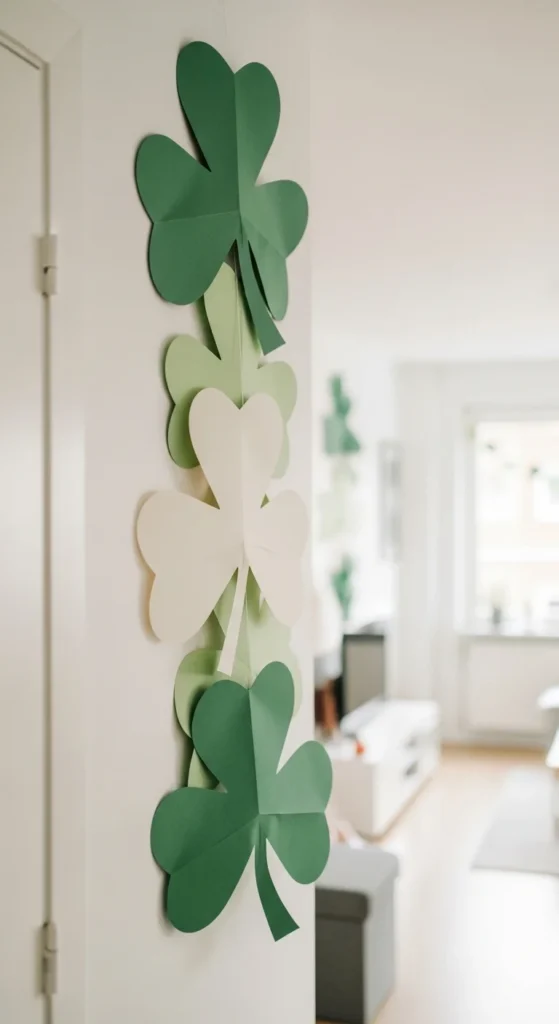
Big shapes work well in tight rooms. One or two oversized shamrocks read calmer than many tiny ones. Hang them vertically to draw the eye upward. That trick helps ceilings feel taller. Use cardstock or heavyweight paper to avoid curling. Scale over quantity keeps walls from feeling crowded. Choose sage or olive instead of bright green. That keeps the look calm. If you rent, use removable hooks or painter’s tape loops. For budget builds, trace a plate or bowl for consistent curves. Leave space between pieces. Negative space matters here. Add nothing else to that wall. Let the form do the work. When the holiday passes, fold them flat and store in a magazine file. This idea fits behind sofas, beside entry mirrors, or along narrow hallways. It also photographs well for Pinterest because the shape reads instantly. Keep finishes matte. Skip glitter. Clean edges matter more than shine in small rooms.
2. Muted Green and Gold Throw Pillow Pairing
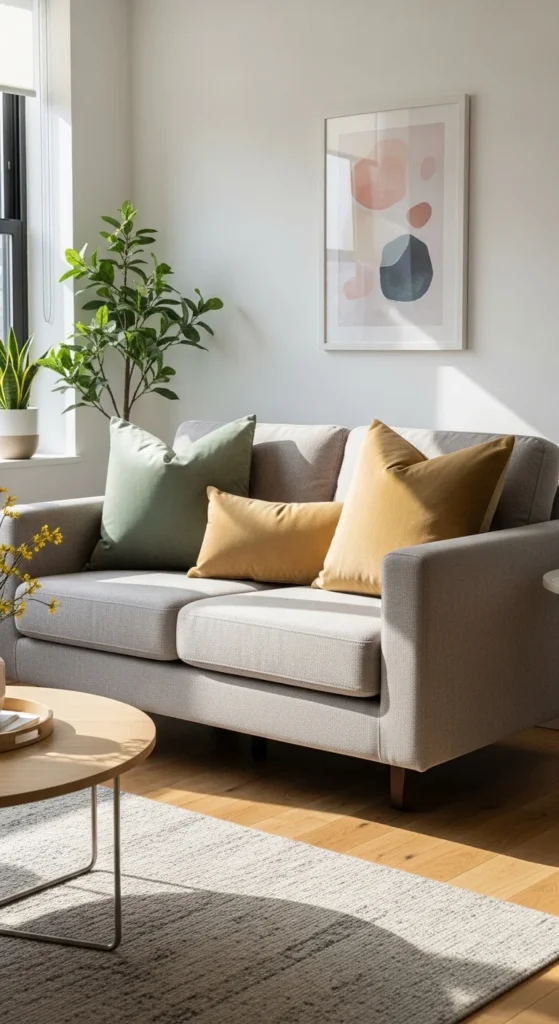
Textiles change a room fast. Pillows are low-commitment and easy to swap. Choose one muted green pillow and one gold-accent pillow. That pairing feels planned without excess. Muted green calms visual noise in small seating areas. Velvet adds richness without adding bulk. Keep pillow size modest. Overstuffed pillows eat space. If buying covers, check zipper quality. Cheap zippers ruin the look. Mix textures, not patterns. Solid colors photograph better and feel calmer. This works well on loveseats, accent chairs, or window benches. After March, keep the green pillow and store the gold one. That extends use beyond the holiday. For budget options, look for covers instead of inserts. Reuse inserts you already own. Stick to a tight palette. Two pillows are enough. More than that feels crowded fast in apartments.
3. Paper Shamrock Bouquet in a Slim Vase
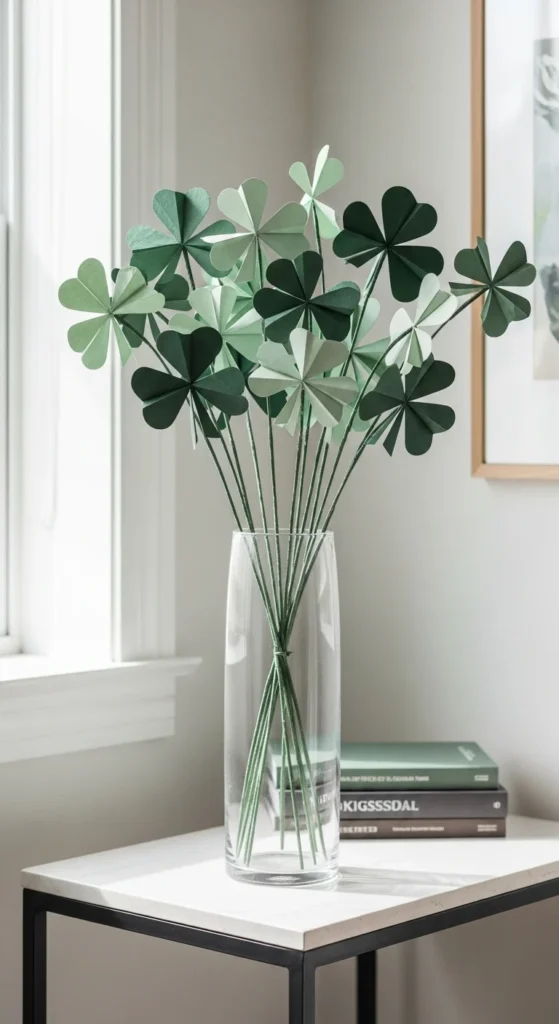
Florals take space. Paper versions solve that. Cut shamrocks from green cardstock and mount them on thin floral wire. Group them tightly in a tall vase. Height works better than width on shelves. Lightweight materials suit small rooms because they don’t feel heavy. Keep the bouquet single-color. Mixed greens look calmer than adding gold here. Place it on a narrow console, desk corner, or nightstand. Avoid wide vases. Cylinder shapes save surface area. This idea costs very little and stores flat. After use, slide stems into a folder or envelope. For variation, try different paper finishes like linen or soft matte. Skip gloss. Gloss reflects too much light in tight spaces. One bouquet per room is enough.
4. Green Fairy Lights Along a Shelf Edge
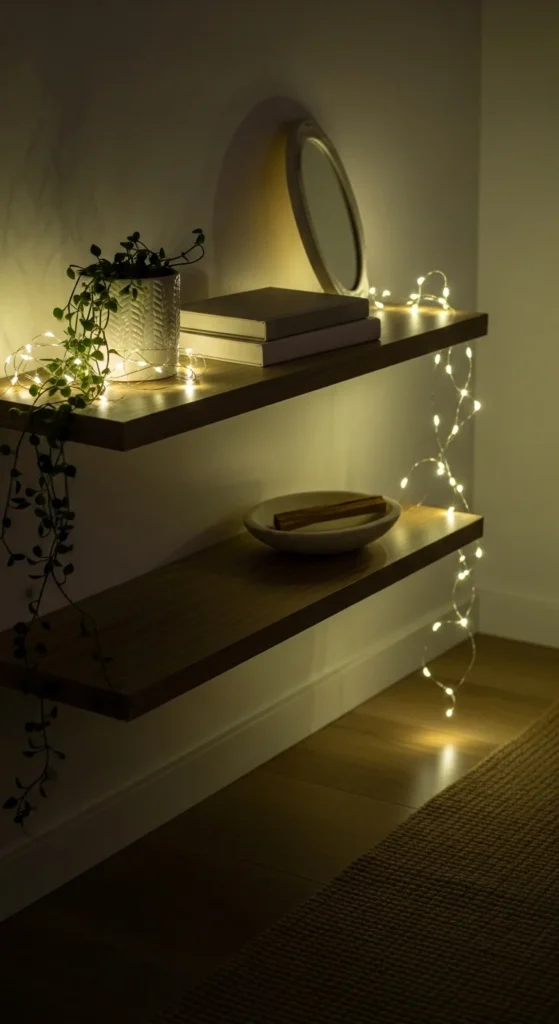
Lighting changes mood without adding clutter. Thin fairy lights work well on shelves and mantels. Choose a soft green bulb, not neon. Wrap lights along the back edge. Hide the wire behind objects. Layered lighting feels intentional even in small rooms. Battery packs fit behind books or planters. Avoid flashing modes. Steady light looks calmer. Pair with neutral decor so the glow stands out. This works well in studios where overhead lights feel harsh. After the holiday, switch to warm white bulbs if possible. That keeps the setup useful. Keep spacing loose. Tight clusters look messy. Less light often looks better than more.
5. Monochromatic Green Shelf Styling
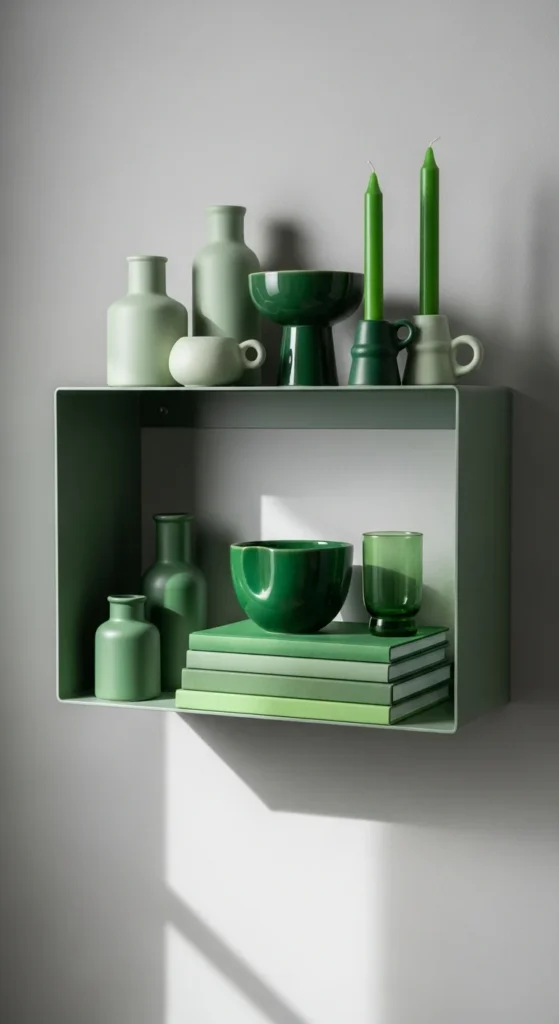
A single color reduces visual clutter. Choose three to five objects in similar green tones. Vary height, not color. Monochrome keeps shelves calm in small rooms. Use ceramics, glass, or paper pieces. Avoid mixing metals here. Let color carry the theme. Keep background walls white or cream. That contrast helps items stand out. This approach works for open shelving in kitchens, offices, or living rooms. When the season ends, remove one item and keep the rest. That prevents full restyling. This idea also photographs well because the color story reads clearly.
6. Forest Green Accent Chair Moment
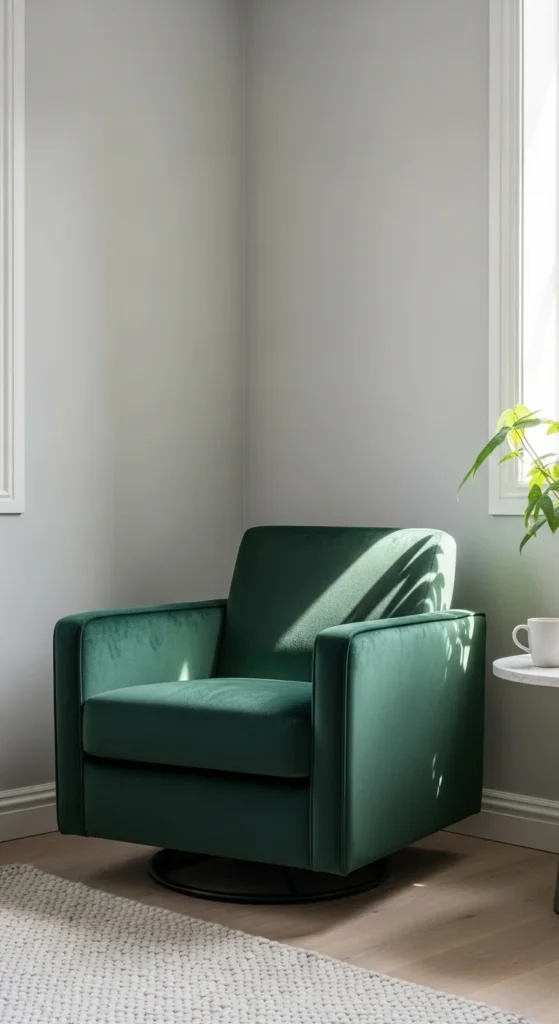
One furniture swap can signal the season. A forest green chair adds presence without crowding. Choose slim arms and a swivel base. One bold piece is enough in tight rooms. Velvet works well because it absorbs light. That reduces glare. Keep the surrounding decor neutral. Let the chair stand alone. This works well in reading corners or bedroom desks. If buying new furniture isn’t an option, use a chair slipcover. Fit matters. Loose covers look sloppy. After March, the green still works year-round.
7. Ivory and Green Tassel Mantel Garland
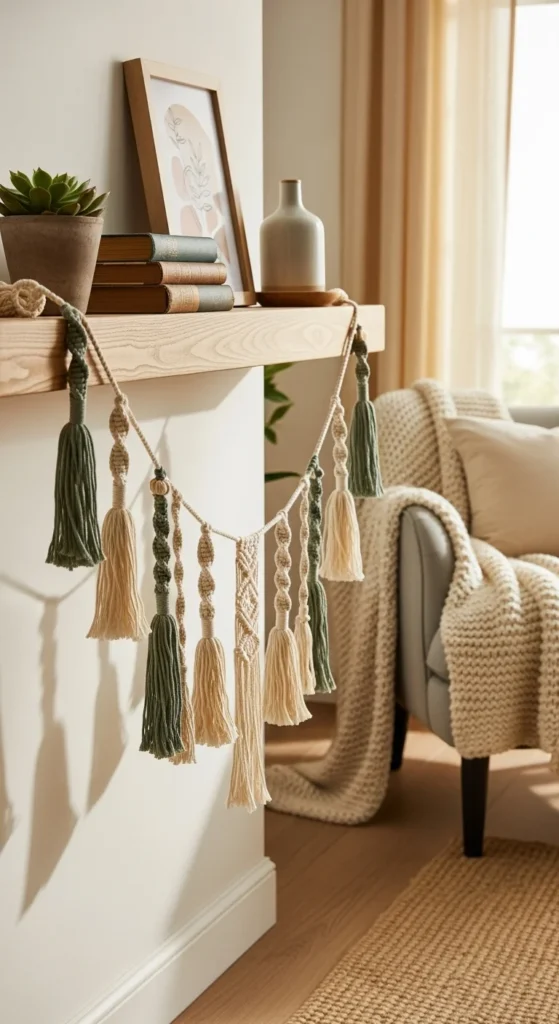
Tassels add softness without bulk. Choose ivory with hints of green. Keep tassels evenly spaced. Soft textures balance hard edges like fireplaces and shelves. This works well on narrow ledges where bulky decor fails. Hang with removable hooks or twine. Avoid adding signs or extra objects nearby. Let the garland be the focus. After the holiday, remove green tassels and keep ivory ones. That extends use into spring.
8. Raw-Edge Green Ribbon Table Runner
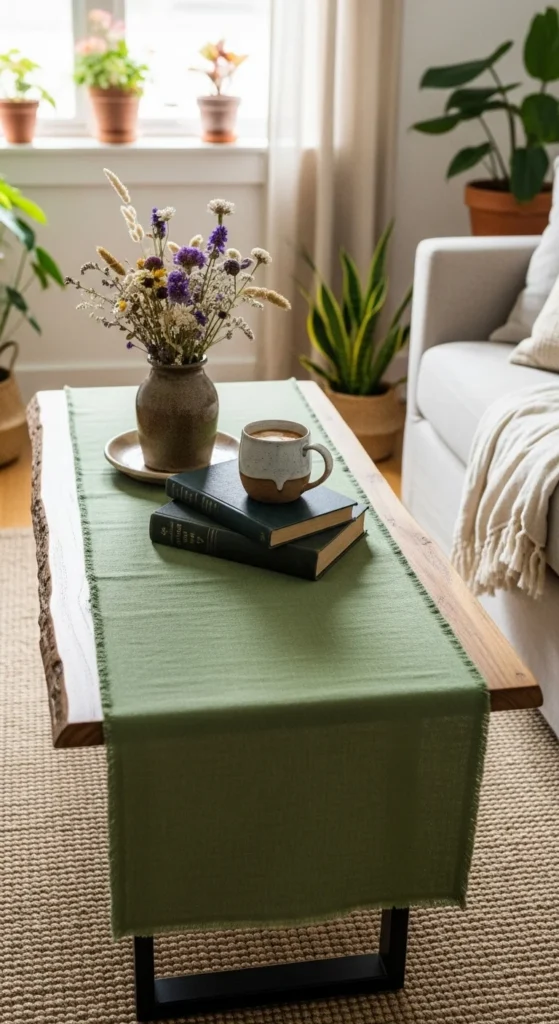
Fabric can replace bulky decor. A narrow runner adds color without height. Choose linen or cotton with a raw edge. Flat decor suits small tables better than centerpieces. Let the fabric drape slightly. Avoid bows or prints. This works on coffee tables, console tables, or desks. Pair with one book and one candle only. More feels more crowded. When done, fold and store easily.
9. Hooked Shamrock Pillow on a Chair
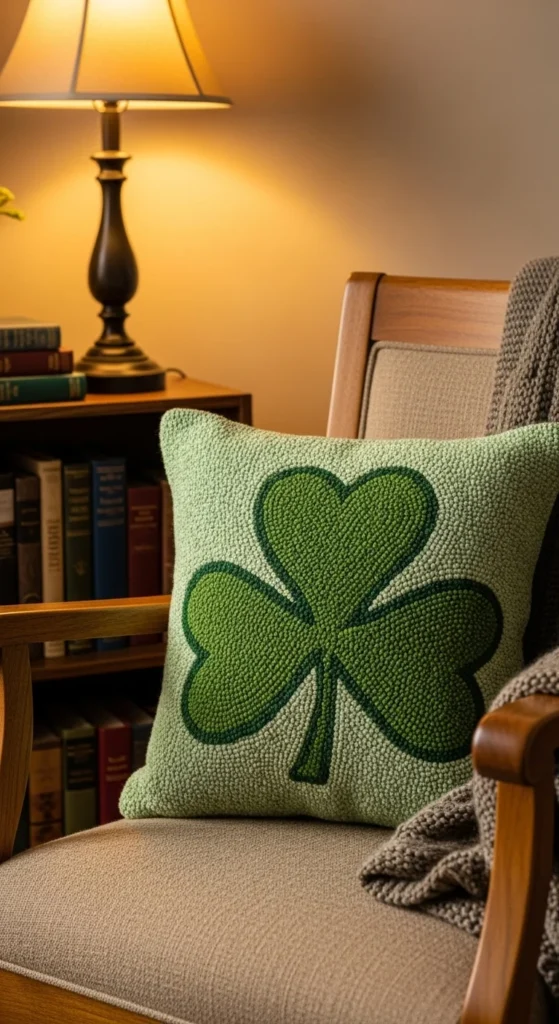
One themed pillow reads clearer than many. Hooked wool adds texture. Place it on a chair, not a sofa. Single accents feel intentional in small spaces. Avoid mixing with other patterns. Let the motif stand alone. This works well in bedrooms or corners. After the holiday, store it and return the chair to neutral use.
10. Paper Shamrock Wall Bouquet
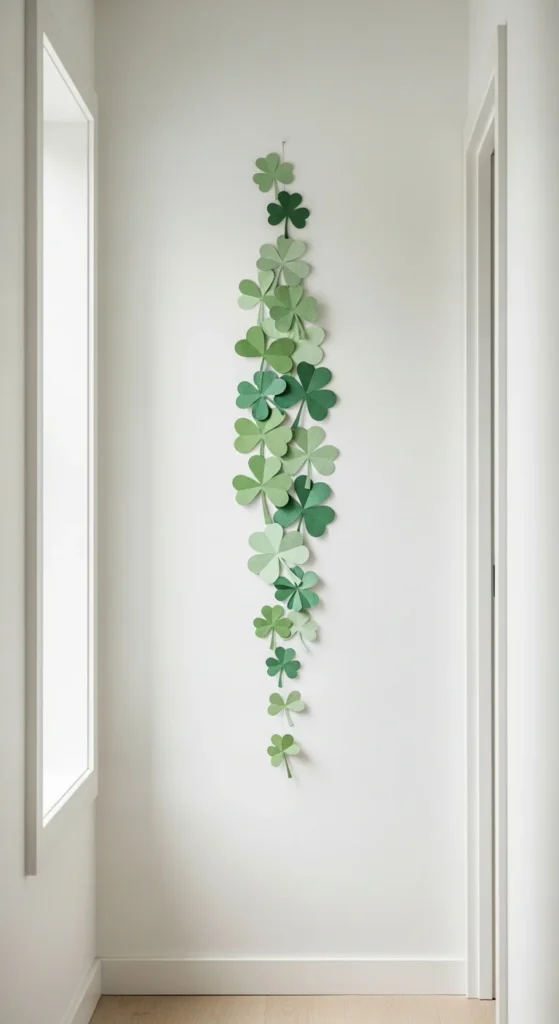
Wall bouquets save surface space. Arrange paper shamrocks directly on the wall. Use removable adhesive dots. Vertical layouts save room and feel tidy. Keep spacing even. Avoid overlapping too much. This works well in hallways and entryways. After use, peel off and store flat.
11. Irish Flag Color Accent Trio
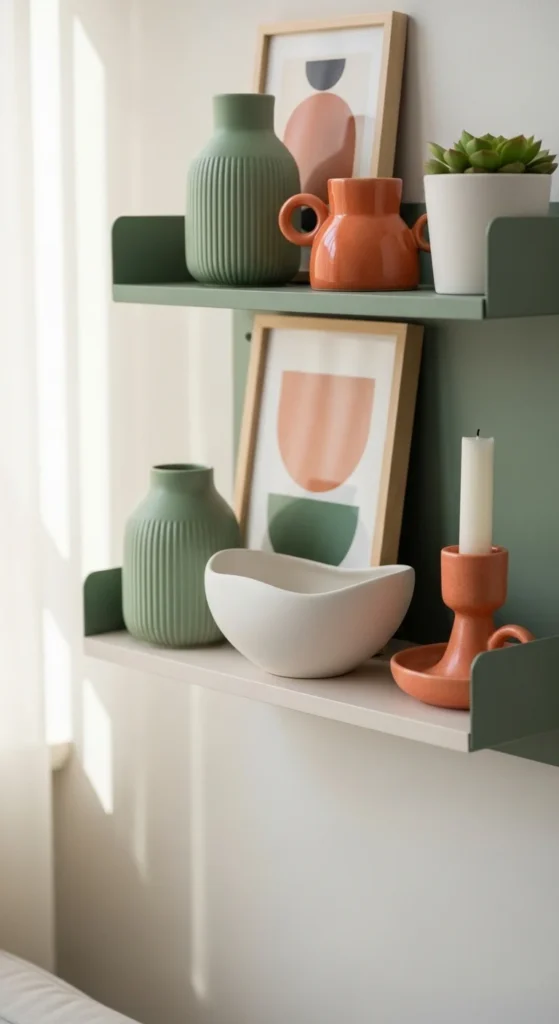
Limit the flag palette. One green, one white, one soft orange item is enough. Controlled color prevents overload. Keep shapes simple. Avoid text or graphics. This works well on shelves or trays. After the holiday, remove orange and keep green and white.
12. Sage Pillow Cover Swap
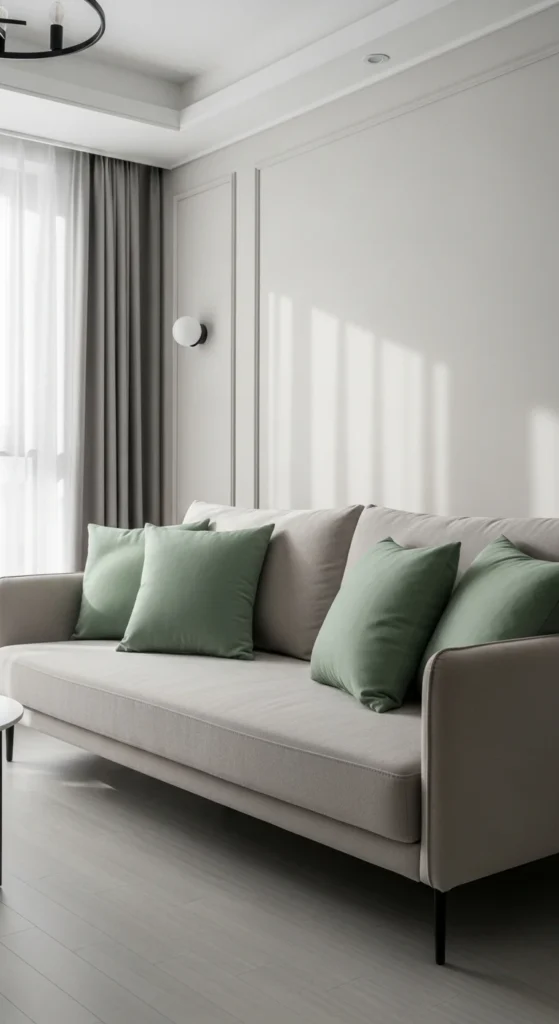
Covers change mood fast. Sage works beyond March. Choose solid fabric with hidden zippers. Subtle color reads calmer than bright tones. Use two pillows only. This fits well in studios and small lounges. After the holiday, keep them on.
13. Shamrock-Stenciled Mason Jars
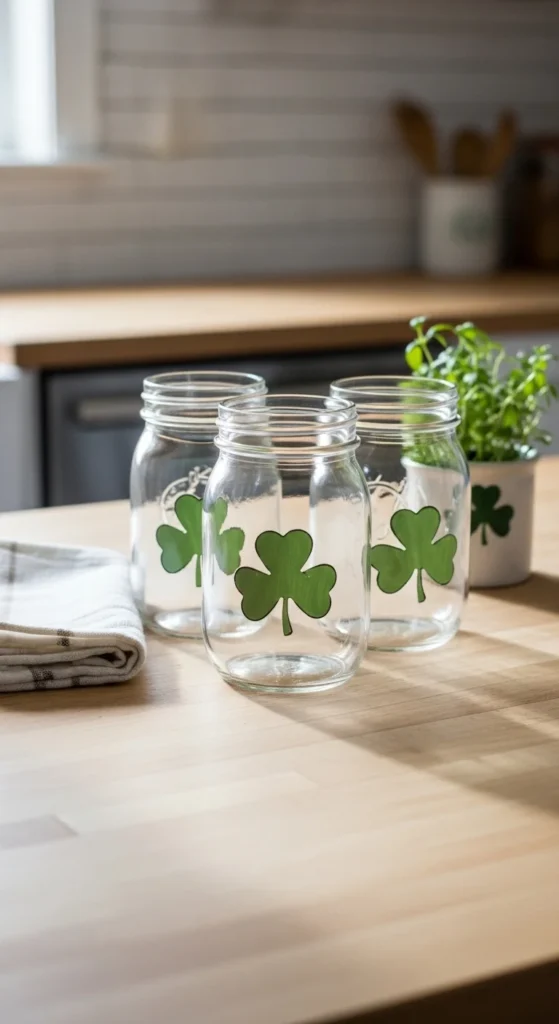
Jars serve storage and decor. Stencil one shamrock per jar. Keep spacing centered. Functional decor saves space. Use jars for utensils, pens, or brushes. Avoid filling shelves with many jars. Two or three are enough.
14. Forest Ribbon Dinner Table Accent
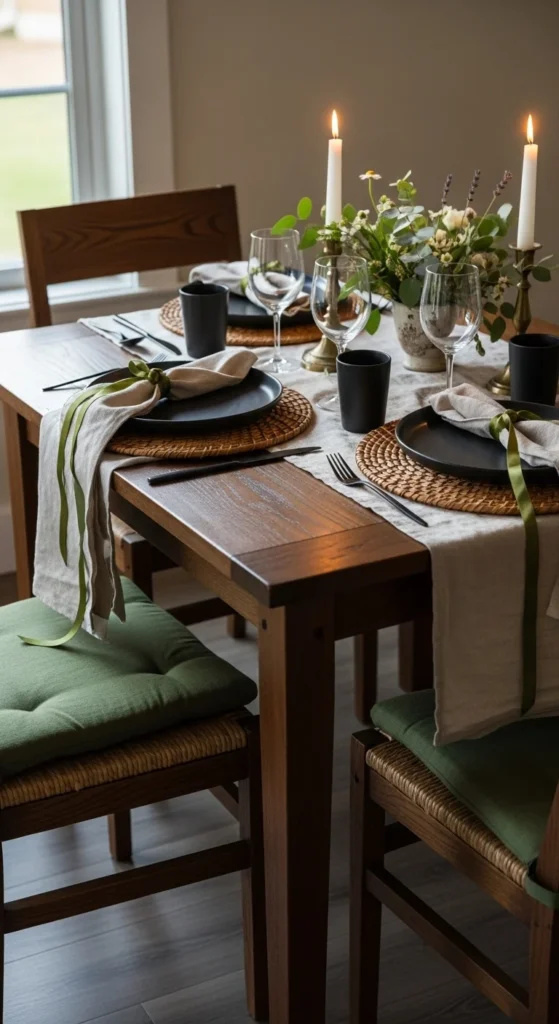
Ribbon adds color without bulk. Tie simple knots. Skip bows. Flat accents suit small tables. Pair with neutral plates. This works well for small dinners. Afterward, untie and store.
15. Compact Green Table Lamp
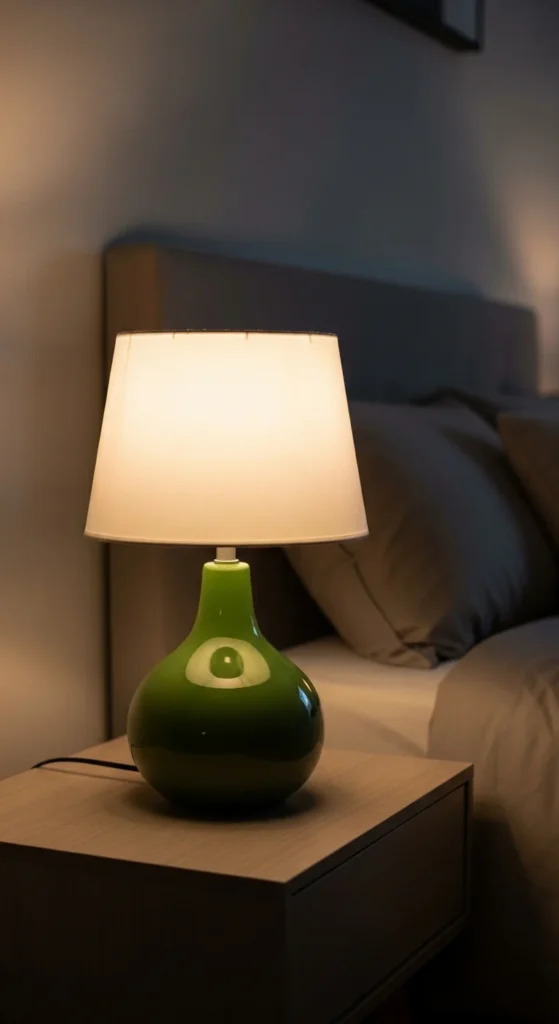
Lamps change the atmosphere. Choose a small base in green. Keep shade neutral. Low-profile lighting saves space. This works on nightstands or desks. After March, it still fits spring decor.
16. Boho Shelf Tassels with Shamrock Tags
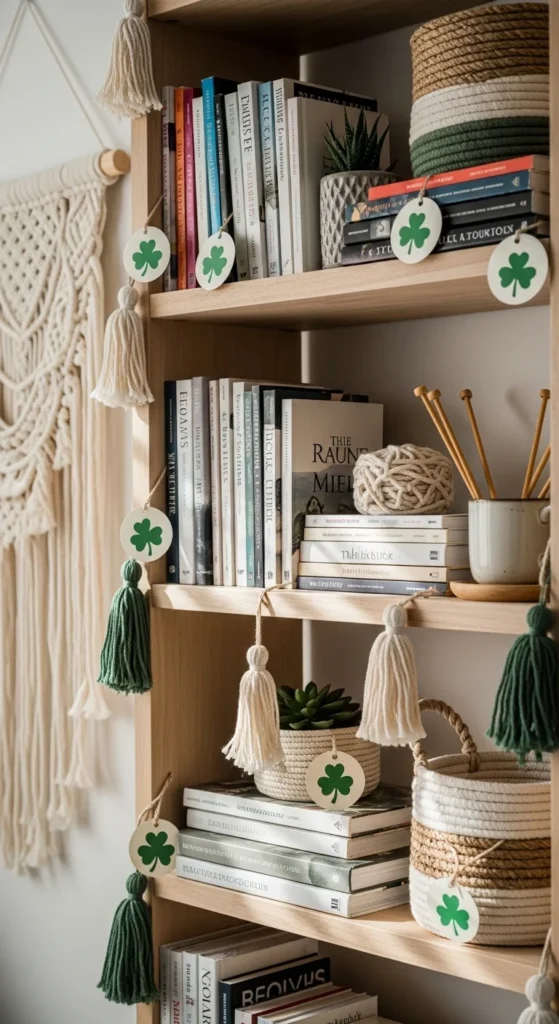
Combine boho elements with restraint. Small tassels hang from shelf edges. Add tiny shamrock tags only at the ends. Detail-level decor works best in tight spaces. Avoid filling shelves. Leave gaps.
17. Paper Wreath for Windows
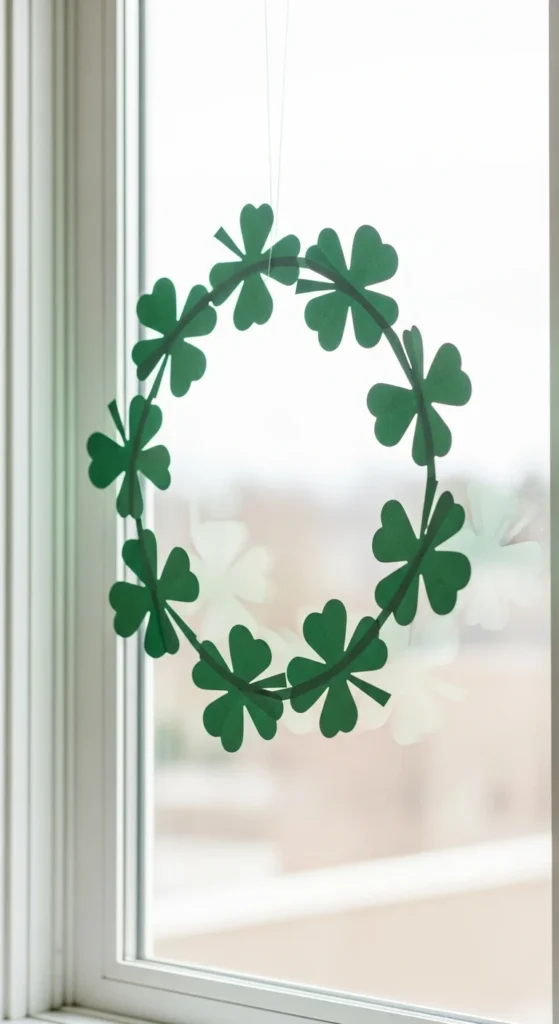
Windows are often unused. A paper wreath adds interest without taking room. Use suction hooks. Vertical surfaces matter in small homes. Keep the wreath thin and light. After use, store flat.
18. Curated Pinterest-Inspired Shelf Copy
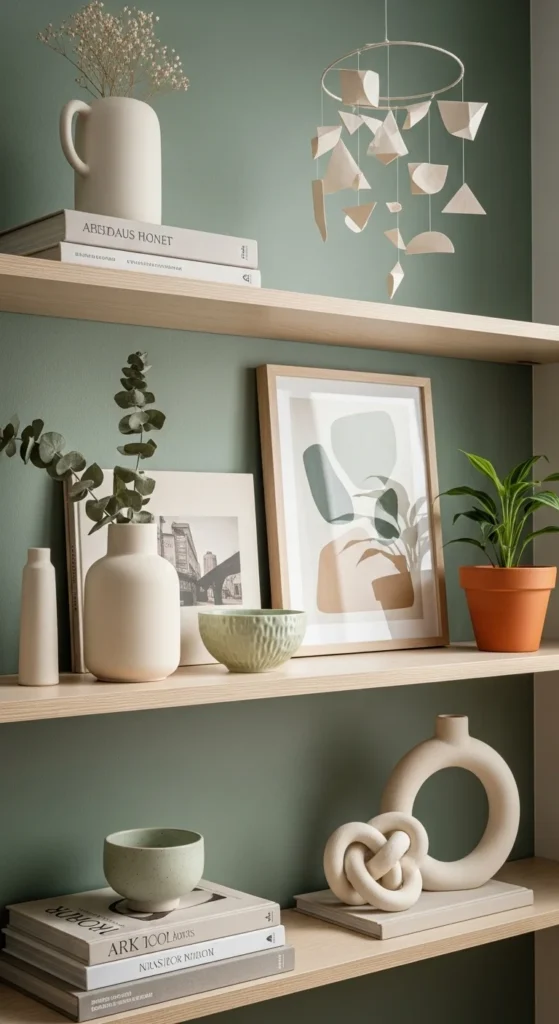
Copying one shelf look works better than mixing ideas. Choose one reference and follow it closely. Focused styling feels calmer. Limit items. Match colors and spacing. This avoids clutter.
19. Green Decor That Stays Past March
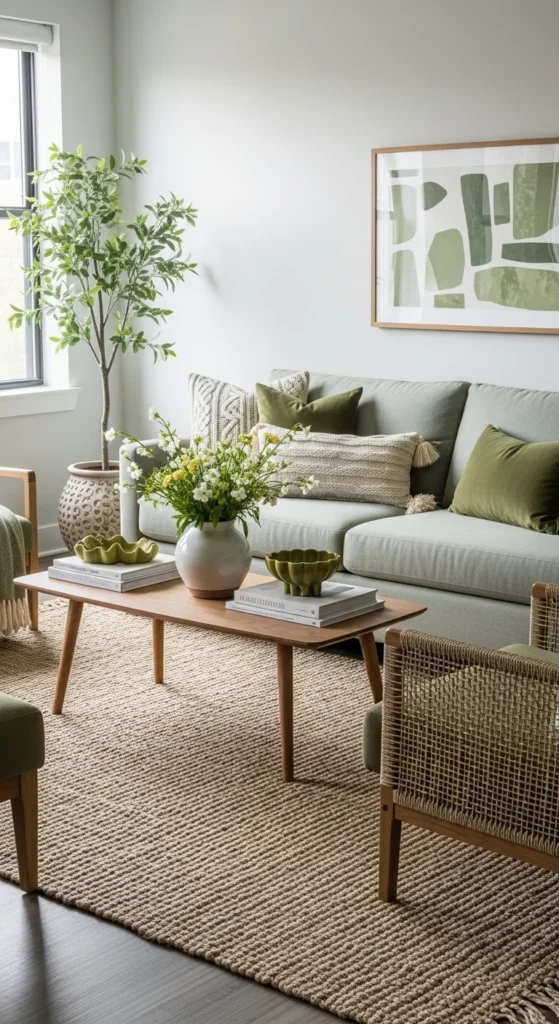
Choose items that work beyond the holiday. Plants, pillows, and ceramics last longer. Extended use saves effort. Skip dated text or symbols. This keeps your space consistent.
20. Vertical Shamrock Garland for Doors
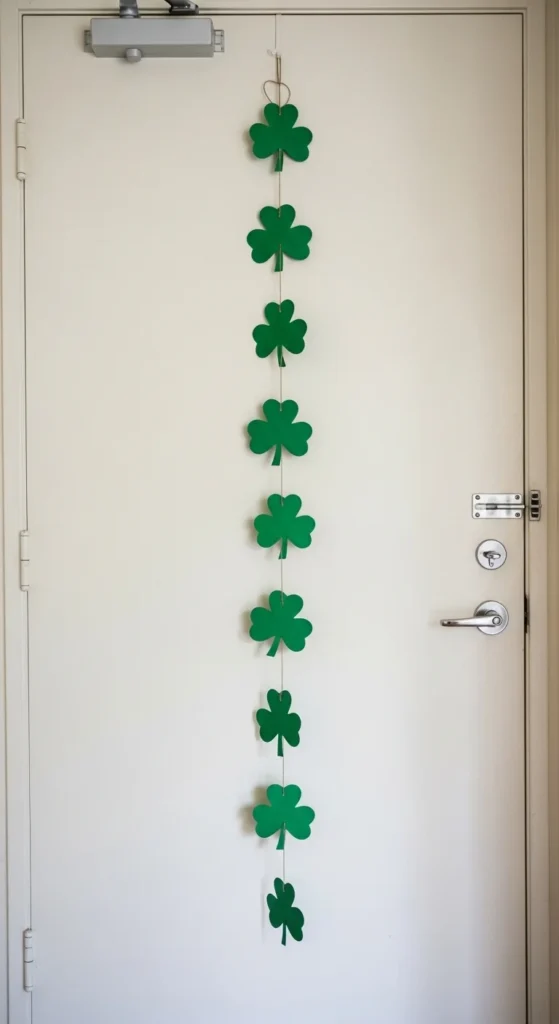
Doors are perfect for vertical decor. Hang a single strand. Keep shapes evenly spaced. Vertical decor frees floor space. Use removable hooks. After March, remove and store easily.
21. Slim Faux Greenery in Wall-Mounted Vessels
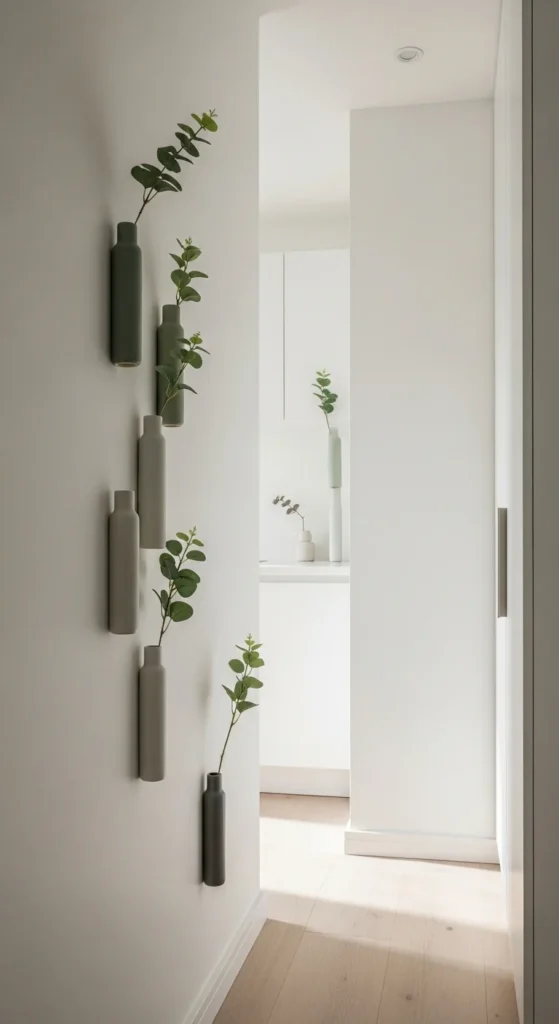
Wall-mounted pieces keep surfaces clear. Choose narrow vessels that sit flush to the wall. Faux greenery avoids water and soil mess. Vertical placement saves floor and shelf space while adding life to blank areas. Use stems with small leaves, not full sprays. Large leaves feel heavy in tight zones. Space vessels evenly. Odd numbers work well, but two can feel calmer in hallways. Install anchors rated for light weight or use adhesive mounts designed for decor. Keep colors muted. Sage and olive blend better than bright tones. Pair with white walls for contrast. This works beside doors, above desks, or near entry mirrors. After March, keep the greenery and remove any holiday tags. The look stays seasonal through spring. Dust lightly with a soft brush to keep it crisp. Avoid mixing metals nearby to maintain a quiet palette.
22. Narrow Tray Styling with Green Accents
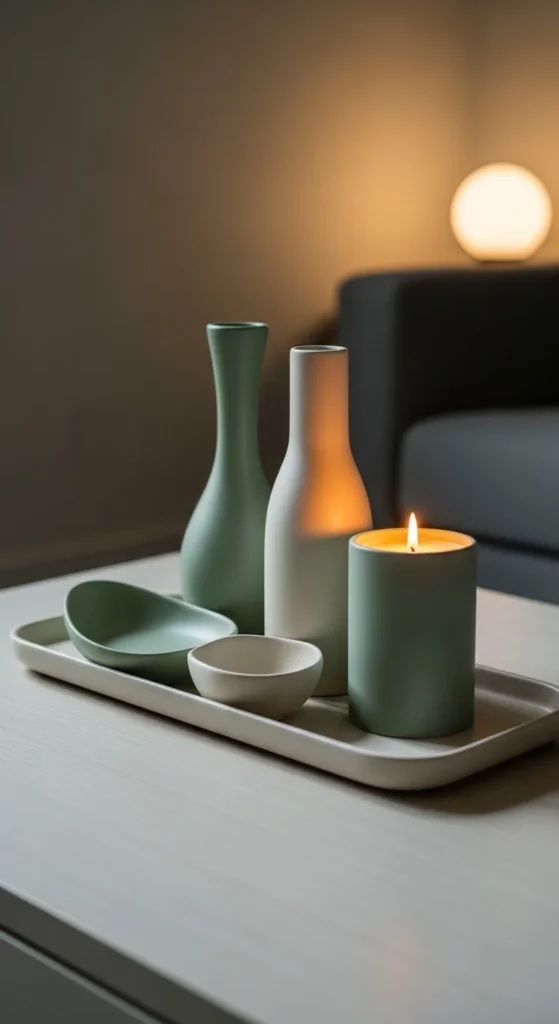
Trays create boundaries. In small rooms, boundaries matter. Choose a narrow tray that fits your table depth. Add two or three items only. Contained styling prevents visual sprawl. A green ceramic piece sets the theme. Pair it with a neutral candle and one small book. Keep heights staggered. Avoid tall items that block sightlines. This approach works on coffee tables, nightstands, and entry consoles. Trays also make cleanup fast. Lift one piece instead of many. For budget builds, thrift simple wood or metal trays and paint them cream. Let green accents sit on top rather than painting the tray itself. After the holiday, swap the green item for something neutral and keep the setup intact. This keeps your layout consistent while changing tone with minimal effort.

Leave a Reply