

1. Light, Airy Color Palettes
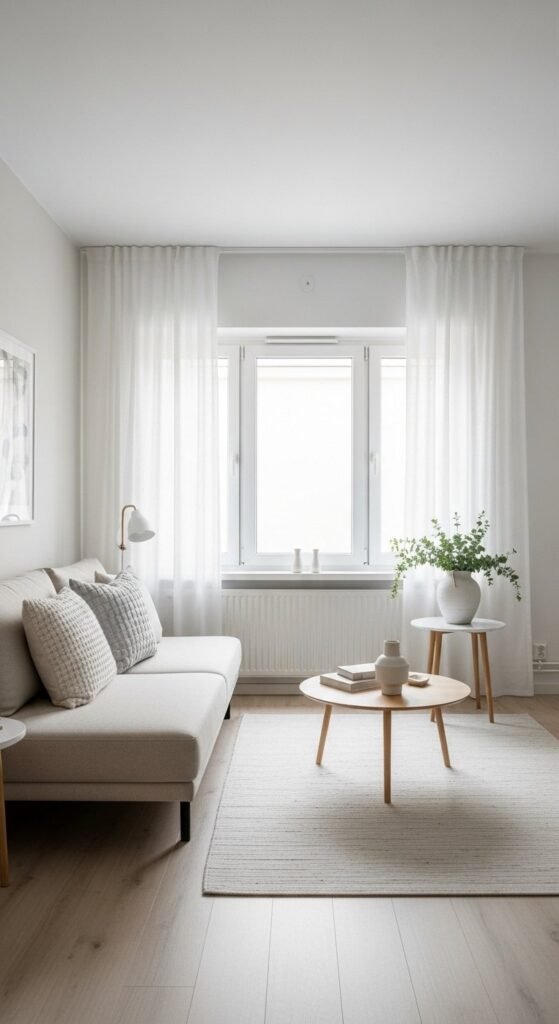
Light colors make a small living room feel open. White, cream, and soft beige reflect daylight instead of absorbing it. That simple shift helps the room feel wider and calmer. Keep walls and ceilings close in tone. This avoids hard breaks that shrink the space. If plain white feels flat, add warmth with light wood or woven textures.
For budget updates, paint is enough. Use one shade across walls and trim. Even the ceiling can match. Curtains should stay sheer and light. Heavy fabrics block light. A pale rug with a subtle pattern adds softness without crowding the floor. Keep large furniture in similar tones so nothing visually jumps out. Light and bright palettes work best when contrast stays low and textures do the work.
2. Mirrors That Create the Illusion of Space
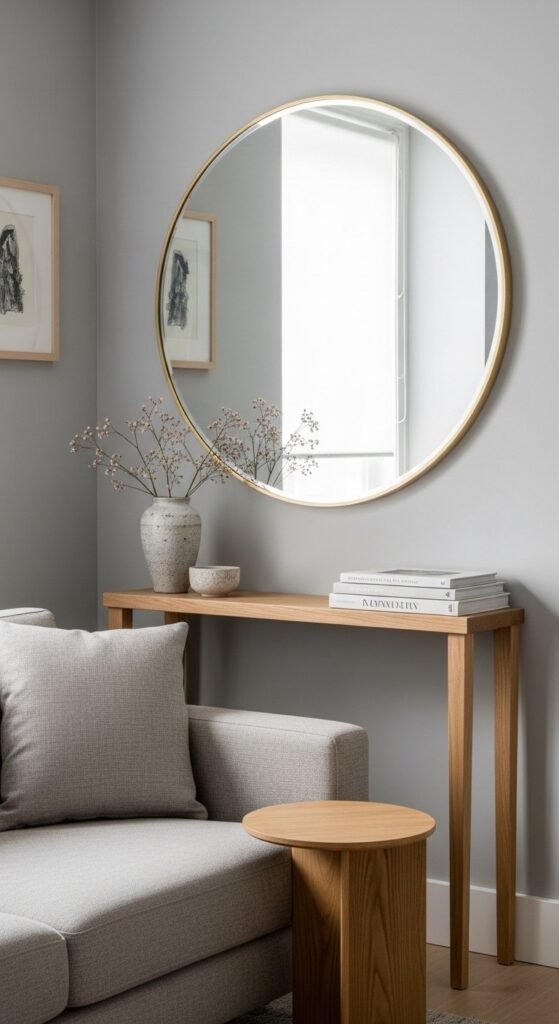
Mirrors help small rooms feel wider. Place one across from a window to reflect daylight. This doubles the visual depth. A large mirror works better than several small ones. It keeps the wall calm and uncluttered. Frameless or thin metal frames suit modern rooms.
If wall space is limited, lean a tall mirror behind a sofa or near a corner. This draws the eye outward. Avoid heavy carved frames. They add visual weight. For a low-cost option, try adhesive mirror panels arranged in a grid. Mirrors placed at eye level feel more natural and balanced. Keep the surrounding wall simple so the reflection stays clean.
3. Corner-Focused Sofa Layouts
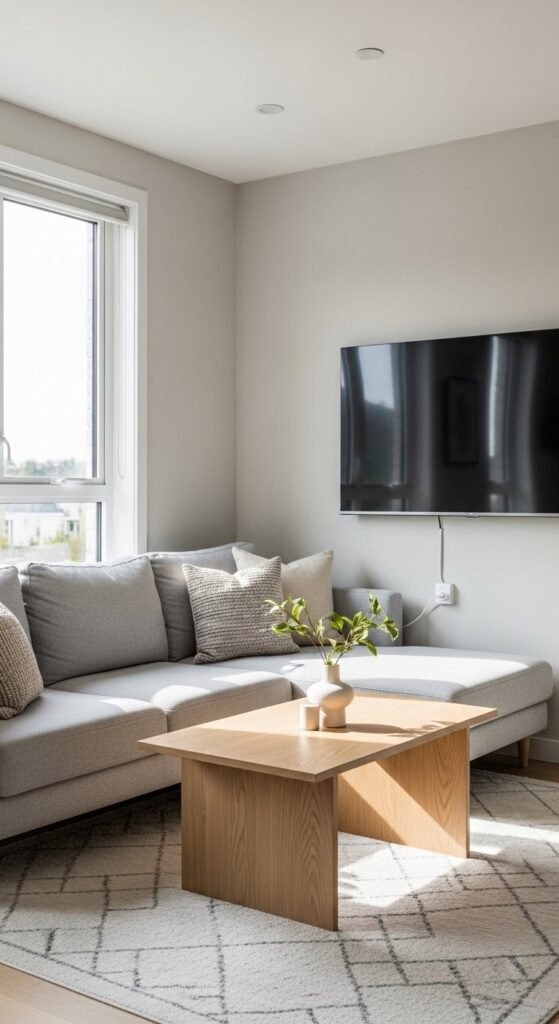
Corners often go unused. An L-shaped sofa fixes that fast. It hugs the walls and opens the center of the room. This layout works well in square or narrow spaces. Choose slim arms and raised legs to keep it visually light.
If a sectional feels too large, use a loveseat with one accent chair angled into the corner. Keep pathways clear. Walkways matter more than extra seating. Corner layouts free floor space when furniture stays low and compact. Add a corner floor lamp instead of a side table. This saves surface space and keeps lighting soft.
4. Floating TV Units and Shelves
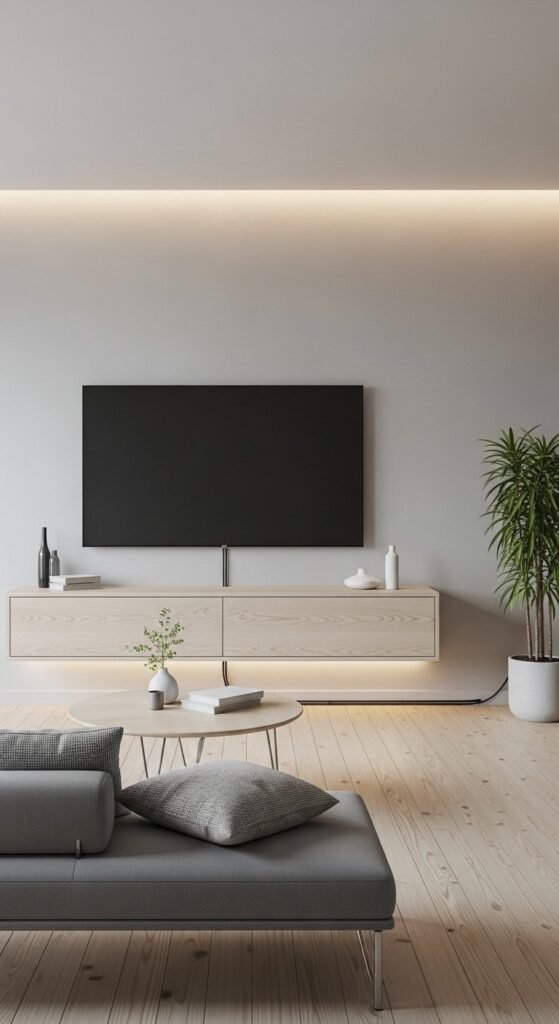
Floating furniture keeps the floor visible. That alone makes a room feel larger. A wall-mounted TV unit removes bulky cabinets. It also helps with cable control. Choose a shallow console under 120 cm wide for compact rooms.
Open floating shelves work better than deep cupboards. Style them lightly. A few books. One plant. Leave breathing room. Avoid filling every inch. Clear floors change the whole layout without moving walls. If drilling isn’t allowed, look for mounting systems designed for rentals. They distribute weight without damage.
5. Multi-Functional Furniture Pieces
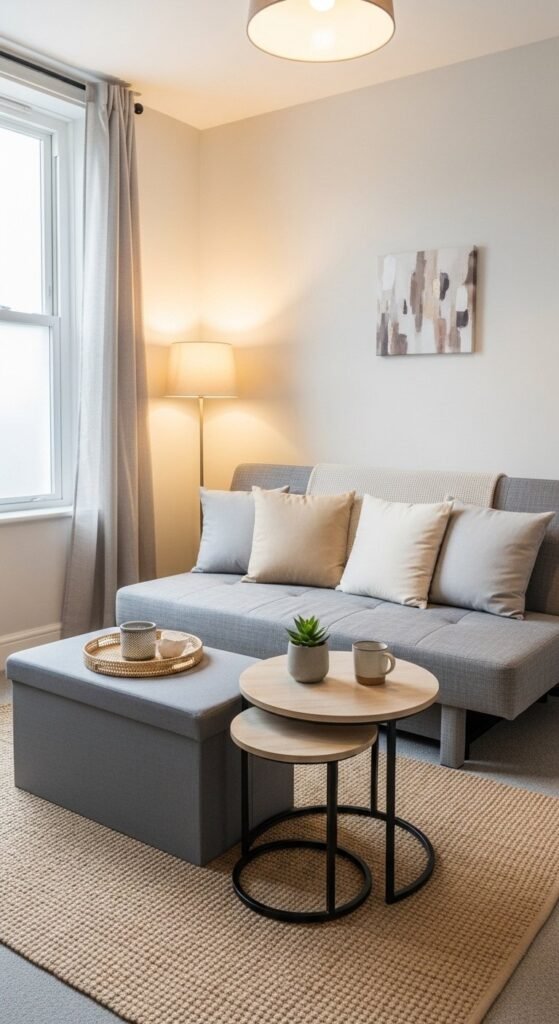
Every piece should earn its place. Storage ottomans hide clutter and act as seating. Sofa beds turn a lounge into a guest room. Nesting tables slide away when not in use.
Choose designs with simple shapes. Extra details add bulk. Upholstery should stay neutral so the room feels calm. For tight budgets, start with one double-duty piece. Even a bench with storage under the window helps. Double-use furniture saves space without making the room feel crowded. Keep surfaces mostly clear so the room stays easy on the eyes.
6. Slimline Furniture With Exposed Legs
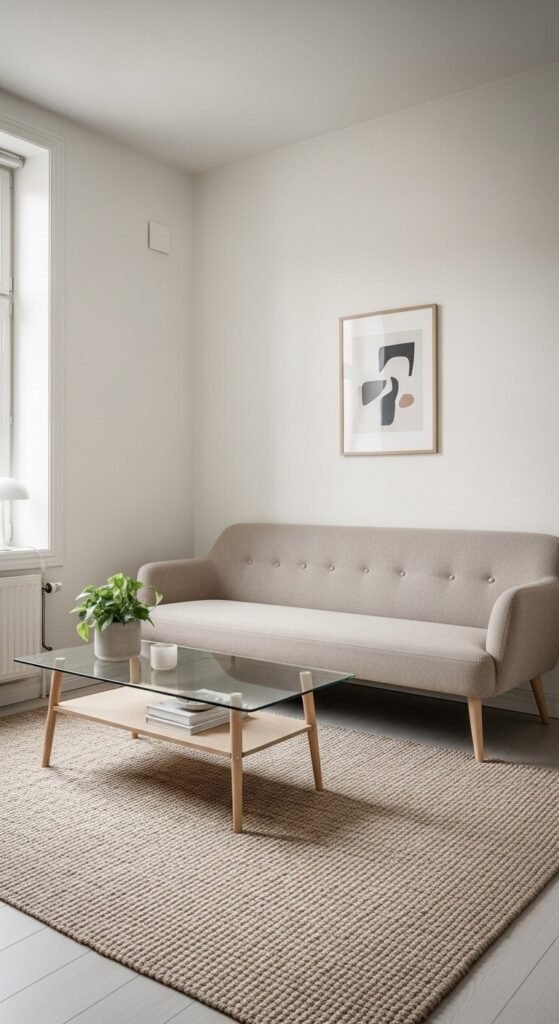
Bulky furniture eats visual space. Slim silhouettes do the opposite. Sofas with narrow arms and raised legs allow the floor to show through. That creates flow. Chairs with open frames feel lighter than solid ones.
Glass or acrylic tables help even more. They almost disappear. If replacing furniture isn’t an option, add furniture risers to lift pieces slightly. This small trick changes proportions. Keep fabrics smooth rather than heavy. Linen blends and tight weaves look lighter. Visual lightness matters more than size in compact rooms. Let the eye move freely underneath and around each piece.
7. Vertical Decorating That Draws the Eye Up
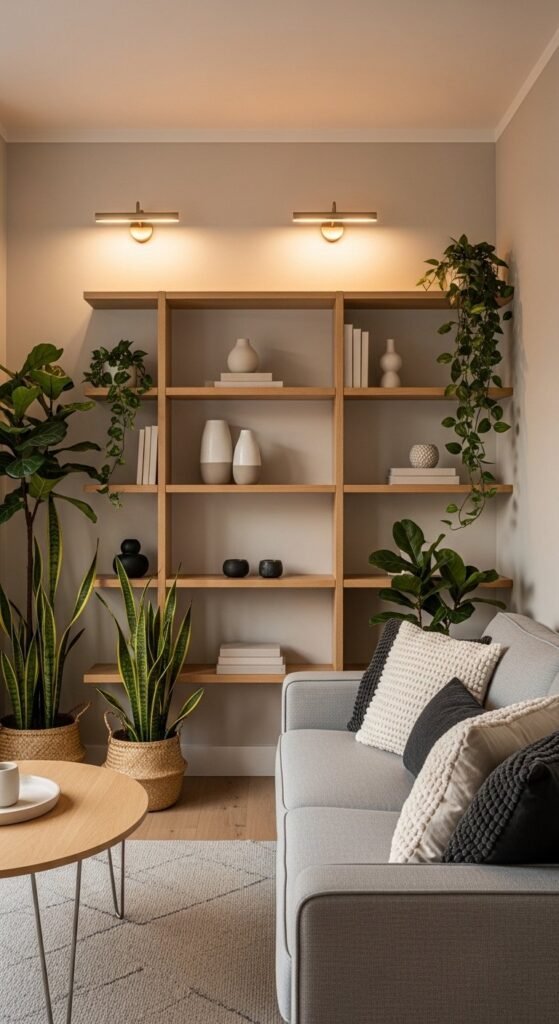
When floor space is tight, go upward. Tall shelves pull attention away from the room’s width. Wall lights replace table lamps and clear surfaces. Curtains hung close to the ceiling make walls feel taller.
Gallery walls should stretch upward, not outward. Use fewer frames but stack them higher. Tall plants work better than wide ones. Think olive trees or palms. Vertical lines change how space feels without adding clutter. Keep colors soft so height feels calm, not busy.
8. Minimalist Styling With Hidden Storage
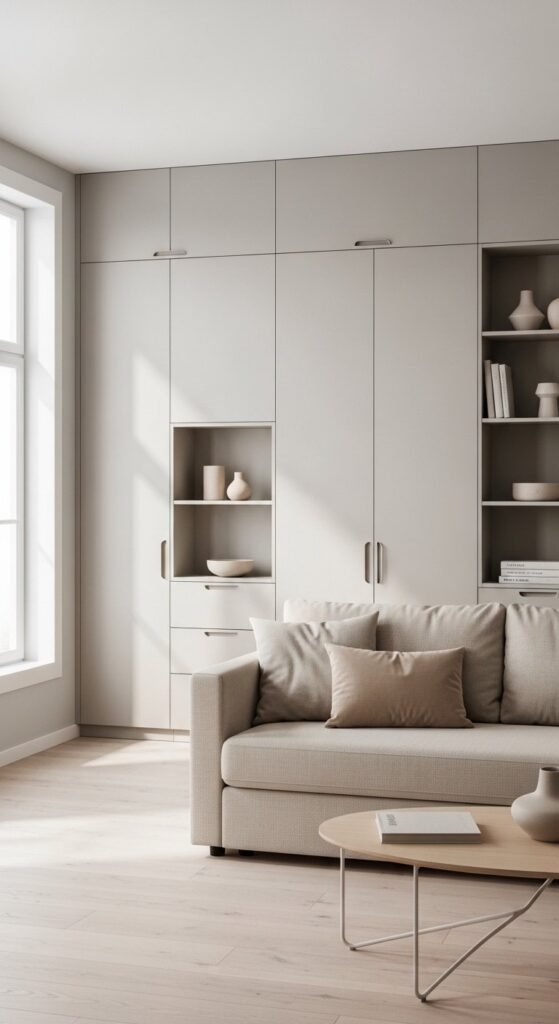
Less decor means more breathing room. Hide everyday items behind closed storage. Built-ins work well, but baskets inside cabinets help too. Limit decor to a few textured pieces instead of many small ones.
Clear coffee tables and sideboards regularly. This keeps the room feeling steady and calm. Open shelves should stay partly empty. Clutter-free rooms feel larger even when square footage stays the same. Minimal styling also makes lighting look softer and more intentional.
9. Color Drenching for a Cohesive Look
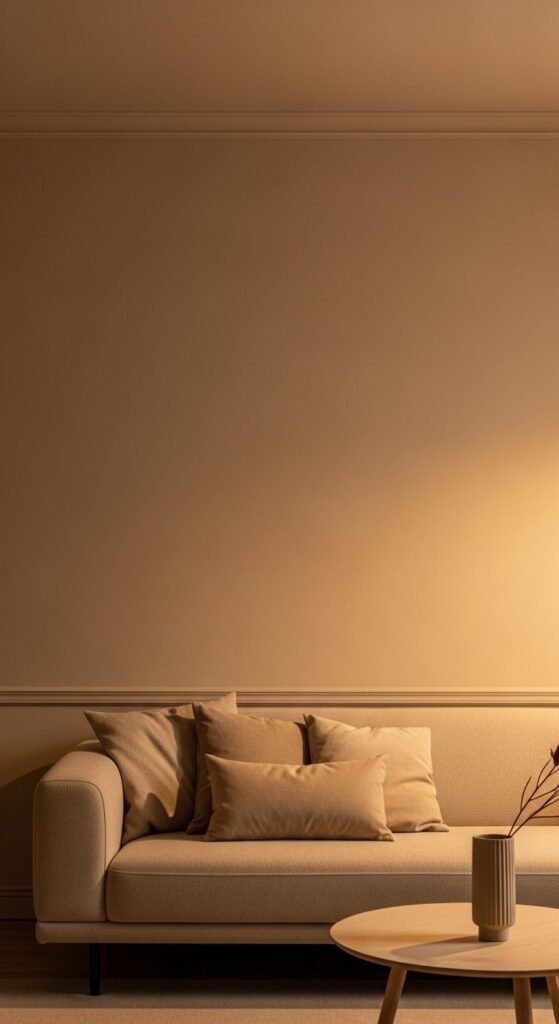
Using one color everywhere removes visual breaks. Walls, trim, and ceiling blend together. This creates flow. Soft neutrals work best. Warm beige. Pale taupe. Soft gray.
Avoid sharp contrast in furniture. Stick close to the wall tone. Texture adds interest without visual noise. Boucle. Ribbed ceramics. Wool rugs. Tone-on-tone rooms feel calm and expansive when lighting stays soft. Test paint samples first. Undertones matter in small spaces.
10. Texture-First Decor Instead of Bold Color
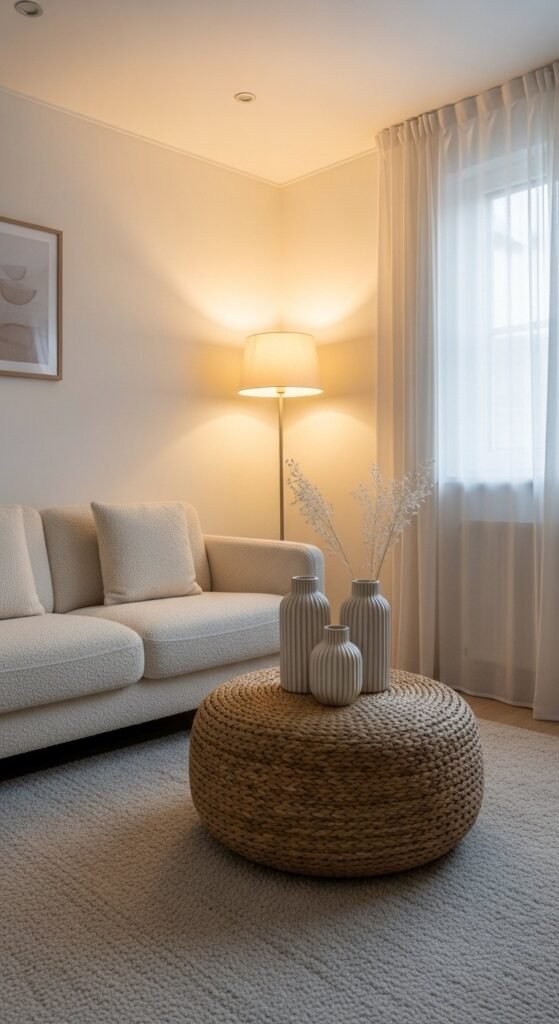
Bright colors can overwhelm tight rooms. Texture works better. Mix smooth and rough surfaces. Soft cushions. Woven baskets. Matte ceramics. This keeps interest without visual overload.
Stick to one palette and vary the feel instead. Even white-on-white works when textures change. Budget swaps help here. Cushion covers. Throws. Small rugs. Texture adds depth without shrinking space. Keep patterns subtle and scale them carefully.
11. Micro-Zoned Layouts Within One Room
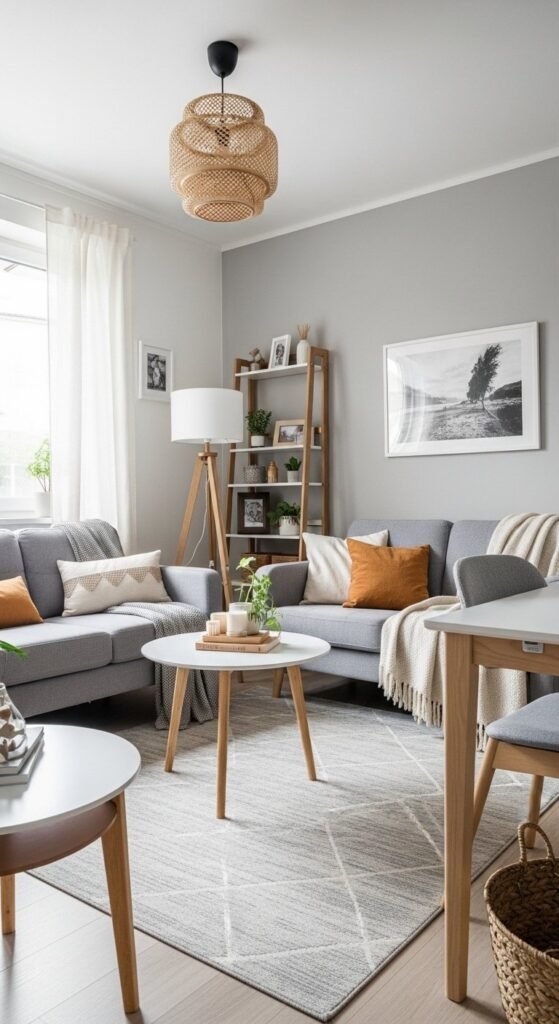
One room can do more than one job. Zoning makes that possible. Use rugs to define areas instead of walls. A reading chair by the window forms a quiet corner. A slim desk can sit behind a sofa.
Furniture placement does the dividing. Not screens. Keep each zone simple so nothing overlaps visually. Lighting helps too. A floor lamp marks a reading spot. A pendant defines the lounge. Micro-zones add function without shrinking the room. Measure carefully so walk paths stay clear.
12. One Statement Rug That Anchors the Space
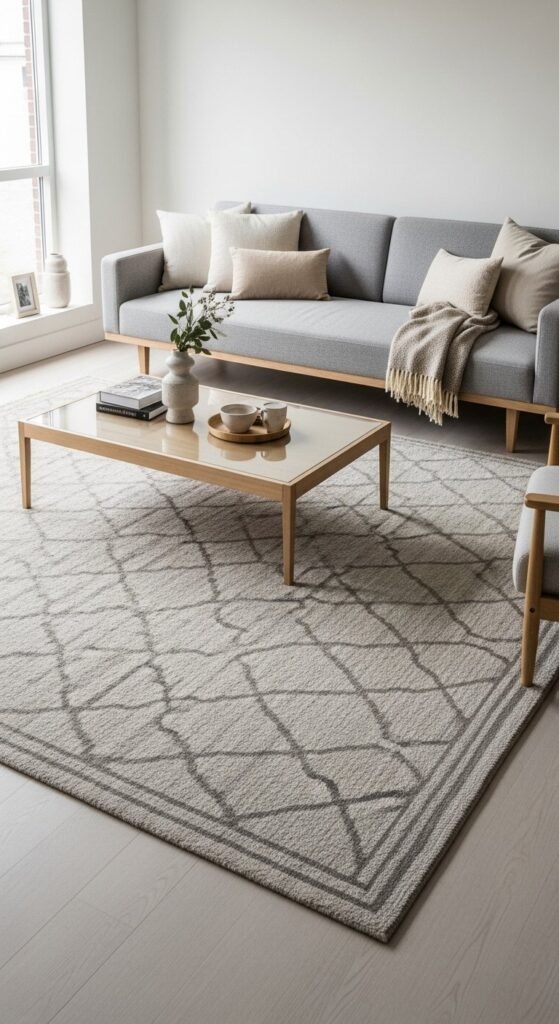
A single rug organizes the whole layout. Too small and it chops the room up. Go larger so the front legs of seating sit on it. This pulls furniture together and creates one visual block.
Patterns should stay subtle. Low contrast works best. Flat weaves help doors and chairs move easily. One well-sized rug brings order to small rooms. Budget tip: polypropylene rugs look good and cost less. Just keep colors soft.
13. Flexible Seating for Guests
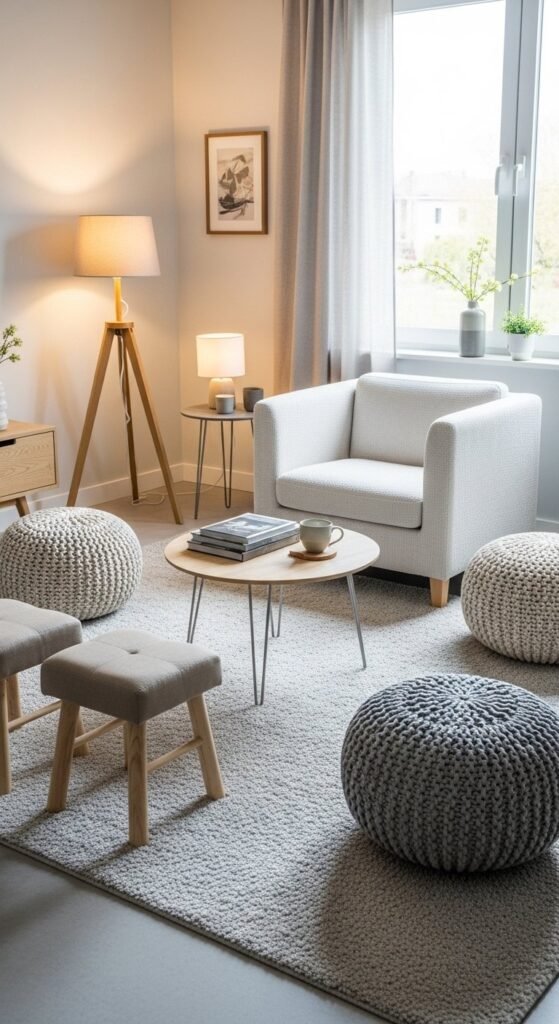
Permanent seating adds bulk. Flexible seating keeps options open. Poufs slide under tables. Stools tuck into corners. Foldable chairs store away when not in use.
Choose pieces that double as side tables. Upholstered cubes work well. Keep colors close to the main palette so extras blend in. Flexible seating handles guests without crowding daily life. When not needed, let the room breathe.
14. Built-In Shelving for Awkward Spaces
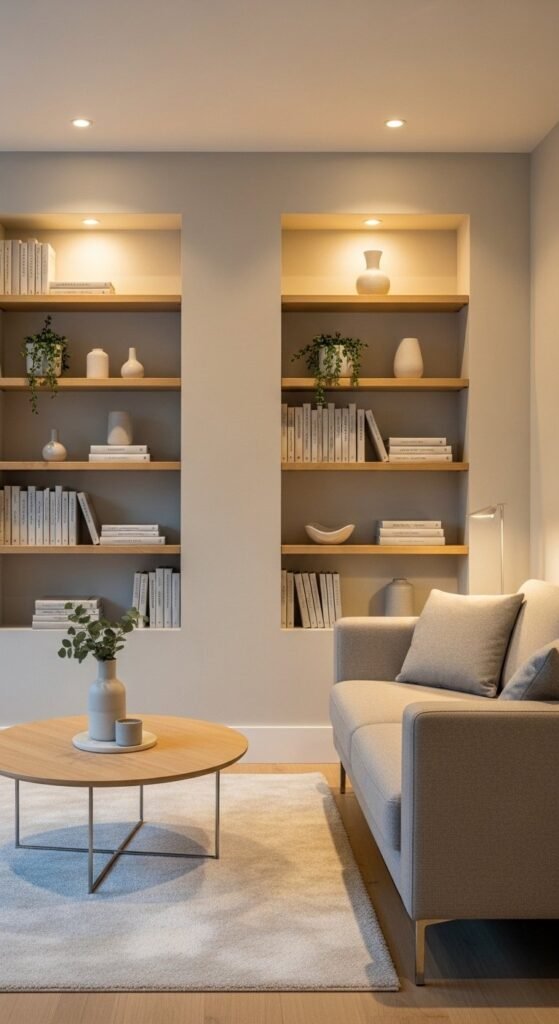
Alcoves often sit empty. Built-ins make them useful. Wall-to-wall shelving adds storage without eating floor space. Keep shelves shallow. Style lightly. Leave gaps.
Closed cabinets at the bottom hide clutter. The open shelves above display only a few items. Built-ins save floor area and look intentional. If custom work isn’t possible, use modular shelving sized tightly to the space.
15. Nature-Inspired Accents to Soften Modern Lines
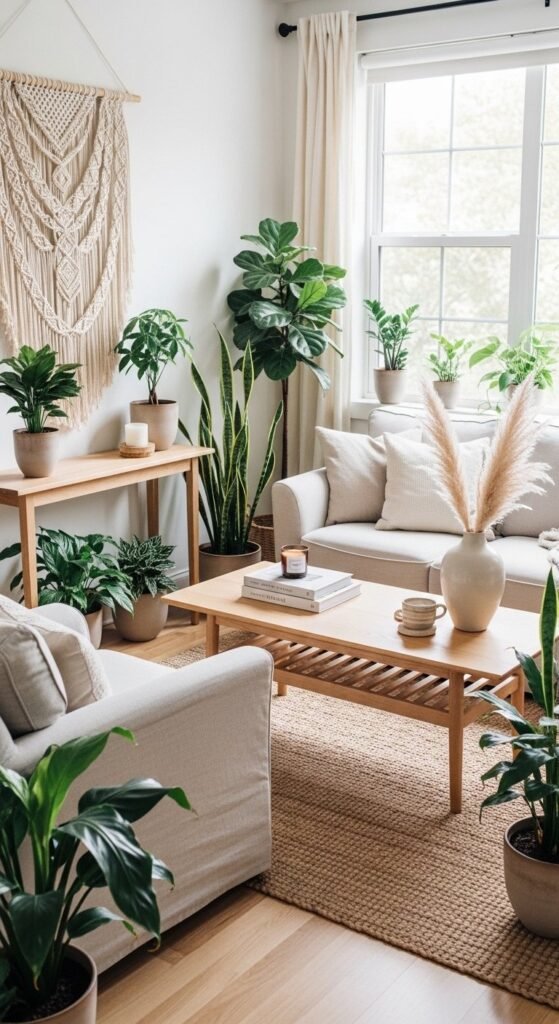
Modern rooms can feel sharp. Natural elements soften them. Plants add life and movement. Wood warms the palette. Linen and cotton feel relaxed.
Choose one or two plants only. Tall plants work better than wide ones. Stick to simple pots. Keep finishing matter. Natural textures add calm without visual clutter. Even one plant by the sofa changes the mood.
16. Circulation-First Furniture Layouts
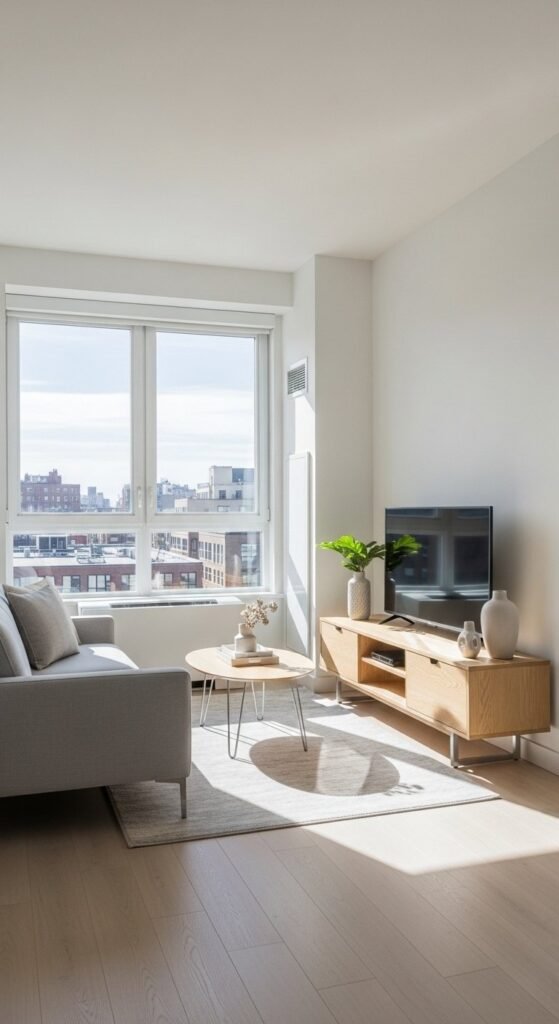
Before placing furniture, plan how people move. Walkways should stay open. Doors and windows must remain clear. Push sofas slightly off walls if it improves flow.
Avoid blocking natural light sources. Narrow coffee tables help keep paths open. If space feels tight, remove one piece rather than squeezing everything in. Clear circulation improves comfort and makes rooms feel calmer. Movement matters more than symmetry in small layouts.
17. Continuous Flooring to Visually Expand Space
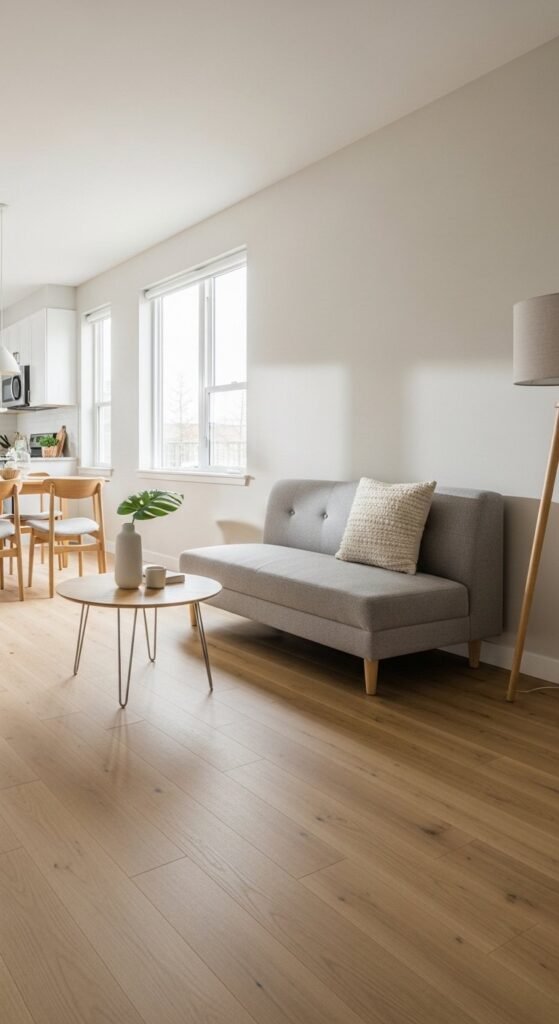
Changing floors breaks up space. One finish keeps it unified. Light wood or large-format tiles work well. Fewer grout lines help the room feel wider.
If replacing floors isn’t possible, use rugs sparingly. Let the flooring show through. Match rug tones closely to the floor for a smoother look. Continuous flooring creates flow and reduces visual stops. This works especially well in open-plan homes.
18. Compact Sofas and Loveseats
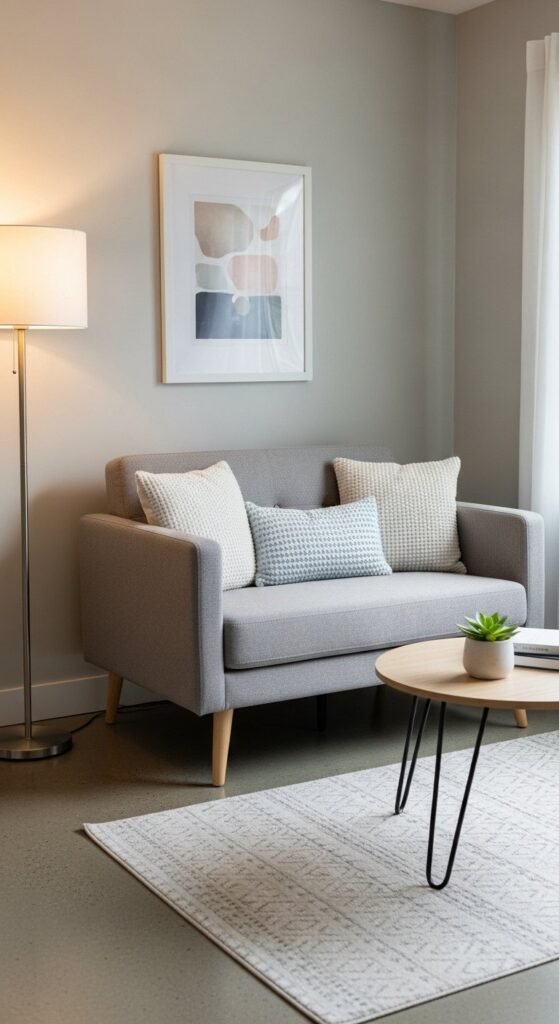
Big sofas overpower small rooms. Loveseats or compact sofas fit better. Look for models under standard widths with tight arms. Raised legs help the room feel open.
Pair with one accent chair instead of another sofa. This balances seating and keeps the layout light. Right-sized seating makes layouts work without crowding. Comfort comes from layout, not size alone.
19. Layered Lighting Without Table Clutter
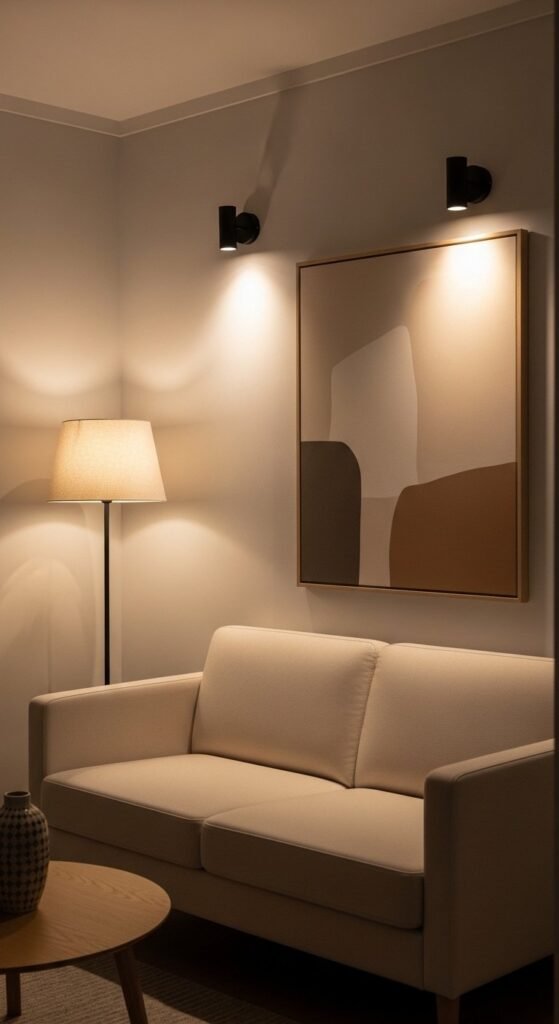
Lighting replaces decor in small rooms. Wall sconces free tables. Floor lamps light corners without taking much space. Warm bulbs keep the room relaxed.
Use dimmers when possible. One ceiling light alone feels flat. Layered light adds depth without objects. Lighting shapes the room more than accessories. Keep fixtures slim and simple so they fade into the background.
20. One Cohesive Style From End to End
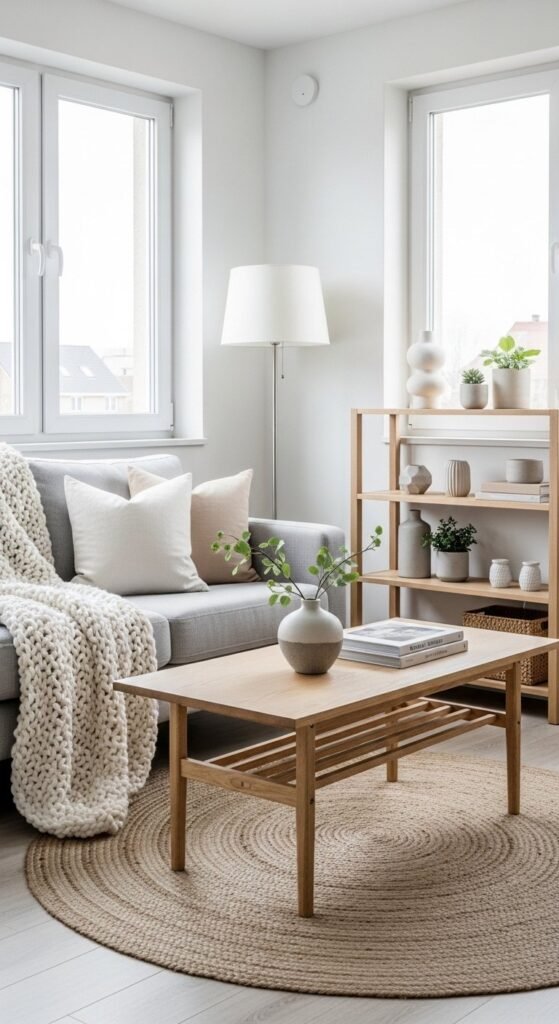
Mixing styles crowds a small room. Pick one direction and stick to it. Scandinavian. Minimal. Soft boho. Repeating materials keeps things calm.
Limit finishes. Two woods max. One metal tone. Keep colors within a tight range. Consistency keeps rooms calm and visually open. A clear style makes even small spaces feel intentional.
21. Compact Fireplaces for Cozy Focus
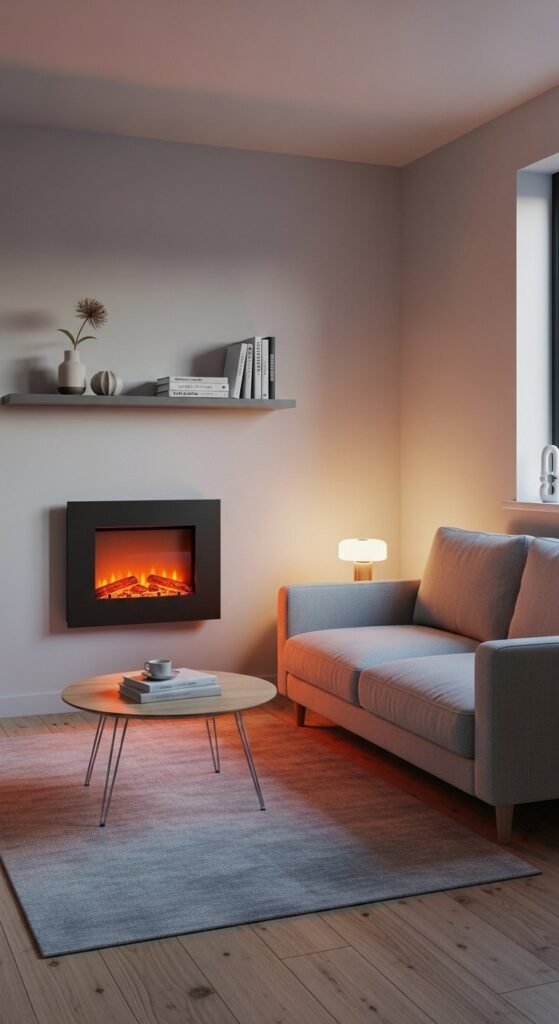
A fireplace adds focus without filling the room. Compact electric or bioethanol models work best. Wall-mounted designs keep the floor clear.
Keep the surroundings simple. No heavy mantels. A slim shelf above is enough. Style it lightly with one object or artwork. Small fireplaces create warmth without visual weight. If space is tight, place seating opposite, not around it.
22. Low-Depth Wall Treatments
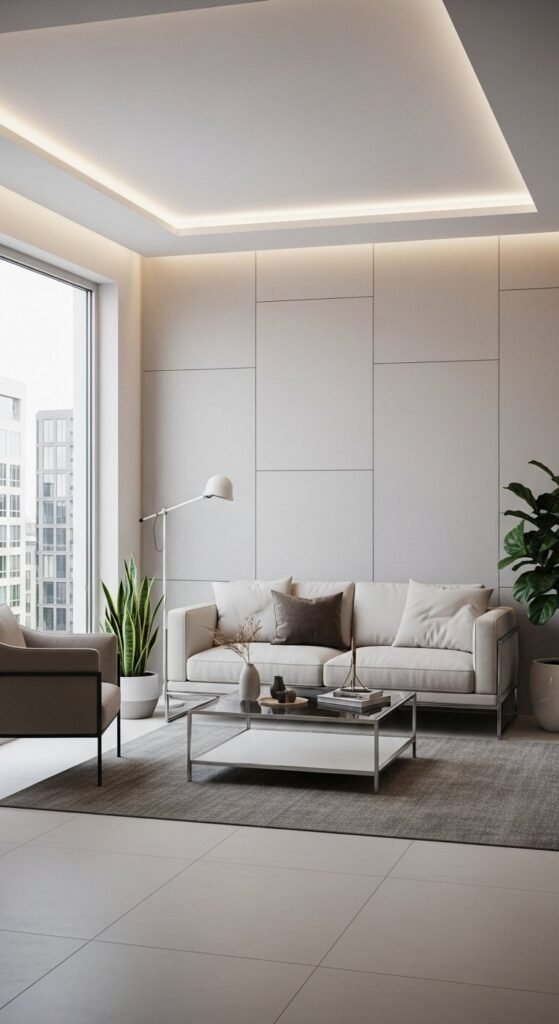
Walls can change without adding bulk. Porcelain slabs, paneling, or paint stencils add interest while staying flat. This keeps floor space untouched.
Choose low-contrast patterns. Vertical lines help walls feel taller. Limit feature walls to one area only. Flat wall updates add character without crowding the room. Paint remains the easiest budget option.
23. Smart TV Placement for Awkward Layouts
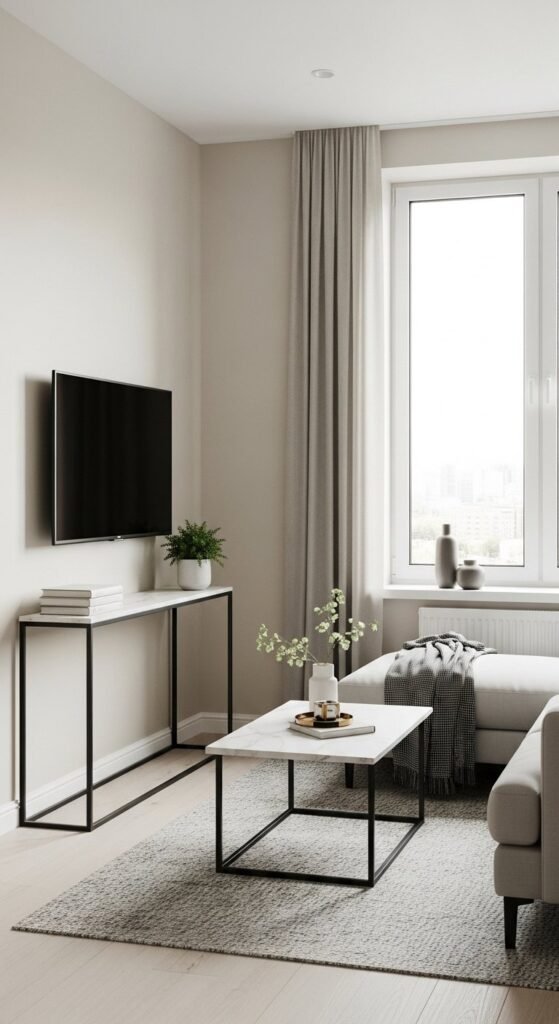
TV placement often causes layout problems. Wall-mounting solves many of them. Corners work well in tight rooms.
Keep screens at eye level when seated. Avoid oversized consoles. Floating units hide cables neatly. Correct TV positioning improves flow and seating options. If walls are limited, use an adjustable arm mount for flexibility.
24. Small Tweaks That Change Everything
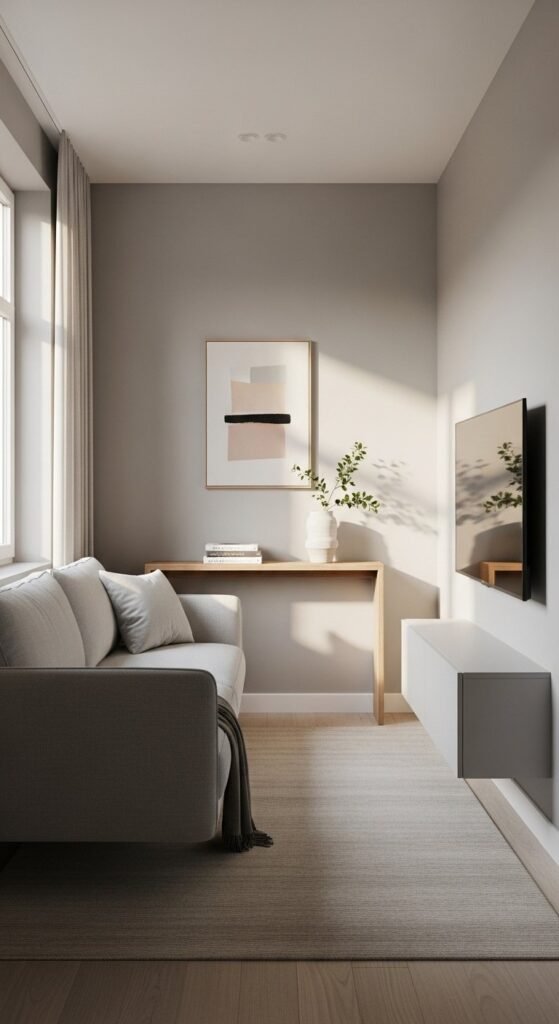
Big changes aren’t always required. Slide the rug inward. Pull furniture off the walls by a few inches. Swap bulky tables for slimmer ones.
Even changing furniture legs can help. These small shifts alter proportions. Minor layout tweaks add visual space without spending much. Step back after each change and reassess before adding anything else.

Leave a Reply