

1. Exposed Wood Ceiling Beams
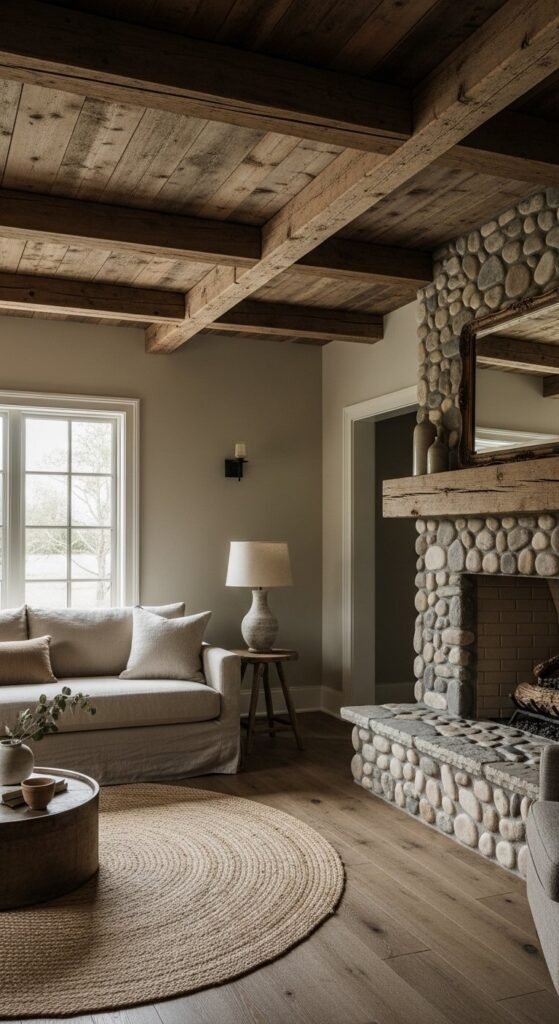
Exposed ceiling beams create timeless farmhouse character without adding furniture or clutter. Reclaimed wood brings knots, grain shifts, and uneven tones that feel collected over time. Real beams work best in open living areas, kitchens, or primary bedrooms. Faux beams made from hollow wood are lighter and easier to install, making them ideal for DIY projects. Paint surrounding walls in greige or mushroom tones so the wood stands out naturally. Skip glossy finishes. A soft matte seal keeps texture visible. In rooms with lower ceilings, space beams farther apart and choose lighter stains. Pair with warm lighting instead of industrial fixtures to keep the room calm. Let beams be the main architectural feature by keeping nearby decor simple and grounded.
2. Reclaimed Wood Coffee Table
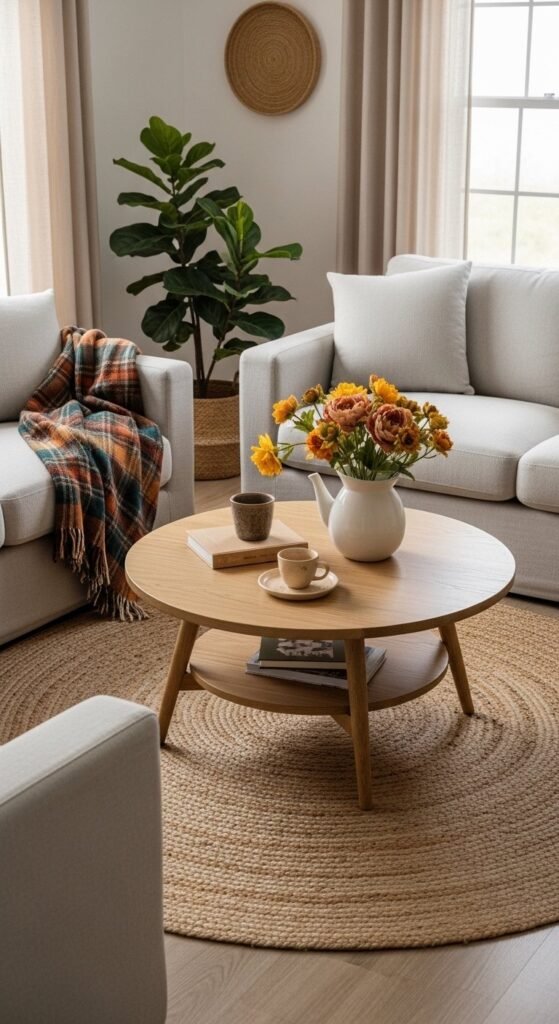
A reclaimed wood coffee table anchors a seating area with natural rustic texture. Thick planks and simple legs work best. Avoid heavy distressing since authentic wear already tells a story. DIY options include salvaged barn boards or old flooring sealed with beeswax or matte oil. Keep styling minimal. Two stacked books and one ceramic piece let the wood show. If your sofa feels modern, the contrast feels intentional. Budget-friendly finds often show up at salvage yards or local marketplaces. Small cracks and uneven edges add charm rather than flaws. Keep surrounding decor soft so the table remains the focal point.
3. Layered Jute and Patterned Rugs
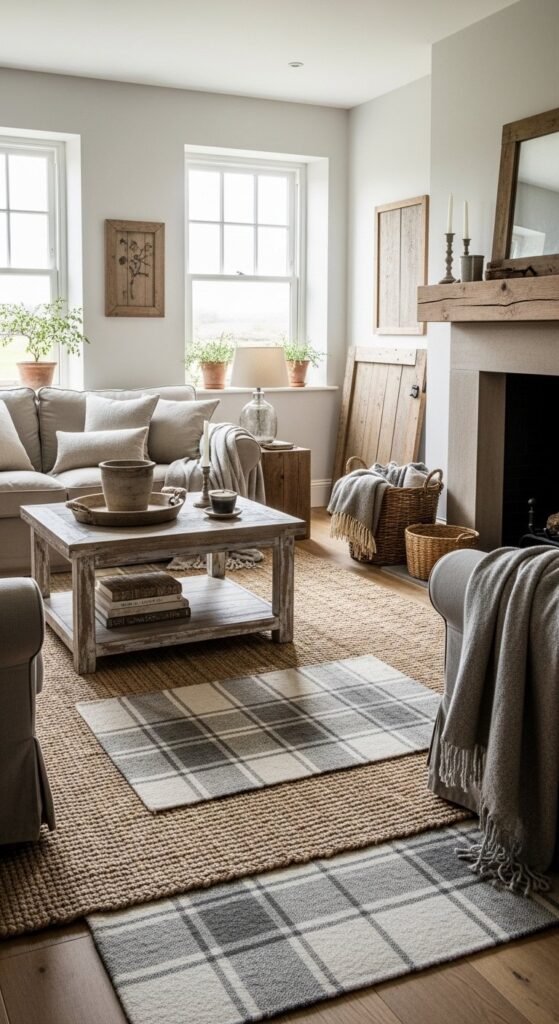
Layering rugs adds comfort and texture fast. Start with a jute rug to ground the space. It’s durable and affordable. Place a smaller wool or cotton rug on top for softness. Plaid or subtle patterns nod to country style without overpowering the room. This setup works well in rentals and helps disguise worn floors. Keep colors muted—cream, tan, soft gray, or sage. Size matters. The base rug should extend under the main furniture while the top rug can float. Swap the top layer seasonally for easy visual change without buying new furniture.
4. Warm Greige Wall Paint
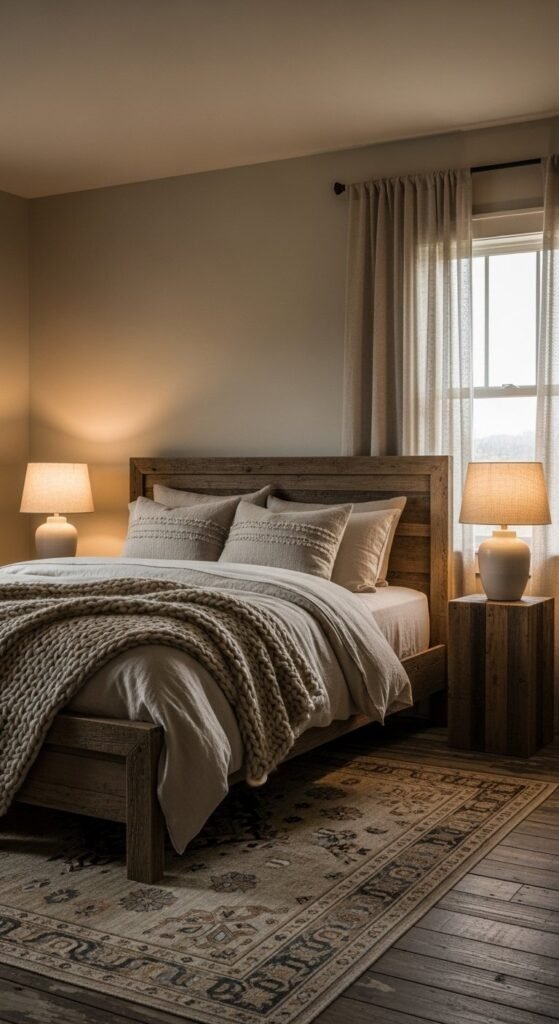
Warm greige walls replace stark white while staying neutral. This shade pairs well with wood, linen, and stone. Test samples at different times of day since light shifts tone. Use it throughout open layouts for cohesion or as a feature wall behind a bed or sofa. Greige balances rustic textures without feeling heavy. If repainting feels big, start with one room. Satin or eggshell finishes reflect light gently and hide wall flaws better than flat paint. Pair with black metal or aged brass accents for contrast.
5. Vintage-Style Bathroom Fixtures
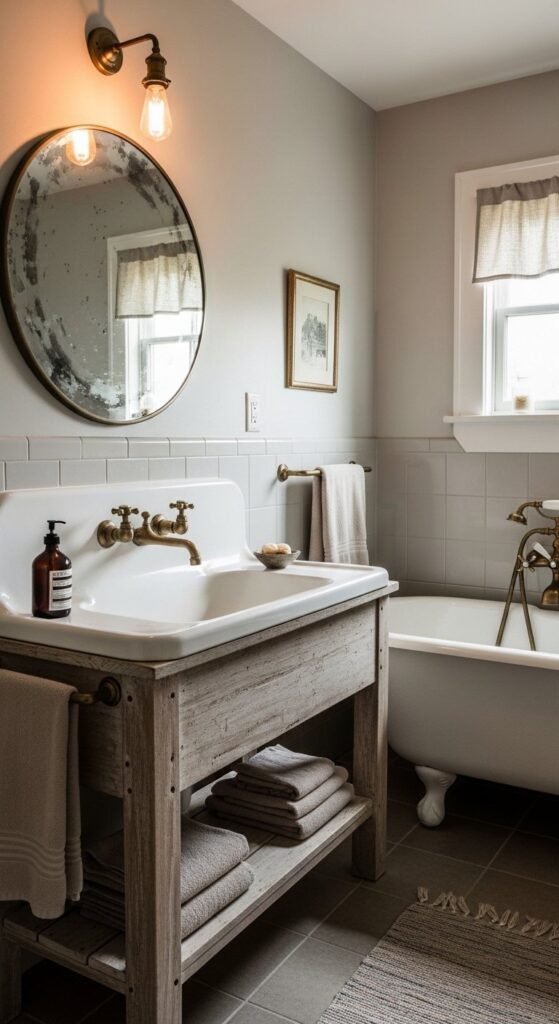
Vintage-style fixtures bring subtle nostalgia to bathrooms. Cross handles and warm metals feel collected rather than trendy. Swapping faucets and towel bars creates visible change without renovation costs. Aged brass and copper feel softer than chrome. Pair fixtures with simple white tile and wood-framed mirrors for balance. Salvage shops sometimes carry authentic pieces, but reproductions work well when finishes stay muted. Keep accessories minimal so the fixtures remain the highlight.
6. Thrifted Finds That Tell a Story
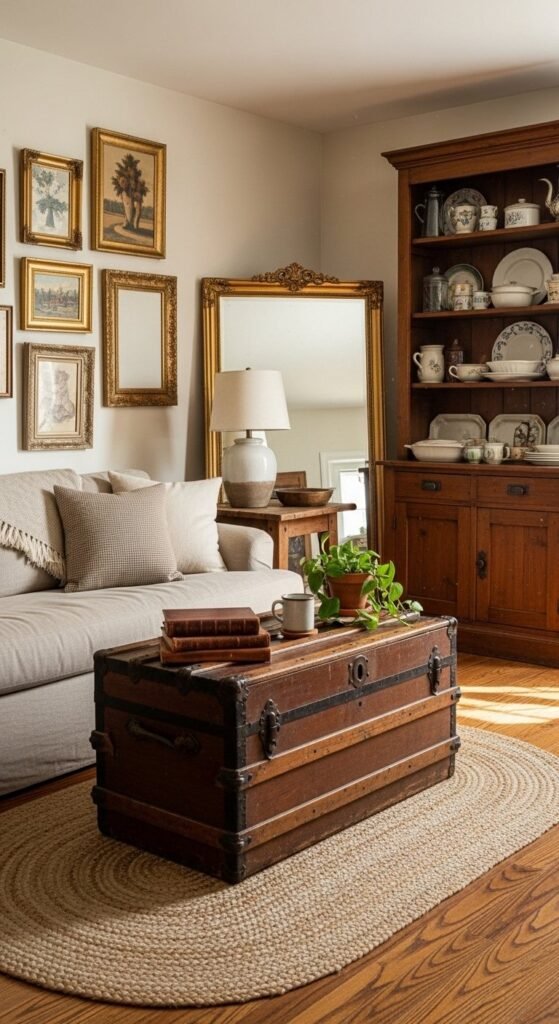
Farmhouse rooms feel better when not everything matches. Thrifted pieces bring that in naturally. Look for trunks, crates, old frames, and mirrors with age marks. Scratches help. Patina helps more.
Use one thrifted item as an anchor. A trunk can replace a coffee table and hide blankets. Old crates stack into side tables. Vintage art fills walls without feeling staged.
Don’t over-style these pieces. Let them breathe. Pair them with clean furniture so the room stays balanced.
A simple trick: repaint thrifted items only if the shape is good but the color feels off. Warm white or soft taupe works well. Light sanding after paint brings back character.
Set a small challenge for yourself. One room. One weekend. One thrift run. Secondhand pieces make the space feel personal, not pulled from a catalog.
7. Shiplap, Used Quietly
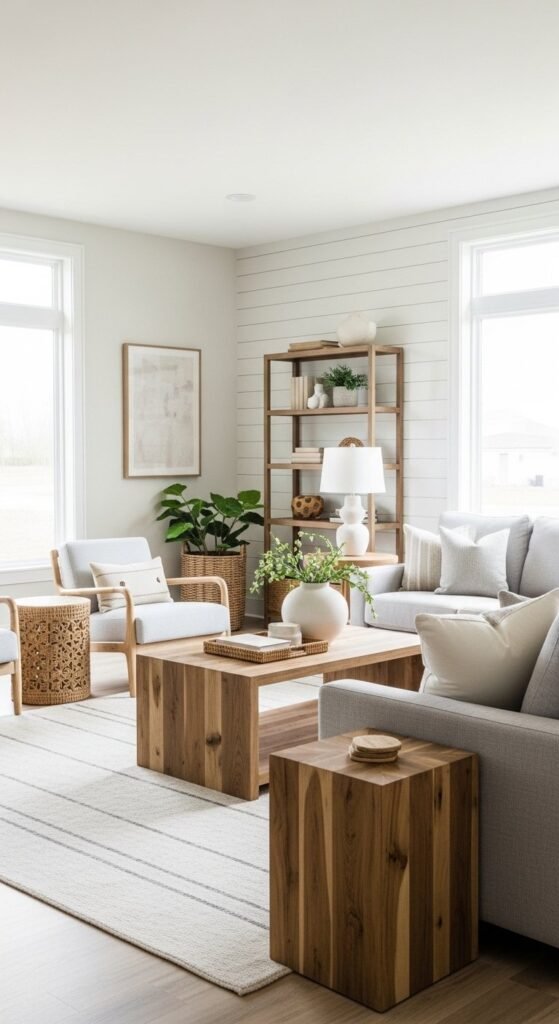
Shiplap still works. Just not everywhere. Instead of a full accent wall, try it in smaller moments. Ceilings add texture without stealing attention. Half-walls define spaces gently.
Reading nooks are another smart spot. A little paneling behind a chair adds depth without overpowering the room.
Paint matters. Avoid stark white. Go warmer so the grooves feel soft, not sharp.
If installing isn’t an option, peel-and-stick panels exist. Use them sparingly. Less surface area keeps the look grounded.
Balance shiplap with smooth surfaces nearby. Upholstery. Plain walls. Simple rugs. Restraint keeps classic details feeling current, especially in open living rooms.
8. Warmer, Moodier Color Touches
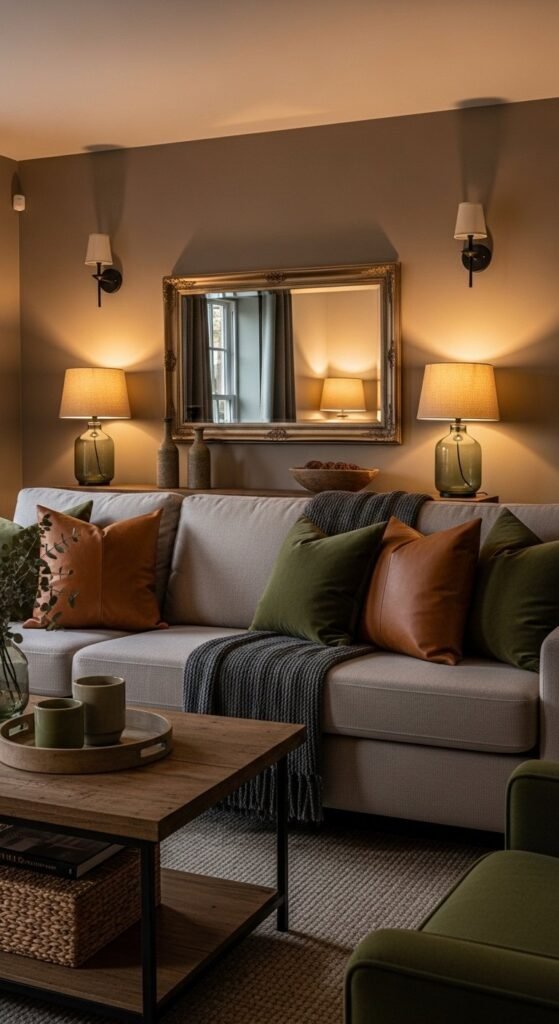
The farmhouse isn’t all white anymore. Warm colors bring comfort. Camel. Olive. Mushroom. Charcoal. Use them as accents first.
Throw pillows are the safest place to start. Swap them seasonally. A darker throw adds weight to a light sofa.
If painting feels doable, try one wall or built-in in a deeper tone. Keep trim light so the room stays open.
Stick to earthy shades. Nothing shiny. Nothing too bright. These colors feel better when muted.
Lighting changes how color reads. Warm bulbs make deeper tones feel cozy, not heavy. Richer accents add depth without changing the whole room when used in small doses.
9. Black Accents for Contrast
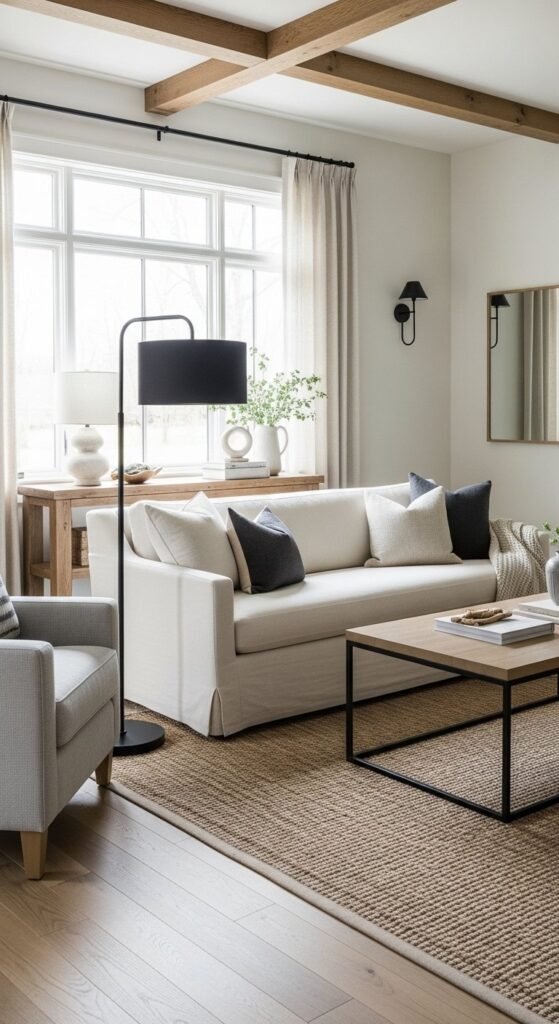
Black details sharpen farmhouse spaces. The trick is control. One or two pieces per area is plenty.
Lighting is the easiest place. Matte black lamps or sconces add contrast without clutter. Table legs and hardware also work well.
Avoid shiny finishes. Matte or satin feels calmer. Pair black with warm wood so it doesn’t feel harsh.
If the room starts leaning industrial, pull back. Add linen or woven textures to soften the look.
Think of black as punctuation. It defines the space, not dominate it. When used lightly, it keeps farmhouse rooms from tipping into overly sweet territory.
10. Layered Rugs That Ground the Room
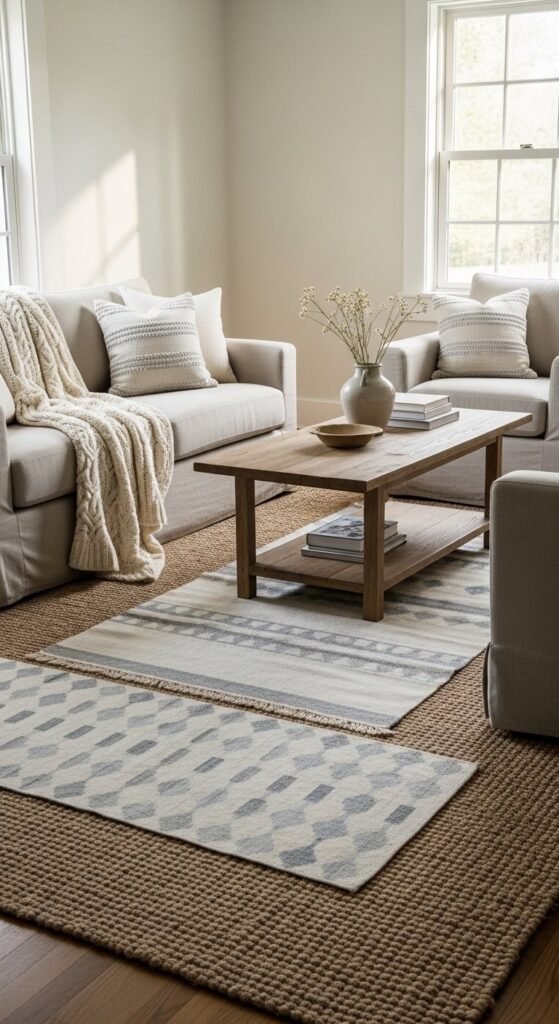
Rug layering is a farmhouse staple for a reason. A large jute rug sets the base. It adds texture and warmth. Then layer a smaller rug on top for pattern.
In small rooms, keep the top rug low-contrast. Too much pattern can shrink the space. In larger rooms, bolder patterns work fine.
Sizing matters. The bottom rug should sit under all the main furniture. The top rug can float under the coffee table.
Budget tip: invest in the jute. Save on the top layer. Flatweave rugs often cost less and wear well.
Layering also hides wear over time. It makes the room feel settled, not showroom-new. Swap the top rug when you want a change without starting over.
11. Stone Kitchen Countertops
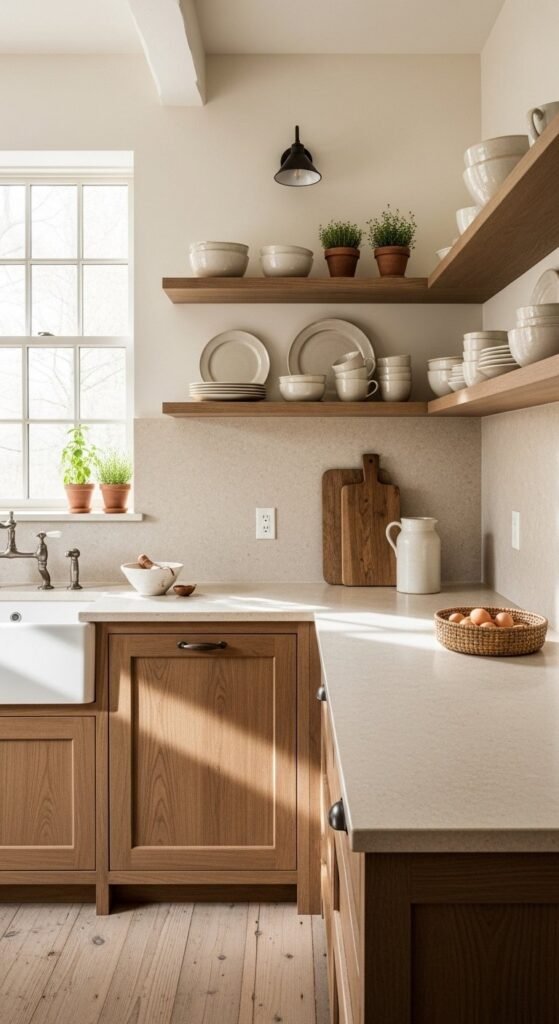
Stone countertops ground a farmhouse kitchen visually. Honed finishes feel softer than polished ones and show fewer marks over time. Lighter stones pair well with wood cabinetry and open shelving. In small kitchens, stone still works when surrounding finishes stay simple. If full replacement feels costly, consider a stone island only. This keeps the budget in check while adding texture. Keep accessories minimal so the surface remains the focus. Warm lighting enhances the natural variation in the stone.
12. Mixed Material Furniture
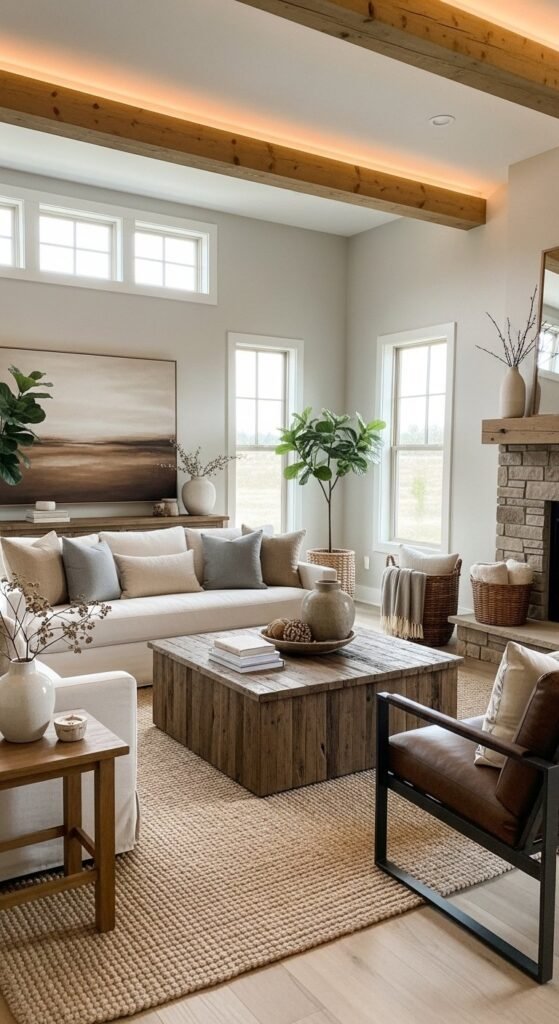
Mixing materials keeps farmhouse spaces from feeling flat. Pair wood with linen, leather, or stone for contrast. Keep forms simple so textures do the work. A wood table with metal legs or a linen sofa with leather pillows feels balanced. Limit each material to one or two appearances per room. This approach keeps the look calm and intentional. Thrifted pieces mix well with newer furniture when tones stay consistent.
13. Vintage-Style Wall Clocks
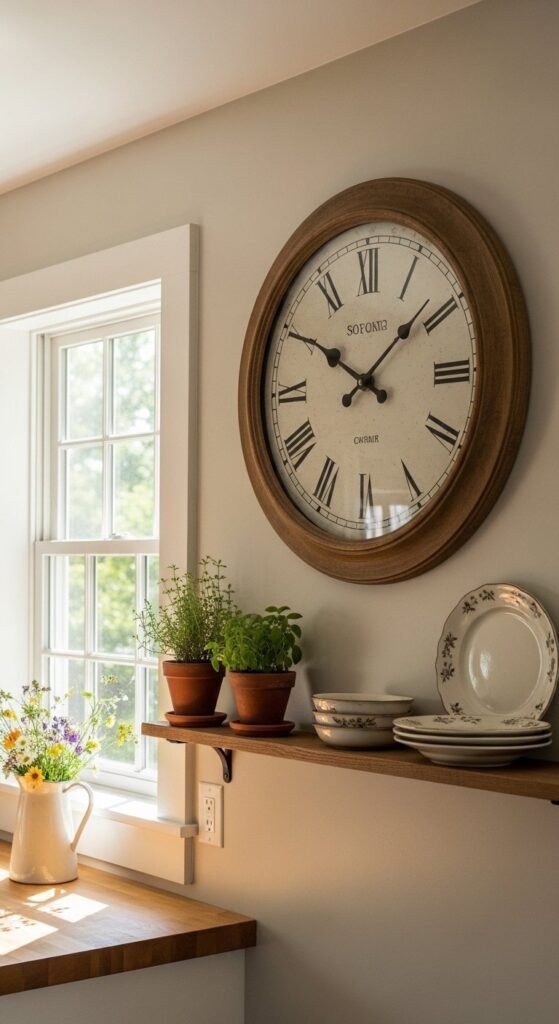
Wall clocks add character and function at the same time. Oversized designs work best on open walls or above doorways. Choose worn finishes rather than high shine. Roman numerals or simple numbers feel timeless. Thrift stores and flea markets often have solid options. Hang clocks where they can be seen without becoming a focal distraction.
14. Farmhouse Entry Bench
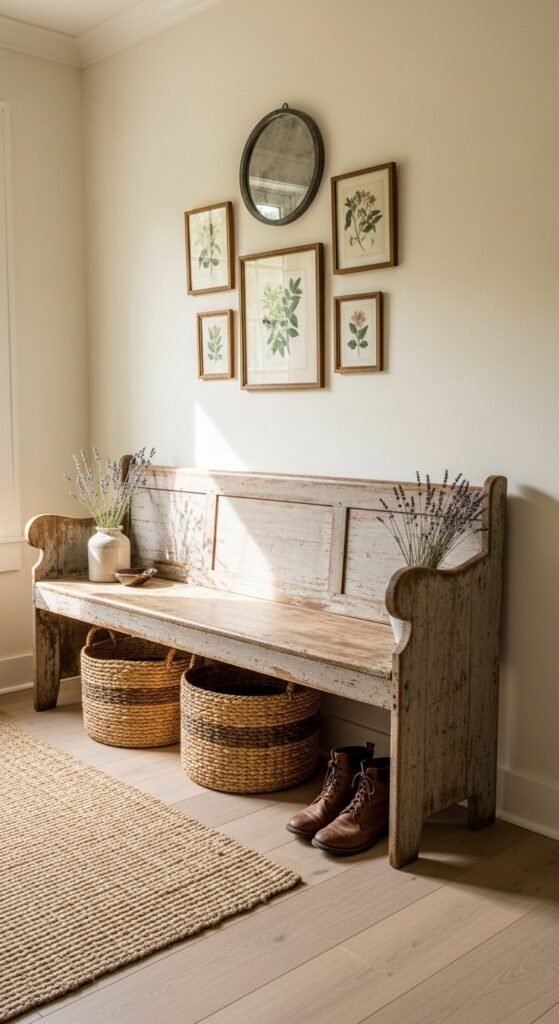
An entry bench creates a welcoming pause as you enter. Wood benches with visible grain feel grounded. Use baskets underneath for shoes or bags. Keep the top mostly clear with one pillow or small tray. This setup works in narrow hallways and open foyers alike. Painted or raw wood both fit the style when tones stay warm.
15. Plaid Accent Pillows
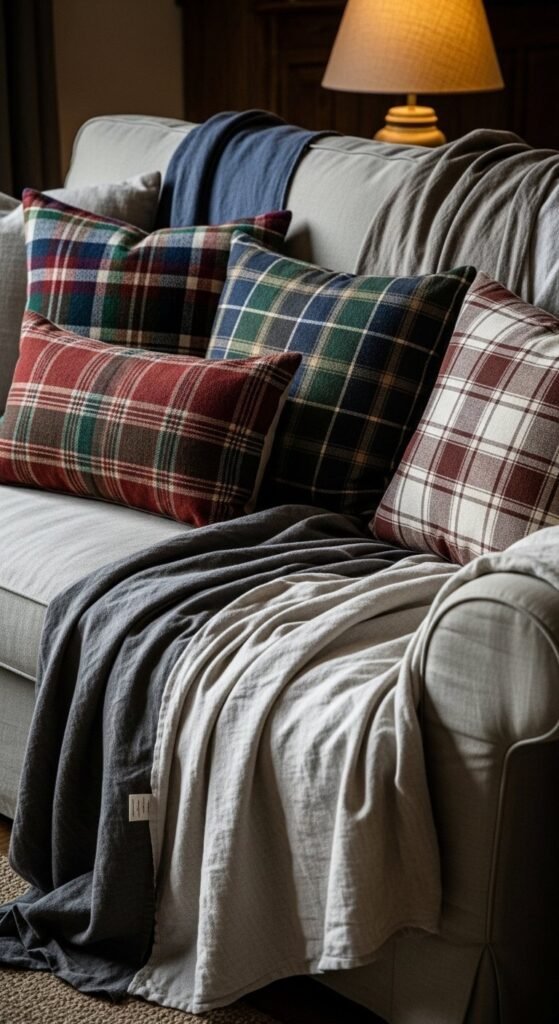
Plaid adds pattern without overwhelming a room. Stick to muted shades like cream, sage, or charcoal. Two pillows usually feel right. Mix plaid with solid linen or textured knits for balance. Removable covers make seasonal changes easy. Keep patterns subtle so the look feels relaxed rather than themed.
16. Natural Fiber Curtains
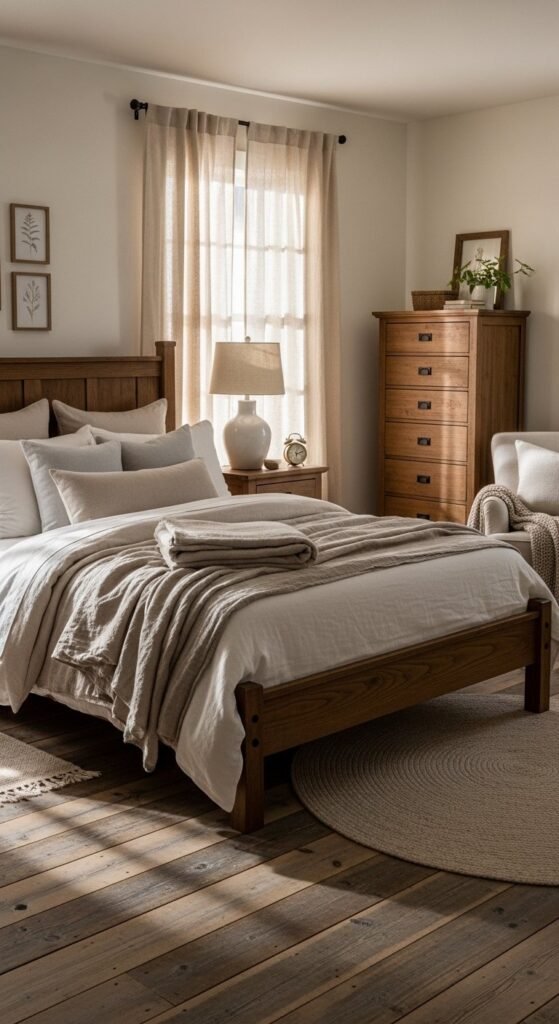
Natural fiber curtains soften windows without blocking light. Linen and cotton work best for farmhouse interiors. Hang panels high and wide to make windows feel larger. Neutral tones like flax or ivory blend easily with wood furniture. Skip heavy patterns. Light texture does the work. For budget options, choose ready-made panels and hem them yourself. Let curtains skim the floor for a relaxed finish.
17. Vintage-Inspired Mirrors
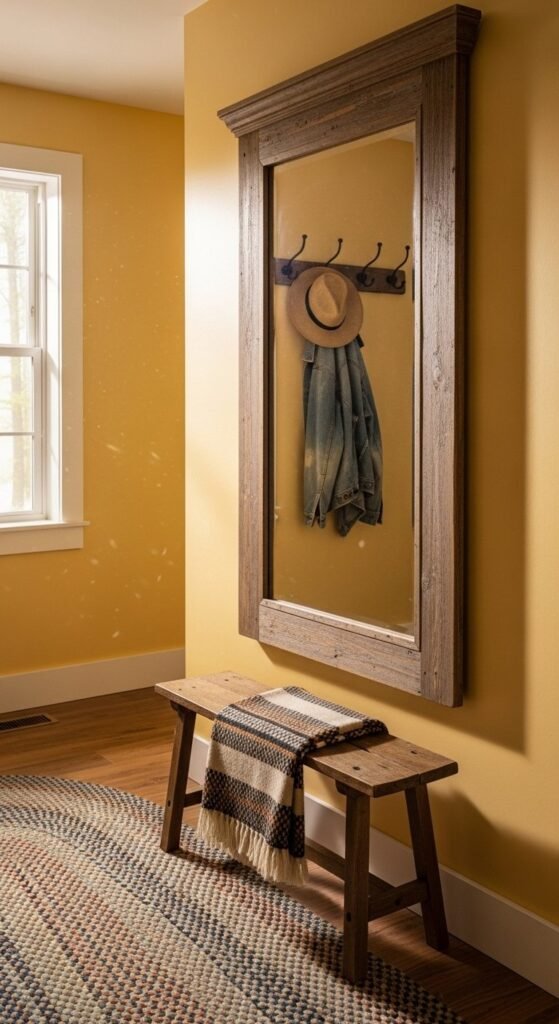
Vintage-style mirrors add depth and reflected light. Frames with subtle wear feel collected rather than staged. Use mirrors in hallways, bedrooms, or above consoles. Wood or aged metal frames work best. Avoid overly ornate shapes. Simple silhouettes keep the look grounded. Thrift shops and flea markets often carry solid options at lower cost.
18. Outdoor Farmhouse Lanterns
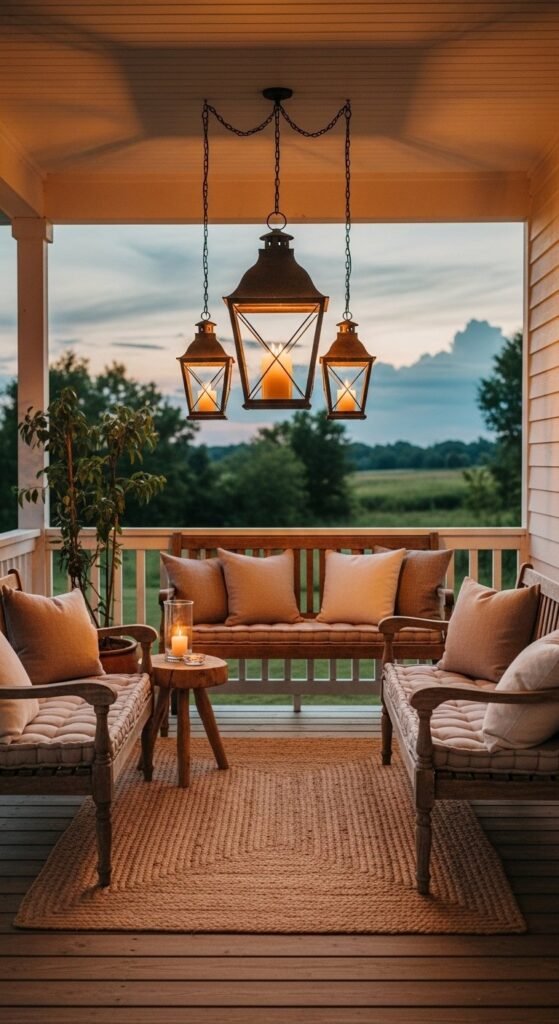
Lanterns extend farmhouse charm outdoors. Metal finishes in black or aged bronze feel classic. Use battery candles for ease and safety. Group lanterns in odd numbers for visual balance. They work well on porches, patios, or entry steps. Keep surrounding decor simple so lantern light remains the focus.
19. Neutral Quilted Bedding
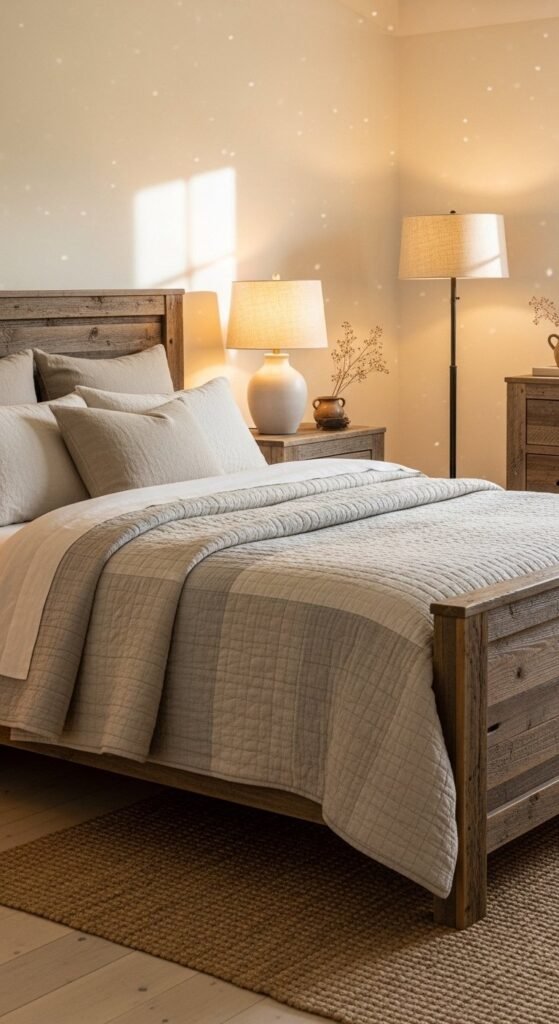
Quilted bedding adds comfort without bulk. Neutral shades keep bedrooms calm and timeless. Layer quilts over linen sheets for texture. Fold them halfway down the bed for casual styling. Thrifted quilts work well when colors stay soft. Keep patterns subtle so the bed feels restful rather than busy.
20. Wood and Marble Accent Pairings
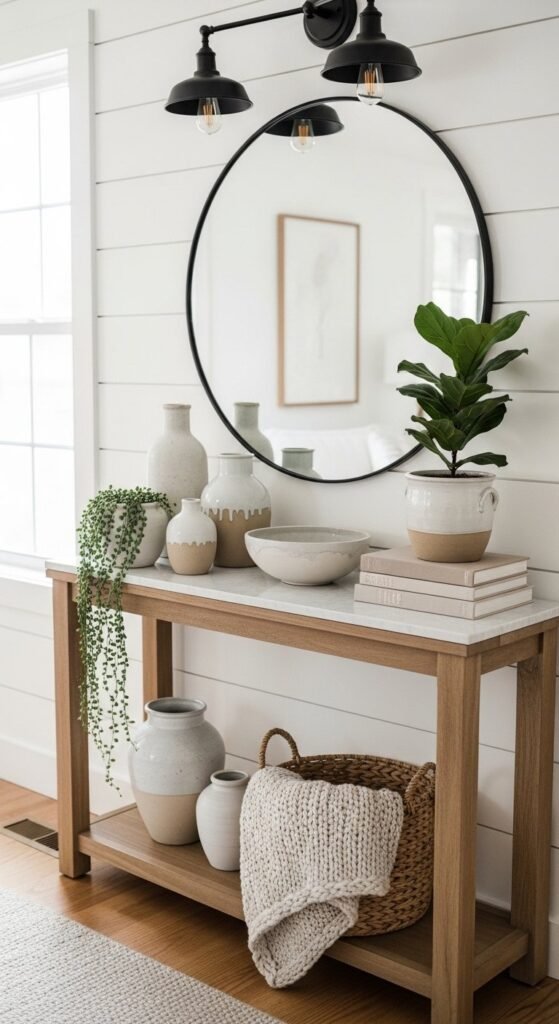
Pairing wood with marble balances rustic texture and smooth contrast. Use marble in small doses. Console tops, trays, or side tables work well. Keep wood tones warm so the stone feels inviting. This mix suits living rooms, bathrooms, and entries. Focus on simple shapes to avoid visual heaviness.
21. Shaker-Style Kitchen Cabinetry
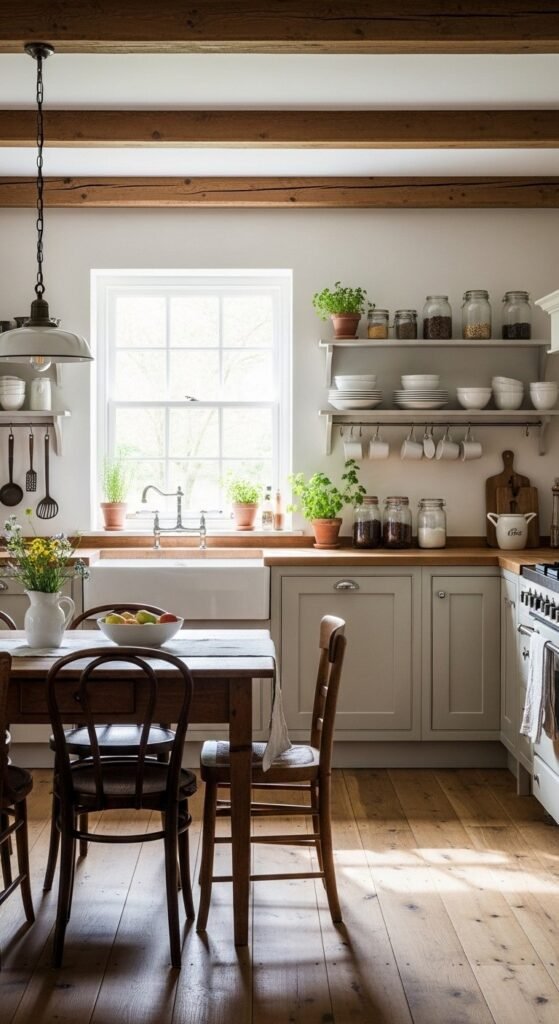
Shaker cabinetry keeps farmhouse kitchens grounded and calm. Flat panels and clean lines allow materials to shine without visual clutter. Warm neutrals work better than stark white and pair easily with wood or stone surfaces. If replacing cabinets isn’t an option, repaint existing doors in mushroom or greige tones. Swap hardware to aged brass or black metal for contrast. Keep upper cabinets simple when open shelving is nearby so the space feels balanced rather than busy.
22. Wooden Dining Tables with Visible Grain
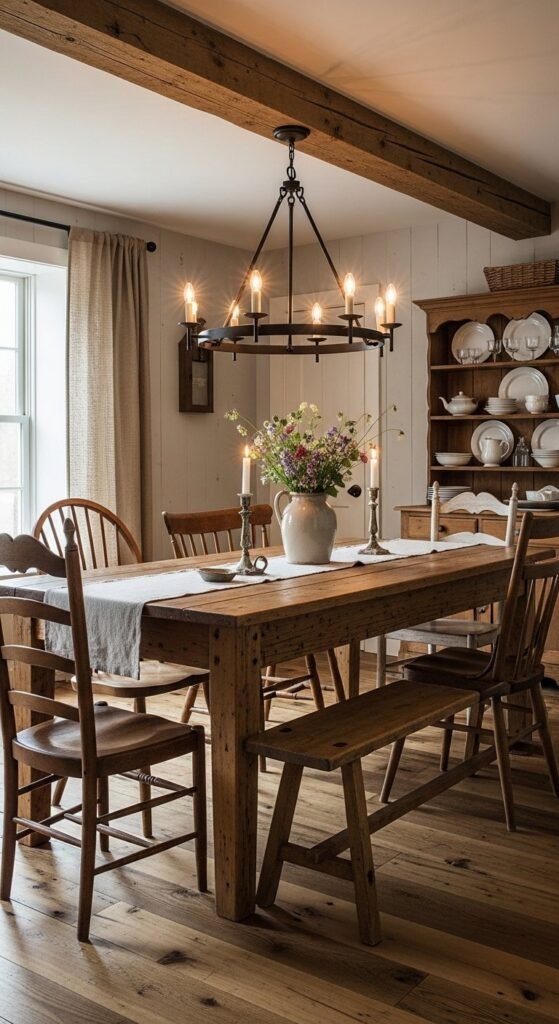
A solid wood table anchors dining spaces naturally. Visible grain and subtle imperfections give character without decor overload. Keep finishes matte so the surface feels touchable. Pair with mismatched chairs for a collected look. If space is tight, choose a narrower table and keep surrounding decor minimal. Table linens and runners add softness without hiding the wood.
23. Soft Neutral Throw Blankets
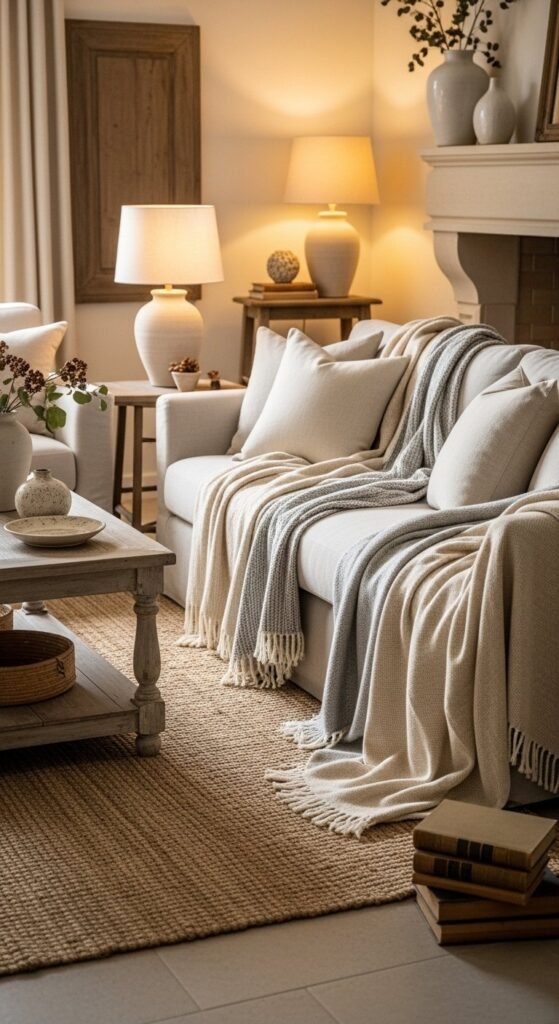
Throwing blankets adds comfort in small doses. Stick to neutral tones like cream, oat, or soft gray. Drape casually over sofa arms or baskets. Chunky knits and woven cotton work well together. Avoid layering too many textures in one spot. Two throws per seating area usually feel right. This simple addition makes rooms feel settled without extra furniture.
24. Feature Walls in Earthy Tones
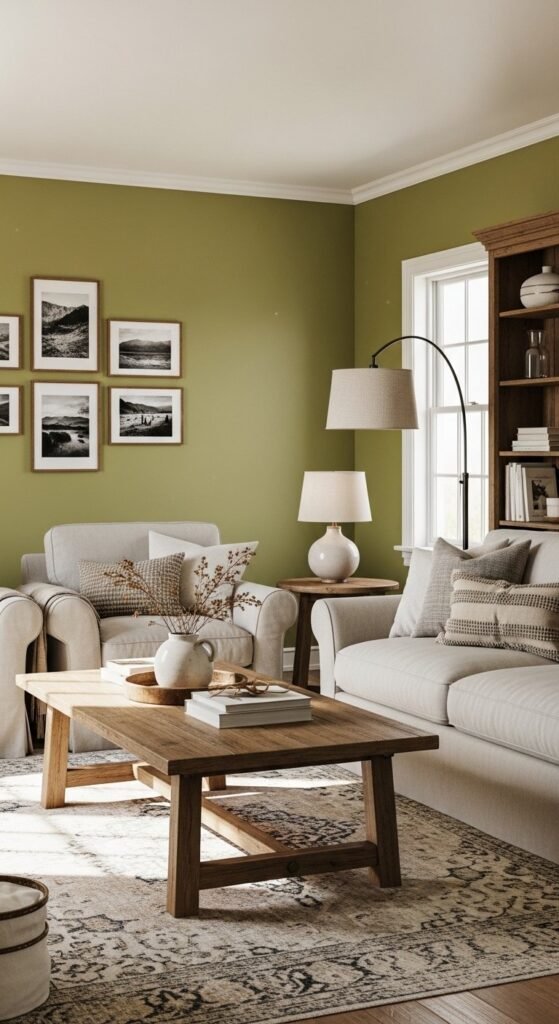
Feature walls personalize farmhouse spaces without overwhelming them. Earthy greens, clay tones, or muted burgundy feel current and warm. Use one wall only so the room stays calm. Pair with wood accents and simple art. Matte paint finishes keep colors grounded. This works well in living rooms, bedrooms, or dining areas where you want subtle depth.
25. Farmhouse-Style Bathroom Vanities
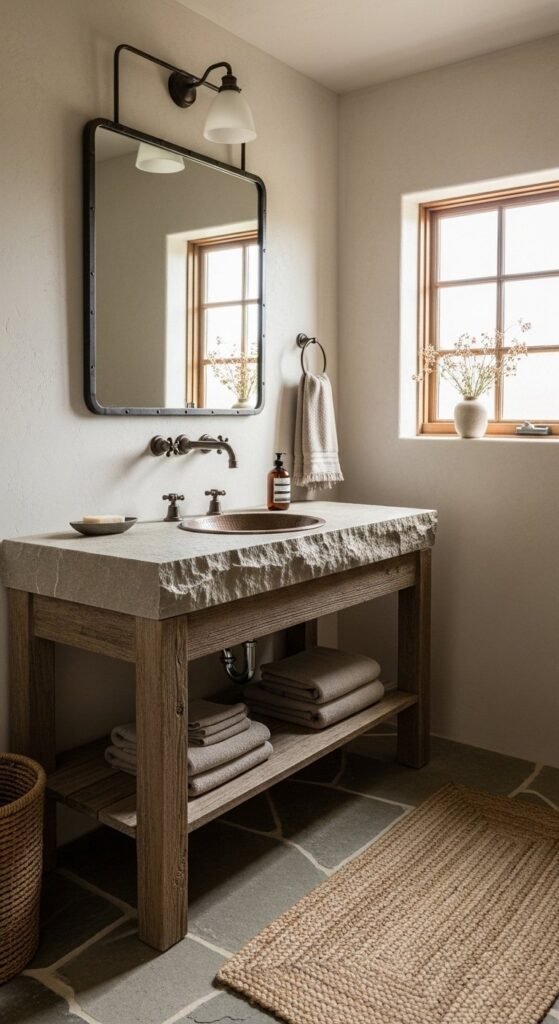
Wood vanities soften bathrooms instantly. Visible grain keeps the look organic. Pair with stone or concrete-style tops for balance. Keep plumbing finishes muted so the vanity remains the focus. Floating styles work in smaller bathrooms and keep floors visible. Storage baskets underneath add function without crowding the space.
26. Outdoor Wooden Seating Areas
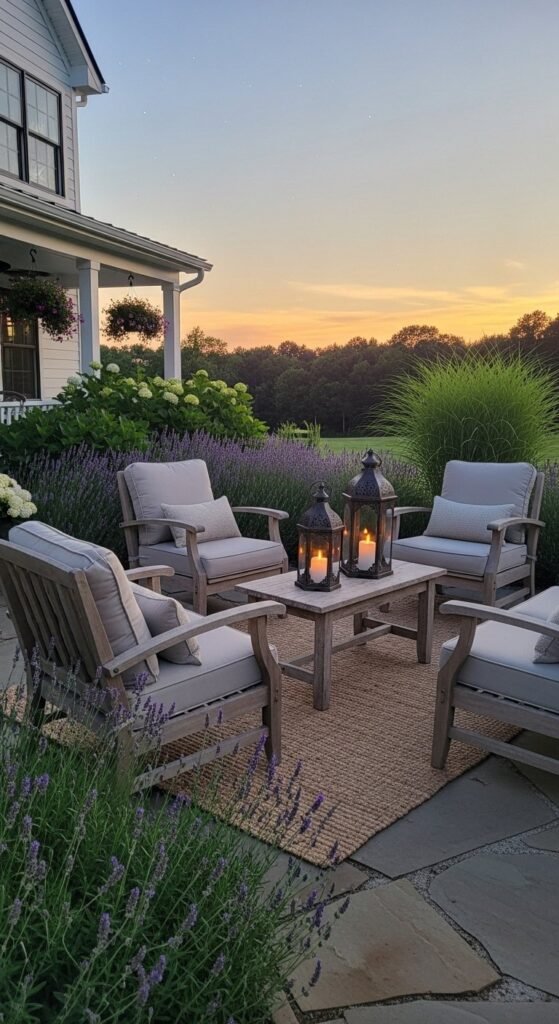
Outdoor wooden seating extends farmhouse charm beyond the house. Simple chairs or benches feel relaxed and welcoming. Neutral cushions keep the look cohesive with interiors. Weathered wood ages naturally and fits the style well. Add lanterns or soft lighting to make the space usable after sunset. Keep accessories minimal so seating stays the focus.

Leave a Reply