

1. Low Profile Neutral Sofa With Clean Lines
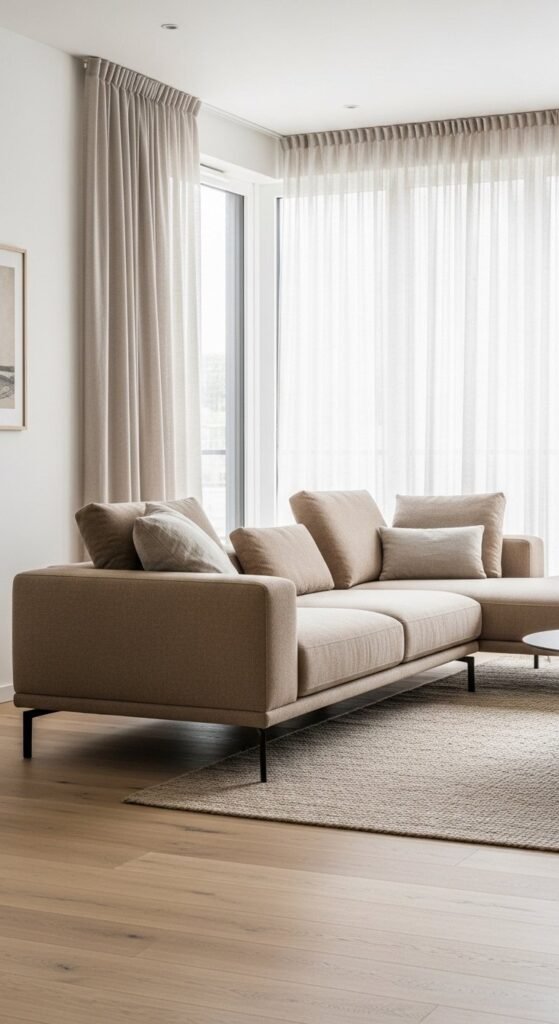
A low profile sofa anchors a modern minimalist living room without adding visual weight. The lower height keeps sightlines open. This makes the room feel wider and calmer. Neutral upholstery like beige, greige, or soft grey blends into the background. It also gives flexibility with cushions and throws. Choose simple arms and a tight silhouette. Skip bulky recliners or tufting.
For comfort, focus on seat depth and fabric texture. Linen blends and performance fabrics hold up well for daily use. If the budget is tight, look for modular sofas sold in sections. These often cost less and suit small homes. Keep styling restrained. Add one textured throw and two cushions max. Stick to similar tones for a quiet look.
If your space is compact, float the sofa slightly away from the wall. This improves flow and keeps the layout intentional. Slim black or wood legs add subtle contrast while keeping the base visually light.
2. Warm White Walls Paired With Light Wood Floors
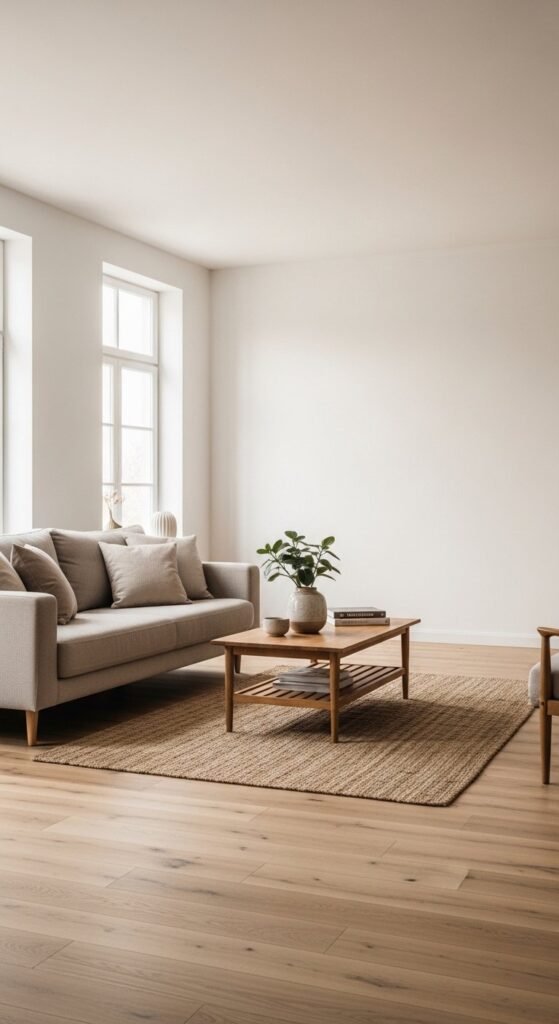
Warm white walls form the base of most modern minimalist living rooms. They feel calm and gentle rather than stark. Shades with beige or cream undertones work best. Pair them with light wood floors to add warmth. Oak, ash, or maple finishes bring balance and texture.
If you rent, use peel and stick wood look flooring or large neutral rugs to mimic the effect. Keep skirting boards and trims the same colour as the wall. This reduces visual breaks and keeps lines clean. For older homes, satin or eggshell finishes hide imperfections better than flat paint.
Limit contrast. Let walls, floors, and large furniture stay in the same colour family. This creates visual continuity. Add interest through grain, not colour. Even a simple wood coffee table can stand out when the palette stays quiet. The result feels calm, lived in, and easy to maintain.
3. Sculptural Statement Lighting as the Main Focal Point
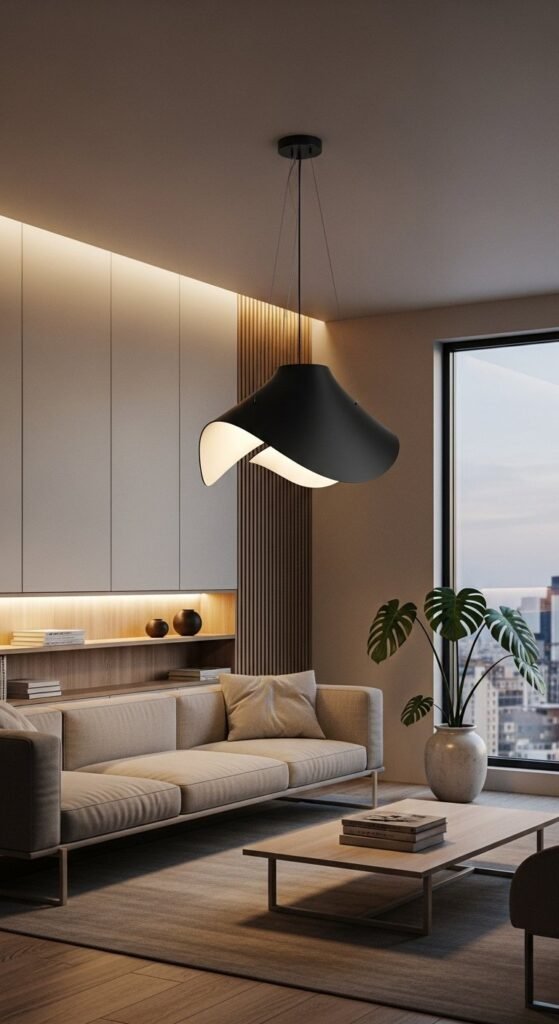
In minimalist living rooms, lighting often doubles as decor. A sculptural pendant or floor lamp draws the eye without clutter. Choose simple shapes. Think arcs, spheres, or slim linear designs. Black, brass, or stone finishes work well with neutral rooms.
Let the light act as the focal point. Avoid competing decor nearby. Keep shelves and walls around it clear. For small rooms, a slim floor lamp beside the sofa works better than a large pendant. Warm bulbs are key. Cool lighting can make the space feel flat.
Budget tip. Many high street brands sell affordable sculptural lamps made from metal or resin. Pair them with a dimmer plug to control mood. At night, rely on this light instead of overhead fixtures. This creates soft contrast and keeps the room relaxing.
4. Travertine or Stone Coffee Table Centerpiece
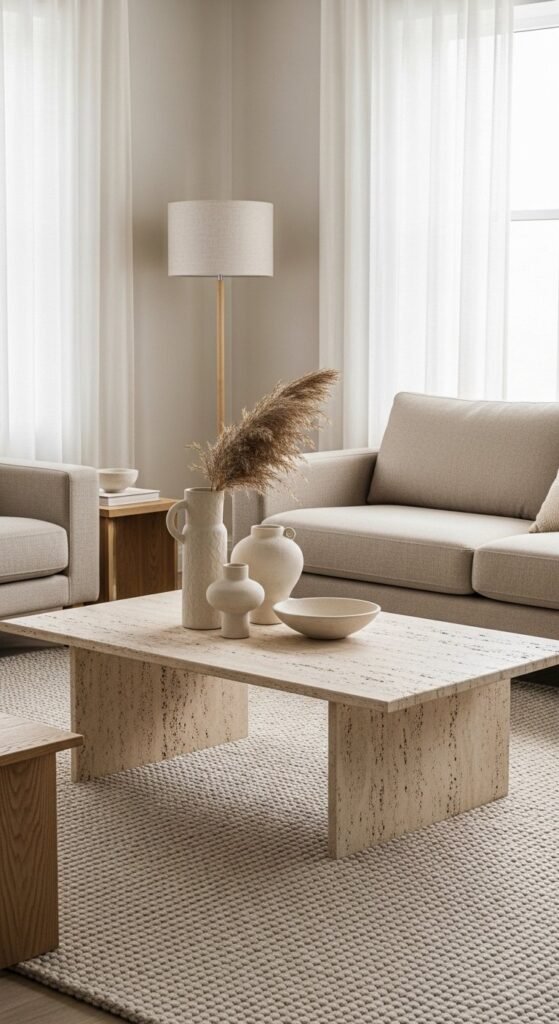
Stone coffee tables bring quiet luxury into minimalist spaces. Travertine is especially popular for its soft veining and warm tone. It adds texture without pattern overload. Keep the shape simple. Rectangular or oval works best with low seating.
If real stone is out of budget, look for stone look concrete or laminate options. These still give weight and texture. Style the surface lightly. One ceramic bowl or a short stack of books is enough. Leave negative space around items.
Balance the table with softer materials nearby. Wool rugs, linen cushions, or fabric sofas stop the stone from feeling harsh. Avoid glass here. Stone grounds the room and gives subtle contrast against light woods and textiles.
5. Layered Textures in a Soft Neutral Palette
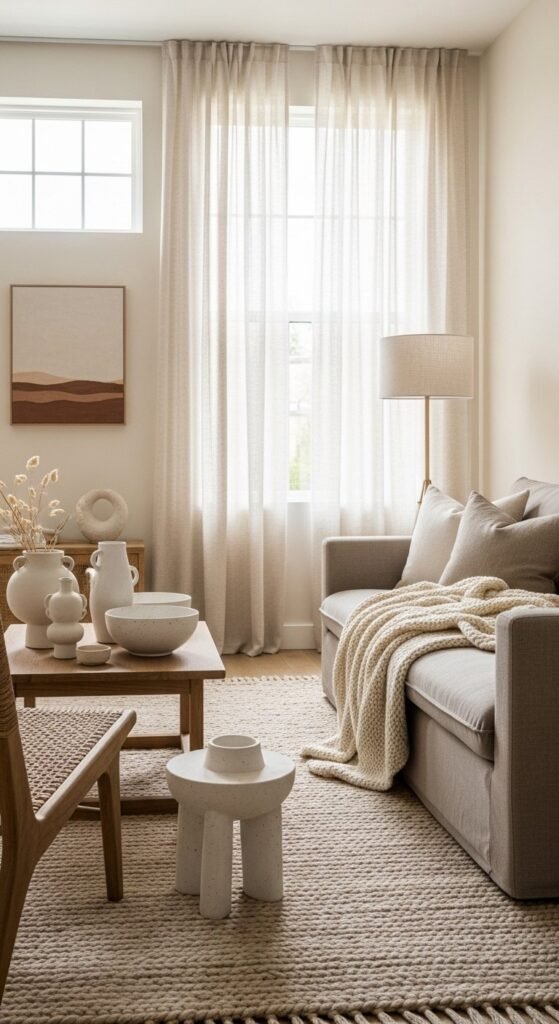
Texture is what keeps minimalist rooms from feeling empty. Stick to a soft neutral palette. Beige, cream, taupe, and warm grey work well together. Then layer materials. Start with a rug. Wool or jute adds depth underfoot. Add linen cushions or a knit throw on the sofa.
Ceramics, wood, and subtle metal finishes round things out. Keep colours close so texture stands out more than contrast. This approach feels calm and intentional. Rotate small items seasonally instead of adding more. This keeps the room edited.
DIY idea. Swap cushion covers instead of buying new pillows. Use different weaves or fabrics in the same colour family. This creates quiet variation without clutter. The space stays simple but never flat.
6. Floating Media Console for a Clean Floor Line
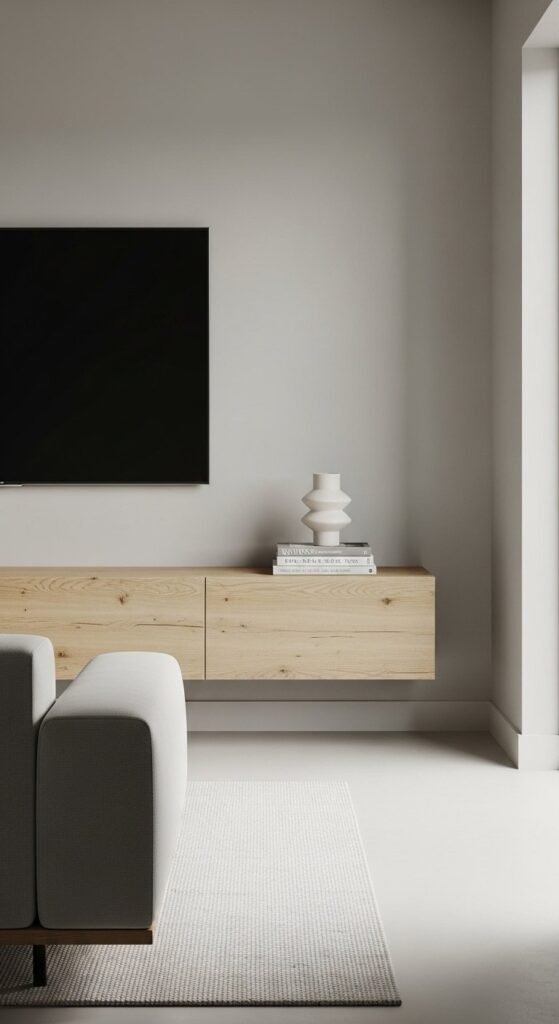
A floating media console keeps the living room visually light. By lifting storage off the floor, the space feels more open. This works especially well in small rooms. Choose simple designs with flat fronts and no visible handles. Light wood or matte white blends easily with neutral walls.
Cable management matters here. Hide wires behind the wall or inside the unit. This keeps the look quiet. If wall mounting isn’t possible, use slim legs to mimic the floating effect. Limit what sits on top. A single ceramic object or small plant is enough.
Budget tip. Many flat pack units can be wall mounted with proper brackets. Always secure into studs or use heavy duty anchors. Keeping the area under the console clear supports clean visual flow and makes daily cleaning easier.
7. Soft Neutral Area Rug to Anchor the Space
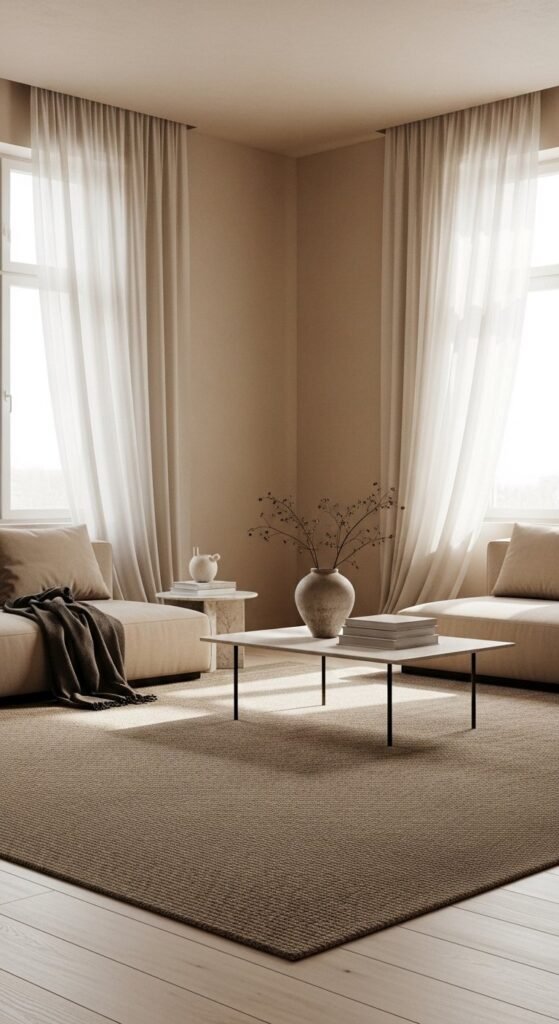
An area rug helps define a minimalist living room without adding clutter. Neutral rugs in wool, jute, or low pile blends work best. They add comfort while keeping the palette calm. Go larger than you think. Furniture should sit partially on the rug to avoid a floating look.
Texture matters more than pattern here. Subtle weave or tonal variation adds depth. Avoid busy prints. If your floor is already light, choose a slightly darker rug for contrast. In rentals, rugs also help protect flooring.
For tight budgets, flatweave rugs are a good option. They cost less and suit high traffic areas. Use a rug pad underneath. This keeps edges flat and improves comfort. A well sized rug creates quiet structure in the room.
8. Minimalist Wall Art With One Strong Statement Piece
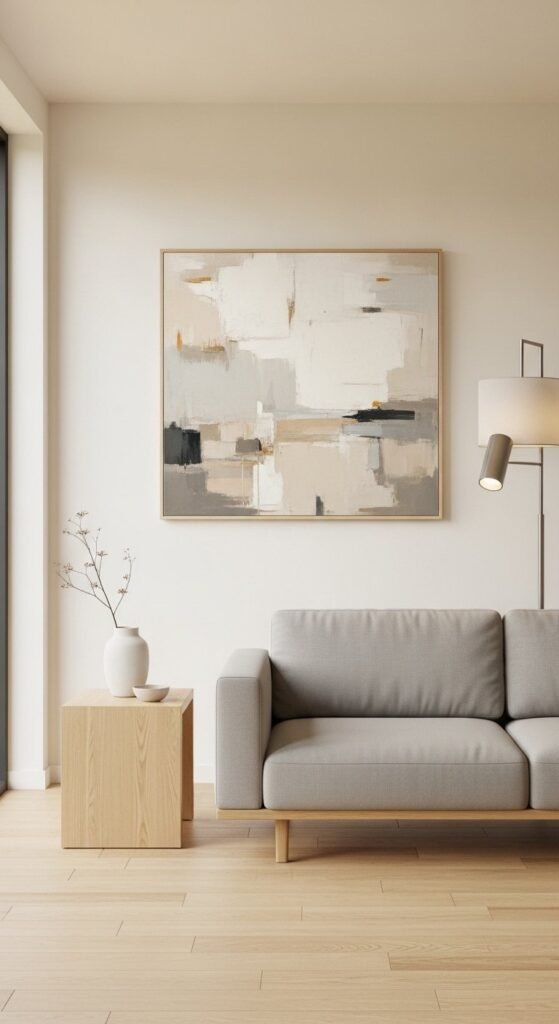
Minimalist wall art works best when it is intentional. One large piece has more impact than several small ones. Abstract art in muted tones fits well with modern interiors. Look for simple shapes or soft movement rather than bold colour.
Hang art lower than expected. This keeps it connected to the furniture. Use thin frames in wood or black metal. Avoid glossy finishes. If artwork is out of budget, try DIY canvas pieces using limewash style paint techniques.
Keep nearby walls clear. Let the art breathe. This approach adds personality without crowding the space. Rotating art seasonally keeps things interesting while staying edited. A single focal piece supports visual calm and avoids distraction.
9. Indoor Plants for a Soft Biophilic Touch
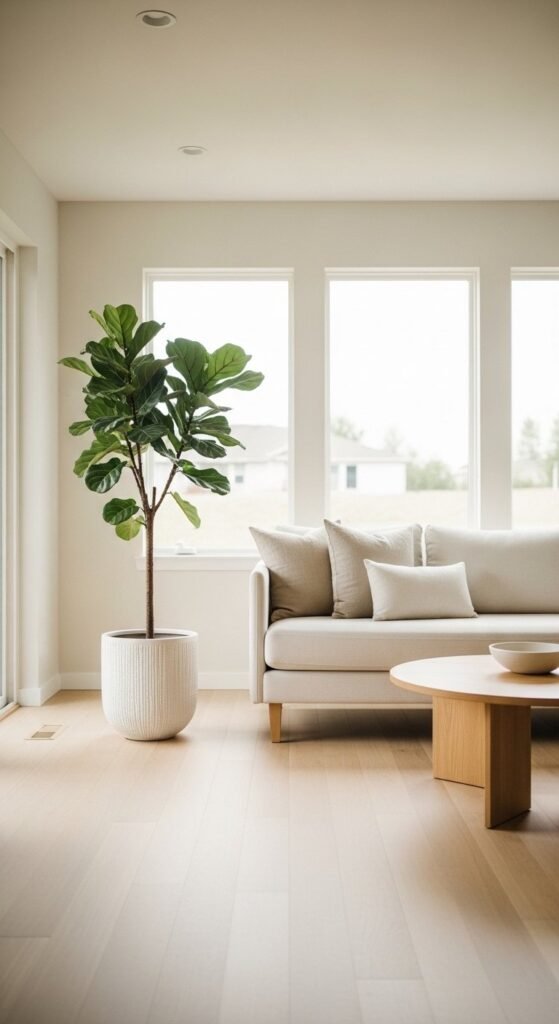
Plants soften clean lines and add life to minimalist rooms. Choose one or two larger plants rather than many small ones. Fiddle leaf figs, olive trees, or rubber plants work well. Use simple ceramic or stone planters in neutral shades.
Place plants near windows when possible. This keeps growth healthy and natural. If light is limited, go for low maintenance options like snake plants. Avoid decorative stands that add visual noise.
Budget option. Buy smaller plants and let them grow. Group nothing else around them. A single plant can act as decor on its own. Greenery adds organic balance and makes the room feel more relaxed.
10. Sheer Curtains to Maximize Natural Light
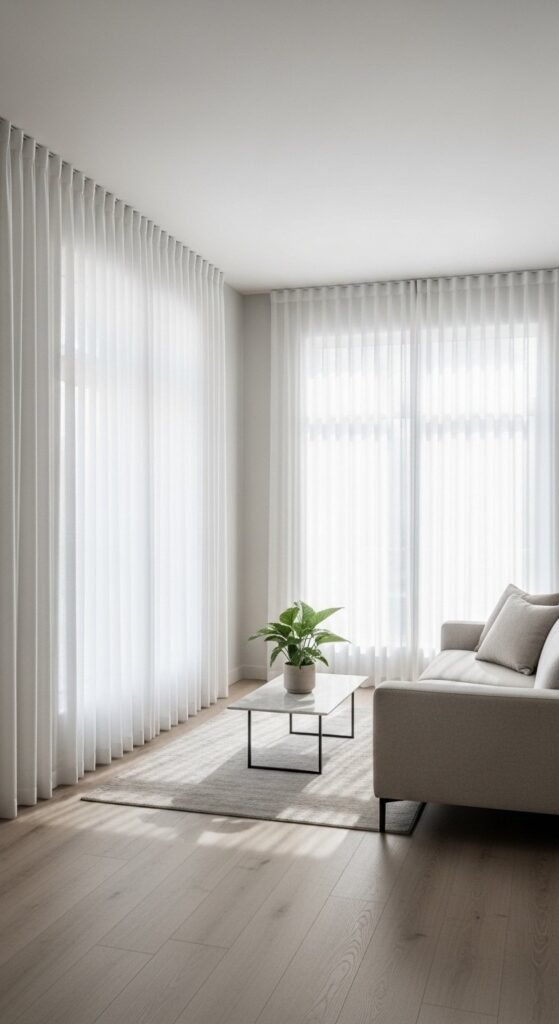
Sheer curtains allow light to filter in while keeping privacy. They soften windows without blocking views. White or warm ivory works best with neutral rooms. Hang curtains from ceiling height to make the room feel taller.
Avoid heavy patterns or thick fabrics. Linen blends are ideal. If blackout is needed, layer sheers with hidden roller blinds. This keeps daytime light intact while allowing privacy at night.
For renters, tension rods or adhesive tracks are useful. Keep curtains slightly wider than the window frame. This lets more glass show when open. Light filled rooms feel open and calm with minimal effort.
11. Mixed Light Wood Accents for Subtle Warmth
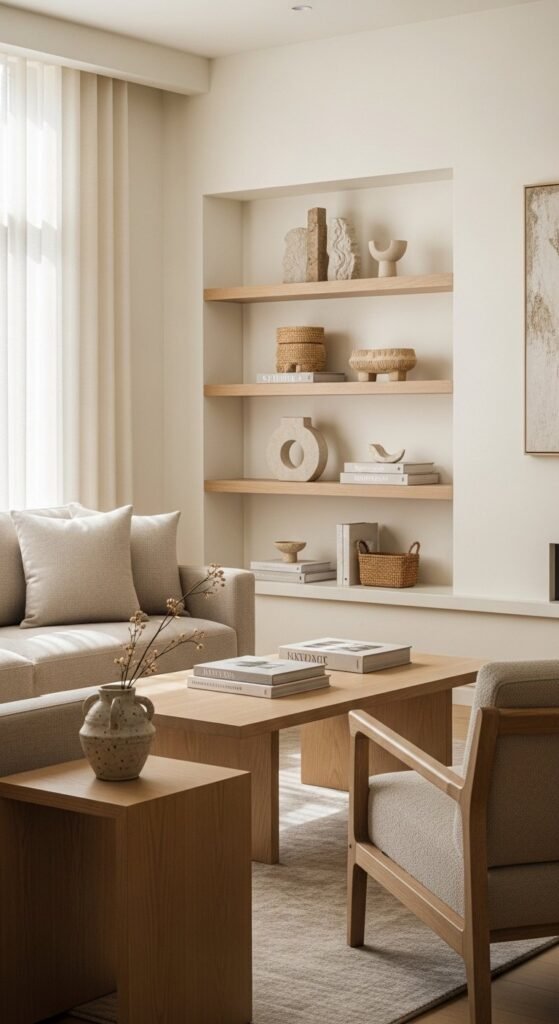
Using more than one light wood tone adds warmth without clutter. Keep undertones similar. Oak, ash, and maple work well together. Avoid dark woods that break the calm flow. Let wood show natural grain instead of heavy stains.
Spread wood elements across the room. A table, shelving, and picture frame are enough. This creates balance. If your furniture doesn’t match, sand and oil small pieces to align tones. DIY wood trays or stools also work well.
The key is restraint. Too much wood feels busy. When paired with neutral fabrics, light wood adds quiet depth and supports a relaxed atmosphere.
12. Low Slung Armchairs for an Open Layout
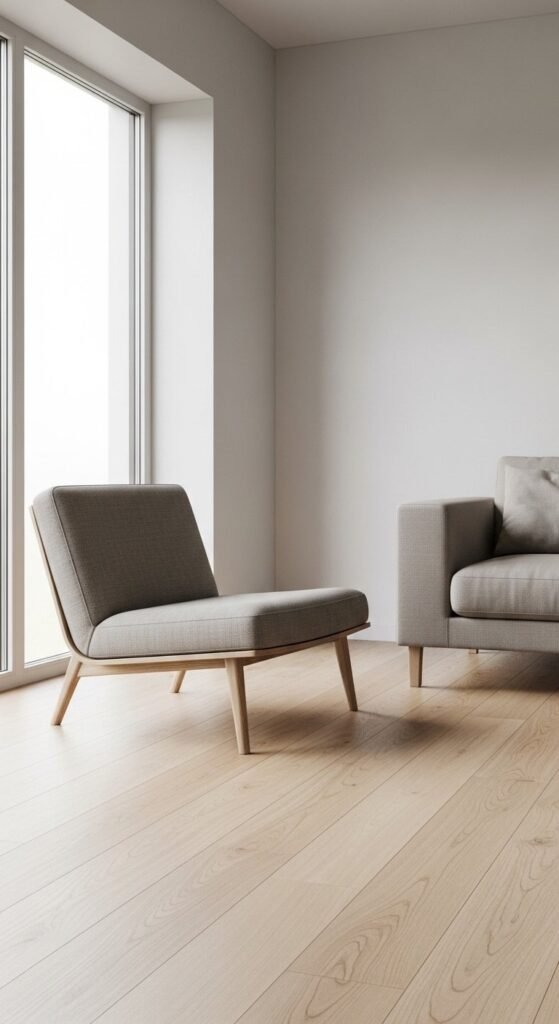
Low slung armchairs support an open feel. Their height keeps sightlines clear across the room. Choose simple silhouettes with soft curves or straight lines. Neutral upholstery blends best with minimalist palettes.
Position chairs at slight angles instead of pushing them flat against walls. This improves flow. For small rooms, armless chairs work well and take up less visual space. Avoid oversized recliners or bold prints.
Budget option. Look for second hand chairs with good frames. Reupholster in neutral fabric. This creates functional seating without overpowering the room.
13. Recessed or Built In Shelving for Visual Calm
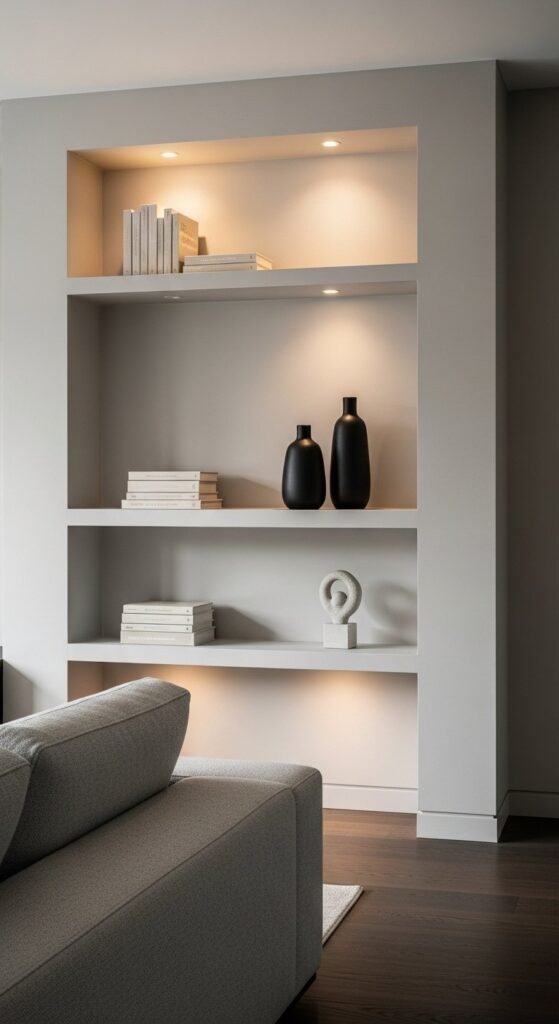
Recessed shelving keeps storage subtle. When shelves sit flush with the wall, they don’t interrupt clean lines. Paint them the same colour as the walls to reduce contrast. This makes decor appear lighter.
Style shelves sparingly. Group items in odd numbers. Leave empty space between objects. Books should be stacked horizontally or kept minimal. Avoid mixing too many colours or materials.
If built ins aren’t possible, mimic the look with shallow shelves. Keep decor intentional. This approach supports clutter free styling while still allowing personal items.
14. Minimalist Fireplace as a Quiet Focal Point
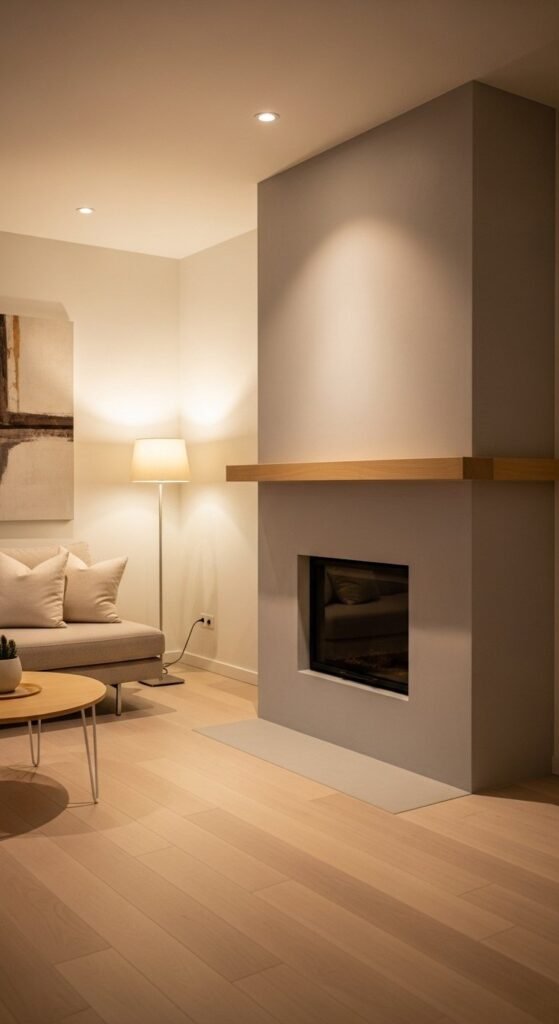
A minimalist fireplace draws attention without decoration overload. Smooth plaster or stone surrounds work best. Keep lines straight and details minimal. Avoid heavy mantels or ornate trims.
Style the area lightly. A single piece of art or ceramic nearby is enough. Keep the hearth clear. If you don’t have a fireplace, electric wall mounted options offer a similar effect.
Fireplaces ground the room and add gentle contrast against soft textures. They work well as the main focal point in neutral spaces.
15. Neutral Storage Ottomans With Hidden Space
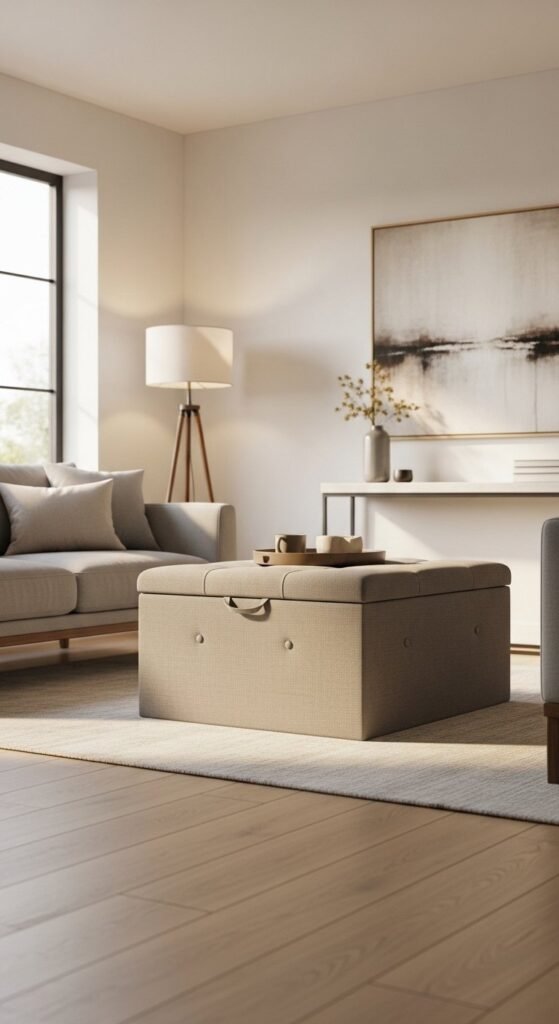
Storage ottomans combine seating and function in one piece. Choose neutral upholstery to blend into the room. Square or rectangular shapes work best with clean lined furniture.
Use ottomans to store throws, books, or remotes. This keeps surfaces clear. In small rooms, an ottoman can replace a coffee table. Add a simple tray when needed.
Budget tip. Look for hollow benches with lift up lids. This creates hidden storage without adding visual clutter.
16. Open Layout With Clear Walkways
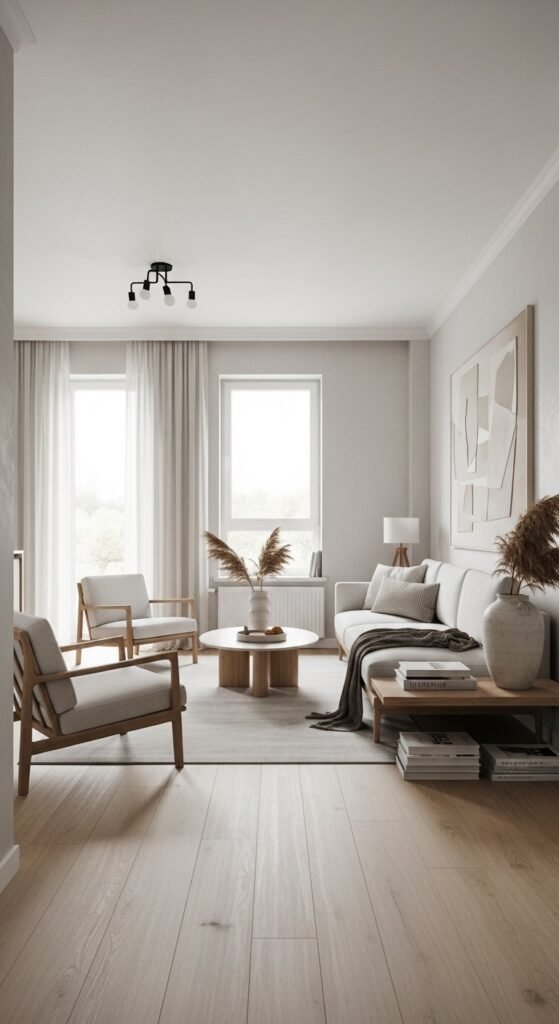
An open layout supports a calm minimalist feel. Keep walkways clear and furniture spaced intentionally. This helps the room feel larger. Avoid pushing all pieces against walls. Let the layout breathe.
Use rugs and seating to define zones instead of extra furniture. In small homes, limit the number of items in each area. If something doesn’t serve daily use, remove it. Clear paths improve comfort and daily flow.
Measure before rearranging. Even small shifts can improve movement. This setup creates visual order without adding anything new.
17. Muted Accent Colours Used Sparingly
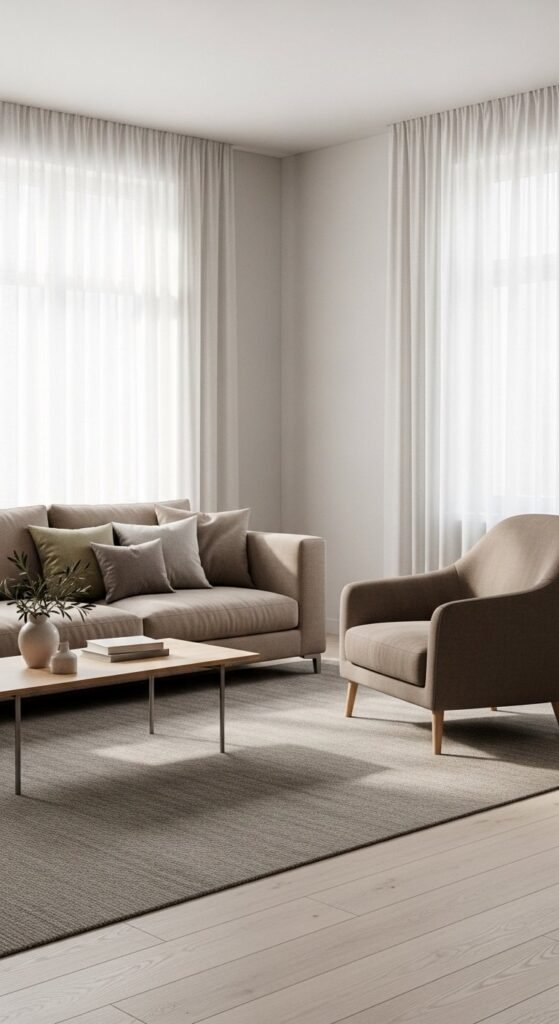
Accent colours work best when used lightly. Earth tones like olive, clay, or muted blue add interest without noise. Limit accents to textiles or one small piece of furniture.
Keep colours within the same warmth level. Avoid sharp contrast. Swap accent covers seasonally to change the mood without buying more decor.
This approach allows personality while keeping soft balance across the room.
18. Japandi Inspired Simplicity With Natural Textures
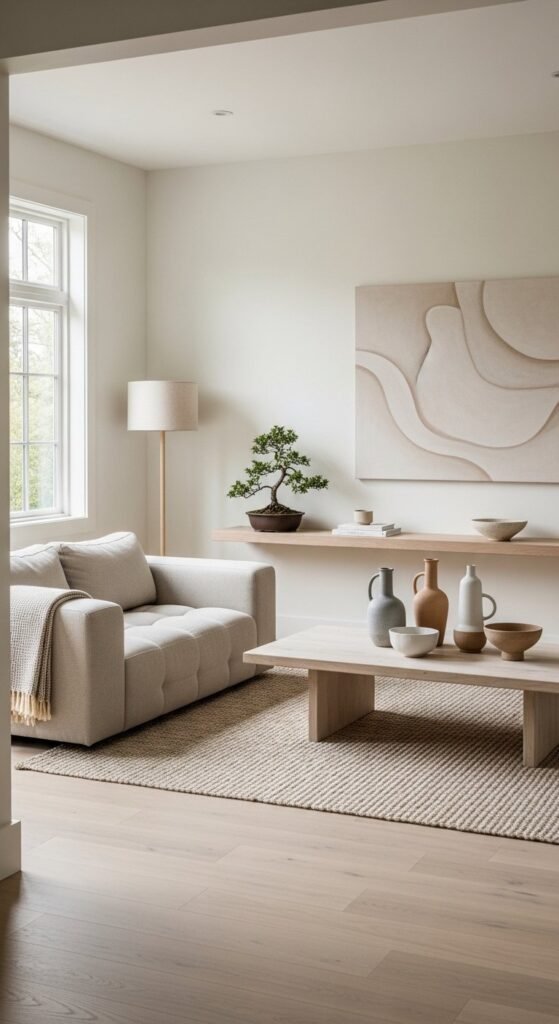
Japandi blends Japanese restraint with Scandinavian comfort. Focus on natural textures and low furniture. Linen, wood, and ceramics work well together.
Keep decor minimal and meaningful. Handmade items add warmth. Avoid shiny finishes or bold colour.
This style feels grounded and supports quiet living through simplicity.
19. Simple Side Tables With Slim Profiles
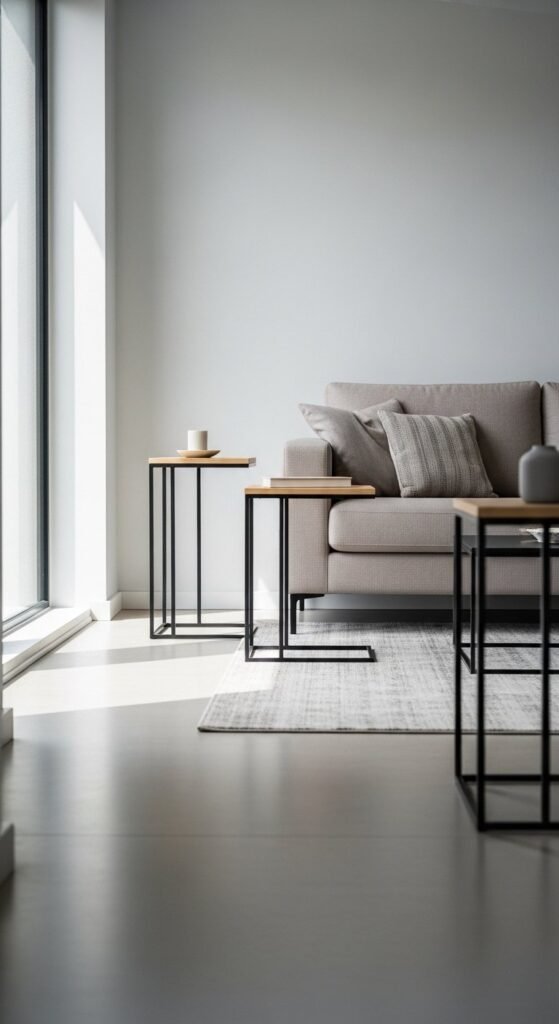
Side tables should stay visually light. Choose slim legs and simple tops. Round shapes soften clean lines and improve flow.
One table per seat is enough. Avoid stacking decor. A lamp or book works well alone.
Slim tables add function while keeping clean spacing around seating.
20. Regular Editing for a Maintained Minimal Look
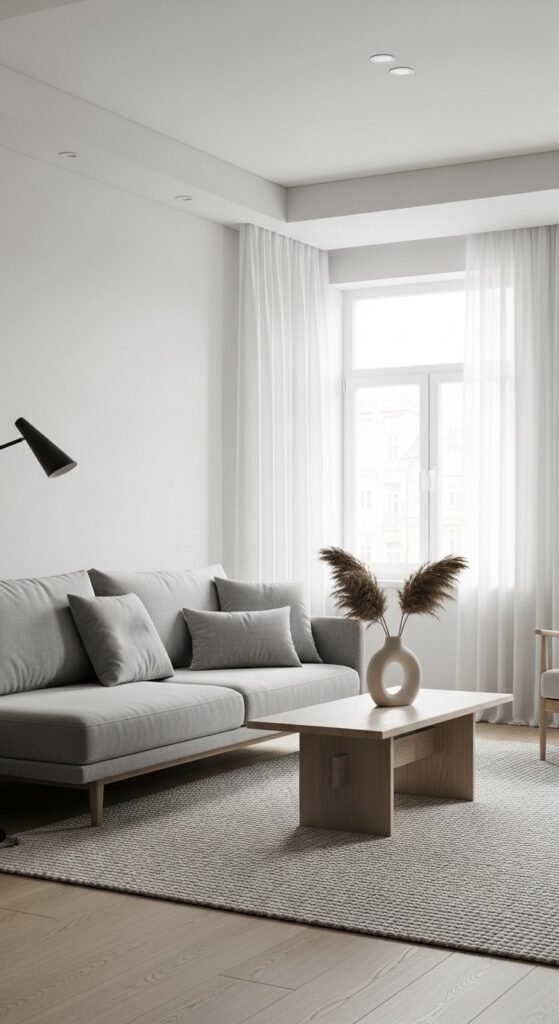
Minimalist rooms require regular editing. Every few months, remove unused items. Rotate decor instead of adding more.
Store extras out of sight. Keep only items used or enjoyed often. This habit keeps the room calm over time.
Editing supports long term simplicity without effort.
21. Soft Minimalism With Cozy Seating Layers
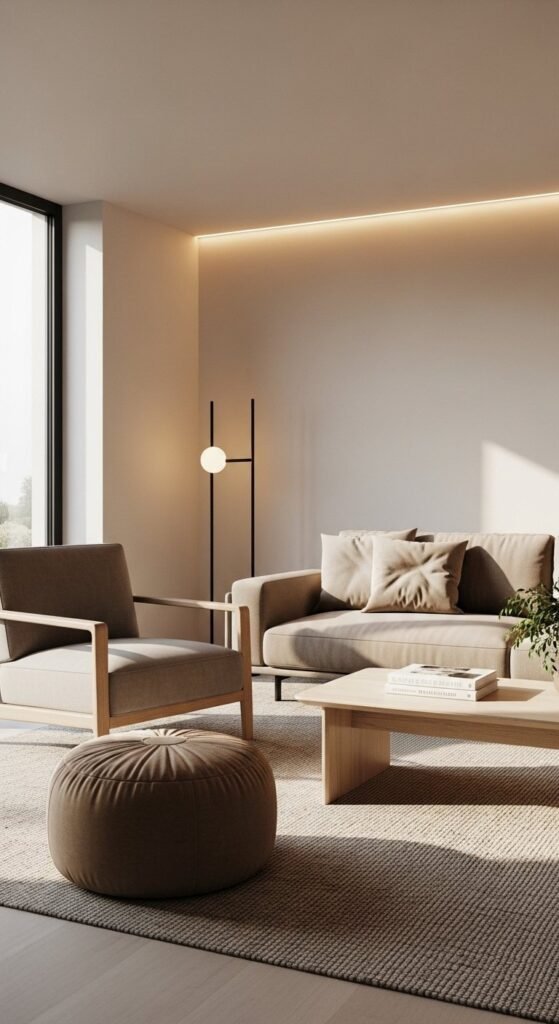
Soft minimalism focuses on comfort without clutter. Layer seating lightly. A sofa, one chair, and a pouf are enough. Keep shapes simple and colours close. This avoids visual noise while supporting daily use.
Textiles play a key role. Use linen, cotton, or wool for upholstery. Avoid leather if you want a softer look. Keep spacing generous between pieces to maintain flow.
This setup supports calm comfort while keeping the room easy to live in.
22. Minimal Window Styling With Hidden Function
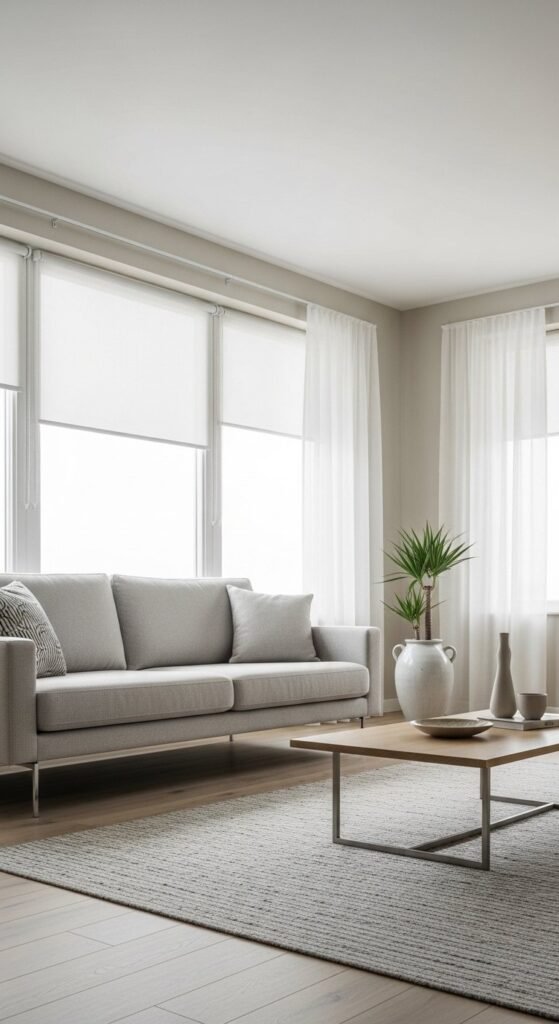
Minimal window treatments keep focus on light. Combine sheer curtains with concealed blinds for privacy. This keeps the window area clean during the day.
Mount hardware high and wide. This improves proportions. Stick to one colour for curtains and walls for a seamless look.
Clean window styling supports light filled spaces without distraction.
23. One Strong Architectural Feature on Display
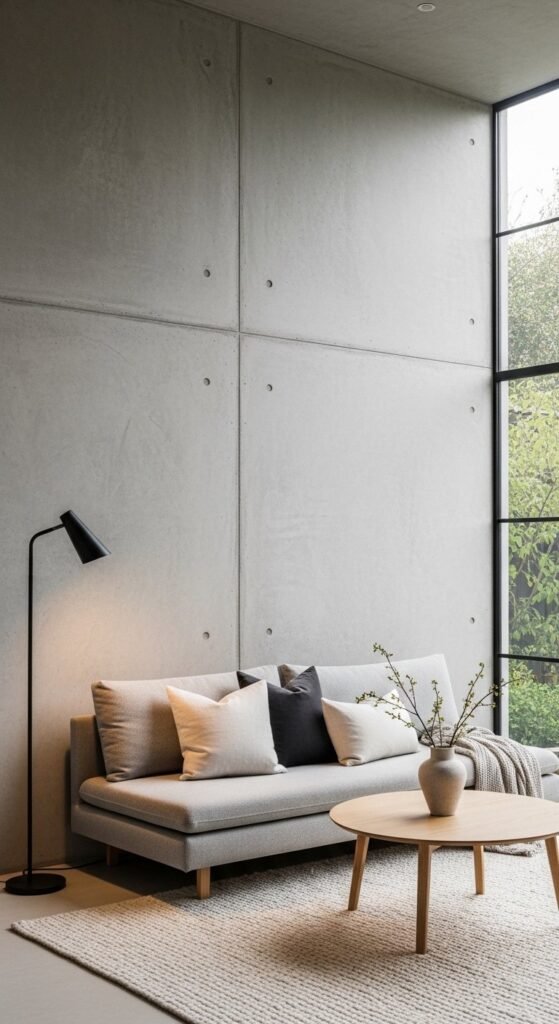
Minimalist rooms work best with one standout feature. This could be a textured wall, exposed beam, or large window. Let everything else stay simple.
Avoid adding decor that competes. Use furniture that complements the feature through colour or material.
A single architectural element adds visual focus without clutter.
24. Minimal Tech With Cables Fully Hidden
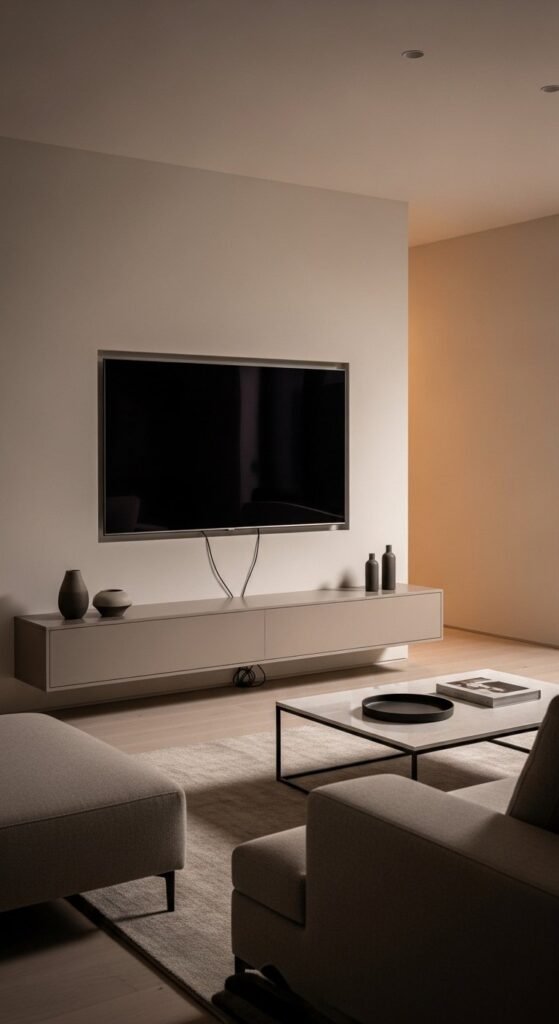
Visible cables disrupt minimalist rooms. Hide wires behind walls or inside furniture. Choose wireless speakers and slim screens.
Limit tech accessories on display. Store remotes out of sight. Keep surfaces clear.
This creates clean continuity across the room.
25. Neutral Decorative Objects in Small Groups
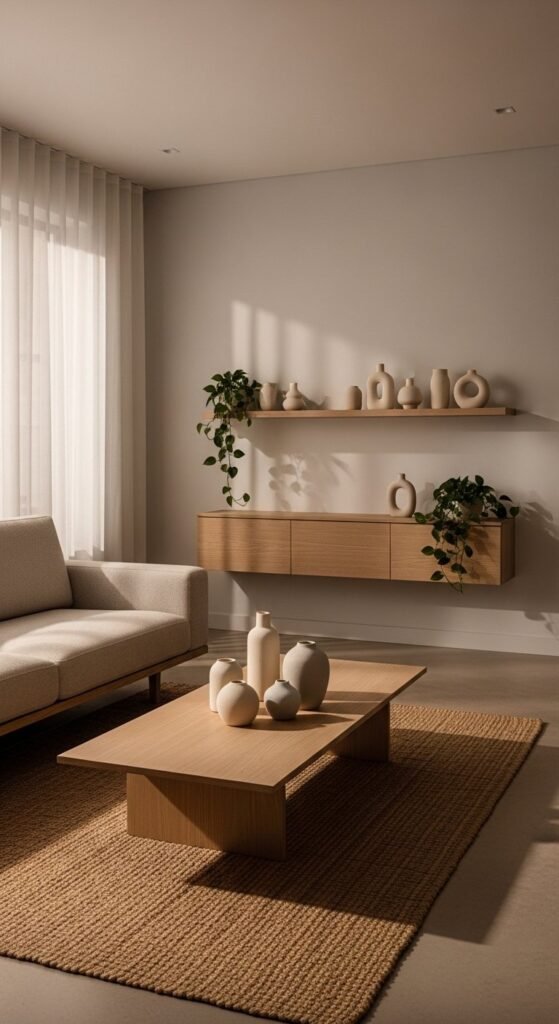
Decor works best in small groups. Use ceramics, stone, or wood in similar tones. Group items in odd numbers and leave space around them.
Avoid decorative clutter. One group per surface is enough. Rotate items occasionally instead of adding more.
This keeps styling intentional and calm.
26. Calm Luxe Styling With Quality Over Quantity
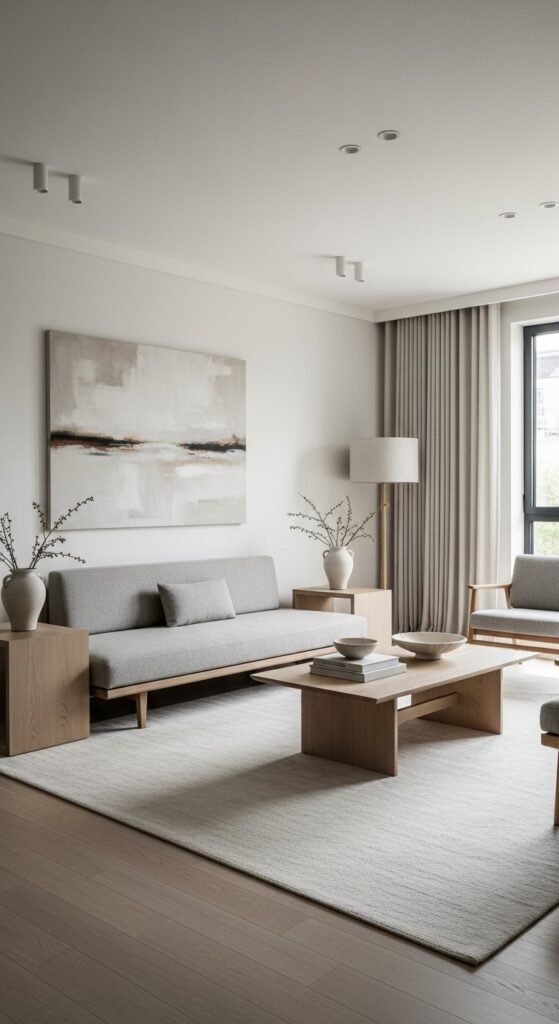
Calm luxe comes from restraint. Fewer pieces with better materials create long lasting appeal. Focus on comfort, texture, and proportion.
Avoid trendy heavy items. Choose timeless shapes and finishes. This keeps the room stable over time.
The result is quiet luxury that feels relaxed and personal.

Leave a Reply