

1. Cozy Modern With Warm Textures
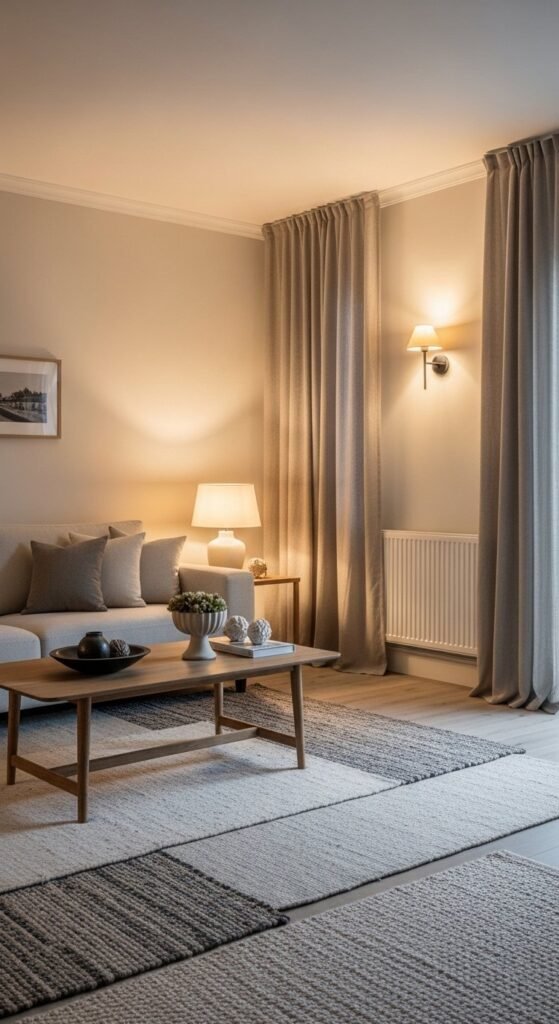
This look balances clean lines with comfort. Start with a simple sofa shape. Add softness through fabric, not clutter. Layer a flatweave rug with a thicker wool rug on top. This adds warmth without visual noise. Wood finishes help break up pale colors. Choose oak or walnut tones. Skip shiny surfaces here. Texture does the heavy lifting.
On a budget, swap cushion covers instead of buying new seating. Mix linen, cotton, and boucle. Keep colors close so the room feels calm. Lighting matters more than decor. Use at least three light sources. A floor lamp, table lamp, and wall light work well. Avoid harsh white bulbs. Warm LEDs keep the space relaxed. Finish with one throw, not five. Less styling reads more polished.
2. Low-Slung Lounge Seating
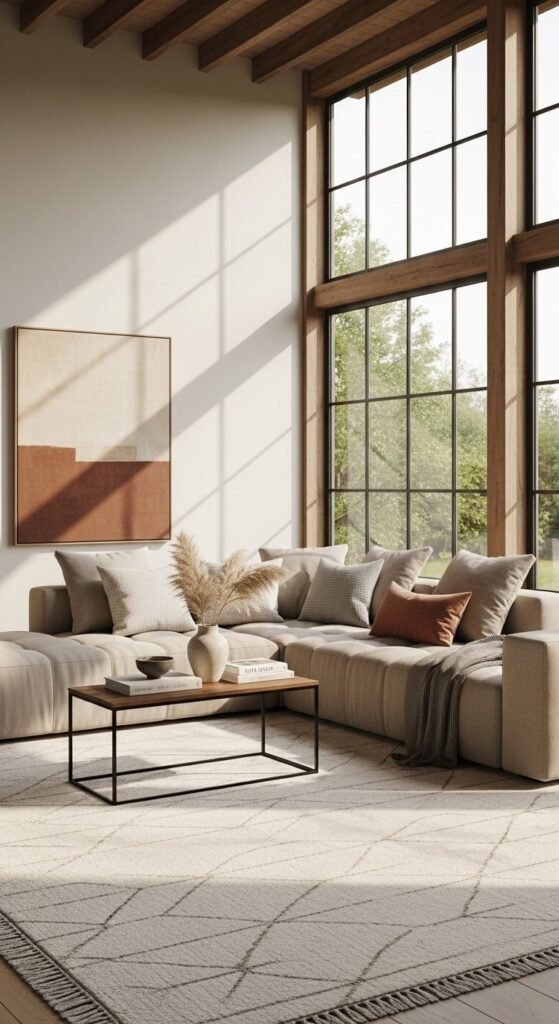
Low seating changes the whole mood. It makes the room feel calm and grounded. A low sofa also works well in open layouts. Sightlines stay clear. The space feels wider. Choose simple shapes with wide seats. Comfort comes from depth, not height. This is lounge-first living.
If custom seating feels expensive, look for modular sofas. Many brands sell low frames at mid-range prices. Keep legs minimal or hidden. Pair with a large rug so furniture doesn’t feel like it’s floating. Avoid tall side tables. Go for low blocks or cubes instead. If you already own a standard sofa, fake the look. Remove bulky cushions. Use a thinner seat pad. Lower artwork so it aligns with the new seating height. Small shifts make a big visual change.
3. Curved Furniture Statements
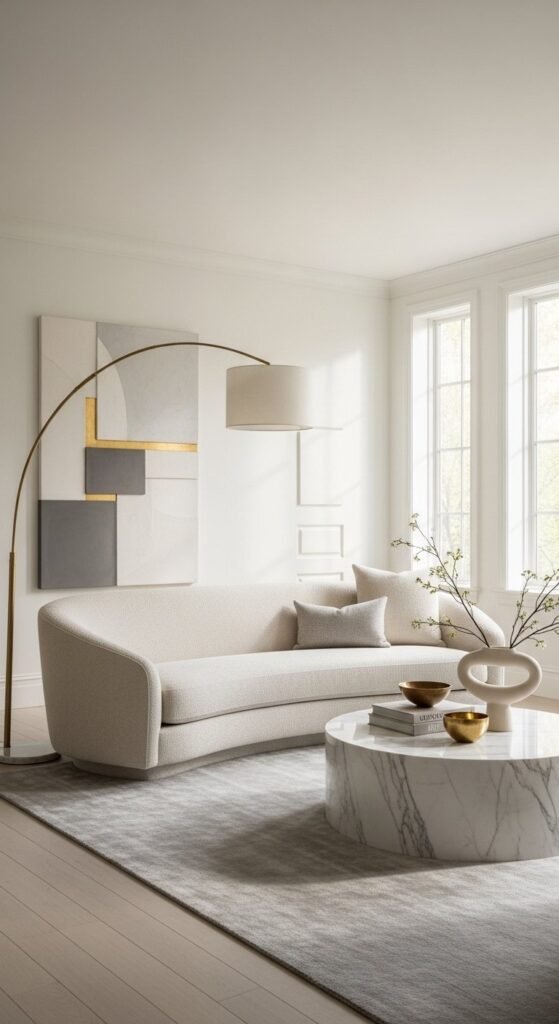
Curves soften modern rooms. They stop spaces from feeling sharp or rigid. One curved piece is enough. A sofa, chair, or coffee table works. Let it stand out. Keep everything else simple. Contrast is the trick here.
If you’re nervous, start small. A round table costs less than a sofa. It also helps with tight walkways. Curves work well in rooms with boxy layouts. They break straight lines. Use materials with weight. Boucle, velvet, or stone add presence. Skip busy patterns. Shape should be the focus. For DIY styling, repeat the curve once more. A rounded vase or arched lamp ties it together. Stop there. Too many curves feel theme-heavy.
4. Organic Modern With Wood and Stone
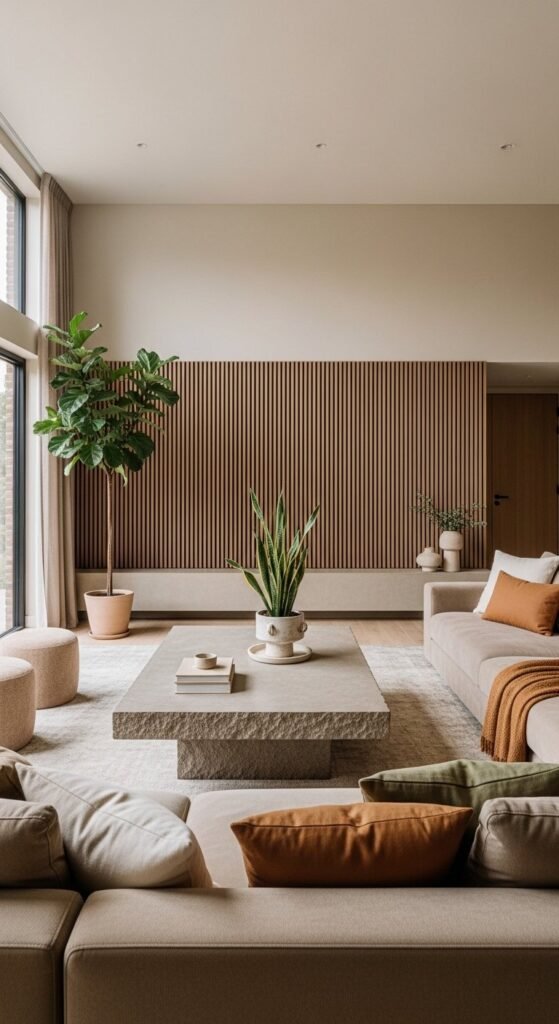
Organic modern blends nature with structure. Wood brings warmth. Stone adds weight. Keep finishes matte. Shiny surfaces break the mood. Natural contrast makes this style work.
You don’t need renovations. Add wood through furniture first. A slatted console or side table works. For stone, try a concrete-effect table or tray. Even small pieces help. Plants matter here. Choose one large plant instead of many small ones. It feels intentional. Use simple pots in clay or stone tones. Avoid black. Lighting should feel soft and indirect. Hide bulbs where possible. This style looks best when calm. Edit hard. Leave negative space. That’s where the room breathes.
5. Statement Lighting as Sculpture
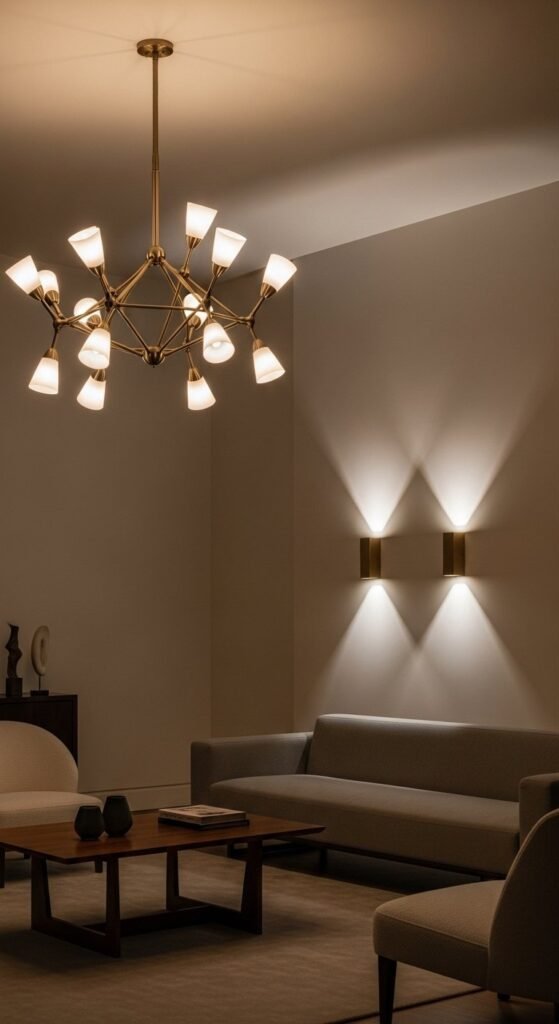
Lighting can be the hero. A bold fixture draws the eye up. It also anchors the room. Choose a shape that feels artistic. Think curves, rings, or linear forms. Lighting becomes decor here.
You don’t need to spend big. Many high-street brands offer sculptural designs. Focus on form, not brand. Keep the surrounding decor quiet. Let the light stand alone. Wall sconces add balance. Use them instead of more accessories. If wiring is an issue, plug-in options work well. Hide cords with paint-matched channels. Use warm bulbs only. Cool light kills the mood. Dimmer switches help control the feel. One great light beats five average ones every time.
6. Color-Drenched Modern Walls
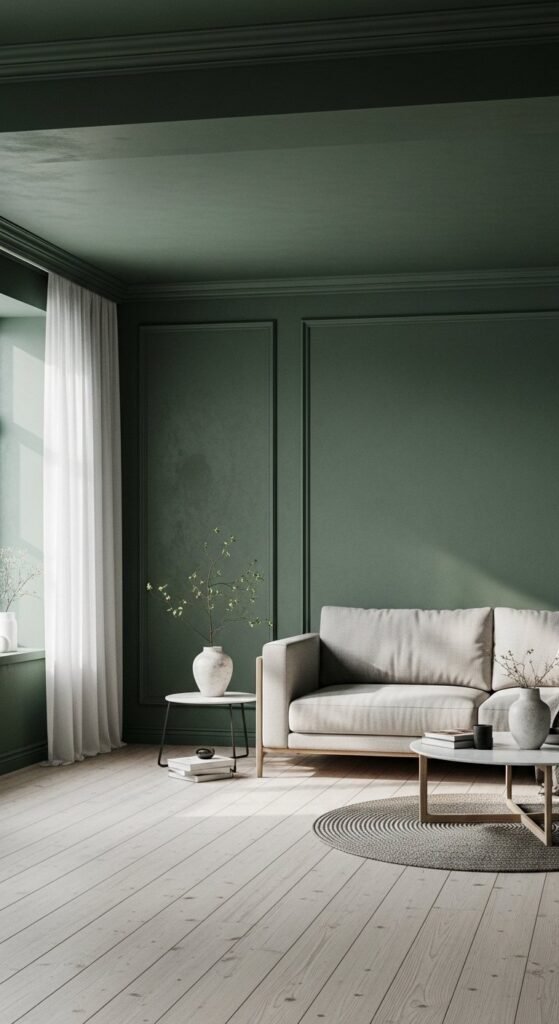
Color-drenching creates impact without clutter. Painting walls, trim, and even the ceiling in one shade makes the room feel wrapped and calm. It works well in both small and large spaces. Dark tones feel cozy. Lighter tones feel airy. One color, many surfaces is the key idea.
If you’re unsure, test with a corner first. Choose a soft, chalky finish rather than gloss. It hides imperfections and feels relaxed. Keep furniture simple so the walls do the talking. Light floors balance darker paint. If repainting the ceiling feels risky, start with walls and trim only. Artwork should be minimal. Let negative space show. For budget updates, repaint existing shelves or a media wall in the same color. This keeps the look cohesive without buying anything new.
7. Art-Forward Living Room Focus
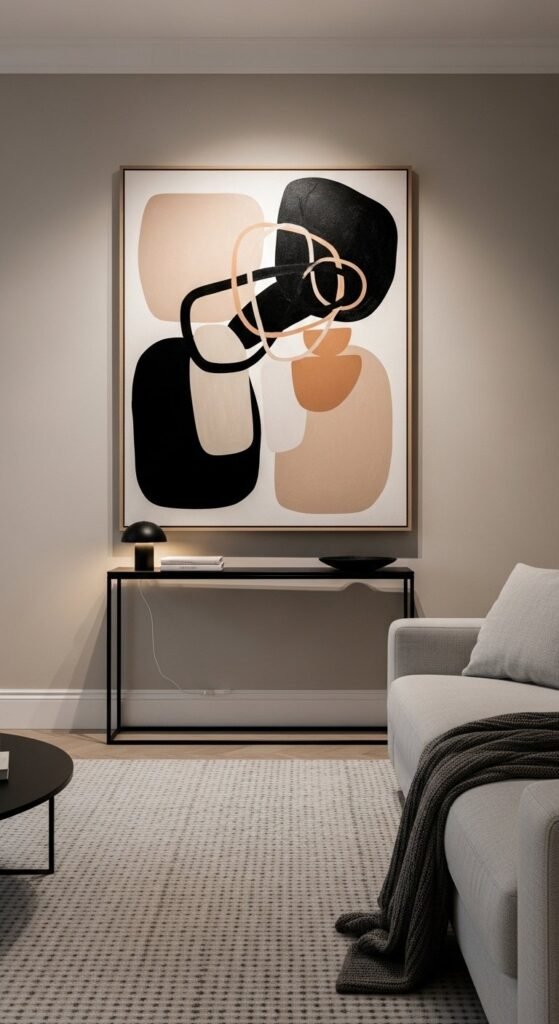
Art can anchor the entire room. One large piece feels more deliberate than many small ones. It also reduces visual noise. Choose art that introduces color or movement. Let art set the tone.
You don’t need original pieces. Large-scale prints work well. Frame them simply. Black, oak, or white frames stay timeless. Hang art lower than expected. This connects it to the furniture. Picture lights add polish and are easy to install. Plug-in versions work for rentals. If you prefer multiple pieces, keep frames consistent. Lay them out on the floor first. Spacing matters more than size. Avoid filling every wall. Empty space helps the art stand out and keeps the room from feeling busy.
8. Modern Media Wall With Hidden Storage
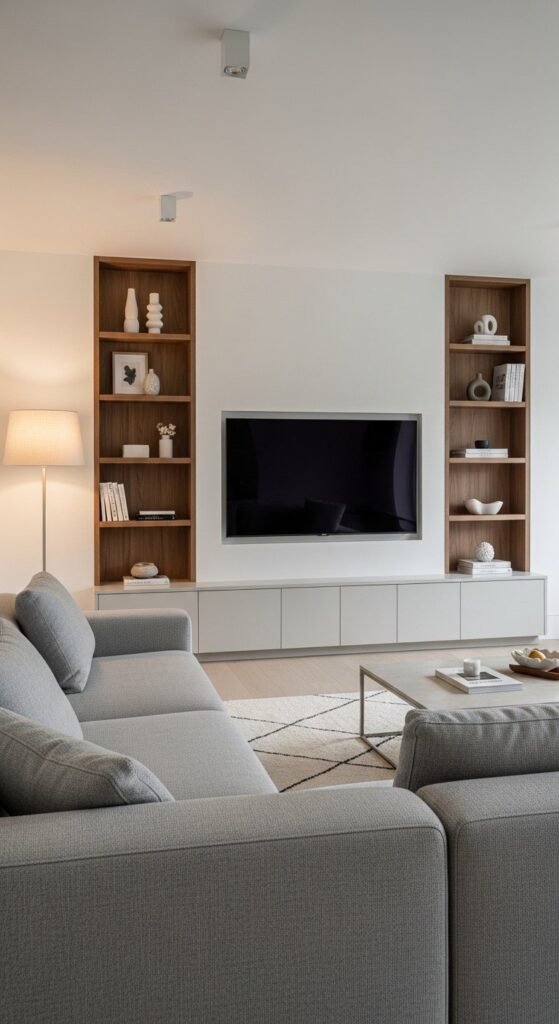
Media walls organize the room visually. Wires disappear. Storage blends in. The TV stops dominating the space. Function meets clean design here.
Custom joinery isn’t the only option. Modular units can mimic the look. Paint them the same color as the wall for a seamless effect. Closed storage works best at eye level. Open shelves should stay sparse. Style with books laid flat and one sculptural object per shelf. If adding a fireplace, keep lines simple. No heavy surrounds. Lighting inside shelves adds depth but keep it subtle. Warm light only. If you rent, use slim consoles with wall-mounted panels behind the TV. It creates a similar feel without permanent work.
9. Rug Layering for Warmth and Zoning
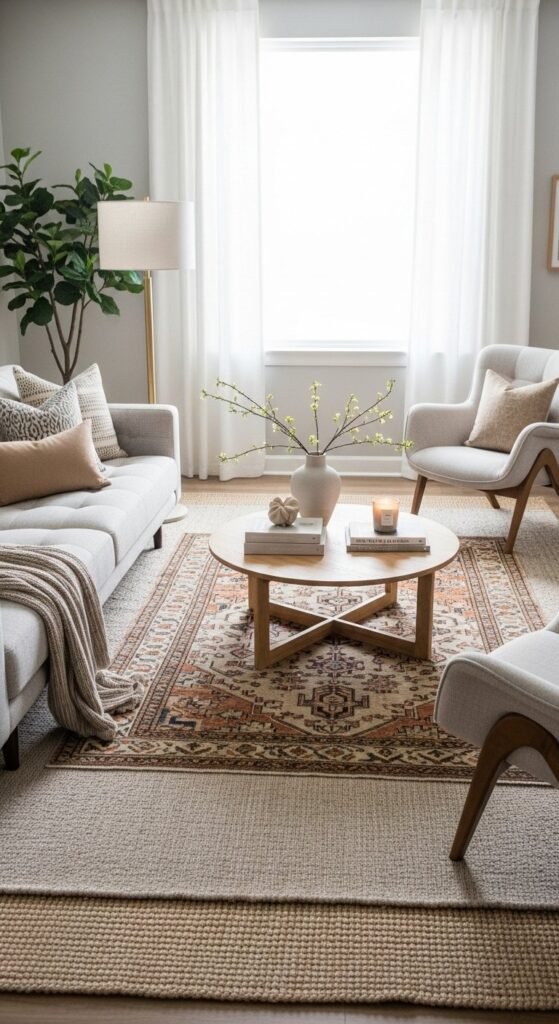
Layered rugs soften modern spaces. They add comfort and help define zones. This works especially well in open layouts. Texture replaces excess decor.
Start with a large neutral base rug. It should fit under all the main furniture. Add a smaller rug on top with pattern or color. Keep tones related so it feels intentional. Avoid matching patterns exactly. Contrast keeps it relaxed. If budgets are tight, invest in the top rug only. Use a simple jute or flatweave underneath. Rugs also help with acoustics. Rooms feel quieter and more comfortable. For styling, keep furniture legs either fully on or fully off the base rug. Half-on looks accidental. Rotate top rugs seasonally for an easy update.
10. Low-Key Modern Glam Accents
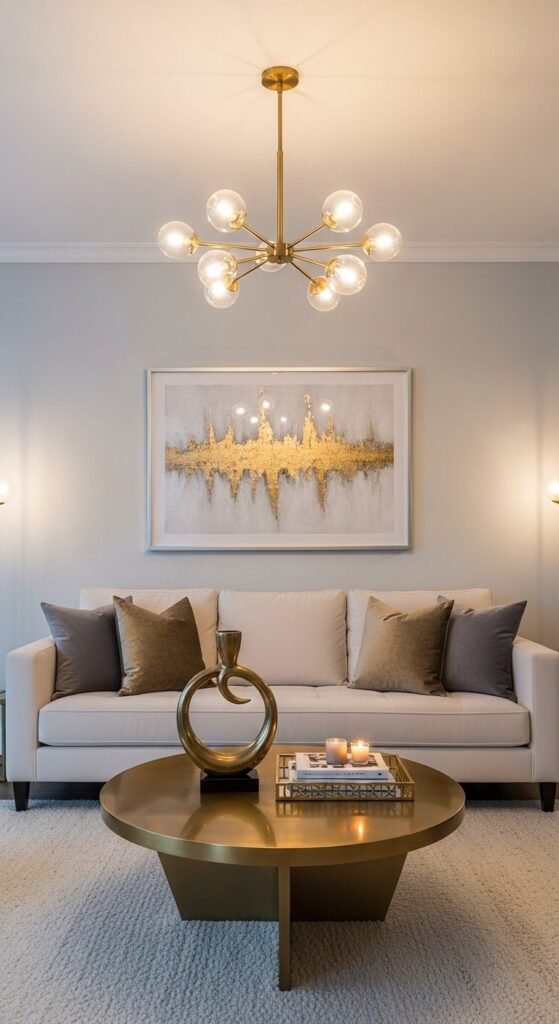
Modern glam works best when restrained. Think shine, not sparkle overload. Metallic accents add contrast to soft fabrics. Polish without excess is the goal.
Start small. A brass lamp or metal tray is enough. Pair it with matte textures like linen or wool. This keeps the look balanced. Avoid mirrored furniture. It dates quickly. Stick to brushed or aged finishes. Lighting plays a big role. Sculptural fixtures add drama without clutter. If velvet feels too formal, try cushions instead of a sofa. They’re easy to swap out. Keep colors tight. Neutrals with one metallic tone feel composed. Too many finishes break the calm. Edit often. Glam reads best when the room still feels livable.
11. Modern Cottage With Clean Lines
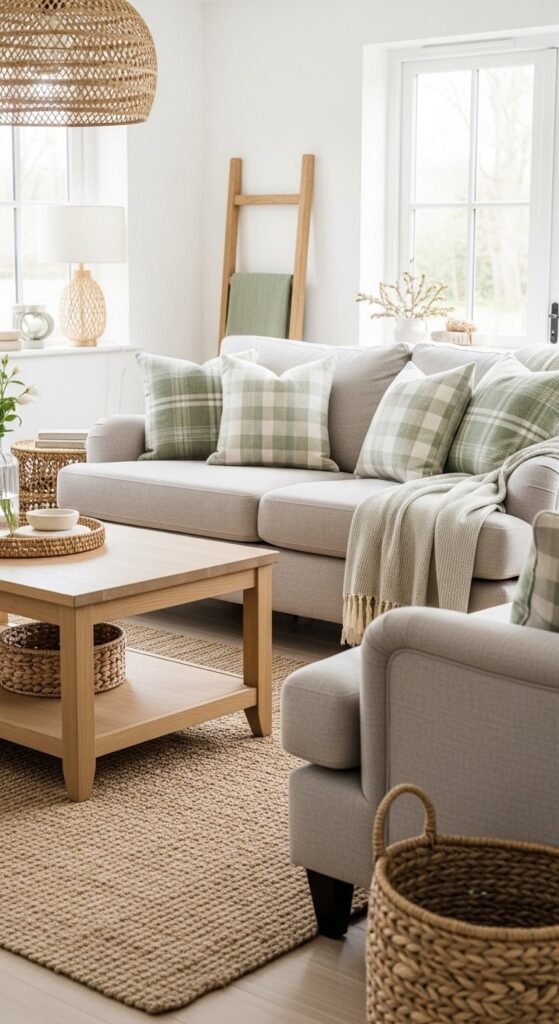
Modern cottage mixes comfort with structure. Shapes stay clean. Materials feel soft and lived-in. This balance keeps the room from tipping rustic. Tailored forms meet handmade texture.
Start with a simple sofa. Add character through cushions and throws. Subtle checks or stripes work well. Avoid heavy florals. Wood furniture should look natural, not distressed. Light finishes keep things current. If you want character without cost, switch hardware on side tables to aged brass or black. Layer lighting gently. Table lamps over overhead light make the room feel welcoming. Keep decor personal. A few books and ceramics beat themed accessories. This style shines when it feels real, not staged.
12. Jewel Tones Balanced With Neutrals
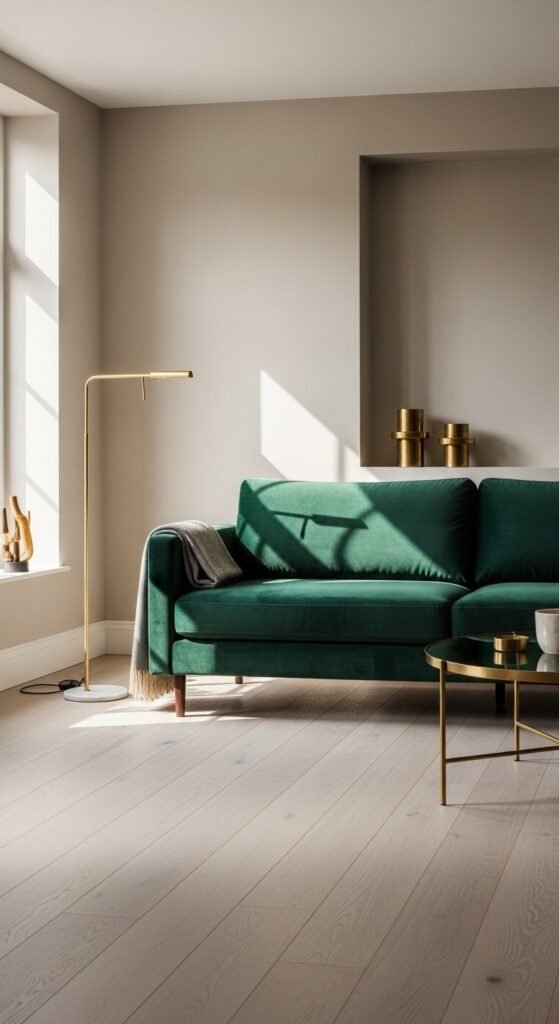
Jewel tones bring drama without chaos. Deep green, navy, or burgundy ground the space. Balance them with pale walls and simple forms. Color becomes the statement.
If painting feels risky, add color through seating. A sofa or armchair works best. Keep surrounding pieces neutral so the color holds focus. Light flooring helps prevent heaviness. Metallic accents add warmth but stay minimal. One or two touches is enough. For smaller budgets, cushions and throws still make an impact. Group them together so the color reads clearly. Avoid mixing too many rich shades. One jewel tone per room keeps the look calm and intentional.
13. Zoning an Open-Plan Living Room
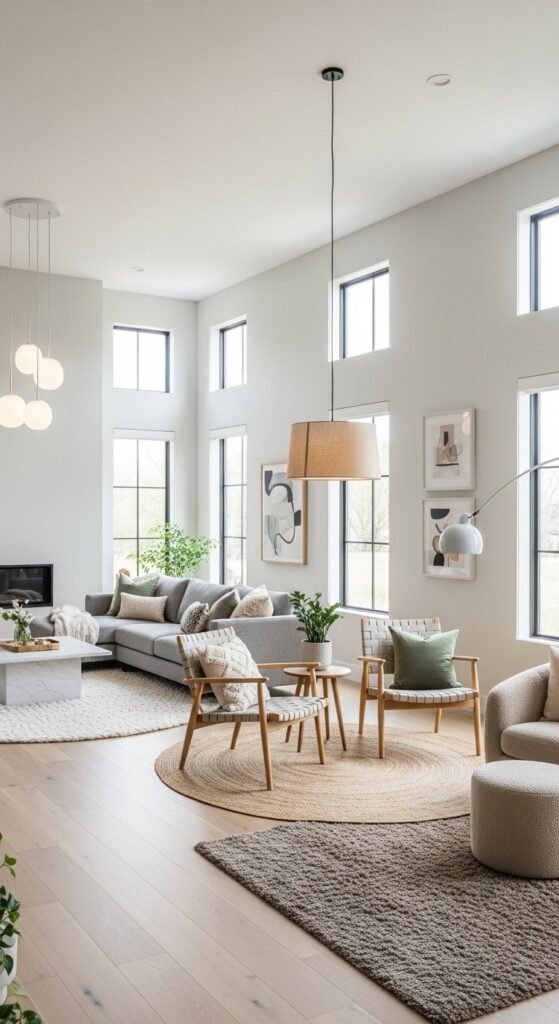
Open layouts need clear zones. Without them, rooms feel unfinished. Rugs, lighting, and furniture placement do the work. Invisible boundaries shape the space.
Start with the seating area. Use a large rug to anchor it. Position sofas and chairs facing each other, not the walls. This creates a room within the room. Lighting should match the zone. A pendant or floor lamp signals purpose. Avoid lining furniture against edges. Float pieces where possible. It feels more intentional. For tight budgets, zoning costs nothing. Rearranging furniture can change everything. Use console tables behind sofas to define edges. Keep color consistent across zones so the space still reads as one.
14. Disguised Storage That Looks Built-In
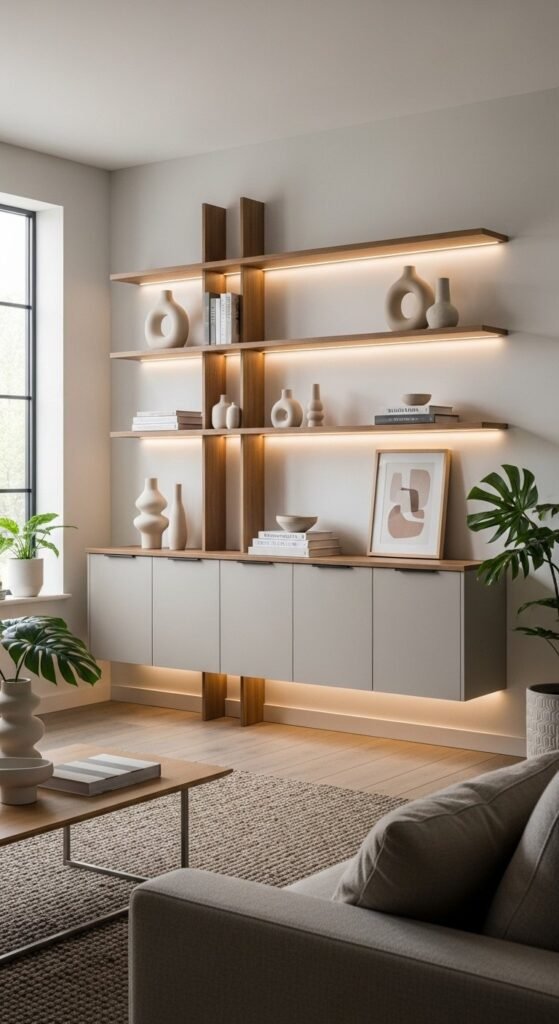
Storage works best when it blends in. Built-ins hide clutter while showing select pieces. What you hide matters as much as what you show.
If custom units aren’t an option, fake the look. Use matching cabinets side by side. Paint them wall color. Add one open shelf above for display. Keep shelves simple. Books, one object, empty space. Avoid filling every inch. Closed storage should sit at eye level or below. This keeps the room calm. For renters, use tall shelving units styled sparsely. Add lighting above to give them presence. Storage that feels intentional makes the whole room feel designed.
15. Painted Ceilings for Subtle Drama
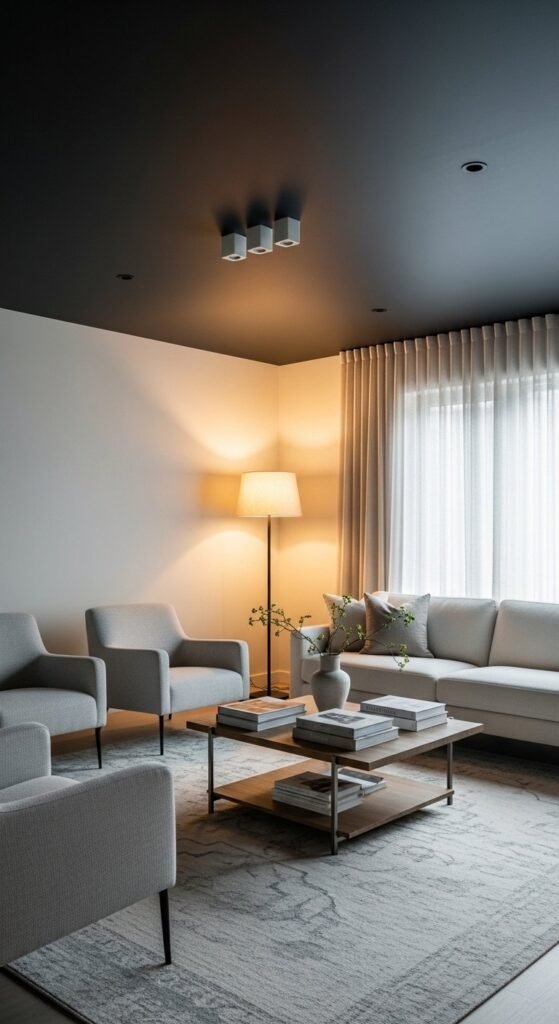
Ceilings don’t have to stay white. A painted ceiling adds depth and structure. Darker tones lower the ceiling visually, which can feel cozy. The room feels more finished.
Choose a shade related to the walls. One or two tones darker works well. Matte finishes avoid glare. If you’re unsure, try painting just the ceiling in a small room first. It’s easier to reverse. Keep furniture light to balance the effect. Lighting should wash the ceiling gently. Avoid harsh spots. For budget updates, repaint ceiling medallions or beams only. Small changes still shift the mood. This trick works especially well in rooms with simple furniture and clean lines.
16. Biophilic Touches With Statement Greenery
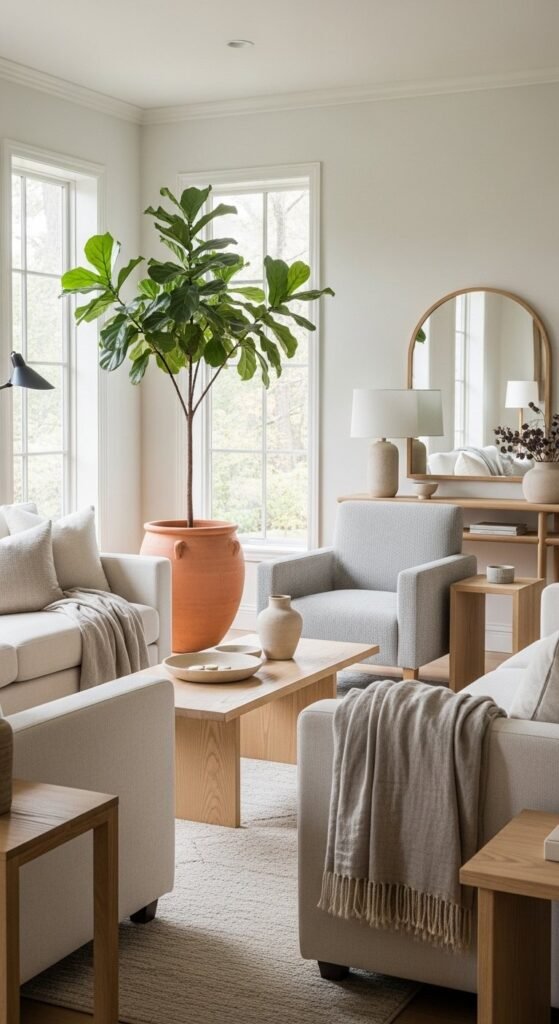
Plants soften modern rooms instantly. One large plant works better than many small ones. It feels intentional. It adds life without clutter. Greenery becomes part of the design.
Choose plants with clear shapes. Olive trees, rubber plants, or palms suit modern spaces. Skip tiny pots scattered around. Use one or two strong placements instead. Natural planters work best. Clay, stone, or woven textures feel grounded. If light is low, faux plants can still work. Just avoid glossy leaves. Styling tip: place plants near windows or corners that feel empty. They fill space gently. On a budget, start with cut branches in a large vase. They give the same effect with less commitment.
17. Curated Shelving With Breathing Room
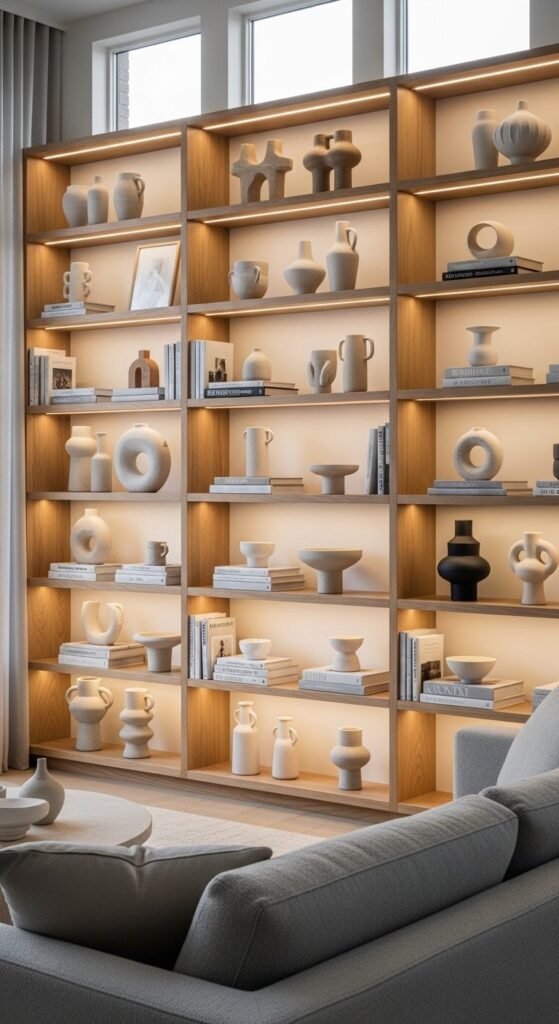
Styled shelves tell a story. They should feel personal, not crowded. Leave space between objects. Empty areas matter. Editing is the secret.
Start by clearing everything. Add items back slowly. Group in odd numbers. Mix heights and materials. Books laid flat balance taller pieces. Keep color tones limited. Too many shades feel chaotic. Lighting helps shelves stand out. Small spotlights or LED strips add depth. For renters, lean artwork on shelves instead of hanging it. This keeps things flexible. If shelves feel busy, remove one item from each section. Less almost always looks better. Rotate pieces seasonally to keep the room feeling current.
18. Console Tables Behind the Sofa
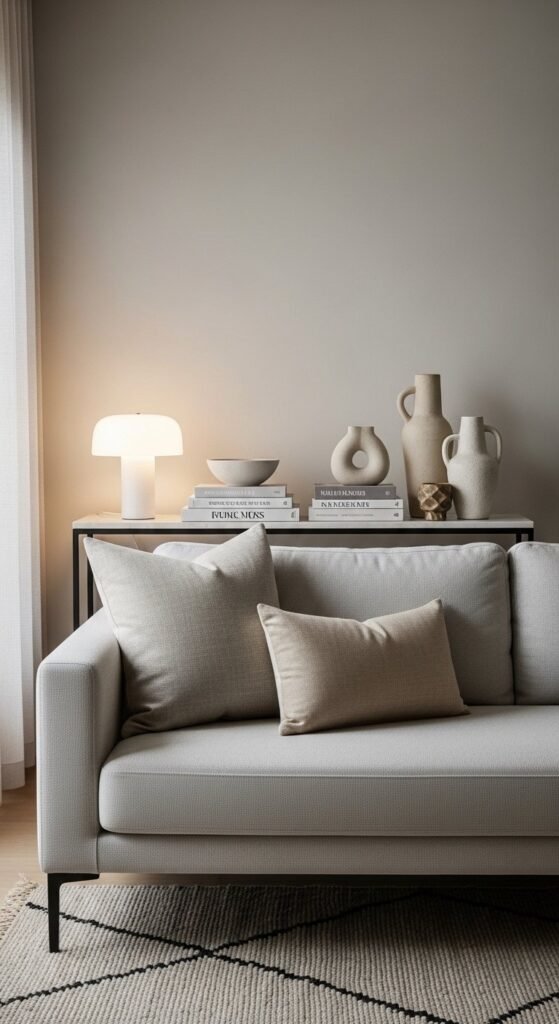
Console tables add structure. They also create a styling zone. Behind the sofa is prime real estate. Function meets styling here.
Choose a table slightly lower than the sofa back. This keeps sightlines clean. Use it for lighting instead of side tables. One lamp works well. Add a small stack of books or a sculptural object. Stop there. Avoid crowding. Consoles also help define zones in open spaces. They act as subtle dividers. On a budget, repurpose a narrow desk or shelf. Paint it to match the wall for a built-in feel. This simple move makes the room feel planned, not accidental.
19. TV That Blends Into the Background
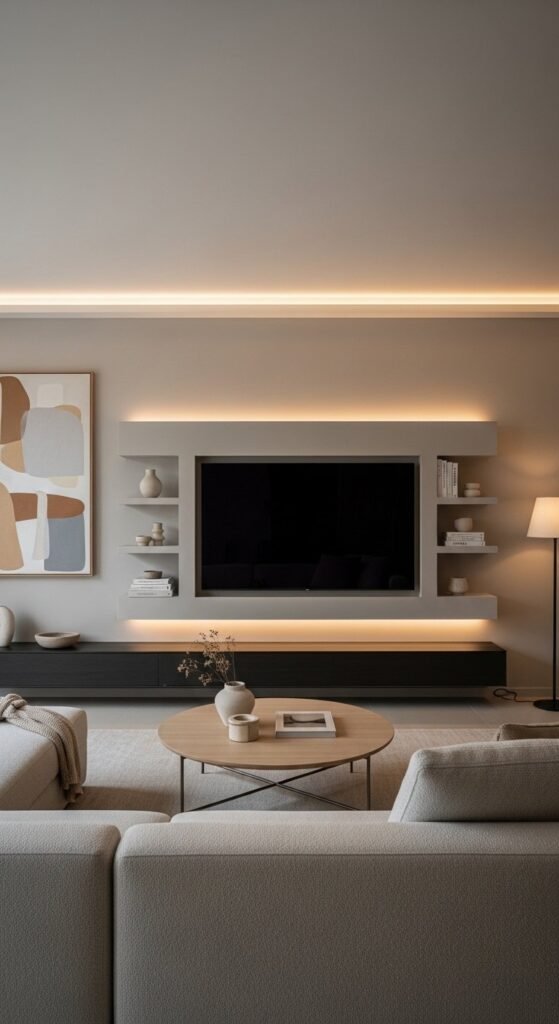
The TV doesn’t have to dominate. When it blends in, the room feels calmer. Dark screens disappear against darker walls. The focus shifts back to the room.
Paint the TV wall a deeper shade. Charcoal or deep green works well. Keep surrounding decor minimal. Symmetry helps. Frame the TV with shelves or panels so it feels placed. Art modes also reduce visual impact. For renters, use a low console and mount art nearby to balance the screen. Hide cables completely. Even visible wires ruin the effect. If mounting isn’t possible, place the TV on a slim stand and layer decor around it. The goal is harmony, not hiding.
20. Intimate Seating Clusters in Large Rooms
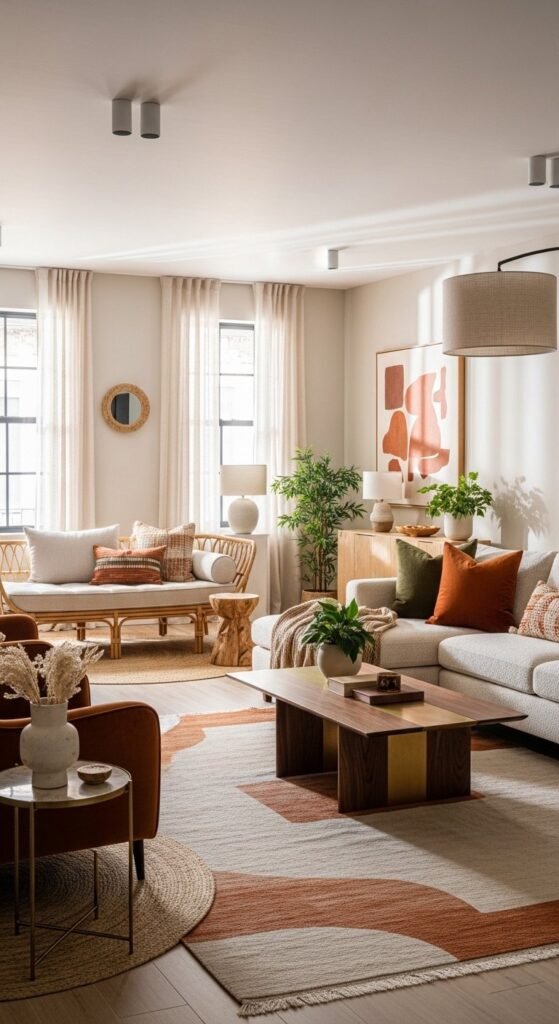
Large rooms can feel empty. One big seating area often falls flat. Break the space into smaller zones. Multiple moments make rooms feel human.
Create two or three clusters. A main sofa area. A reading corner. Maybe a window seat. Rugs define each spot. Lighting should follow. Floor lamps and table lamps work better than overhead light alone. Keep furniture scaled. Oversized pieces overwhelm. Medium-size items grouped together feel balanced. On a budget, rearrange what you own. Even shifting chairs creates new zones. Add a small side table to anchor each cluster. This approach makes big rooms feel welcoming instead of echoey.
21. Modern Maximalism With Control
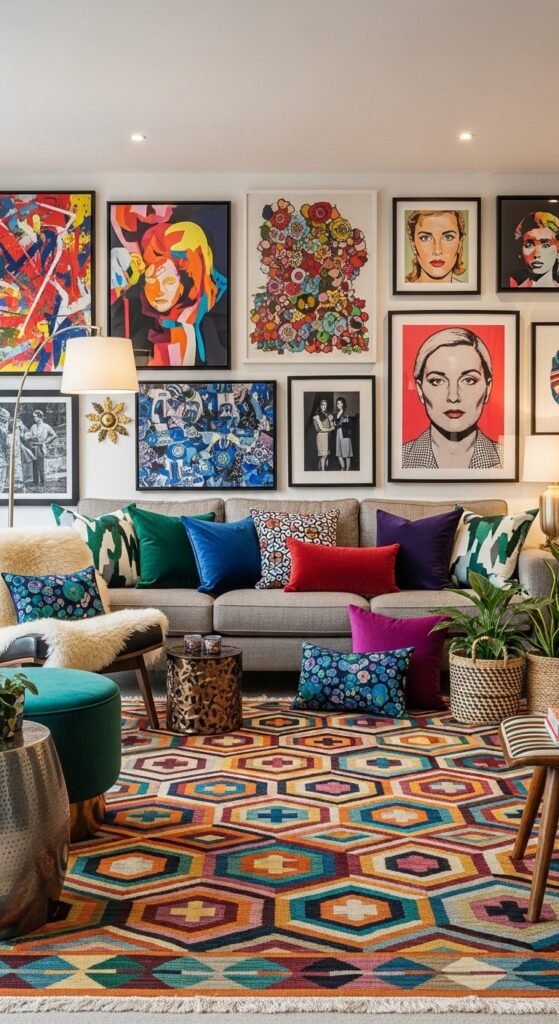
Maximalist modern rooms celebrate personality. Color, pattern, and texture all play a role. The trick is control. Start with a calm base. Neutral walls and simple furniture keep things grounded. Then layer in interest. More doesn’t mean messy.
Choose one hero pattern. Let everything else support it. Rugs work well here. Art can also lead the palette. Repeat colors at least twice so nothing feels random. Keep shapes simple. Clean-lined sofas stop the room from tipping chaotic. If you’re unsure, build slowly. Add one bold piece at a time. Live with it. Then add the next. For budgets, focus on textiles. Cushions, throws, and rugs change the mood fast. Avoid filling every surface. Negative space keeps the look intentional and magazine-ready.
22. Sustainable Modern With Craft Details
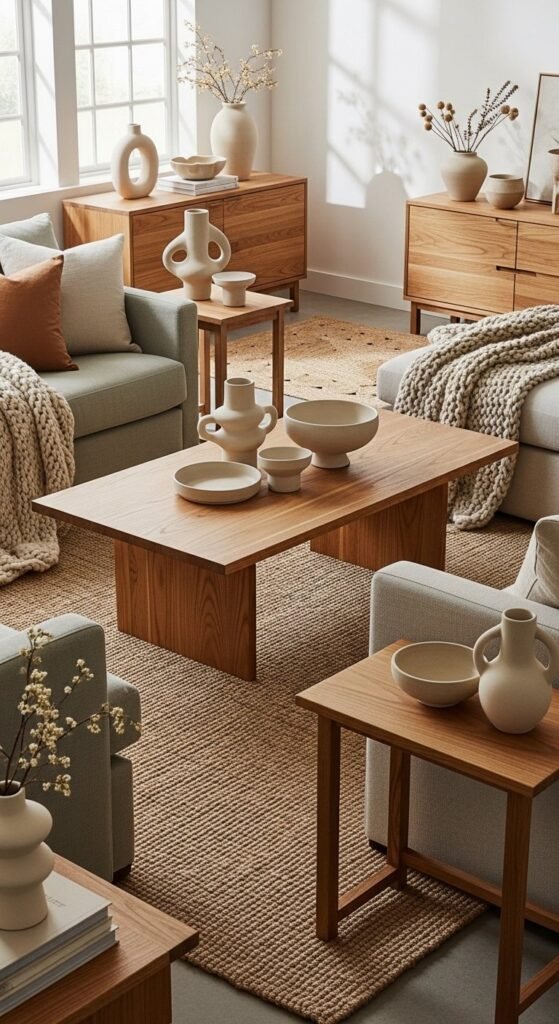
Sustainable modern rooms focus on quality over quantity. Fewer pieces. Better materials. Craft details bring warmth without excess decor. Longevity becomes part of the style.
Choose solid wood over veneer where possible. Natural finishes age well. Linen and wool feel good and last longer. Skip trend-heavy items that date quickly. If buying new isn’t an option, reframe what you own. Refinish tables. Recover cushions. Repair instead of replace. Handmade ceramics add character at low cost. Even one piece makes the room feel thoughtful. Lighting should stay warm and soft. Energy-efficient bulbs still create mood when chosen carefully. This approach feels calm, grounded, and quietly confident.
23. Rental-Friendly Modern Updates
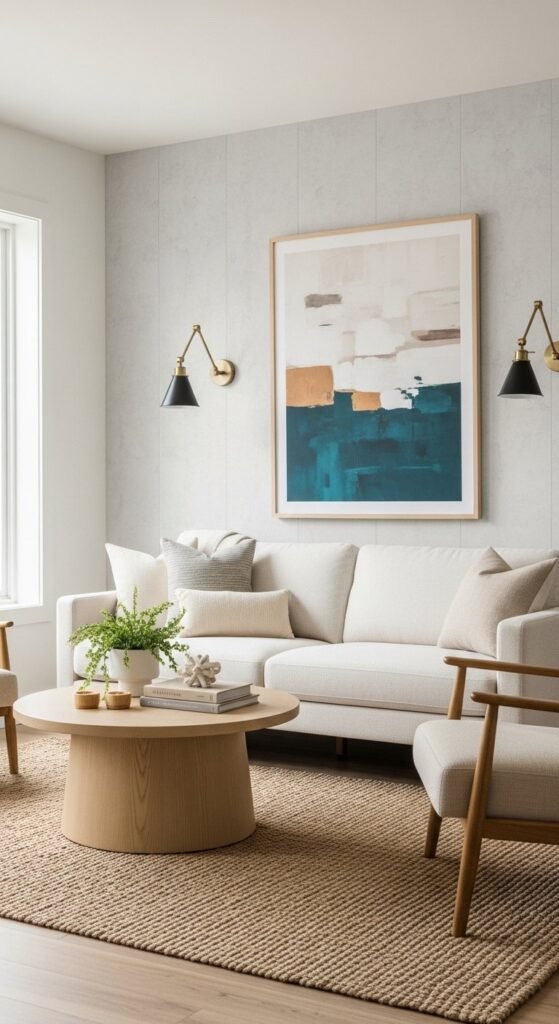
Rentals can still look polished. Focus on changes you can undo. Peel-and-stick panels add texture. Plug-in lighting replaces harsh overheads. No drills, no stress.
Rugs do heavy lifting here. They cover floors and define zones. Go large so the room feels finished. Art doesn’t need nails. Lean frames on consoles or shelves. Use adhesive hooks for lighter pieces. Swap lampshades instead of fixtures. It’s cheaper and reversible. Furniture choice matters more than decor. Simple shapes read modern anywhere. Stick to a tight color range so the space feels cohesive. When it’s time to move, everything comes with you. That’s smart styling.
24. Color Blocking for Visual Flow
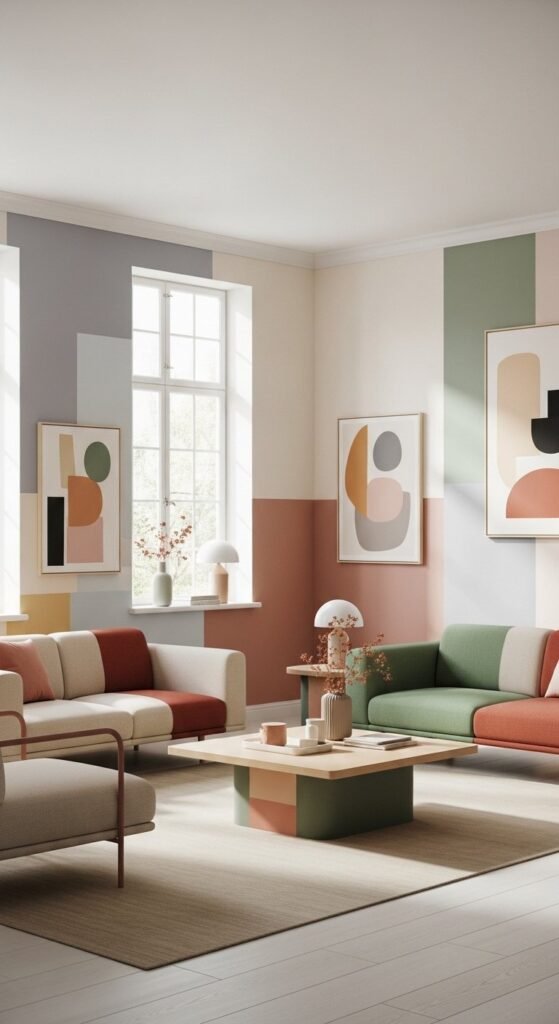
Color blocking brings order to modern rooms. It guides the eye. It creates rhythm. Use large blocks, not small accents. Color works as structure.
Start with three colors. One base. One secondary. One accent. Spread them evenly across the room. Walls, rugs, art, and cushions should talk to each other. Avoid adding extra shades. That’s where things unravel. If bold colors feel risky, use neutrals in different depths. Beige, taupe, and clay still count. Paint samples help. Test blocks with paper first. Tape them on the wall. This saves money and regret. Color blocking works especially well in open spaces where flow matters more than feature walls.
25. Weekend DIY Modern Upgrades
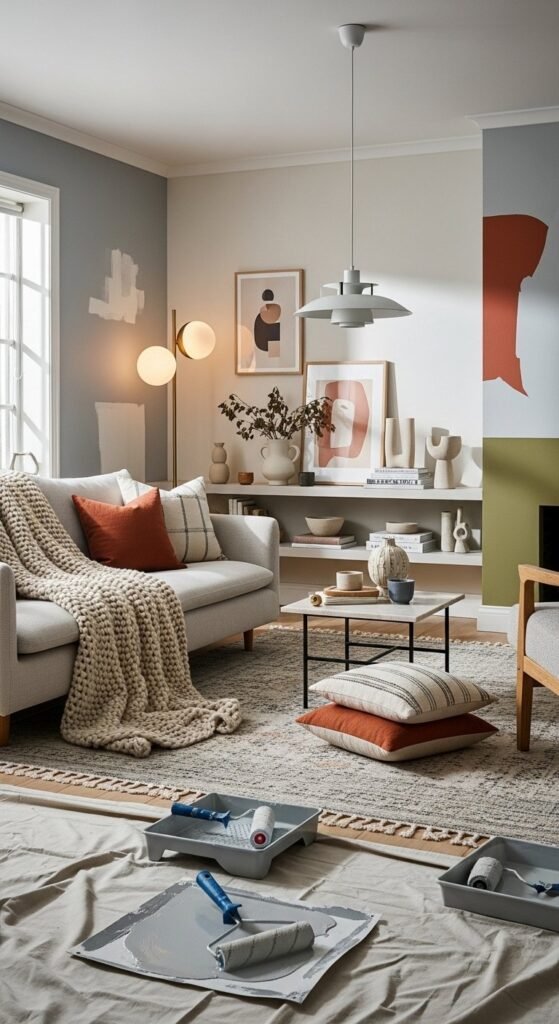
Small projects can shift the whole room. Paint, lighting, and styling go far. Choose one task per weekend. Progress beats perfection.
Repaint one wall or alcove. Change bulbs to warm tones. Restyle shelves with fewer items. These take hours, not weeks. Lighting swaps offer instant payoff. Table lamps and wall lights soften everything. If funds are tight, move decor between rooms. Fresh placement creates new energy. Clean lines matter more than new things. Edit often. Remove what doesn’t earn its place. Modern rooms look best when they feel intentional, not overworked.
26. Modern Living Rooms That Feel Collected
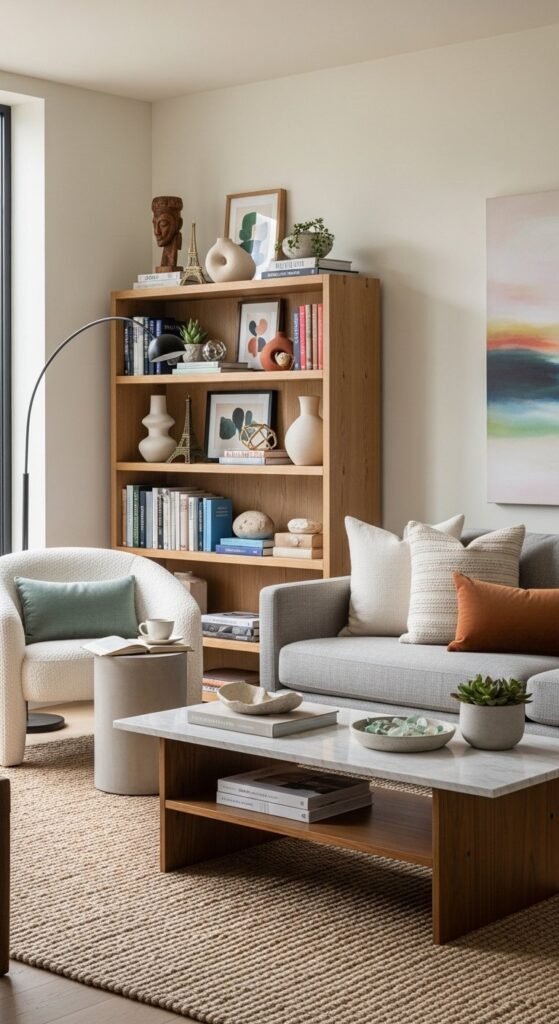
Collected rooms feel lived-in. They tell stories. Each piece has meaning. Avoid showroom symmetry. Personality leads the design.
Mix old and new. A vintage table beside a modern sofa works well. Keep scale balanced. One standout piece per area is enough. Group items loosely. Perfect spacing feels stiff. Books add warmth. Stack them. Use them as risers. Art doesn’t need to match. It just needs a shared tone or mood. If the room feels busy, remove one thing. Then another. Collected doesn’t mean crowded. It means considered.
27. Magazine-Style Styling Through Editing
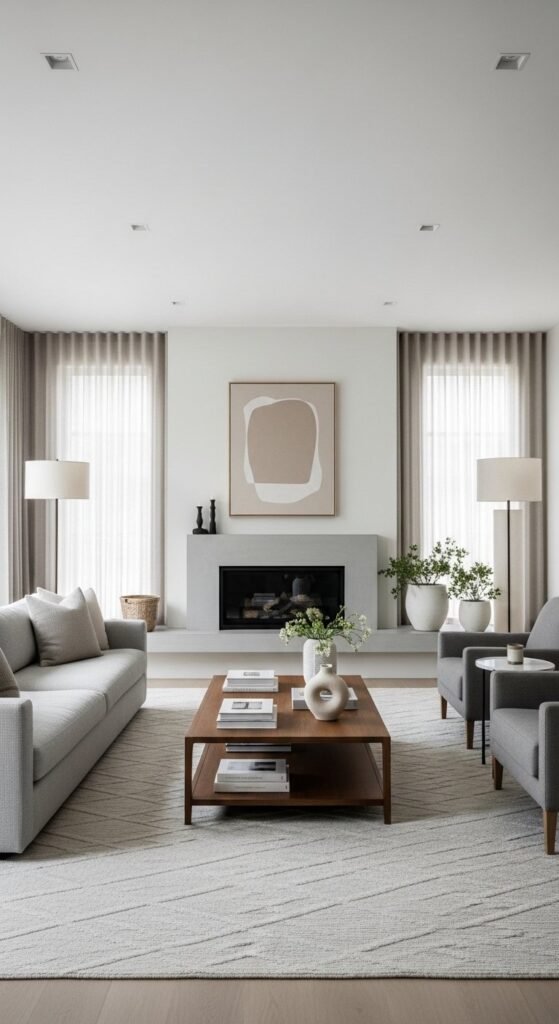
Magazine rooms aren’t about more. They’re about editing. Every item earns its place. Surfaces stay mostly clear. Restraint creates impact.
Clear one surface completely. Style it again with just three items. Vary height. Keep colors tight. Step back often. Distance shows imbalance. Lighting finishes the look. Even a simple room feels styled when light is layered. Use warm bulbs. Avoid glare. If something feels off, remove before adding. Modern living rooms shine when they feel calm, intentional, and easy to live in.

Leave a Reply