

1. Creamy Beige with Soft Gold Accents
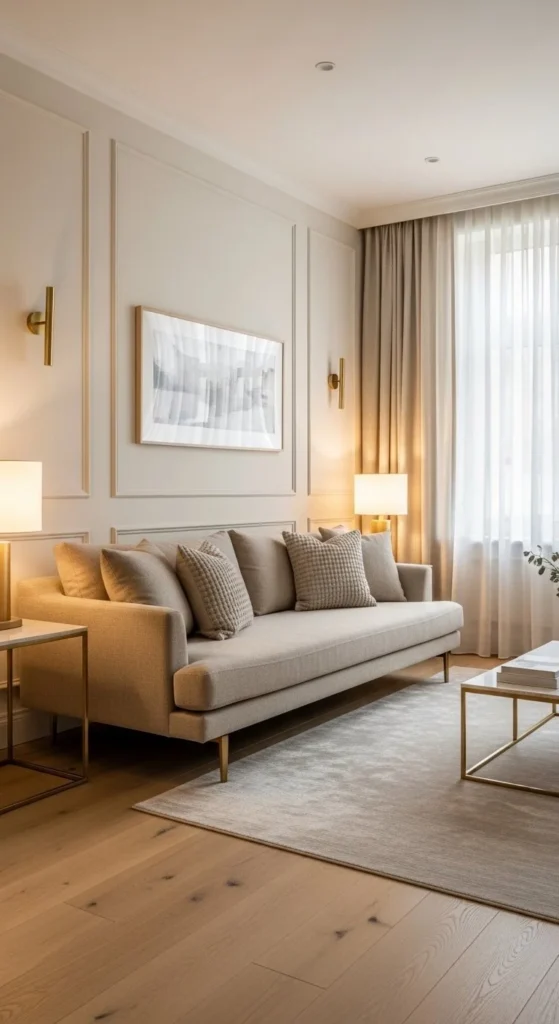
Creamy beige sets a calm foundation that never feels flat. It reads warmer than white and reacts beautifully to daylight. Add soft gold accents through trays, lamps, or thin frame mirrors. This keeps the palette warm without feeling heavy. For budget styling, spray paint old hardware in brushed gold. Stick to linen, cotton, and wool for upholstery. These textures prevent beige from looking washed out. Use darker beige on accent chairs for contrast. Avoid stark chrome here. Wood tones should stay light to medium. Think oak, not walnut. This scheme works well in small rooms because it reflects light while staying cozy. Keep art minimal and abstract for a clean finish.
2. Muted Teal and Warm White Balance
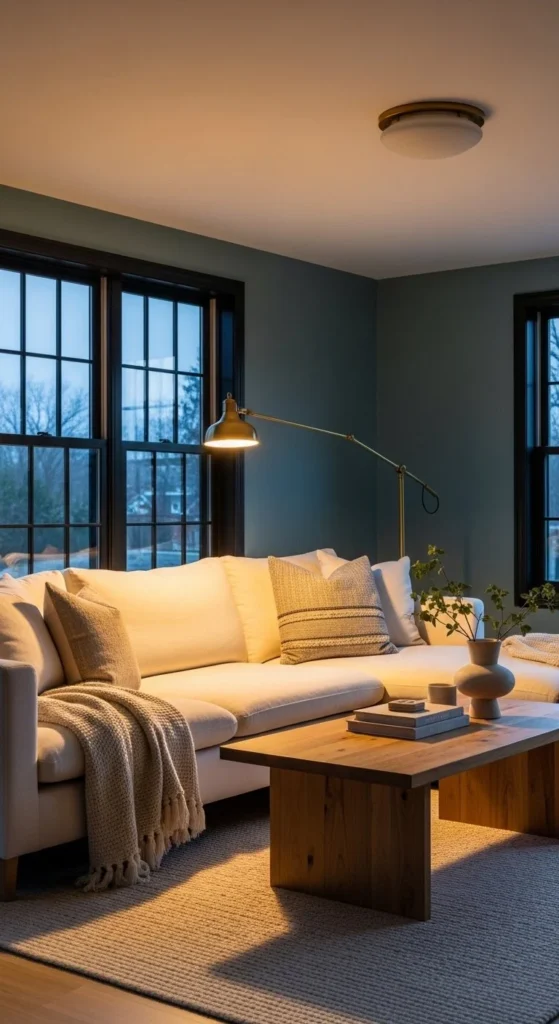
Muted teal brings color without shouting. It has gray undertones that feel calm and grounded. Pair it with warm white seating to soften the look. Avoid icy whites. They clash with teal. Use teal on one wall if the room is small. Layer neutral rugs underneath to keep things light. DIY tip: sample teal paint in morning and evening light before committing. Add brass or aged gold lighting to warm the blue green tone. Wood accents should stay natural, not stained dark. This palette feels relaxed but polished. It works well for open plan homes where color needs restraint.
3. Olive Green with Natural Wood Layers
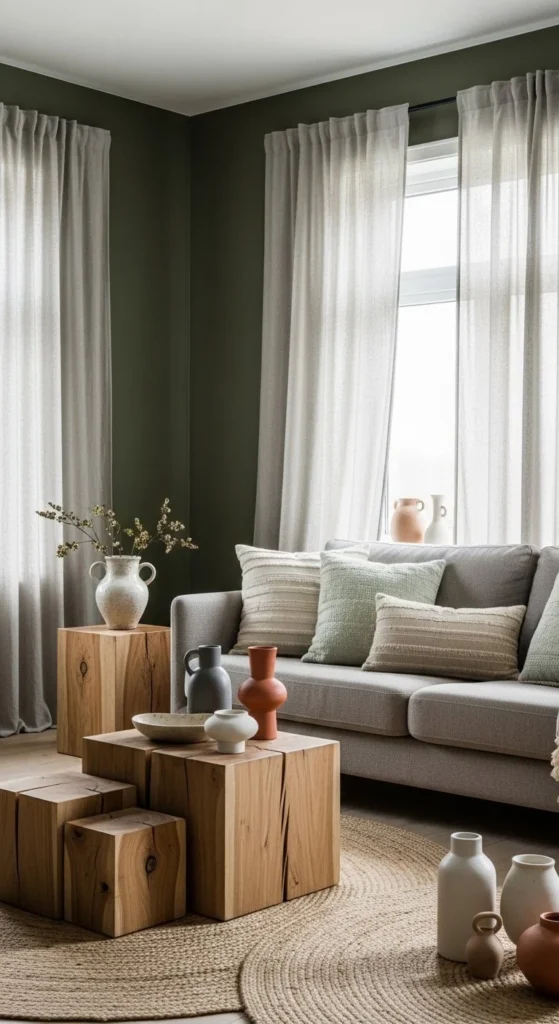
Olive green brings the outdoors in. It feels grounding without feeling dark. Pair it with natural wood layers for warmth. Think coffee tables, shelves, or ceiling beams. Avoid glossy finishes. Matte paint looks better with green. For small budgets, add olive through paint and keep furniture neutral. Swap throw pillows seasonally for variety. Linen curtains work better than heavy drapes here. This scheme handles seasonal decor well. Add clay, stone, or ceramic accents for texture. Keep metals muted. Black works better than gold in this setup.
4. Dusky Pink and Plaster Neutrals
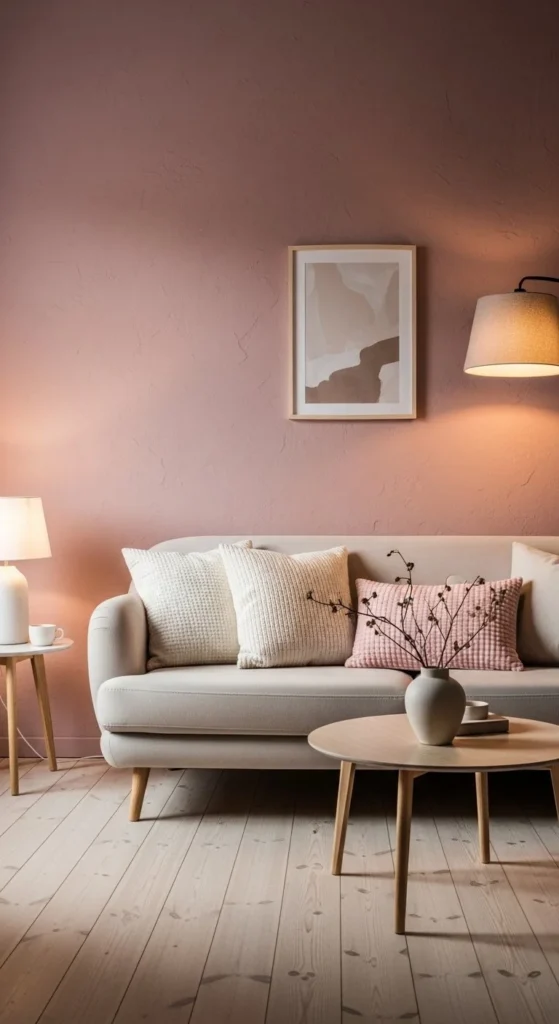
Dusky pink reads more neutral than sweet. It adds warmth without feeling playful. Plaster style finishes give depth and softness. Pair with muddy neutrals like beige or stone. Avoid bright whites here. DIY option: limewash style paint adds texture without wallpaper costs. Keep furniture low and simple. Curved silhouettes work well with pink tones. Use black accents sparingly for contrast. This palette works well in low light rooms because it reflects warmth. Art should stay minimal. One large piece beats many small frames.
5. Warm Gray with Layered Textures
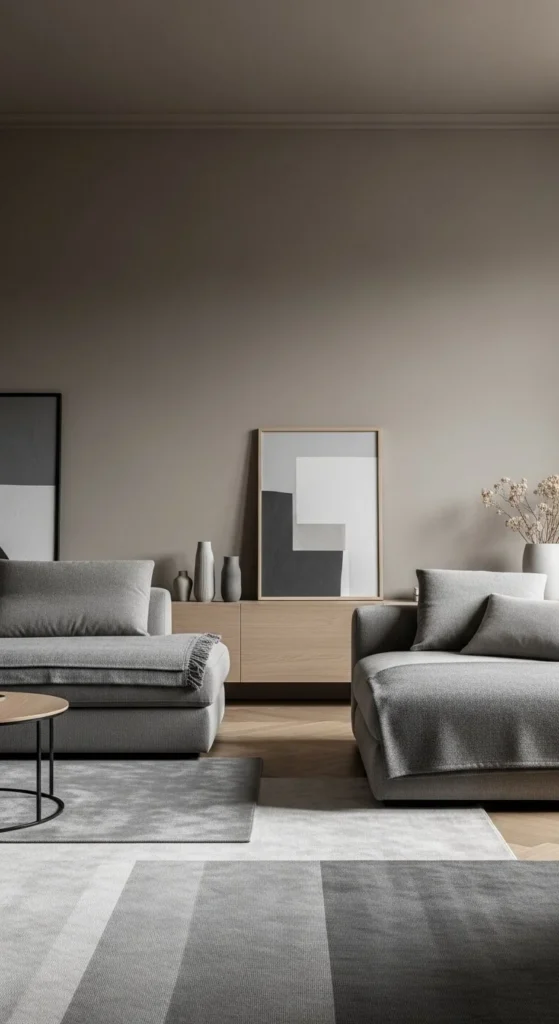
Warm gray avoids the cold feel of old school gray. The key here is texture. Mix boucle, wool, and woven fabrics to avoid flatness. Use tonal layering instead of contrast colors. Dark gray throws add depth. Light gray walls keep the room open. DIY trick: swap pillow covers seasonally to refresh the look. Stick to matte finishes. Glossy paint breaks the softness. Wood accents should lean warm, not ashy. This scheme works well for renters since it relies more on styling than paint alone.
6. Warm White with Black and Wood Contrast
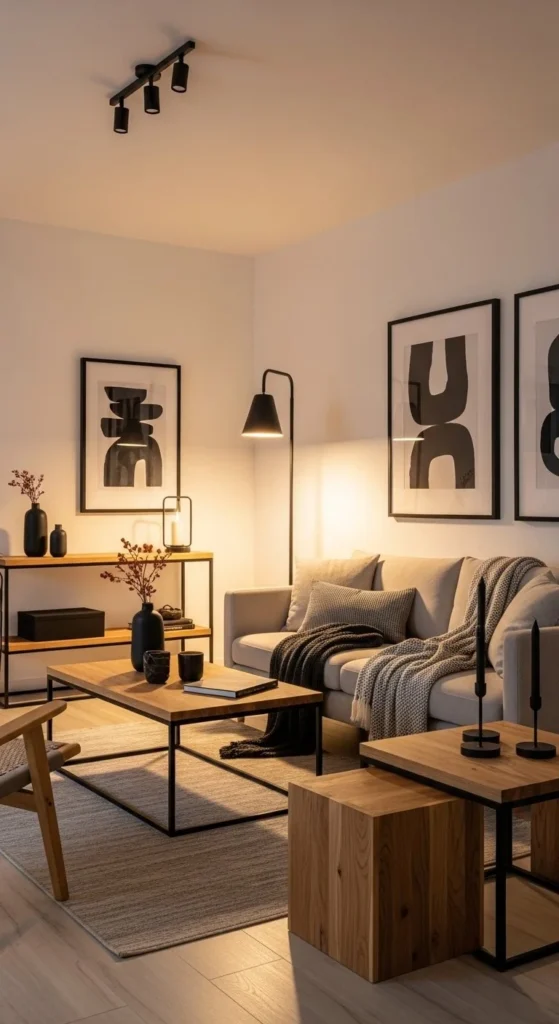
Warm white works best when paired with contrast. Black accents ground the space and keep it sharp. Use black in small doses. Frames, lighting, or a side table are enough. Natural wood tones soften the look and prevent it from feeling stark. Skip glossy black finishes. Matte reads calmer. DIY option: paint thrifted frames black for instant cohesion. Keep fabrics soft. Linen and cotton prevent the scheme from feeling rigid. This palette works well in apartments with limited light. Choose warm bulbs to avoid a yellow cast.
7. Emerald Green on a Neutral Base
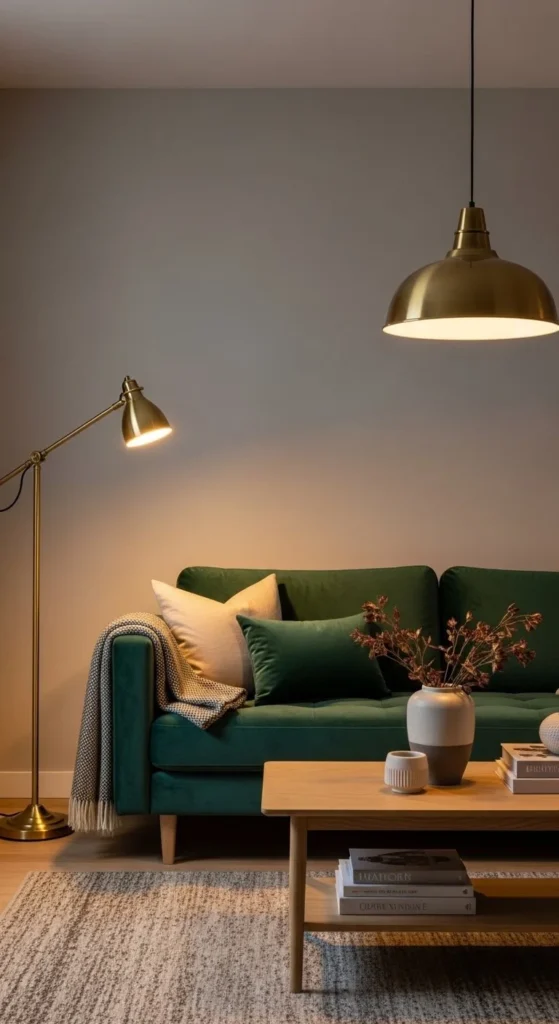
Emerald green brings richness without overpowering the room. Use it as an accent rather than a wall color. A sofa or armchair works best. Pair it with soft neutral walls to let the color stand out. Brass details add warmth and polish. Budget tip: velvet look fabrics give the same effect at a lower price. Keep rugs simple and light. Too much pattern fights the jewel tone. Add greenery for balance. This scheme feels bold yet controlled.
8. Terracotta and Soft Beige Pairing
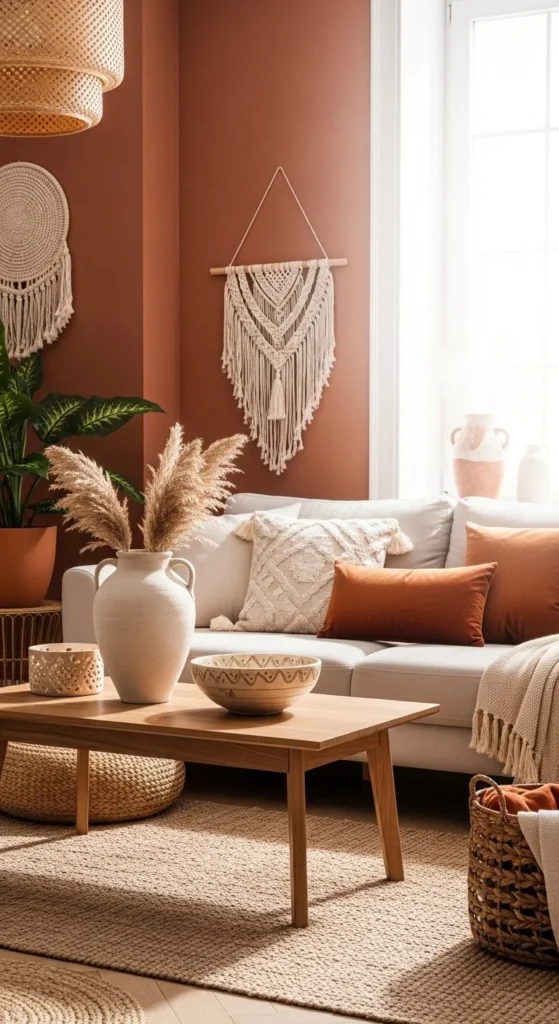
Terracotta brings warmth and character. It works best when softened with beige. Avoid pairing it with bright white. Earth toned styling keeps it grounded. Use terracotta on one wall if the room is compact. Add clay pots or ceramic vases to echo the tone. DIY option: limewash paint gives terracotta a muted finish. Wood should stay mid toned. This palette feels especially good in rooms with afternoon sun.
9. Japandi Neutrals with Black Accents
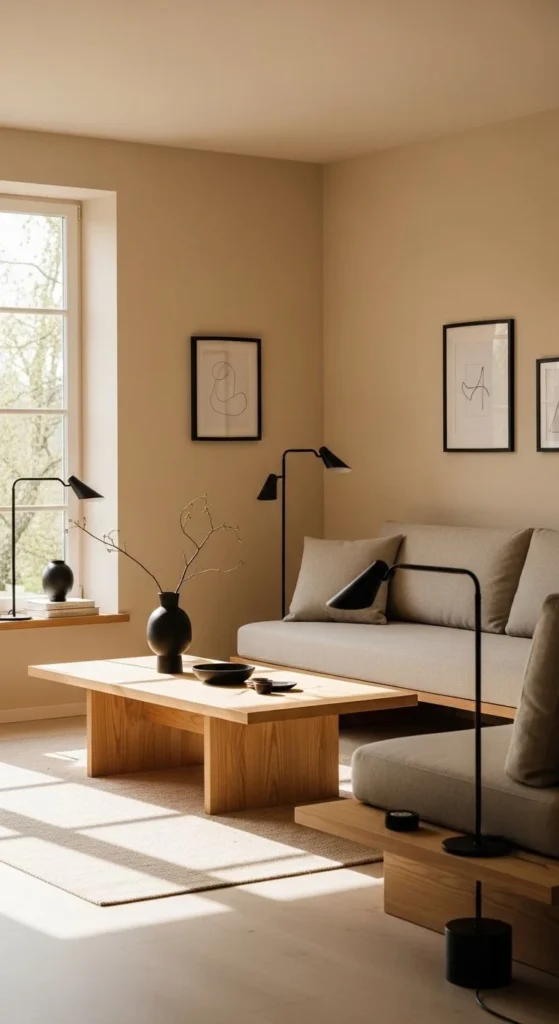
Japandi color schemes rely on restraint. Light warm neutrals keep the room airy. Black accents add structure. Use them sparingly. Think lamp bases or table legs. Natural materials do most of the work here. Linen, wood, and stone keep the palette grounded. Skip busy patterns. DIY tip: decluttering makes this scheme work better than buying more decor. Stick to one or two tones only.
10. Blue Green with Gray Undertones
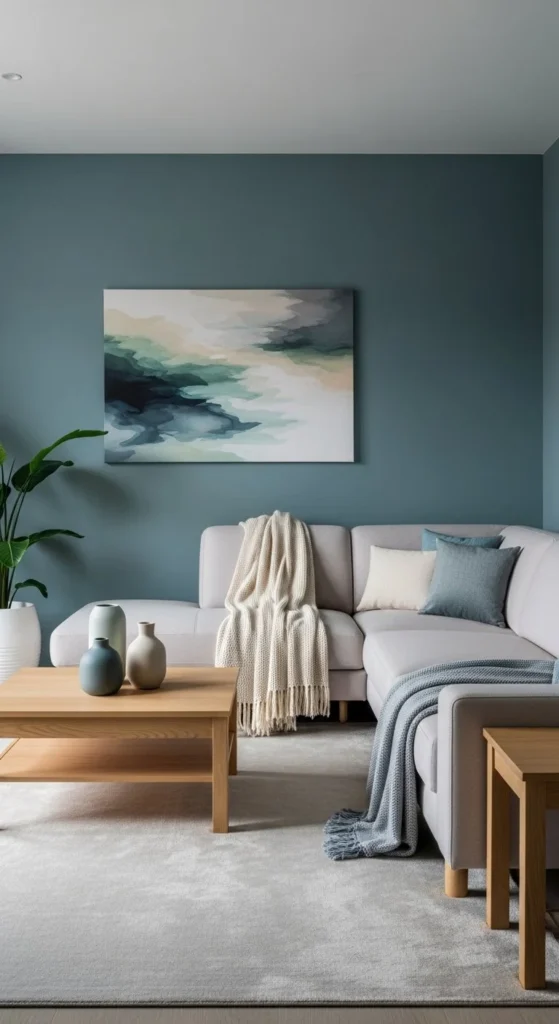
Blue green with gray undertones feels calmer than true blue. It adapts well to changing light. Pair it with soft gray or beige seating. Avoid crisp whites. They feel harsh against this shade. Add texture through rugs and cushions rather than color. DIY tip: paint sample boards and move them around the room during the day. This palette works well in shared living spaces where calm matters.
11. Monochrome Gray with Texture Layers
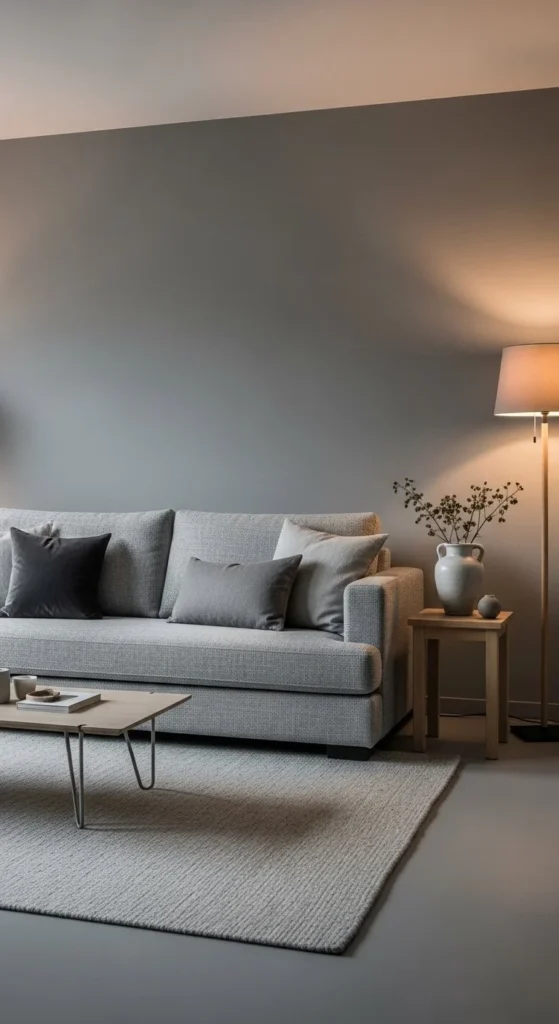
Monochrome gray works when texture does the heavy lifting. Mix light and mid gray shades to avoid flatness. Texture layering keeps the room from feeling cold. Bouclé, wool, and knits work well together. Avoid matching everything exactly. Slight variation feels more natural. DIY option: swap cushion covers instead of furniture. Keep metals muted. Black or brushed steel fits better than shiny chrome. This scheme suits modern apartments where color restraint feels calming.
12. Olive Green with Plum Accents
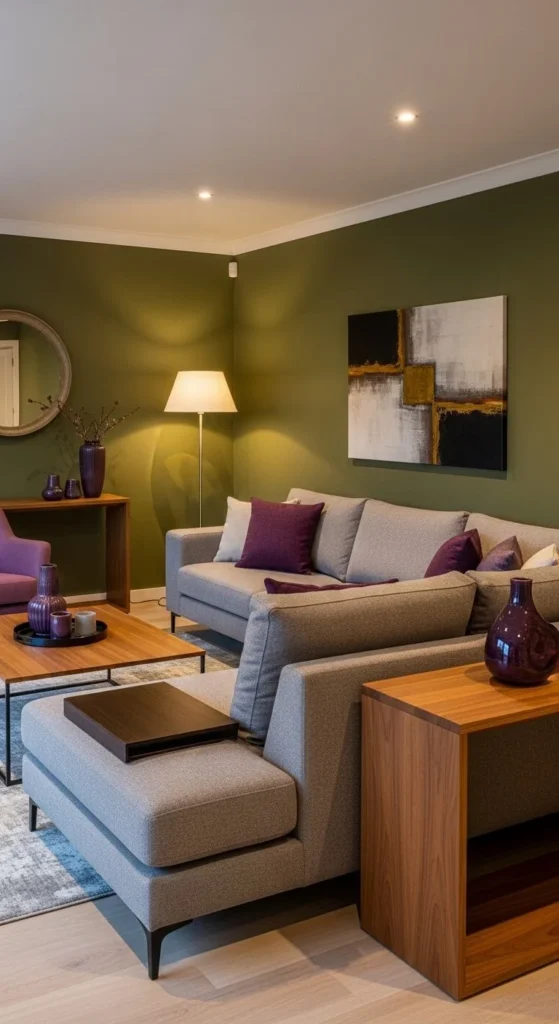
Olive and plum create an unexpected pairing that feels rich but controlled. Use plum in small accents. Cushions, art, or a throw work well. Earthy greens stay dominant to keep balance. Avoid bright purples. Muted tones look more refined. DIY tip: add plum through removable decor for flexibility. Keep rugs neutral. Wood tones should stay warm and simple.
13. Soft Blue with Linen and Oak
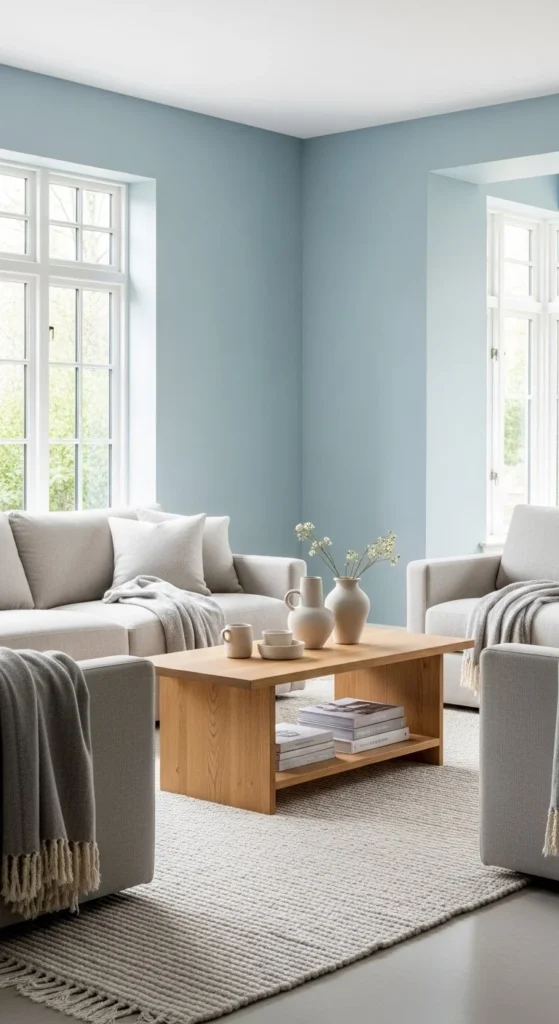
Soft blue brings calm without cooling the room too much. It pairs well with linen and oak. Stick to light, natural textures to keep the space open. Avoid heavy drapery. Sheer curtains work best. DIY option: add blue through paint and keep furniture neutral. This palette works especially well in warm climates where cooler tones feel refreshing.
14. Black and White with Gold Details
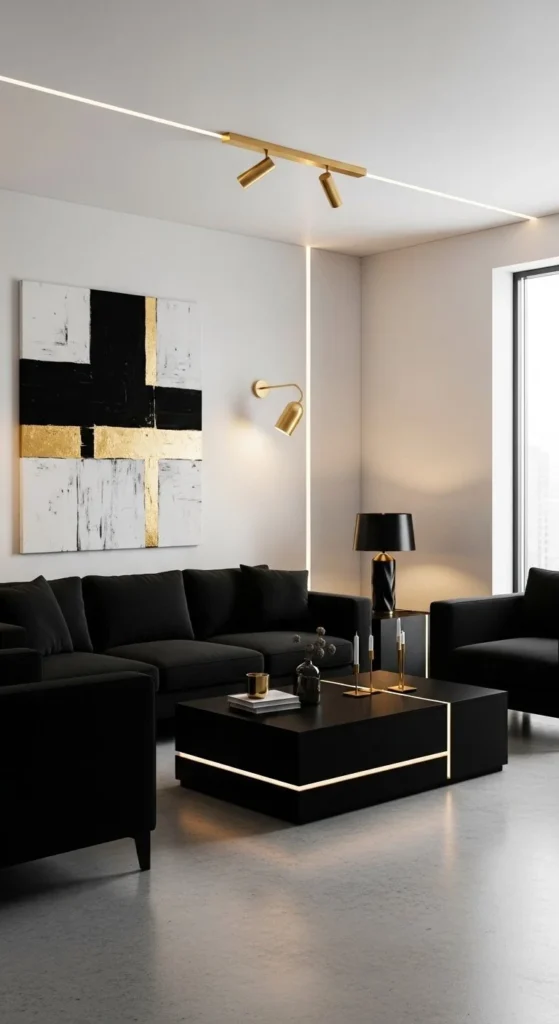
Black and white feels sharp when softened with gold. Use gold sparingly. Lighting fixtures or small trays are enough. High contrast styling works best in rooms with good light. Avoid glossy finishes everywhere. Mix matte black with soft fabrics. DIY trick: replace lamp shades with warmer bulbs to soften contrast. Keep furniture silhouettes simple.
15. Butter Yellow Pops on Neutral Backdrop
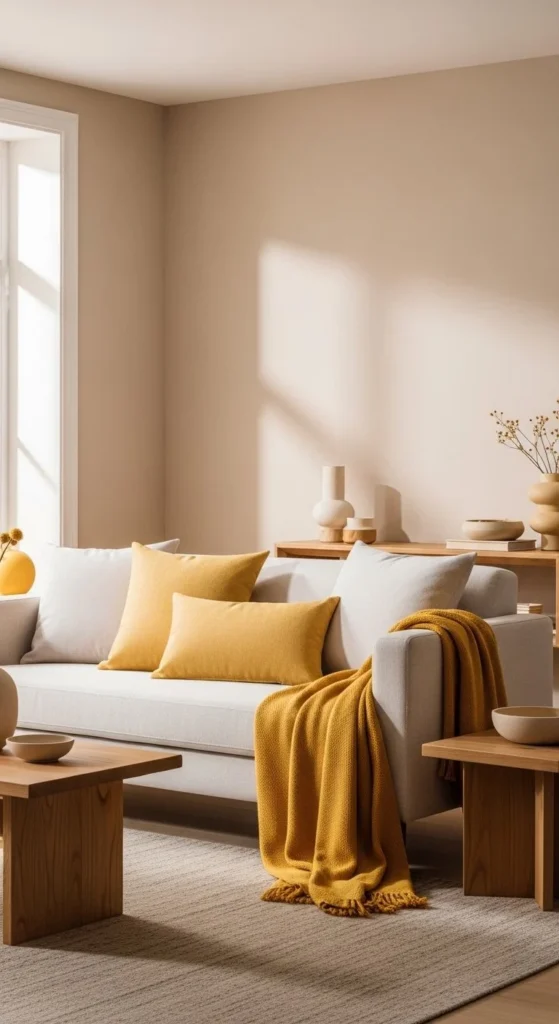
Butter yellow adds cheer without overpowering the room. Use it as an accent only. Cushions, art, or small decor work well. Pair with warm neutral walls for balance. Avoid pairing with cool gray. DIY option: paint a small side table yellow for a subtle color hit. Keep patterns minimal. This palette feels welcoming and easy to live with.
16. Warm Beige with Soft Gray Contrast
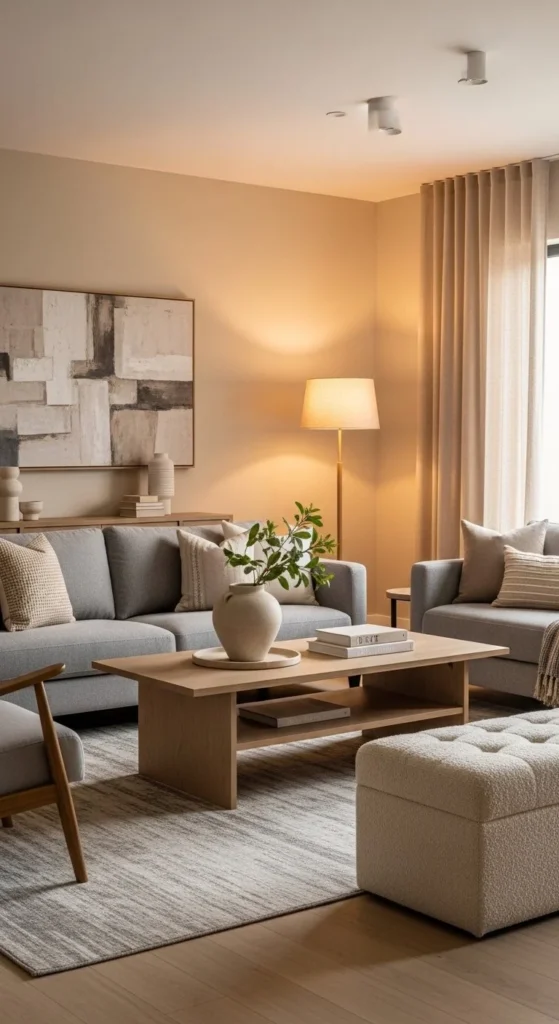
Warm beige and soft gray work well together when neither goes too cool. Beige sets the tone. Gray adds structure. Keep contrast gentle rather than sharp. Choose gray fabrics with warm undertones. Avoid blue gray shades. DIY tip: layer throws in slightly darker beige to blend the two tones. Wood accents should stay light. This palette feels calm and works well in open layouts.
17. Color Drenched Olive Living Room
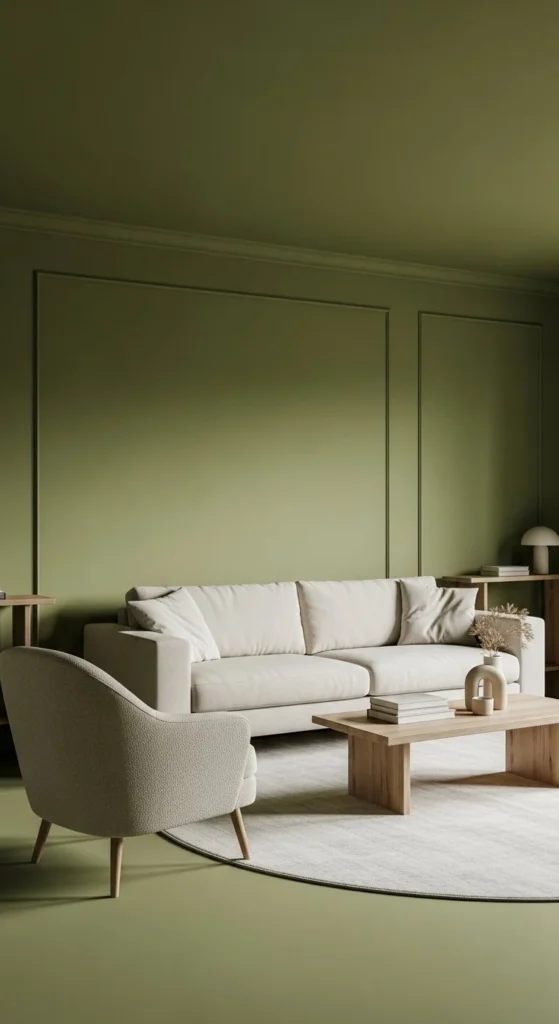
Color drenching creates an immersive feel. Olive works especially well for this approach. Use the same shade on walls and ceiling. Keep furniture neutral so the color doesn’t overwhelm. Saturated green feels grounding rather than dark. DIY tip: use matte paint to reduce glare. Add texture through rugs and cushions. This scheme suits rooms used mainly in the evening.
18. Plaster White with Natural Linen
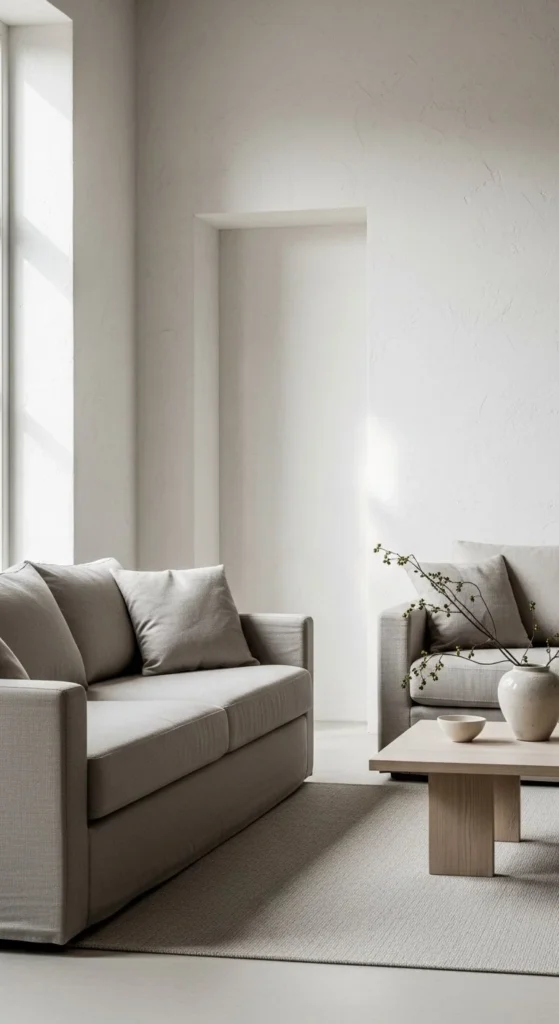
Plaster white brings warmth that flat white lacks. The texture adds depth without color. Pair it with natural linen upholstery for a relaxed feel. Avoid sharp contrast. Everything should feel soft and tonal. DIY option: textured paint or limewash achieves a similar look. Keep decor minimal. One statement piece works better than many small items. This palette works well in bright rooms.
19. Forest Green with Warm Metallics
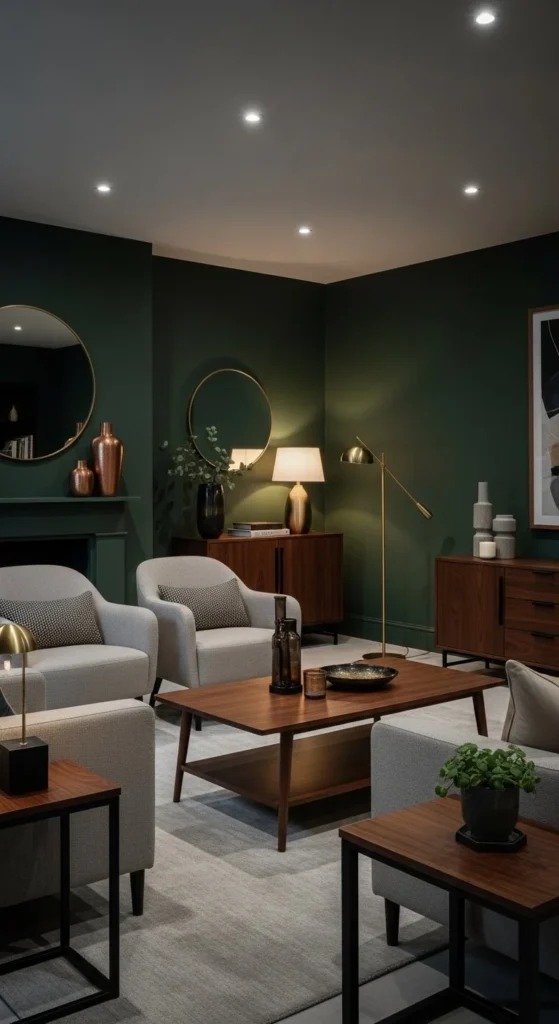
Forest green feels rich and enveloping. Balance it with warm metallic accents like aged brass. Use metallics sparingly. Lamps or trays are enough. Dark green walls work best in rooms with controlled lighting. DIY tip: add green through paint and keep furniture light to avoid heaviness. Rugs should stay neutral. This scheme feels dramatic yet livable.
20. Neutral Base with Coral Accent Touches
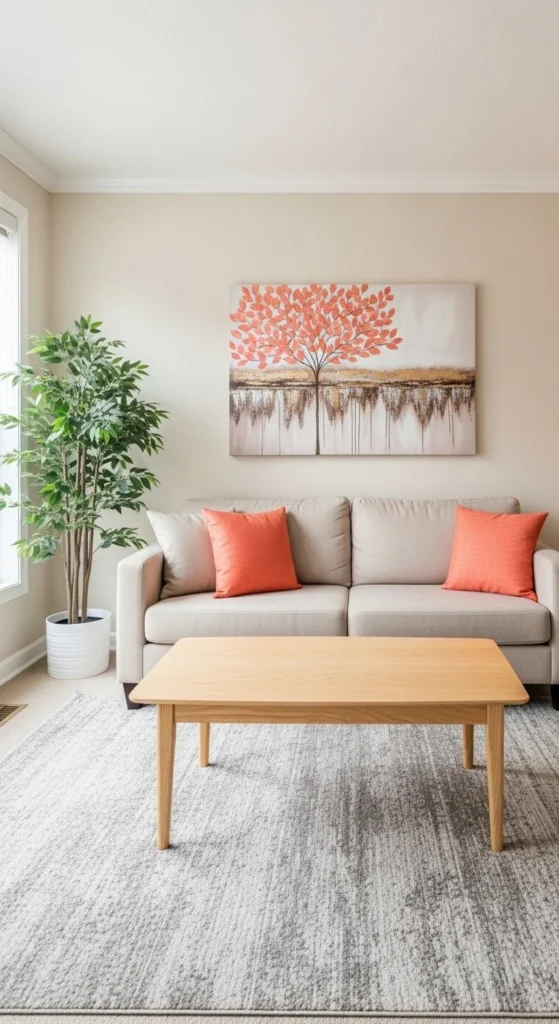
Coral adds warmth without taking over the room. Use it in small accents only. Cushions or art work best. Pair it with soft neutral bases like beige or warm white. Avoid mixing coral with strong patterns. DIY option: paint a small decor item coral for a subtle update. This palette feels playful but controlled.
21. Sea Salt Blue with Warm Neutrals
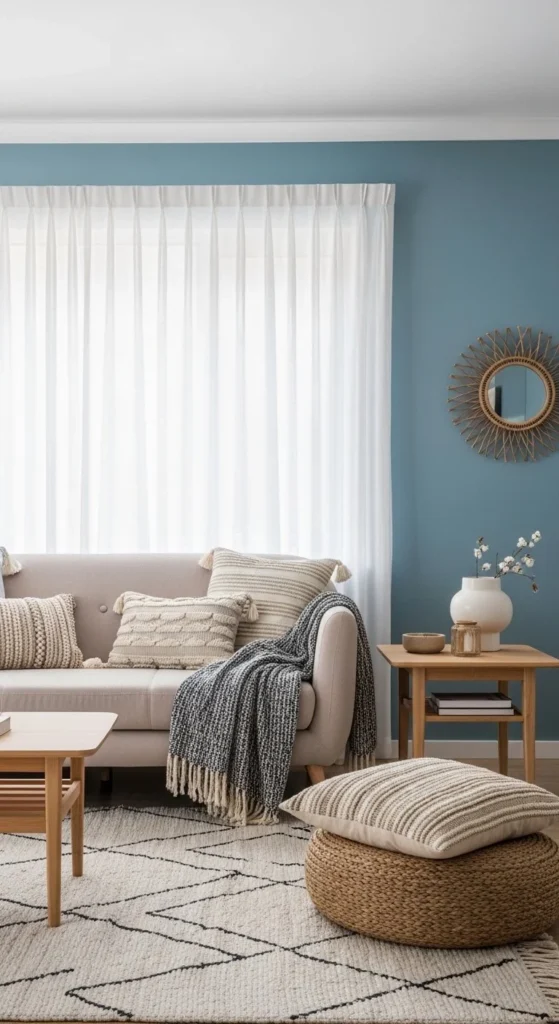
Sea Salt blue feels light without turning cold. It works best when paired with warm neutrals. Beige sofas and cream rugs soften the blue tone. Light reflective color keeps the room open and calm. Avoid pairing with stark white trim. Soft ivory looks better. DIY tip: paint only the upper half of walls for a subtle color wash. Texture matters here. Add woven baskets or boucle cushions. This scheme works well in rooms with limited natural light.
22. Dead Salmon Pink as a Neutral Base
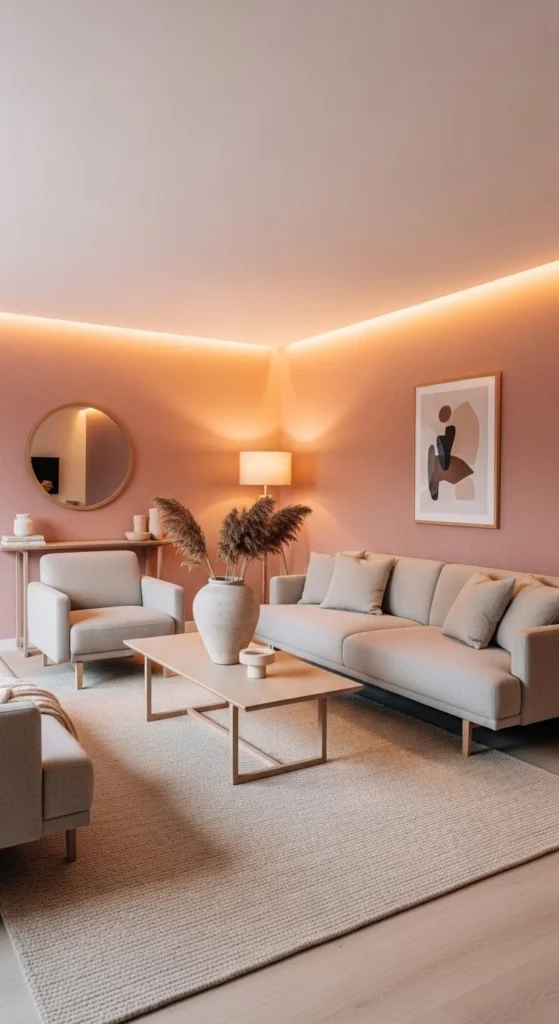
Dead Salmon reads more earthy than pink. It behaves like a neutral while adding warmth. Pair it with stone, beige, or soft gray furniture. Muddy pink tones avoid sweetness and feel grounded. DIY option: sample paint heavily before committing, as lighting shifts its tone. Keep decor minimal. One or two dark accents add balance. This palette works well in both modern and classic interiors.
23. Black White Scheme with Soft Wood Balance
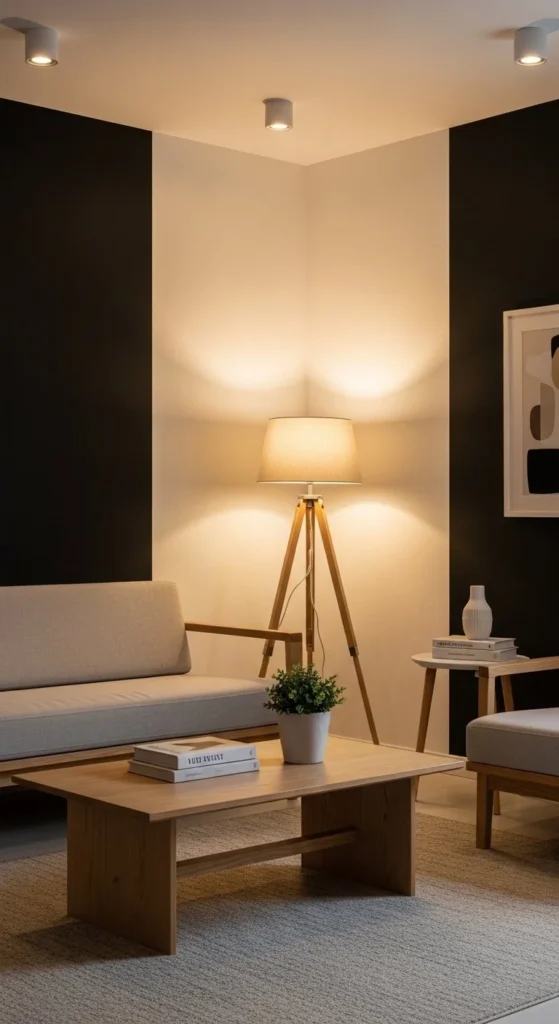
Black and white feel strong when softened with wood. Use white as the main color. Black works best in accents only. Furniture legs, lighting, or frames are enough. Wood balance keeps the room from feeling stark. DIY tip: add wood through trays or shelves if furniture feels too bold. Keep fabrics soft and matte. This scheme suits modern homes with clean lines.
24. Saturated Plum with Soft Beige Layers
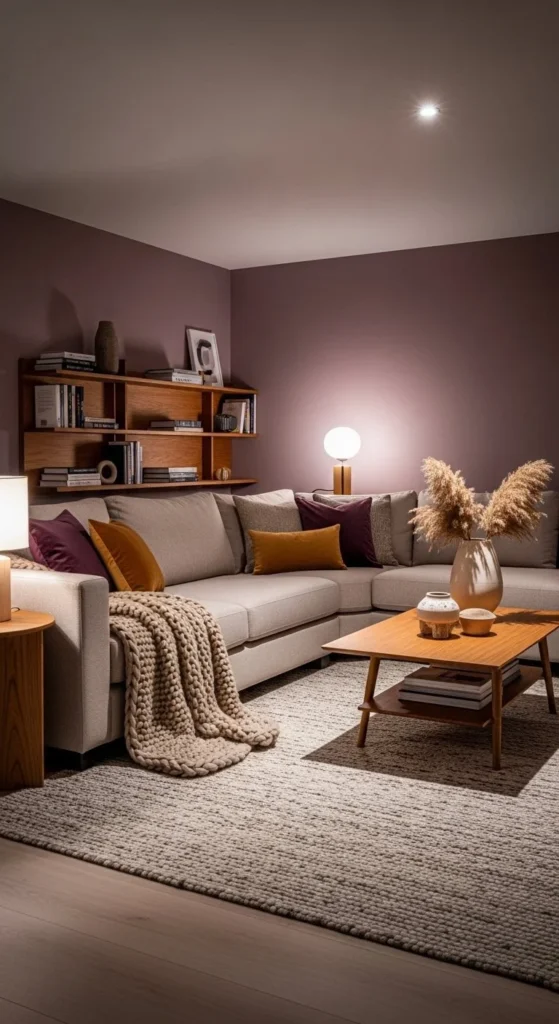
Plum brings richness without overwhelming when used carefully. Pair it with beige to keep the room grounded. Avoid pairing with cool gray. Saturated jewel hues work best in rooms used during evenings. DIY tip: use plum on one feature wall if unsure. Add texture through rugs and cushions rather than more color. This palette feels bold yet controlled and finishes the list with drama.

Leave a Reply