

1. Low-Profile Modular Seating
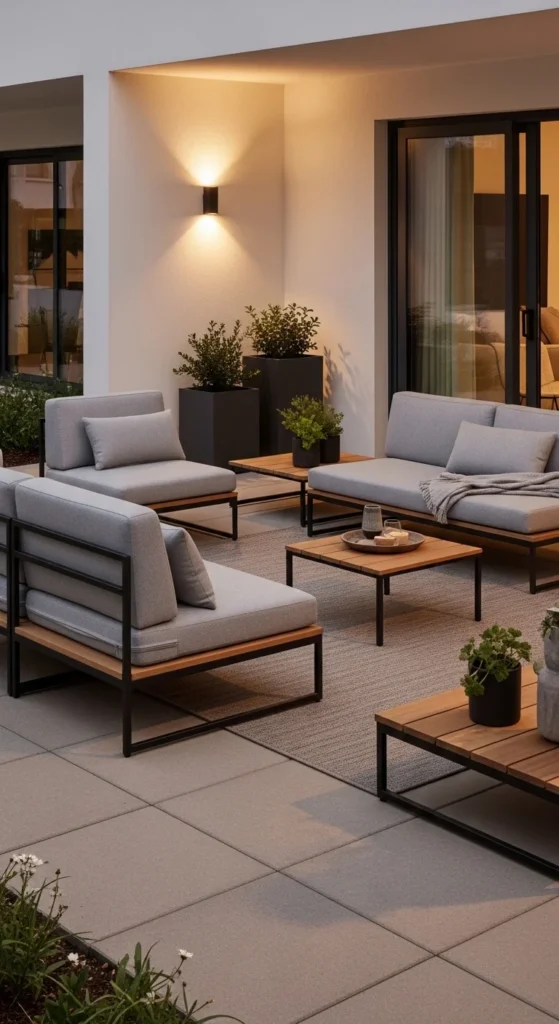
Low seating sets the tone fast. It keeps sightlines open. It also makes small patios feel wider. Choose modular pieces so the layout can shift with the season. Start with two armless chairs and one corner unit. That’s enough. Clean geometry matters more than size here. Stick to one fabric color to avoid visual noise. Performance fabric saves time later. Look for removable covers you can toss in the wash.
DIY tip: build a simple base from plywood and outdoor foam, then add a tailored slipcover. Budget-friendly sets often hide at the end of summer sales. Place seating away from walls to create breathing room. Add one slim side table only. No extras. For comfort, layer one lumbar pillow in a similar tone. Avoid patterns. Let texture do the work. Concrete, wood, and fabric should each show up once. That balance keeps the space calm and modern without feeling bare.
2. Neutral Concrete Paver Flooring
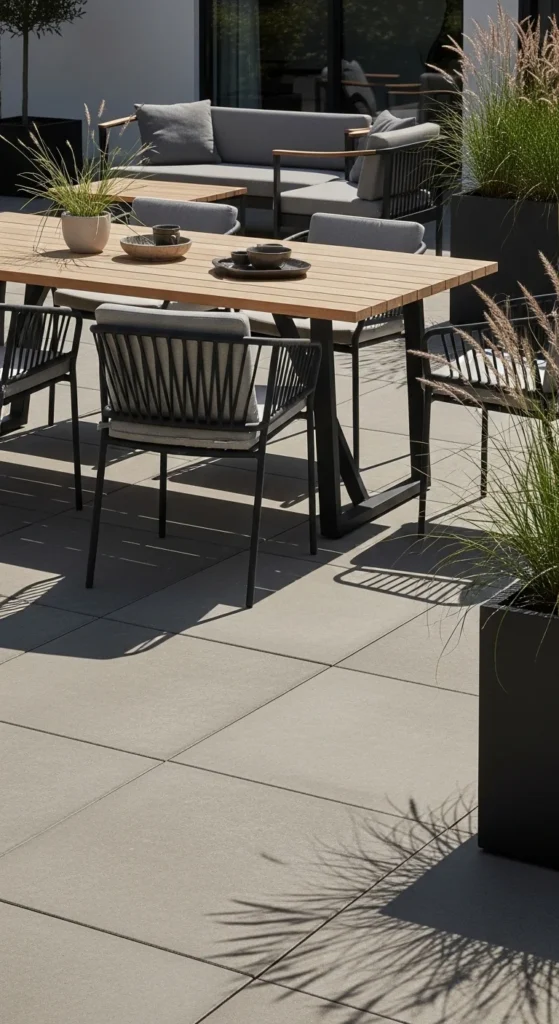
Concrete pavers ground the whole patio. They feel quiet and ordered. Large formats reduce visual breaks, which helps small areas feel longer. Choose a warm gray instead of cool slate to avoid a cold look. Even spacing matters. Use thin gravel or polymeric sand for crisp lines.
DIY-friendly kits make this doable over a weekend. Lay over compacted gravel for drainage. Rent a plate compactor to save effort. If pouring concrete feels like too much, porcelain pavers offer a similar look with less mess. Keep the rest of the patio restrained so the flooring can shine. Pair with light wood or matte black furniture.
Styling trick: run the pavers in the same direction as indoor flooring to hint at indoor–outdoor flow. Skip borders. Let edges stay clean. For warmth, add one outdoor rug with a low pile. No fringe. No pattern. This surface becomes the calm base that everything else rests on.
3. Slim Black Pergola Frame
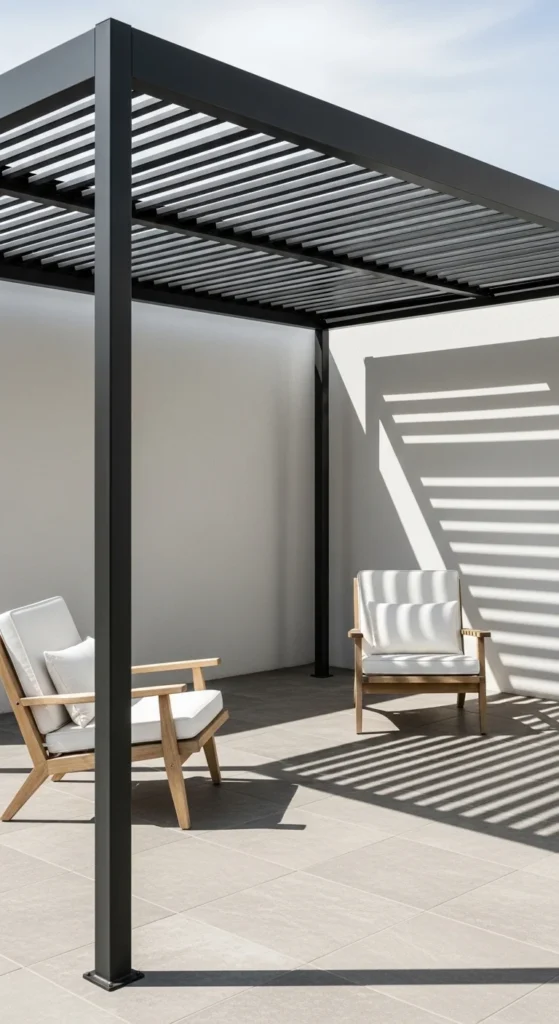
A thin pergola frame adds structure without heaviness. Black metal works well because it outlines space without stealing focus. Keep the roof open or use spaced slats to let light pass through. This keeps the patio airy. Strong lines are the point here, not decoration.
For a lower-cost option, look for aluminum pergola kits. They’re lighter and easier to assemble. Anchor posts carefully so everything stays square. Skip drapes. If shade is needed, add a simple retractable fabric panel in off-white. One panel is enough.
Design tip: align the pergola with doors or windows to reinforce symmetry. Place seating fully inside the frame so it reads as one zone. Avoid hanging too many lights. One linear fixture or a pair of small wall lights nearby works better. The pergola becomes a quiet outline that makes the rest of the patio feel intentional.
4. Built-In Concrete Bench Seating
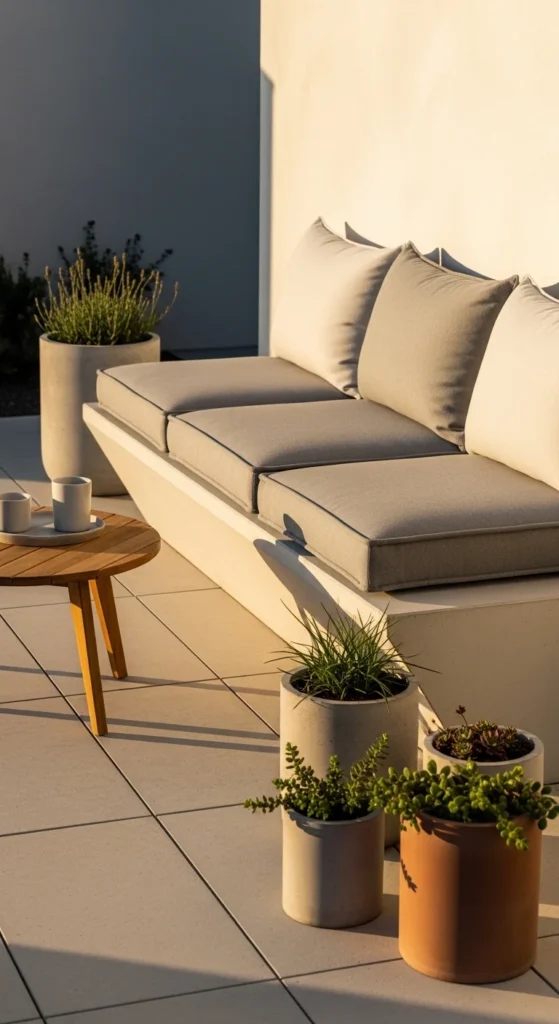
Built-in benches reduce clutter fast. They remove the need for extra furniture. Concrete works well because it feels permanent and grounded. Keep the bench low and long. Straight edges only. Visual weight stays low when cushions match the wall color.
DIY option: form the bench with concrete blocks and a smooth render coat. Add a wood seat top if full concrete feels too stark. Use outdoor foam cushions with ties hidden underneath. Storage can fit below the seat if planned early.
Style lightly. One cushion per seat is plenty. Add a single throw for cooler evenings. Place the bench along a wall or edge to free up floor space. This approach suits narrow patios where chairs would crowd walkways. The bench becomes part of the architecture, not an add-on.
5. Soft White Outdoor Curtains
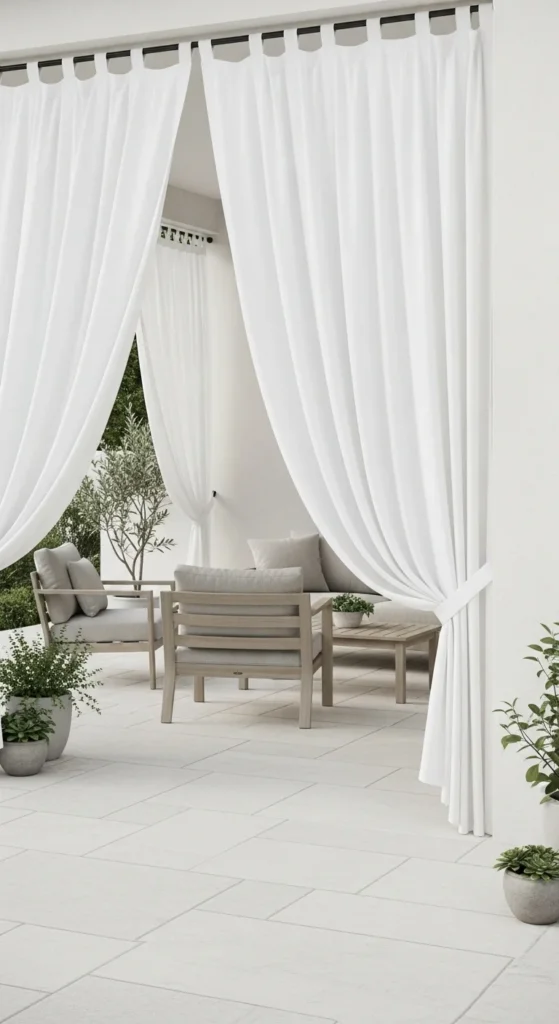
Outdoor curtains add privacy without closing things off. White works best because it reflects light. Choose a sheer, weather-rated fabric that moves with the breeze. Light diffusion is the goal, not coverage.
Install ceiling-mounted tracks under a pergola or simple rods on posts. Keep hardware minimal. Curtains should just skim the floor. Avoid puddling. Tie them back loosely during the day. Let them hang straight at night.
Budget tip: look for shower curtains made for outdoor use. They often cost less and hold up well. Wash once a season to keep them crisp. Pair curtains with simple seating so the fabric stays the focal layer. This single move can make a patio feel calm, private, and modern without adding bulk.
6. Monochrome Outdoor Color Palette
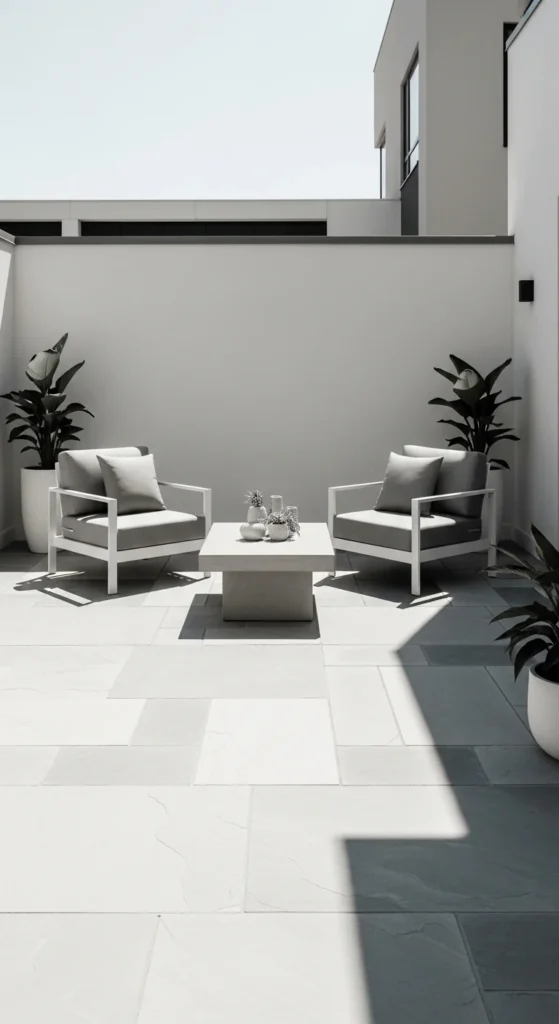
A single-color palette brings instant calm. Whites, creams, and soft grays work well outdoors because they reflect light and hide visual breaks. Keep tones close together. Subtle contrast should come from texture, not color. Think smooth concrete against woven fabric or matte metal next to wood.
Budget trick: repaint existing furniture in one outdoor-safe color. Even mismatched pieces feel unified once they share the same tone. Use fabric covers to reset old cushions without replacing frames. If the space feels flat, add depth with shadow. A pergola, umbrella, or tall planter can help.
Limit accent colors. One muted shade, used once, is enough. Too many tones break the mood. This approach also photographs well, which matters if you plan to share the space online or pin it later. Calm palettes age better and won’t feel dated next season.
7. Vertical Garden Wall Panel
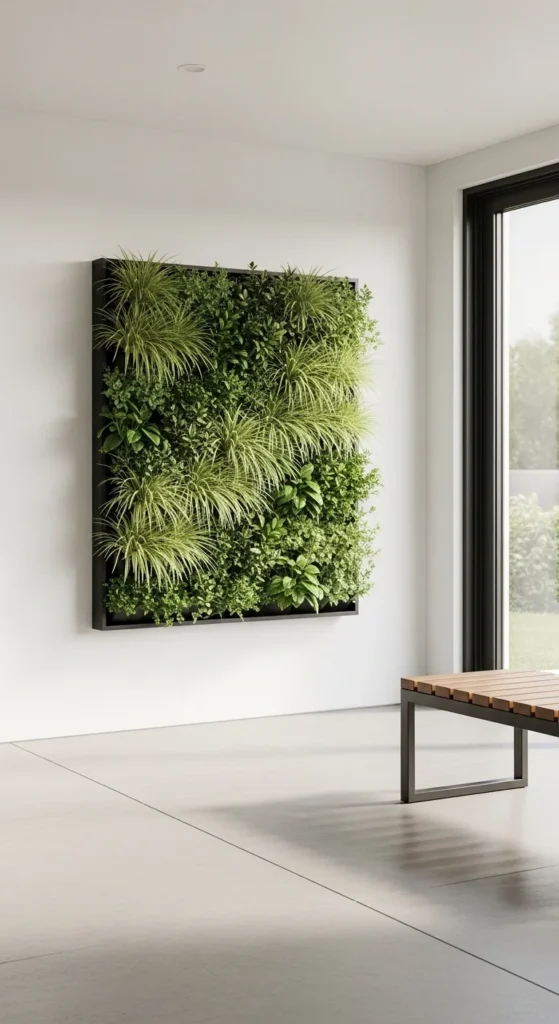
Vertical gardens bring life without eating floor space. They work especially well on balconies and narrow patios. Choose structured plants with clean shapes. Ferns and trailing vines can feel messy here. Controlled greenery keeps the minimalist look intact.
Pre-made wall panels save time and reduce guesswork. Many systems include drip irrigation that connects to a hose timer. For a low-cost route, mount metal grids and hang lightweight planters in a simple pattern. Keep spacing even.
Limit plant variety. Two or three types max. Stick to similar shades of green. This keeps the wall from feeling busy. Pair the garden with plain furniture nearby so the plants stay the focus. Regular trimming matters. A tidy garden reads calm. An overgrown one does not.
8. Hidden Storage Bench
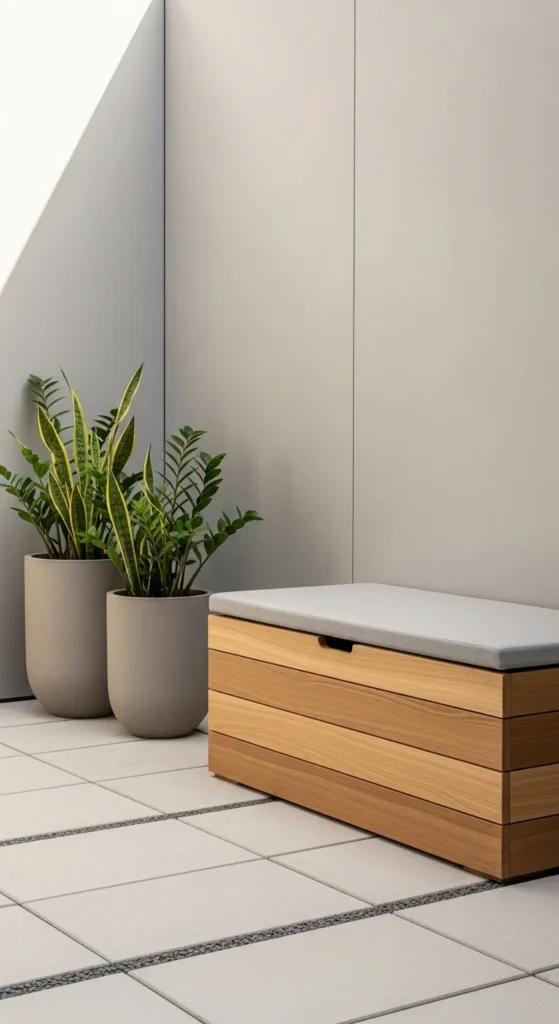
Storage solves clutter quietly. A bench with built-in storage keeps cushions, throws, and tools out of sight. Choose a design with flush panels and no visible handles. Clean surfaces help the bench blend into the background.
DIY fans can convert a basic deck box by adding a custom wood wrap. Keep the grain simple. Seal it well for weather exposure. Inside, use breathable bins to prevent moisture buildup.
Style the bench like furniture, not storage. Add one long cushion instead of multiple pillows. Place it along a wall or fence to save space. This piece works hardest in small patios where every item must earn its spot. When clutter disappears, calm shows up fast.
9. Warm Wood and Black Metal Mix
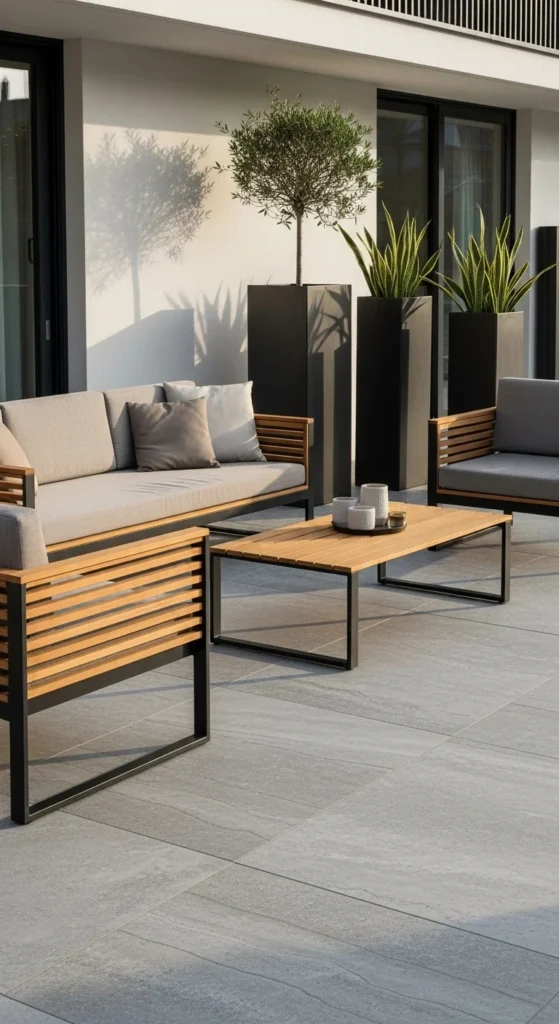
Wood softens minimalism. Black metal sharpens it. Together, they strike balance. Use wood for seating or decking. Let black metal appear in frames, lighting, or planters. Material contrast replaces decoration here.
You don’t need expensive teak to get the look. Acacia or eucalyptus can work if sealed properly. For metal, choose powder-coated finishes to avoid rust. Keep profiles slim. Thick frames feel heavy.
Limit the mix to two main materials plus one neutral surface like concrete or stone. More than that gets busy. Repeat each material at least twice so it feels intentional. This pairing suits both modern homes and older exteriors without clashing.
10. Layered Minimalist Lighting Plan
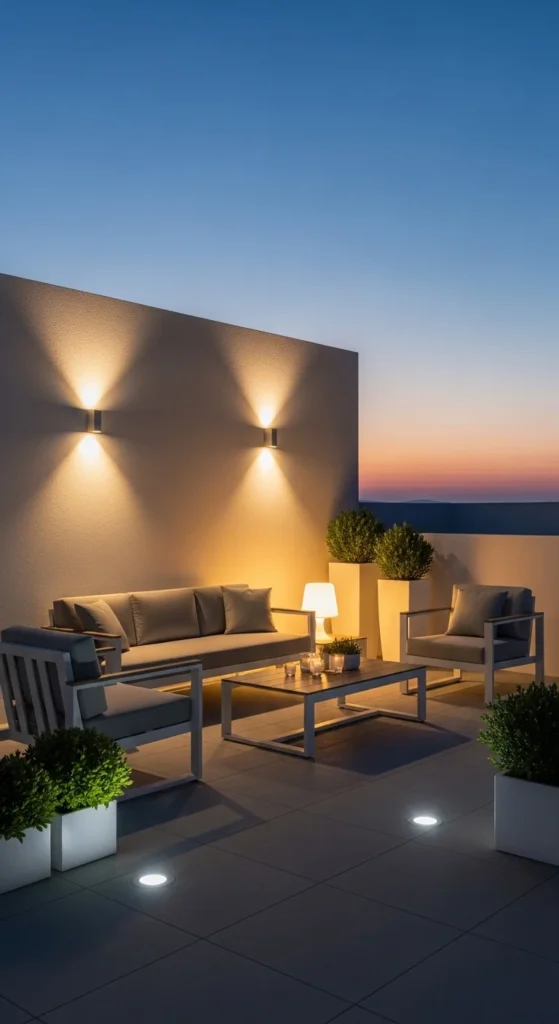
Lighting sets the mood after sunset. Start with ambient light. Wall sconces or overhead fixtures work well. Add one task light near seating. Finish with a soft accent like a table lamp. Low glare matters more than brightness.
Solar lights can handle ground-level accents on a budget. Choose warm color temperatures only. Cool light breaks the calm. Hide fixtures where possible so the glow feels indirect.
Avoid string lights if you want a modern look. If used, keep them straight and minimal. One run only. Good lighting makes the patio usable longer without adding clutter. It also highlights textures like concrete and wood, which carry the design when color stays quiet.
11. Minimalist Fire Pit
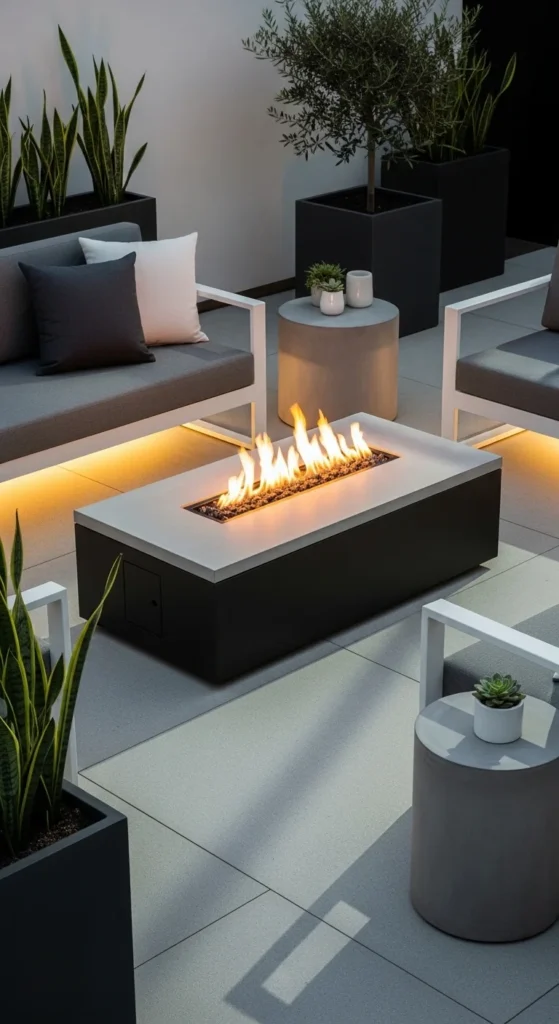
A fire pit adds warmth and focus without clutter. Keep the shape simple—circle or square works best. Low-profile design keeps sightlines open. Concrete or black metal complements neutral furniture.
DIY option: a pre-made steel ring filled with gravel is cheaper than poured concrete. Keep the fire pit centered for symmetry. Surround it with a few modular seats rather than chairs on every side.
Style tip: skip decorative stones or oversized logs. A small pile of polished river rocks is enough. A fire pit makes the patio usable year-round, especially in cooler evenings. Safety matters—ensure clearance around all seating and check local codes before installation.
12. Outdoor Rugs in Subtle Patterns
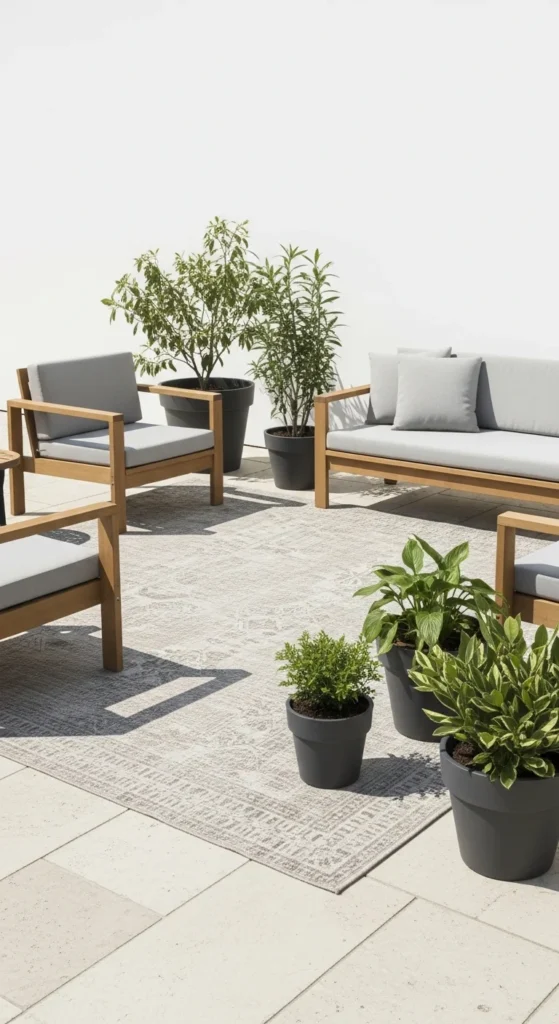
Rugs add softness and define zones. Stick to subtle patterns or monochrome tones to avoid visual clutter. Low-pile outdoor rugs are easier to clean and maintain.
Budget-friendly option: look for polypropylene rugs—they handle sun and rain. Keep the rug slightly smaller than the seating area to frame furniture neatly.
Styling trick: roll edges under slightly for a crisp finish. Layer one outdoor pillow in the same tone for cohesion. Avoid multiple rugs—one well-placed piece is enough to tie the space together and make it feel cozy.
13. Privacy Screens with Slim Profiles
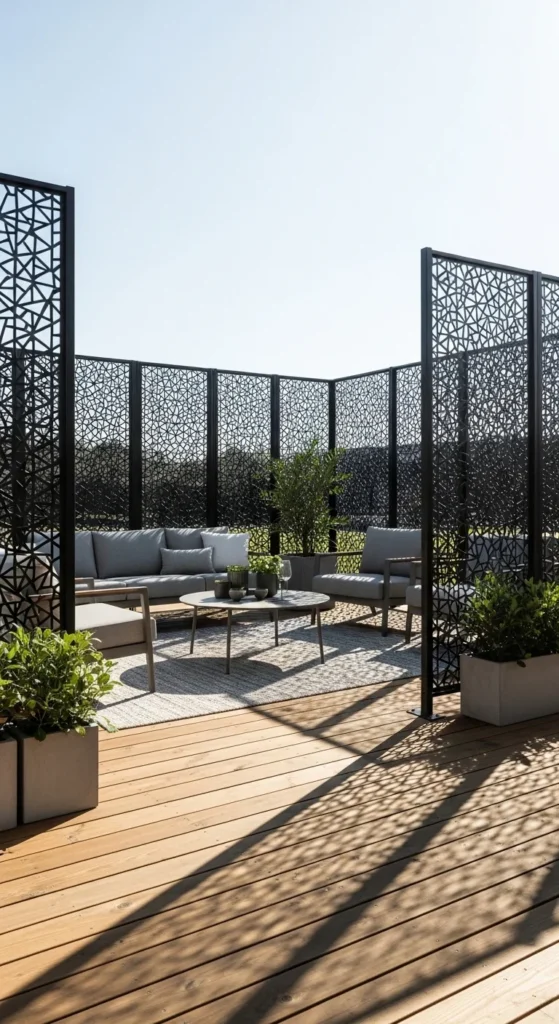
Privacy screens help define boundaries without closing off light. Use slim profiles and geometric patterns to maintain openness. Black or dark gray works best for contrast with light walls or floors.
DIY option: mount laser-cut panels on posts or hinges. Keep spacing even and avoid overly intricate designs. One panel is usually enough per side.
Plant a row of low shrubs or tall grasses along the base to soften edges. This combination keeps the patio feeling calm while giving privacy from neighbors. Maintenance is low, but a quick wipe down each season keeps it sharp.
14. Multi-Zone Layout
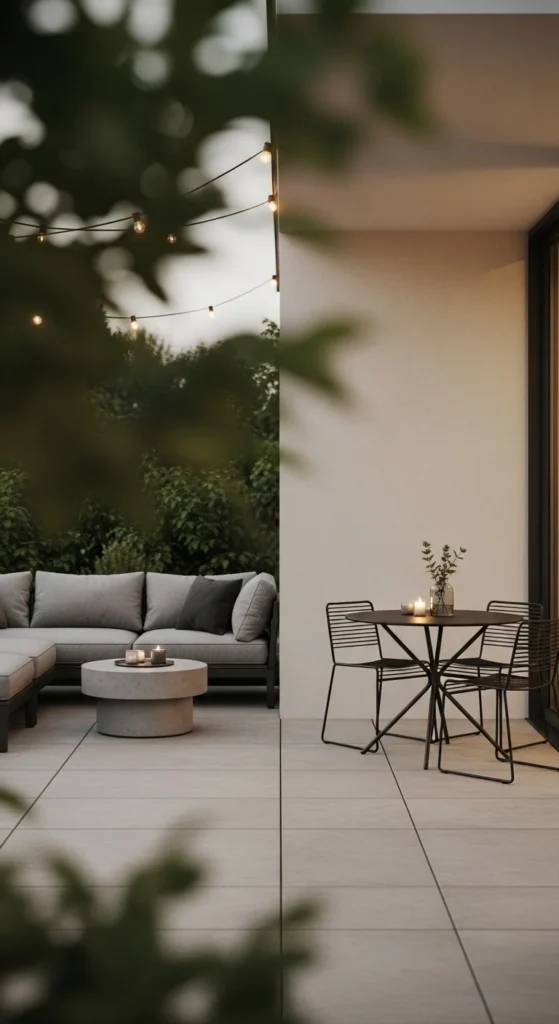
Dividing space into functional zones creates a sense of order. One area for lounging, another for dining, even on small patios. Keep furniture low-profile to prevent crowding.
Budget tip: define zones with outdoor rugs or slightly different flooring textures. Modular pieces make it easier to switch zones seasonally.
Styling trick: avoid over-accessorizing. Two or three planters per zone are enough. Multi-zone layouts make small patios feel larger by giving each function its own visual space. Clear pathways prevent trips and keep the area calm.
15. Water Feature Accent
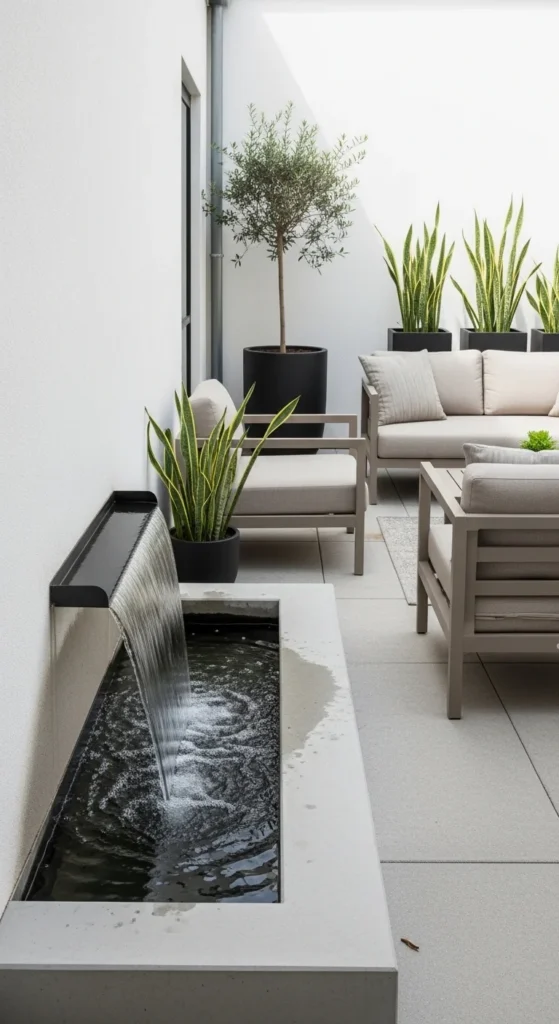
A small water feature adds sound without clutter. Choose geometric shapes to maintain minimalism. Concrete or metal keeps the look restrained.
DIY option: a simple tabletop or wall-mounted fountain works for tight patios. Re-circulating pumps are low maintenance and budget-friendly.
Placement matters: put it where seating can enjoy the sound, but not block pathways. One accent is enough. Pair with low-maintenance plants nearby. The gentle water sound makes the patio feel serene and masks urban noise without overwhelming the space.
16. Weatherproof Textiles
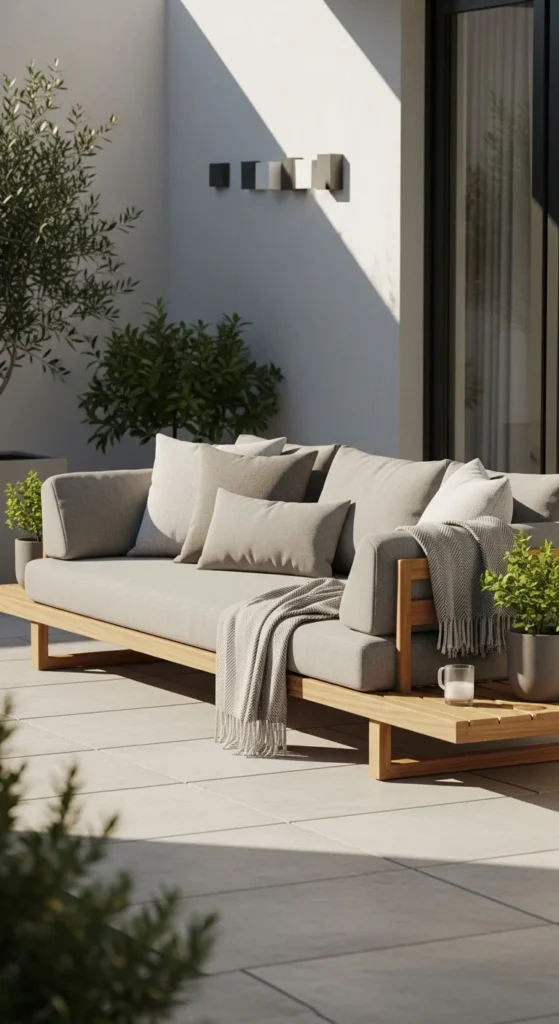
Textiles bring comfort without cluttering the space. Use weatherproof fabrics in muted tones to maintain a clean look. Gray, cream, or taupe cushions work best.
DIY option: recover old cushions with outdoor canvas or Sunbrella fabric. Easy to sew and wash. Avoid patterns that compete with the furniture’s lines.
Styling trick: limit pillows to one per seat and one throw for cooler nights. Let texture, not color, create interest. Proper textiles make seating more inviting while keeping the patio calm and modern year-round.
17. Perforated Metal Planters
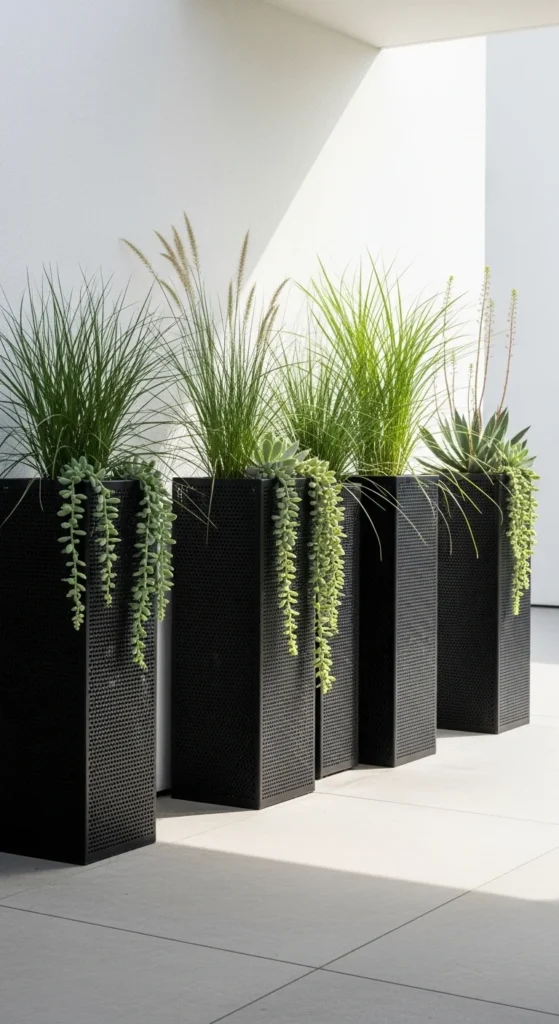
Perforated metal planters add height and structure without visual heaviness. Black or dark gray keeps it grounded, while plants soften the look.
DIY idea: punch simple geometric patterns in sheet metal and seal for weather resistance. Group planters in odd numbers for balance.
Keep plant choices minimal—one or two types per planter. This approach maximizes greenery in tight spaces without clutter. The perforation adds subtle texture and shadow play throughout the day, enhancing calm and modern vibes.
18. Seasonal Adaptable Furniture
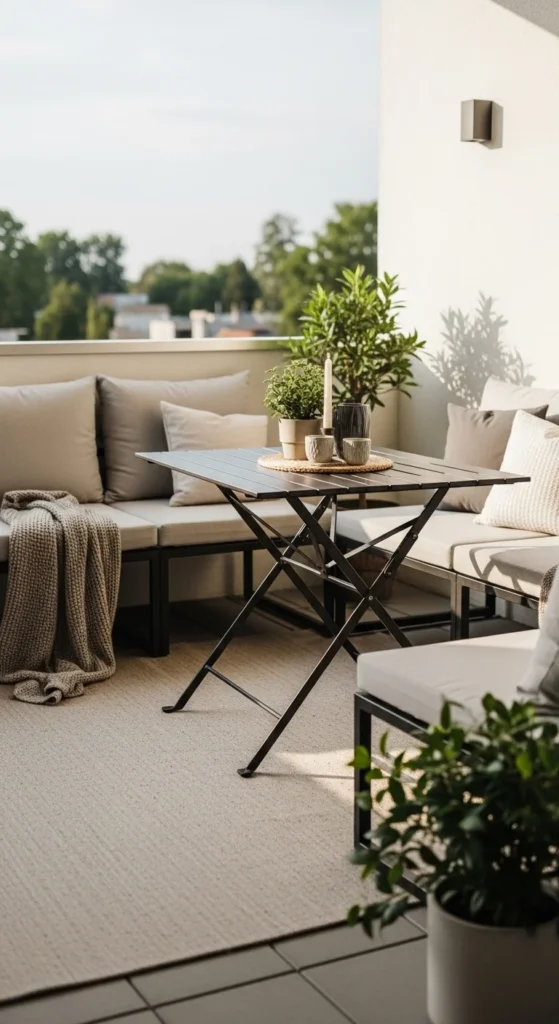
Furniture that moves or folds keeps patios versatile across seasons. Modular seating can be rearranged for winter gatherings or summer lounging.
Budget tip: consider stackable chairs or tables with removable cushions. Lightweight frames make storage easy during off-season.
Styling trick: keep textiles neutral so pieces can mix across different layouts. Seasonal adaptability ensures the patio remains functional without overcrowding or losing calm visual flow.
19. Small-Scale Fire Feature
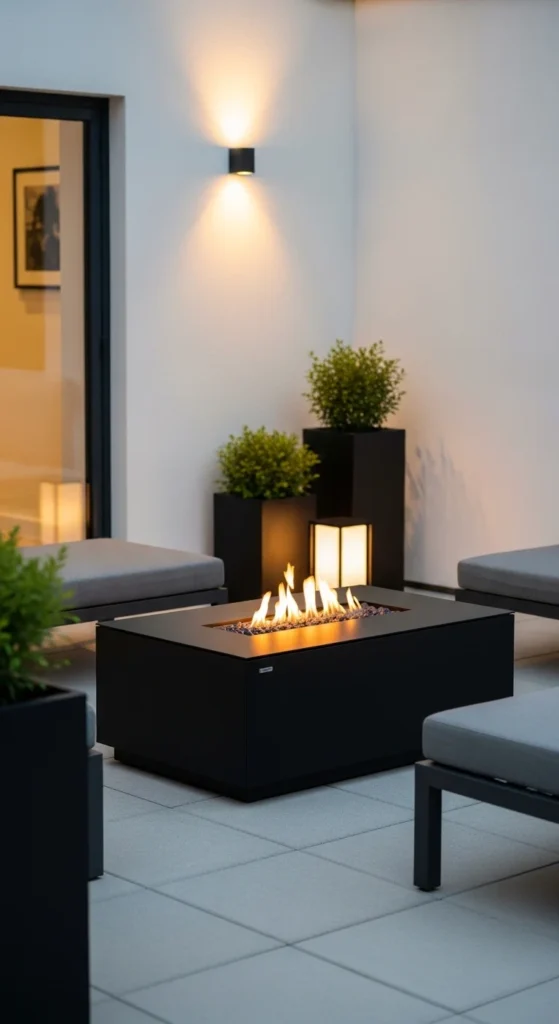
For limited space, a small fire table works better than a large pit. Keep lines simple and edges straight. Matte black blends with most neutral palettes.
DIY alternative: convert a metal planter into a propane fire feature safely. Always check clearance around furniture and plants.
Position near seating but not too close. One fire feature is enough to create a cozy focal point without overwhelming the patio. The small size keeps the space open and calm.
20. Quiet Luxury Touches
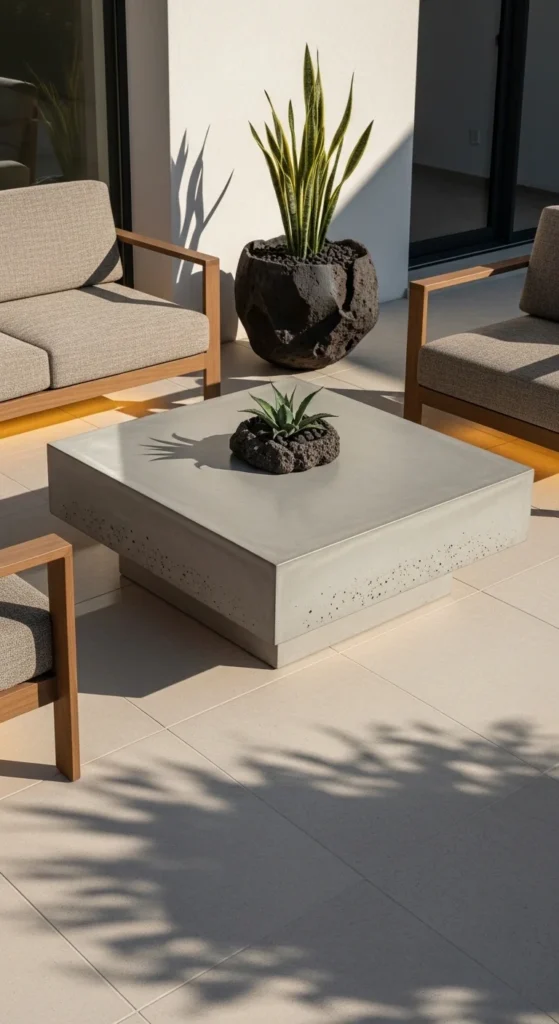
Quiet luxury is about restraint with texture and light, not ornaments. Use hand-finished surfaces or natural stone to add sophistication.
DIY-friendly approach: polish existing concrete or add a thin wood veneer to a tabletop for tactile interest. Limit accessories to one or two sculptural pieces.
Lighting should be soft and layered, not flashy. A single floor lamp or table light is sufficient. The goal: a refined, calm space that feels curated without clutter, perfect for modern minimalist patios.
21. Integrated Planter Seating
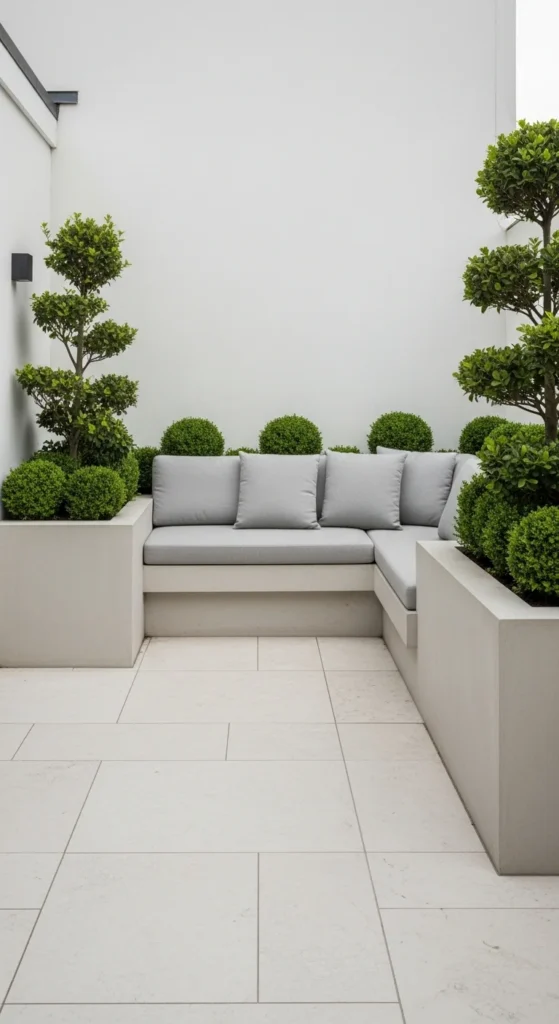
Integrating planters into seating combines function and greenery seamlessly. Built-in planters add life without occupying extra floor space. Keep shapes rectangular and edges crisp to maintain minimalism.
DIY option: extend a bench with side boxes for soil and plants. Use lightweight planters if the base is not load-bearing. Stick to one or two plant types to avoid a cluttered feel.
Styling trick: match cushion colors to the surrounding wall or floor for cohesion. The greenery softens the structure, creating a calm, balanced space that feels modern yet inviting.
22. Minimalist Outdoor Dining Nook
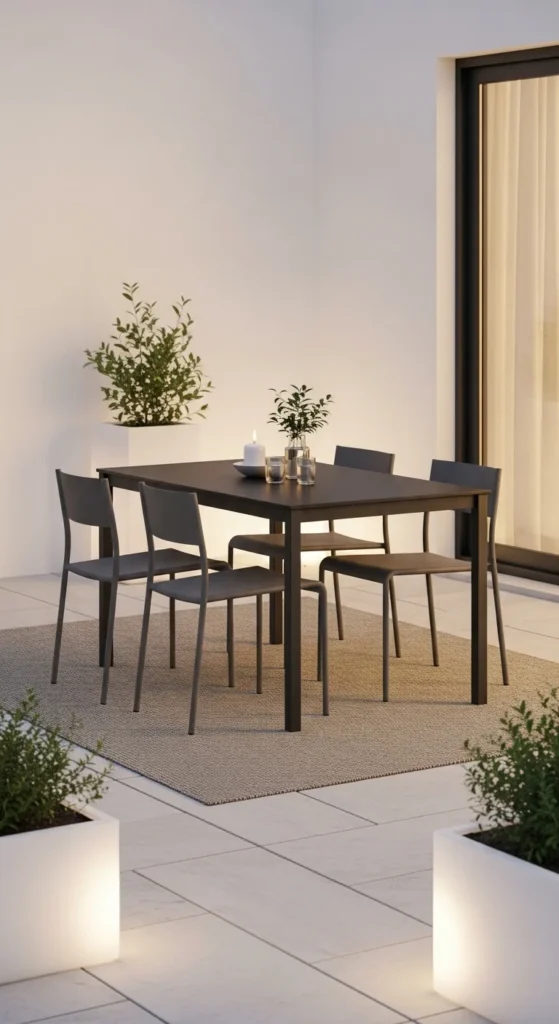
A compact dining nook allows meals outdoors without crowding. Keep furniture low-profile and colors neutral to maintain calm. Black metal tables paired with gray seating keep the palette cohesive.
Budget-friendly tip: mix secondhand chairs with a simple new table to save money. Keep the tabletop clear, perhaps just one small centerpiece.
Lighting should be subtle—wall-mounted sconces or a single hanging bulb. Keep pathways clear and scale consistent. A well-planned dining nook makes the patio functional, serene, and ready for both casual meals and small gatherings.

Leave a Reply