

1. Lemon Grove Kitchen Tray
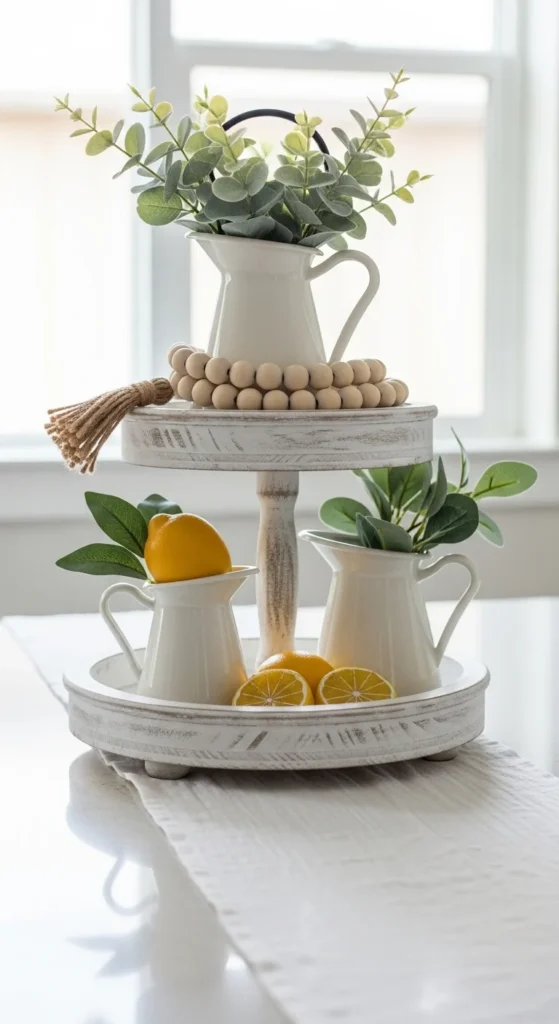
This tray style works because it stays simple and controlled. Lemons bring color, but the rest of the tray stays quiet. Start with white ceramics as your anchor pieces. Small pitchers, bowls, or creamers work well. Place heavier items on the bottom tier to keep the tray stable. Use faux lemons instead of real ones. They last longer and keep their color. Stick to three lemons on the top tier and four or five on the bottom. Odd numbers look more natural and prevent the tray from feeling stiff. Wood beads soften the look and break up the smooth ceramic surfaces. Drape them slightly over the edge for movement. Greenery should feel light, not dense. One or two eucalyptus stems are enough. Avoid dark greens here. This tray suits kitchens, coffee bars, or open shelving. For budget options, dollar-store lemons and thrifted white mugs work just fine. If the tray starts to feel busy, remove one item instead of adding another. Seasonal changes are easy. Swap lemons for oranges in late summer or mini apples in early fall. Keep the base items the same so storage stays manageable. This setup photographs well for Pinterest because the colors stay clean and bright. It also works in small kitchens where bold decor would feel overwhelming.
2. Neutral Linen & Wood Stack
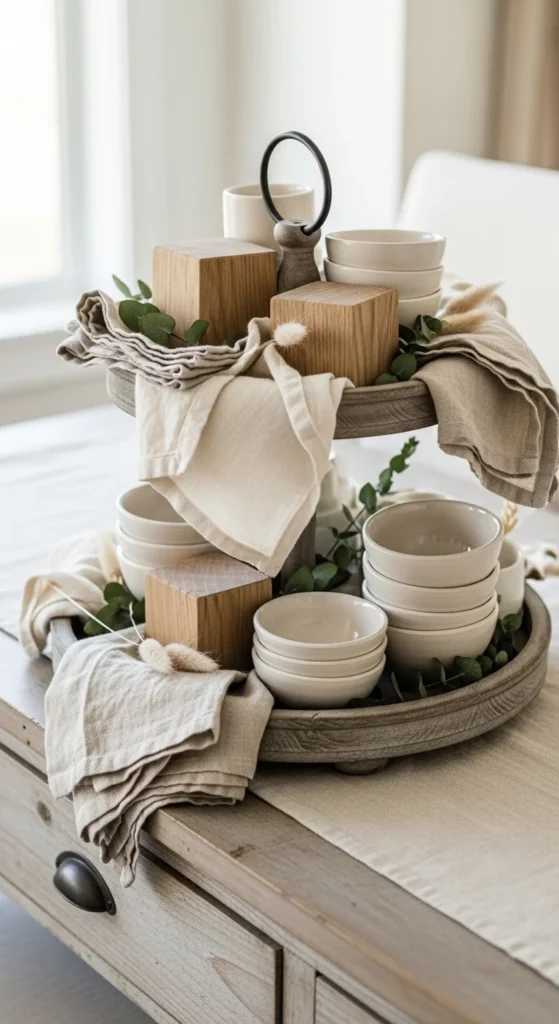
This tray focuses on texture instead of color. Linen does most of the visual work. Fold napkins casually rather than sharply. Soft edges make the tray feel relaxed. Stack wood blocks or books to build height. Keep taller items toward the back of each tier. Height variation keeps the tray from feeling flat. Clay or ceramic bowls add weight and balance. Matte finishes work better than glossy ones here. Stick to one greenery element so the tray stays calm. Olive stems or soft eucalyptus fit well. For budget-friendly options, use thrifted tea towels instead of linen. Light sanding on wooden pieces removes shine and adds character. This tray fits dining rooms, entry tables, or kitchen islands where bold decor would feel distracting. If the look feels too pale, add one darker accent like a charcoal bead strand or a single dark wood piece. Just one is enough. Seasonal updates should stay subtle. Add a mini pumpkin in fall or dried florals in winter. Avoid bright seasonal colors. The goal is continuity. This setup works well for people who prefer clean spaces but still want warmth. It also performs well in photos because shadows and textures show clearly without heavy contrast.
3. Mini Pumpkin Fall Tray
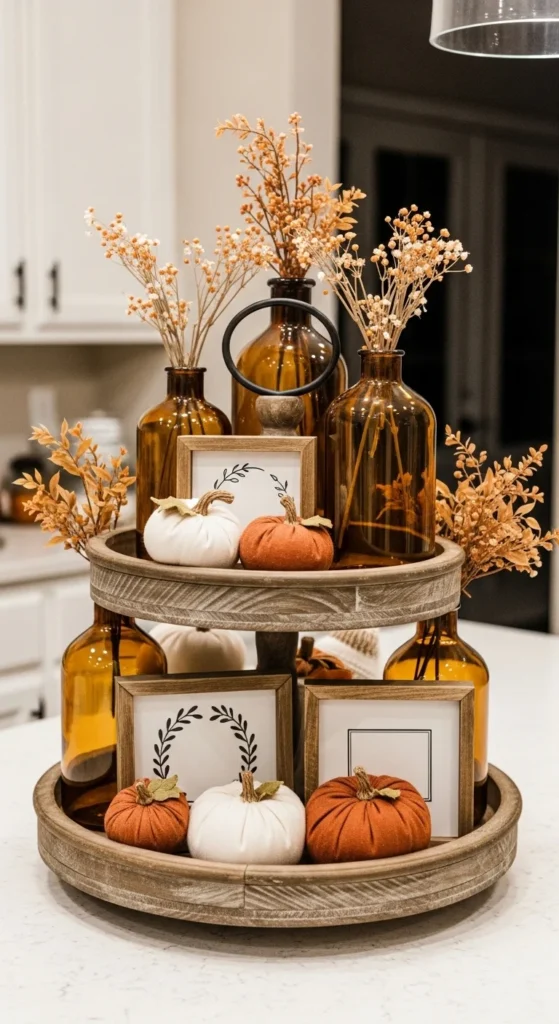
This fall tray leans into softness and warmth. Fabric pumpkins feel more relaxed than ceramic ones. They also store easily after the season ends. Choose muted tones like cream, rust, and soft orange. Avoid bright or glittery finishes. Place pumpkins in clusters rather than spreading them evenly. Grouping items creates visual flow. Wood signs add structure, but keep text short. One small phrase works better than multiple signs. Amber glass bottles add warmth and catch light nicely. They also break up fabric-heavy sections. Dried florals should stay neutral. Wheat stems or pampas grass work well. For budget builds, DIY pumpkins using scrap fabric or old sweaters. Fill them with rice or beans for weight. This tray works best in kitchens, dining areas, or entry tables. Avoid placing it near heat or direct sun. Fabric can fade over time. After fall ends, remove pumpkins and keep the bottles and wood pieces. Add pine sprigs or neutral ornaments for winter. That way the tray transitions smoothly without starting from scratch. This setup feels cozy without feeling crowded, which makes it ideal for smaller spaces.
4. Coffee Bar Tiered Tray
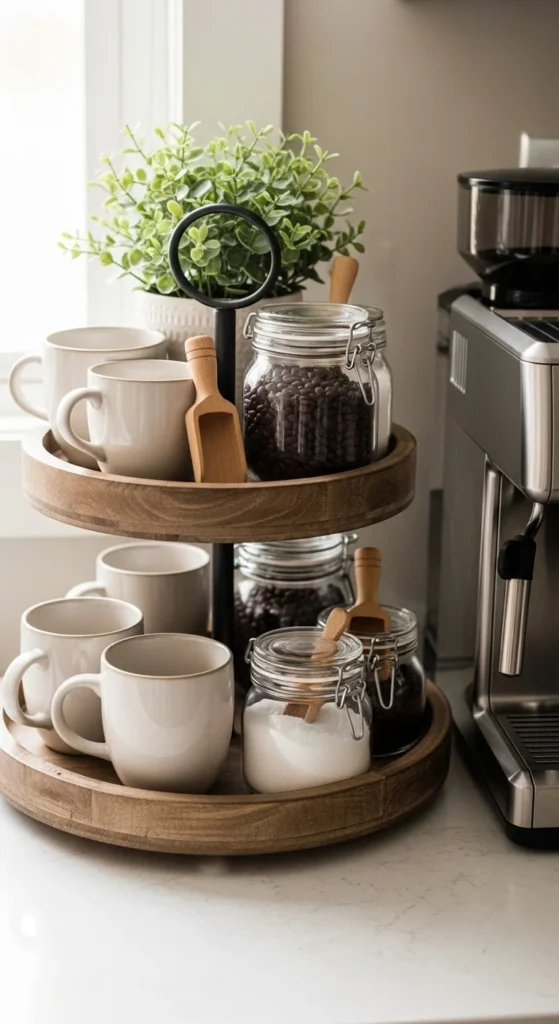
A coffee bar tray should look good and work well. Start with mugs on the bottom tier. They add weight and keep the tray steady. Choose neutral mugs so the tray doesn’t clash with appliances. Glass jars hold sugar, pods, or stirrers and keep the setup tidy. Wood scoops add warmth and texture. Function and style should share space here. Avoid overdecorating the top tier. One small plant or sign is enough. If counter space is tight, use a narrow two-tier tray instead of a wide one. For budget options, mismatched mugs work fine if the colors stay consistent. Thrift stores are great for glass jars. Skip labels if the tray already feels busy. This setup changes easily throughout the year. Swap mug designs or jar contents instead of rebuilding the whole tray. Keep greenery minimal so cleaning stays easy. This tray works best when it feels lived-in, not staged. It also performs well in photos because the items are familiar and relatable. A practical tray often feels more personal than a purely decorative one.
5. Galvanized Metal Farm Tray
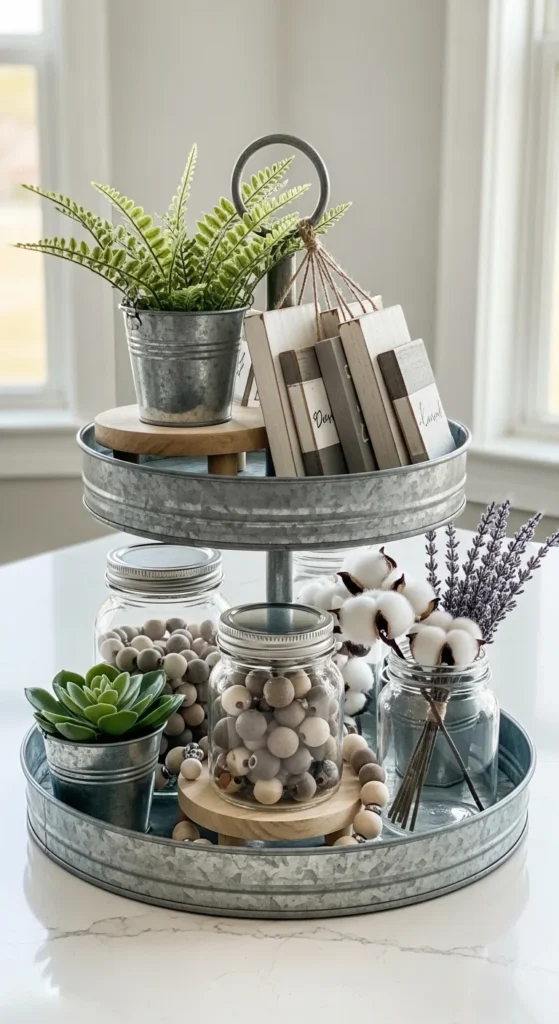
Galvanized metal brings contrast without overpowering the tray. Start with metal planters or buckets as focal pieces. Pair them with light wood to soften the look. Balance keeps metal from feeling cold. Glass jars help reflect light and keep the tray airy. Fill them with beads, dried stems, or small tools. Signs should stay small and simple. One sign per tray is enough. Too many words can feel cluttered. For a budget-friendly option, spray paint plastic planters with a galvanized finish. Light sanding adds texture and makes them look more realistic. This tray fits modern farmhouse kitchens, entry tables, and open shelving. It pairs well with white walls and neutral counters. Seasonal updates are simple. Add greenery in spring. Use dried wheat in fall. Add pinecones in winter. Keep the metal pieces year-round as your anchor items. This setup works well for people who like a slightly industrial edge but still want warmth. It also photographs well because the mix of matte and reflective surfaces adds depth without heavy color.
6. Botanical Greenery Layered Tray
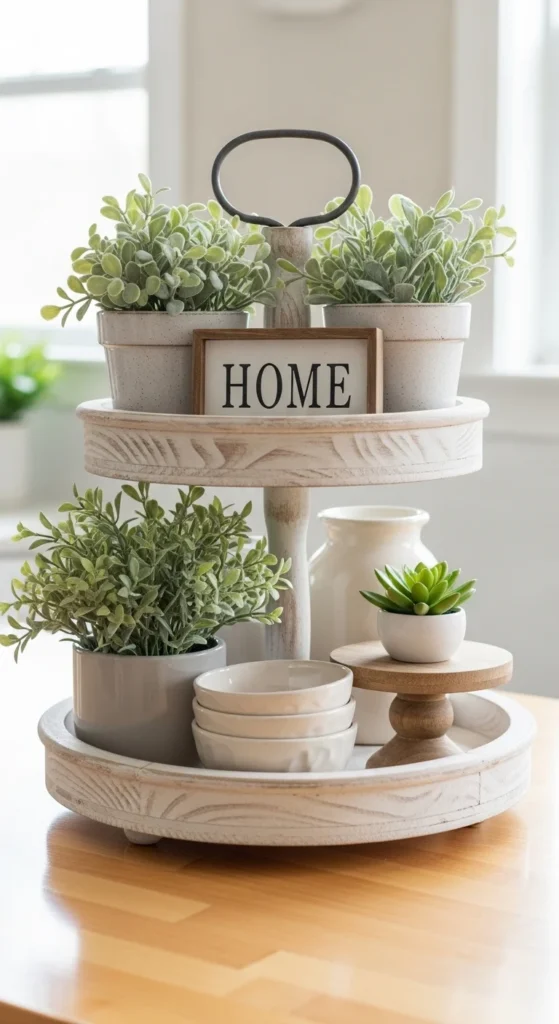
Greenery-focused trays feel calm and grounded. Start with small faux plants that look soft, not stiff. Avoid shiny leaves. Matte finishes photograph better and feel more natural. Place the tallest plant on the bottom tier toward the back. Shorter plants work well on the top tier. Layering greenery creates depth without adding clutter. Use ceramic pots in white or cream to keep the palette controlled. Wood risers help break up similar shapes. If everything sits at the same height, the tray feels flat. Budget options are easy here. Faux plants from discount stores can look good once you trim uneven stems. Add texture with moss or raffia at the base. This tray works well in kitchens, bathrooms, or entryways. It also suits people who want decor without seasonal swaps. For a small update, switch pot styles instead of plants. Avoid mixing too many plant types. Stick to one or two varieties so the tray feels intentional. If greenery feels overpowering, add one neutral object like a small bowl or bead strand. This setup feels relaxed and tidy at the same time. It also holds up well over time since nothing feels dated or theme-heavy.
7. Vintage Milk Bottle Charm
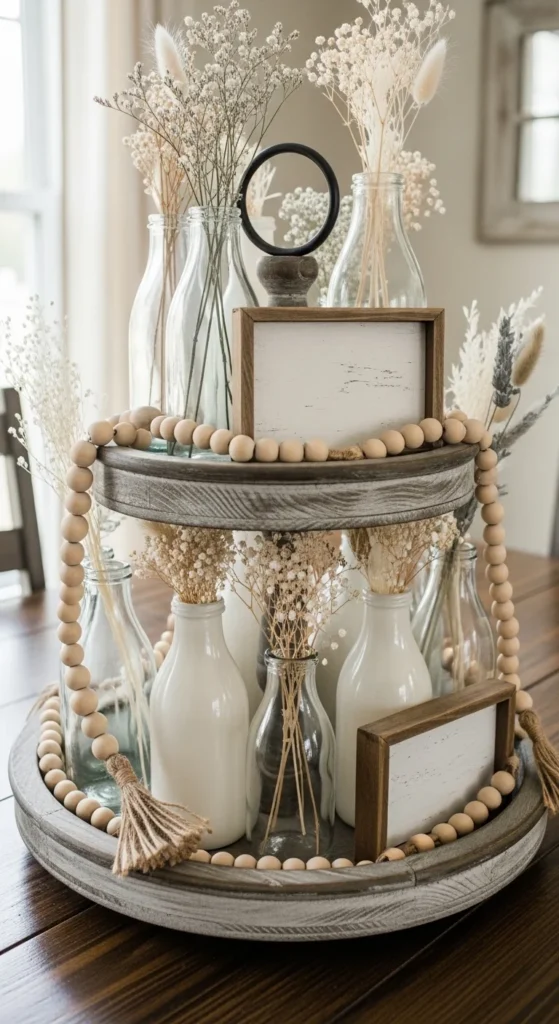
Milk bottles bring instant farmhouse character. Use clear or frosted glass for a softer look. Avoid bright labels or bold text. Place bottles in pairs or trios rather than spreading them out. Grouping glass keeps the tray cohesive. Dried florals work better than faux here. Pampas, bunny tails, or wheat add softness without visual noise. Wood beads help break up the glass and add warmth. Signs should stay minimal and small. One simple phrase is enough. For budget builds, thrift stores are the best source for bottles. Slight variations in shape add charm. This tray fits dining rooms, kitchen nooks, or sideboards. If the tray feels too delicate, add a wood block or small crate piece for balance. Seasonal changes are subtle. Swap florals instead of bottles. Use cotton stems in winter or lavender in spring. This setup feels collected over time rather than styled all at once. It also photographs beautifully because glass catches light without overpowering the scene.
8. Black & White Farmhouse Contrast
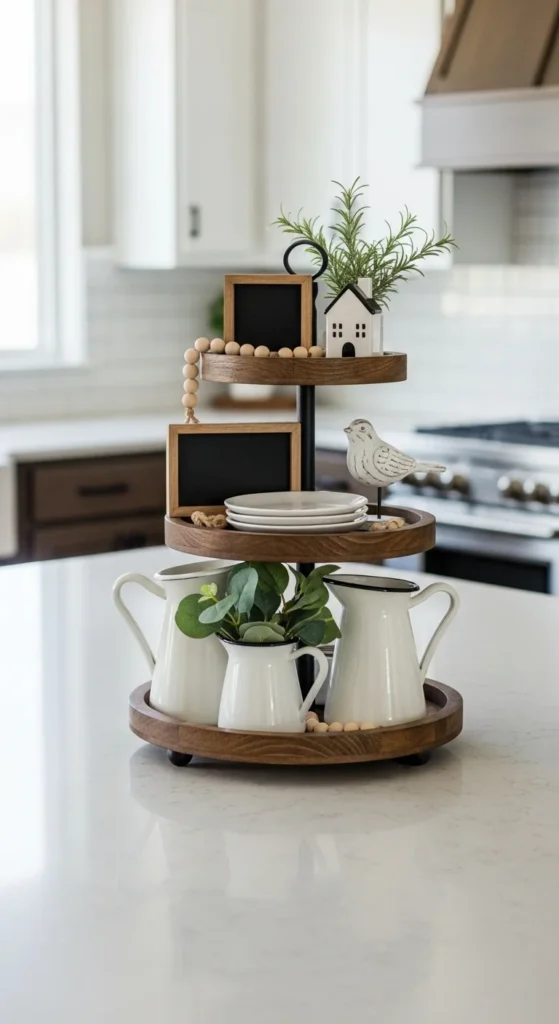
Black and white trays rely on restraint. Start with white ceramics as your base. Add black through signs or small accents. Keep black items limited so they don’t dominate. Contrast works best in small doses. Wood pieces help soften sharp lines and prevent the tray from feeling harsh. Greenery should stay light and airy. Avoid dark leaves. This tray works well in modern farmhouse kitchens with white cabinets or black hardware. For budget options, paint small thrifted items black or white. Matte finishes look better than glossy ones. Avoid mixing fonts on signs. Stick to one style to keep the tray clean. If the setup feels too stark, add one beige or linen element for warmth. Seasonal swaps are simple. Change one sign or add a small themed object. Keep the base steady so the tray still feels balanced. This style photographs well because the contrast reads clearly even in small images.
9. Rustic Wood Bead Focus
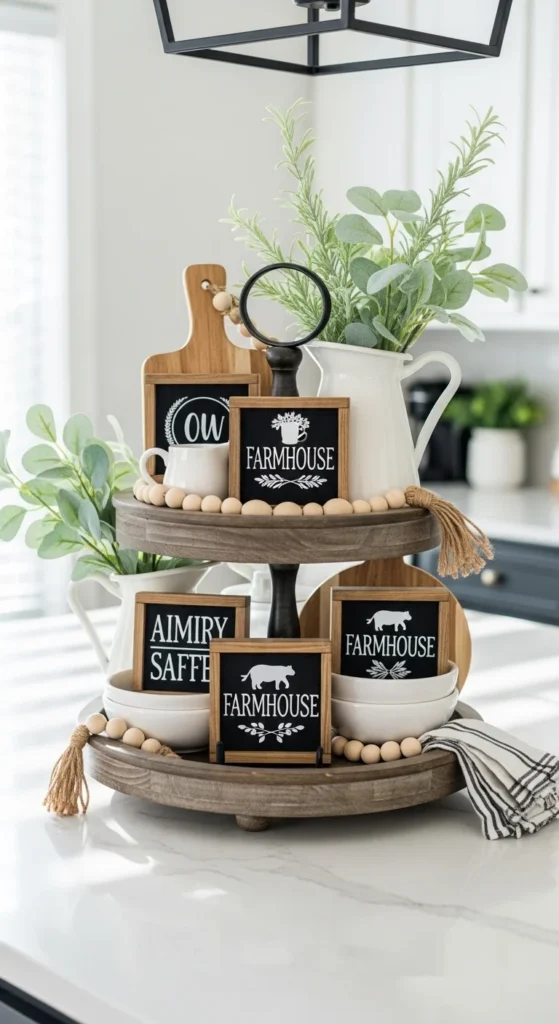
Wood beads add movement and texture. Drape them loosely rather than coiling tightly. Let some hang over the edge for flow. Place heavier bead strands on the bottom tier. Movement keeps the tray from feeling stiff. Pair beads with simple ceramics so textures don’t compete. Small vases work better than large ones. Greenery should stay minimal. One stem per tier is enough. For budget options, DIY bead garlands using unfinished wood beads and jute string. Light sanding removes factory shine. This tray fits entry tables, dressers, or shelves. It also works year-round. Seasonal changes can be as small as swapping bead color or adding a charm. Avoid mixing too many bead sizes. Consistency keeps the look calm. If the tray feels empty, add a wood riser instead of another object. This setup feels relaxed and handmade, which suits farmhouse spaces well.
10. Simple Seasonal Swap Tray
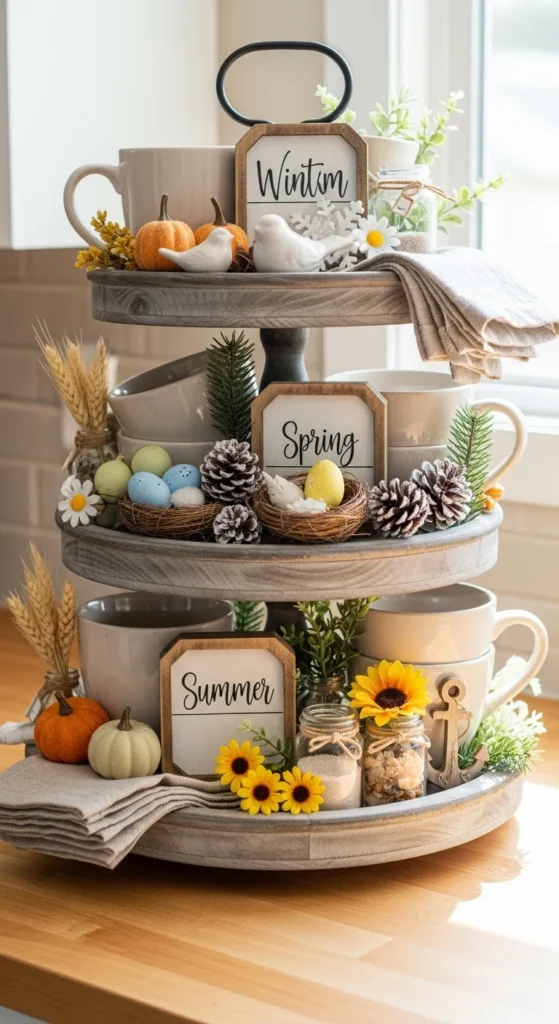
This tray is built for easy changes. Start with neutral base items like white bowls, wood blocks, and simple greenery. These stay year-round. Seasonal pieces are small and easy to store. The base never changes. In fall, add mini pumpkins. In winter, add pine sprigs. In spring, add florals. In summer, add fruit or shells. Keep seasonal items limited to two or three pieces. Too many swaps defeat the purpose. Budget options work well because accents are small. This tray suits busy households or small spaces. It also prevents decor burnout since changes feel quick. If the tray looks uneven, move items between tiers instead of adding more. This approach saves time and storage space. It also keeps your home feeling updated without constant shopping.
11. Cozy Winter Neutral Tray
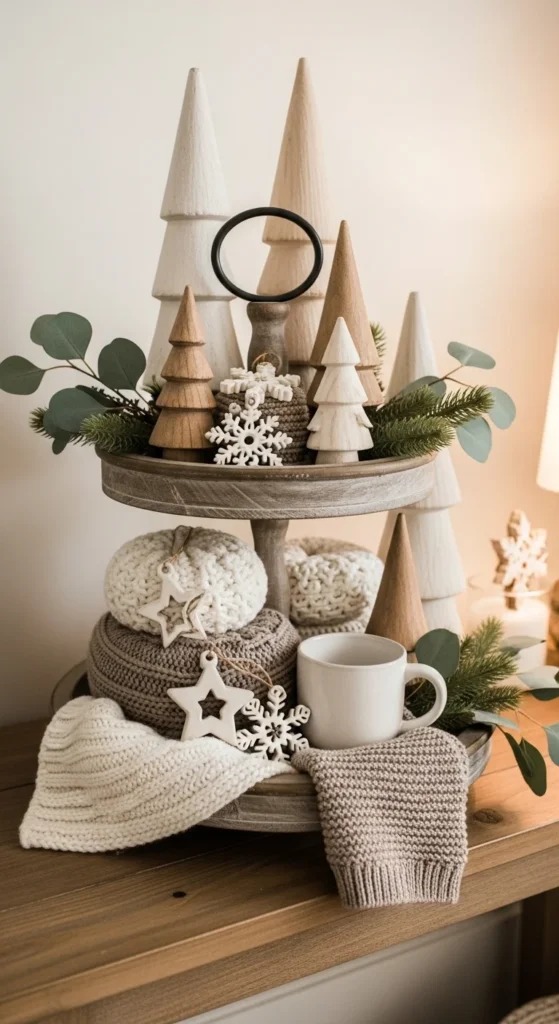
This winter tray stays calm and cozy without heavy themes. Start with neutral knit pieces like small fabric balls or folded swatches. Texture replaces color here. Place heavier wood items on the bottom tier to keep the tray grounded. Wood trees or blocks add height without feeling seasonal-only. Soft texture carries the mood instead of bold objects. Ceramic accents keep the tray from feeling too rustic. Use matte finishes rather than shiny ones. Greenery should feel subtle. Pine sprigs or eucalyptus stems work well. Avoid glitter or metallics if you want a relaxed look. For budget options, cut old sweaters into small pieces and roll them into soft filler shapes. Thrifted wood decor can be sanded for a lighter finish. This tray fits living rooms, entry consoles, or dining sideboards. After winter, remove knit items and keep the wood pieces for year-round use. The base stays useful beyond the season. If the tray feels crowded, remove one small object instead of rearranging everything. This setup works well in homes that lean neutral year-round. It also photographs nicely because textures create depth without relying on contrast.
12. Entryway Organizer Tray
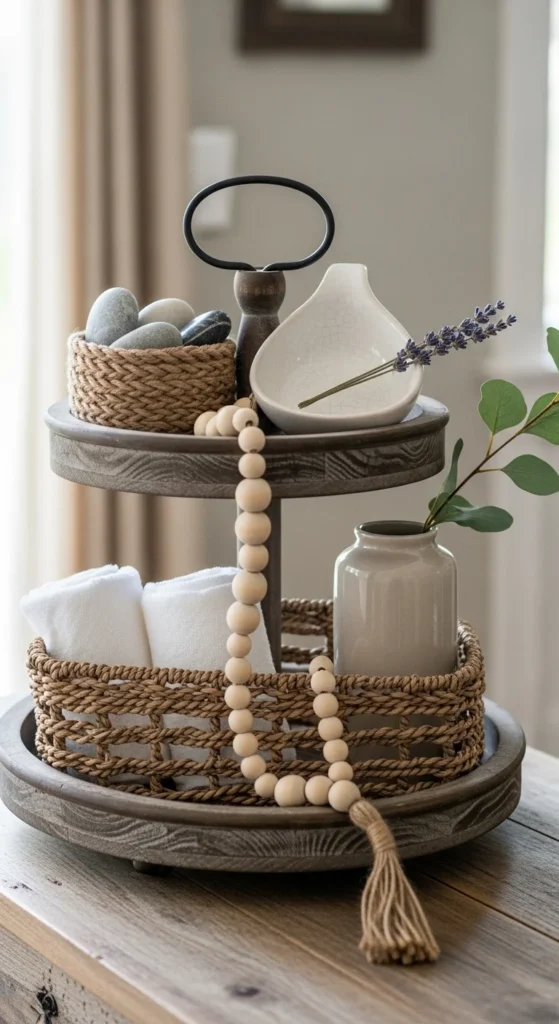
This tray blends decor with daily use. Start with small baskets or bowls to hold keys or sunglasses. Place functional items on the lower tier for easy access. Decorative pieces belong on top. Function guides placement here. Wood beads soften the structure and add movement. Keep greenery minimal so items stay easy to grab. This tray works best in narrow entryways where surfaces are limited. For budget options, use thrifted bowls or small woven containers. Matching colors matter more than matching styles. If everything shares a neutral palette, the tray feels cohesive. Avoid tall items that block reach. Height should stay moderate. Seasonal updates are simple. Add a small seasonal accent without removing the functional pieces. This setup helps keep clutter contained while still looking intentional. It suits busy households where decor has to earn its place. The tray feels lived-in, not staged, which makes it more inviting.
13. Tea Station Farm Tray
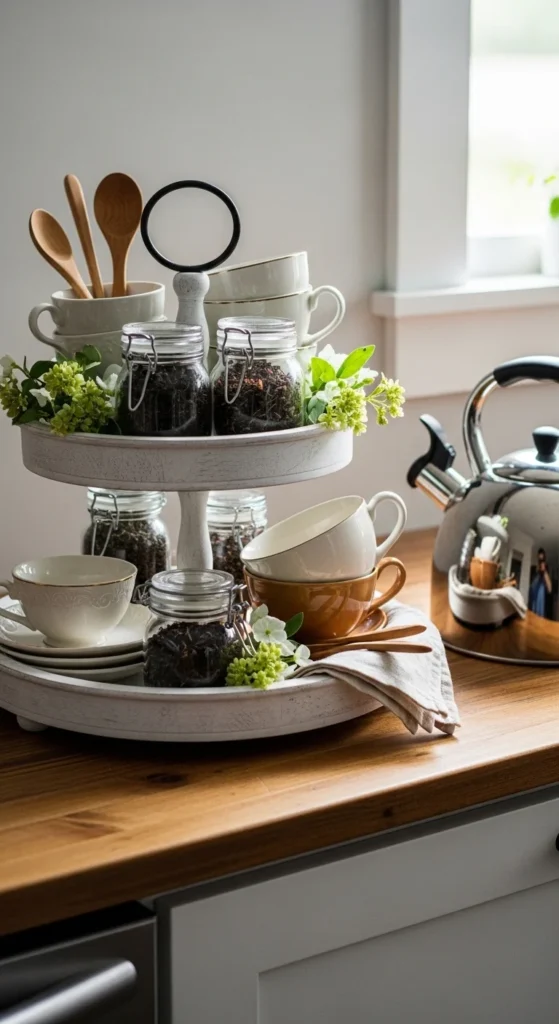
A tea tray feels softer than a coffee setup. Use teacups instead of mugs for a lighter look. Place them on the bottom tier for balance. Glass jars show tea blends and add visual interest. Clear containers keep the tray airy. Wooden spoons add warmth and texture. Florals should stay light and simple. Dried stems work well and don’t require upkeep. For budget options, mismatched teacups work if colors stay similar. Thrift stores are ideal for this. Keep the top tier uncluttered so the tray doesn’t feel busy. This setup fits kitchens, breakfast nooks, or sideboards. It also works well in small apartments where counter space matters. Seasonal swaps can include different tea blends or cup styles. The tray stays functional while still feeling styled. This look photographs well because glass and ceramic catch light softly.
14. Boho Neutral Farmhouse Tray
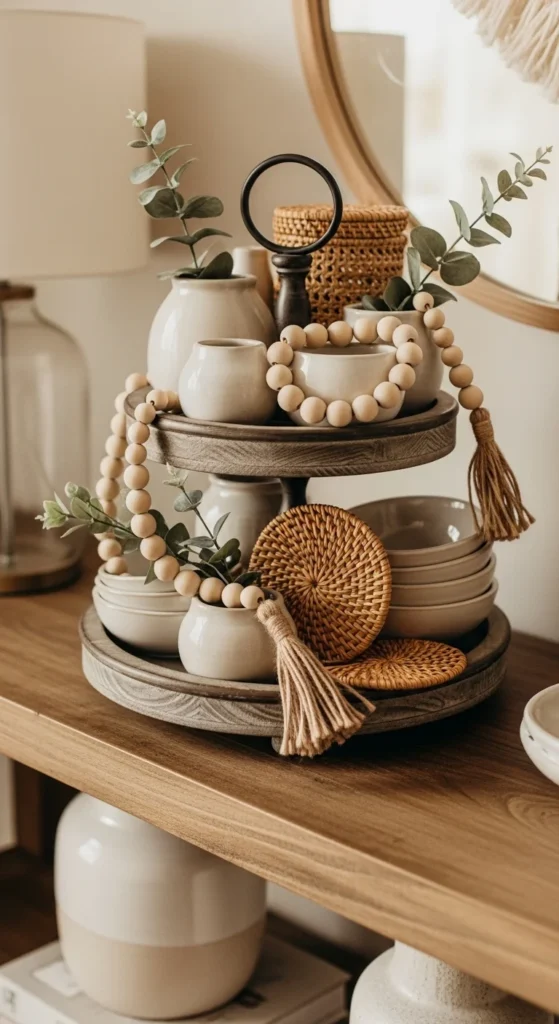
Boho farmhouse trays focus on warmth and softness. Rattan pieces add texture without feeling heavy. Use them sparingly. One or two accents are enough. Pair rattan with smooth ceramics to balance textures. Contrast in texture keeps the tray interesting. Wood beads tie everything together and add movement. Greenery should feel natural and loose. Avoid stiff stems. For budget options, small rattan items or coasters work well as fillers. This tray fits living rooms, bedrooms, or open shelving. It feels relaxed and collected over time. Seasonal updates should stay subtle. Swap greenery or bead tones instead of adding themed items. This setup works well for people who like farmhouse style with a softer edge. It also performs well visually because textures show clearly even in neutral tones.
15. Minimal White-on-White Tray
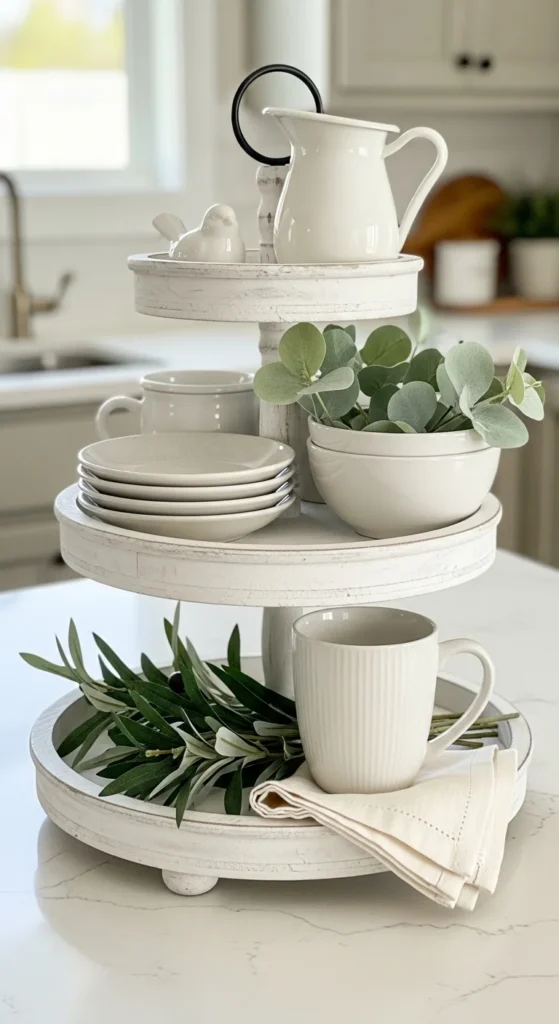
White-on-white trays rely on detail. Texture replaces color completely. Use ceramics with subtle shapes or patterns. Linen pieces add softness and prevent the tray from feeling stark. Texture creates separation when color stays the same. Greenery should be very light. One small stem is enough. Avoid dark accents here. For budget builds, thrifted white dishes work well even if styles differ slightly. Matte finishes look better than glossy ones. This tray fits bright kitchens or modern farmhouse spaces. Seasonal updates are minimal. Add one small neutral accent if needed. This setup feels calm and clean without looking empty. It also photographs well because shadows define each piece clearly.
16. Fall Harvest Citrus Tray
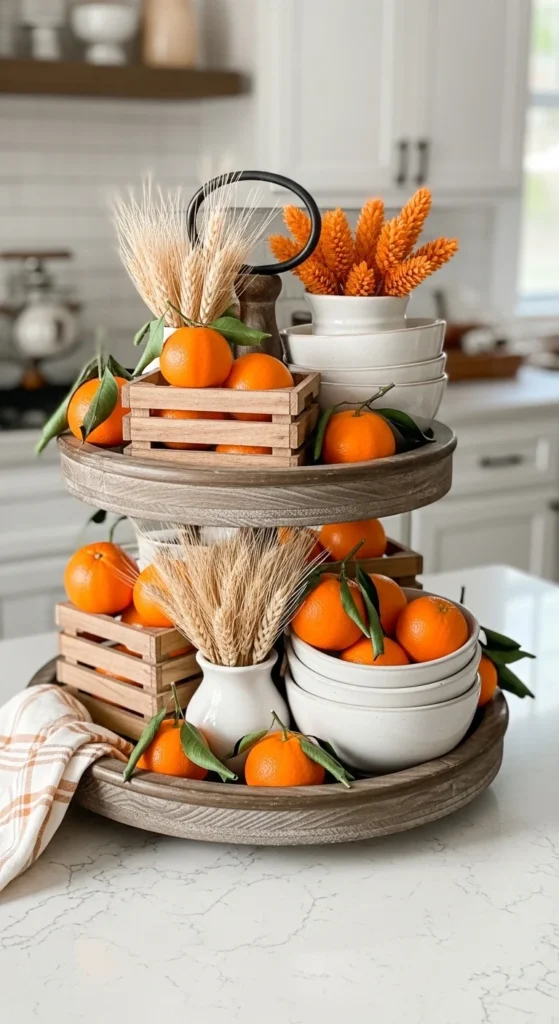
This tray brings fall color without feeling overdone. Start with mini oranges as the focal point. Place them in clusters of three or five for balance. Use small wooden crates or risers to add height and structure. Layering items creates visual interest and prevents the tray from looking flat. Dried wheat stems add texture and seasonal charm. Neutral ceramic bowls balance the bright orange tones. For budget-friendly options, faux oranges or small craft pumpkins work just as well. Arrange them in groups rather than scattering them, which keeps the tray intentional. This setup works best on kitchen counters, islands, or dining sideboards. Avoid placing fragile items near edges. Swap seasonal elements easily by switching oranges for apples in late fall or adding pinecones for early winter. Keep neutral items like bowls and crates year-round. This tray photographs beautifully because the mix of textures and muted colors allows the oranges to pop without overwhelming the scene.
17. Spring Floral Refresh
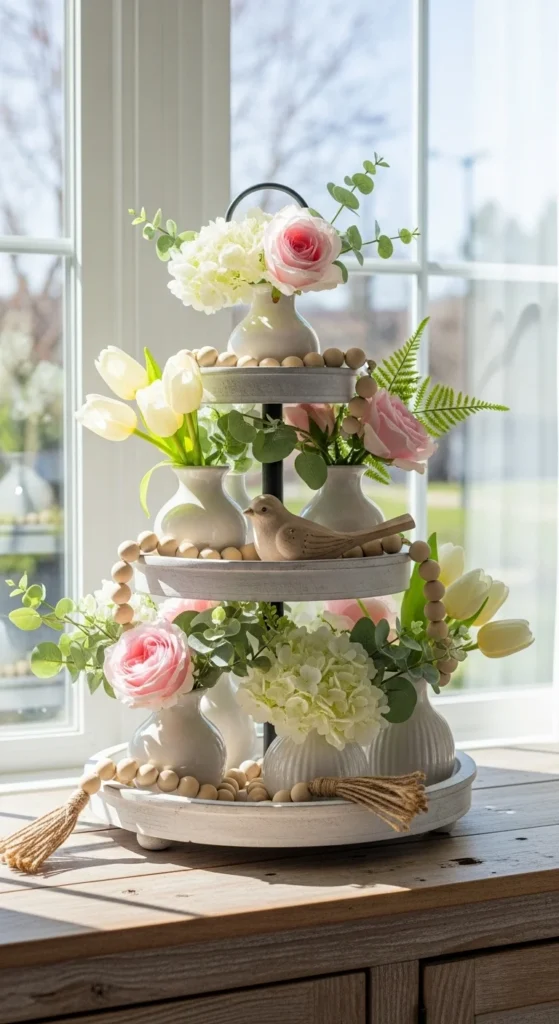
Spring trays rely on soft pastels and airy layouts. Use small vases for flowers rather than one large bouquet. This prevents overcrowding and allows for more layers. Odd numbers of flowers create a natural feel. Light greenery adds texture without overpowering the flowers. Wood beads or small risers help elevate items and add depth. Budget-friendly options include faux florals or cuttings from the garden. Arrange taller flowers in the back and smaller blooms in front for visual balance. This tray works well on entry tables, sideboards, or dining islands. Keep neutral base pieces so you can swap seasonal items easily. Avoid adding too many bright or contrasting colors, which can make the tray feel chaotic. This setup also photographs well because soft daylight emphasizes pastels and textures, making the tray feel fresh and inviting.
18. Neutral Coffee & Book Tray
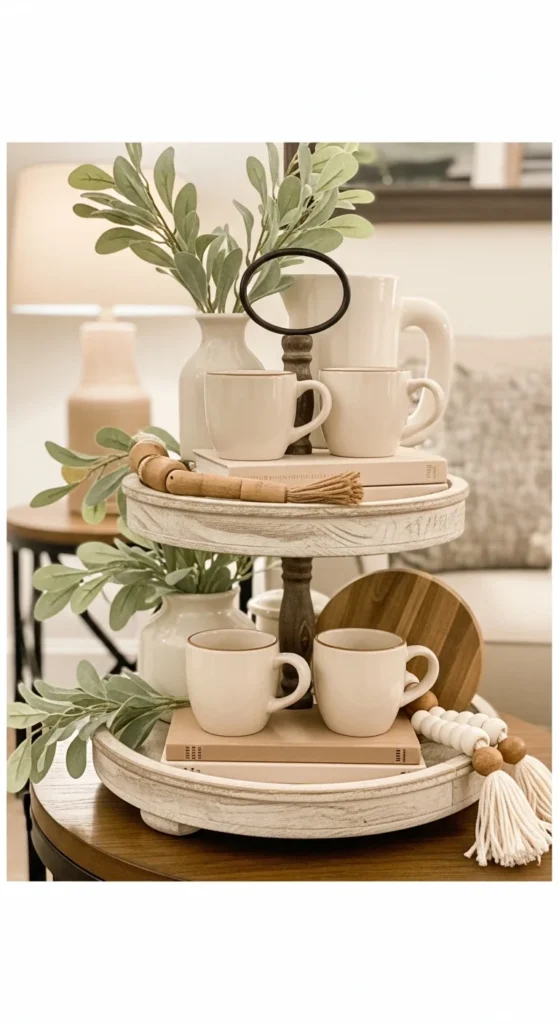
This tray combines function and charm. Use coffee mugs on the bottom tier for stability, then layer neutral books or journals on the top tier. Layering creates height and visual interest. Wooden accents like small trays or blocks soften the scene. Greenery should be light to avoid crowding. This setup is perfect for living rooms, reading nooks, or kitchens. Budget options include thrifted mugs, small hardcover books, or DIY wooden risers. Avoid adding too many small items that make the tray look cluttered. Keep base pieces neutral so seasonal swaps are easy. Swap mugs or books for seasonal colors or small decor items. This tray feels lived-in but intentional, perfect for casual homes. It also photographs well because neutral tones and layered heights create depth without heavy colors.
19. Rustic Herb Tray
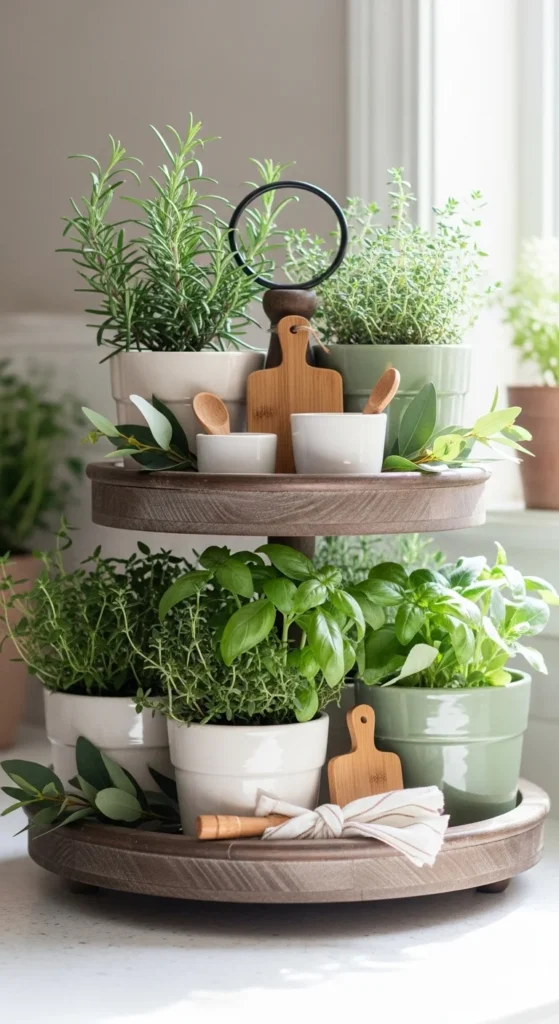
Herb trays combine decor with function. Use small potted herbs like rosemary, thyme, or basil. Place them in ceramic pots for a farmhouse feel. Wood accents like risers or small cutting boards help add height and texture. Functional items can also be decorative. Keep greenery minimal to avoid overcrowding. This tray works in kitchens, on islands, or near windows. For budget builds, repurpose small planters or thrifted pots. Odd numbers of herbs or pots look natural and balanced. Rotate herbs as needed to keep them fresh. Avoid overcrowding so each plant has breathing room. Seasonal swaps can include different herbs or small dried floral accents. This tray also photographs well because the greenery brings life, and textures like wood and ceramic create visual depth.
20. Neutral Farmhouse Gift Tray
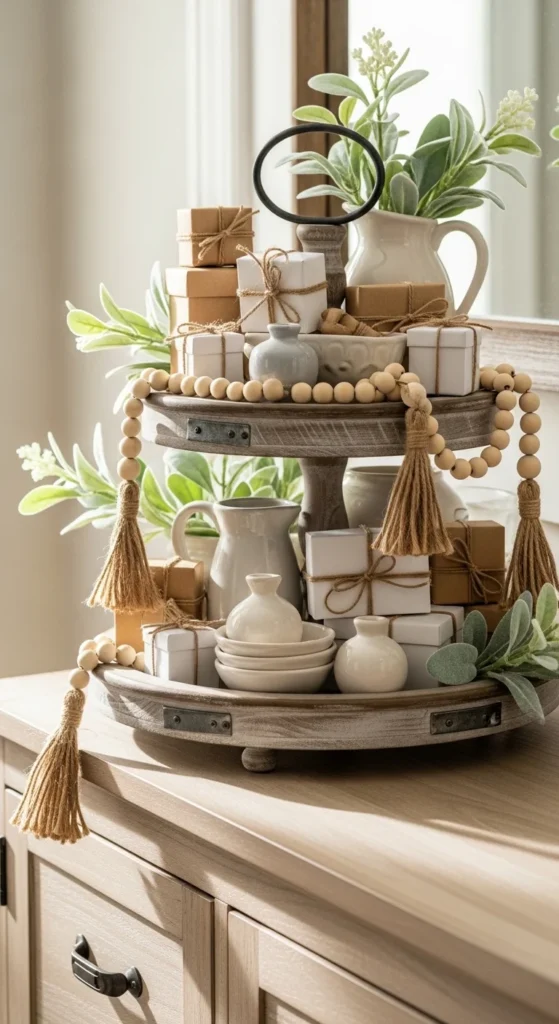
Gift trays are functional and stylish. Start with small neutral gift boxes on the bottom tier. Layer neutral ceramics and wood beads on the upper tiers. Keep the palette cohesive so the tray feels intentional. Greenery should stay subtle and soft. This tray works as a gift display, a welcoming setup for guests, or for housewarming events. Budget options include DIY gift boxes, thrifted ceramics, or faux greenery. Odd numbers of items create a natural feel, and height variation keeps the tray dynamic. Avoid overcrowding the tiers. Seasonal swaps can include different small gifts or decorations. This setup feels curated but approachable. It also photographs well for social media or Pinterest because neutral tones and layered heights create depth and interest without overwhelming the eye.
21. Summer Citrus & Greenery Tray
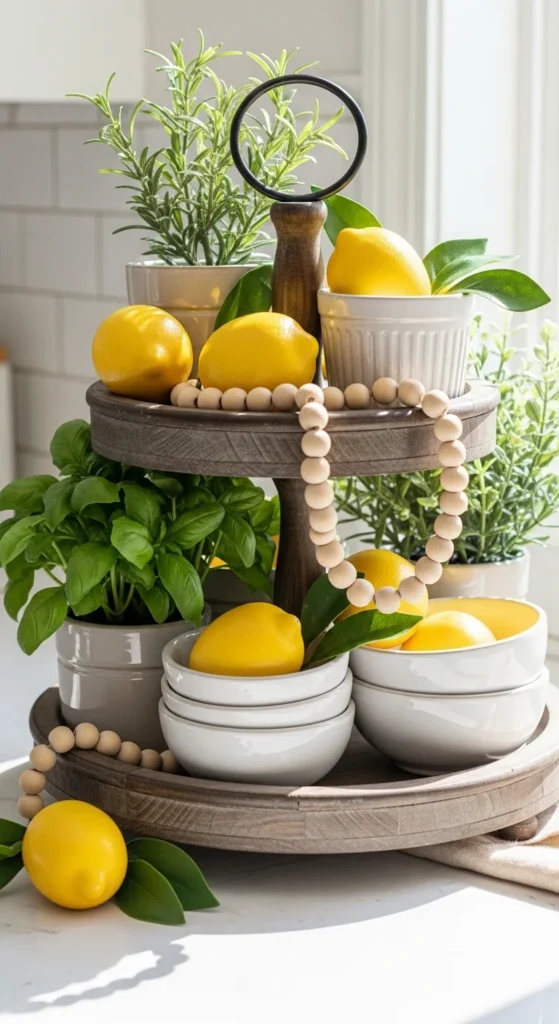
This summer tray celebrates light and color without feeling overwhelming. Start with a neutral base of white or cream ceramic bowls to anchor the design. Place faux lemons in clusters to bring vibrant pops of yellow, but keep them balanced with greenery to prevent color overload. Odd numbers of lemons and pots create a natural, relaxed look. Small potted herbs like basil, thyme, or rosemary add texture, depth, and a hint of practical charm. Wood beads or small wooden risers add subtle height variation, which keeps the eye moving across the tiers. Budget-friendly options include faux lemons from craft stores or small thrifted herb pots that can be painted or customized. Arrange taller elements toward the back of each tier to maintain visibility of all items. Avoid overcrowding; leave negative space to keep the tray airy. This tray works perfectly on kitchen counters, breakfast nooks, or open shelving where sunlight enhances the colors. Seasonal swaps are easy—swap lemons for oranges in fall, or add pastel florals in spring. The base neutral pieces remain, which saves storage and makes styling easier. This setup also photographs beautifully for Pinterest because the vibrant yellow contrasts against soft greens and whites, creating a fresh and inviting visual that feels both practical and decorative.

Leave a Reply