

1. Start With a Soft Neutral Base
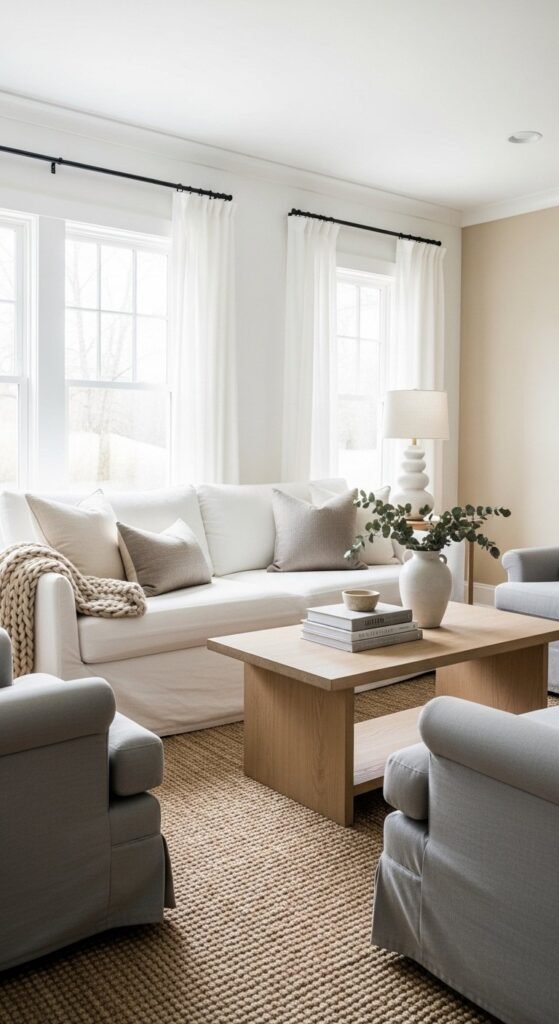
A farmhouse living room almost always begins with quiet colors. White. Cream. Beige. Soft gray. These shades calm the space and let texture do the talking. Paint is the cheapest place to begin. Warm whites work better than stark ones. Look for undertones that lean creamy or mushroom.
Furniture should follow the same rule. A neutral sofa acts like a blank canvas. Slipcovers help here. They’re washable. They age well. And they feel relaxed instead of stiff. Add contrast later through wood, rugs, and pillows.
If the room feels flat, it’s not the color. It’s the lack of layers. Bring in a woven basket. Add a chunky knit throw. Use a wood tray on the coffee table. These details stop neutrals from feeling boring.
For renters, peel-and-stick paint samples or fabric covers can shift the palette without commitment. Keep large pieces calm. Save personality for accents. A neutral base makes everything else easier to swap later, especially as seasons change.
2. Layer Textures for That Lived-In Look
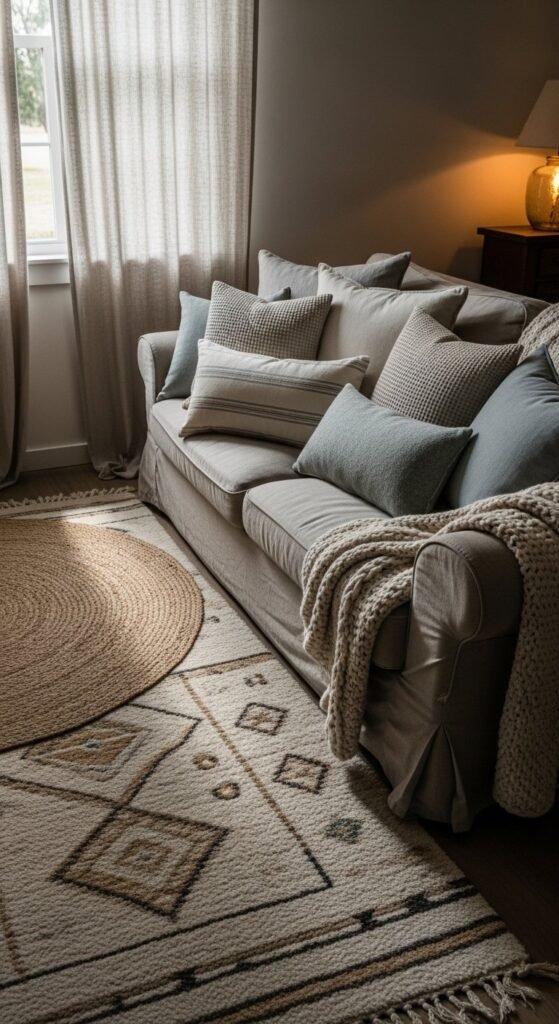
Texture is where farmhouse style comes alive. Without it, the room feels empty. Start with textiles. A linen sofa paired with cotton pillows already creates contrast. Add one chunky knit throw. Not three. One is enough.
Rugs matter more than people think. A jute rug grounds the room. Layer a smaller wool or kilim rug on top for pattern. This works even in small spaces. Just keep colors muted.
Curtains count too. Skip heavy panels. Choose light cotton or linen that moves when the window is open. That motion adds softness.
Thrift stores are gold for texture. Old wool blankets. Handwoven runners. Faded quilts. Wash them. Use them. Imperfection fits the style.
If the room starts to feel busy, pull one item away. Farmhouse rooms feel collected, not crowded. Texture should invite you in, not overwhelm the eye.
3. Add Rustic Wood Without Remodeling
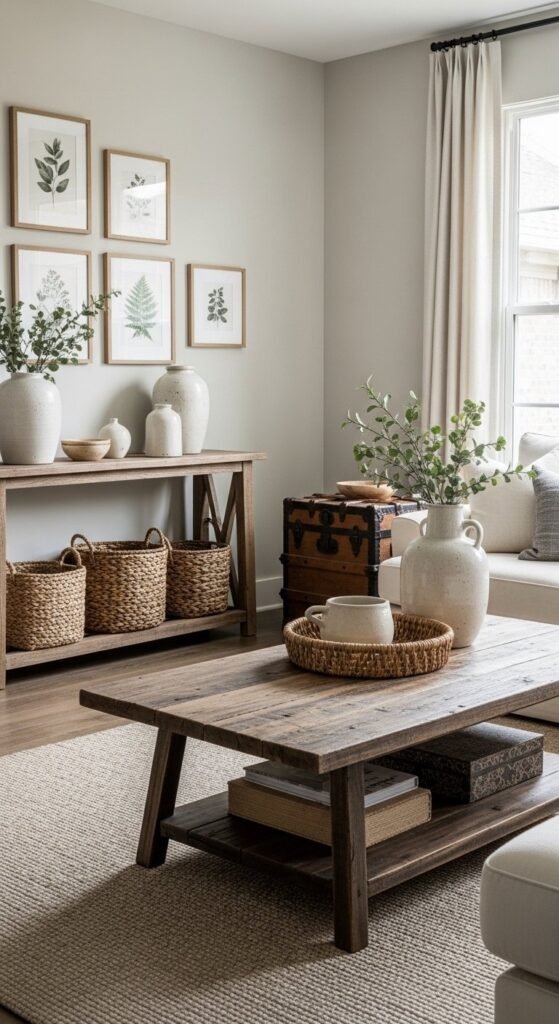
You don’t need exposed beams to bring wood into a farmhouse living room. Small moves work. A reclaimed coffee table. A wood bench under a window. An old trunk used as storage.
Picture frames are an easy win. Swap sleek frames for raw wood ones. Even mismatched styles work if the tones are similar.
Console tables behind sofas are another smart spot. Look for turned legs or worn finishes. If new furniture feels too perfect, lightly sand the edges. It softens the look fast.
For a DIY route, unfinished pine boards stained in warm tones can become shelves or wall ledges. Keep them simple. No ornate brackets.
Wood balances all the soft fabric in the room. It brings weight and grounding without making the space feel heavy. Focus on a few strong pieces instead of spreading wood everywhere.
4. Make the Fireplace the Hero
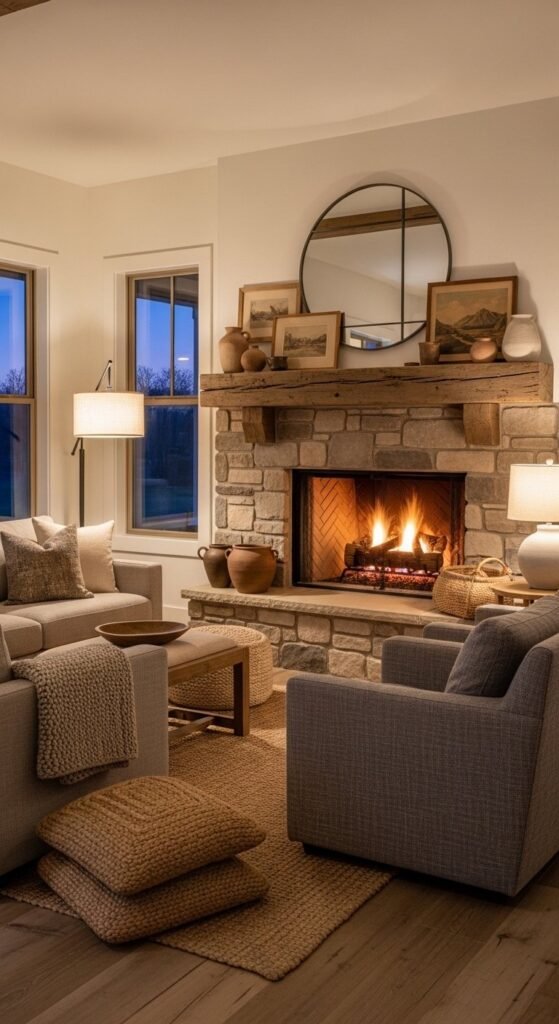
If there’s a fireplace, use it. Real or faux. It sets the tone for the whole room. Stone or brick works best, but even a simple surround can shine with the right styling.
Keep the mantel calm. One large mirror or artwork beats five small objects. Add pottery or candlesticks in uneven numbers. Step back often while styling.
No fireplace? Create the look. An electric insert. A painted surround. Even a console styled like a mantel can fake the feel.
Seating should face the hearth when possible. It makes the room feel social and grounded. A bench near the fireplace adds extra seating without bulk.
Skip themed signs or busy decor. Let texture and shape do the work. A quiet fireplace moment anchors the entire space and gives the room a natural focal point.
5. Bring in Greenery the Easy Way
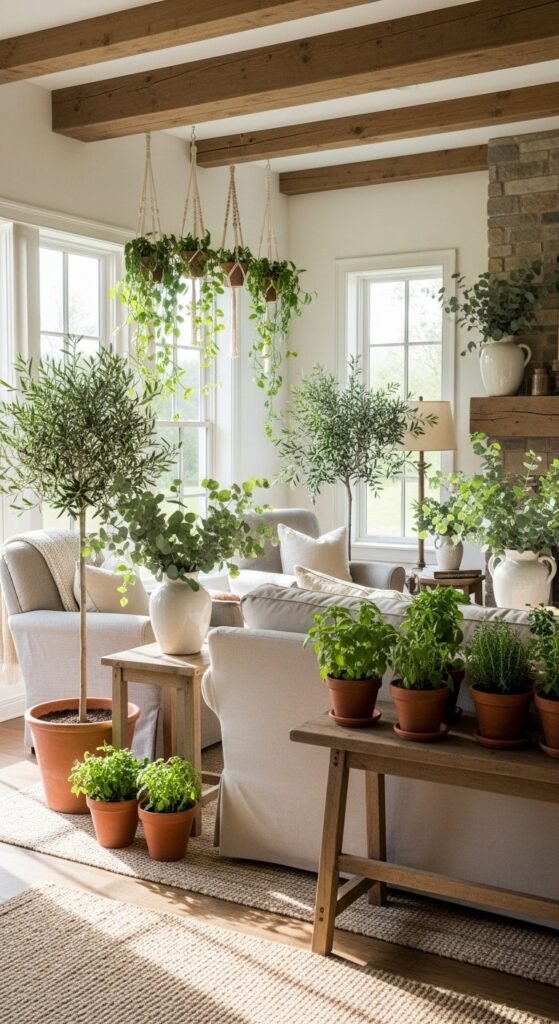
Plants soften farmhouse interiors fast. And they don’t have to be expensive. One tall olive tree instantly fills an empty corner. Faux works if the quality is good.
Eucalyptus stems are everywhere for a reason. They last. They smell good. And they work year-round. Drop them into stoneware or glass vases.
Hanging plants help small rooms. They pull the eye up without taking floor space. Use simple hooks and neutral planters.
For a budget option, grocery store herbs look great on side tables or windowsills. Use clay pots or wrap plastic ones in linen.
Greenery adds life without clutter. It balances wood and fabric beautifully and keeps the room from feeling too styled. Rotate plants seasonally for subtle change.
6. Thrifted Finds That Tell a Story
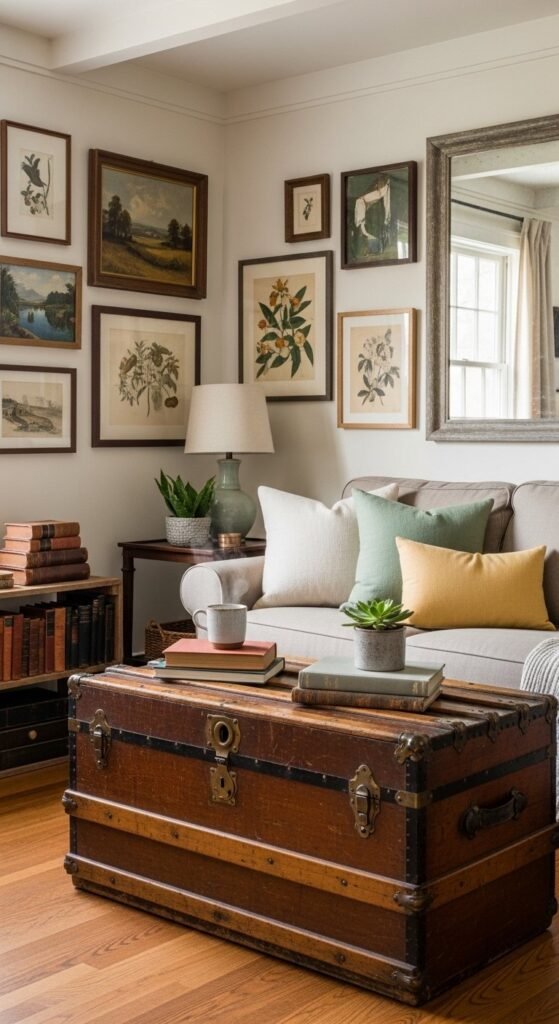
Farmhouse rooms feel better when not everything matches. Thrifted pieces bring that in naturally. Look for trunks, crates, old frames, and mirrors with age marks. Scratches help. Patina helps more.
Use one thrifted item as an anchor. A trunk can replace a coffee table and hide blankets. Old crates stack into side tables. Vintage art fills walls without feeling staged.
Don’t over-style these pieces. Let them breathe. Pair them with clean furniture so the room stays balanced.
A simple trick: repaint thrifted items only if the shape is good but the color feels off. Warm white or soft taupe works well. Light sanding after paint brings back character.
Set a small challenge for yourself. One room. One weekend. One thrift run. Secondhand pieces make the space feel personal, not pulled from a catalog.
7. Shiplap, Used Quietly
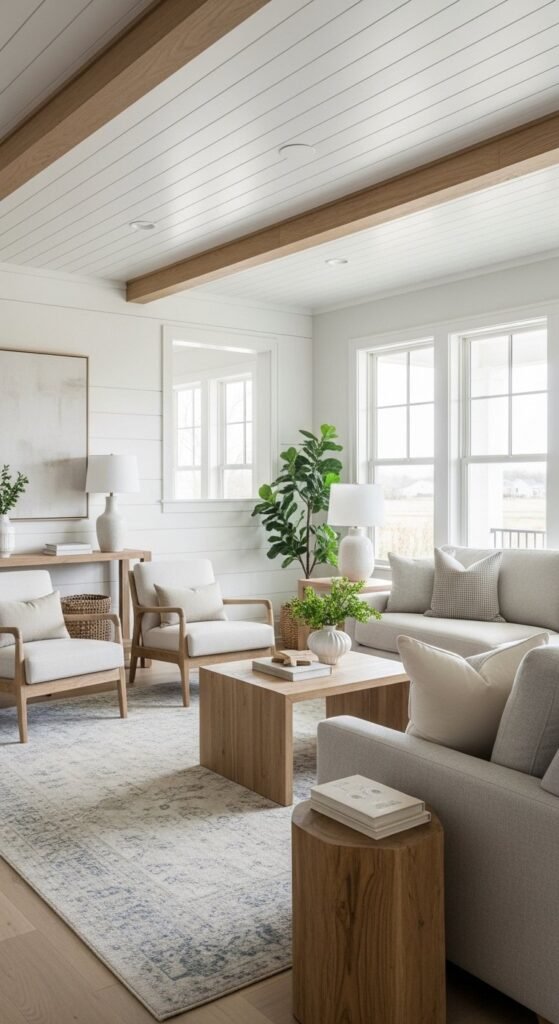
Shiplap still works. Just not everywhere. Instead of a full accent wall, try it in smaller moments. Ceilings add texture without stealing attention. Half-walls define spaces gently.
Reading nooks are another smart spot. A little paneling behind a chair adds depth without overpowering the room.
Paint matters. Avoid stark white. Go warmer so the grooves feel soft, not sharp.
If installing isn’t an option, peel-and-stick panels exist. Use them sparingly. Less surface area keeps the look grounded.
Balance shiplap with smooth surfaces nearby. Upholstery. Plain walls. Simple rugs. Restraint keeps classic details feeling current, especially in open living rooms.
8. Warmer, Moodier Color Touches
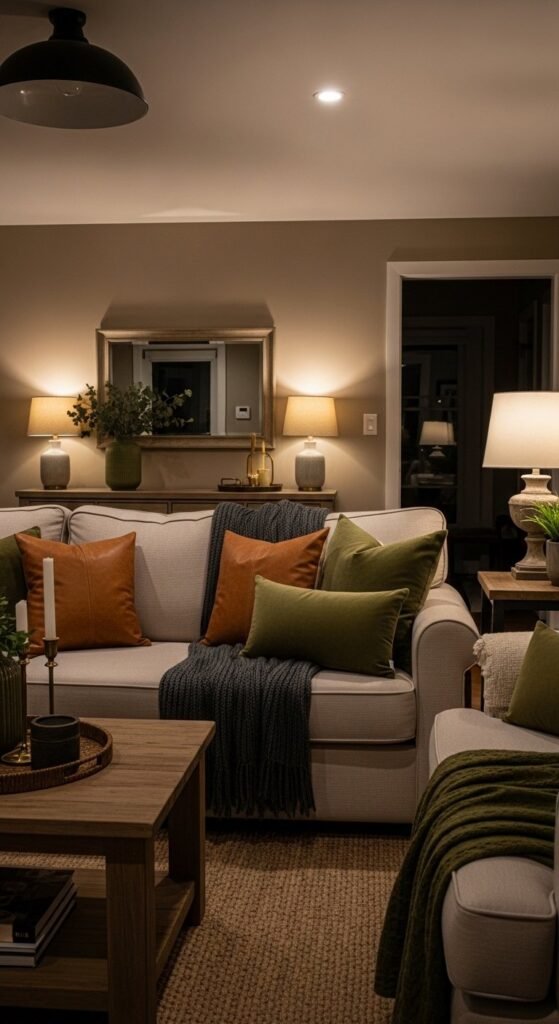
The farmhouse isn’t all white anymore. Warm colors bring comfort. Camel. Olive. Mushroom. Charcoal. Use them as accents first.
Throw pillows are the safest place to start. Swap them seasonally. A darker throw adds weight to a light sofa.
If painting feels doable, try one wall or built-in in a deeper tone. Keep the trim light so the room stays open.
Stick to earthy shades. Nothing shiny. Nothing too bright. These colors feel better when muted.
Lighting changes how color reads. Warm bulbs make deeper tones feel cozy, not heavy. Richer accents add depth without changing the whole room when used in small doses.
9. Black Accents for Contrast
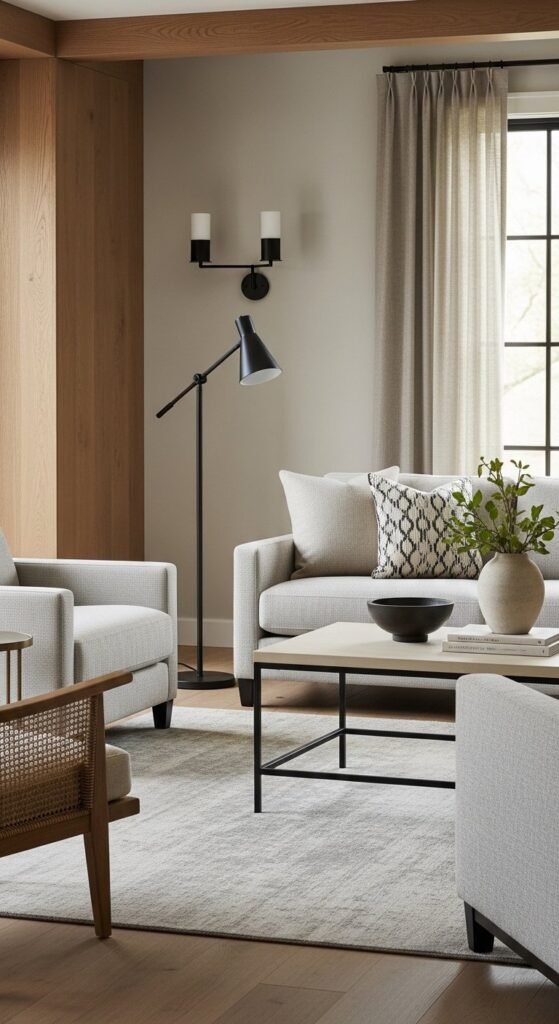
Black details sharpen farmhouse spaces. The trick is control. One or two pieces per area is plenty.
Lighting is the easiest place. Matte black lamps or sconces add contrast without clutter. Table legs and hardware also work well.
Avoid shiny finishes. Matte or satin feels calmer. Pair black with warm wood so it doesn’t feel harsh.
If the room starts leaning industrial, pull back. Add linen or woven textures to soften the look.
Think of black as punctuation. It defines the space, not dominate it. When used lightly, it keeps farmhouse rooms from tipping into overly sweet territory.
10. Layered Rugs That Ground the Room
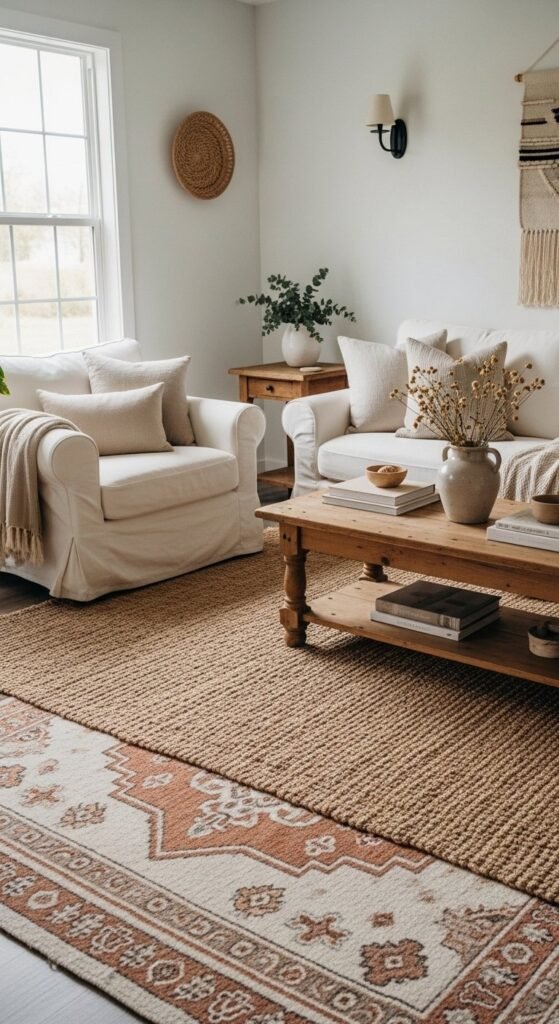
Rug layering is a farmhouse staple for a reason. A large jute rug sets the base. It adds texture and warmth. Then layer a smaller rug on top for pattern.
In small rooms, keep the top rug low-contrast. Too much pattern can shrink the space. In larger rooms, bolder patterns work fine.
Sizing matters. The bottom rug should sit under all the main furniture. The top rug can float under the coffee table.
Budget tip: invest in the jute. Save on the top layer. Flatweave rugs often cost less and wear well.
Layering also hides wear over time. It makes the room feel settled, not showroom-new. Swap the top rug when you want a change without starting over.
11. Bare Windows That Let Light In
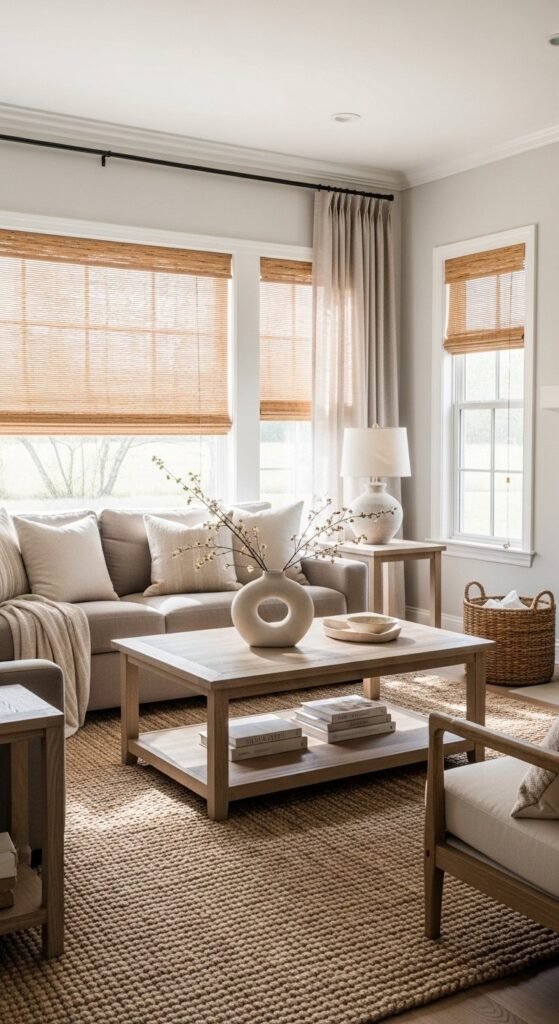
Farmhouse rooms love daylight. Heavy curtains block it. Swap them out for woven shades or sheer panels that still give privacy. The room will feel calmer right away.
If privacy is a concern, layer. A simple roller shade paired with linen drapes works well. Keep colors close to the wall tone so nothing feels heavy.
Hang curtain rods higher than the window frame. This pulls the eye up and makes ceilings feel taller. It’s a small trick with big payoff.
For renters, tension rods or no-drill brackets keep things simple. Even a single panel on each side can soften the window without closing it off.
Light changes how every other element reads. An airy window setup makes the whole room feel open, even with darker accents elsewhere.
12. Small Farmhouse Living Room Layouts
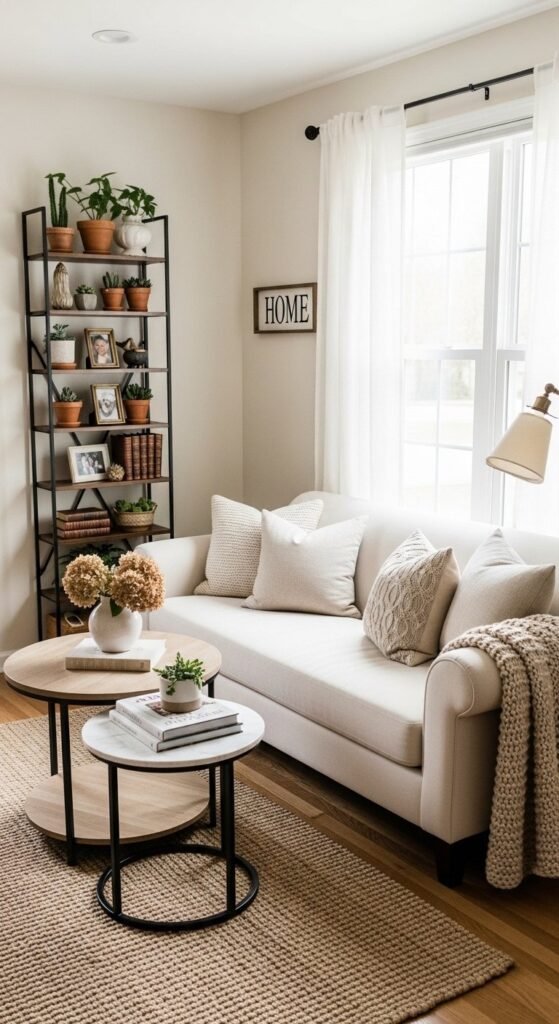
Small spaces still work with farmhouse style. Scale matters more than style here. Choose a slimmer sofa with exposed legs. It feels lighter.
Nesting tables beat bulky coffee tables. Pull them apart when guests arrive. Stack them back when the room needs breathing space.
Vertical storage helps. Shelves or tall cabinets draw the eye upward without crowding the floor. Keep styling minimal.
Mirrors help bounce light around tight rooms. Round shapes work especially well in farmhouse interiors.
Skip oversized sectionals and heavy armchairs. A thoughtful layout keeps the room functional and warm, not cramped or chaotic.
13. Farmhouse for Real Life Zones
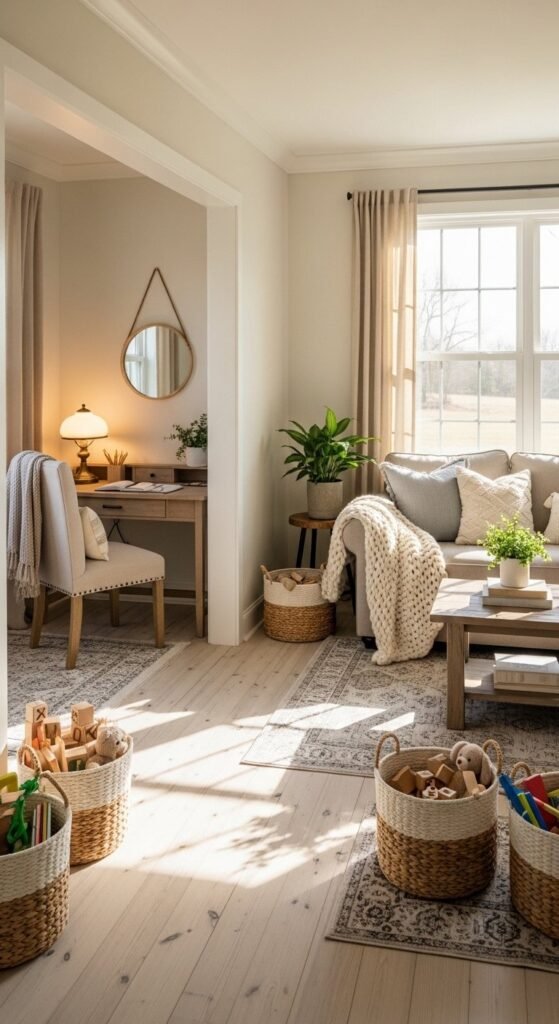
Living rooms often do more than one job. Farmhouse style handles this well with gentle zoning. Use rugs to define seating areas.
A console behind the sofa can double as a desk. Add a simple chair and task lamp. It blends in when styled right.
For kids or pets, baskets hide clutter fast. Woven ones feel intentional, not messy. Keep them within reach.
Lighting helps separate zones. A floor lamp for reading. A table lamp for work. Overhead lights stay soft.
The goal isn’t perfection. It’s a room that works and still feels welcoming at the end of the day.
14. Seating That Feels Relaxed
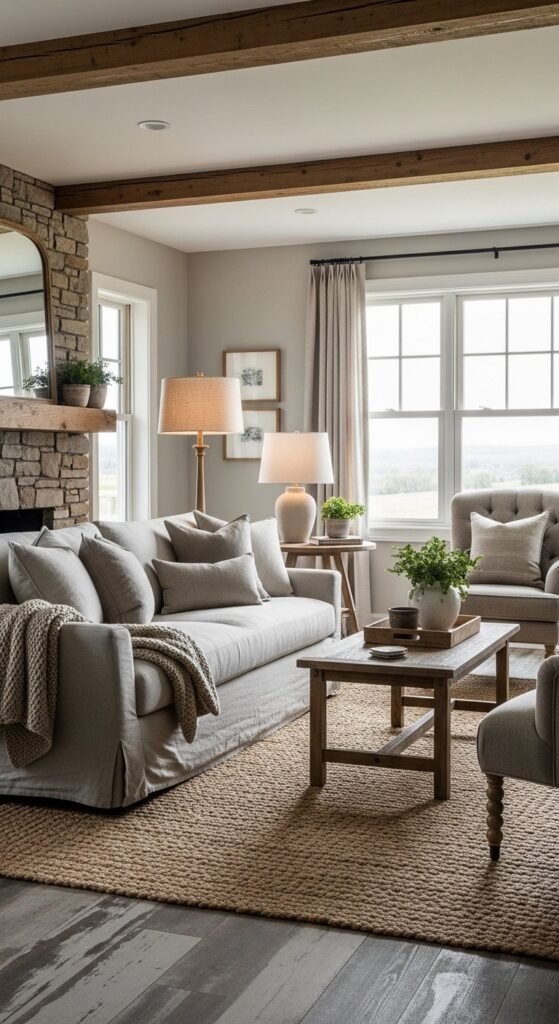
Seating sets the tone. Slipcovered sofas feel casual and forgiving. They age well and clean easily.
Tufted armchairs add structure without feeling formal. Look for neutral fabric and classic shapes. Turned legs hint at farmhouse roots.
Mix seating styles instead of matching everything. It keeps the room from feeling staged.
If buying new, spend more on the sofa. Save on accent chairs or stools. Thrifted chairs with good frames can be reupholstered later.
Comfort matters here. Farmhouse seating should invite long conversations, not quick sits.
15. Simple Wall Moments
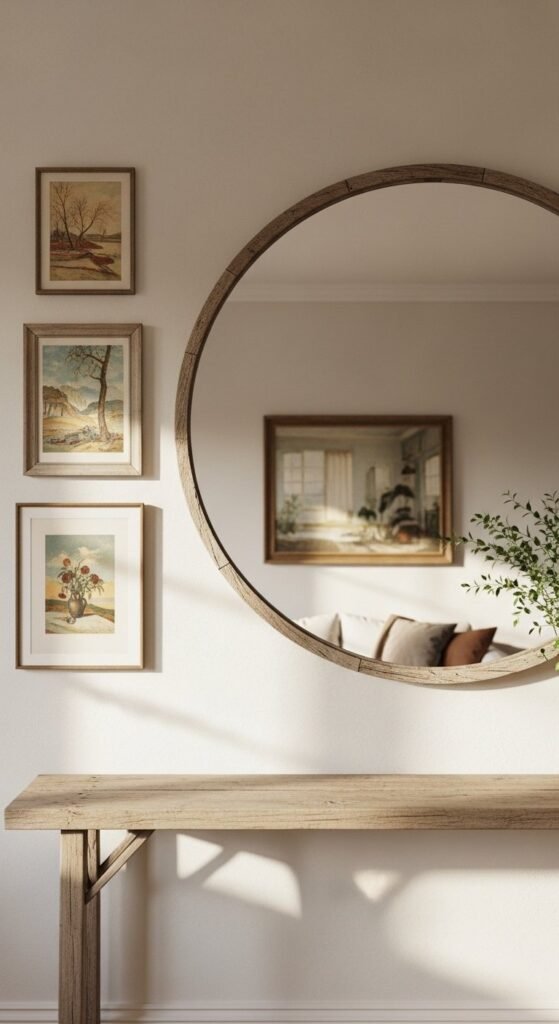
Walls don’t need much. One strong moment beats many small ones. A round mirror reflects light and softens straight lines.
Gallery walls work when colors stay muted. Mix art sizes but keep frames simple. Wood or black metal both fit well.
Vintage art adds depth without shouting for attention. Even botanical prints feel right here.
Hang art slightly lower than usual. It keeps the room grounded and connected to furniture.
Skip word signs and busy slogans. Quiet wall decor lets texture and light do the talking and keeps the room timeless.
16. Storage That Hides the Mess
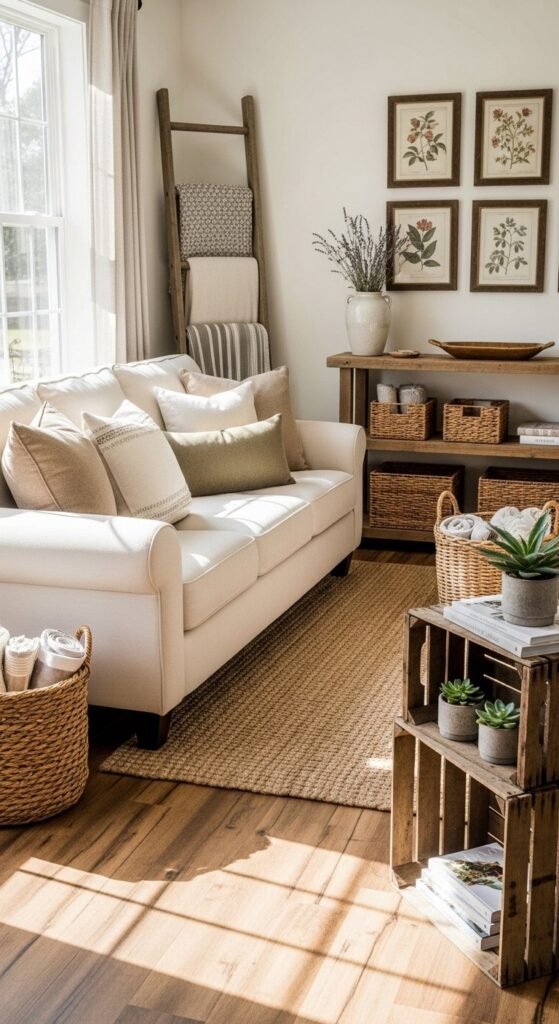
Farmhouse rooms look relaxed because clutter is tucked away. Storage doubles as decor here. Woven baskets slide under tables or benches and hide toys, throws, or magazines.
Blanket ladders work when styled lightly. Two throws max. More than that looks busy. Lean it near seating so it feels purposeful.
Crates and boxes add structure. Stack them neatly or place one under a side table. Keep finishes natural.
Closed storage helps too. Cabinets with simple doors blend in better than open shelving when life gets messy.
The trick is access. Easy storage keeps the room livable, not staged. If it’s hard to put away, it won’t stay tidy.
17. Cozy Cottage–Farmhouse Mix
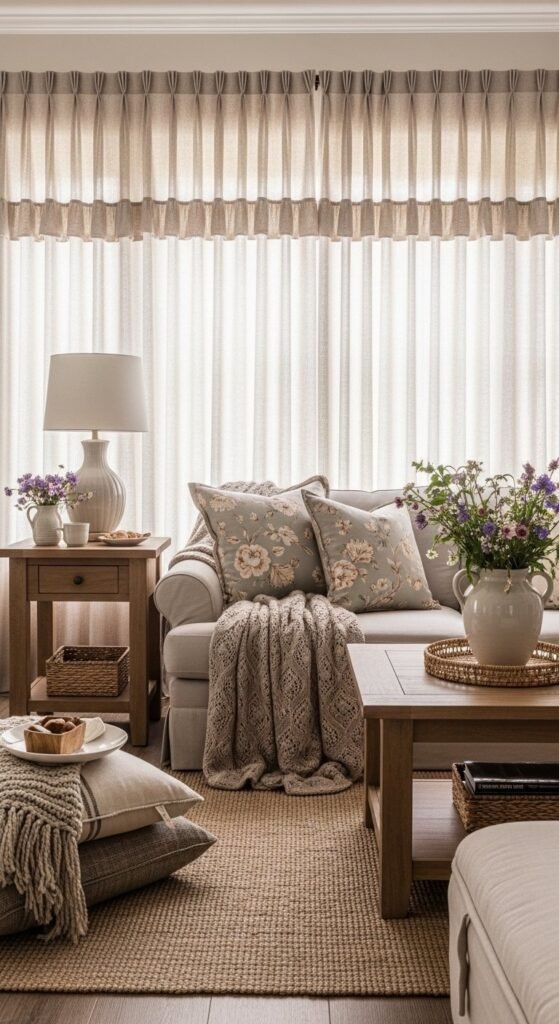
Cottage touches soften farmhouse lines. Florals work best when muted and small-scale. One or two pillows are enough.
Ruffles belong in small doses. Curtains or a throw edge add softness without going sweet. Stick to neutral colors so patterns don’t take over.
Curved furniture helps here. Round tables. Soft armchairs. They balance rustic wood pieces nicely.
Keep the base calm. Let cottage details float on top. This keeps the room from leaning themed.
This blend feels personal and cozy. It works especially well in older homes or spaces with lots of natural light.
18. Budget-Friendly Updates Under $100
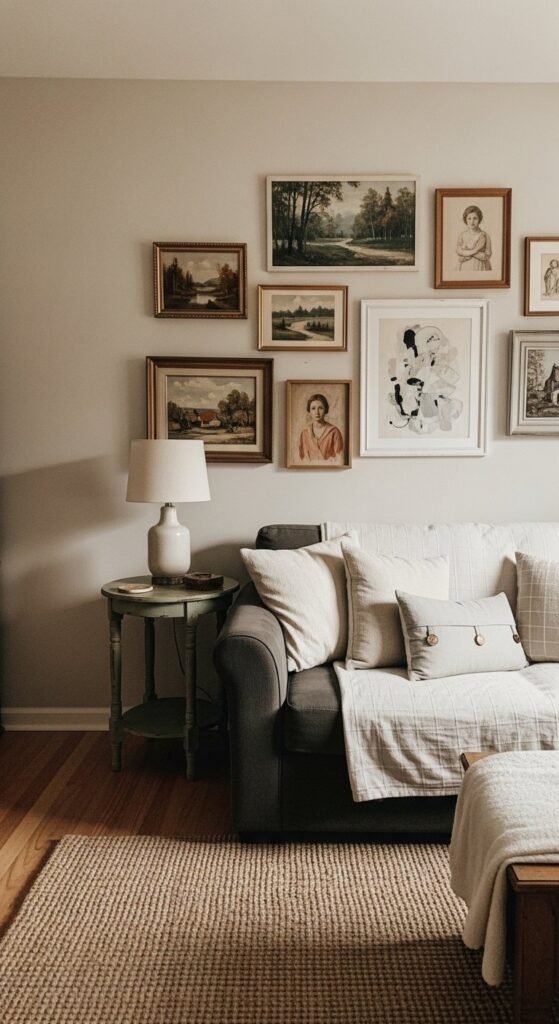
Small changes add up fast. Pillows switch the mood instantly. Choose covers you can rotate instead of buying inserts each time.
Paint is powerful. A side table or old chair looks new with warm white or soft taupe paint. Light sanding keeps it from looking flat.
Lighting swaps matter. A thrifted lamp with a linen shade changes the whole corner.
Art doesn’t have to be pricey. Printable art in thrifted frames works well. Mix sizes for interest.
Focus on one area at a time. Low-cost updates keep the room evolving without big spending.
19. Sustainable, Secondhand Style
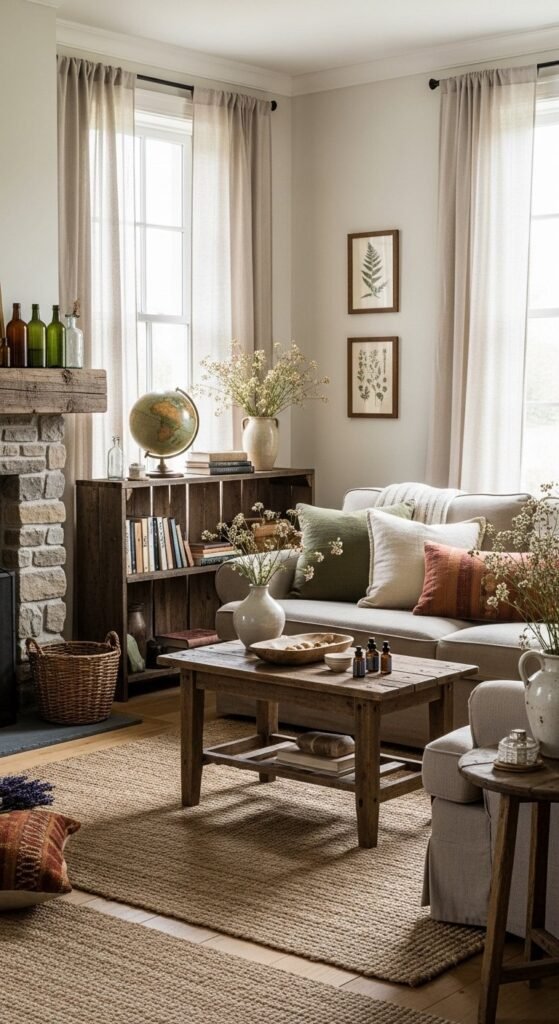
Secondhand fits a farmhouse naturally. Older pieces bring texture and history. Look for solid wood furniture. It lasts longer and feels right.
Natural fibers help too. Jute, wool, cotton. They age better and feel comfortable year-round.
Refinish instead of replacing when possible. New hardware or stain can change a piece completely.
Shop slowly. One good find beats five rushed ones.
This approach keeps the room grounded and thoughtful. Sustainability and style work together here without extra effort.
20. What to Skip for a Timeless Look
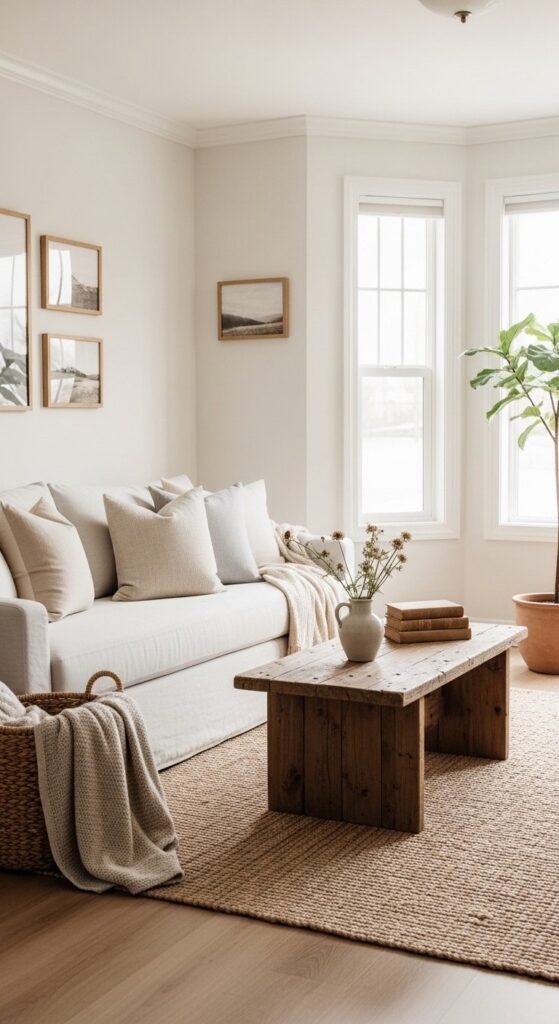
Some farmhouse habits feel tired now. Skip word signs and overly themed decor. They date the room quickly.
Too much shiplap overwhelms. So do barn doors in every doorway. Use classic details with restraint.
Avoid heavy checks and loud patterns everywhere. Mix solids with subtle texture instead.
Edit often. If something feels forced, remove it. Farmhouse rooms breathe better when not overfilled.
The goal is comfort that lasts. A simpler approach keeps the space welcoming year after year.
21. Kid- and Pet-Friendly Farmhouse Choices
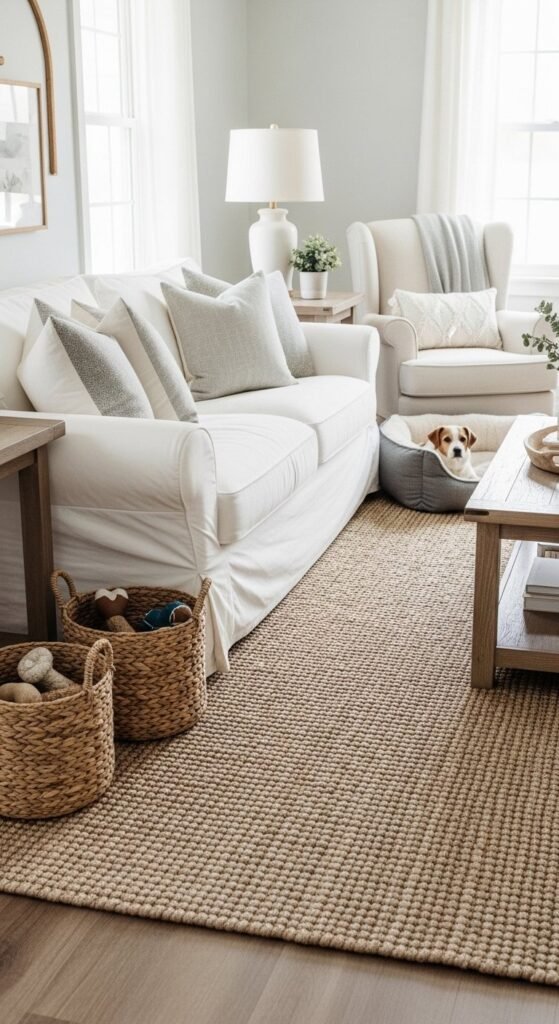
Farmhouse style works well for busy homes when materials are chosen carefully. Slipcovers handle spills and fur with ease. Neutral tones hide wear better than stark white.
Rugs should be low-pile and washable when possible. Flatweaves are forgiving and easy to clean. Layer them over jute for extra texture.
Leather or performance fabric chairs hold up well and still feel warm. Skip delicate finishes.
Baskets corral toys and pet gear fast. Keep them near activity zones so cleanup stays simple.
Comfort comes first here. A practical setup keeps the room calm, even on loud days.
22. High–Low Farmhouse Mixing
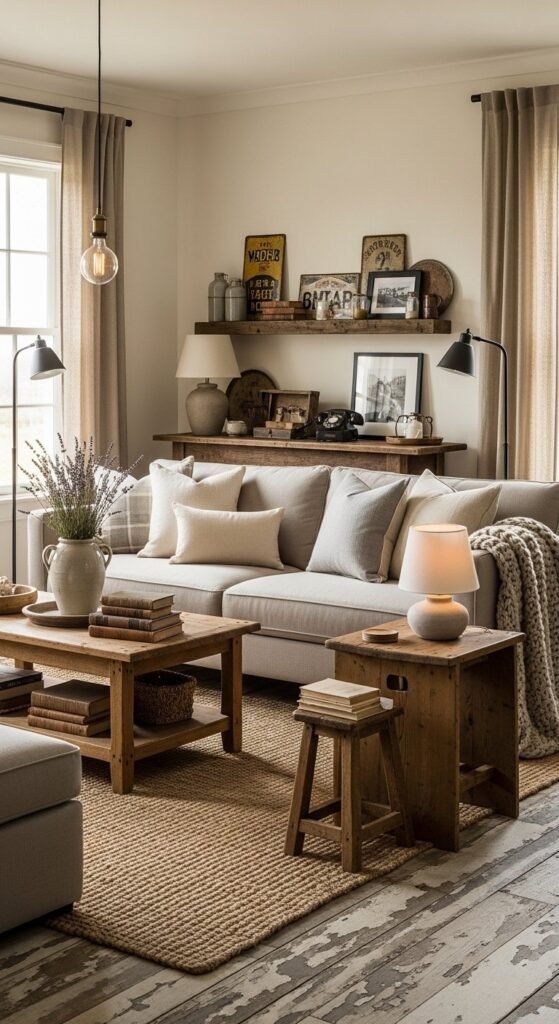
Not everything has to be expensive. Spend more on pieces you touch every day. Sofas. Lighting. Save on decor and side furniture.
Thrifted tables pair well with clean-lined seating. The contrast feels collected, not mismatched.
Lighting is worth a careful choice. One statement fixture can carry the room. Everything else can stay simple.
Avoid buying full sets. Mix old and new. Mix textures.
This balance feels intentional. It keeps the room from looking flat or overdone and gives it personality.
23. Seasonal Farmers-Market Styling
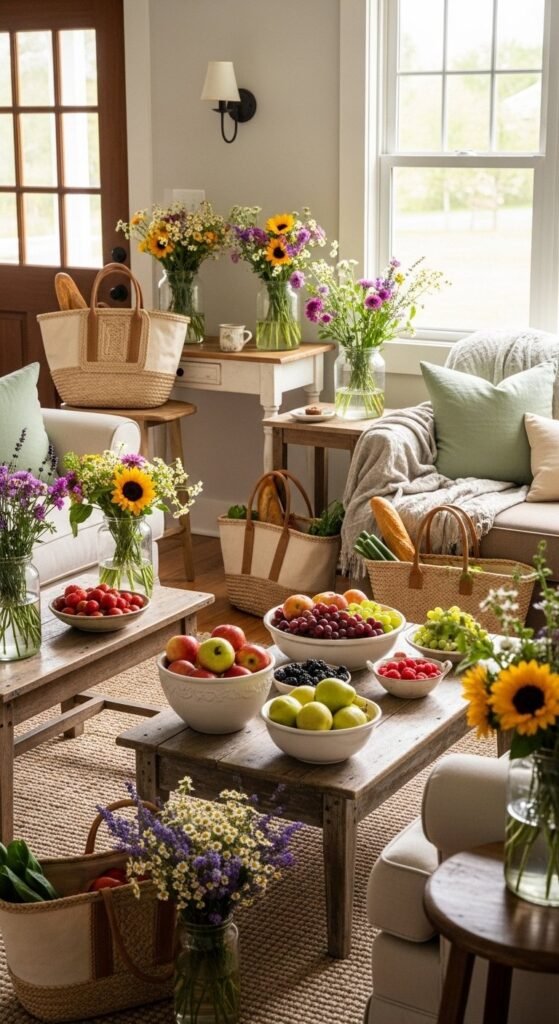
Seasonal styling doesn’t require new decor. Use what you bring home. Bowls of citrus. Fresh flowers. Herbs in small pots.
Market totes hang nicely on hooks or lean against consoles. They add texture and purpose.
Swap pillow covers and throws as seasons change. Stick to the same color family so everything still works together.
This approach keeps the room feeling alive without clutter. Small seasonal shifts keep farmhouse spaces feeling human, not staged.
24. Tech-Friendly Without the Visual Noise
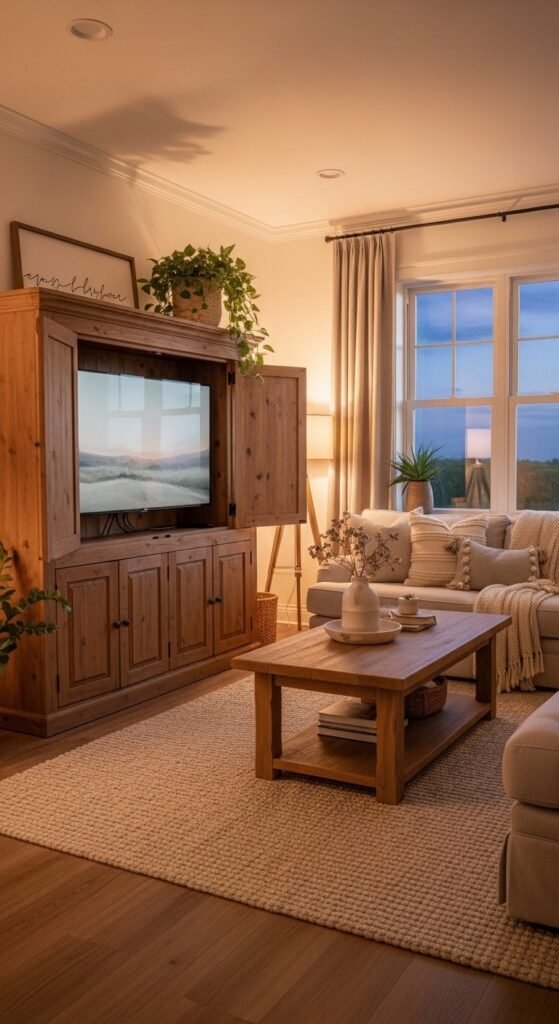
Technology belongs in living rooms, but it doesn’t have to stand out. Hide cords with fabric cord covers or run them along wood edges.
Use cabinets or sliding panels to disguise screens when not in use. Even a simple console with doors helps.
Smart bulbs allow mood lighting without extra fixtures. Stick to warm tones.
Speakers blend in better when small and neutral. Place them near baskets or books.
A calm visual field keeps the farmhouse feel intact, even with modern comforts.
25. Farmhouse That Fits Apartments and Rentals
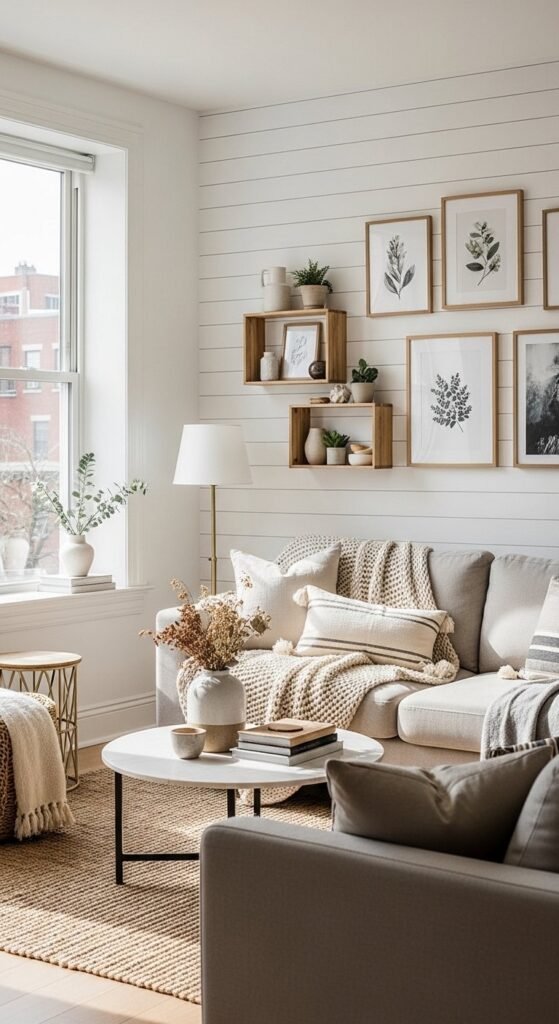
Permanent changes aren’t required. Peel-and-stick paneling adds texture without damage. Use it in small areas.
Furniture does most of the work here. Choose wood tones and soft fabrics. Skip built-ins.
Rugs define zones without altering walls. Curtains on no-drill rods soften windows easily.
Everything should move with you. Portable pieces keep the look flexible for future homes.
26. Then vs. Now Farmhouse Style
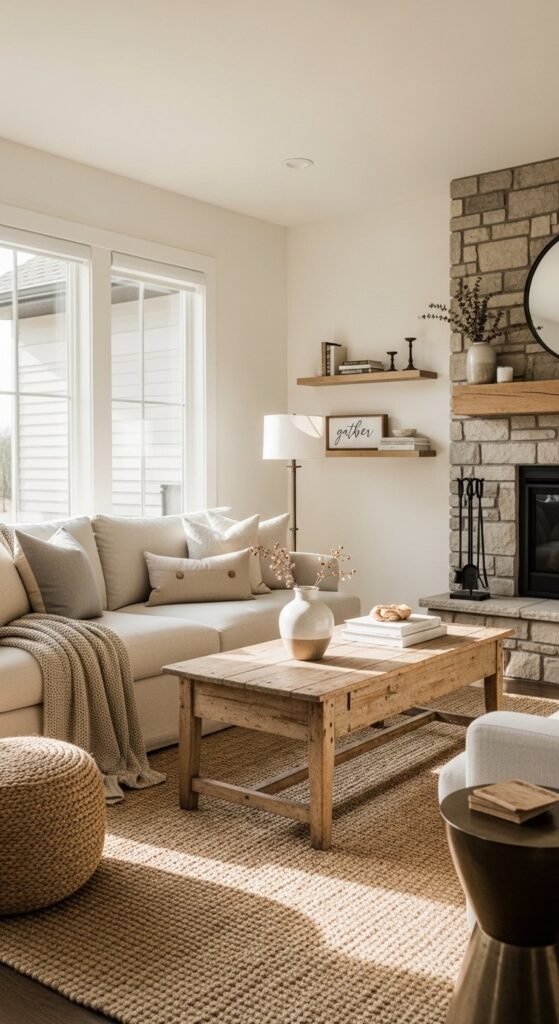
The farmhouse didn’t disappear. It matured. Earlier versions were themed. Newer spaces feel calmer and more refined.
Fewer signs. More texture. Less contrast. More warmth.
The focus shifted from decor statements to comfort and materials.
This evolution helps the style last longer. Updated farmhouse feels quieter and more personal, not trend-driven.
27. Make It Feel Like Home
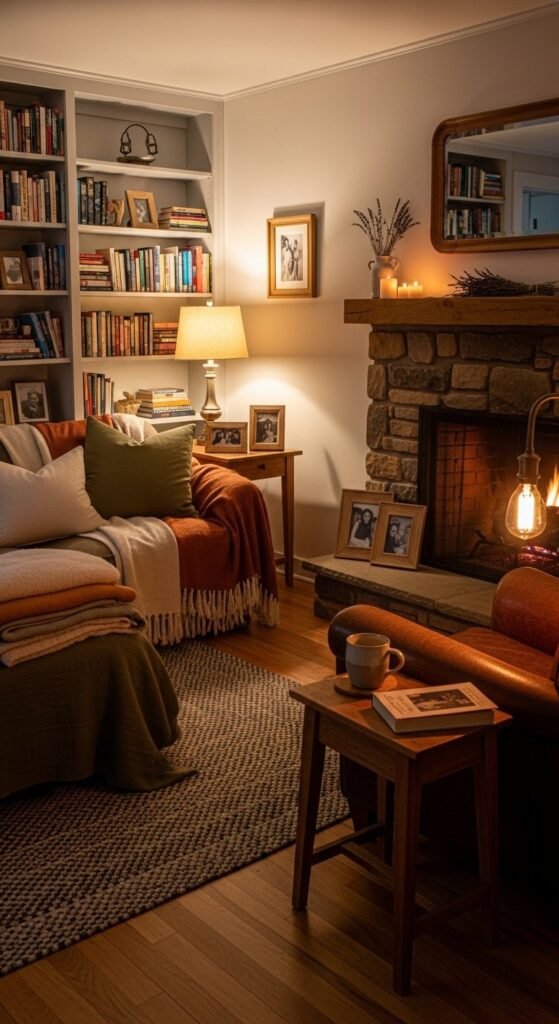
The final layer is personal. Books you read. Photos you love. Objects with meaning.
Keep them grouped and simple. Too many scattered items feel chaotic.
Lighting matters most at night. Table lamps and floor lamps create calm pockets of light.
Adjust over time. Rooms change with life.
When a space reflects how you live, it always feels right.

Leave a Reply