

1. Neutral Farmhouse Color Palette
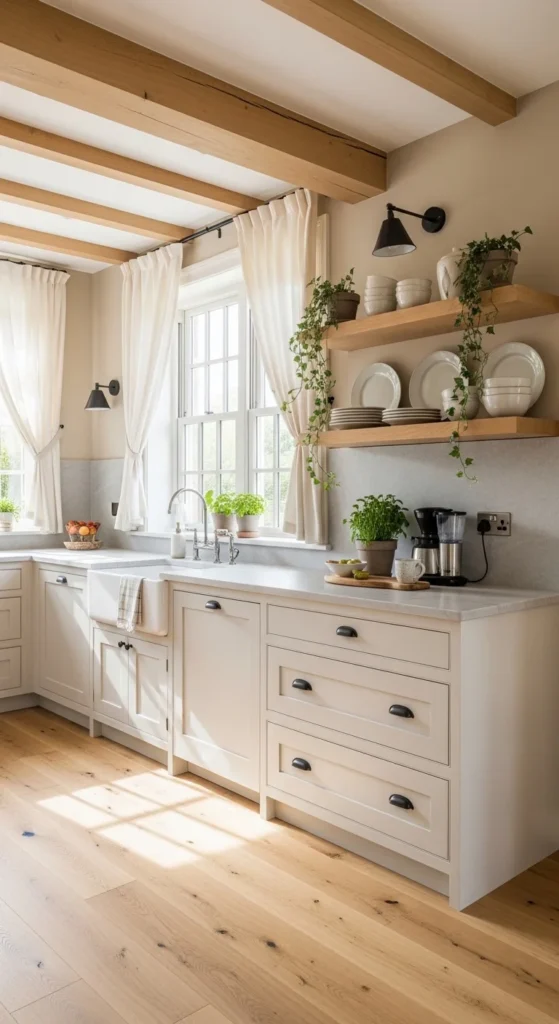
Neutral palettes sit at the heart of Pinterest-loved farmhouse kitchens. Whites, creams, and beiges create a calm base that feels timeless. The trick is layering, not matching. Pair warm whites with light wood shelves or a butcher block island. This keeps the space from feeling flat. Add texture through linen curtains, ceramic bowls, or stone counters.
For a budget route, repaint cabinets instead of replacing them. Use warm-toned white paint rather than bright white. Swap glossy finishes for matte. Even small touches matter. Wooden cutting boards leaned against the backsplash. A woven runner under the sink. These details add soft visual warmth without clutter.
If your kitchen is small, stick to two main neutrals and repeat them. This keeps things cohesive. Avoid heavy patterns on walls. Let materials do the talking. A neutral farmhouse kitchen always photographs beautifully, which is why it dominates Pinterest boards year after year.
2. Shiplap Accent Walls
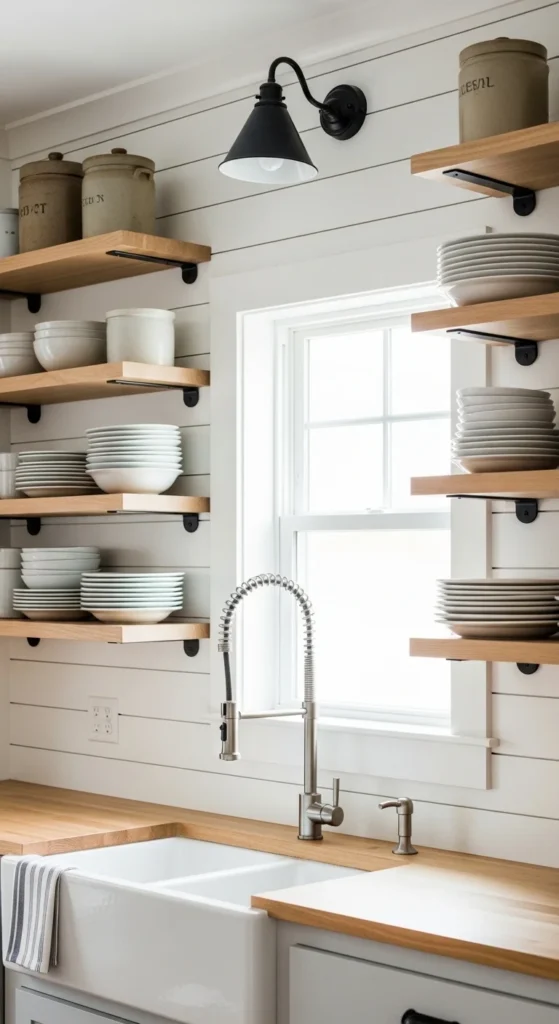
Shiplap walls instantly add farmhouse character. They work best when used with restraint. One accent wall behind the sink or breakfast nook is enough. Painted white, shiplap adds texture without overwhelming the space. It pairs well with open shelving and simple cabinetry.
DIY fans can install MDF shiplap panels or use peel-and-stick versions. These cost far less than real wood and still look great in photos. Keep seams tight and paint with a satin or eggshell finish for easy cleaning.
Styling matters here. Keep decor simple. Stack white dishes. Add a small trailing plant. Let the lines of the shiplap stay visible. This creates subtle rustic rhythm that reads cozy, not busy.
If you want a warmer look, try light beige or soft greige paint instead of white. Shiplap works in modern farmhouse kitchens because it blends clean lines with gentle texture.
3. Open Shelving With Everyday Dishware
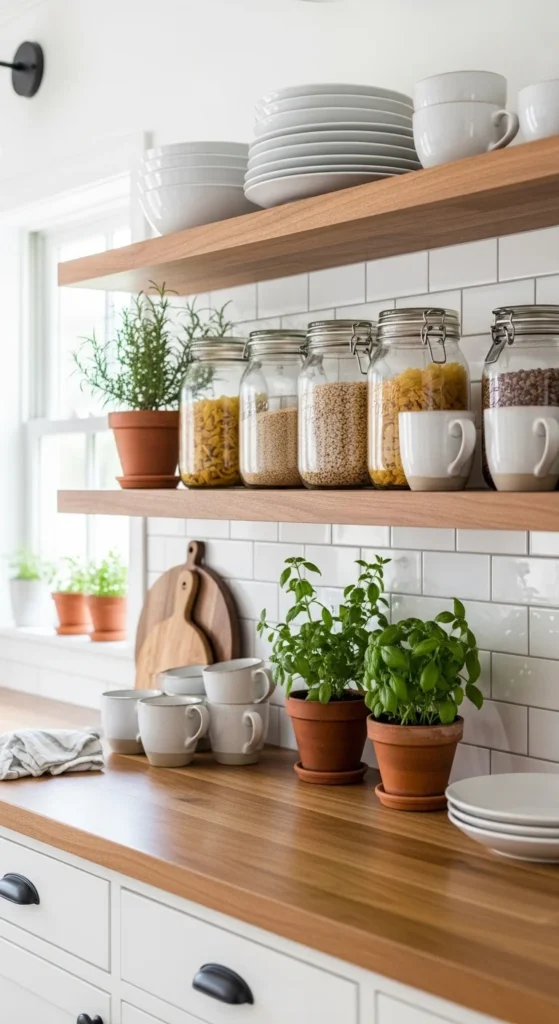
Open shelving keeps farmhouse kitchens feeling relaxed and real. It works best when styled with items you actually use. Plates, bowls, mugs, and jars feel authentic and practical. Avoid over-decorating. Too many objects create visual noise.
Choose shelves made from reclaimed wood or simple pine. Black or brass brackets add contrast. Keep colors tight. White dishware mixed with clear glass always looks clean. Add one natural element per shelf, like a small plant or wooden board.
For renters, try shelf ledges or rail systems that use fewer screws. Budget tip: thrift matching plates instead of buying full sets new. Minor chips often add charm.
The key is spacing. Leave empty areas so shelves can breathe. This creates effortless farmhouse balance that looks styled but not stiff. Open shelving also encourages you to keep clutter under control, which helps small kitchens feel larger.
4. Apron-Front Farmhouse Sink
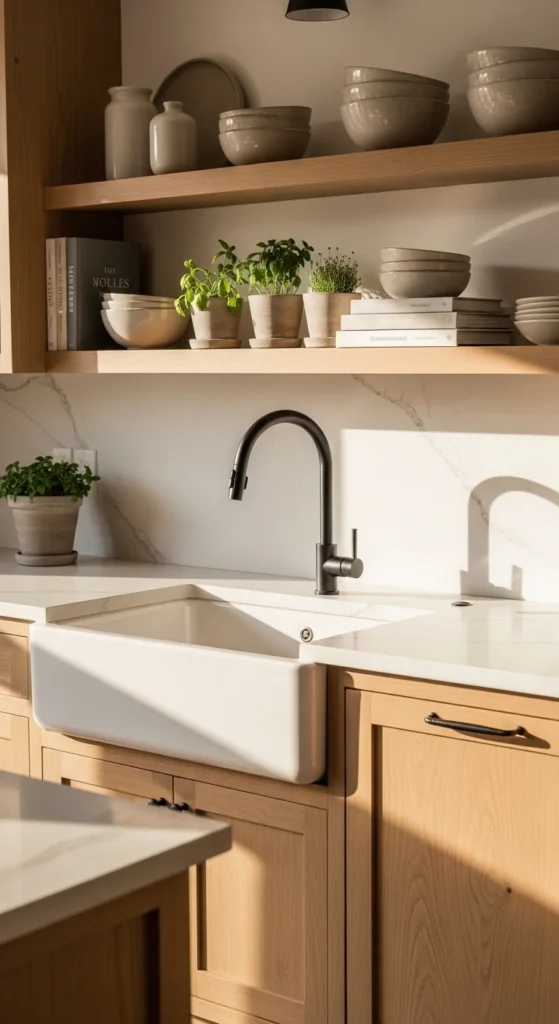
The farmhouse sink is a visual anchor. Its deep basin and exposed front instantly signal farmhouse style. White fireclay sinks are the most popular, but stainless steel versions work for busy homes. Pair the sink with black or aged brass hardware for contrast.
If a full replacement isn’t possible, consider an apron-style sink cover or retrofit model. These offer the look without major cabinet changes. Keep the surrounding area simple. Let the sink shine.
Style the sink wall with a small window, sconce lighting, or open shelves above. Avoid heavy curtains. Linen café curtains work better and keep light flowing.
Function matters too. These sinks handle large pots easily, which makes them practical for families. Combined with simple decor, a farmhouse sink delivers classic kitchen charm that never goes out of style.
5. Warm Wood Accents
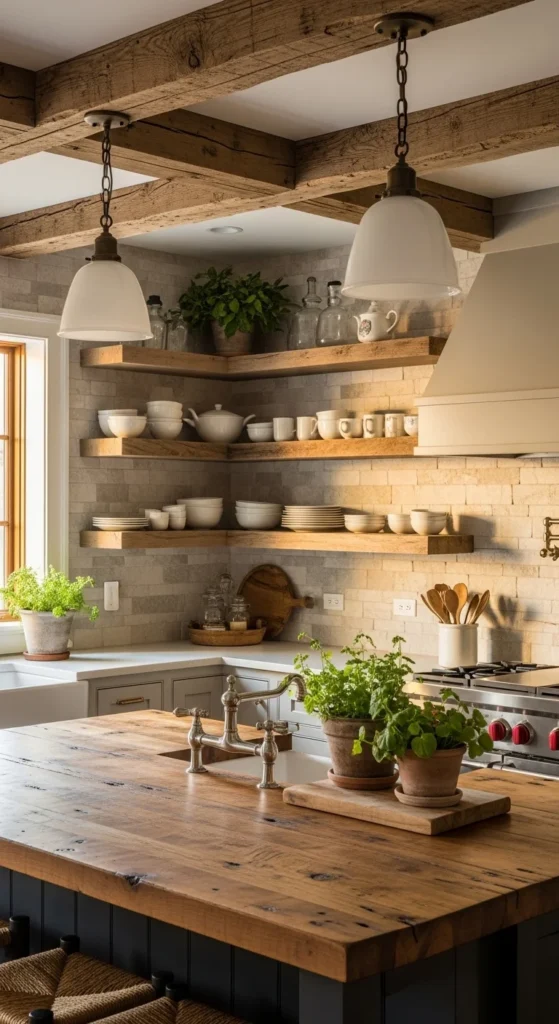
Wood brings warmth into farmhouse kitchens like nothing else. Beams, shelves, floors, or countertops all count. Reclaimed wood adds texture and history, but new wood works just as well when kept natural. Avoid orange tones. Stick to oak, walnut, or light pine shades.
Budget option: add wood through accessories first. Cutting boards. Stools. Floating shelves. Even one wood element softens an all-white kitchen. Mix finishes slightly to keep things relaxed. Perfect matching can feel stiff.
Maintenance is simple. Seal butcher block surfaces properly and oil them occasionally. For shelves, matte sealers keep the look natural.
Wood balances stone, tile, and metal beautifully. It grounds the space and creates cozy farmhouse depth that photographs well and feels welcoming every day.
6. Vintage & Thrifted Farmhouse Accessories
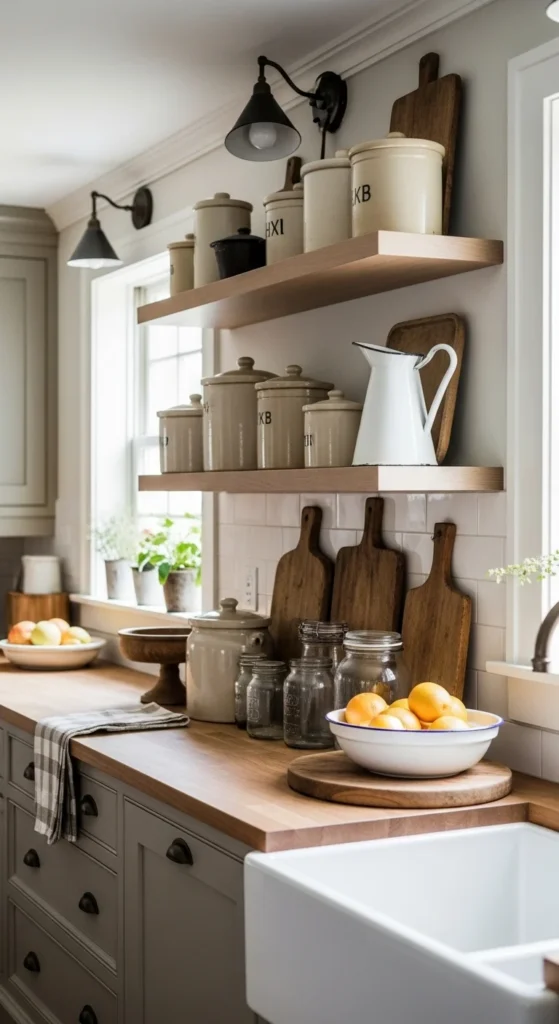
Vintage accessories give farmhouse kitchens soul. They tell a story without saying a word. Look for old crocks, bread boards, enamel bowls, and glass jars at flea markets or thrift stores. Small imperfections add character. Chips and patina work in your favor here.
Group similar items together to avoid visual chaos. Three crocks on one shelf. A stack of boards leaning near the backsplash. Keep colors muted so nothing feels loud. White, beige, and warm brown tones blend easily.
If thrifting locally isn’t easy, mix new pieces that mimic vintage shapes. Matte finishes help. Skip shiny glazes. Even one antique-style item can anchor a whole shelf.
This approach keeps decor meaningful and budget-friendly. It creates collected farmhouse charm that feels lived-in, not staged.
7. Matte Black Hardware Contrast
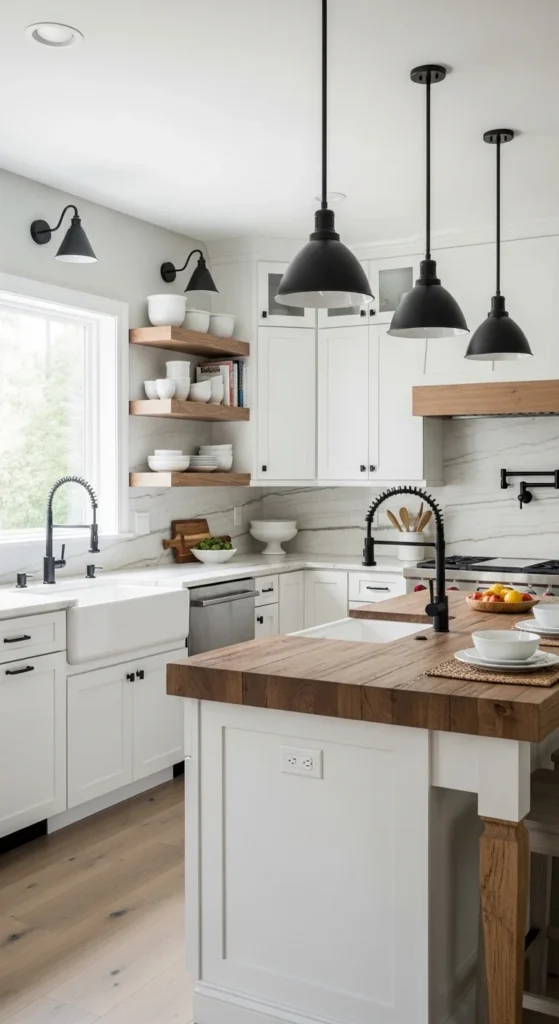
Matte black hardware adds definition to farmhouse kitchens. Against white or beige cabinets, it creates crisp contrast. Handles, knobs, faucets, and light fixtures can all tie together. The look feels grounded and slightly rustic without being heavy.
Swapping hardware is one of the easiest updates you can do. Measure carefully and reuse existing holes to save time. Choose simple shapes. Straight pulls and round knobs work best. Avoid ornate styles.
To keep balance, limit black finishes to two or three areas. Too much can feel harsh. Pair black with wood and soft textiles to keep warmth in the space.
This small change delivers instant visual structure and makes even older cabinets feel intentional and styled.
8. Gingham Textiles for Cottage Touch
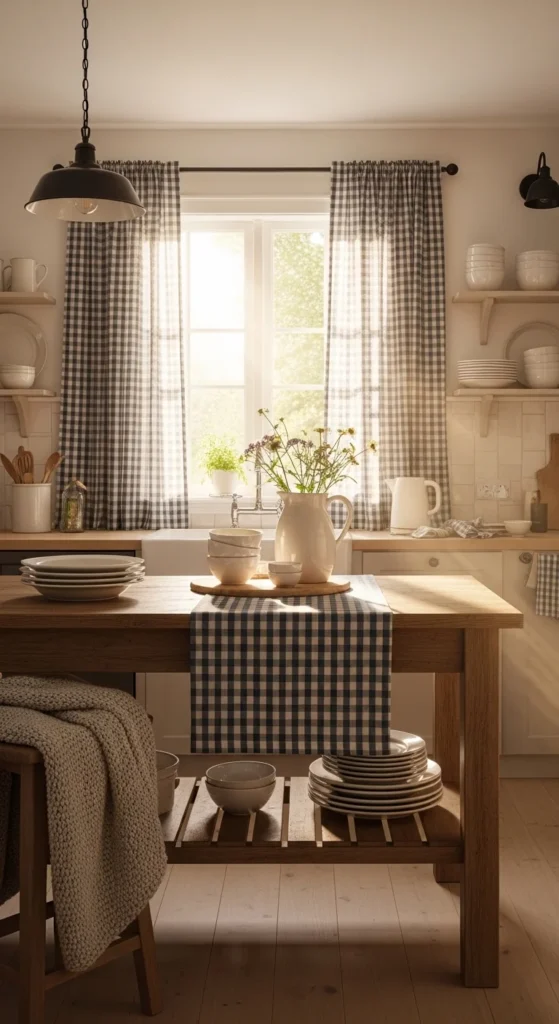
Gingham adds a gentle cottage layer to farmhouse kitchens. It works best in small doses. Think runners, curtains, or seat cushions. Stick to neutral colors like beige, soft black, or muted sage. Bold colors can overpower the room.
Mix gingham with solid textures. Linen, wood, and ceramic help ground the pattern. This keeps the look relaxed. Seasonal swaps work well here too. Lighter gingham in summer. Warmer tones in fall.
DIY tip: make no-sew runners using fabric tape. It’s renter-friendly and budget-smart. Washable fabrics are best for kitchens.
Gingham softens hard surfaces and brings quiet farmhouse coziness without cluttering counters or shelves.
9. Custom or Faux Range Hoods
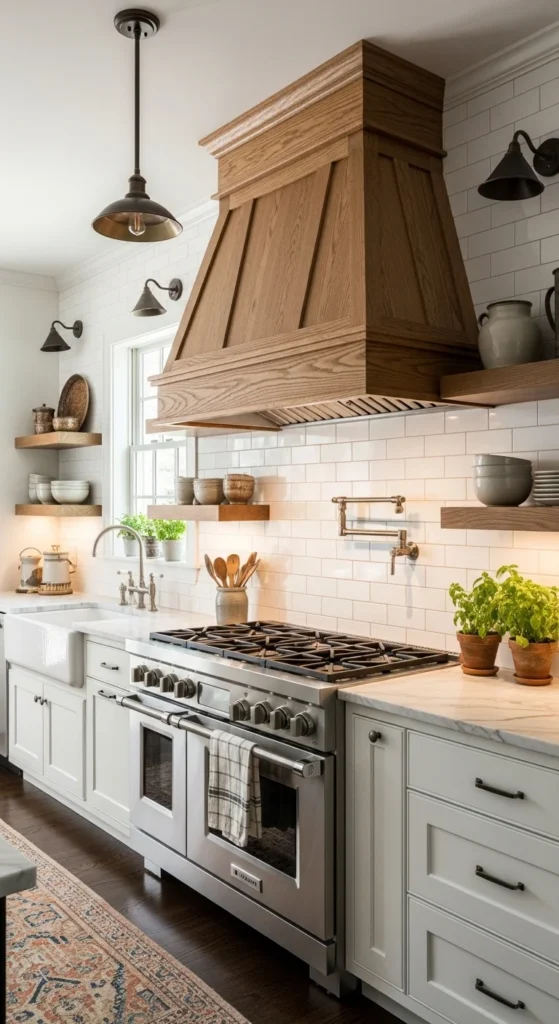
A statement range hood draws the eye upward. Wood-clad designs feel especially farmhouse-inspired. They pair beautifully with simple cabinetry and tile backsplashes. If custom work isn’t an option, faux hood covers offer a similar look at lower cost.
Painted plaster-style hoods also work well. Keep finishes matte and neutral. Avoid glossy surfaces. The hood should blend with the kitchen, not dominate it.
Balance is key. If the hood is bold, keep surrounding decor minimal. Skip busy tile patterns nearby. Let texture do the work.
A well-designed hood adds architectural farmhouse detail that makes kitchens feel thoughtfully designed.
10. Natural Stone or Brick Surfaces
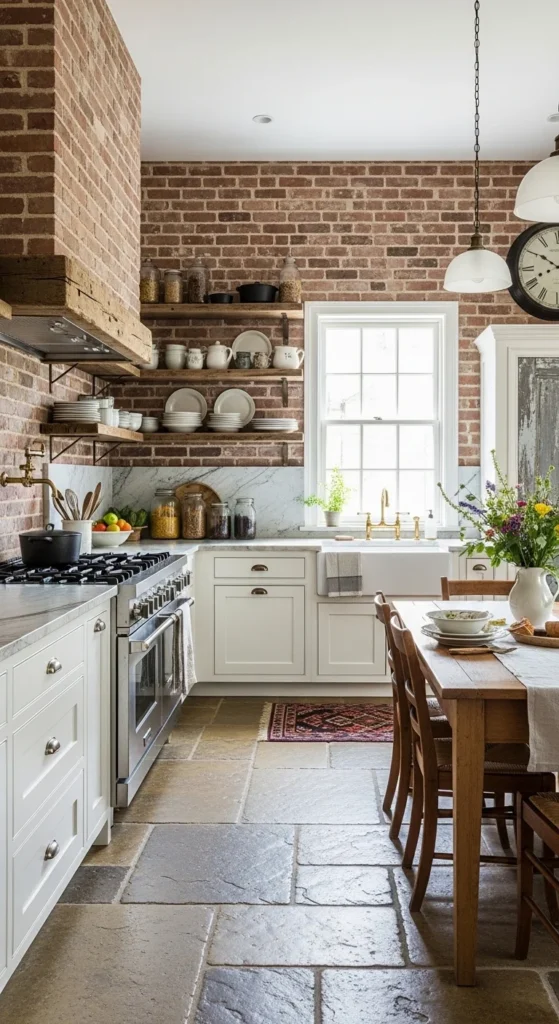
Stone and brick bring raw texture into farmhouse kitchens. A brick backsplash adds warmth behind open shelves or a stove. Stone floors ground the space and hide wear well. These materials age gracefully and suit busy homes.
If real stone isn’t practical, look for high-quality tile that mimics natural texture. Keep grout lines soft and neutral. Avoid high contrast grout that distracts from the surface.
Balance rough textures with smooth finishes. Pair brick with simple cabinets. Add linen or wood to soften the look.
Natural surfaces create earthy farmhouse depth and make kitchens feel rooted and welcoming.
11. Functional Island Styling
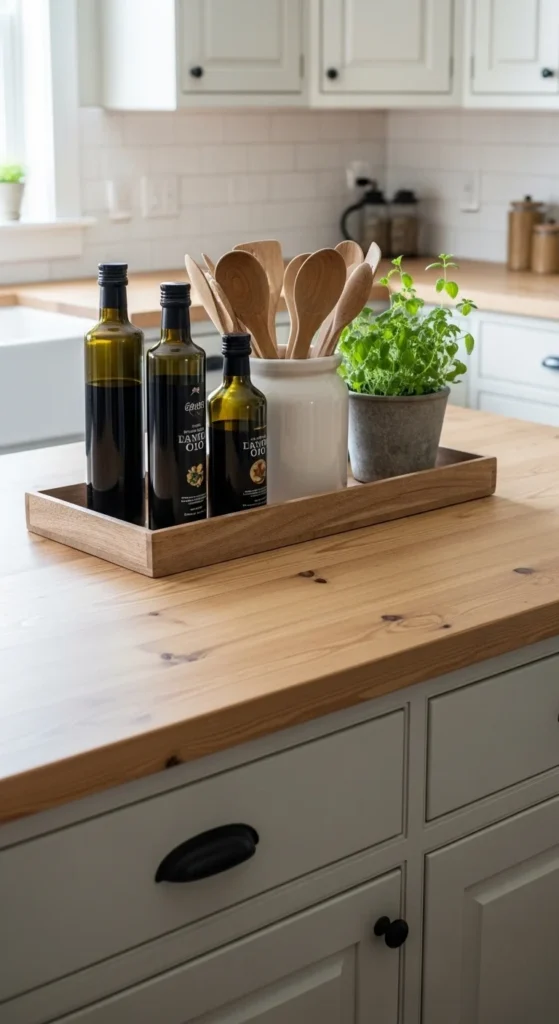
Farmhouse islands work best when styled with purpose. Keep items useful. Utensil crocks, oil bottles, and small plants feel natural here. Avoid decorative clutter that steals prep space. Trays help contain items and make cleaning easier.
Choose materials that match the kitchen. Wood, ceramic, and stone blend well. Skip shiny metals. Keep colors soft so the island stays calm visually.
DIY tip: use thrifted trays or shallow crates. Sand lightly and seal for durability. Herbs like rosemary or basil add life and scent without taking over the surface.
This approach keeps the island tidy while adding everyday farmhouse function that feels lived-in and real.
12. Glass-Front Cabinet Doors
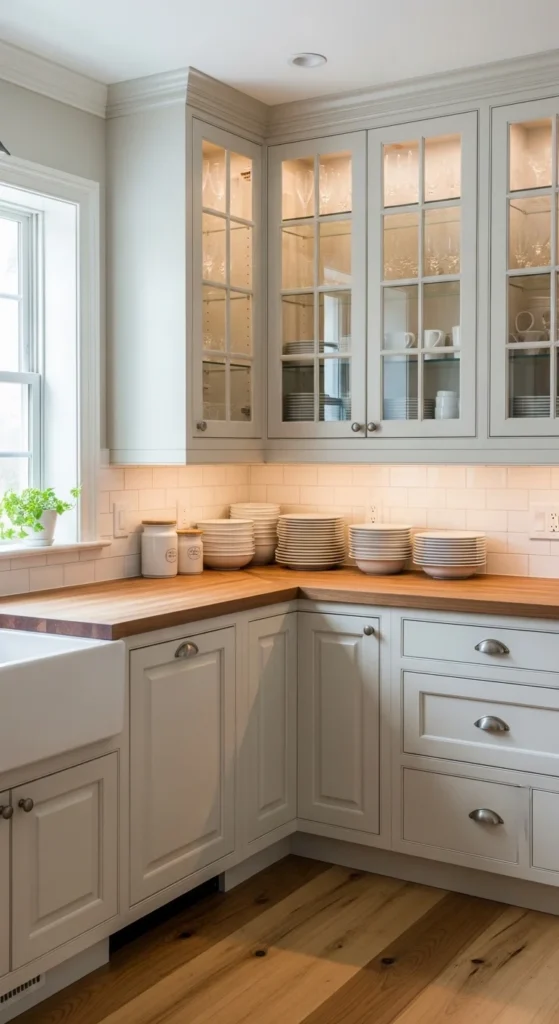
Glass cabinet doors strike a balance between open shelving and closed storage. They protect items from dust while still showing off dishware. Clear glass works for minimal looks. Seeded or ribbed glass adds texture and softness.
Style the inside simply. Stack plates neatly. Leave breathing room. Avoid overcrowding. Cabinet lighting adds a gentle glow and helps items stand out without feeling showy.
For a budget upgrade, replace just one or two cabinet doors with glass. This breaks up solid cabinetry and keeps costs low.
Glass-front cabinets add light farmhouse elegance and help kitchens feel more open.
13. Subway Tile Backsplash
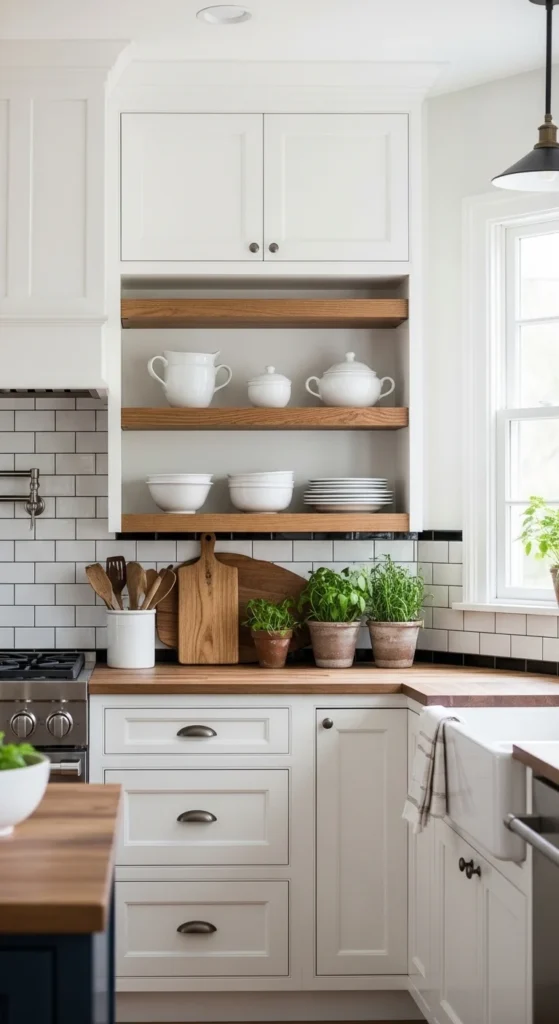
Subway tile remains a farmhouse favorite for a reason. It’s simple, durable, and easy to clean. Laid in a classic brick pattern, it suits both modern and rustic kitchens. White tiles with soft grout keep the look calm.
For a twist, try handmade-style tiles with uneven edges. They add texture without busy patterns. Vertical stacking works too for a subtle update.
DIY-friendly installation makes subway tile budget-smart. Use tile spacers for clean lines and seal grout properly.
This backsplash delivers timeless farmhouse simplicity that works with almost any decor update.
14. Exposed Brick Accent Walls
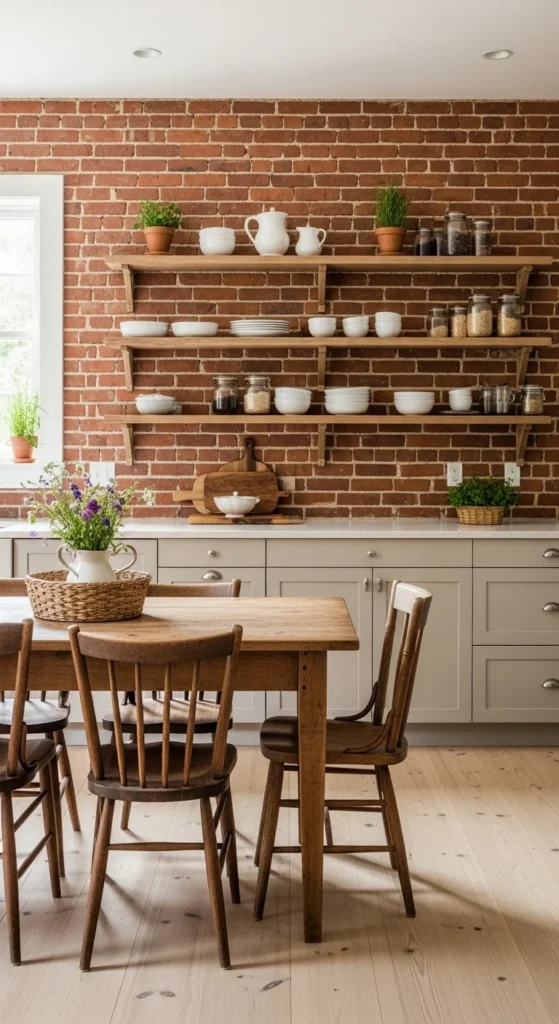
Exposed brick adds warmth and depth instantly. It works best as an accent, not throughout the entire kitchen. Behind shelves or a dining nook is ideal.
If real brick isn’t an option, brick veneer panels offer a convincing look. Choose muted red or washed brick tones for a softer feel. Avoid overly dark finishes that absorb light.
Balance brick with lighter elements. White cabinets, light countertops, and simple decor keep the space from feeling heavy.
Brick creates rustic farmhouse texture that feels cozy and grounded without extra decor.
15. Wood Flooring or Wide Planks
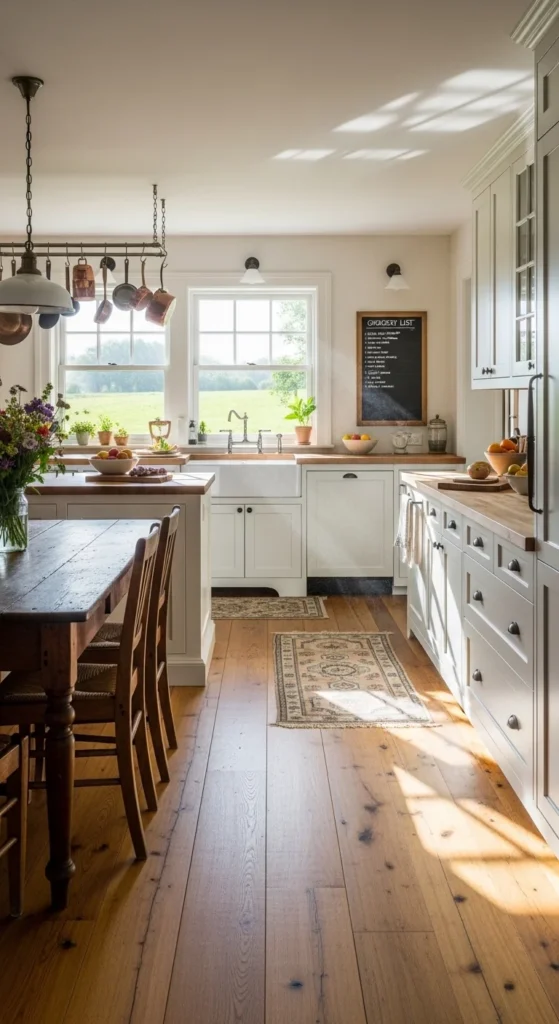
Wood floors set the foundation for farmhouse kitchens. Wide planks feel traditional and welcoming. Natural finishes show grain and wear beautifully over time. Avoid overly glossy coatings. Matte or satin works better here.
For budget homes, wood-look tile or vinyl planks offer durability and water resistance. Choose realistic grain patterns and warm tones.
Rugs help protect high-traffic areas. Use washable runners near sinks and stoves. Stick to neutral patterns so the floor stays the focus.
Wood flooring adds cozy farmhouse grounding and ties all other textures together.
16. Seasonal Farmhouse Layering
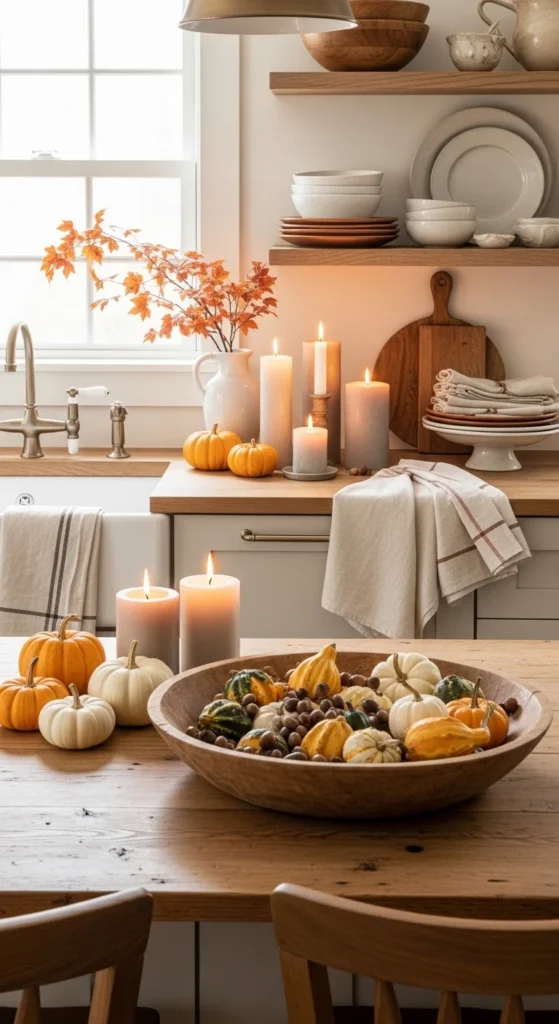
Seasonal layering keeps farmhouse kitchens feeling current without major changes. Small swaps make the biggest difference. Think produce, greenery, candles, and textiles. Avoid theme-heavy decor. Subtle cues work better.
In fall, use pumpkins and warm-toned linens. In spring, switch to fresh herbs and light fabrics. Keep colors within your existing palette so nothing feels out of place.
Storage bins help rotate items easily. Label them by season to stay organized. This keeps counters calm while still reflecting the time of year.
Seasonal updates add gentle farmhouse rhythm that feels natural, not forced.
17. Dark Farmhouse Cabinetry
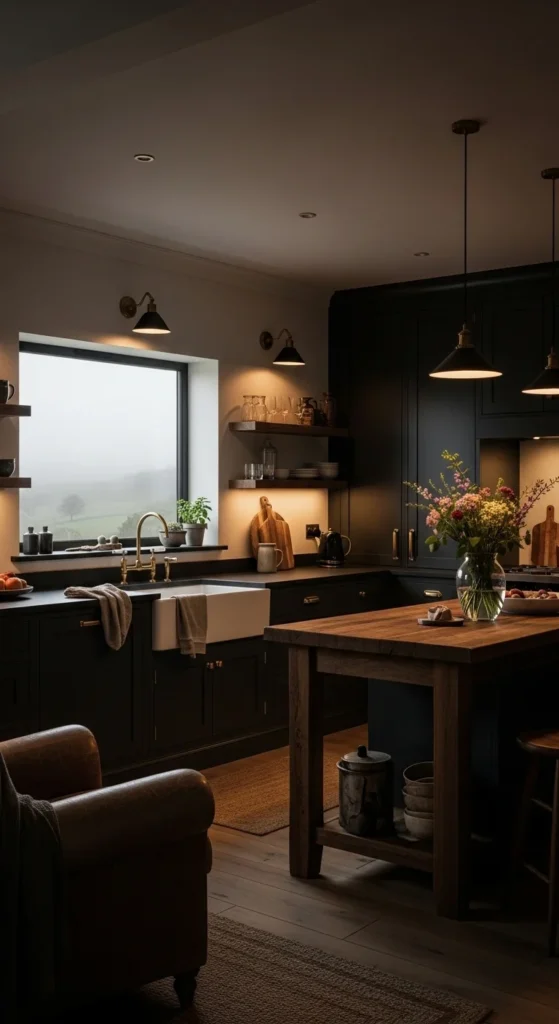
Dark cabinets bring depth to farmhouse kitchens. Charcoal, deep green, or warm brown shades work well. Balance is key. Pair dark cabinetry with light counters or walls to keep the space from feeling closed in.
If repainting all cabinets feels risky, start with the island or lower cabinets. This adds contrast without overwhelming the room. Matte finishes photograph best and hide fingerprints better.
Wood accents soften dark tones and keep the farmhouse feel intact.
Dark cabinetry creates cozy rustic drama that appeals to modern farmhouse fans looking for something beyond white.
18. Mixed Metal Finishes
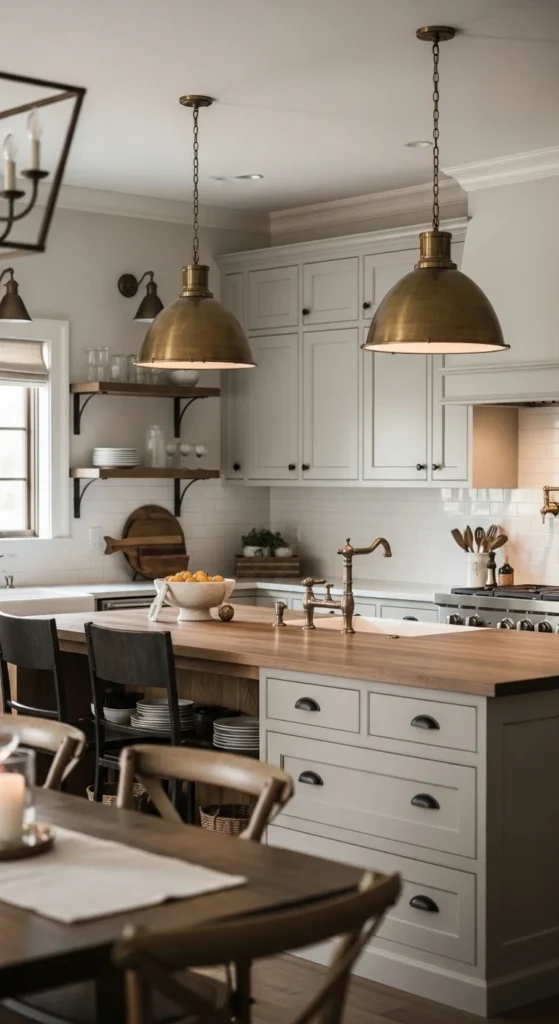
Mixing metals adds visual interest when done thoughtfully. Choose one dominant finish, then layer one or two accents. Black and brass work especially well in farmhouse kitchens.
Keep finishes consistent in shape and style. Simple silhouettes help metals feel cohesive. Avoid mixing too many tones in one area.
Lighting is a great place to introduce contrast. Pendants above islands draw attention without clutter.
This approach creates layered farmhouse detail that feels curated, not chaotic.
19. European-Inspired Farmhouse Details
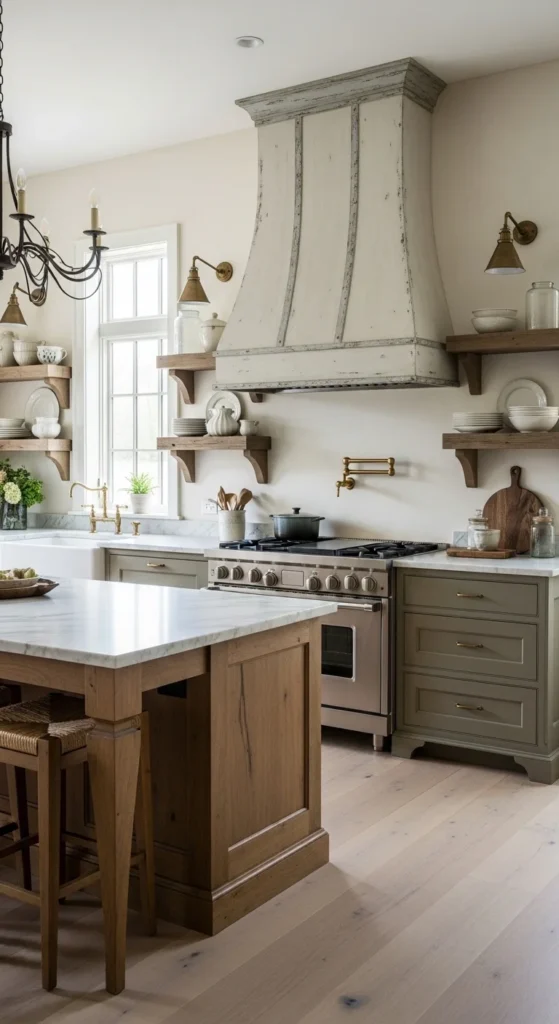
European farmhouse kitchens lean softer and more refined. Curved shapes, plaster finishes, and aged metals bring warmth without heaviness. Colors stay muted. Creams, soft taupes, and warm greys dominate.
Swap sharp edges for rounded details where possible. Even small changes, like curved shelves or arched niches, shift the feel.
Decor stays minimal. Let materials shine. One statement light or hood is enough.
This style adds old-world farmhouse calm that feels timeless and serene.
20. Sliding Barn Door Accents
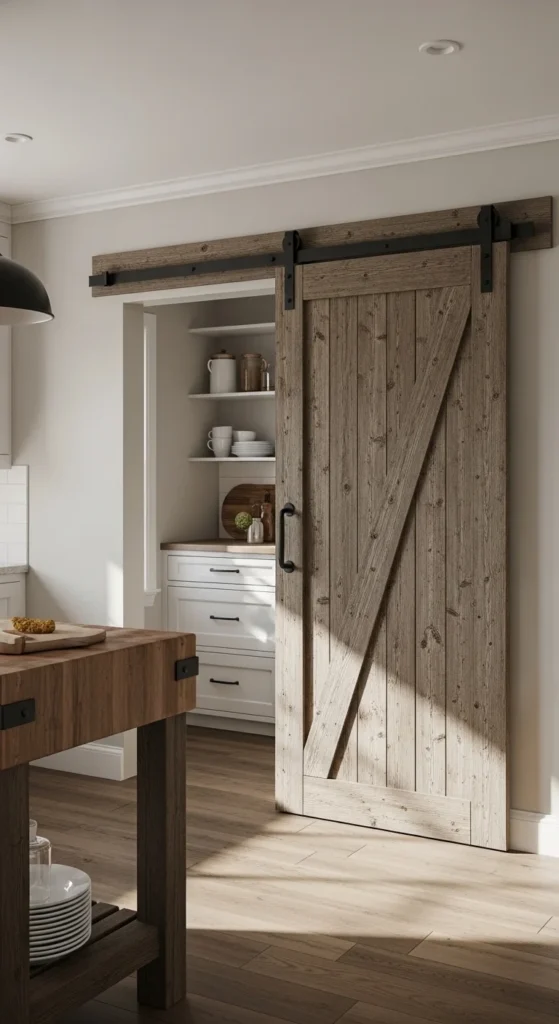
Barn doors add farmhouse character when used sparingly. Pantry entrances or laundry nooks work best. Reclaimed or distressed wood adds texture and contrast against light walls.
Hardware matters. Choose simple matte black rails. Keep the door design clean. Heavy patterns can feel overpowering in kitchens.
For small spaces, sliding doors save swing room and feel practical. Faux doors or lightweight panels offer a budget-friendly option.
Barn doors deliver classic farmhouse charm that finishes the space without extra decor.
21. Heirloom Cookware Display
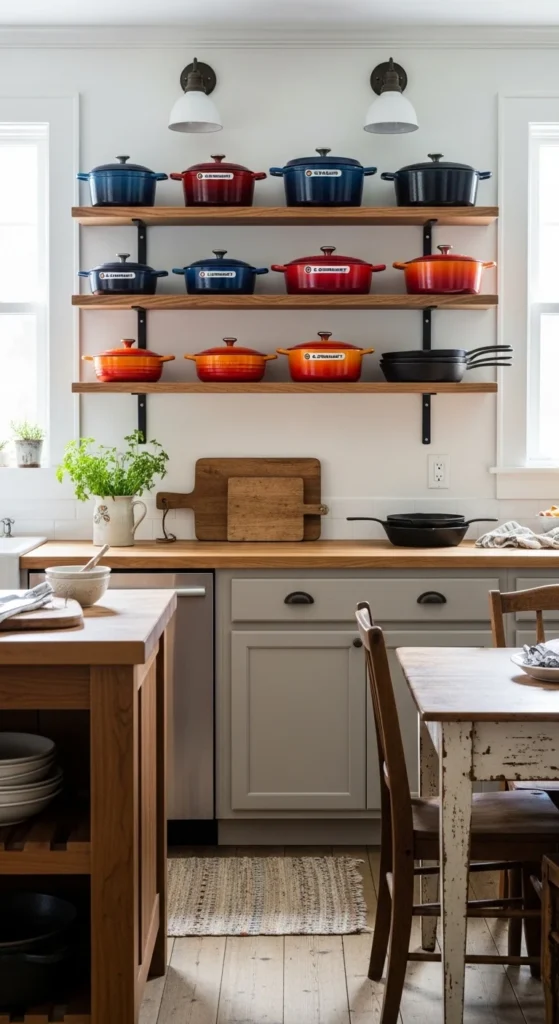
Displaying heirloom cookware blends function with style. Heavy, well-made pots like Staub or Le Creuset add color and texture on open shelves. Even older cast iron pieces bring patina and authenticity.
Keep shelves organized by size and color. Stack similar items together. Add a small plant or wooden board to break up the metal.
Budget-friendly tip: showcase thrifted or second-hand cookware. They look charming when paired with neutral backgrounds.
Heirloom displays provide practical farmhouse artistry and make kitchens feel personal and well-loved.
22. Cottagecore Infusions
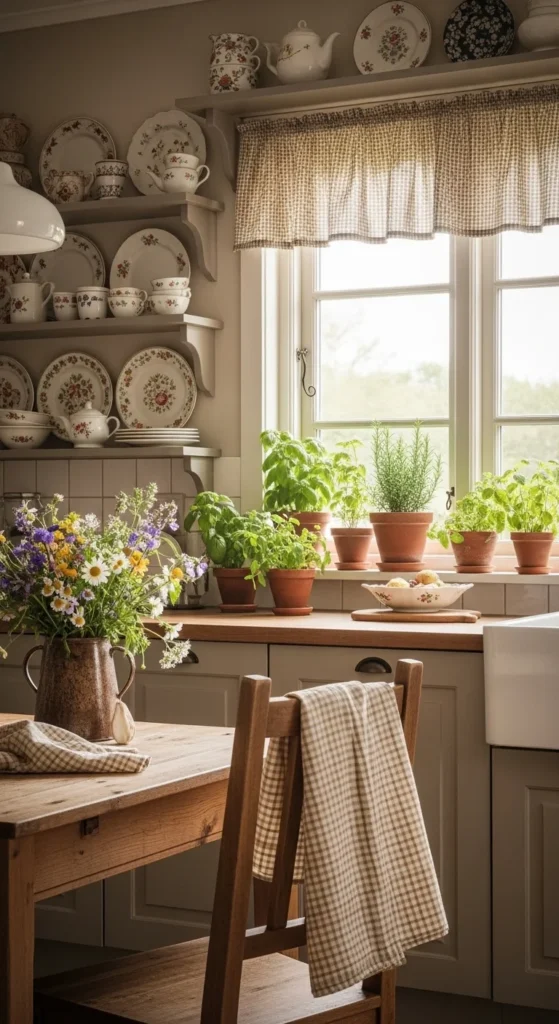
Cottagecore touches add soft charm to farmhouse kitchens. Think gingham runners, linen napkins, and small florals. Balance patterns with neutral walls and wood elements.
For DIY, sew simple no-sew table runners or cushion covers. Swap out dish towels seasonally for a gentle update.
Small potted herbs or flowers on windowsills enhance the vibe. Keep color palettes muted for a cohesive look.
Cottagecore accents create gentle rustic whimsy that pairs beautifully with traditional farmhouse foundations.
23. Sustainable Thrifting Tips
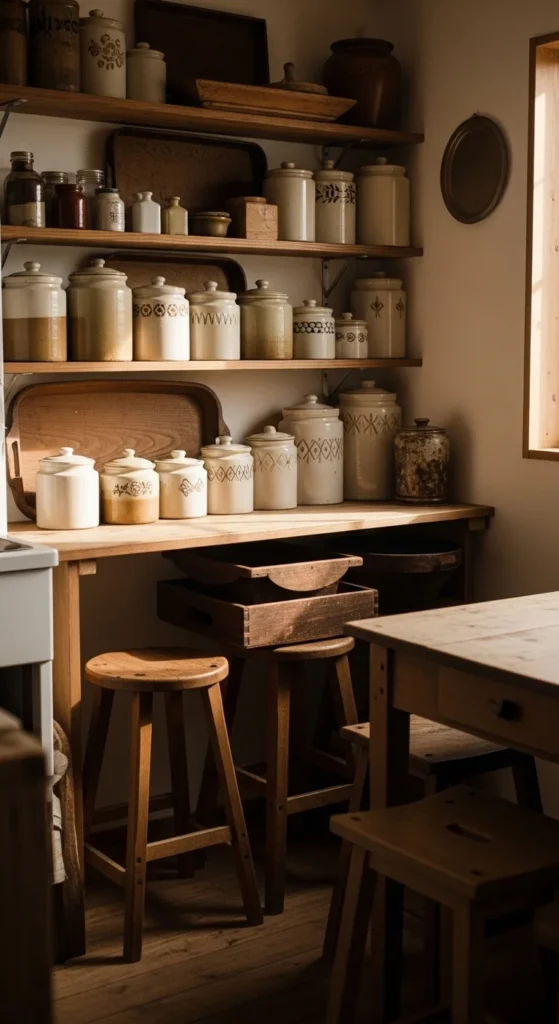
Thrifting aligns farmhouse kitchens with sustainability. Look for second-hand stools, jars, cutting boards, and trays. Older items carry patina and charm that new pieces can’t replicate.
Pair thrifted finds with neutral cabinetry and wood accents. Sand or paint lightly if needed. Even small items make a big difference visually.
Thrifting encourages budget-conscious farmhouse styling while adding character and a story to your kitchen.
24. Compact Farmhouse Hacks
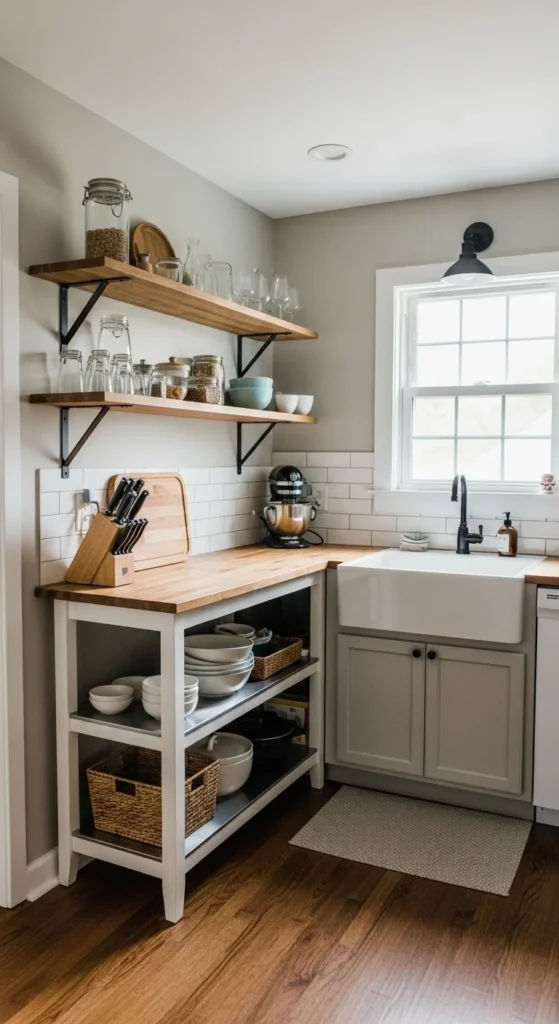
Small kitchens can still feel fully farmhouse. Narrow islands or butcher block counters create prep space without crowding. Open shelves maximize vertical storage.
Use hooks for utensils or mugs to free up counter space. Roll-up dish racks and tiered organizers keep essentials accessible.
Keep colors light. White cabinets and soft wood tones prevent a compact kitchen from feeling cramped.
These hacks provide functional farmhouse style even in tiny spaces.
25. Seasonal Herb Displays
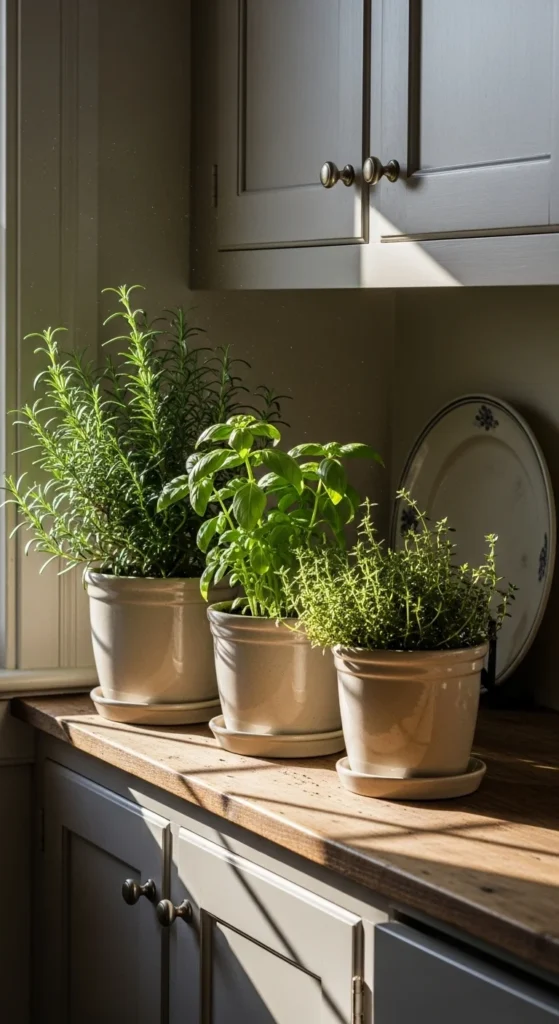
Fresh herbs double as decor and cooking essentials. Line windowsills or counters with small potted rosemary, basil, or thyme. Ceramic or terra-cotta pots blend with neutral cabinetry.
Group herbs by size for balance. Rotate seasonally to keep colors and scents lively. Even a single plant adds greenery and life.
DIY tip: repurpose old mugs or jars as planters for a budget-friendly option.
Herbs create dynamic farmhouse freshness, connecting kitchen style with practical use.
26. Reclaimed Wood Shelving
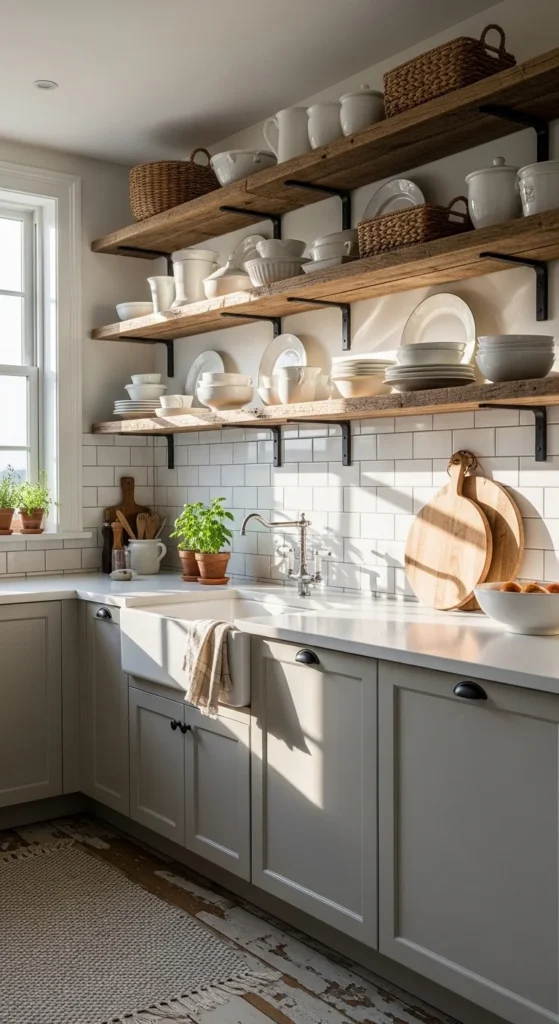
Reclaimed wood shelves bring texture and history into kitchens. They work perfectly with neutral walls and simple cabinetry. Black metal brackets add subtle contrast and industrial charm.
DIY tip: Sand lightly and seal with a matte finish to preserve character. Avoid over-styling—let a few crocks, plates, or jars breathe.
Budget-friendly: repurpose old furniture boards or pallets for shelving. This adds authentic farmhouse warmth and keeps costs low while showcasing personality.
27. Functional Utensil Crocks
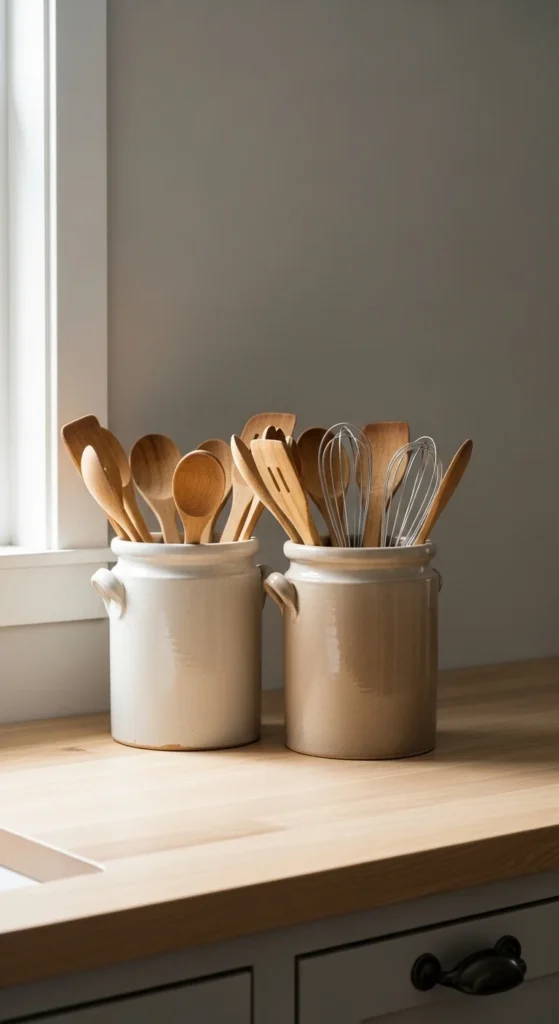
Utensil crocks are both functional and decorative. Place them on counters near prep areas for easy access. Use ceramic, clay, or enamel crocks in neutral colors to match the kitchen palette.
Group by size or material for a tidy appearance. Avoid overcrowding. Rotate utensils seasonally or by use.
Budget tip: thrift vintage crocks or repurpose jars. They add practical farmhouse style while keeping counters organized and visually appealing.
28. Local Materials & Textiles
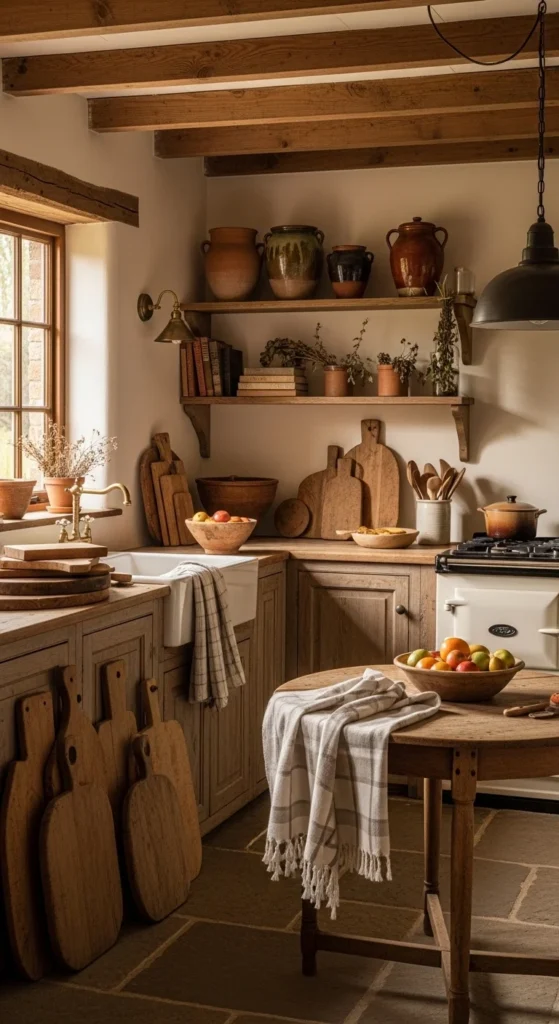
Incorporate local materials for a unique farmhouse touch. Wood, textiles, and pottery sourced locally add authenticity and connect your kitchen to your environment.
Handwoven napkins, linen runners, or clay serving bowls bring texture and warmth. Swap a few modern accessories for locally crafted pieces for budget-friendly charm.
Using regional materials creates personalized farmhouse character, blending style with sustainability and tradition.

Leave a Reply