

1. Reclaimed Wood Farmhouse Table
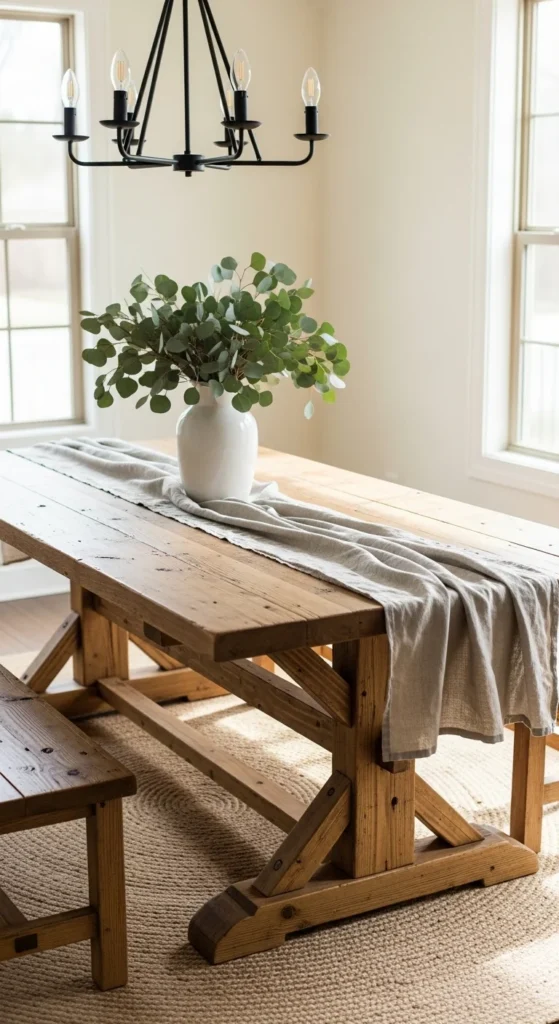
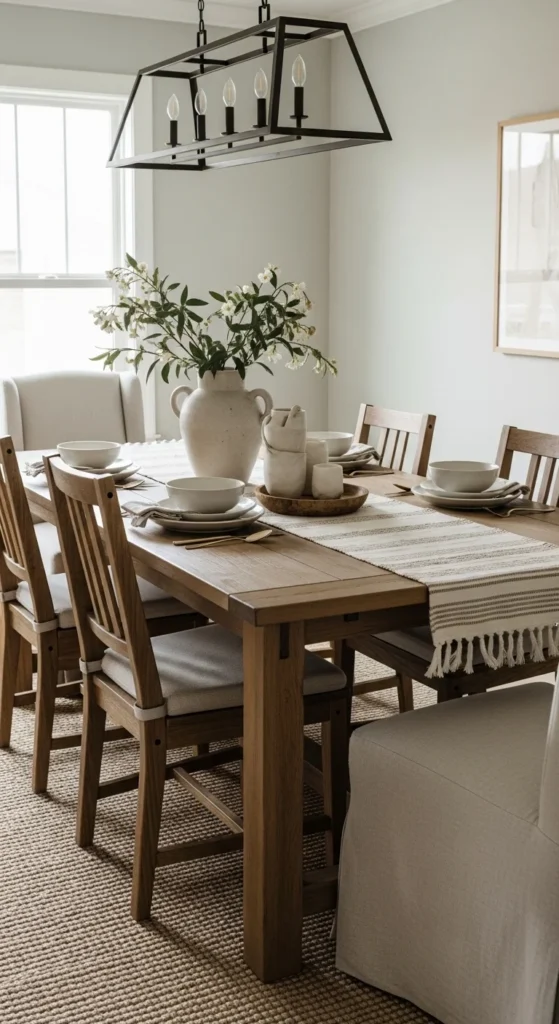
A reclaimed wood table sets the whole mood. Go for visible grain, knots, and a slightly matte finish. It reads warm and welcoming. Keep the silhouette clean so it feels modern farmhouse, not themed. If the table is new wood, fake age with a light sand on edges and a walnut stain wash. Seal with a satin topcoat so spills wipe fast. For budget, check resale apps for solid-wood pieces with scratches you can embrace. Pair it with simple chairs so the table stays the star. Style the surface with a runner, one vase, and two candleholders. That’s it. Too many objects make the table feel like a shelf. Add black metal accents through lighting or hardware for contrast. If your room is small, choose a narrower table and skip bulky end chairs. A bench slides in neatly and keeps walkways clear. Finish with a low-pile rug so chairs move smoothly.
2. Candle-Style Statement Chandelier
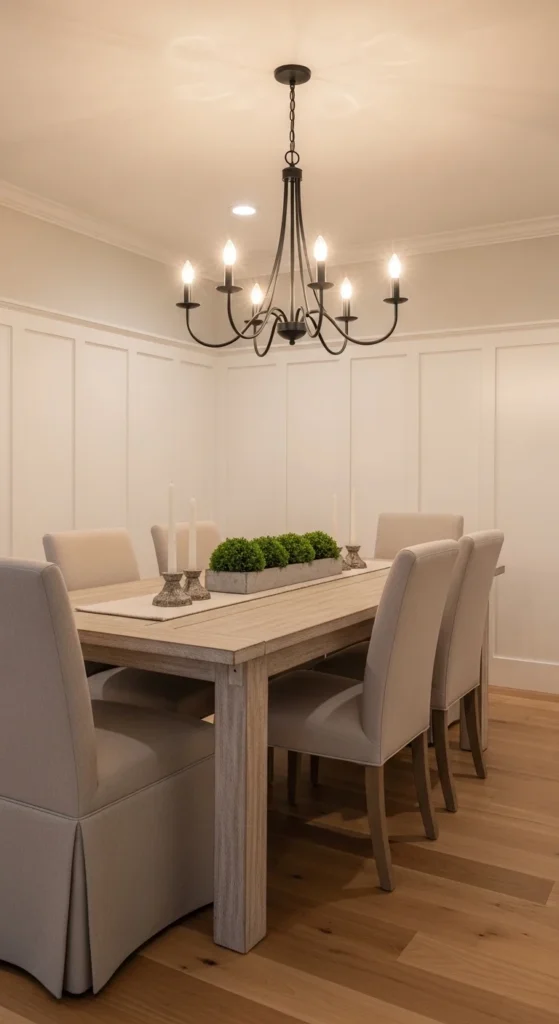
A statement chandelier is the fastest way to make the dining zone feel intentional. Choose a size that won’t look timid over the table and aim for a fixture that spans roughly two-thirds of the tabletop width. Hang it about 30–34 inches above the table so faces stay visible and the light feels intimate. Use warm bulbs around 2700K for a cozy glow that flatters wood tones. If you’re renting or wiring is a hassle, convert a plug-in pendant with a ceiling hook and a cord cover. For a low-cost upgrade, repaint an outdated brass fixture in matte black or aged bronze, then swap in candle-style LED bulbs. Keep the rest of the decor simple so the chandelier reads like a focal piece. A long runner and a single centerpiece are plenty. Add warm lighting in layers with a nearby lamp or sconce so the room feels comfortable after sunset.
3. Mix-and-Match Farmhouse Seating
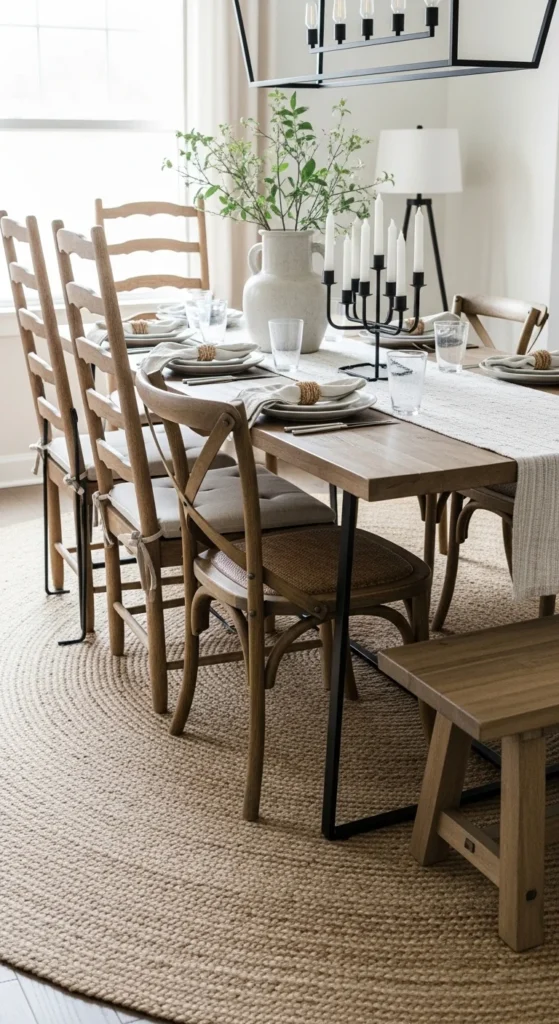
Matching chair sets can feel catalog-stiff. Mixing chairs looks collected and personal. The trick is to repeat one element either the wood tone, the seat color, or the chair shape. Try cross-back chairs on the sides and two ladderbacks at the ends. Or add a bench on one side and keep chairs on the other. If the mix feels chaotic, unify it with cushions in the same fabric or paint two chairs the same color. Thrift stores are perfect for singles; sand, prime, and repaint in warm white or charcoal for an easy refresh. Keep chair heights similar so the table looks balanced. For comfort, add slim seat pads in linen or canvas and tie them underneath. This approach also saves money because you can buy pieces slowly. A seating mix gives you lived-in charm without piling on decor. Let the furniture do the talking.
4. Greige-and-White Color Palette with Dark Contrast
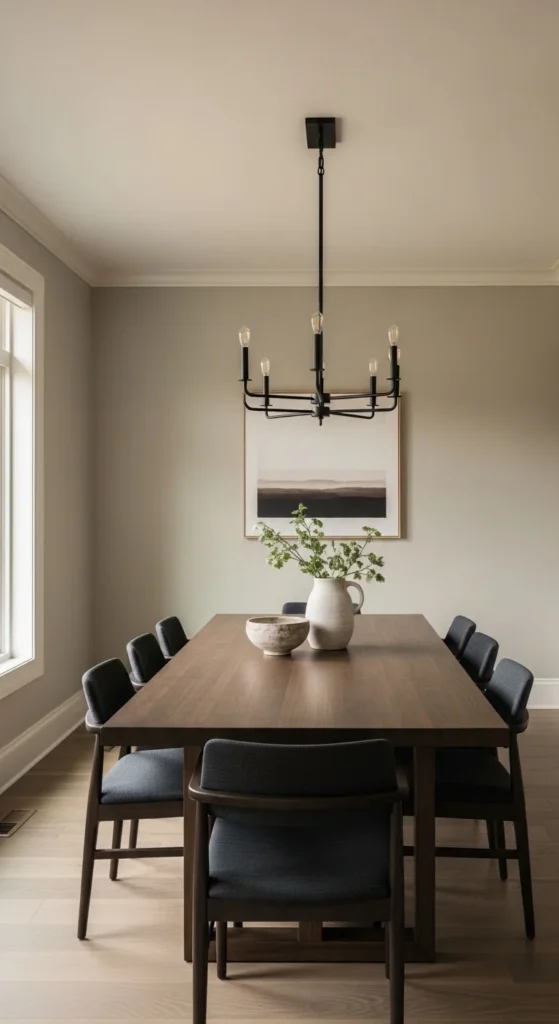
A greige-and-white palette keeps farmhouse style calm and timeless, but it can look flat without contrast. Add darker accents through chairs, lighting, frames, or a sideboard. Keep big surfaces light walls, curtains, and rug then anchor the room with a few deeper tones like charcoal, forest green, or navy. If repainting is on the table, sample warm whites and greiges at different times of day; the undertone matters. For a quick budget fix, bring contrast in with black candlesticks, a dark tray, or a bold piece of art. Avoid too many small black items scattered everywhere; it looks busy. Instead, choose two or three strong dark moments. This keeps the space bright while still feeling grounded. The result is soft neutrals with punch, which reads elegant farmhouse rather than all-white and sterile.
5. Linen Runner + One Strong Centerpiece
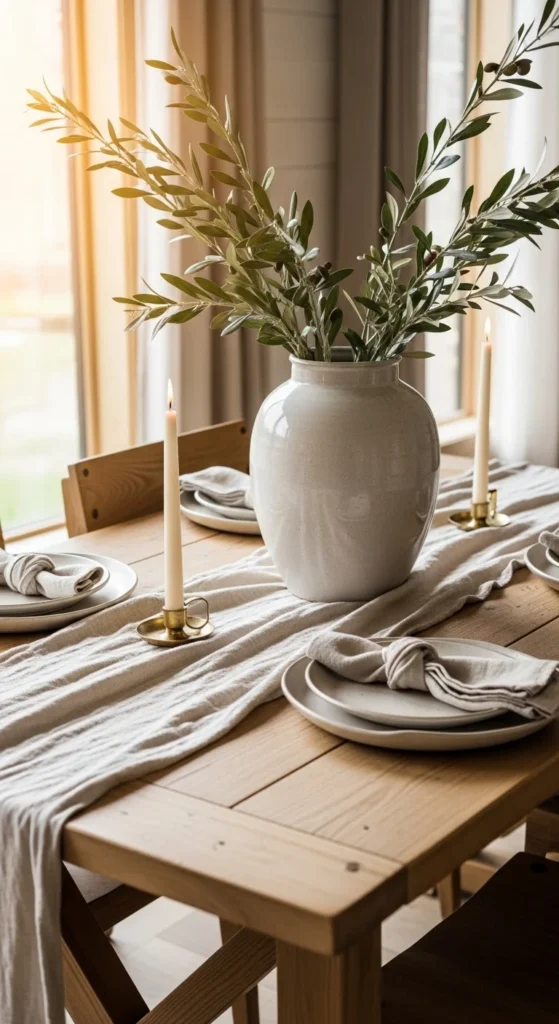
Table styling looks best when it’s simple. Start with a linen runner in oatmeal, flax, or soft gray. Linen adds texture without a loud pattern. Then pick one centerpiece that has presence: a ceramic vase with greenery, a wooden dough bowl with seasonal stems, or a low tray with candles. Keep the height practical so people can talk across the table. If your centerpiece is tall, keep it narrow. If it’s wide, keep it low. You can change the stems seasonally without buying new everything: olive branches for everyday, dried grasses for fall, pine for winter. For budget, use grocery-store eucalyptus and a thrifted crock vase. Add set-and-forget styling with two simple candleholders and stop there. When the table is easy to clear, you’ll actually use it. That’s what makes the room feel welcoming, not staged.
6. Bench Seating for Casual Gatherings
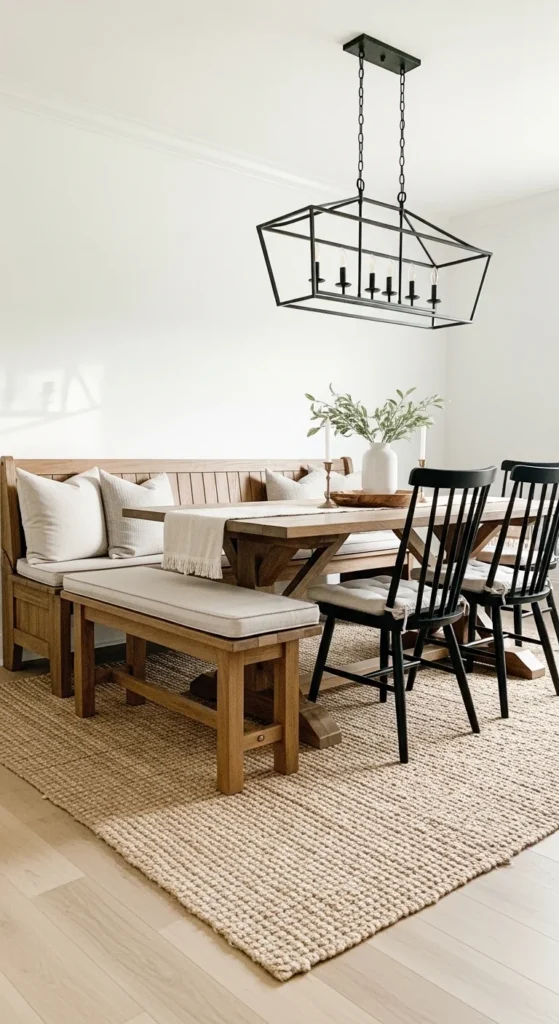
Bench seating makes a dining room feel relaxed and social. It’s easier to squeeze in extra guests and keeps the layout visually open. Choose a bench that’s a few inches shorter than the table so it slides in smoothly. Backless styles look lighter and work well in smaller rooms. For comfort, add a thin cushion or folded throw in linen or cotton. Stick to neutral tones so the bench blends into the space. If buying new feels pricey, build a simple bench with basic lumber and square legs, then stain or paint it. Pairing a bench with chairs keeps the setup balanced and prevents the room from looking too casual. Bench seating also looks great against a wall under artwork or a gallery display. It’s an easy way to add family-friendly seating without cluttering the room.
7. Open Shelving with Simple Pottery
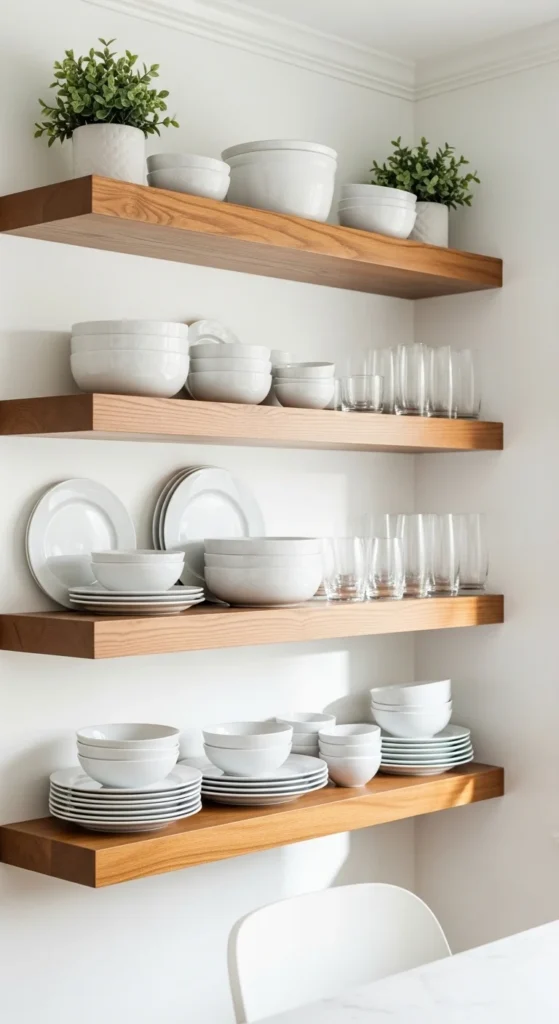
Open shelves turn everyday dishes into decor. Use sturdy wood shelves with simple brackets or hidden supports. Stick to a tight color palette white, cream, and soft gray photographs beautifully. Group items in small clusters and leave space between them. Too much on every shelf looks messy fast. Mix plates, bowls, and a few decorative pieces like small plants or vases. Rotate items seasonally instead of adding more. For budget, use shelves from big-box stores and upgrade the brackets to black metal for contrast. Open shelving works especially well near a dining nook or sideboard. It adds interest without overwhelming the room. The key is restraint. Less on shelves looks better than more.
8. Rustic Sideboard or Buffet
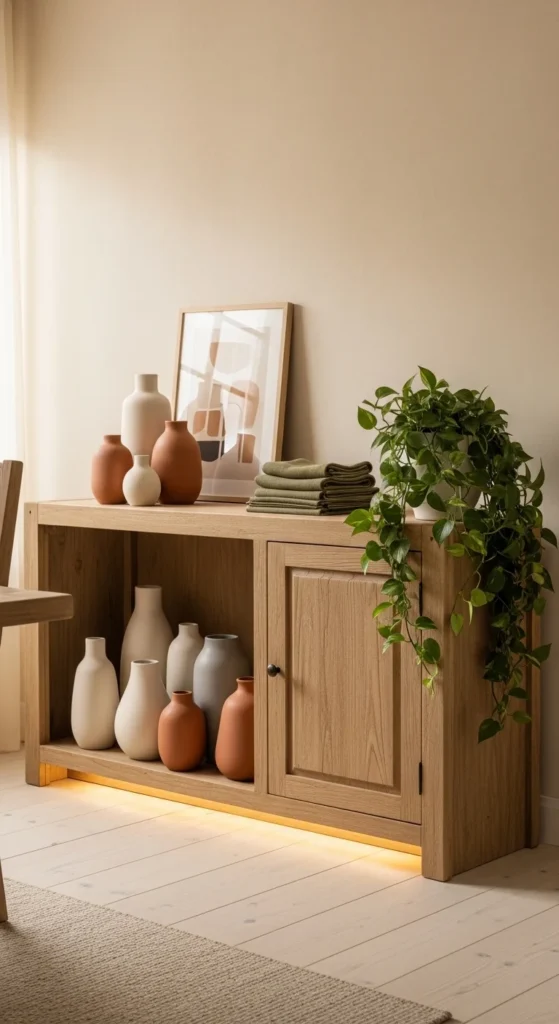
A sideboard adds both storage and visual weight. Look for solid wood with simple lines and minimal hardware. Avoid overly ornate details. On top, use a basic formula: one piece of art or mirror, one lamp or vase, and one smaller accent. Inside, the store serving dishes, linens, or seasonal decor. Baskets keep things organized and hidden. If new furniture isn’t in the budget, search secondhand and refinish. A light sanding and new hardware can completely change a piece. Place the sideboard on the longest blank wall so it feels grounded. This piece anchors the room and gives you a place to stage food during gatherings. It’s practical and decorative at the same time.
9. Farmhouse Gallery Wall
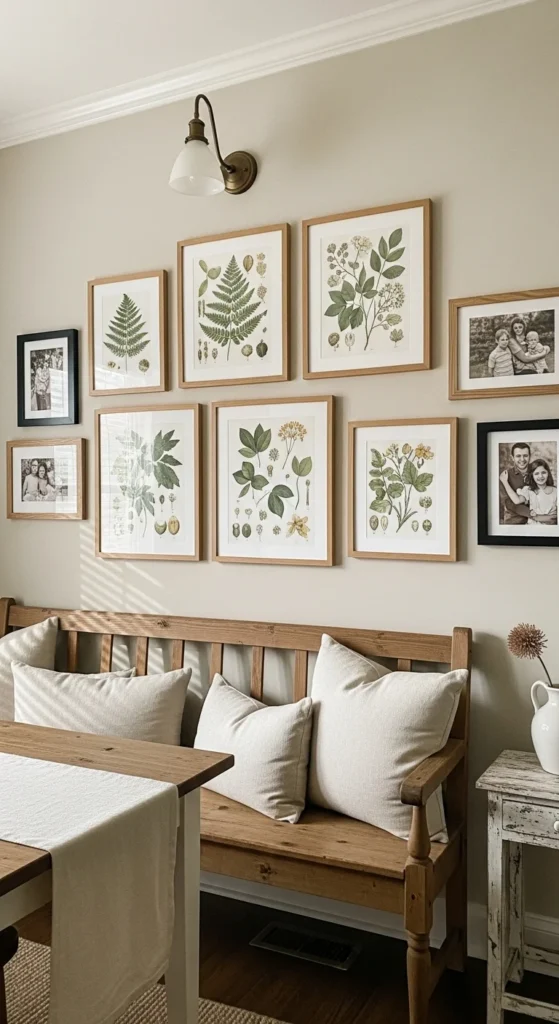
Gallery walls add personality. Choose 6–12 pieces depending on wall size. Keep frames mostly the same color for cohesion. Mix botanicals, landscapes, and a few personal photos. Lay everything out on the floor before hanging. Take a quick photo to remember the layout. Keep spacing consistent, about 2 inches between frames. For budget art, print downloads or use book pages. Thrifted frames painted black or white work well. A gallery wall looks best above a bench, sideboard, or wainscoting. It fills the wall without bulky furniture. Personal touches beat store-bought art every time.
10. Botanical Greenery Centerpiece
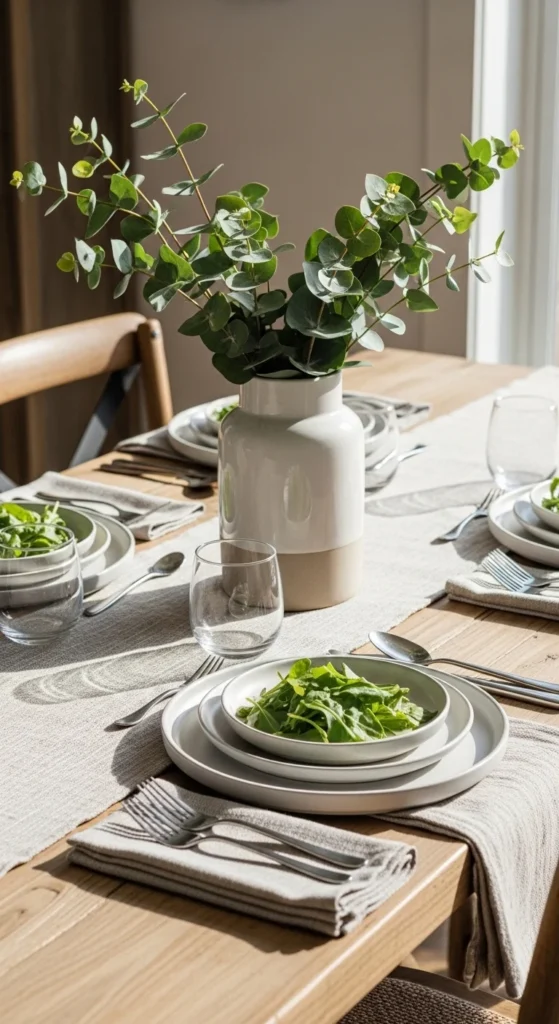
Greenery instantly softens a dining room. A single vase with branches is simple and effective. Faux stems work well and don’t drop leaves. Choose realistic-looking eucalyptus, olive, or willow. Keep the vase neutral ceramic, stoneware, or glass. Height should be below eye level when seated. Swap stems seasonally for easy change. If you prefer low arrangements, try a shallow bowl with moss and small plants. Grocery-store flowers are another affordable option. Trim stems short and keep the look loose, not tight. Greenery adds color without overpowering the palette. It brings quiet life to the table.
11. Jute or Flatweave Dining Rug
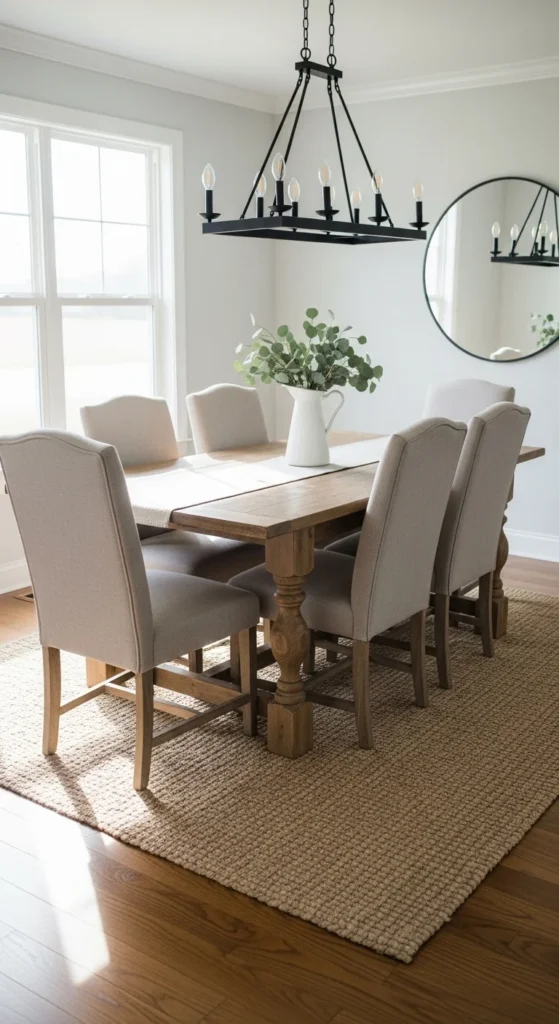
A rug helps define the dining zone, especially in open layouts. Jute, sisal, or flatweave rugs work best because chairs slide easily. Choose a size that extends at least 24 inches beyond the table on all sides so chairs stay on the rug when pulled out. Stick to natural tones or subtle patterns. Busy designs compete with wood grain and feel heavy. For budget spaces, layer a smaller patterned flatweave over a larger neutral rug. It adds depth without extra cost. If spills worry you, look for washable flatweave rugs or outdoor rugs designed to look like indoor styles. A rug adds warmth underfoot and softens sound. It makes the room feel finished without crowding it. Simple rugs work hardest in farmhouse dining rooms.
12. Slipcovered Dining Chairs
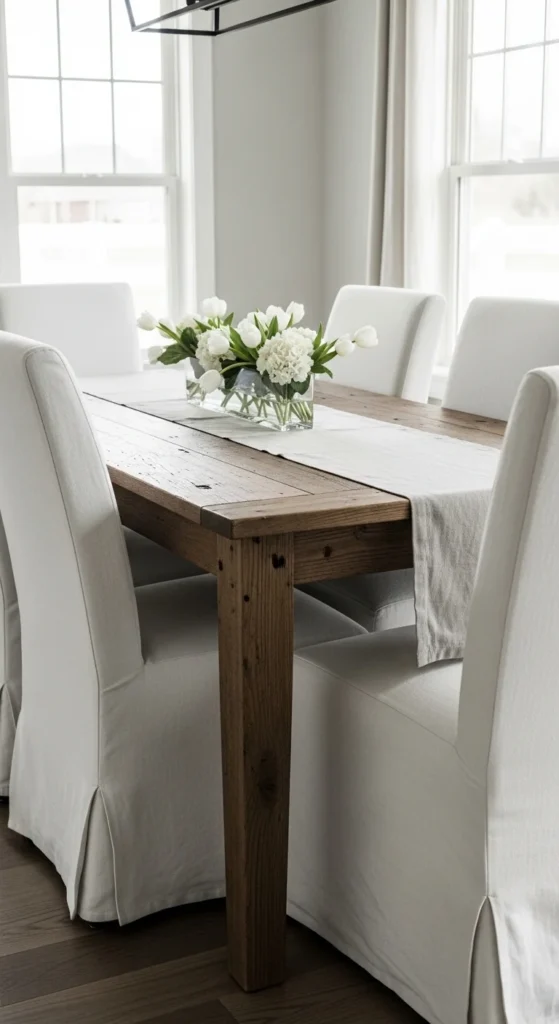
Slipcovered chairs bring softness to wood-heavy spaces. White, cream, or oatmeal covers look timeless. Choose washable fabrics so everyday messes aren’t stressful. If you already have chairs, buy universal slipcovers or sew simple drop covers using cotton duck or linen-blend fabric. Keep the fit slightly relaxed, not skin-tight. That casual drape feels farmhouse-friendly. Pair slipcovered chairs with a wood bench or painted chairs to avoid an overly uniform look. Slipcovers also let you change color seasonally without replacing furniture. They’re great for families and pets. Soft seating balances rough textures like reclaimed wood and metal.
13. Dark Wood or Faux Ceiling Beams
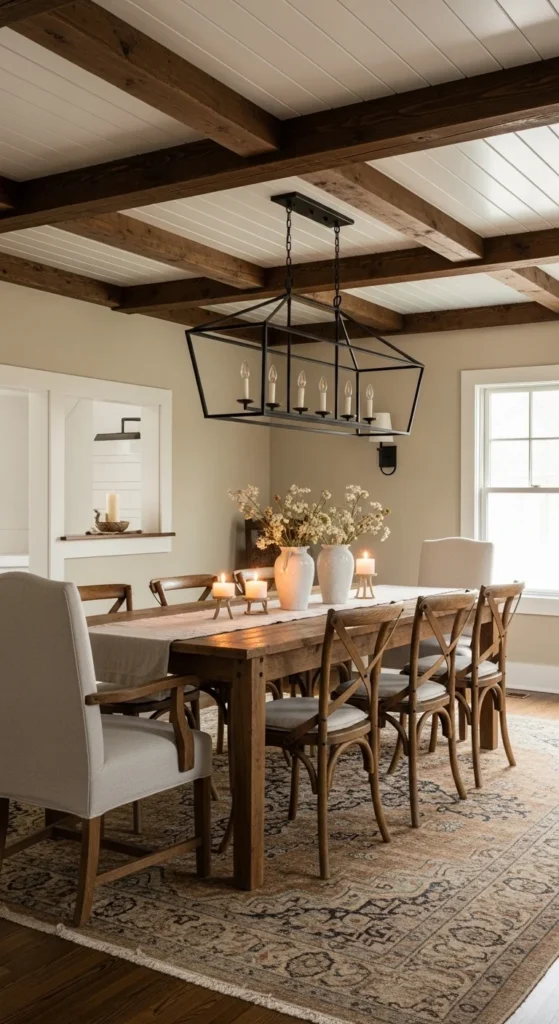
Beams draw the eye upward and add character. Real beams are beautiful but not required. Faux beams made from lightweight wood or MDF create the same visual effect. Stain them a few shades darker than the floor for contrast. Keep the rest of the ceiling light so the room doesn’t feel heavy. Beams work especially well in rooms with higher ceilings. If your ceiling is low, install fewer beams or keep them slim. This architectural detail adds depth without adding clutter. It gives the room a sense of history even in newer homes. Subtle structure beats extra decor.
14. Simple Linen Table Runner
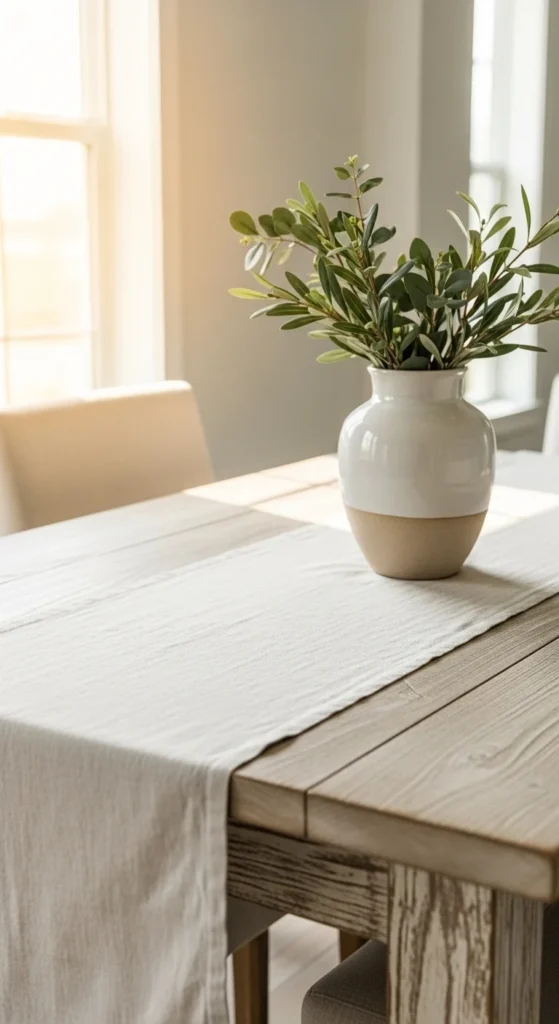
A linen runner softens a bare wood table while letting the grain show. Choose natural, flax, or soft gray tones. Avoid heavy patterns. Keep the runner long enough to drape slightly over the edges. For everyday use, skip placemats and let the runner be the main layer. You can fold it in half lengthwise for a narrower look. Wash linen in cold water and air dry to keep texture. If you like seasonal color, swap runners instead of buying new decor. A runner is small but powerful. It adds texture and calm instantly. One layer is often enough.
15. Black Metal Accent Details
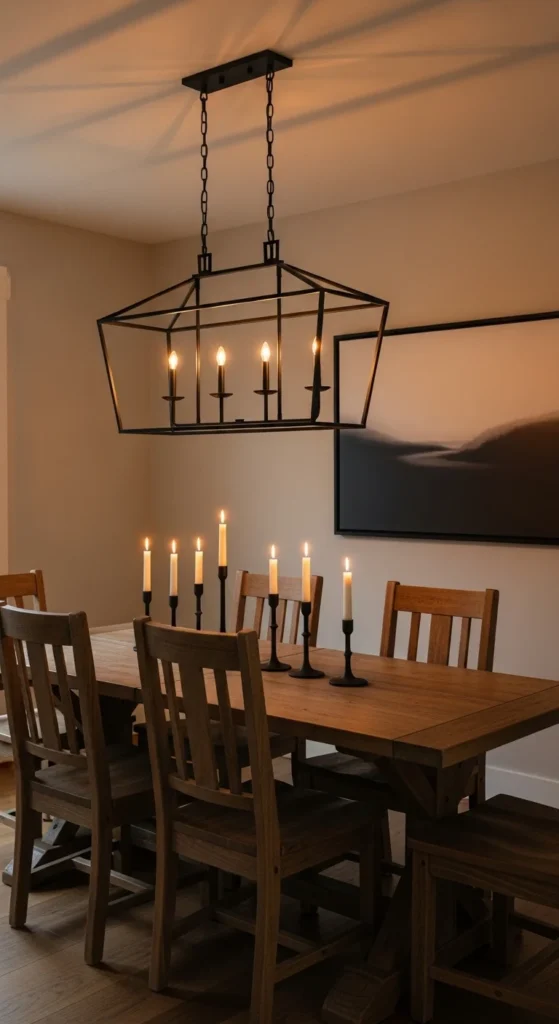
Black metal adds contrast that keeps farmhouse rooms from feeling too soft. Use it in lighting, frames, hardware, or small tabletop pieces. Limit it to a few areas so it feels intentional. Matte or satin finishes look better than shiny ones. If your room feels bland, add one black element first, such as candlesticks or a tray. You don’t need to replace furniture. Spray paint can refresh old brass or chrome pieces. Black metal pairs well with warm wood and neutral textiles. It adds a slightly industrial edge while staying cozy. Small dark accents go a long way.
16. Vintage Wall Clock
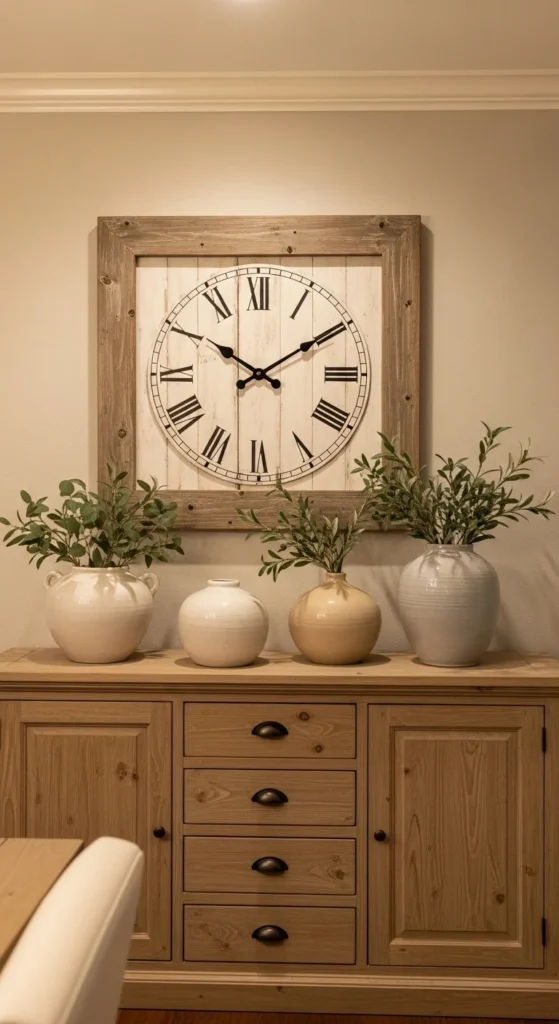
A vintage-style wall clock adds function and character. Choose a simple face with muted tones and minimal markings. Oversized clocks work best so they don’t look lost on a dining wall. Place it above a sideboard, bench, or narrow console. Keep surrounding decor minimal so the clock stands out. If you find an old clock at a thrift store, remove the outdated mechanism and install a new quartz movement. It’s inexpensive and easy. Wood, metal, or mixed-material frames all work well. Avoid overly ornate designs. A clock brings subtle charm without feeling themed. One statement wall piece is often better than several small ones.
17. Woven Basket Wall Display
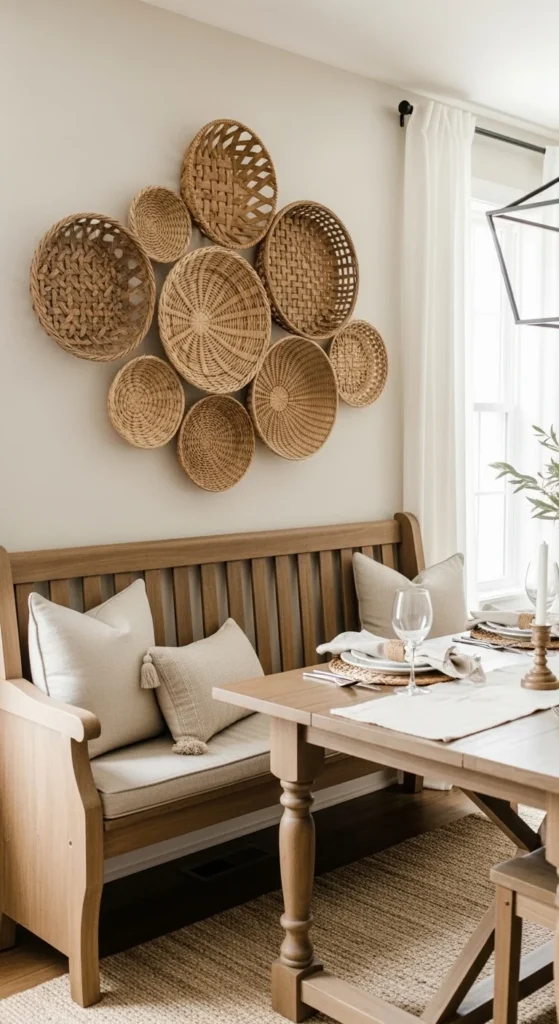
Woven baskets add texture without frames or glass. Use a mix of sizes and shallow depths. Stick to natural straw and warm brown tones. Lay out the arrangement on the floor first. Start with a larger basket in the center, then build outward. Keep the grouping tight so it feels cohesive. This type of wall decor works well above a bench or sideboard. For budget, check thrift stores or flea markets. Even mismatched baskets look good when grouped. Baskets add warmth and a handmade feel. Texture becomes the artwork.
18. Seasonal Table Styling Rotation
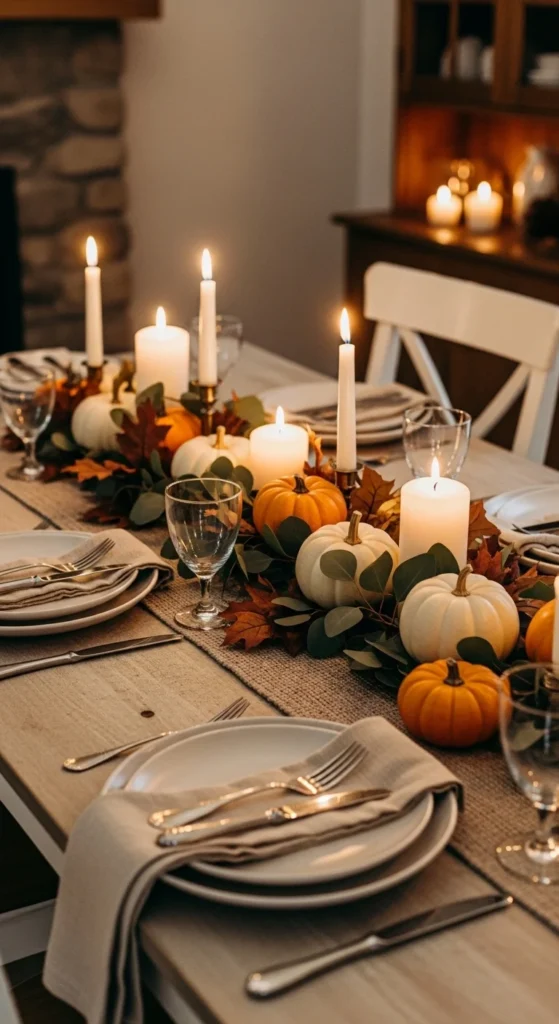
Seasonal updates keep the room feeling current without redecorating everything. Use the same base pieces year-round: runner, vase, and candleholders. Swap what goes inside the vase or bowl. Dried grasses in fall. Pine in winter. Tulips in spring. Green branches in summer. Store seasonal stems in labeled bins. Keep colors muted so the room still feels cohesive. Skip novelty items and stick to natural elements. This approach saves money and storage space. Small changes make a big impact. Rotate accents, not furniture.
19. Industrial-Style Dining Chairs
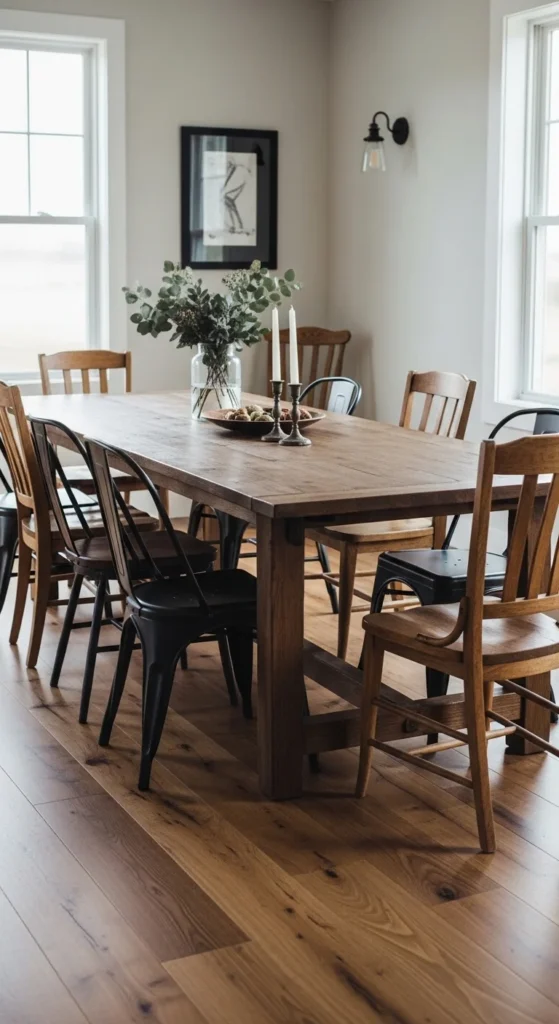
Industrial chairs add edge to farmhouse spaces. Black metal Tolix-style or simple steel-frame chairs work well. Use two or four, not a full set, to avoid a cold feel. Mix them with wood or slipcovered chairs for balance. Add thin seat cushions if the chairs feel hard. Industrial pieces look best when paired with lots of wood and soft textiles. They introduce contrast without overpowering the room. This mix keeps the space from leaning too much. A little industrialization goes a long way.
20. Soft Layered Lighting
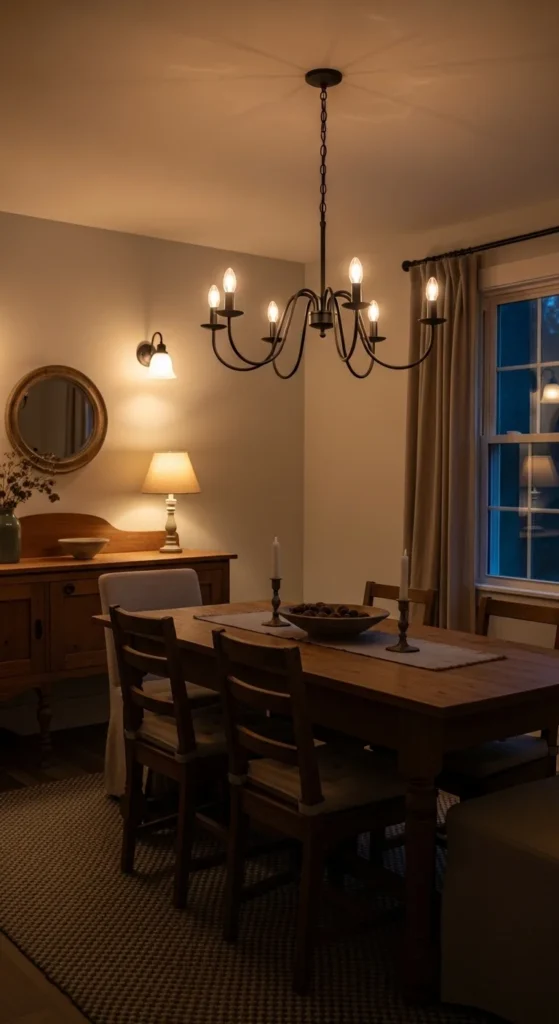
One ceiling light isn’t enough. Layer lighting for comfort. Start with the chandelier. Add wall sconces or a lamp on a sideboard. Use warm bulbs across all fixtures. Keep light levels gentle. Dimmers are helpful but not required. Even table lamps on low wattage bulbs can change the mood. Soft lighting makes dinners feel relaxed and welcoming. It also highlights textures in wood and fabric. You don’t need fancy fixtures. Simple lights placed well make the biggest difference. Multiple light sources create warmth.
21. Rustic Wooden Hutch Display
A wooden hutch adds vertical storage and charm. Look for simple lines and solid wood construction. Skip overly carved details. Inside, keep a limited color palette so the display feels calm. Stack plates, group bowls, and mix in a few decorative pieces like pitchers or small plants. Leave some empty space. Overfilling makes the hutch look messy. If you already own a hutch in a dark finish, consider lightening it with paint or a whitewash technique. For budget, check resale shops and refinish an older piece. A hutch anchors the dining room and gives everyday items a place to shine. Storage that doubles as decor keeps the room functional and inviting.
22. Neutral Curtains for Softness
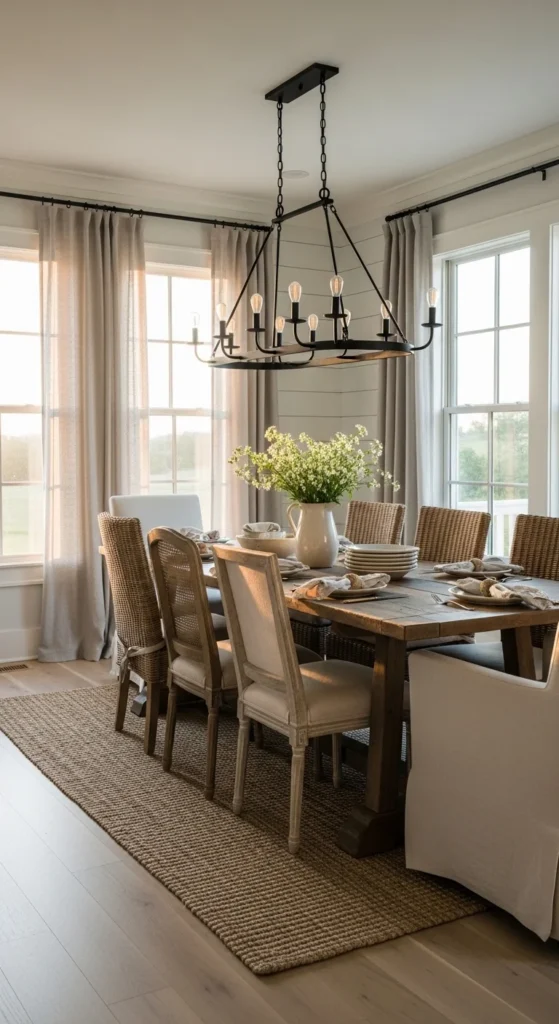
Bare windows can make a room feel cold. Add simple curtains in linen or cotton. Choose warm white, oatmeal, or soft gray. Hang rods wider and higher than the window to make the space feel taller. Keep panels long enough to just touch the floor. Avoid heavy patterns. Let texture do the work. For privacy without blocking light, use sheer or semi-sheer fabric. Budget option: IKEA-style curtain panels hemmed to size. Curtains soften the room and improve acoustics. They also frame the dining area beautifully. Fabric adds instant warmth.
23. Ceramic Dinnerware on Display
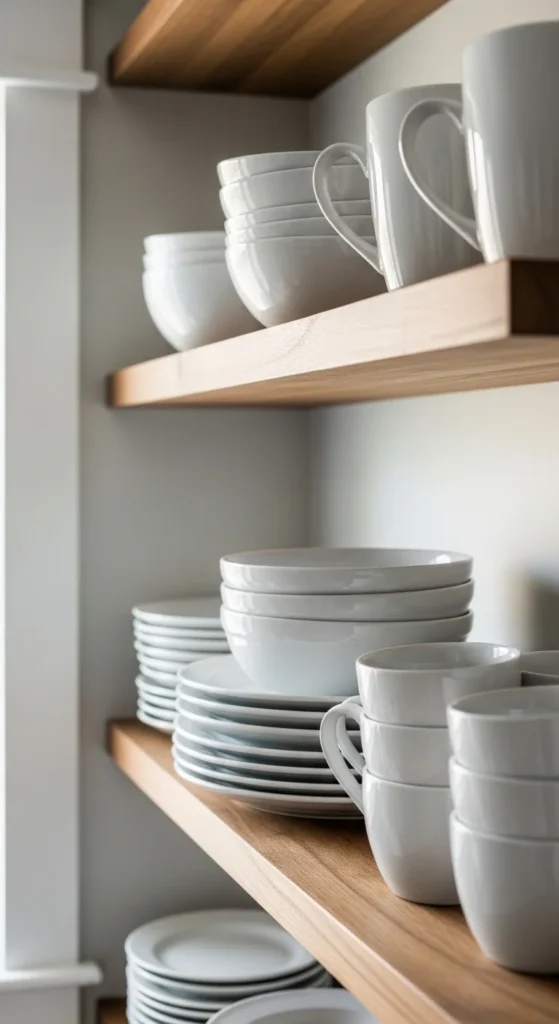
Everyday dishes can become decor. Stack white or cream plates on open shelves or inside a glass-front cabinet. Mix matte and glossy finishes for subtle variation. Avoid too many colors. Keep it simple. If your current dishes don’t match, slowly replace them with neutral pieces from thrift stores or open-stock sections. Displaying dinnerware makes the room feel lived-in, not staged. It also makes setting the table faster. Functional items used as decor always look more authentic. Use what you already own whenever possible.
24. Dark Accent Wall in Dining Nook
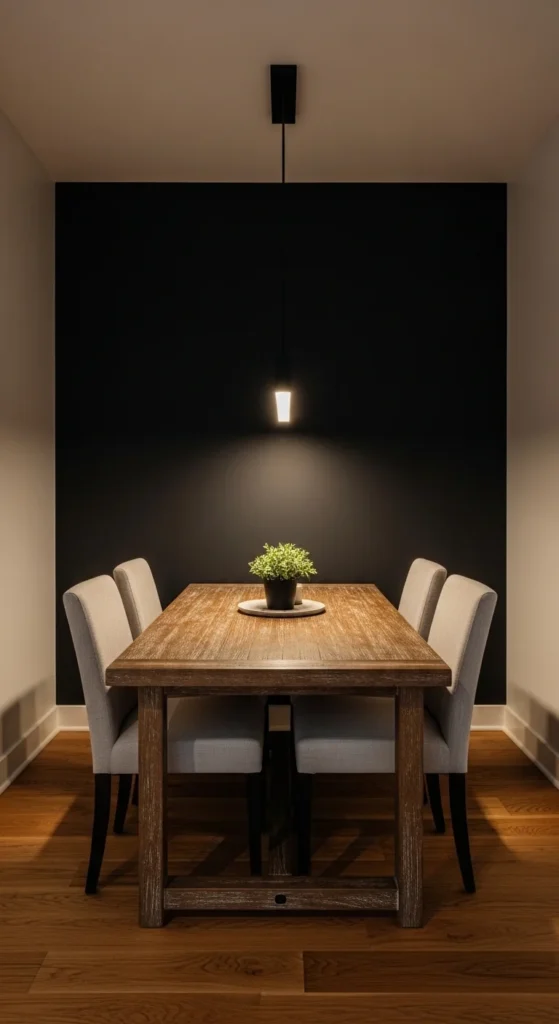
A dark accent wall adds depth without overwhelming the room. Charcoal, deep green, or navy work well. Use it on the wall behind a sideboard or bench. Keep the remaining walls light so the space stays balanced. Dark paint highlights wood grain and white trim beautifully. If painting feels permanent, try peel-and-stick wallpaper in a subtle texture or grasscloth look. Accent walls define the dining area in open layouts. They make the space feel intentional. One dark wall can change everything.
25. Simple Wooden Tray Centerpiece
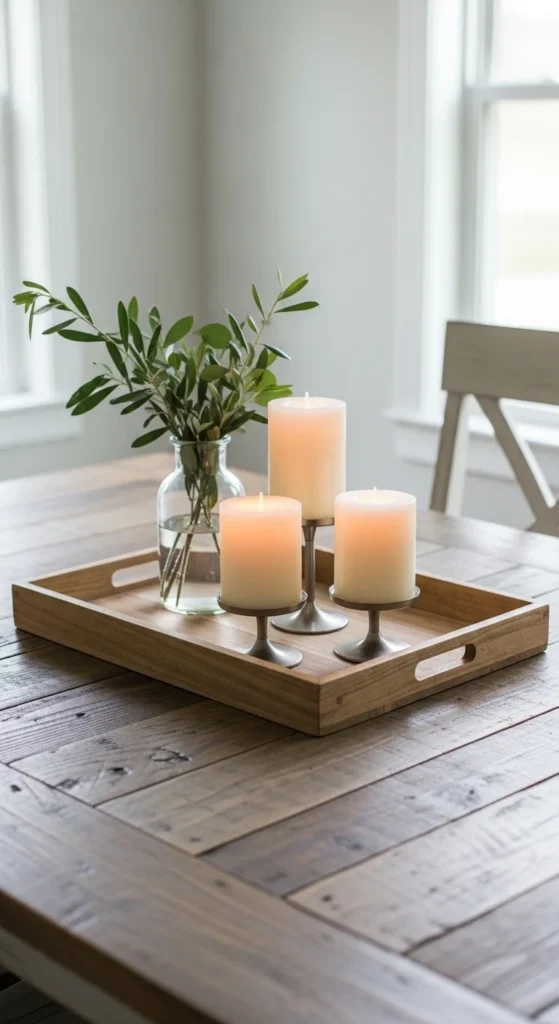
A wooden tray keeps tabletop decor contained. Choose a rectangular or oval tray slightly narrower than the table. Inside, place two candles and one small vase or bowl. That’s enough. Trays make it easy to move decor when you need the table clear. Look for unfinished or lightly stained wood. Avoid glossy finishes. For budget, thrift a tray and sand it lightly. Trays add structure to casual styling. They keep things from feeling scattered. The contained decor looks cleaner.
26. Antique or Vintage Mirror
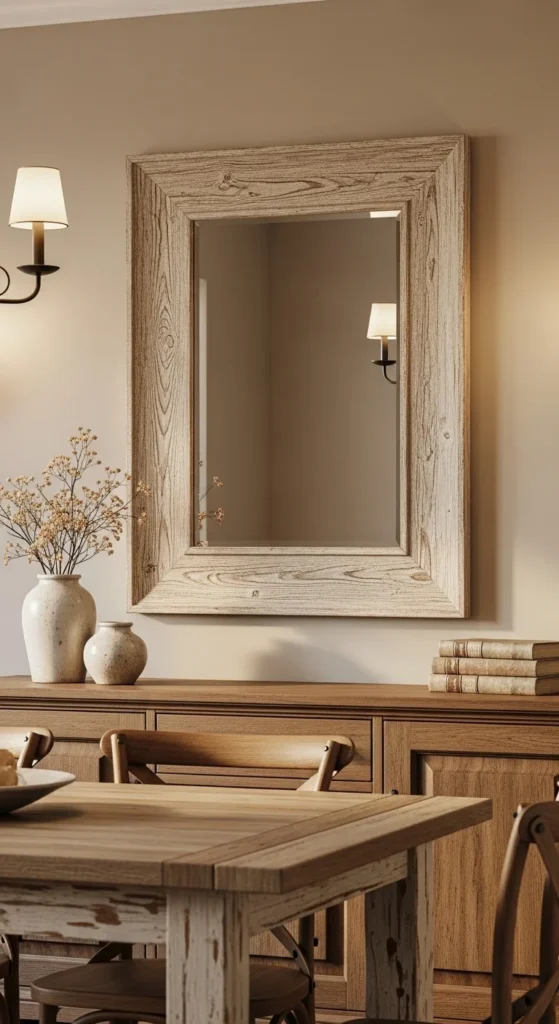
A mirror reflects light and makes dining rooms feel larger. Choose a simple wood or metal frame with a slightly aged finish. Place it above a sideboard or bench. Keep the mirror large enough to feel substantial. Avoid ornate gold frames. For budget, check flea markets and repaint the frame if needed. Mirrors also bounce candlelight beautifully during dinner. They add quiet drama without extra decor. Light reflection adds depth.
27. Minimal Tabletop Place Settings
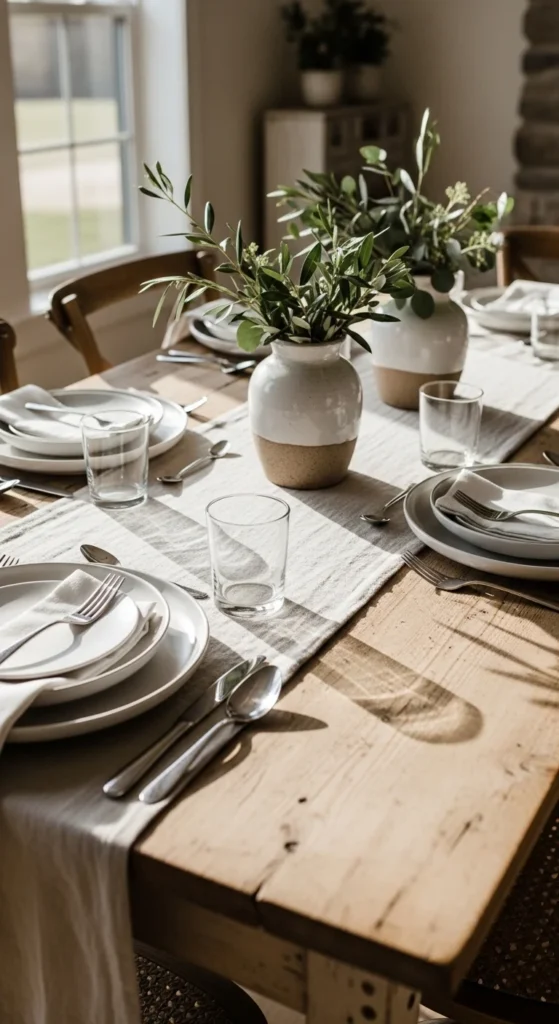
Everyday place settings don’t need layers. White plates, linen napkins, and simple flatware look clean and timeless. Skip chargers unless it’s a special occasion. Fold napkins loosely or place them under plates. Keep colors neutral so the table feels calm. Add texture through fabric rather than pattern. When the table is simple, the room feels more open. It also makes daily meals easier. Simple settings feel intentional.

Leave a Reply