

1. Floating Corner Shelves
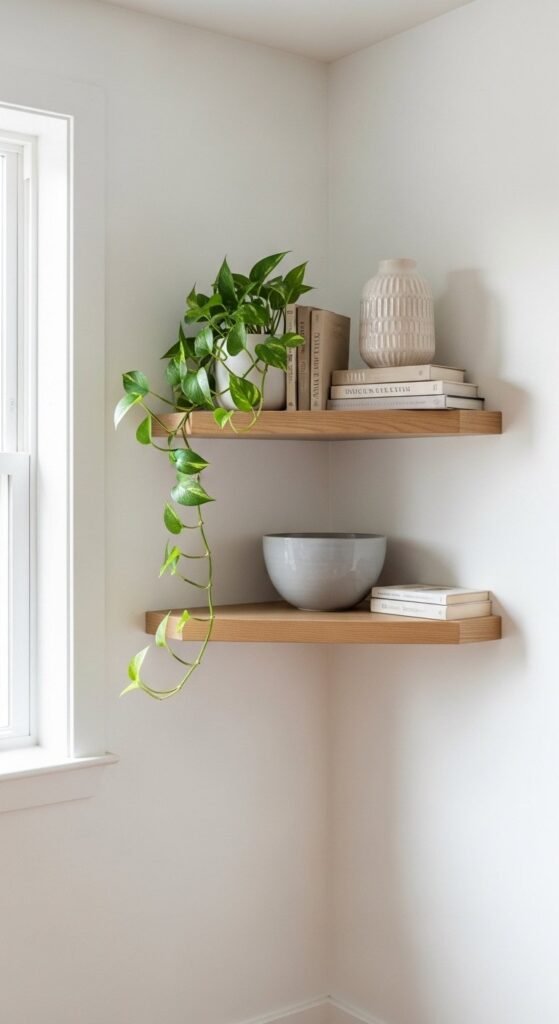
Floating corner shelves turn ignored angles into working storage and decor zones. Corners often sit empty, yet they can hold plants, books, or daily-use items without eating floor space. Use simple L-brackets hidden beneath the shelf for a clean look. MDF boards work fine if painted, while plywood adds grain on a budget. Keep shelf depth shallow to avoid crowding the wall. Style vertically. One object per shelf keeps the setup calm. For renters, lightweight shelves with wall anchors or adhesive systems help avoid damage. Add trailing plants to soften hard edges. Stick to a tight color range so the corner reads intentional, not busy. Corners near windows work best for plants. In kitchens, use them for mugs or jars. In bedrooms, stack books and a small lamp. Vertical storage like this keeps rooms open while still feeling styled.
2. Wall-Mounted Mirror Panels
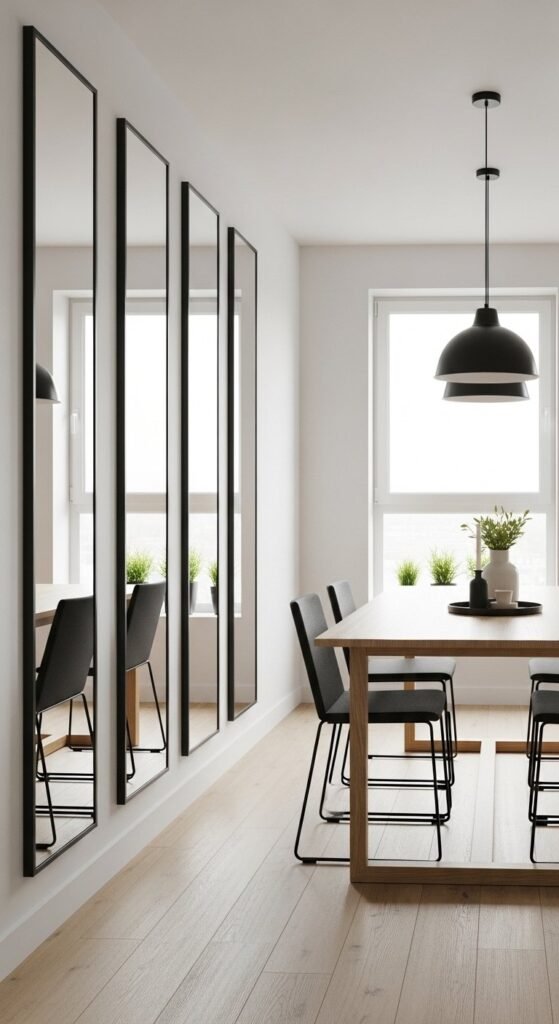
Mirrors stretch visual space without touching square footage. Large panels reflect light and repeat the room, making it feel wider and calmer. Skip tiny mirrors. Go tall and slim instead. Frameless designs keep the look clean, while thin black frames add structure. For DIY, mirror tiles or acrylic panels cost less and weigh less. Mount them vertically to draw the eye upward. Place mirrors across from windows or lamps to double brightness. Avoid cluttered reflections. What the mirror shows matters. Clean walls or greenery work best. In dining areas, mirrors add depth without crowding furniture. In hallways, they reduce tunnel-like vibes. Illusion of space works strongest with light walls and simple decor. If drilling isn’t allowed, heavy-duty mounting strips handle most panels safely.
3. Loft Bed With Storage Below
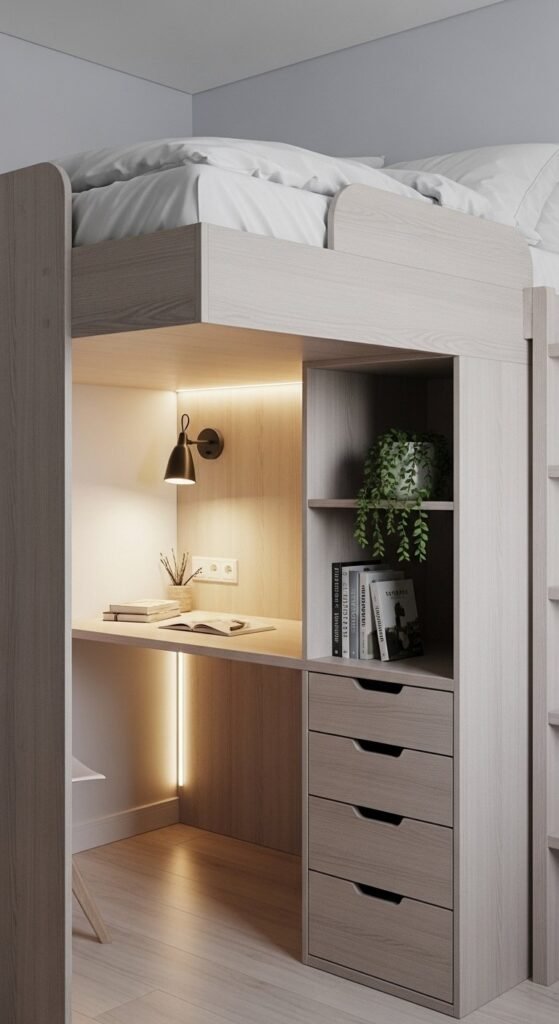
A loft bed clears the floor for daily life. Sleeping moves up. Living happens below. This setup works well in studios and teen rooms. Use ready-made loft frames or build a simple platform with plywood and solid posts. Underneath, add drawers, a desk, or open shelves. Curtains can hide storage if you want a calmer look. Keep the mattress height reasonable so the ceiling doesn’t feel close. Light bedding helps reduce heaviness overhead. Stick to built-in storage rather than extra furniture. That’s where space disappears fast. Multifunctional furniture like this keeps one zone doing double duty. Add plug-in wall lights instead of table lamps to save surface area.
4. Decorative Ladder Storage
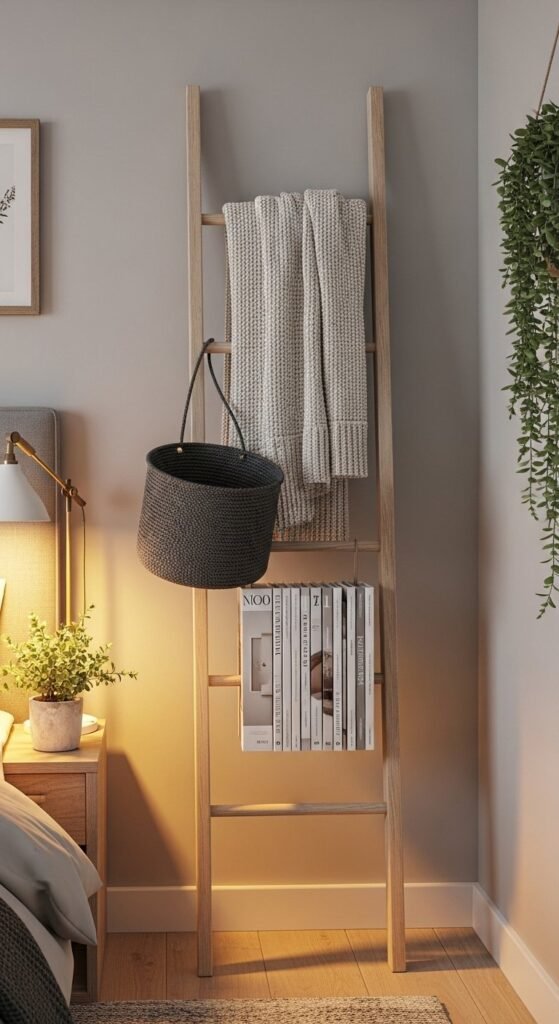
Decorative ladders offer vertical organization with zero installation. Lean them against a wall and start hanging. Blankets, towels, baskets, even plants work well. Choose wood for warmth or metal for a cleaner look. Keep spacing even so items don’t stack visually. In bathrooms, use them for towels. In bedrooms, throw blankets look relaxed but tidy. Paint the ladder the same color as the wall for a subtle effect, or contrast for character. DIY versions cost little. Two rails and evenly spaced dowels get the job done. Vertical storage like this avoids bulky cabinets and keeps airflow around the room.
5. Hanging Planters Instead of Floor Pots
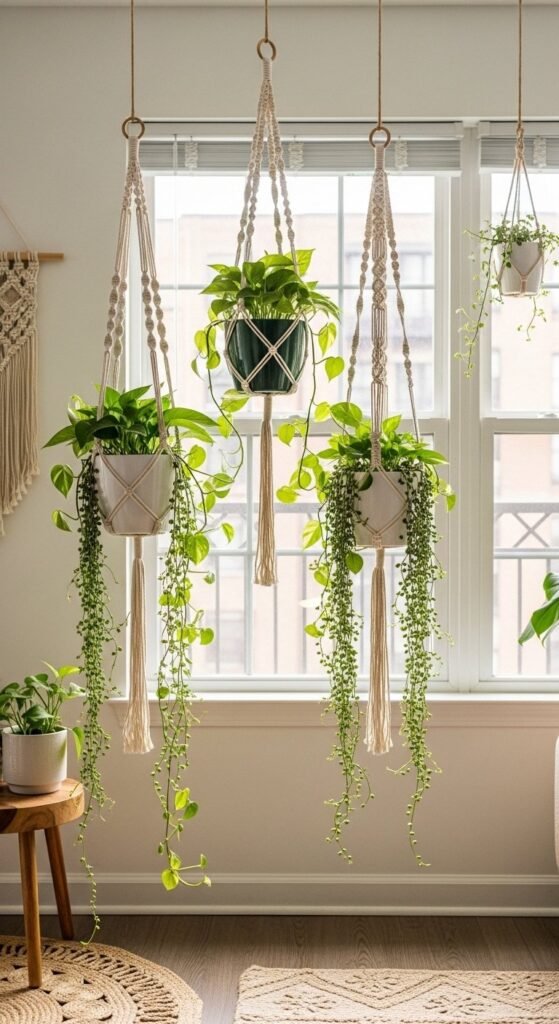
Plants bring life, but floor pots steal space fast. Hanging planters solve that. Suspend them near windows so light stays strong. Macramé adds texture, while simple metal holders suit modern rooms. Use lightweight planters to avoid stress on hooks. Ceiling anchors or wall-mounted arms work well. Mix trailing plants with upright ones to add movement. Keep pot colors neutral so greenery stays the focus. In kitchens, herbs thrive near light. In living rooms, plants soften hard lines from furniture. Greenery integration helps small rooms feel lived-in without clutter. Water carefully to avoid drips. Removable trays help protect floors and walls.
6. Pendant Lighting Instead of Floor Lamps
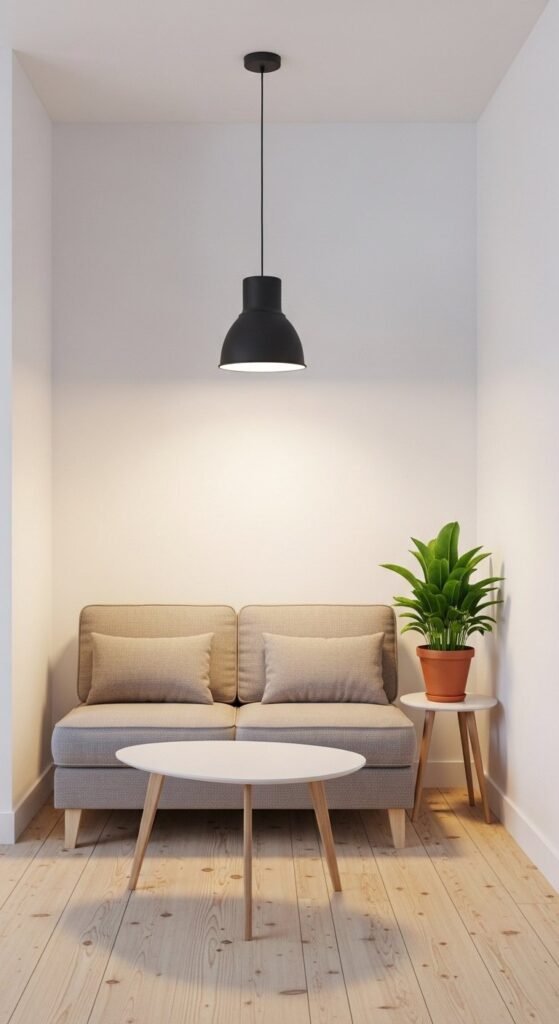
Floor lamps eat space fast. Pendant lights free it instantly. Hanging light sources keep walkways open and surfaces clear. Choose slim pendants with simple shades to avoid visual weight. Warm bulbs soften small rooms and reduce harsh shadows. Install over seating areas, desks, or bedside zones. Plug-in pendants work well for renters and avoid rewiring. Keep cords tidy with wall clips painted to match the wall. Glass or fabric shades spread light without heaviness. Metal shades give sharper contrast in modern rooms. Ceiling-based lighting makes a room feel taller and calmer. Skip oversized fixtures. One focused pendant does more than three lamps scattered around.
7. Under-Stairs Mini Workspace
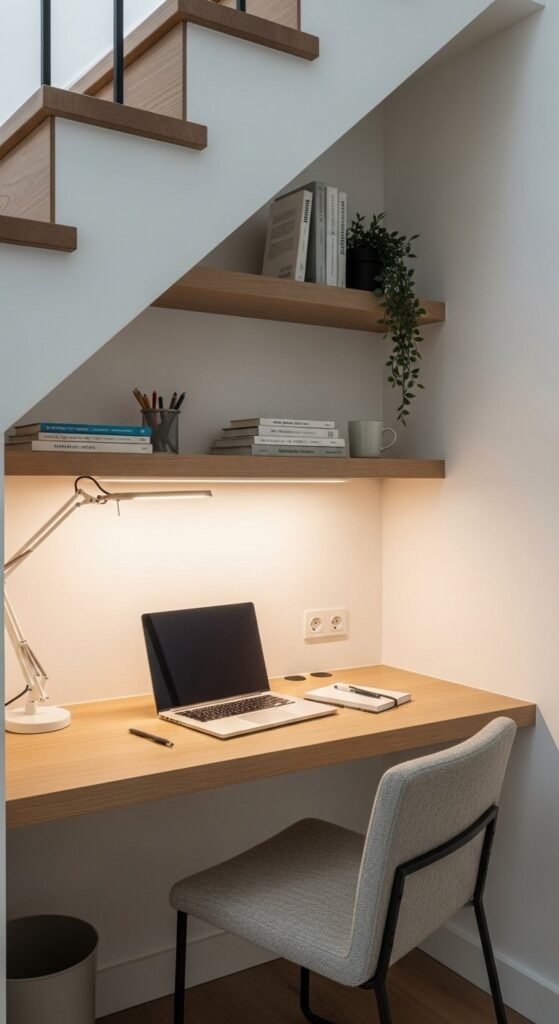
Under-stairs zones often turn into storage piles. With planning, they become productive corners. A slim desk fits most stair angles. Floating shelves above hold supplies without closing the space. Use wall-mounted lights instead of desk lamps to save surface area. Paint the area a light tone to keep it open. Pegboards add organization without bulk. Cable clips keep wires invisible. If depth is tight, choose a pull-out desk or fold-down surface. Hidden workspaces work best when styled simply. Keep only daily items within reach. Everything else goes behind drawers or baskets. This setup works for remote work, homework, or hobbies without stealing an entire room.
8. Picture Rails for Flexible Wall Decor
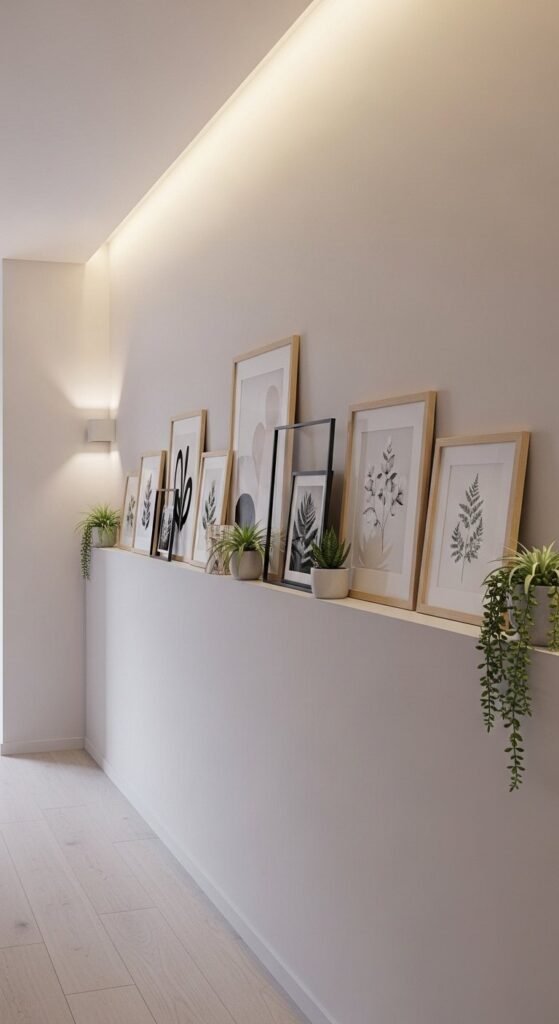
Picture rails let walls change without damage. Frames hang from hooks instead of nails. That means easy rearranging and no patching later. Install rails near the ceiling to draw the eye upward. Use thin frames so art doesn’t overpower the wall. Mix small prints with mirrors or postcards for variety. In rentals, adhesive rails work for lightweight decor. Wall styling without drilling keeps small spaces adaptable. Picture rails suit hallways, bedrooms, and dining areas. Keep color palettes tight so the display feels calm. Swap art seasonally to refresh the room without moving furniture.
9. Symmetrical Open Shelving Displays
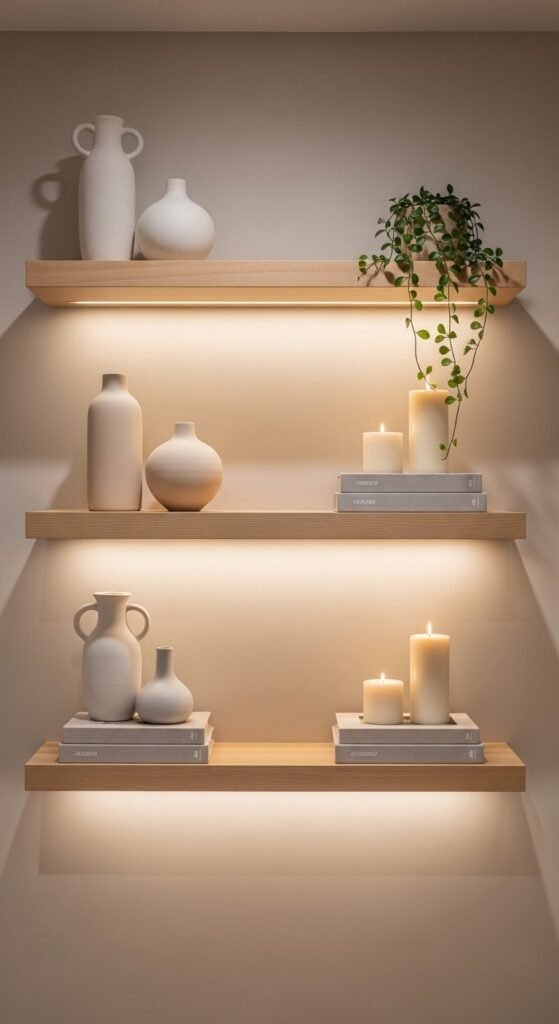
Symmetry brings order to tight rooms. Matching shelves calm visual noise and feel intentional. Install shelves at the same height and depth. Style them with balance in mind. One tall item paired with two smaller ones works well. Leave breathing room between objects. Crowding kills the effect. Use ceramics, books, and simple decor pieces. Avoid loud colors. Structured styling makes small rooms feel polished, not busy. This works especially well above sofas or desks. Keep shelf length modest to avoid heaviness. The goal is rhythm, not storage overload.
10. Sheer Curtains to Multiply Light
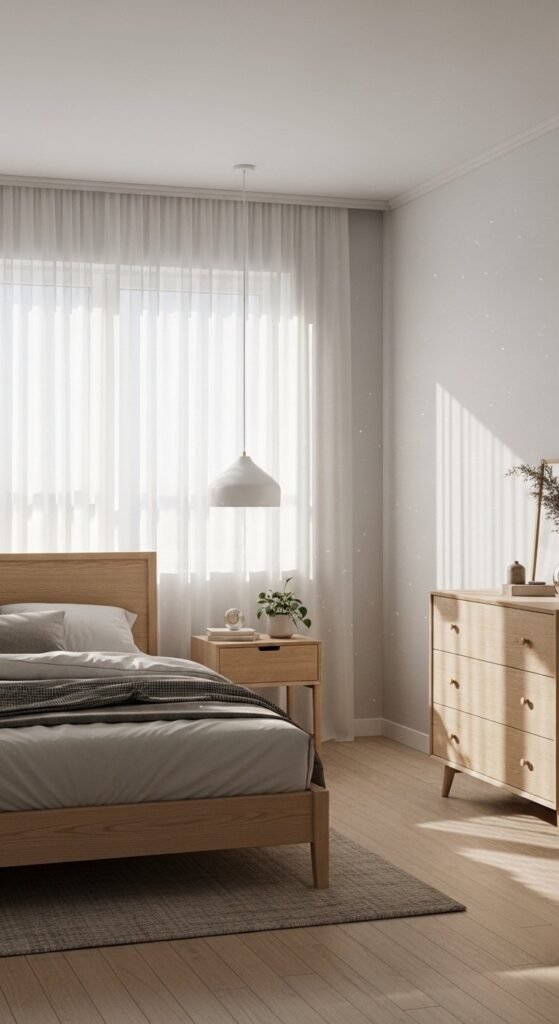
Heavy curtains block light and shrink rooms. Sheer panels do the opposite. They soften sunlight while keeping brightness strong. Hang curtains wider than the window to visually expand it. Floor-length panels add height even in small rooms. Use light fabrics like voile or linen blends. White or cream works best with neutral walls. Light control without darkness helps rooms feel open all day. For privacy, layer sheers with roller blinds. This combo keeps the look clean while staying practical. In studios, curtains can also divide zones without walls.
11. Built-In Corner Seating Nook
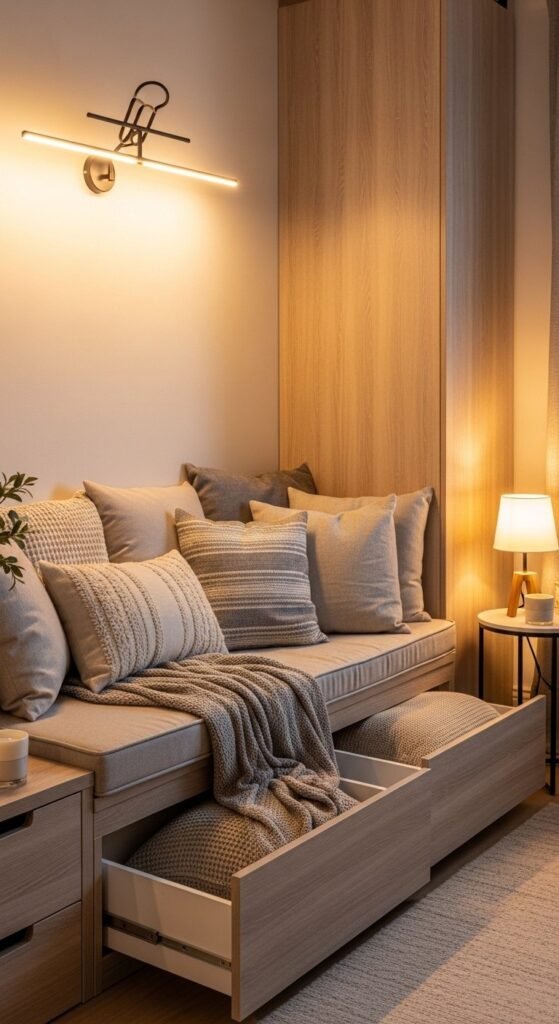
Corner seating turns awkward angles into usable zones. A simple bench with storage below adds seating and hides clutter. Use plywood and foam cushions for a budget build. Keep the bench height standard for comfort. Neutral upholstery keeps the nook light. Add one or two pillows only. Too many overwhelm small corners. Pair the seat with a slim wall shelf instead of a side table. Cozy nook styling works well near windows or balconies. This setup fits dining corners, bedrooms, or living rooms. It creates a pause in the room without blocking movement.
12. Fluted Glass Room Dividers
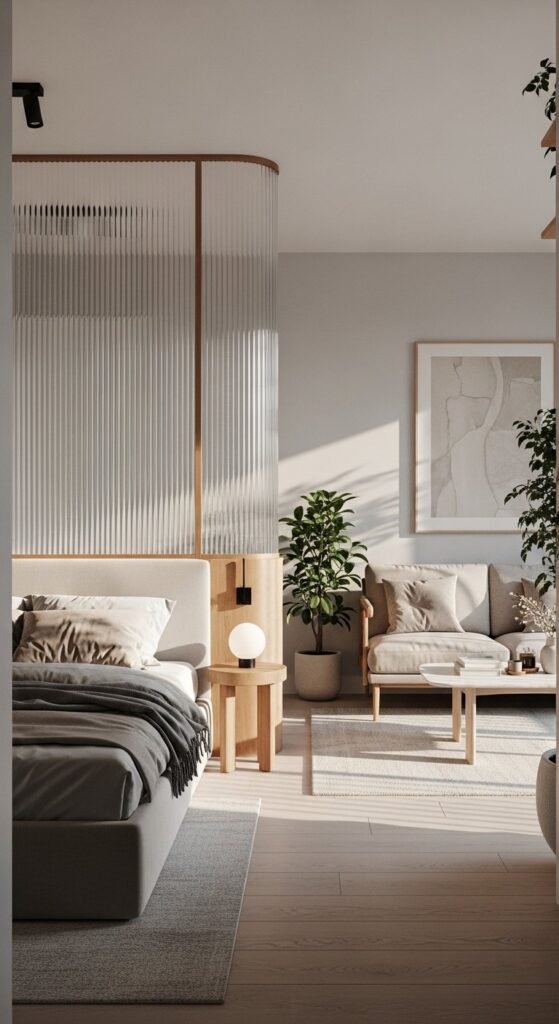
Fluted glass separates spaces without closing them off. Light passes through while lines blur details. This keeps privacy without darkness. Use black or brass frames for contrast, or wood for warmth. DIY kits with acrylic panels reduce cost. Install dividers from floor to ceiling for impact, or half-height for flexibility. Soft zoning helps studios feel organized without walls. This works for work areas, sleeping zones, or entryways. Keep surrounding decor minimal so the divider remains the focal point.
13. Woven Trays for Organized Surfaces
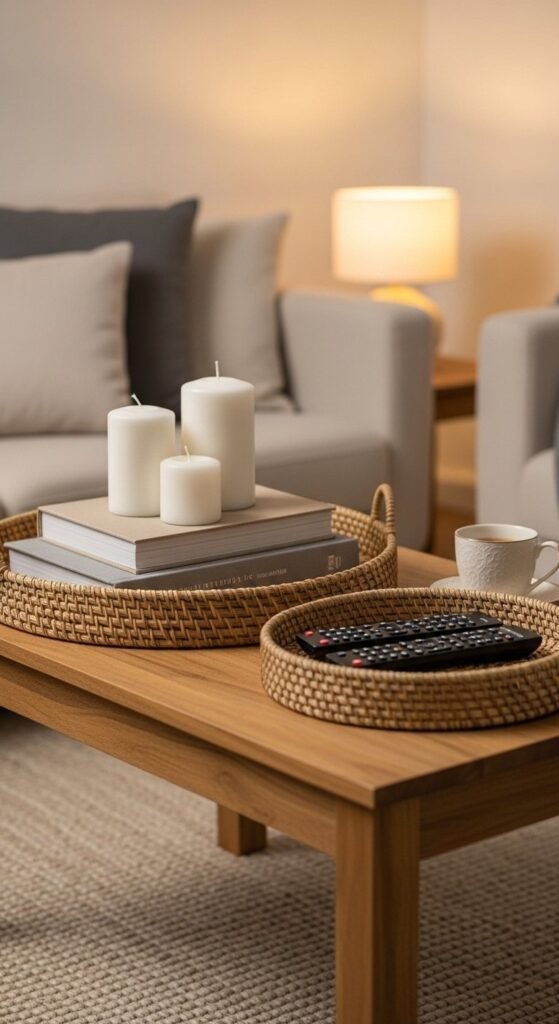
Small surfaces clutter fast. Woven trays group items visually and keep order. Use trays on coffee tables, desks, or dressers. Natural fibers add texture without weight. Stick to one tray per surface to avoid crowding. Rectangular trays work best in narrow rooms. Controlled grouping keeps essentials handy while looking styled. Trays also make cleaning easier. Just lift and wipe. For budget options, thrift stores often carry baskets that work just as well.
14. Balcony Micro-Retreat Setup
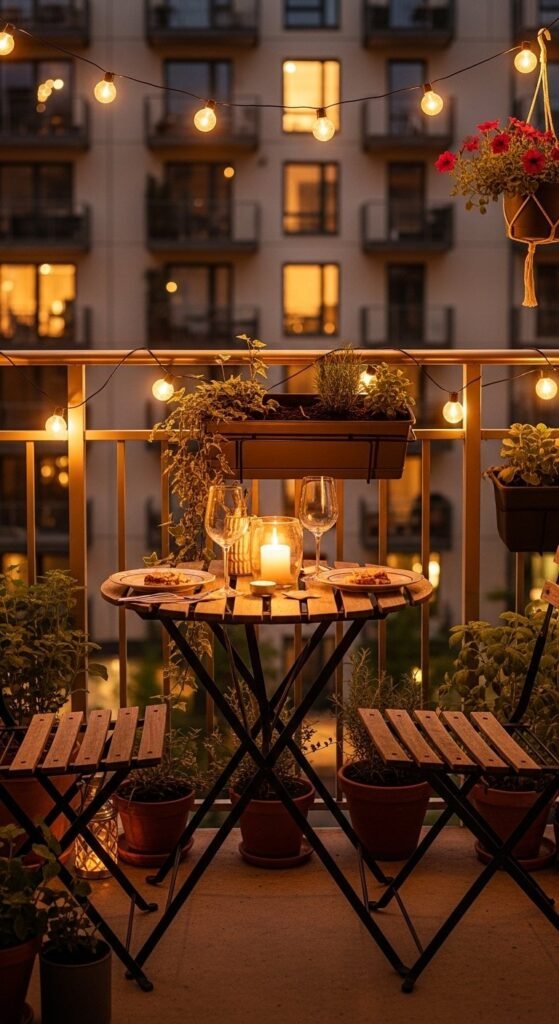
Balconies count as living space when styled right. Use foldable furniture to keep pathways clear. String lights add warmth without taking room. Stick to two colors for cohesion. Plants soften railings and walls. Vertical planters save floor area. Outdoor zoning creates a calm break from indoor life. Even small balconies can hold a chair and table. Choose weather-resistant materials to avoid constant upkeep. Keep decor light so the space doesn’t feel boxed in.
15. Live-Edge Wall Shelves
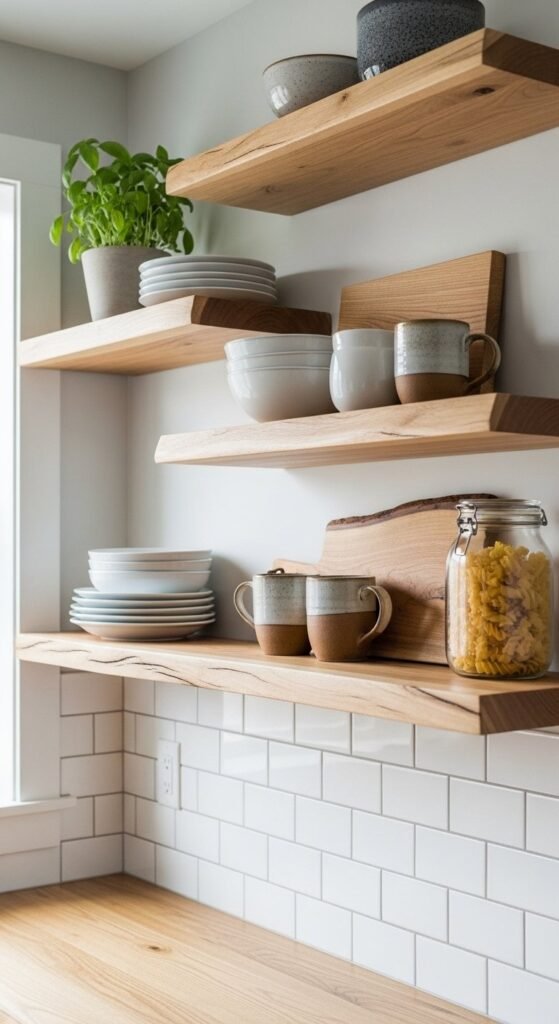
Live-edge shelves bring texture without bulk. Each shelf feels sculptural and personal. Use them in kitchens, breakfast bars, or entryways. Keep shelf thickness slim to avoid heaviness. Pair with white or neutral walls so the wood stands out. Seal the wood to protect from moisture. Natural texture accents help minimal rooms feel warm. Style shelves lightly. A mug, small plant, and bowl go a long way. Avoid stacking items deep. Let the shape shine.
16. Vertical Wall Art Gallery
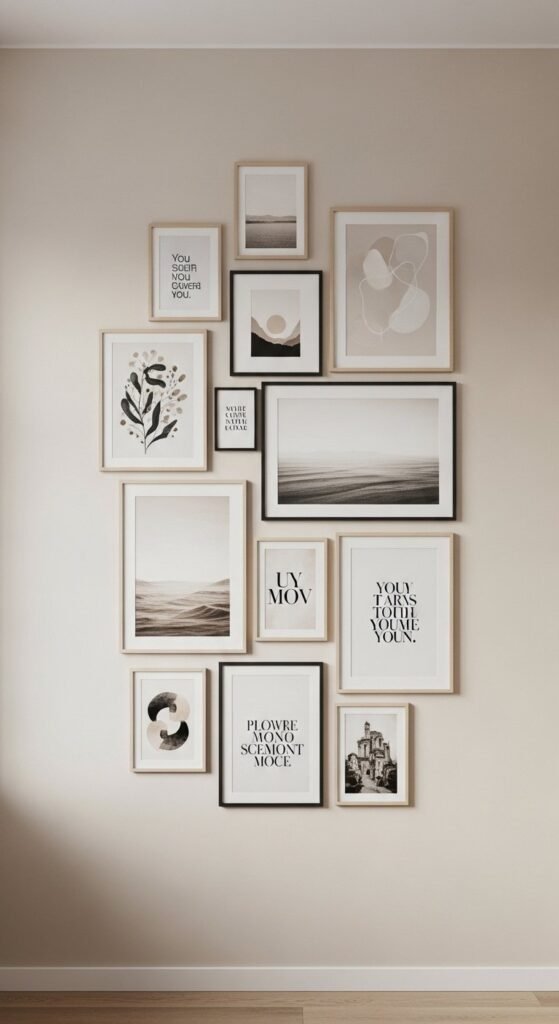
Vertical galleries guide the eye upward, making walls feel taller. Use narrow frames to keep things light. Align art in a single column or slim grid. Spacing matters more than quantity. Leave equal gaps between frames for calm rhythm. Command strips work well for renters. Choose artwork within one color family to avoid chaos. Wall-focused styling adds personality without touching floor space. This works especially well in studios and hallways. Keep furniture low nearby to balance the height visually.
17. Under-Bed Storage Drawers
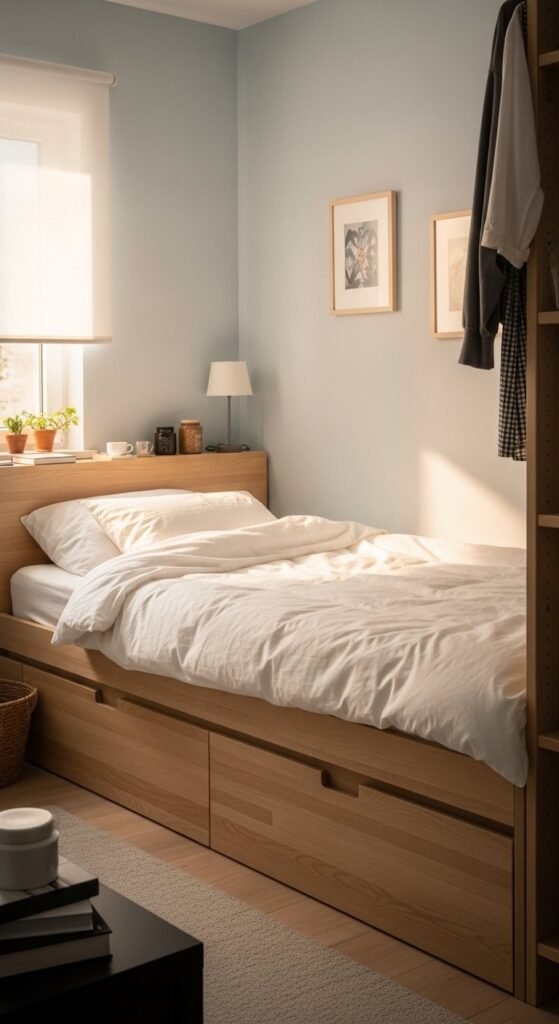
Beds hide valuable square footage. Drawers beneath turn it into storage without adding furniture. Use rolling bins if built-ins aren’t possible. Label containers to avoid digging later. Stick to soft items like linens or clothing. That keeps drawers easy to slide. Hidden storage zones help bedrooms stay calm and uncluttered. Keep drawer fronts flush so the bed frame looks clean. Light wood or painted finishes blend better in small rooms.
18. Fold-Down Wall Desk
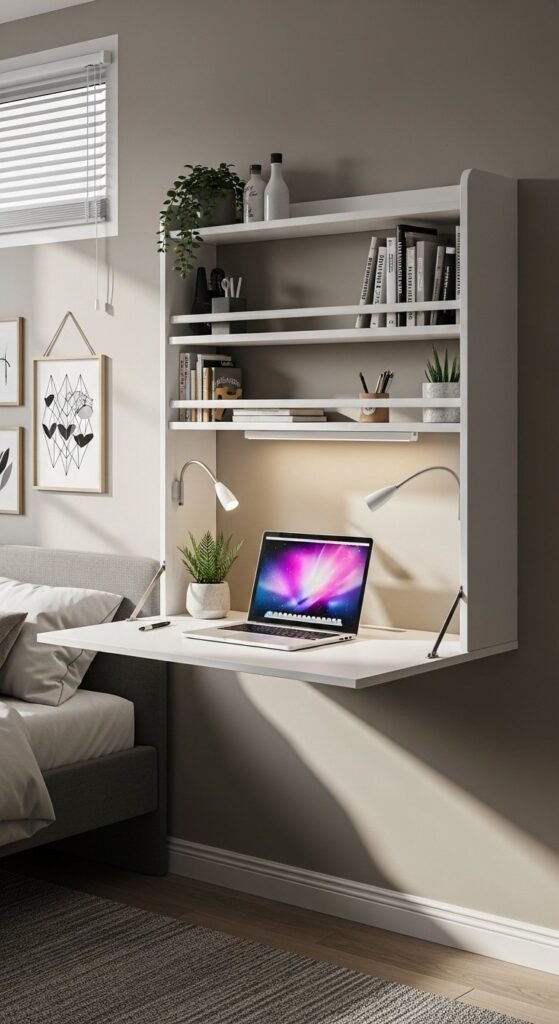
Fold-down desks disappear when not in use. Perfect for studios and shared rooms. Choose a desk with built-in shelves to store supplies. Mount it at standard desk height for comfort. Use a slim chair that tucks away easily. Space-flexible work areas keep rooms multi-purpose. Paint the desk the same color as the wall to reduce visual contrast. When closed, it reads like a cabinet, not furniture.
19. Minimal Molding for Elegant Walls
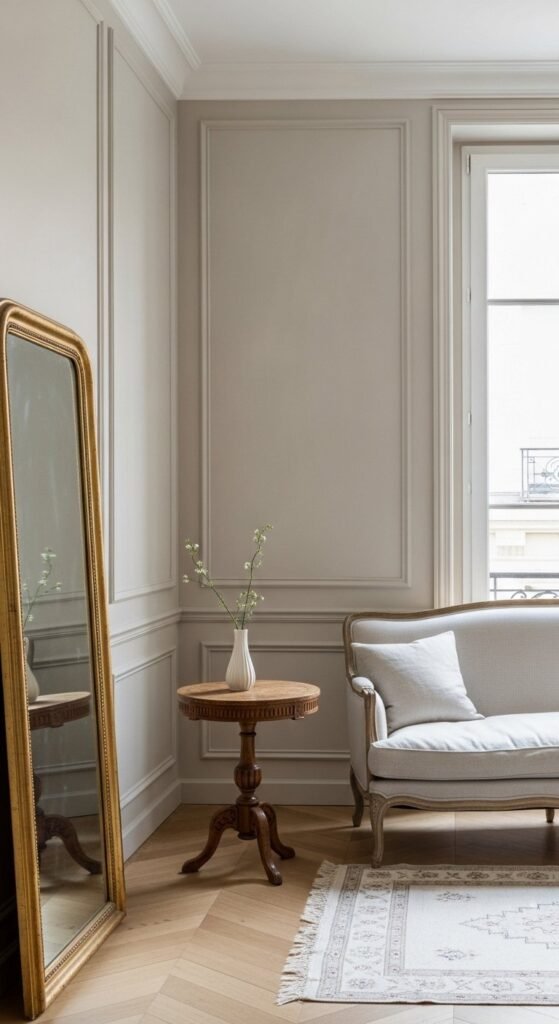
Molding adds detail without taking space. Thin trim keeps walls interesting while staying flat. Paint molding the same shade as the wall for subtle texture. This works well in small rooms where contrast would feel heavy. DIY kits or pre-cut trim lower costs. Surface-level detail adds character without clutter. Use molding on one feature wall to avoid overdoing it. Pair with simple furniture to keep balance.
20. Cubby Cabinets for Small Essentials
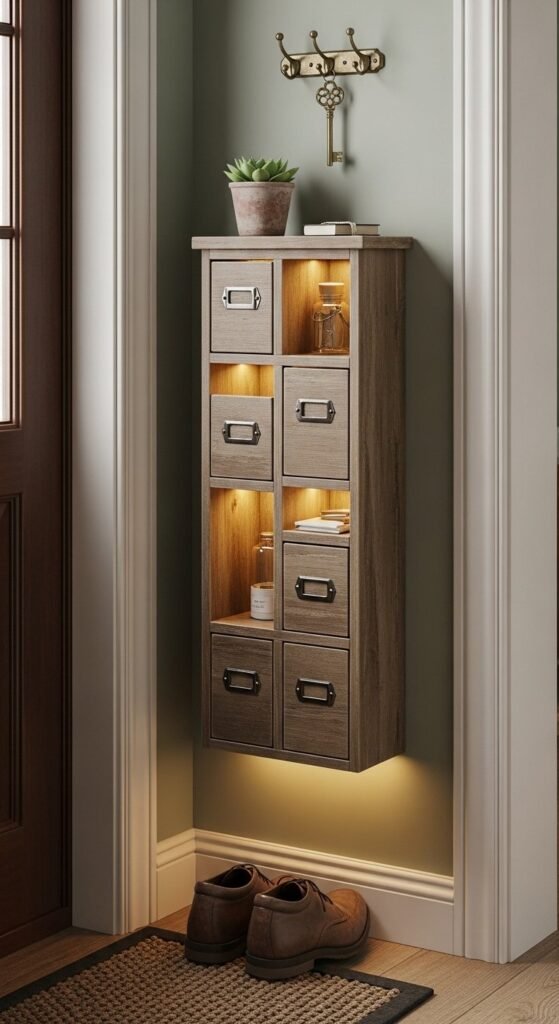
Cubby cabinets organize small items fast. Keys, tools, craft supplies all get their own slot. Mount them at eye level to save floor space. Vintage-style cubbies add charm, while modern versions stay sleek. DIY builds use plywood and simple dividers. Compartment-based storage prevents pile-ups in small homes. Keep contents minimal so cubbies don’t look busy. This works well in entryways, offices, or kitchens.
21. Slim Entryway Wall Hooks
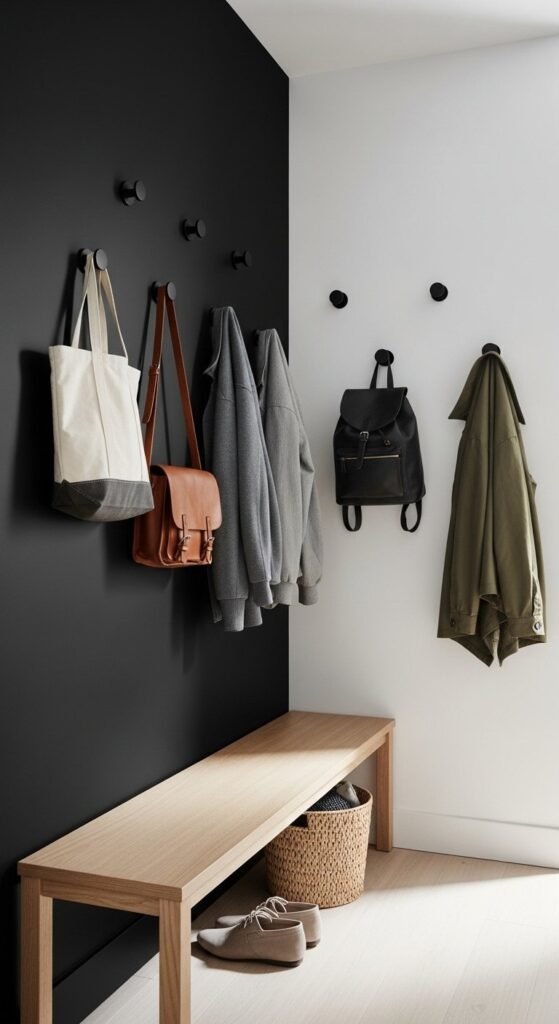
Wall hooks keep entryways usable without furniture bulk. Mount them in a straight line for visual order. Space hooks evenly so items don’t overlap. Use metal hooks for durability or wood pegs for warmth. Install above a small bench or shoe rack to create a landing zone. Wall-mounted organization clears floors instantly. For renters, adhesive hooks work for lighter items. Keep the hook count limited. Too many create visual noise. This setup works in hallways, bedrooms, and even kitchens for bags or towels.
22. Narrow Console Table Behind Sofa
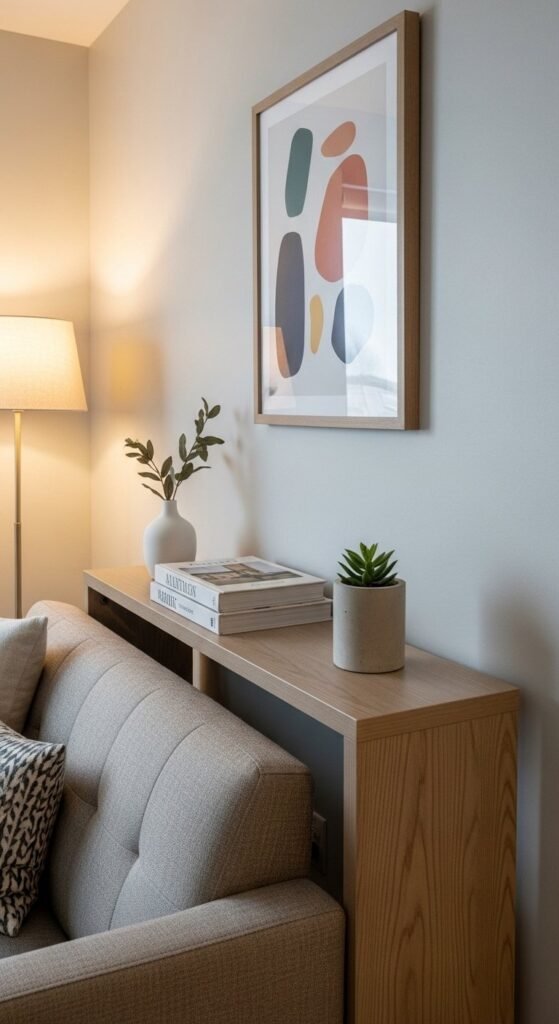
A narrow console behind the sofa adds function without crowding. Use it for lamps, books, or trays. Depth should stay under 10 inches to keep walkways open. Choose open-leg designs so light passes through. Dual-purpose furniture placement helps small rooms feel intentional. This works well in studios where the sofa floats in the room. Keep decor minimal so the table reads as support, not clutter.
23. Hanging Basket Storage on Walls
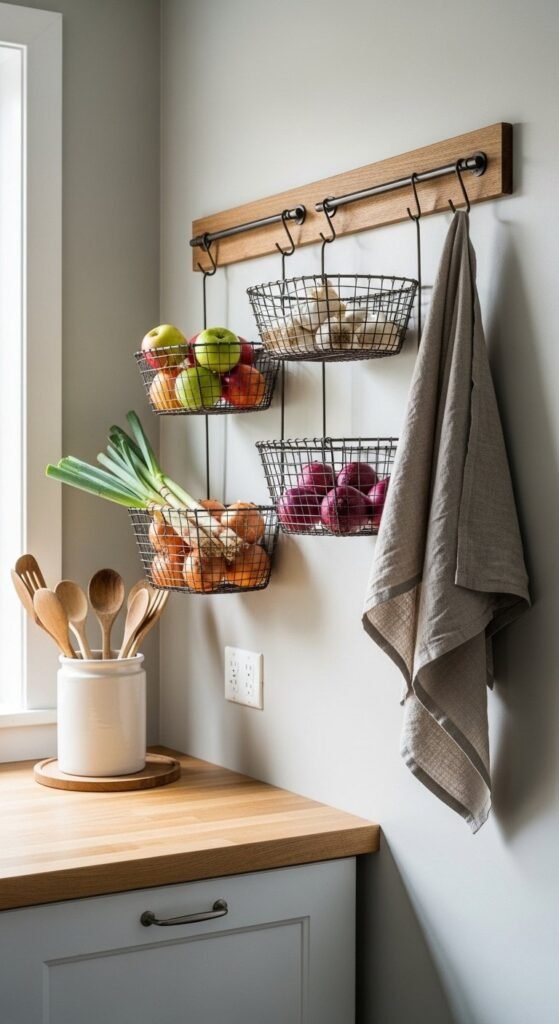
Hanging baskets turn walls into storage zones. Use them in kitchens, bathrooms, or offices. Wire baskets keep contents visible and light. Mount them vertically to save width. Label baskets if storing small items. Open wall storage works best when kept tidy. Stick to similar basket styles for cohesion. This setup costs little and installs quickly.

Leave a Reply