

1. Layered Wood-and-Ceramic Shelf Vignette
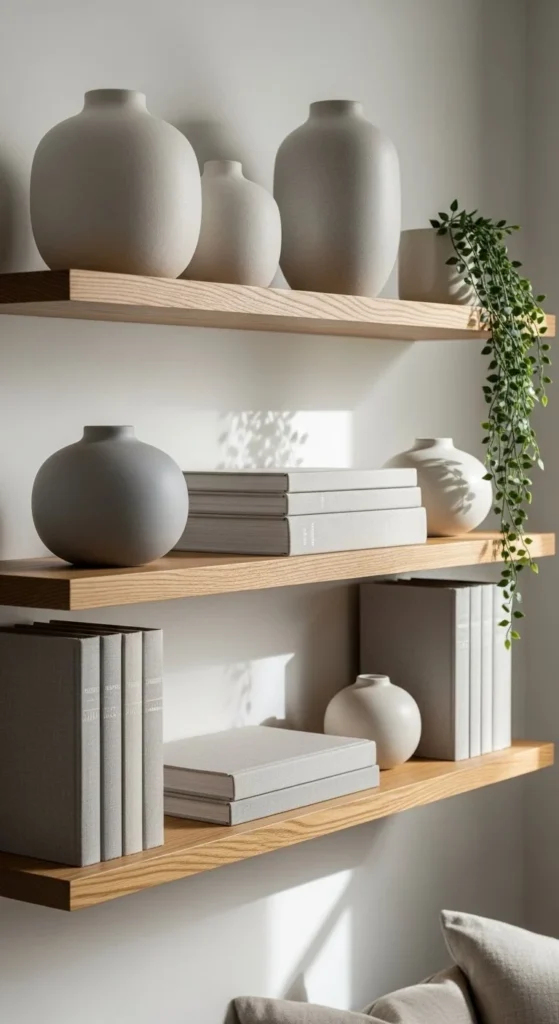
This setup works because contrast does the heavy lifting. Wood brings warmth. Ceramic adds weight. Books ground the look. Start with a simple floating shelf in pine or plywood. Sand lightly. Seal with a clear matte finish. Stack books horizontally on one side. Keep covers neutral or wrap them in kraft paper. Add two ceramic pieces in different heights. Odd numbers feel balanced.
Keep spacing intentional. Leave breathing room between objects. That pause makes each item feel chosen. Layered textures help shelves look styled without feeling busy. On a budget, thrift mismatched vases and spray-paint them one tone. Chalk paint works well for a soft finish.
For renters, command-style shelf brackets paired with lightweight boards can work for decor-only displays. Add a small trailing plant, real or faux, to soften the edge. Rotate ceramics seasonally. White in summer. Earth tones in fall. Small swaps keep the shelf feeling current without buying more.
2. Book Stack Risers With Decor Accents
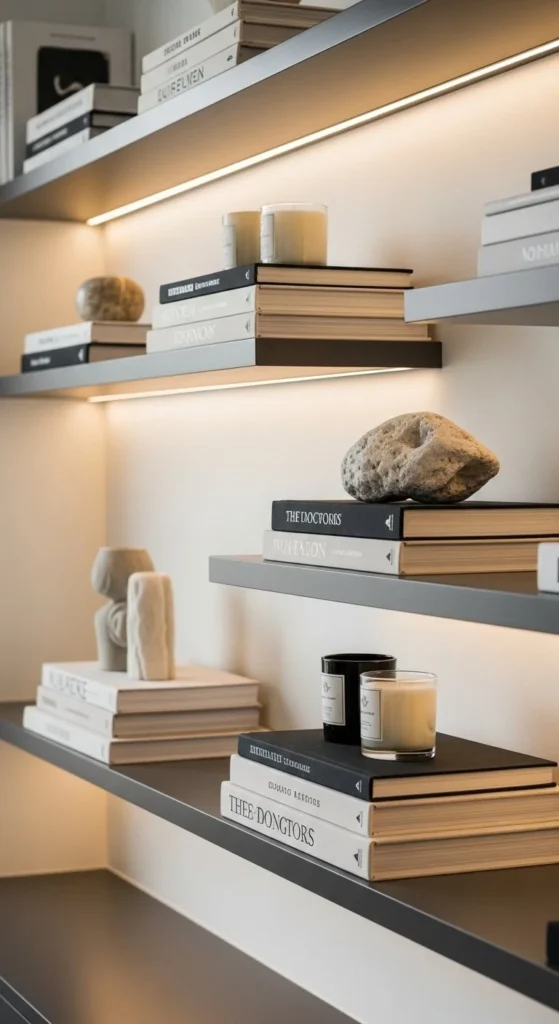
Books are more than fillers. They control height. Stack two or three horizontally to form a base. Place a candle, small sculpture, or framed photo on top. This creates levels without extra tools. Use paperbacks from thrift stores if you don’t want to risk hardcovers.
Stick to one color family for spines. Neutral wraps help. Kraft paper or fabric covers work well and cost little. Height variation keeps shelves from looking flat in photos and real life.
Balance matters. If one side has tall stacks, keep the other lighter. A single vertical book group can counter a heavy horizontal pile. For tight shelves, trim book stacks to two only.
Want a cleaner look? Remove dust jackets. Or turn books spine-in for texture without text. Add one dark object to anchor the shelf visually. A black candle or stone paperweight does the job. This idea works well in offices and bedrooms where books already belong.
3. Plant-Forward Shelf Styling
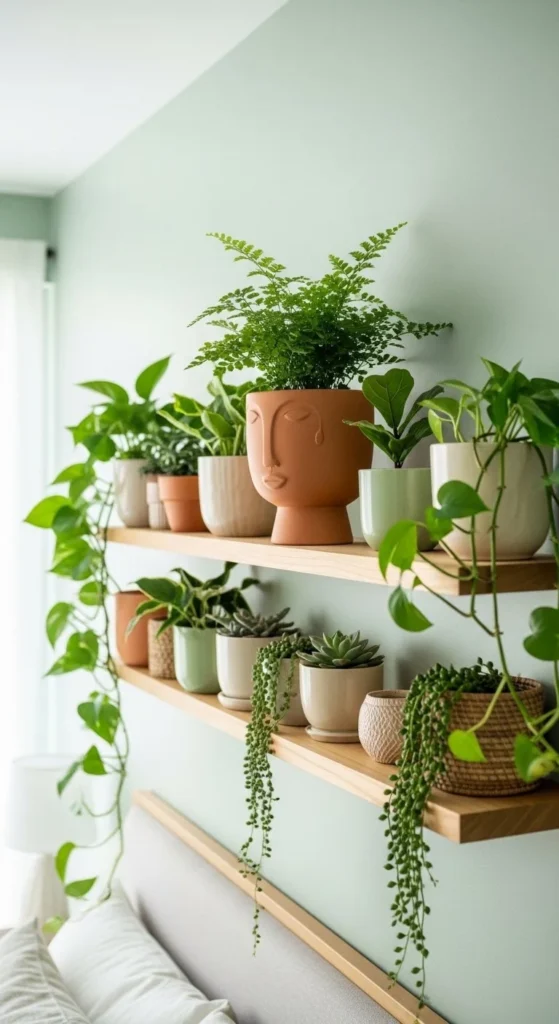
Plants soften hard lines. Even one shelf can feel alive with greenery. Start with one trailing plant. Pothos and philodendron handle low light well. Pair it with two smaller upright plants. Keep pots simple so leaves stay center stage.
If watering feels risky, mix real and faux. Place faux plants higher. Real ones where you can reach them. Greenery as a focal point works best when the rest of the shelf stays calm. Avoid crowding. Three plants often read better than five.
DIY tip: use mismatched pots and paint them one clay or sand tone. Seal with a matte spray. For texture, wrap one pot with jute or linen cord.
Add one non-plant item. A small bowl or framed print helps break repetition. This style suits living rooms, kitchens, and bedrooms. Rotate plants instead of buying new ones. A simple swap changes the mood fast.
4. Decorative Storage Boxes That Hide Clutter
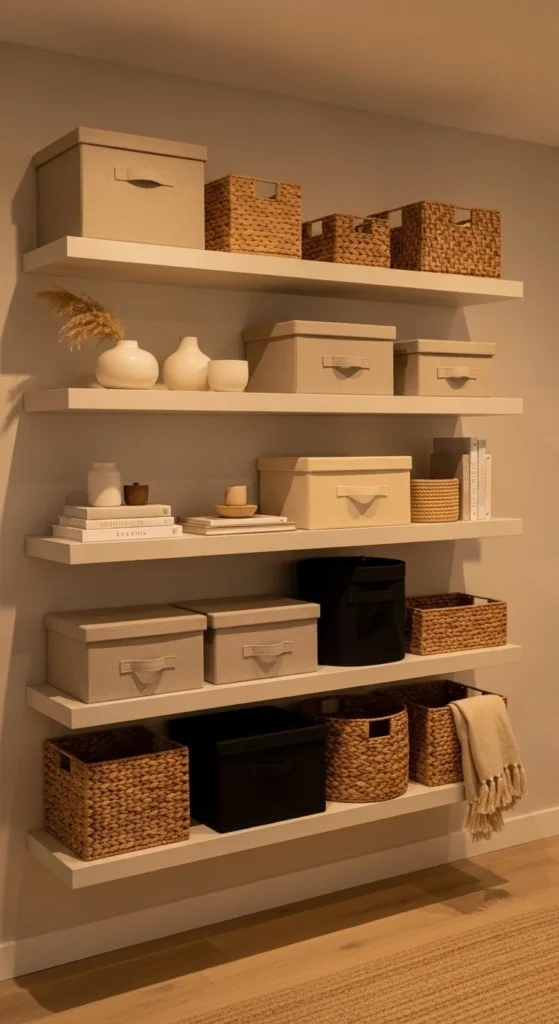
Shelves don’t have to be precious. Storage can still look intentional. Fabric or paper-covered boxes hide cords, papers, and small items. Choose two sizes only. Consistency keeps things tidy visually.
DIY your own boxes using shoe boxes and fabric remnants. Spray adhesive works well. Keep patterns subtle. Solids age better. Functional decor earns its place when space is tight.
Place boxes on lower shelves for easy access. Style above them with lighter objects like frames or small bowls. This keeps the shelf from feeling heavy.
In entryways, use boxes for keys and mail. In offices, stash chargers. Label the inside, not the outside, for a cleaner look.
One styling trick: add a single object on top of a box. A stone, candle, or small plant breaks the block shape. This approach suits small apartments where shelves must work harder without looking crowded.
5. Minimal Shelf With One Statement Object
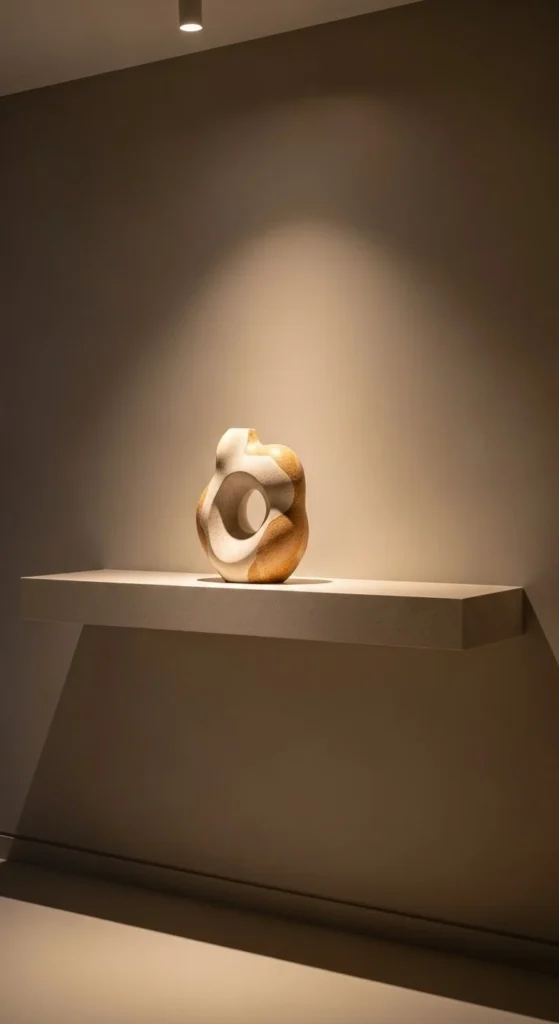
Sometimes less really is more. One shelf. One object. The wall becomes part of the design. Choose a sculptural piece with shape. Curves read softer. Angular forms feel graphic.
DIY option: thrift a dated vase and coat it in plaster or textured paint. Sand lightly for an uneven surface. Seal matte. Statement piece styling works best when the shelf itself stays simple. Thin profiles disappear visually.
Lighting matters here. A small picture light or nearby lamp adds shadow and depth. Avoid clutter nearby. Let negative space do its job.
This idea works well in hallways, above consoles, or between windows. It’s also renter-friendly. One anchor screw can hold a lightweight shelf. Rotate the object seasonally. The shelf stays. The mood shifts.
6. Mixed-Material Shelf Trio
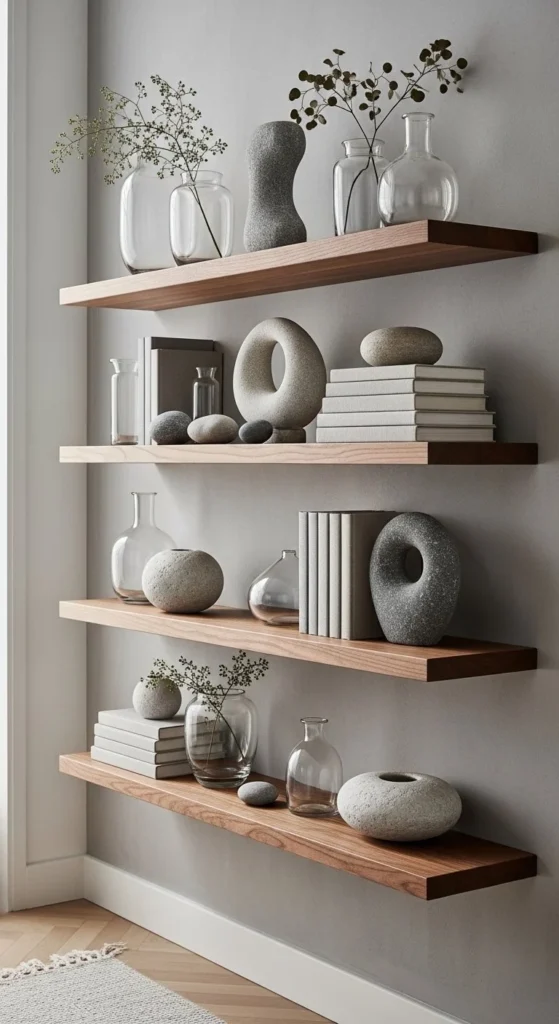
Using three shelves together gives room to play with contrast. Keep each shelf related but not identical. One can lean heavier with books. Another lighter with objects. The third can mix both. Materials do the storytelling here. Wood adds warmth. Stone grounds the look. Glass keeps it from feeling heavy.
DIY tip: don’t buy matching decor sets. Thrift different pieces and tie them together with color. One shared tone across all shelves keeps cohesion. Textural contrast matters more than matching shapes.
Vary spacing between shelves slightly. Perfect symmetry can feel stiff. A few inches difference adds ease. Place heavier items toward the ends. Lighter pieces near the center. This helps the wall feel balanced.
Budget option: use air-dry clay to form small bowls or abstract shapes. Let imperfections show. Seal lightly. These handmade pieces add character without cost.
This setup works well behind sofas or in dining rooms where a single shelf feels too sparse.
7. Seasonal Color Story Shelf
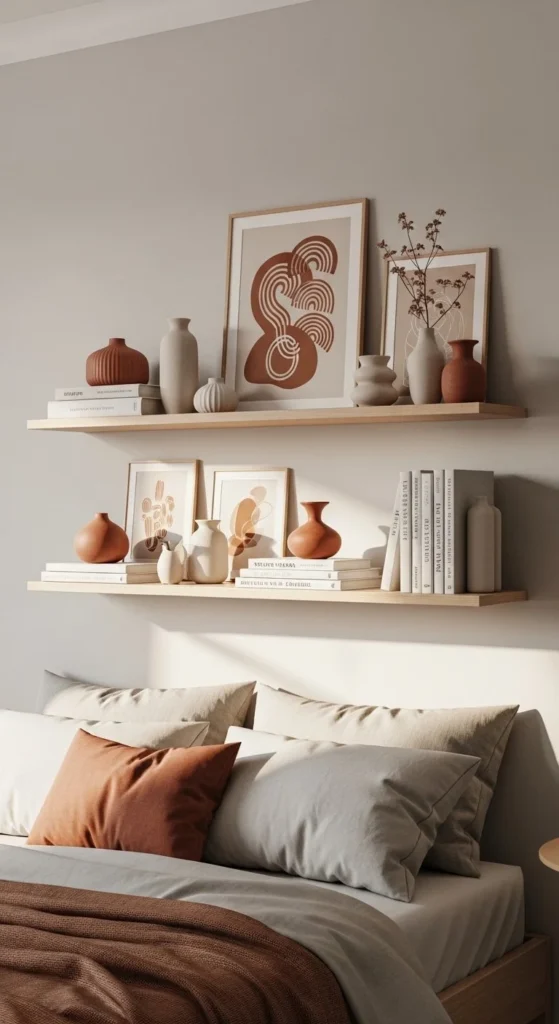
Pick two colors. That’s it. Everything on the shelf should live within that range. This makes styling decisions fast. It also keeps swaps simple. When seasons change, colors change. The shelf stays.
DIY trick: repaint old decor to fit the palette. Spray paint works well for ceramics and frames. Color storytelling helps shelves feel intentional even with simple items.
Books can join the palette too. Wrap covers with colored paper. Tape inside only. No damage. Add one neutral item to give the eye a rest.
This idea suits bedrooms and offices where calm matters. It also helps indecisive decorators avoid clutter. If an item doesn’t fit the colors, it doesn’t go up.
Store off-season pieces in a labeled box. Rotation keeps shelves feeling cared for without constant buying. Small change. Big visual shift.
8. Floating Shelf With Integrated Lighting
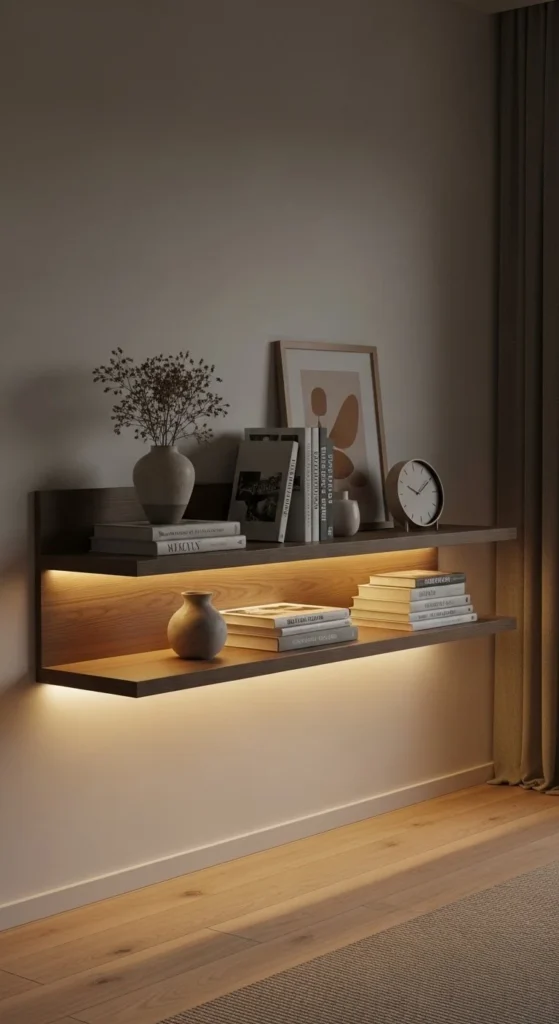
Lighting changes everything. A slim LED strip under the shelf highlights objects and adds mood. Warm light works best. Avoid cool tones. They flatten textures.
DIY install is simple. Use adhesive LED strips with a plug-in adapter. Hide cords behind books or along the wall edge. Lighting as a styling tool draws attention without adding more decor.
Keep objects minimal. Light already adds drama. One stack of books. One object. One plant. That’s enough.
This works especially well for shelves above desks or consoles. Evening light makes the space feel intentional. On a budget, battery-powered puck lights can work too. Place them behind objects for a glow effect.
Tip: test lighting at night before final styling. Shadows matter as much as objects here.
9. Personal Object Display Shelf
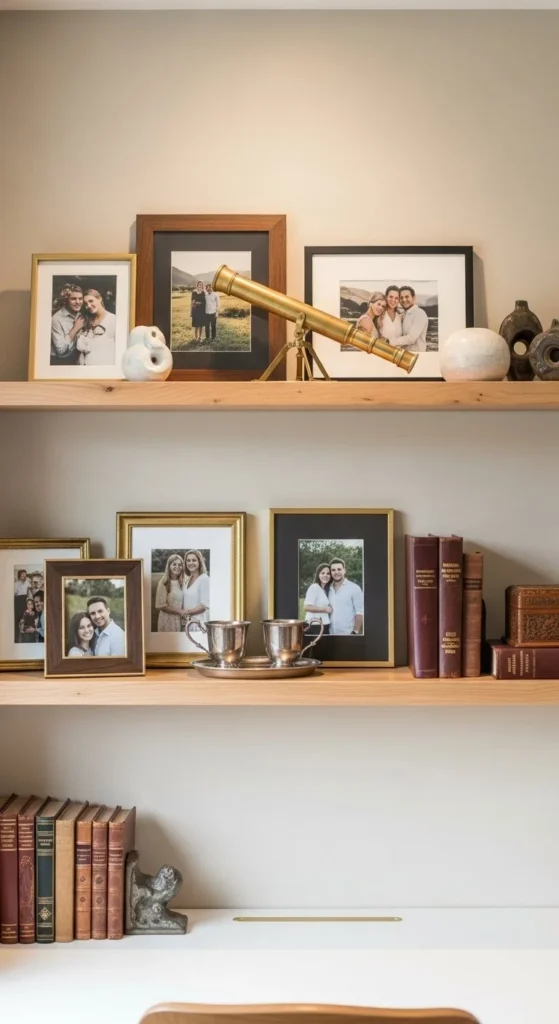
Shelves can tell stories. Choose items with meaning. A framed photo. A travel object. A small inherited piece. Keep the count low so each item has space.
DIY frames can unify mismatched pieces. Paint all frames one tone. Matte finishes work best. Personalization through objects makes shelves feel lived-in without extra styling tricks.
Rotate items every few months. This keeps the shelf engaging and protects delicate pieces from light exposure. Store swaps nearby so rotation feels easy.
Balance sentimental items with simple decor. A plain bowl or book stack keeps the shelf from feeling too emotional or busy.
This style suits offices, bedrooms, and reading corners. It’s less about trends and more about presence. Let the shelf reflect your story, not a catalog.
10. Budget Upcycled Decor Shelf
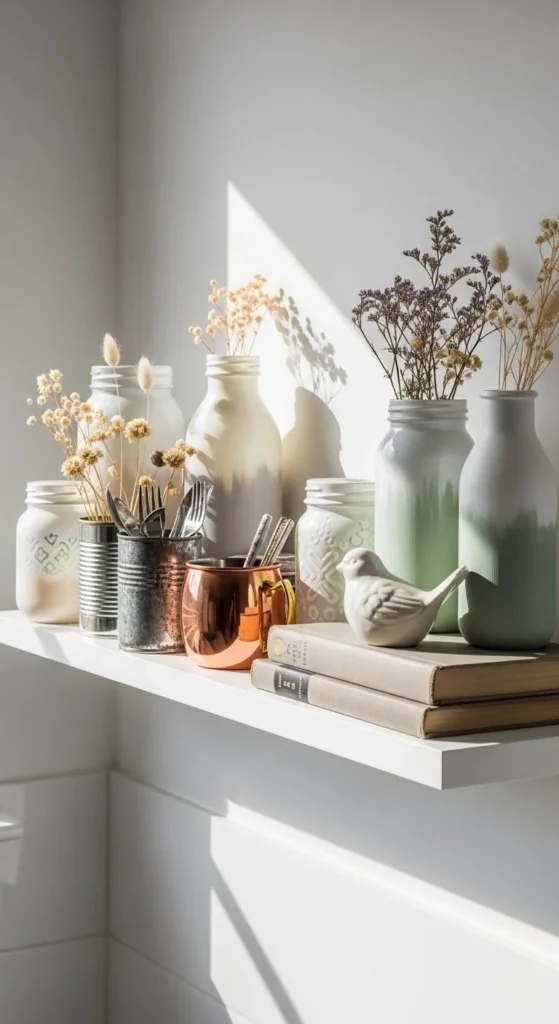
Upcycling stretches your decor budget far. Glass jars become vases. Old containers become planters. Paint pulls everything together. Stick to one finish so pieces feel related.
DIY tip: textured spray paint can make plastic look ceramic. Light coats work best. Budget-friendly DIY hacks shine when the shelf layout stays simple.
Limit items to five per shelf. This keeps things tidy even when pieces vary. Add one natural element like a plant or wooden object to soften repurposed items.
This idea fits kitchens, hallways, and laundry areas where shelves work hard. It’s also forgiving. If something chips, repaint it.
Upcycled shelves feel relaxed and practical. They prove good styling doesn’t require expensive decor, just intention and restraint.
11. Sculptural Object Balance Shelf
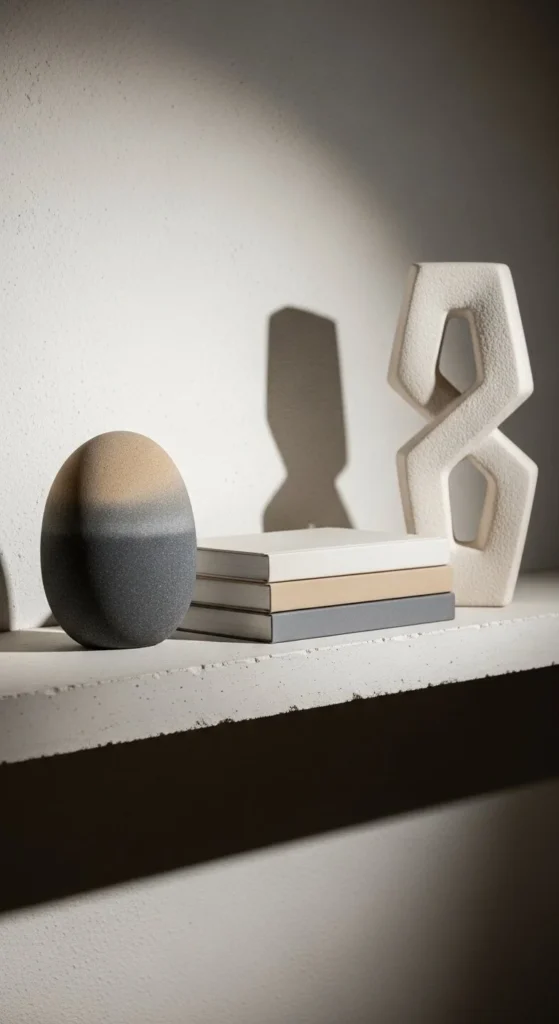
This shelf relies on shape more than quantity. Sculptural objects do the talking. Look for curves, arches, or asymmetry. Place one larger piece off-center. Counter it with a smaller form or a low book stack. The imbalance feels intentional.
DIY option: shape air-dry clay into organic forms. Don’t smooth too much. Texture adds character. Seal with matte varnish. Strong silhouettes read clearly even from across the room.
Keep colors tight. One light tone. One darker accent. Too many shades dilute the effect. Negative space matters here. Let the wall show.
This approach suits modern living rooms and stairway walls. It also photographs well for Pinterest. Swap sculptures occasionally to change the look without redoing the shelf.
12. Art-Led Shelf With Leaning Frames
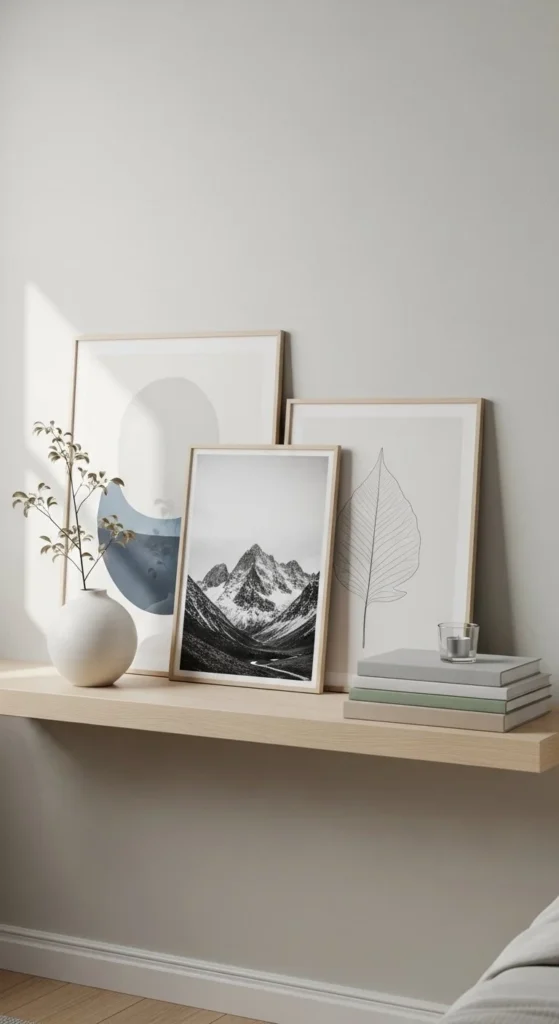
Leaning art feels relaxed and flexible. No nails. No measuring stress. Choose two prints in similar tones but different sizes. Overlap them slightly. Add one small object in front for depth.
DIY prints work well here. Download public-domain art or create simple line drawings. Print on textured paper. Art-forward styling gives shelves personality without clutter.
Avoid crowding. One shelf usually fits two frames comfortably. Add a low object like a bowl to anchor the setup.
This works well above desks or nightstands. When moods change, swap prints. The shelf stays. It’s an easy way to refresh a room without rearranging furniture.
13. Neutral Scandinavian-Style Shelf
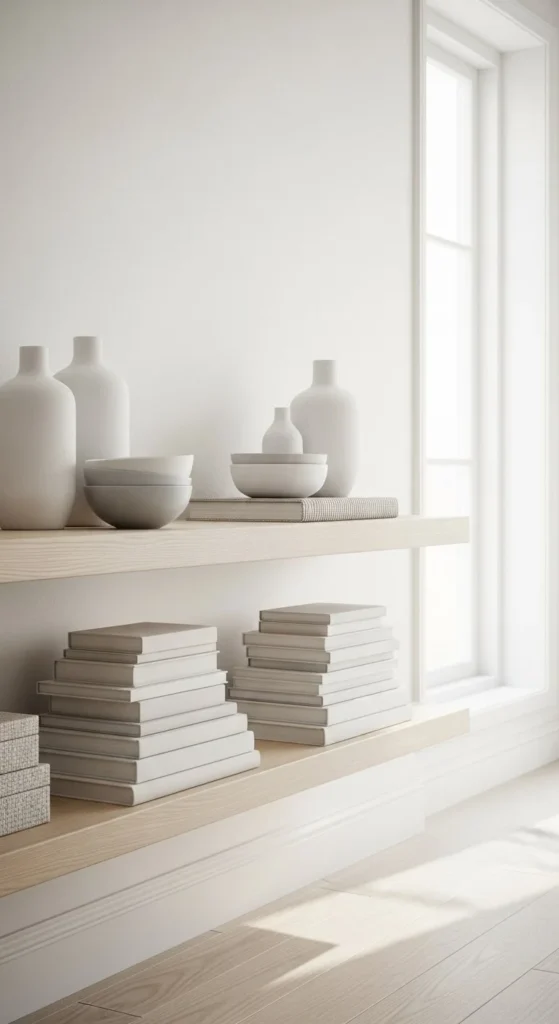
This look favors calm and restraint. Light wood shelves blend into pale walls. Decor stays simple. Think smooth ceramics, plain books, and one subtle object with texture.
DIY tip: sand shelves extra smooth and use a clear finish only. Let the wood grain show. Minimal shelf styling works best when each item earns its place.
Stick to odd numbers. Three items often feel right. Five can work if sizes vary. Avoid shiny finishes. Matte keeps the look soft.
This style suits small spaces and rooms with lots of light. It also pairs well with plant-heavy corners nearby. The shelf doesn’t compete. It supports the room’s mood.
14. Functional Entryway Shelf Setup
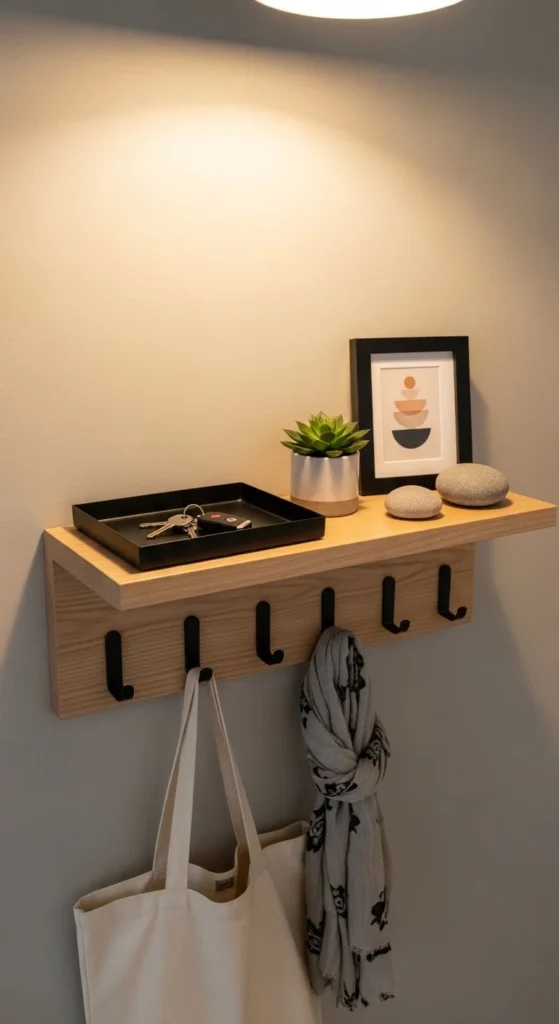
Entryway shelves work hard. Keep decor useful. A tray for keys. A small bowl for coins. One object for visual interest. That’s enough.
DIY trick: add hooks underneath the shelf for bags or hats. Paint hardware to match shelf brackets for cohesion. Functional decor keeps clutter off surfaces while still looking considered.
Place heavier items toward the wall side. This helps stability. Avoid tall pieces that block sightlines near doors.
This setup fits apartments and narrow hallways. It proves shelves can be both practical and styled without feeling staged.
15. Textured Basket and Object Mix
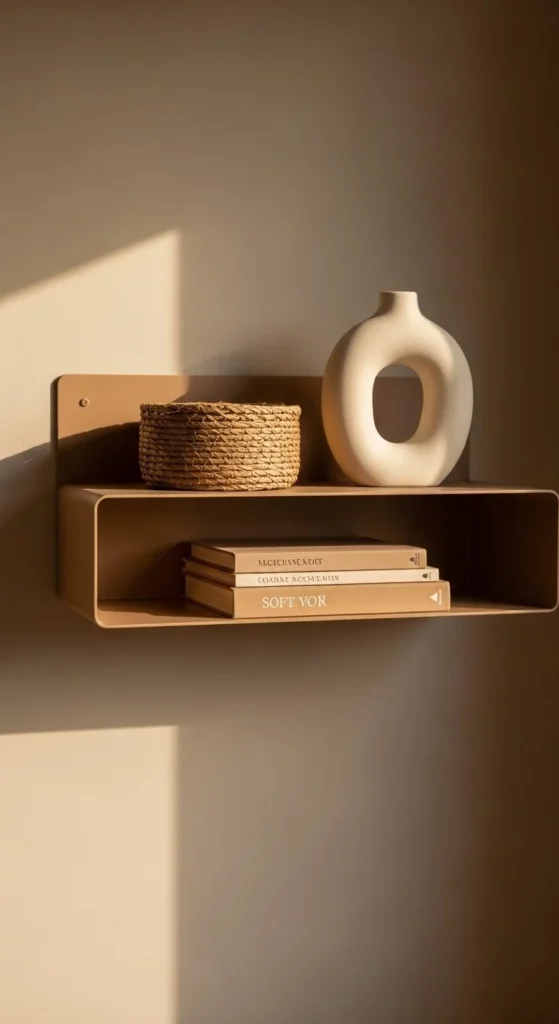
Baskets add softness and hide small items. Use one basket only. Pair it with solid objects so textures don’t compete. A ceramic piece and a book stack usually balance it well.
DIY baskets can be made by wrapping rope around a simple bowl with hot glue. Keep shapes clean. Layered textures help shelves feel complete without extra color.
Place the basket slightly off-center. Fill it lightly so it keeps its shape. This works well on lower shelves where access matters.
This idea fits family rooms and offices where small clutter shows up fast. It keeps things contained while still reading as decor.
16. Dried Flower Display Shelf
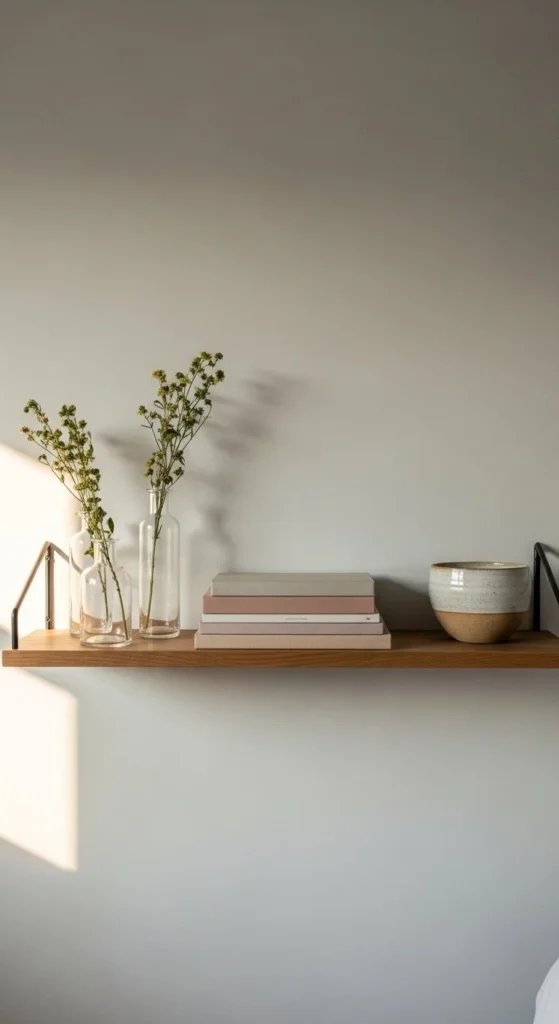
Dried flowers add texture without maintenance. Use one or two small vases. Pair with books or a simple bowl. Keep colors muted for a calm, cohesive look.
DIY option: collect and press flowers from your garden or local market. Display in tiny glass bottles or recycled jars. Dried florals as year-round decor are low-effort but high-impact.
Rotate arrangements quarterly. Swap in new blooms or mix stems for variation. Avoid overcrowding. Negative space lets the shapes shine.
This works on bedroom shelves, hallways, or small wall nooks. Combining neutral objects keeps dried flowers feeling intentional, not messy.
17. Geometric Planter Shelf
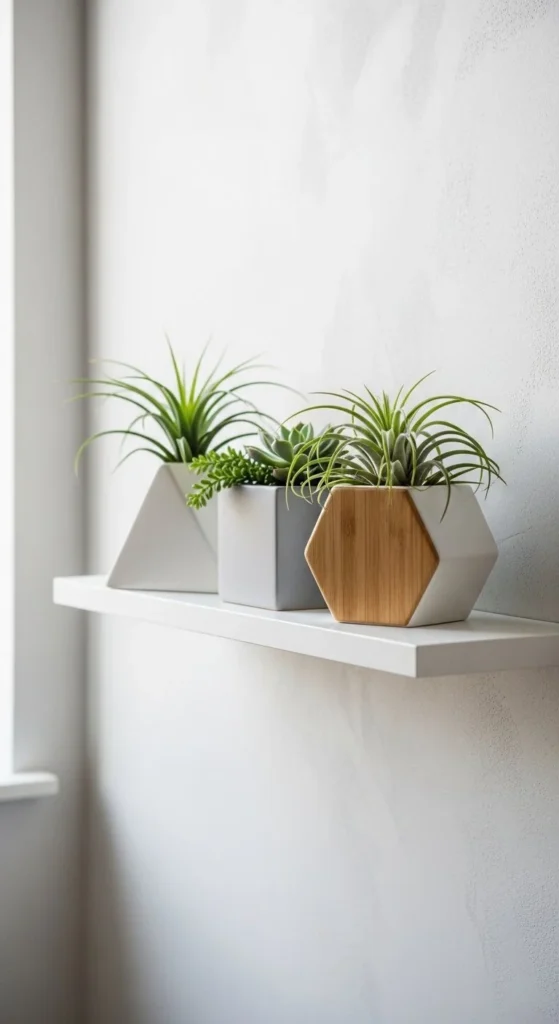
Geometric planters create visual rhythm. Choose three shapes of different sizes. Add small plants with varying leaf shapes. The contrast between angles and organic greenery is striking.
DIY idea: paint thrifted pots in geometric patterns with painter’s tape. Matte finishes give a clean look. Geometric planters in neutral tones suit any shelf style.
Place tallest planter in the back or corner. Smaller ones step forward to build depth. Avoid repeating the same shape.
This style works well in kitchens, offices, and living rooms. Pair with one small object, like a stone sculpture, for contrast. Rotation or plant swaps keep it feeling alive.
18. Mini Green Corner Shelf
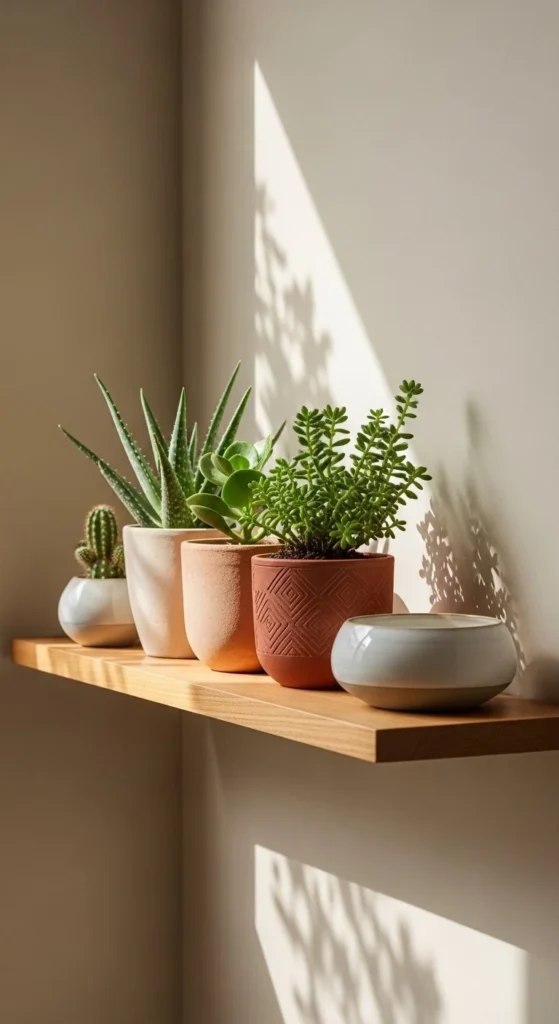
Small succulents are easy to style. Pick three pots of different sizes. Include one standout cactus. Place a small bowl or object in front for depth.
DIY tip: paint thrifted containers or use clay air-dry holders. Succulent and small plant arrangements give life without high maintenance.
Use odd numbers. Trios feel more balanced. Rotate succulents with the seasons. In winter, add faux greens if light is low.
Perfect for kitchen shelves, bathrooms with window light, or living rooms. Keep soil neat. Layer small pebbles on top for texture. The tiny corner suddenly feels curated and green.
19. Mixed-Media Storytelling Shelf
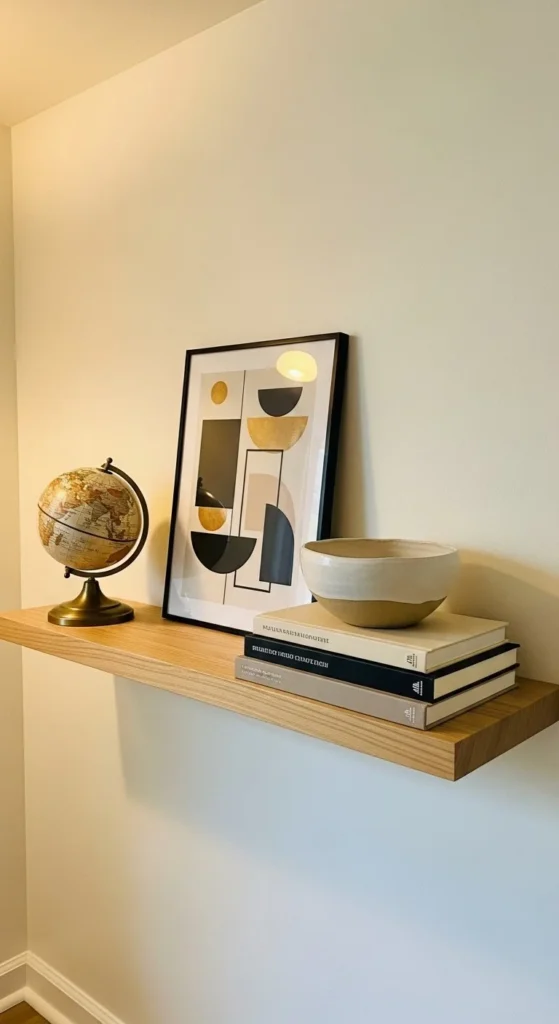
Mixing media tells a story. One art print, a small globe, and a low ceramic object combine textures and interest. Books provide grounding.
DIY idea: create your own mini globe or print vintage maps for free. Mixed-media displays work best when each object has purpose. Keep one or two colors consistent.
Avoid clutter. Three to five pieces are enough. Layer items by height. Let some edges hang slightly off the shelf for casual style.
This works well in studies, home offices, and living rooms. Swap objects by travel, season, or mood. The shelf becomes a small rotating vignette.
20. Seasonal Rotation Shelf
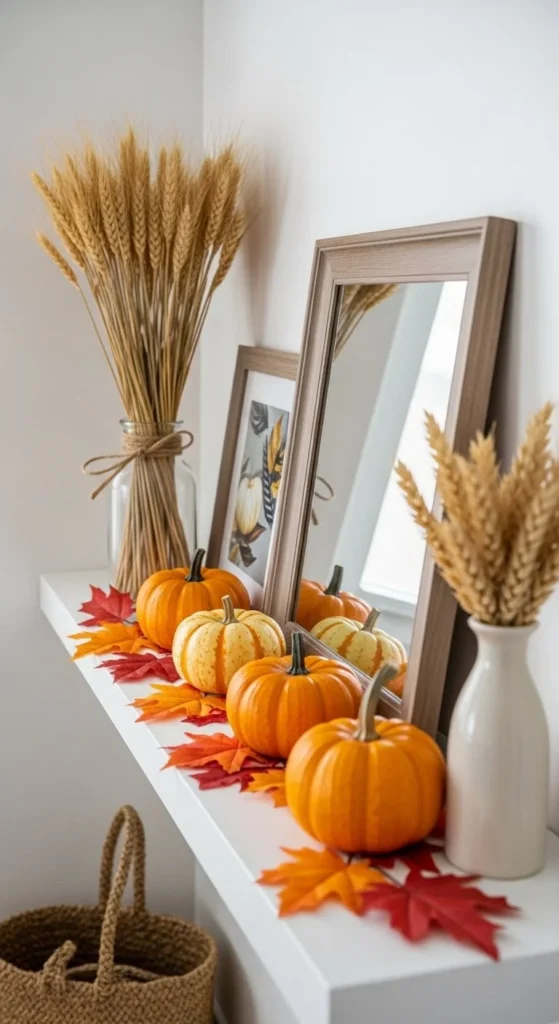
Seasonal styling keeps shelves feeling alive. Pick 3–5 items per season. Autumn: small pumpkins. Winter: pinecones and candles. Spring: pastel vases or flowers.
DIY tip: repurpose small objects like jars or pinecones with paint. Rotate every 2–3 months. Seasonal rotation guides make it easy to swap pieces quickly without buying more decor.
Keep spacing flexible. Don’t overcrowd. Odd numbers feel balanced. One shared color can tie items together.
Works well in dining rooms, living rooms, and entryways. A single shelf can tell the story of each season. Rotation keeps the display dynamic and prevents stagnation.
21. Upcycled Jar and Bottle Shelf
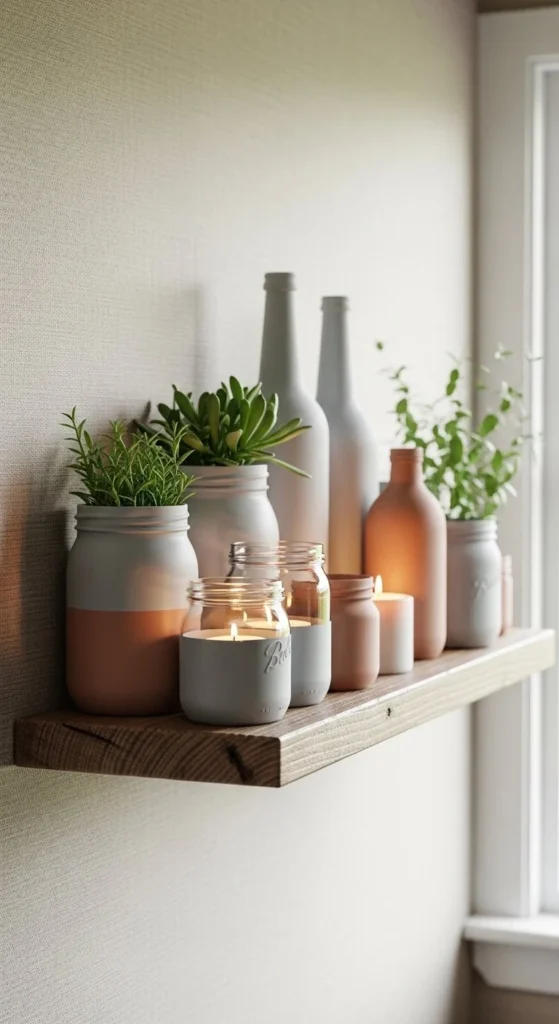
Upcycling everyday jars gives your shelf personality. Paint mismatched bottles in one tone to unify them. Add small plants or tea lights. Upcycling ideas for older decor help reduce waste and save money.
DIY tip: use chalk paint for a matte, textured finish. Sand edges lightly for a rustic feel. Arrange objects in odd numbers for balance.
Rotate contents seasonally. Spring: small succulents. Winter: mini candles. This keeps the shelf interesting without buying new items.
Perfect for kitchens, windowsills, or hallways. These jars make ordinary shelves feel curated and eco-friendly. Even inexpensive thrifted bottles can look high-end after a coat of paint.
22. Miniature Travel Memory Shelf
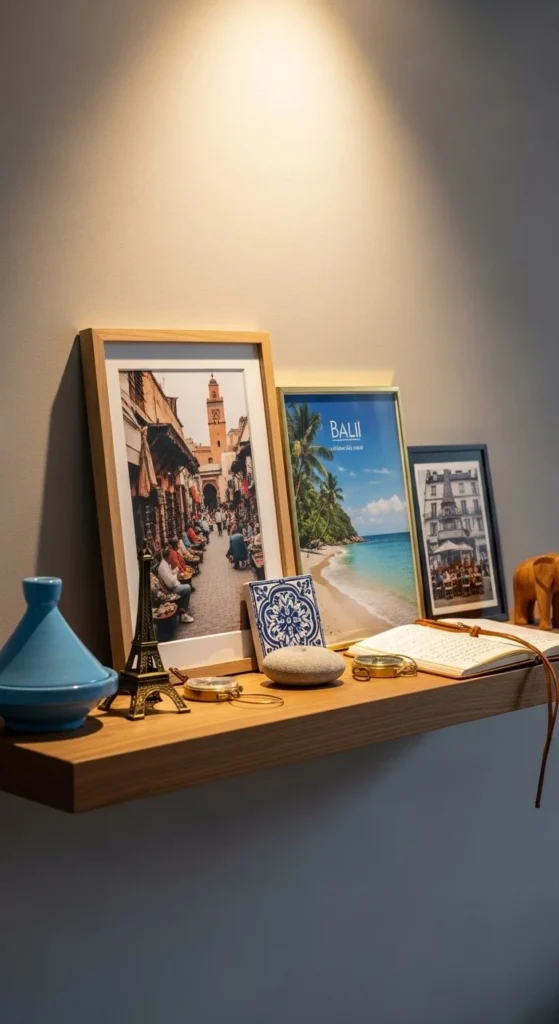
Use shelves to showcase memories. Small souvenirs, mini statues, and framed photos tell a story. Personalization through heirlooms and keepsakes gives a home warmth.
DIY tip: create tiny stands with scrap wood or cardboard to add height variation. Group items in odd numbers. Keep a neutral backdrop for cohesion.
Rotate pieces as you acquire new souvenirs. Swap older items into storage to avoid overcrowding.
This idea works well in living rooms, bedrooms, or office walls. The shelf becomes a mini museum of your experiences, styled intentionally without clutter.
23. Tiered Shelf Display With Books and Objects
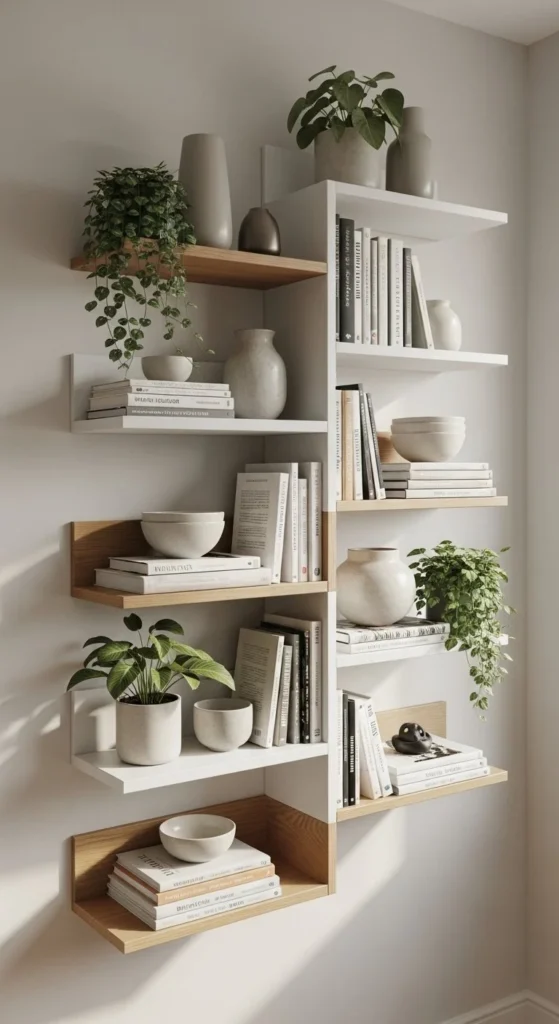
Tiered shelves provide natural height variation. Place taller items at the back and shorter ones in front. Books can act as risers for decorative objects.
DIY tip: use reclaimed wood for tiered shelves. Cut boards to staggered lengths. Sand and seal lightly. Books as decor add both height and texture.
Keep objects in small groups, ideally 2–3 per tier. Rotate plants or small ceramics to refresh the look seasonally.
This setup works for offices, libraries, and living rooms. It’s practical, stylish, and allows multiple layers of interest without crowding.
24. Small Wall Nook Shelf With Statement Vase
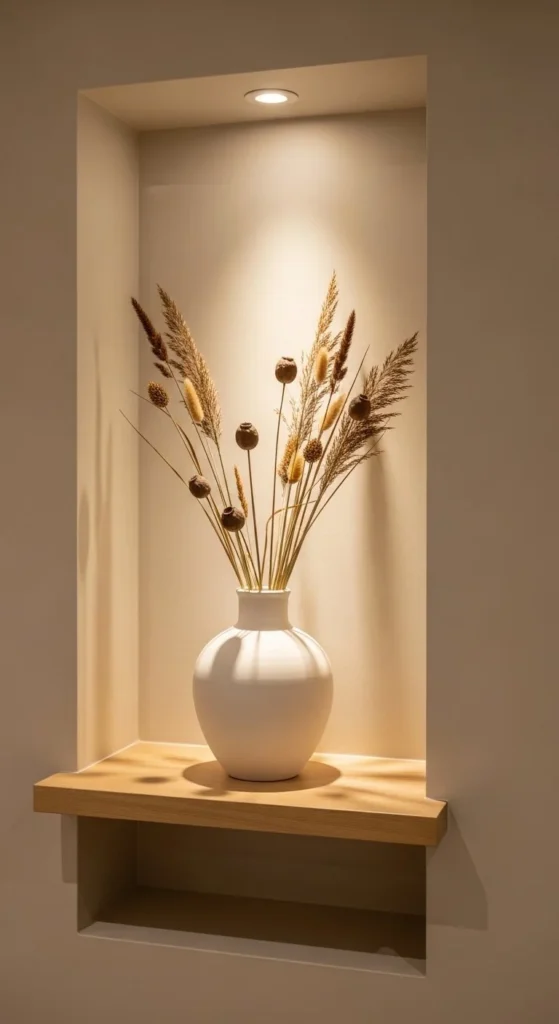
Small wall nooks are perfect for one striking item. A large ceramic vase with dried grasses creates impact without clutter. Statement pieces let a single item shine.
DIY idea: repaint or texture thrifted vases to match your space. Keep surrounding wall clean for focus. Add subtle lighting to emphasize the piece.
One object keeps styling simple. Use negative space intentionally. Rotate vase contents seasonally: tall grasses in fall, soft flowers in spring.
Works well in hallways, entryways, or any shallow recess. Even tiny shelves can feel significant when one object is highlighted thoughtfully.

Leave a Reply