

1. Textural Layered Coffee Table Styling
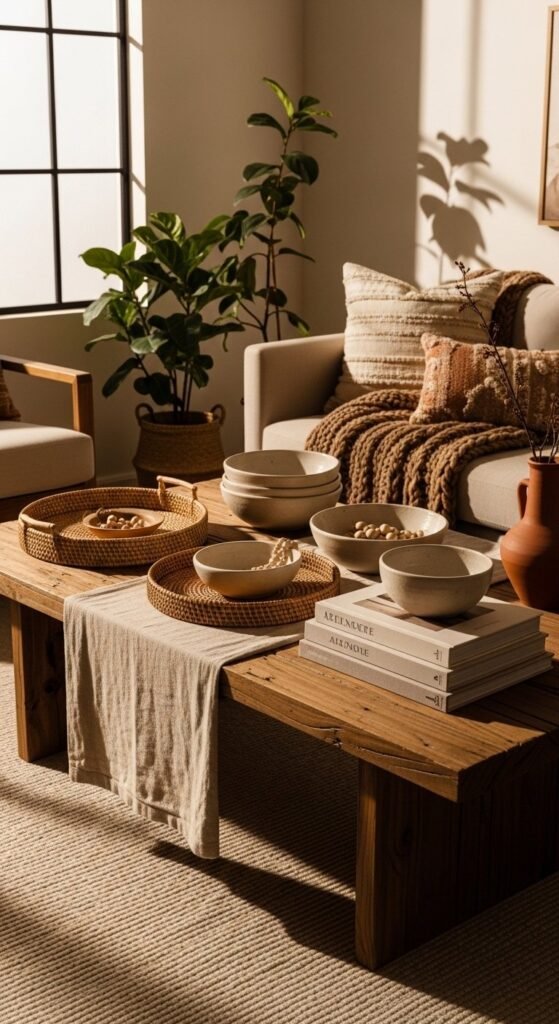
A layered coffee table sets the tone fast. Start with a wood base or thrifted table. Scratches add character. Add one woven tray to anchor smaller pieces. Stack two or three books with neutral covers. Place an organic object on top. Think stone, clay, or driftwood. Keep spacing loose. Nothing lined up.
Mix hard and soft textures. Ceramic next to linen. Rough wood beside smooth glass. This contrast reads designer-styled without effort. Budget tip: wrap old books in kraft paper or fabric. Use air-dry clay for sculptural bowls.
Stick to one color family. Browns, creams, and muted greens work well together. Avoid shine overload. One reflective surface is enough. A small mirror tile tray works.
Change one item seasonally. Everything else stays. That’s how the setup feels intentional, not cluttered. Lighting matters. Place the table where daylight hits from the side, not overhead. Shadows create depth. Even small tables feel styled when textures do the talking.
2. Hand-Stenciled Botanical Accent Wall
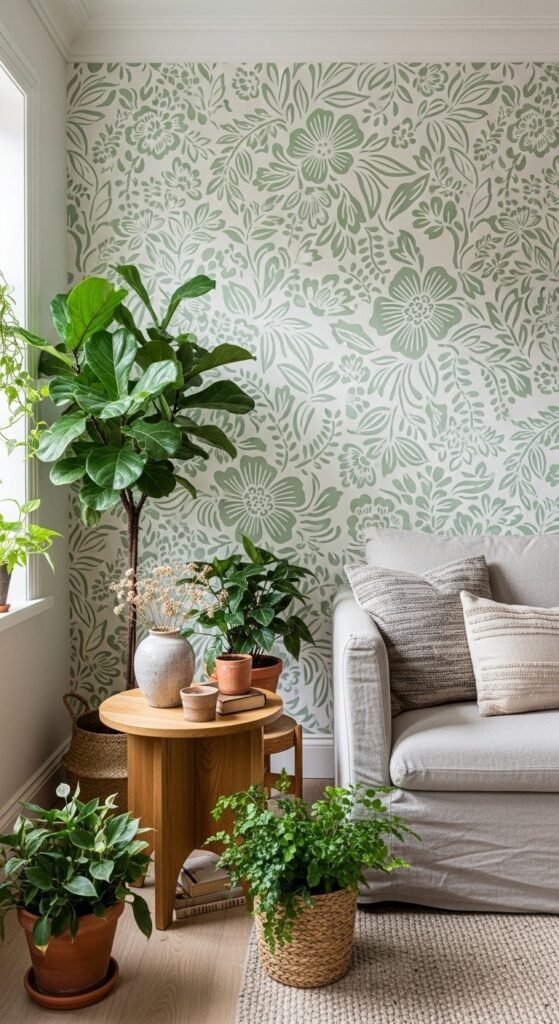
Stenciling adds patterns without wallpaper prices. Choose a large motif. Small repeats feel busy fast. Botanical shapes work well in living rooms. Leaves, branches, or loose florals.
Use matte paint only. Gloss shows mistakes. Two paint tones max. Keep contrast low for a relaxed look. Practice on cardboard first. Don’t rush edges. Slight imperfections help.
Paint with a sponge or dry brush. Less paint than you think. Step back often. Stop before the wall feels full. Negative space keeps it calm.
This pairs well with simple furniture. Solid sofas. Clean lines. Let the wall carry interest. Add plants nearby to echo the shapes. That repetition makes the room feel pulled together.
For rentals, stencil on large canvas panels instead. Lean them against the wall or hang lightly. You still get the hand-done charm without commitment. Evening light softens the pattern and keeps it cozy.
3. Curved Thrifted Armchair Makeover
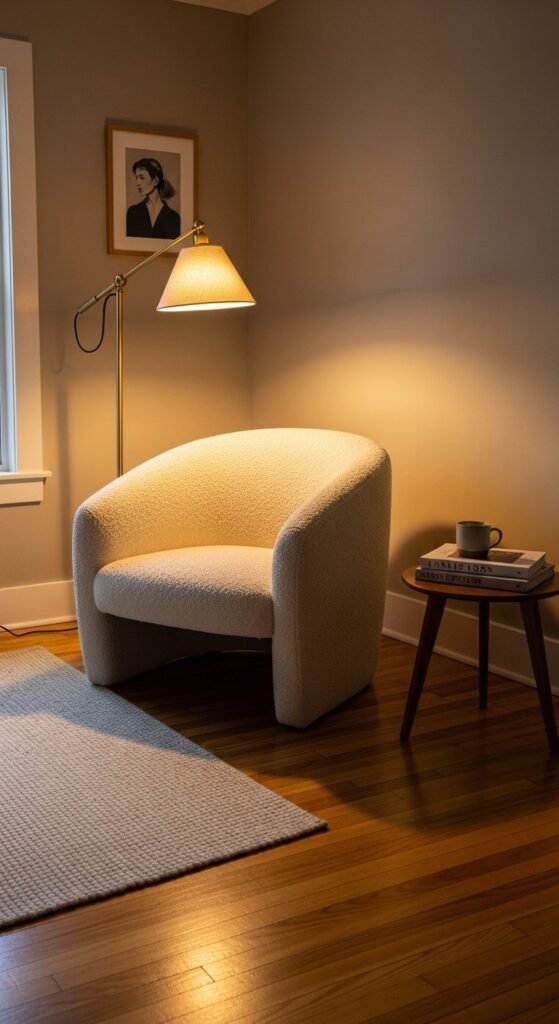
Curves change the mood of a room. Even one piece helps. Thrift stores often hide great frames under bad fabric. Look for rounded arms and low backs. Solid weight matters more than looks.
Reupholster with boucle or textured fabric. It hides wear and feels inviting. Staple guns work fine for beginners. Plenty of tutorials exist. Keep the color light so the shape stands out.
If full upholstery feels like too much, use a fitted slipcover. Add piping with fabric glue for structure. Place the chair at an angle, not flat to the wall. That reads intentional.
Pair it with a round side table. Or a soft rug underneath. Avoid sharp lines nearby. This balance makes the chair feel custom, not random.
Lighting seals it. A warm bulb in a floor lamp brings out texture and shadows. One curved chair can anchor the whole seating area and quietly signal designer taste.
4. Maximalist Mosaic Mirror DIY
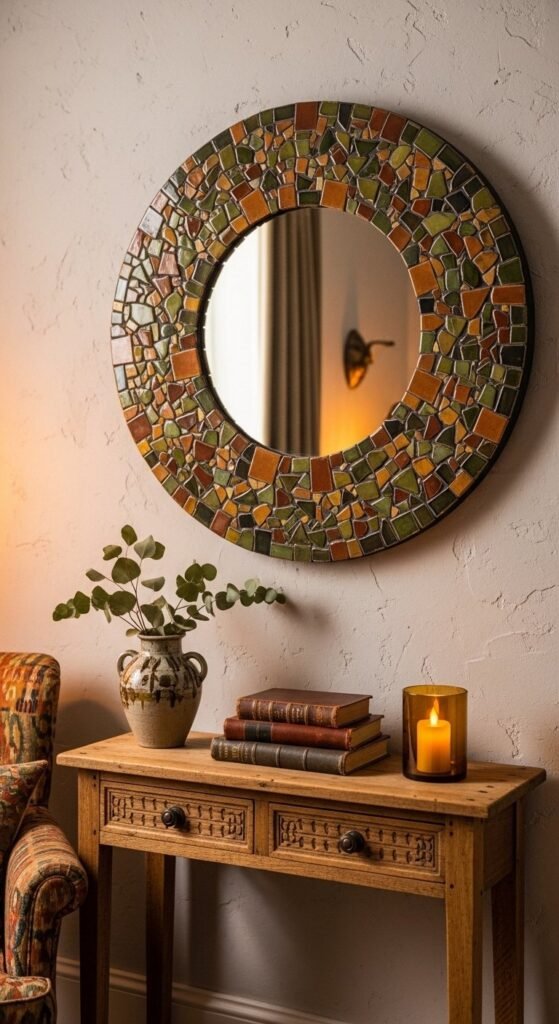
Mirrors bounce light and add drama. Mosaic frames add texture without art prices. Use an old mirror or basic round one. Break tiles carefully. Wear gloves. Sand edges lightly.
Lay pieces dry first. Adjust spacing. Then glue in sections. Don’t aim for symmetry. Variation feels relaxed. Stick to a tight palette. Cream, amber, smoky gray. Too many colors feel messy.
Grout thinly. Wipe back before it fully sets. Let some gaps show. That imperfection adds depth. Hang it where light hits from the side. Reflections shift through the day.
Keep nearby decor simple. One console. One vase. Let the mirror stand alone. This works especially well in smaller living rooms. It draws the eye upward.
The result feels collected over time, not store-bought. That’s the secret behind maximalist warmth without chaos.
5. Cozy Chunky Knit Throw Styling
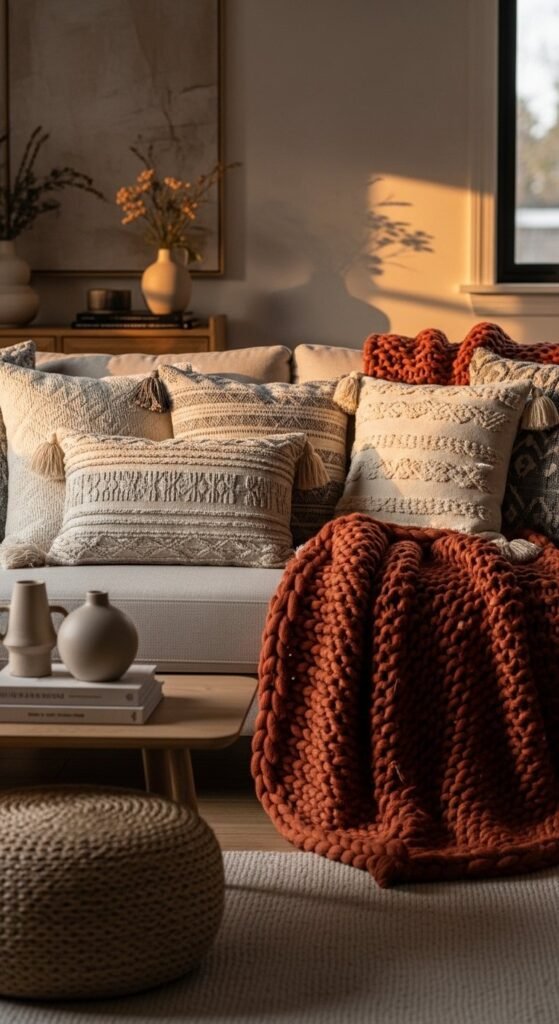
Chunky knits add instant comfort. No needles required. Arm-knit or buy yarn blankets online. Bold colors work best here. Rust, olive, deep blue. They ground neutral rooms.
Drape casually. Never folded tight. Let one end pool on the floor. That relaxed look feels lived-in. Pair with smoother pillows so textures don’t compete.
Budget trick: make a half-size throw. Style it diagonally across the sofa. It still reads generous. Acrylic blends cost less and hold shape well.
Wash gently. The air is dry. Fluff by hand. Keep pets off if possible. Or accept the fuzz. That softness adds charm over time.
Use knits as visual weight. Balance lighter walls or open layouts. One throw can change how the whole room feels at night. Warm lighting nearby makes the yarn glow. Simple move. Big cozy payoff.
6. Color-Capped Living Room Palette
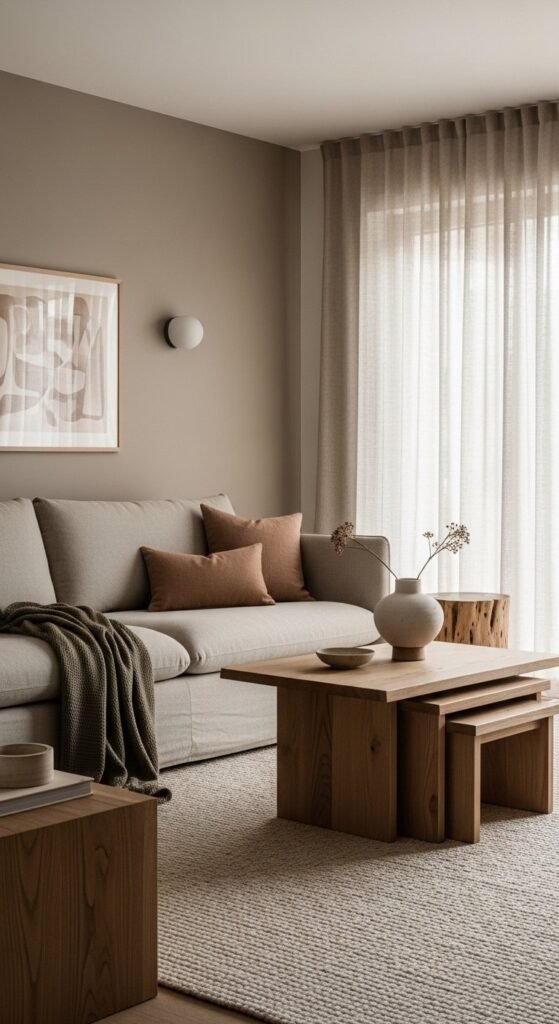
Color capping keeps a room calm. Choose three colors only. One base. One support. One accent. Repeat them across walls, textiles, and decor. No extras. This limitation creates harmony fast.
Start with what you already own. Pull colors from a rug or artwork. Paint is optional. Swapping pillow covers or throws often does the trick. Keep finishes mixed but tones aligned. Matte, brushed, woven.
Wood should stay in one family. All warm or all dark. Mixing too many woods breaks the flow. Metals count as accents. One type only. Chrome or brass, not both.
This approach works well in open plans. The living area feels grounded without walls. It also makes budget items look intentional.
Lighting matters here. Warm bulbs soften color edges. Evening light blends everything together. The room feels pulled together, calm, and quietly styled without obvious effort.
7. Antique Accent Layering
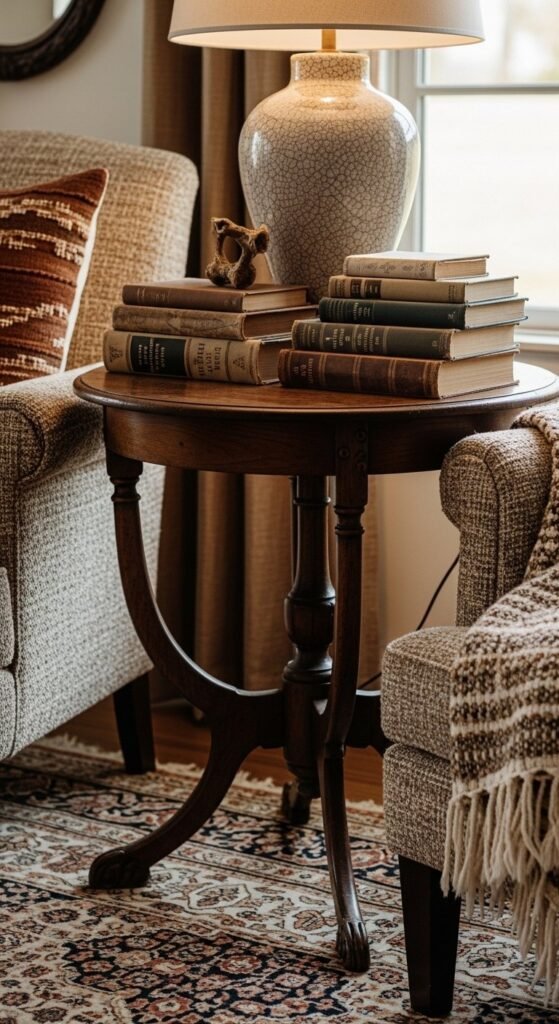
Antiques add soul. One or two pieces go far. Look for small items first. Tables, mirrors, lamps. Condition matters less than shape. Chips and wear add story.
Pair antiques with modern furniture. This contrast keeps things balanced. A clean sofa next to an old table feels collected, not dated. Keep the surrounding decor simple. Let the piece breathe.
Books help anchor the look. Stack unevenly. Mix sizes. Remove dust jackets if needed. Add one object on top. Stone or metal works well.
Avoid themed styling. No matching sets. That reads staged. Instead, let things feel accidental.
Antique accents soften new spaces. They break the showroom feel. Even rentals benefit. One old piece can shift the whole mood and make the room feel lived-in and warm.
8. Defined Living Zones with Rugs
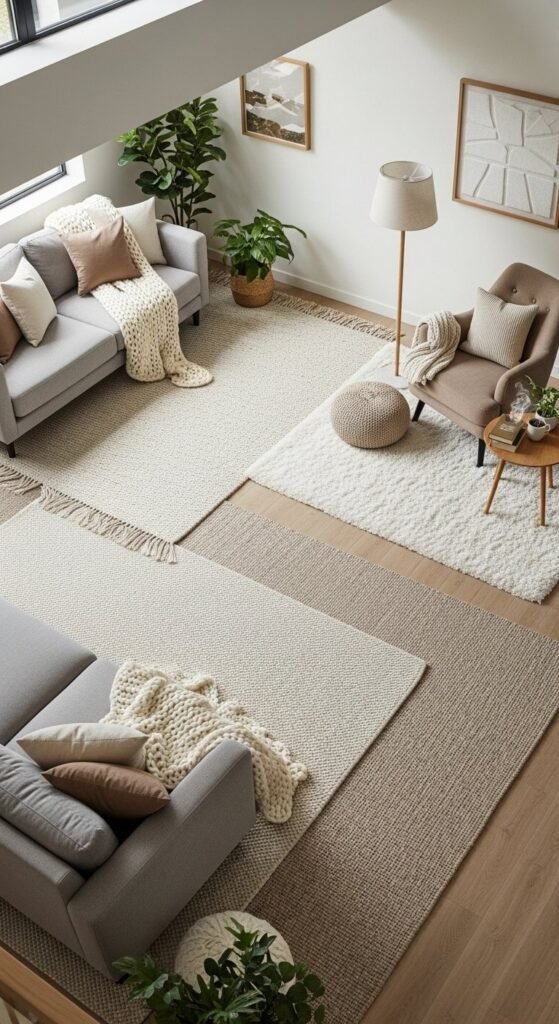
Open rooms feel empty without zones. Rugs solve that. Use size first, pattern second. Each seating area gets its own rug. Furniture legs should touch it. That signals purpose.
Layer if needed. Flat weave under plush works well. Keep colors related so zones connect visually. Avoid bold patterns everywhere. One statement rug is enough.
Budget trick: use indoor-outdoor rugs. They cost less and handle wear. Add softness on top with smaller textiles.
Zones also guide traffic. Walking paths feel clearer. The room feels organized without walls.
This works especially well in apartments. It creates intimacy. Lighting can follow zones too. A floor lamp for reading. A table lamp near seating. Together, the space feels intentional and easy to live in.
9. DIY Pleated Lampshade Upgrade
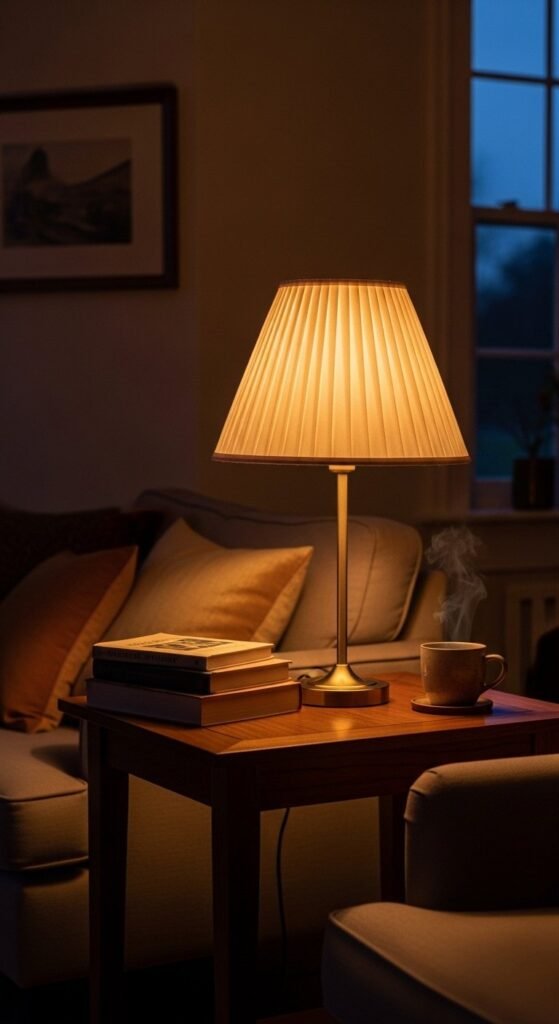
Lighting changes everything. Pleated shades soften light instantly. Buy a plain shade or reuse an old one. Lightweight fabric works best. Cotton or linen blends.
Cut fabric panels evenly. Glue carefully. Work in sections. Keep pleats loose, not tight. That relaxed fold diffuses light better.
Stick to warm neutrals. Cream, sand, pale gray. Patterns can distract once lit. Trim is optional. If used, keep it thin.
This project takes little time but shifts the room mood fast. Lamps feel custom. Light feels gentle.
Place pleated shades near seating. Eye level glow feels inviting. Even basic lamps look special afterward. It’s a small change with a big atmosphere payoff.
10. Biophilic Corner with Potted Plants
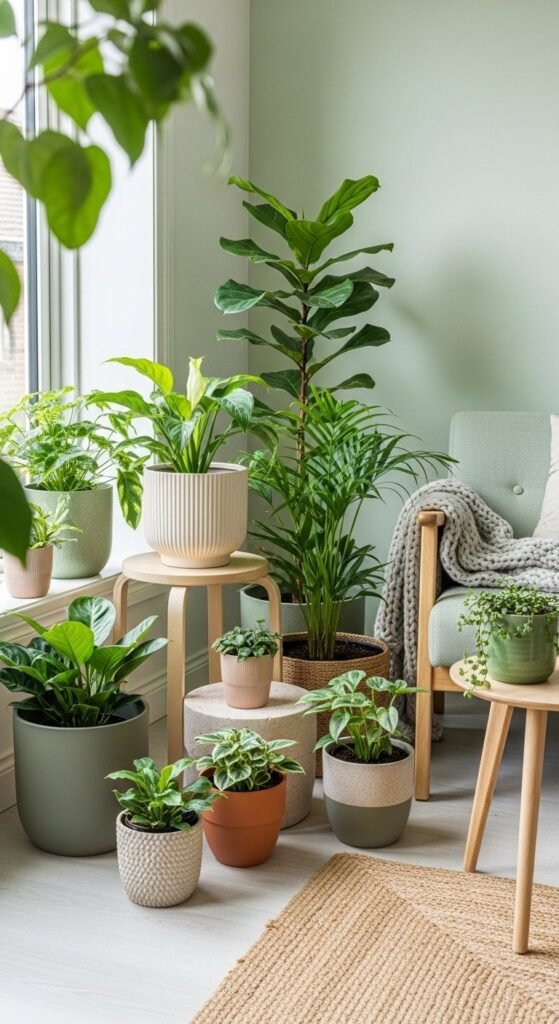
Plants bring calm. No theme required. Mix heights. One floor plant. One stool plant. One trailing plant. Odd numbers work best.
Choose easy care options. Snake plants. Pothos. Rubber trees. Faux plants work too if chosen well. Look for matte leaves and varied shapes.
Planters matter. Clay, stone, or woven baskets feel grounded. Avoid shiny plastic. Elevate one plant slightly to create layers.
Group plants near light. Corners soften instantly. The room feels balanced. Texture increases without clutter.
This setup pairs well with natural materials nearby. Wood. Linen. Woven rugs. Together they create a relaxed rhythm. A plant corner costs little but adds steady warmth that lasts year-round.
11. Sculptural Stone Accent Objects
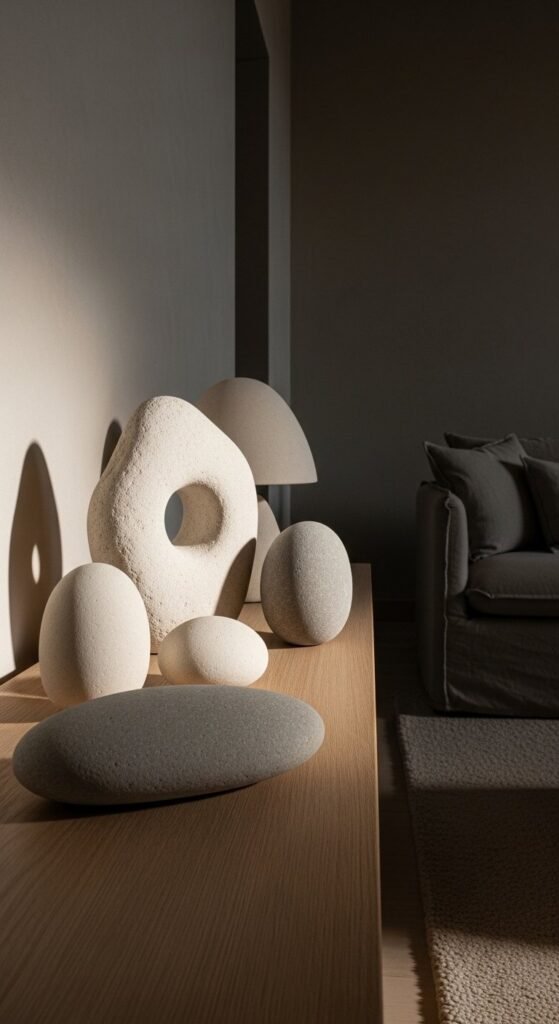
Stone accents add weight without clutter. Think bookends, small pedestals, or carved bowls. One or two pieces are enough. Their shape does the work.
Look for asymmetry. Rounded edges. Soft curves. These forms echo nature and calm the room. Faux stone works fine. Plaster or resin versions cost less and still read solid.
Place stone near softer materials. Linen sofas. Woven baskets. This contrast keeps things balanced. Avoid crowding. Negative space helps the object stand out.
Budget tip: cast your own using quick-set concrete. Silicone molds are reusable. Sand lightly once dry. Leave the finish matte.
Stone pieces ground a space visually. They feel steady and tactile. Even small objects can anchor a whole wall when styled with care and quiet confidence.
12. Organic Pattern Accent Pillows
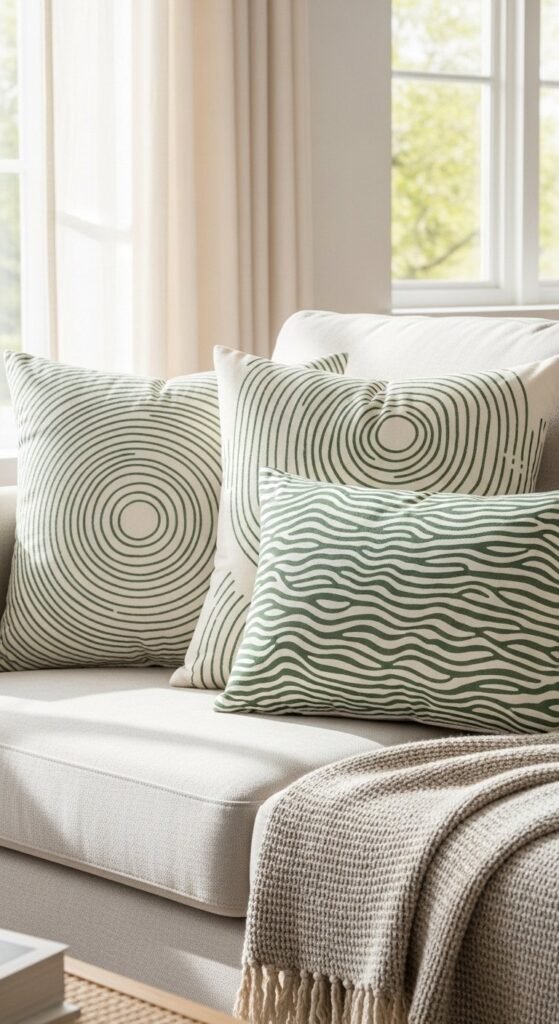
Patterns don’t have to shout. Organic shapes feel relaxed. Ripples, lines, soft geometrics. These mimic water or bark textures. They work well in living rooms meant for downtime.
Choose one pattern family. Mix scale instead of style. One larger print. One subtle texture. Keep colors close. This keeps the sofa calm.
DIY covers save money. Use fabric remnants or thrifted textiles. Envelope backs are simple to sew. No zippers needed.
Balance patterned pillows with solids. Texture fills the gaps. Boucle, linen, or knit covers soften the look.
Swap pillow covers seasonally. Same inserts. Different feelings. It’s an easy way to refresh the room without buying more furniture or decor.
13. Faux Plaster Texture Wall Panel
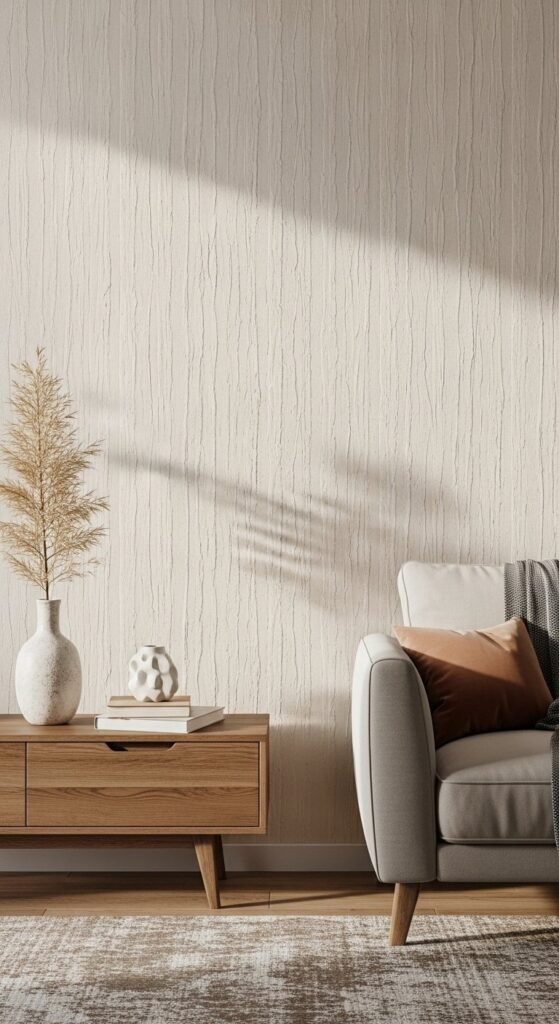
Textured walls add depth fast. Faux plaster panels work well for renters. Use joint compound or textured paint on removable boards. Etch lightly with a sponge or brush.
Keep the texture uneven. Too smooth feels flat. Too heavy feels messy. Let the tool marks show. That variation adds movement when light hits.
Paint in warm whites or pale stone shades. Avoid cool grays. Side lighting matters most here. Place the panel where daylight grazes across it.
Limit the textured area. One panel or section works better than a full wall. Surround it with simple furniture.
This trick adds architectural interest without renovation. It changes how light behaves in the room and adds subtle drama without noise.
14. Vintage Finds as Functional Decor
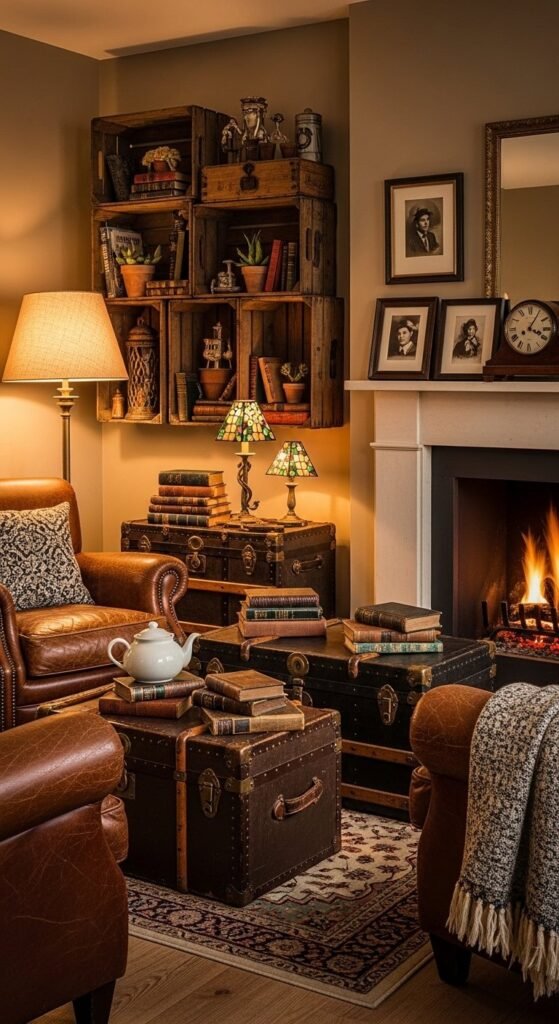
Vintage pieces work harder when they’re useful. Trunks become coffee tables. Crates turn into shelves. Old ladders hold throws.
Look for sturdy items. Patina is fine. Loose joints are not. Clean gently. Don’t over-refinish. Wear tells the story.
Mix vintage with simple shapes. Too many old items together feel heavy. Balance with modern lighting or clean-lined seating.
Budget sourcing matters. Estate sales often beat thrift stores. Arrive early. Focus on materials first, style second.
Functional vintage decor makes a room feel personal. Not staged. Not precious. Just comfortable and well-loved.
15. Modular Sofa Styling for Flex Spaces
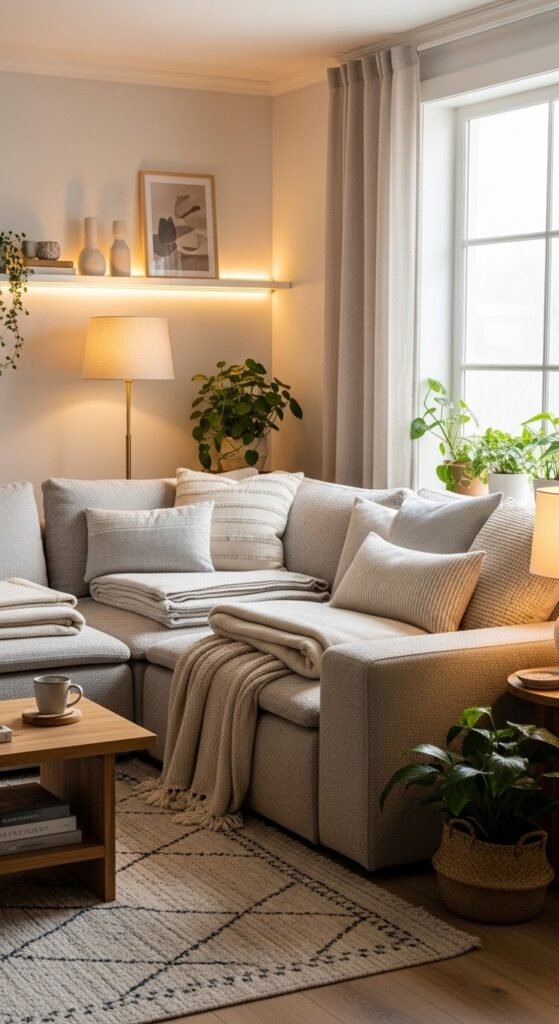
Modular sofas adapt easily. Rearrange sections to fit how you live. Movie night. Guests. Quiet reading. The layout can change without effort.
Keep upholstery neutral. Let textiles bring color. Throws and pillows add softness and shift mood. Choose low-profile modules for a relaxed look.
Anchor the sofa with a rug. This keeps the layout grounded even when pieces move. Side tables should be lightweight and movable.
If buying new feels costly, combine separate seating pieces. Matching fabric tones help them read as one unit.
Flexible seating supports real life. The room feels welcoming, not stiff. Comfort leads the design, and that always reads intentional.
16. Maximalist Wall Art Burst
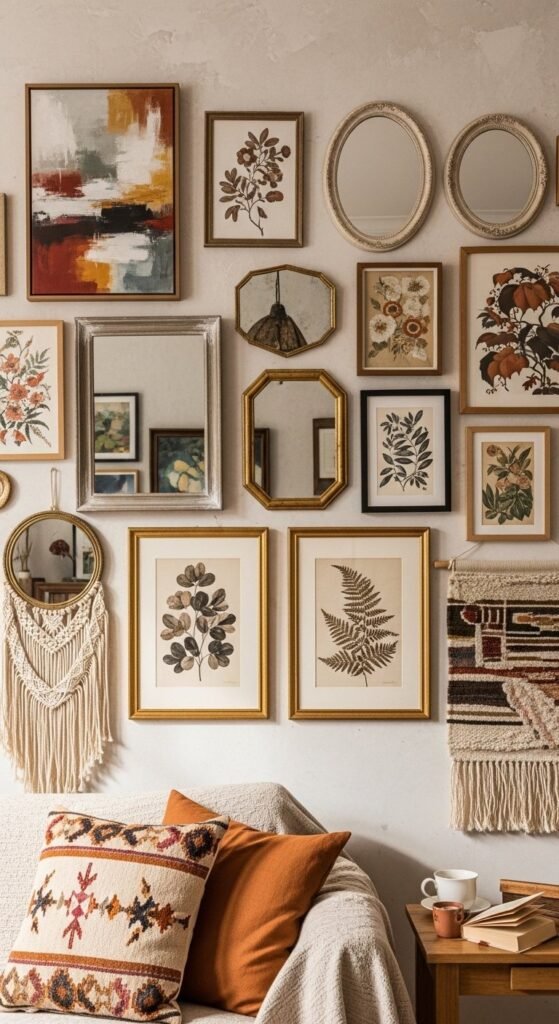
Maximalist art walls feel curated, not chaotic, when you control color and scale. Stick to a muted palette. Mix sizes, but keep edges aligned roughly.
Start small. Add pieces gradually. Layer frames slightly or lean one large piece against the wall first. This builds depth without clutter.
DIY frames save money. Sand old thrifted frames, paint in soft neutrals, or wrap in fabric. Textile pieces add texture.
Place art near eye level. Group odd numbers for balance. Avoid forcing symmetry. Negative space is part of the design.
Maximalism here feels intentional. The room gains personality instantly. It’s a statement setup that’s easy to tweak over time.
17. Cozy Layered Rug Setup
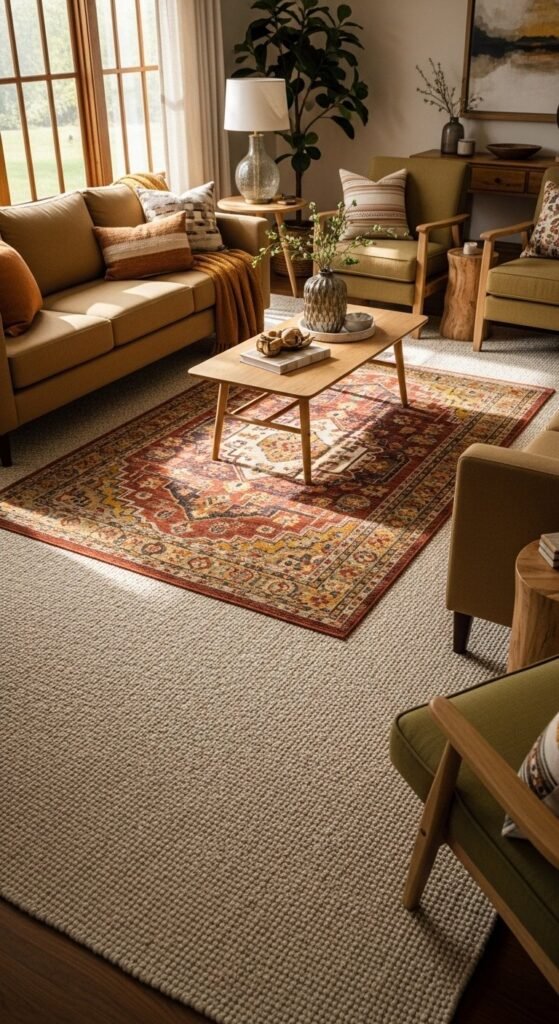
Layering rugs adds softness underfoot and defines areas visually. Use one flat rug as a base, then layer a smaller, cozier one for texture.
Mix textures, not colors. Flat weave under plush. Wool over jute. This contrast gives depth. Stick to complementary shades.
Edges should peek out. Don’t cover completely. Let the base rug show to ground the layers.
Rugs also protect floors and absorb sound. Budget tip: second-hand rugs or DIY braided rugs work beautifully.
This setup reads carefully styled, not overdone. Guests notice warmth and texture first, then patterns. It’s a quick way to make a room feel inviting.
18. DIY Faux Fur Throw from Recycled Materials
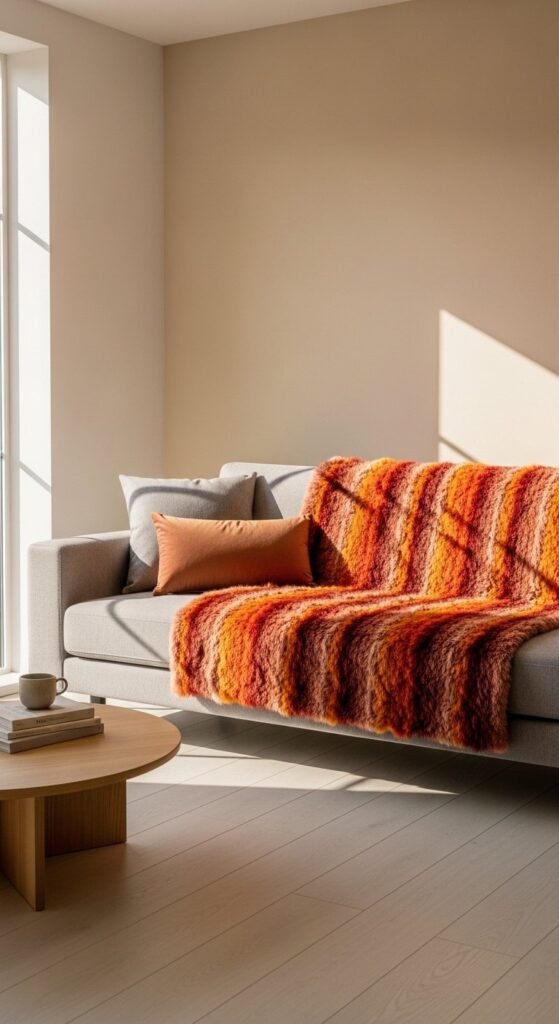
Faux fur throws feel luxurious, but you can make them eco-friendly. Look for DIY kits or tutorials using recycled fibers.
Keep size moderate. One throw is enough. Fold casually over one arm or across the back of the sofa. Let edges pool naturally.
Pair with smoother textures. Linen pillows or wool cushions keep the look balanced. Avoid layering other furs.
Color is key. Bold tones like rust, olive, or mustard stand out against neutral sofas. Budget tip: choose synthetic options over real fur.
This method adds softness, color, and sustainability. Even a small recycled fur throw makes a big style impression without expensive fabric.
19. Mirror TV Concealment
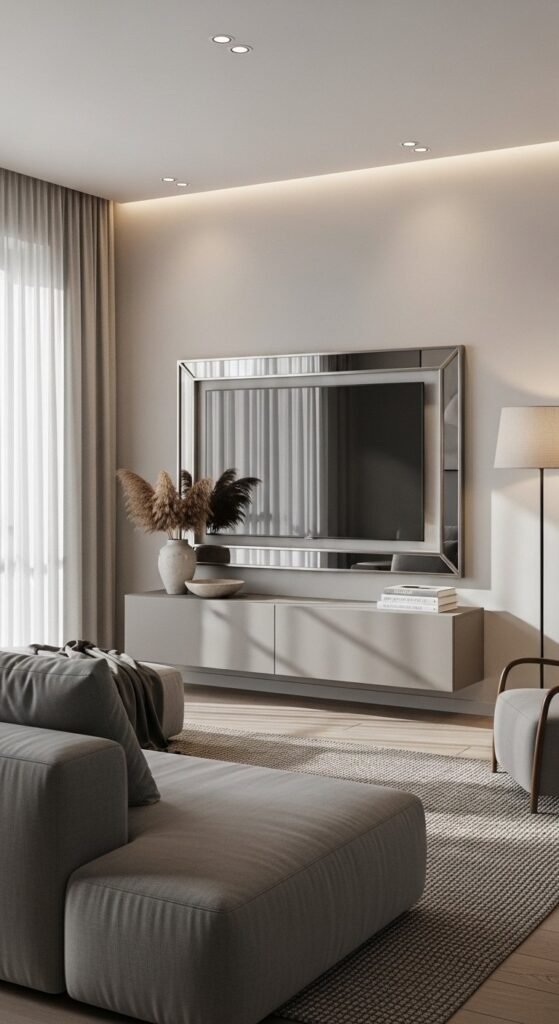
Mirror TVs combine function and decor. The tech disappears when not in use. No need to hide electronics behind panels or furniture.
Select a mirror that complements existing decor. Matte frames or slim metal edges work best. Ensure the reflective surface doesn’t overpower the room.
Mount carefully. Check weight and safety. Keep cords tidy. Add a low console below to store accessories or remotes discreetly.
Budget tip: use a regular framed mirror with a removable TV panel if the official option is costly.
This setup feels sleek, clean, and tech-friendly without screaming gadgetry. It blends modern convenience with cozy styling.
20. Eco-Friendly Wall Decor Under $50
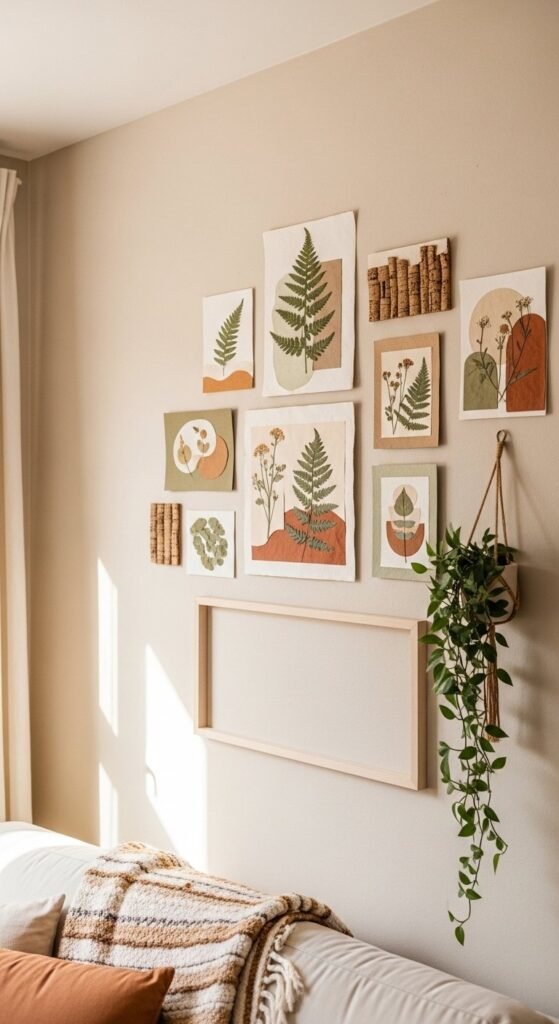
Sustainable decor can be stylish and cheap. DIY cork boards, pressed plant frames, and recycled paper art give texture and warmth.
Focus on small clusters. One larger piece surrounded by two smaller ones creates interest without clutter. Use natural or muted tones to maintain cohesion.
DIY tip: wrap recycled cardboard with fabric for a backing, press leaves, or cut geometric shapes from scrap paper. Glue lightly and frame simply.
Arrange pieces near natural light. This emphasizes textures and makes the space feel cozy and intentional.
Eco-friendly art keeps cost low and adds conscious charm. Small gestures like this show care for both design and the planet.
21. Reclaimed Wood Floating Shelves
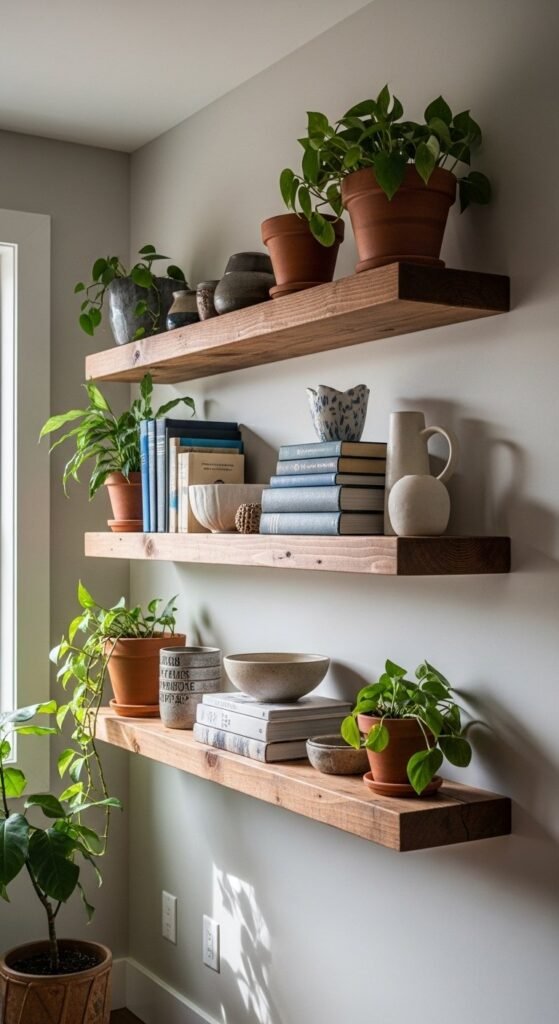
Floating shelves made from reclaimed wood add texture and warmth instantly. Look for weathered planks at thrift stores or salvage yards. Sand lightly to smooth edges without losing character.
Mount brackets hidden under the shelf for a clean, floating effect. Keep spacing open. Avoid overcrowding items—less is more when it comes to visual balance.
Mix materials on the shelf. Combine ceramics, small plants, and framed photos. Vary heights for interest. Repeat shapes or colors to tie the look together.
Budget tip: Use wood scraps or old pallets cut to size. A quick coat of matte varnish seals them and highlights the grain.
These shelves double as storage and decor. They make the room feel carefully curated while keeping costs low.
22. DIY Pleated Lamp Shade Cluster
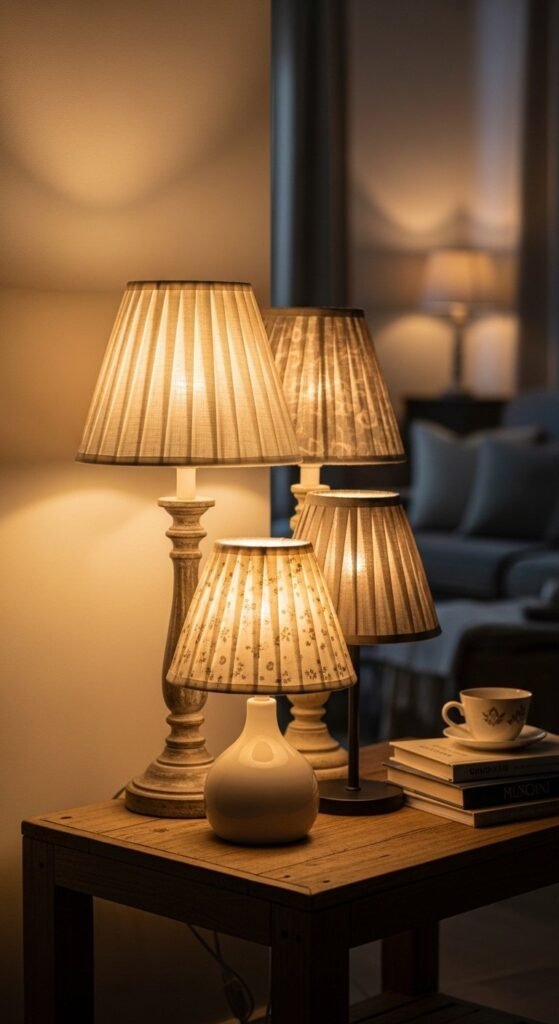
Grouping multiple pleated lamps creates layered light. Each shade softens glare and adds texture to the room.
Cut identical panels for uniformity or mix widths for a more relaxed look. Glue or staple carefully, leaving slight gaps for natural folds.
Place lamps at different heights using books, small tables, or adjustable bases. This creates visual rhythm. Use warm bulbs to enhance softness.
Budget tip: repurpose old shades with leftover fabric or ribbons. Even a mismatched set reads intentional and inviting when grouped together.
This setup transforms plain corners into cozy nooks, perfect for reading or relaxing without overwhelming the space.
23. Recycled Cork Ripple Wall Art
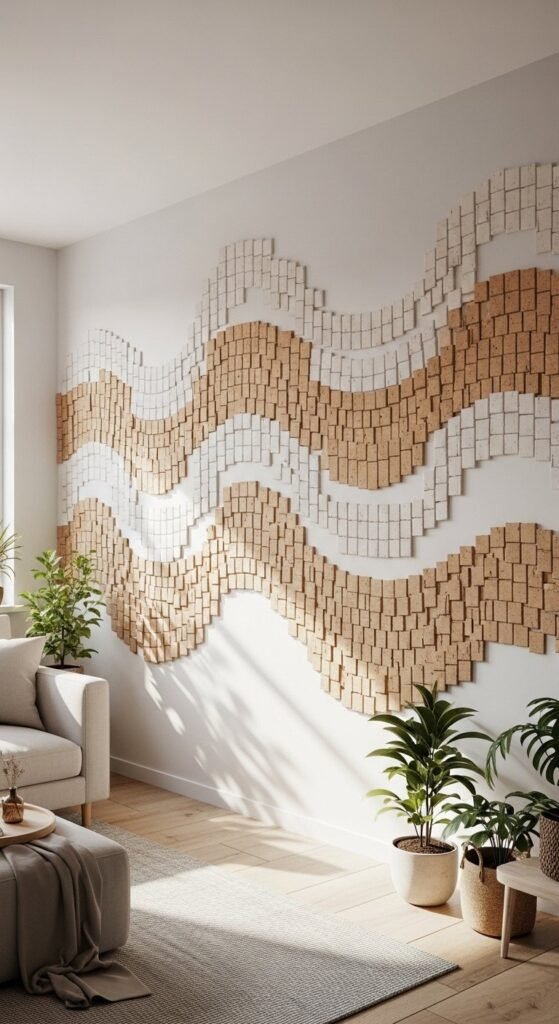
Cork walls add subtle texture and visual interest. Cut recycled cork tiles into squares or rectangles, then arrange in a wavy ripple pattern.
Glue lightly, then press firmly. Variations in spacing create shadows and depth. Keep the color natural to emphasize organic appeal.
Pair the cork wall with neutral furniture. Light wood and linen textures complement cork beautifully. Avoid overloading with other wall art.
Budget tip: source wine corks for small-scale patterns or buy cork sheets from craft stores. Even small panels feel architecturally thoughtful.
This technique adds a tactile, organic element to the room without high cost or construction.
24. Modular Cozy Reading Nook
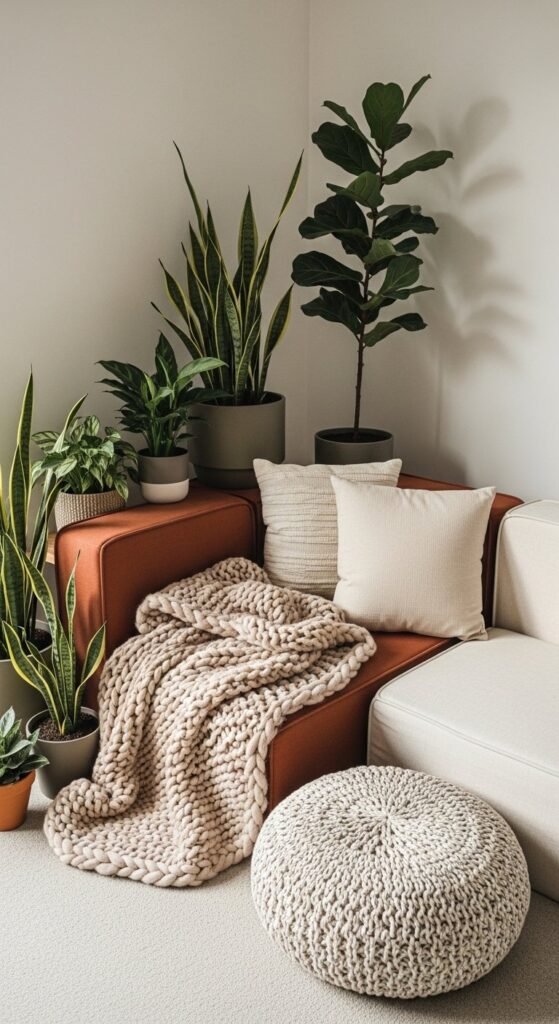
A corner reading nook adds function and charm. Use a modular sofa piece or compact loveseat. Layer with a chunky knit throw and floor cushions.
Include a small side table or stool for books and drinks. Position a plant or two nearby to echo biophilic design principles.
Lighting is key. Use a warm floor lamp or table lamp to make the nook inviting at all times. Add a soft rug underfoot for comfort.
Budget tip: thrift cushions or use DIY slipcovers. Even one statement piece, like a knit throw, makes the space feel designed.
This cozy corner creates a dedicated retreat in any living room, combining warmth, texture, and style effortlessly.

Leave a Reply