

1. Reclaimed Wood Plank Frame
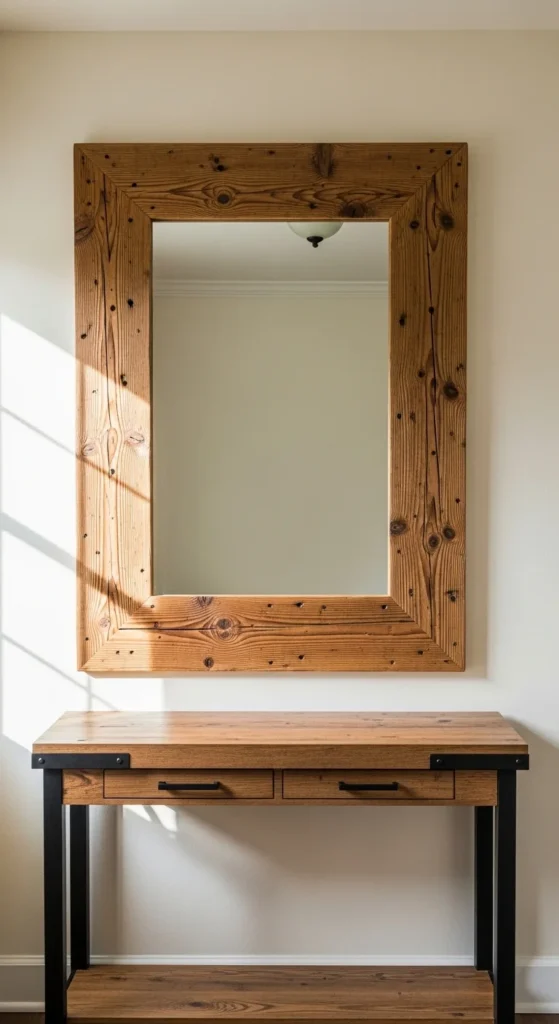
This mirror style leans into texture first. Old fence boards or barn planks work well because the grain already tells a story. Cut four boards with simple square edges. Skip ornate cuts. Let the wood do the talking. Light sanding keeps splinters away without erasing marks. For color, clear matte sealer keeps tones honest. Dark wax adds age if boards feel too raw.
On a budget, check salvage yards or construction offcuts. Even shipping pallets can work if boards are heat-treated and solid. Use mirror clips instead of glue so the glass stays secure and replaceable. Keep the frame slightly wider at the bottom for visual weight.
Style it with a narrow table, crock with stems, or stacked books. This design works well in entryways and dining rooms where straight lines feel grounding. It also pairs nicely with black iron hooks or a simple bench nearby.
2. Antique Window Pane Mirror
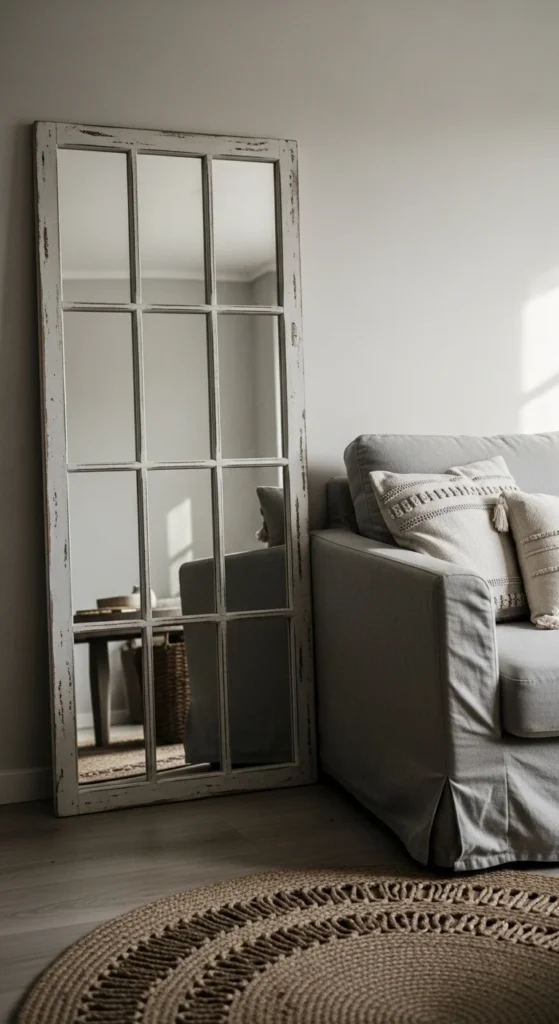
Old window frames make mirrors feel collected over time. Look for frames with divided muntins. Glass can be replaced pane by pane, which keeps costs lower. Clean the wood first. Then add a light chalk-style paint wash. Sand corners so wood peeks through.
If you can’t find a real window, build a faux version with lattice strips over mirror glass. This keeps the look without hunting antiques. Use wood glue and pin nails for the grid. Paint before assembly to save time.
Mounting matters here. Leaning works for low-traffic rooms. Wall mounting feels better for hallways. Keep hardware hidden so the frame stays the focus. This mirror plays well with soft textiles and neutral walls. Avoid busy patterns nearby. Let the lines breathe.
3. Farmhouse Mirror With Storage Shelf
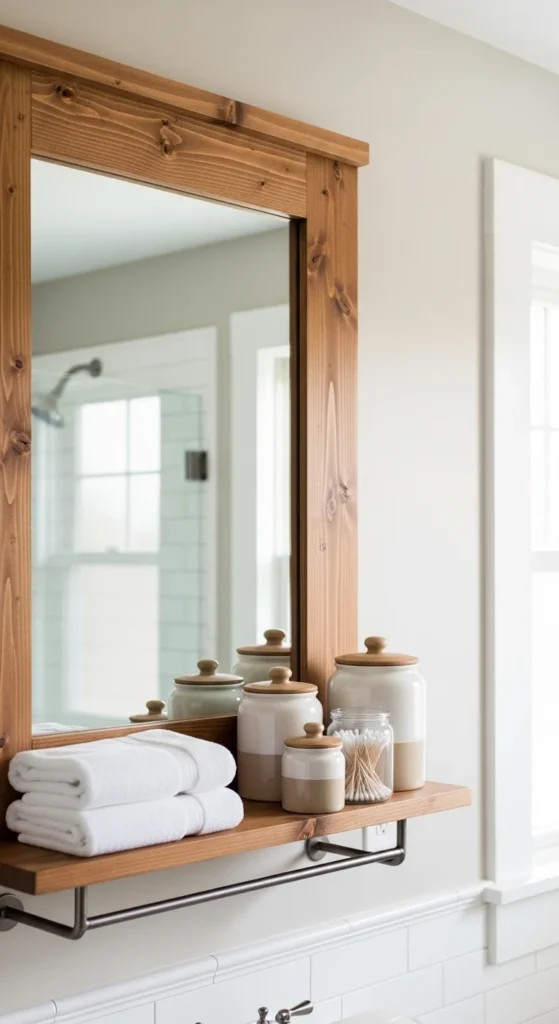
This design mixes form and function without fuss. Start with a flat plank frame. Add a narrow shelf below using L-brackets or hidden cleats. Pine works well since it’s light and easy to cut. Keep the shelf depth shallow so it doesn’t crowd the wall.
Seal everything before hanging. Bathrooms call for water-resistant finishes. Satin polyurethane works without shine. For small spaces, mount the shelf just below chin height. This keeps items reachable but clear of splashes.
Budget tip: Use a builder-grade mirror and frame it yourself. The shelf hides edges and adds purpose. Style with only a few items. A small plant. One jar. Maybe folded linens. Too much clutter pulls attention away from the mirror itself.
This look suits bathrooms, bedrooms, or even a coffee station wall.
4. Distressed White Farmhouse Frame
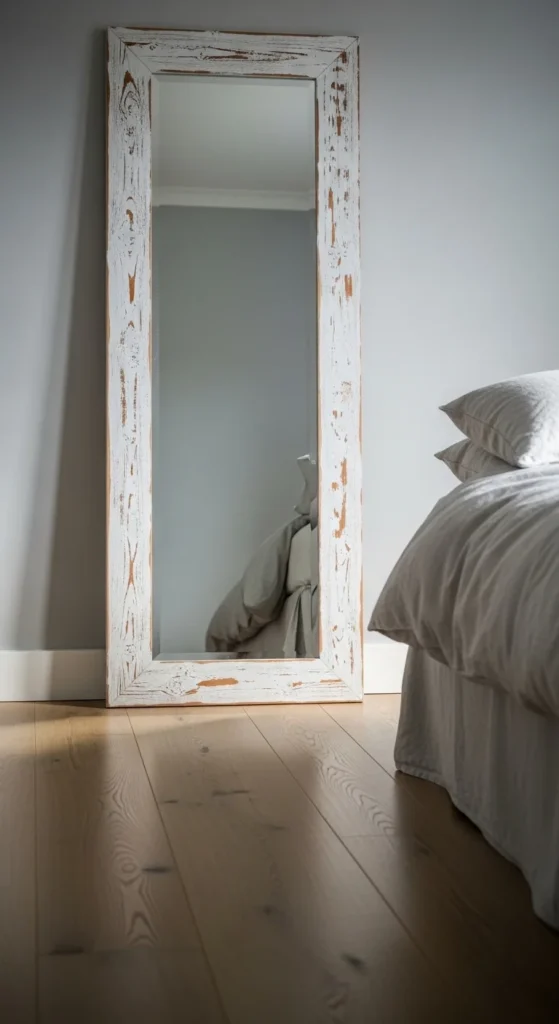
White frames work when distressing feels intentional. Start with raw wood. Apply a base coat in warm white. Let it dry fully. Then sand edges, corners, and random spots. Focus where hands would touch over time.
For depth, rub dark wax into sanded areas. Wipe back quickly. This adds shadow without heaviness. MDF works fine here if sealed well. It paints smoothly and costs less.
A tall leaner mirror makes rooms feel taller. Secure it with wall anchors for safety. Keep surrounding decor simple. Texture over color keeps the look grounded. Think linen, wool, raw wood. This mirror fits bedrooms and dressing areas where calm matters more than contrast.
5. Rustic Mirror With Metal Corner Brackets
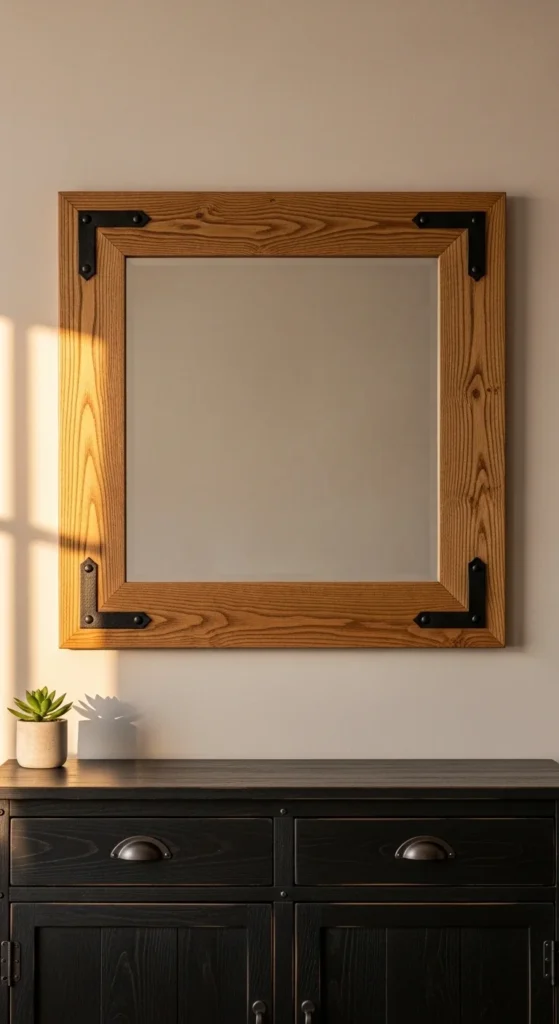
Metal brackets bring structure to simple frames. Use flat corner plates or L-brackets. Black or oil-rubbed finishes work best. Build the frame first. Then add brackets last so alignment stays clean.
Choose a darker stain for contrast. Walnut or espresso tones pair well with iron. Seal with a low-sheen finish. This keeps glare off the metal. For a lighter room, balance with pale walls or textiles nearby.
DIY tip: Brackets hide minor corner gaps. This helps if cuts aren’t perfect. Use mirror adhesive plus clips for safety. This style suits dining rooms and offices where bold lines and contrast feel right.
Keep styling minimal. Let the hardware stand out.
6. Barn Door Style Sliding Mirror
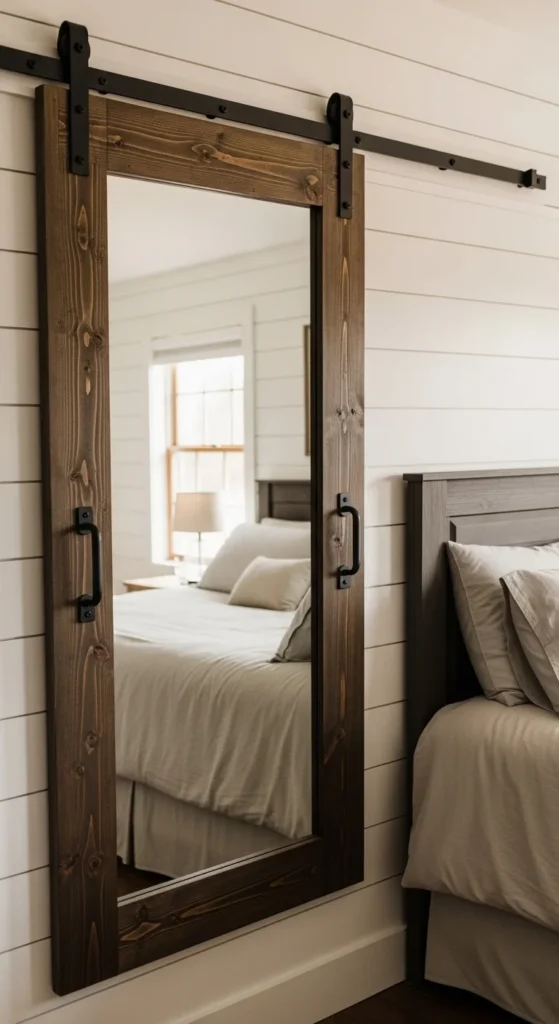
This mirror borrows its look from classic barn doors. The sliding rail becomes part of the design. Use a solid wood frame so it holds weight without flexing. Pine or poplar works well. Stain it darker than the wall for contrast.
Mount the rail directly into studs. Even if the mirror stays centered, the hardware sells the look. If space is tight, skip sliding function and fix the door in place. You still get the visual payoff.
Budget option: buy a basic hardware kit and build the “door” from plywood with trim. Paint or stain after assembly. This style works best in bedrooms or dressing areas where a tall mirror earns its keep. Pair it with simple linens and muted colors so the hardware doesn’t feel heavy.
7. Farmhouse Mirror With Shutters
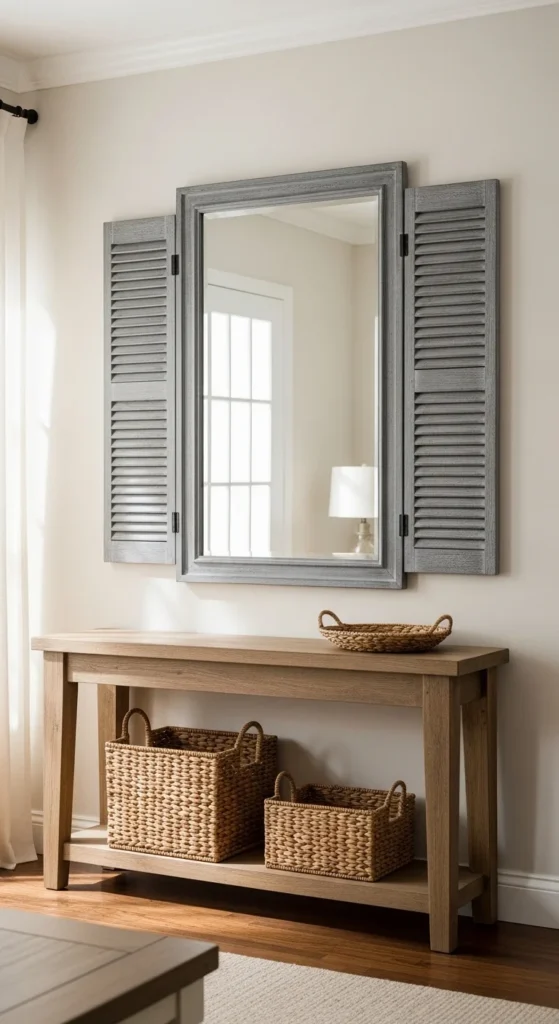
Shutters bring architectural detail without major construction. Old window shutters are ideal, but replicas work too. Attach them directly to the wall beside the mirror, not hinged, to keep things simple.
Paint them before mounting. Muted gray, soft sage, or worn white fit well. Light sanding on edges adds age. Keep the mirror plain so shutters stay the star.
This setup works nicely above consoles or sideboards. It fills wall space without artwork overload. DIY tip: If shutters feel too tall, trim the bottoms and sand smooth. This look pairs well with woven textures and simple pottery nearby.
8. Chalkboard Accent Farmhouse Mirror
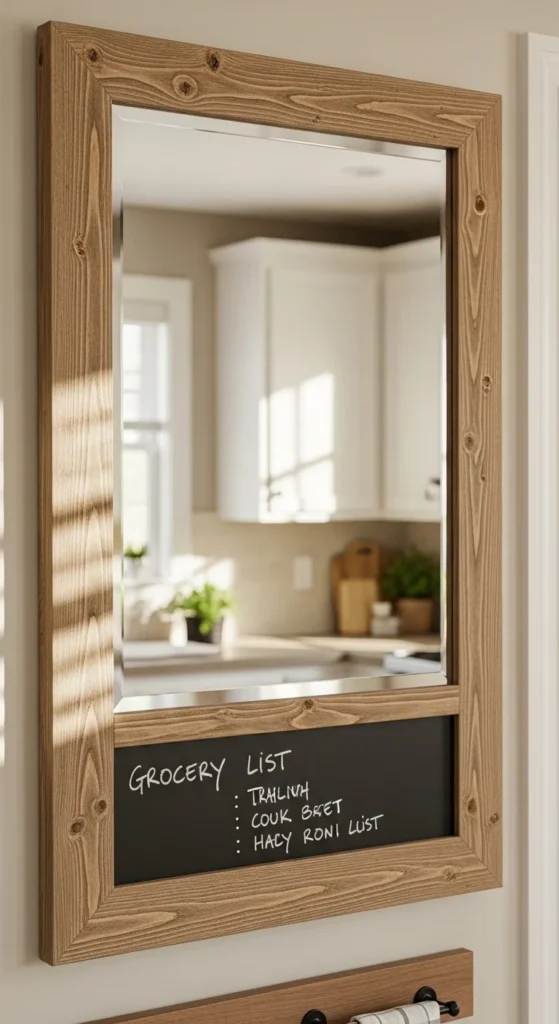
Adding a chalkboard strip turns a mirror into a message center. Use chalkboard paint on a thin MDF panel and attach it below the mirror within the same frame. Keep proportions tight so it doesn’t feel bulky.
This works well near kitchens or mudrooms. Write reminders or grocery lists. Seal the wood frame to protect from smudges. For cleaner lines, tape edges carefully before painting.
Budget-friendly tip: reuse an old mirror and add a new lower panel only. Styling stays casual here. Don’t overthink it. A few handwritten notes bring charm without trying too hard.
9. Pallet Wood Farmhouse Mirror
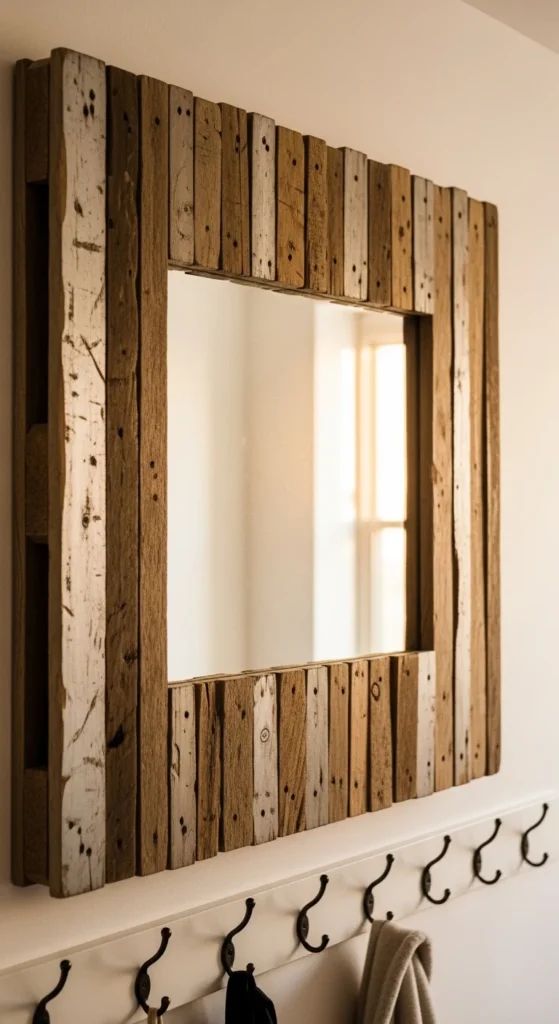
Pallet wood brings built-in variation. Break down pallets carefully and remove nails fully. Sort boards by thickness before cutting. This keeps the frame flat against the wall.
Leave boards mismatched for character. Light sanding keeps things safe. Clear sealant locks in color differences. Avoid heavy stain—it flattens the look.
This mirror works best in casual spaces like hallways or mudrooms. Use heavy-duty hangers since pallet wood adds weight. Pair it with simple hooks or benches. Texture carries the design, so keep accessories minimal.
10. Farmhouse Mirror With Peg Hooks
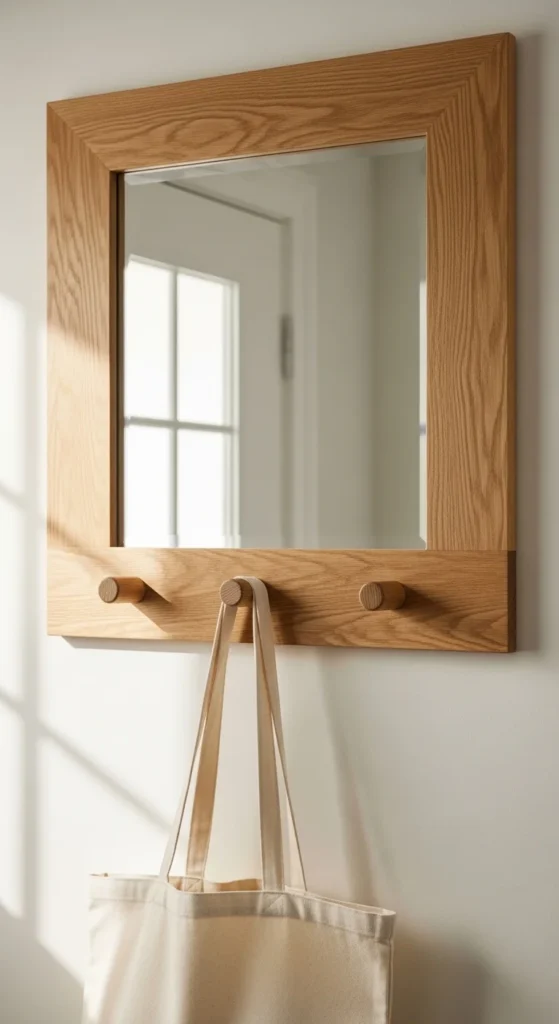
Peg hooks add purpose without clutter. Install them evenly along the bottom rail of the frame. Hardwood pegs last longer than soft pine. Pre-drill holes to avoid splitting.
Keep the frame simple so hooks feel intentional. Natural wood or light stain works well. Seal everything since hooks see wear. This mirror fits entryways where bags, hats, or scarves get daily use.
DIY shortcut: buy wooden pegs online and cut them shorter for a custom look. Keep styling light. One bag per hook looks better than crowding. This design blends utility with farmhouse warmth in a clean way.
11. Arched Farmhouse Mirror Frame
Arched shapes soften all the straight lines common in farmhouse rooms. Build the arch using thin plywood or bendable MDF for the top. Attach it to a standard rectangular base frame. Fill seams with wood filler and sand smooth.
Paint works better than stain here. Soft whites and warm creams keep the curve subtle. Keep distressing light so the shape stays clean. This mirror looks best as a leaner, anchored for safety.
Place it where light hits the glass naturally. Near a window works well. Keep surrounding decor low and relaxed. The curve does the work, so don’t crowd it with busy pieces.
12. Farmhouse Mirror With Beadboard Backing
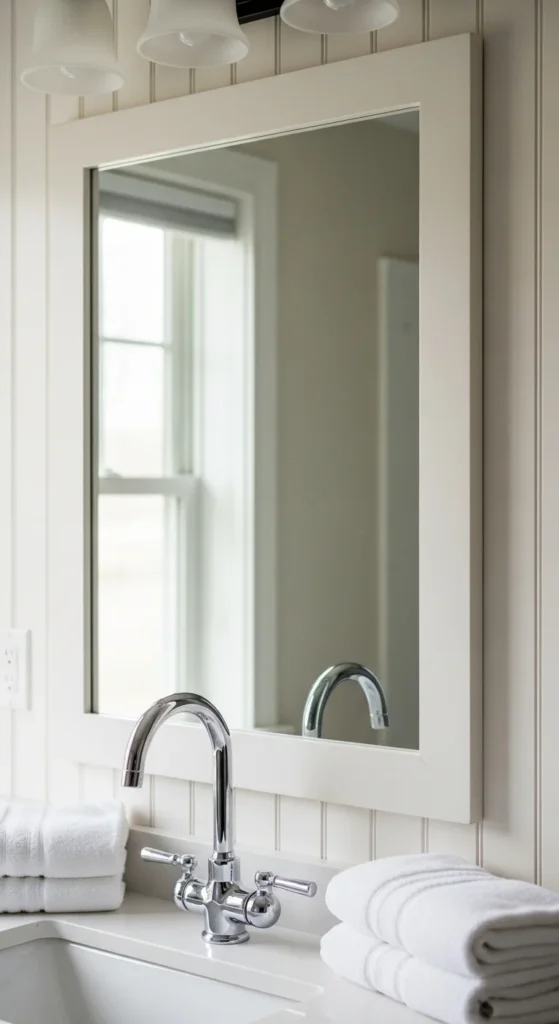
Beadboard adds texture without pulling focus. Cut a panel slightly larger than the mirror. Mount the mirror on top so the grooves frame it subtly. Paint everything the same color for a seamless look.
This setup works well in bathrooms and laundry rooms. Seal paint properly to handle moisture. MDF beadboard is budget-friendly and easy to cut.
Keep the frame narrow so the backing stays visible. Style with simple fixtures and neutral towels. This mirror pairs well with clean lines and soft whites rather than heavy rustic elements.
13. Window Grid Farmhouse Mirror
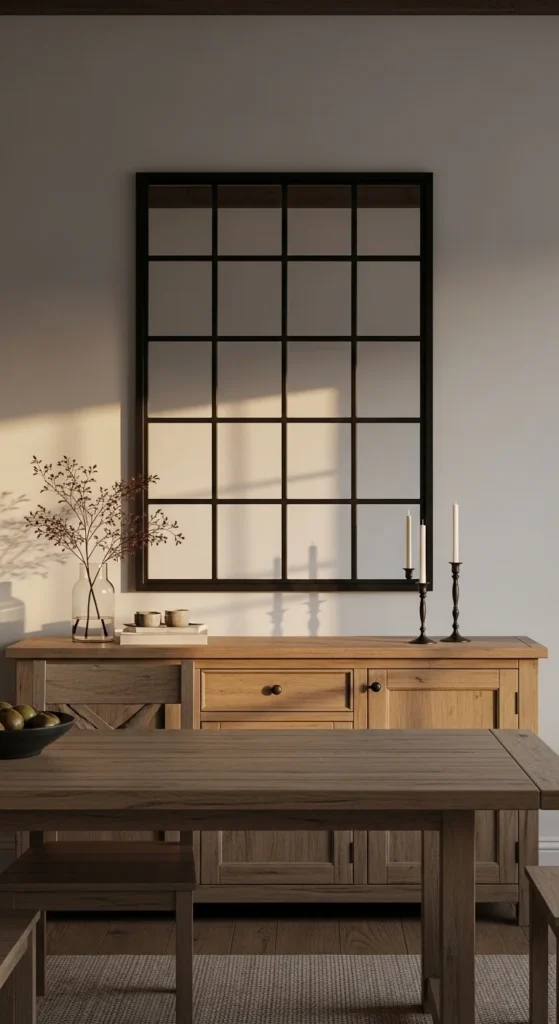
Window grids add structure and contrast. Use thin wood strips or metal overlays. Paint them black or dark bronze. Attach them directly to the mirror surface using mirror-safe adhesive.
This approach avoids heavy frames. The grid becomes the feature. Keep the surrounding decor simple. Too much pattern nearby fights the lines.
DIY tip: Measure twice before attaching grids. Symmetry matters here. This mirror suits dining rooms and offices where strong geometry feels grounding.
14. Farmhouse Mirror With Rope Hanger
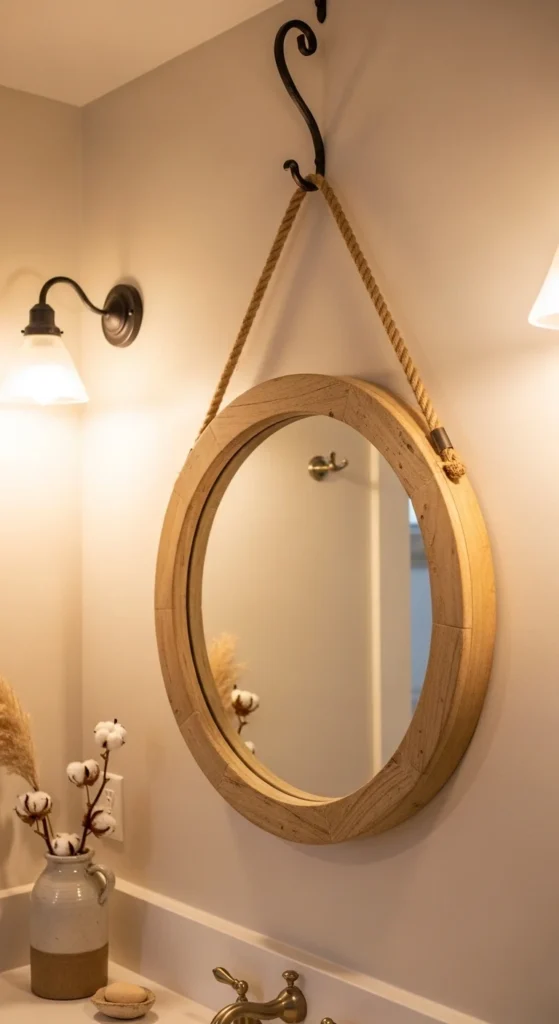
Rope hangers bring casual charm. Use thick cotton or jute rope rated for weight. Tie secure knots and test before hanging. The mirror frame should be lightweight but sturdy.
This works well for round or oval mirrors. Keep rope ends neat. Tape and trim fibers if needed. Mount into a stud or use heavy anchors.
This design fits bathrooms or powder rooms. Pair it with light wood and simple fixtures. Natural materials carry the look, so skip shiny finishes nearby.
15. Farmhouse Mirror With Crown Molding Top
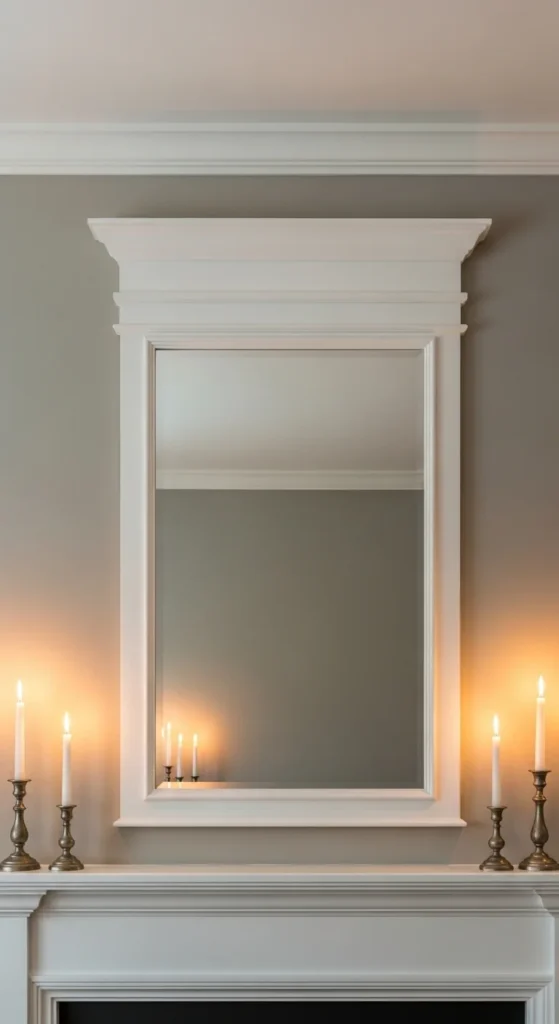
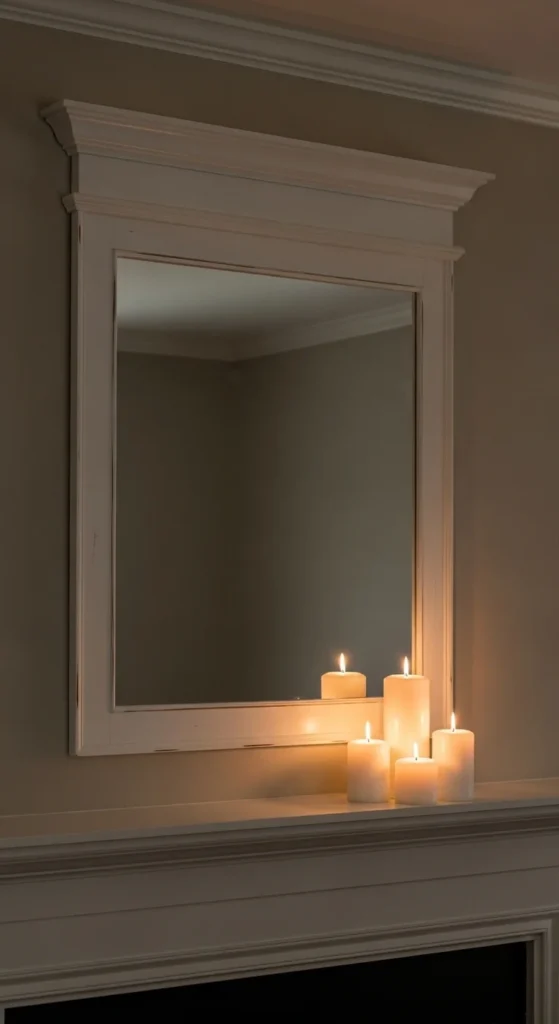
Adding crown molding gives mirrors an architectural feel. Attach molding only at the top so it reads like a built-in. Paint to match the wall or frame.
Use lightweight foam molding for easier install. Caulk seams for a clean finish. This works especially well above mantels or consoles.
Keep the rest of the frame simple. Let the molding stand out. This mirror pairs nicely with traditional farmhouse interiors where trim details already exist.
16. Farmhouse Mirror With Sliding Peg Rail
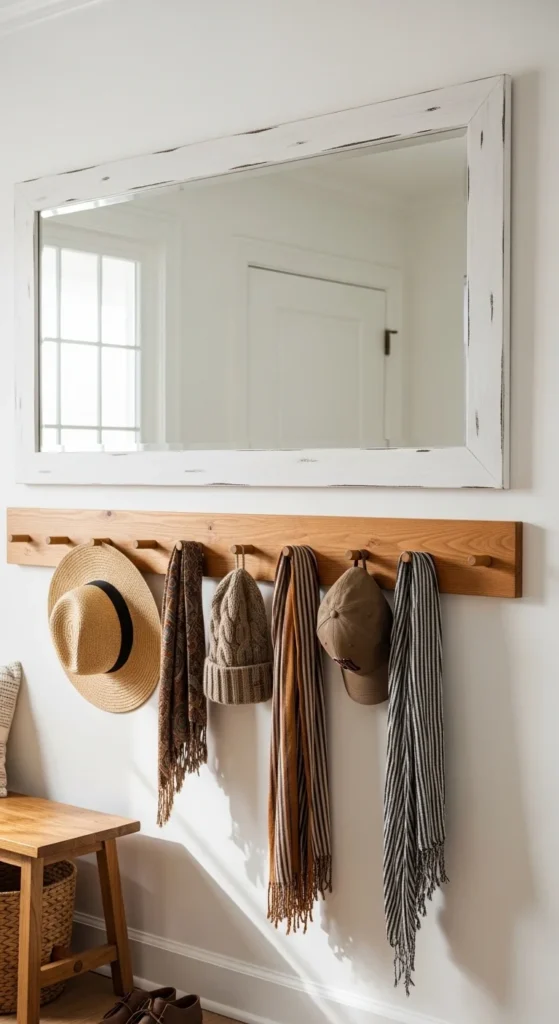
A peg rail adds storage without bulk. Build a rail separately and mount it just below the mirror. Align widths so everything feels intentional.
Use turned pegs or simple dowels. Seal the wood for durability. This setup suits busy households where grab-and-go storage matters.
Styling tip: Keep items neutral in color so the rail looks calm even when in use. This mirror blends function and rustic style without fuss.
17. Weathered Gray Farmhouse Frame
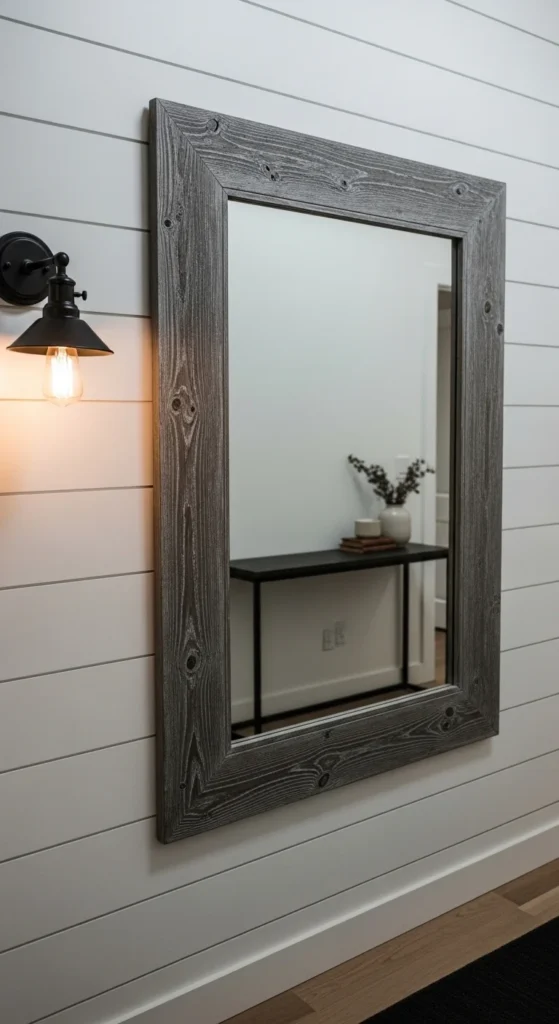
Gray finishes feel relaxed and lived-in. Create the look with diluted gray paint layered over raw wood. Wipe back unevenly. Seal once dry.
This color pairs well with black hardware and white walls. Avoid heavy distressing. Let brush strokes show slightly for texture.
This mirror works in hallways or bedrooms where quiet tones feel right. Keep decor minimal so the finish stays the focus.
18. Farmhouse Mirror With Drawer Shelf
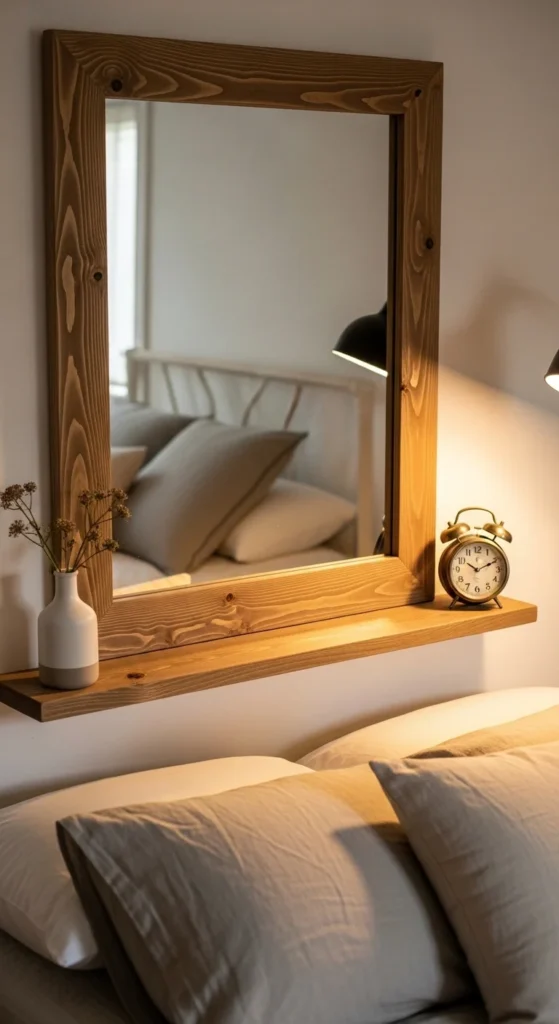
A drawer adds hidden storage. Build a shallow box with a simple pull. Mount it below the mirror. Keep proportions slim.
This works well in bedrooms for jewelry or small items. Seal the drawer interior too. For savings, repurpose an old drawer and build around it.
Style the top lightly. One plant or frame is enough. Subtle storage keeps the design clean.
19. Square Chunky Wood Frame Mirror
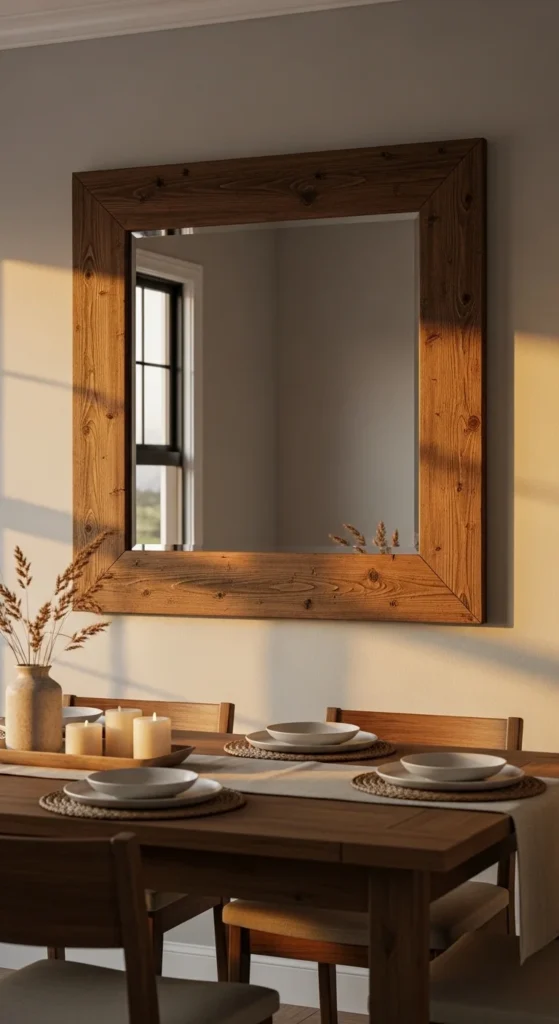
Chunky frames feel bold and grounded. Use wide boards and miter corners carefully. Sand edges smooth to avoid harsh lines.
Darker stains suit this style. Balance with lighter walls. Mount securely into studs.
This mirror pairs well with solid furniture and simple decor. Let the scale make the statement.
20. Farmhouse Mirror With Carved Trim
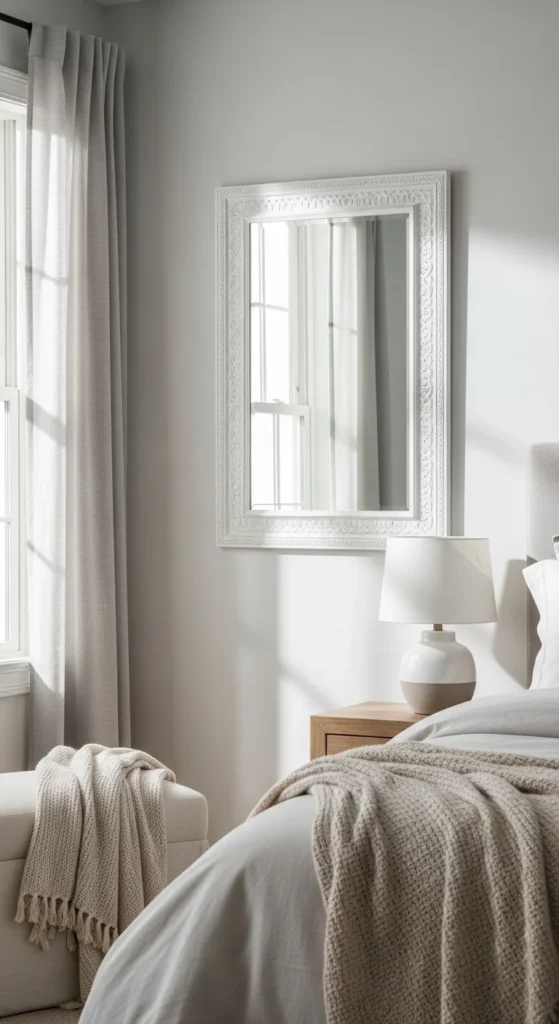
Carved trim adds detail without excess. Look for lightweight decorative molding. Attach it to a flat frame base.
Paint keeps carvings soft. Skip heavy distressing. This mirror suits bedrooms or dressing areas.
Pair it with soft textures and calm colors so details feel intentional, not busy.
21. Oval Farmhouse Mirror With Wood Ledge
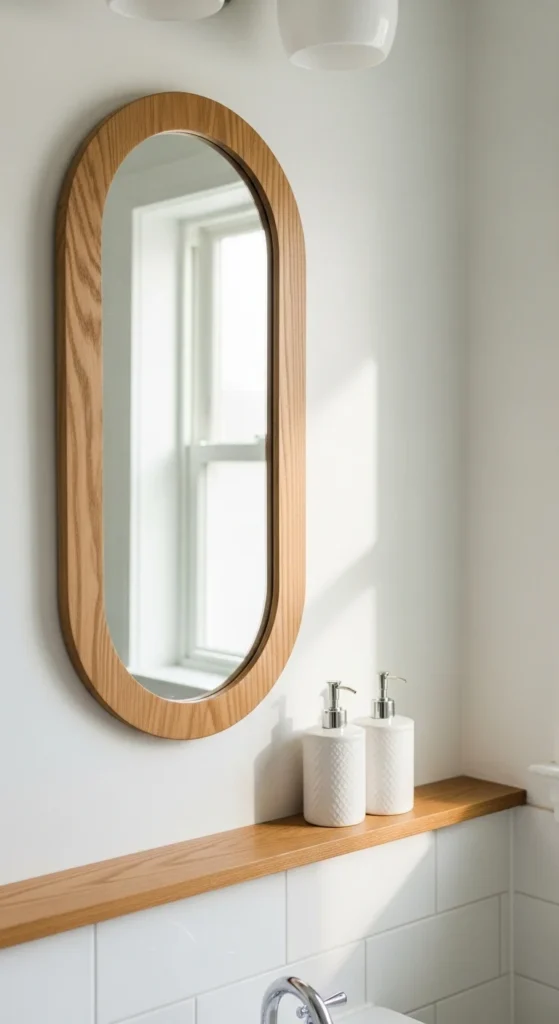
Oval mirrors break up boxy rooms in a subtle way. Adding a slim ledge makes the shape feel grounded. Build the frame from bent plywood or buy a frameless oval mirror and add a custom wood surround. Keep the ledge shallow so it doesn’t compete with the curve.
Seal the wood well, especially in bathrooms. A satin finish handles moisture without glare. For tight budgets, use a prefab oval mirror and attach a separate ledge underneath rather than building a full frame.
Styling stays minimal. One small plant. One soap bottle. Too many items distract from the shape. This mirror works well where soft lines and light materials keep the room relaxed.
22. Farmhouse Mirror With Cross Brace Detail
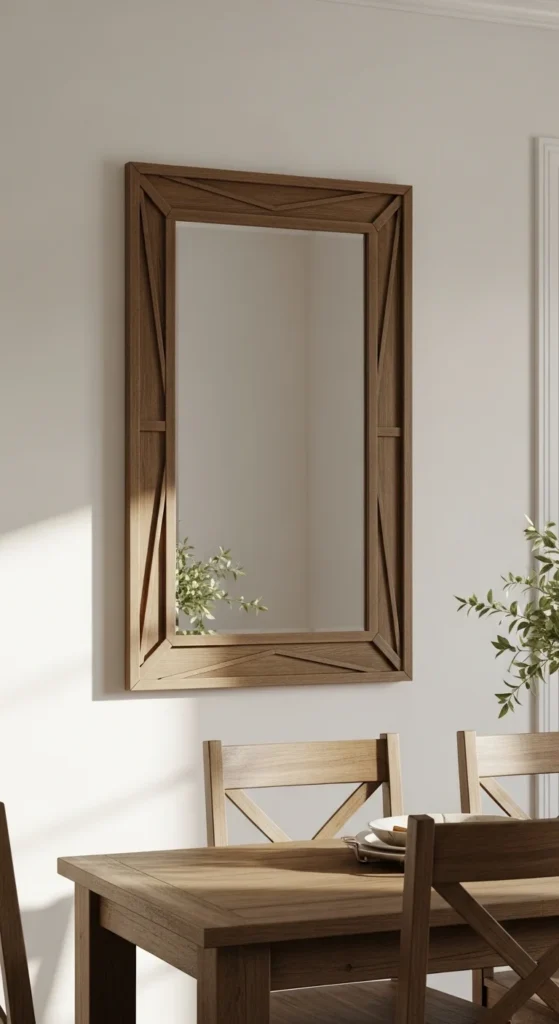
Cross braces nod to barn doors without going literal. Use thin wood strips arranged in an X or window-cross pattern. Attach them to the mirror surface with mirror-safe adhesive.
Keep the frame plain so the brace reads clearly. Medium stains show grain without going heavy. Measure carefully before attaching. Symmetry matters more here than distressing.
This mirror suits dining rooms or offices where structure feels right. Pair it with straight-lined furniture and simple textiles. Clean geometry keeps the look confident.
23. Farmhouse Leaner Mirror With Simple Base Stand
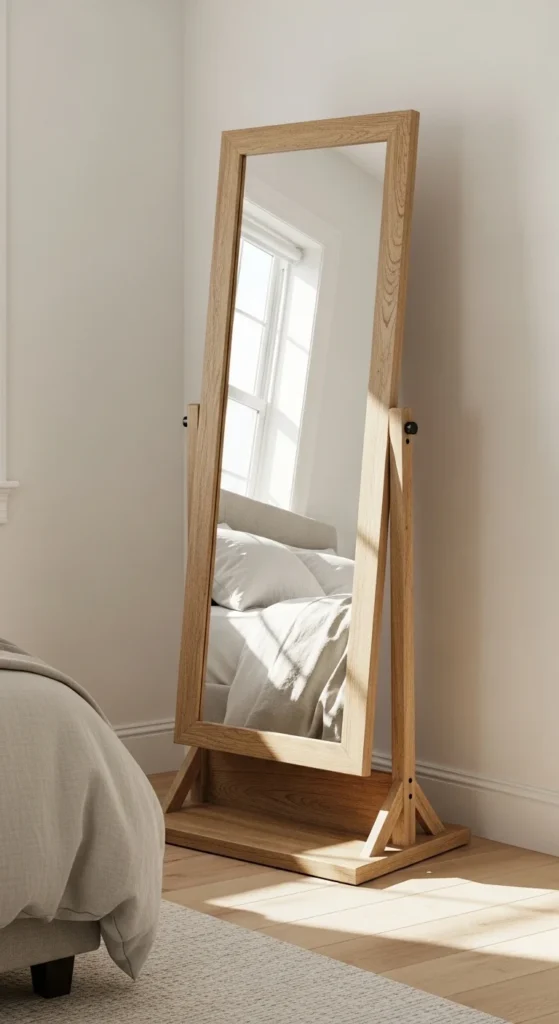
A base stand gives a leaner mirror purpose. Build a shallow support at the back so it angles safely. Secure the top to the wall for peace of mind.
Use solid wood for the frame so it doesn’t flex. Keep the finish natural or lightly stained. This style works well in bedrooms where full-length views matter.
Skip wall clutter nearby. Let the mirror breathe. This design feels calm and practical without trying too hard.
24. Farmhouse Mirror With Tin or Metal Inlay
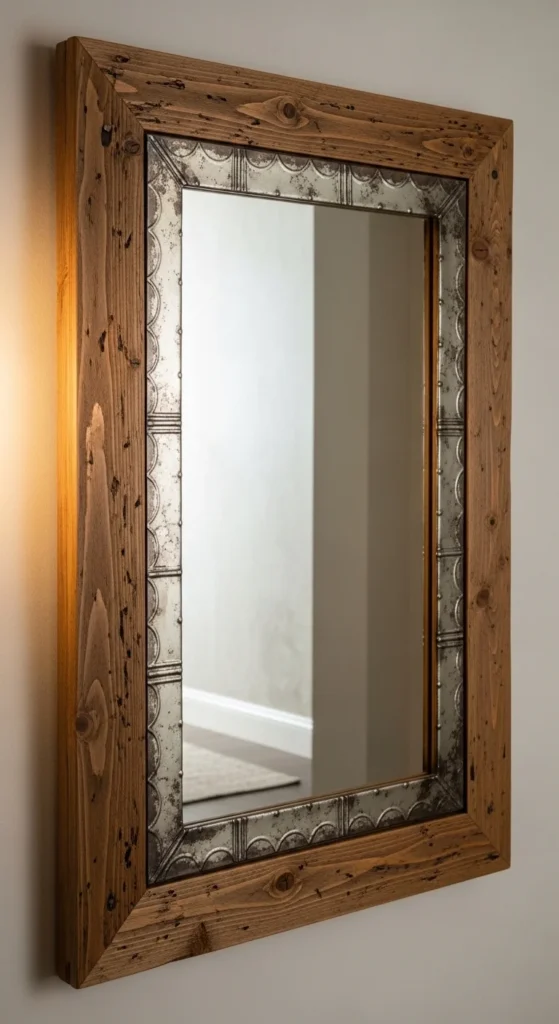
Metal inlays add texture without bulk. Use thin tin panels or embossed metal sheets set into a routed groove in the frame. Keep the metal narrow so wood still leads.
Seal metal edges to avoid sharp spots. Dark wax tones down shine if it feels too new. This mirror fits hallways and dining rooms where subtle contrast adds interest.
Pair it with simple decor. Too many metals nearby feel busy.
25. Farmhouse Mirror With Salvaged Molding Mix
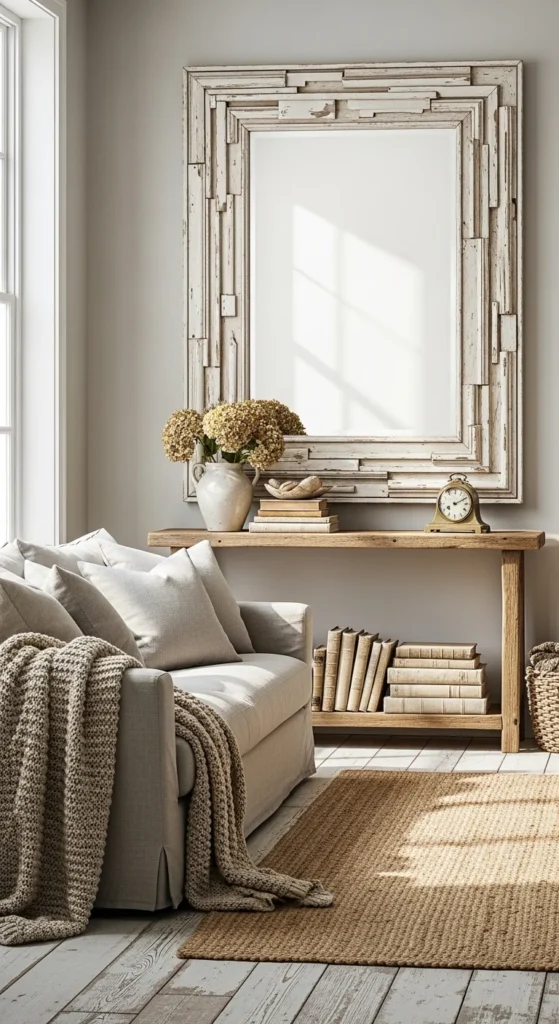
Mixing moldings gives a collected-over-time feel. Source trim pieces from salvage shops. Layer them around a flat base frame. Paint unifies everything.
Sand lightly so profiles stay visible. This approach works well when cuts aren’t perfect. Paint hides gaps better than stain.
Style with restraint. Let the frame carry the story. This mirror suits living rooms and entries where character comes from detail, not size.

Leave a Reply