

1. Twine-Wrapped Round Mirror
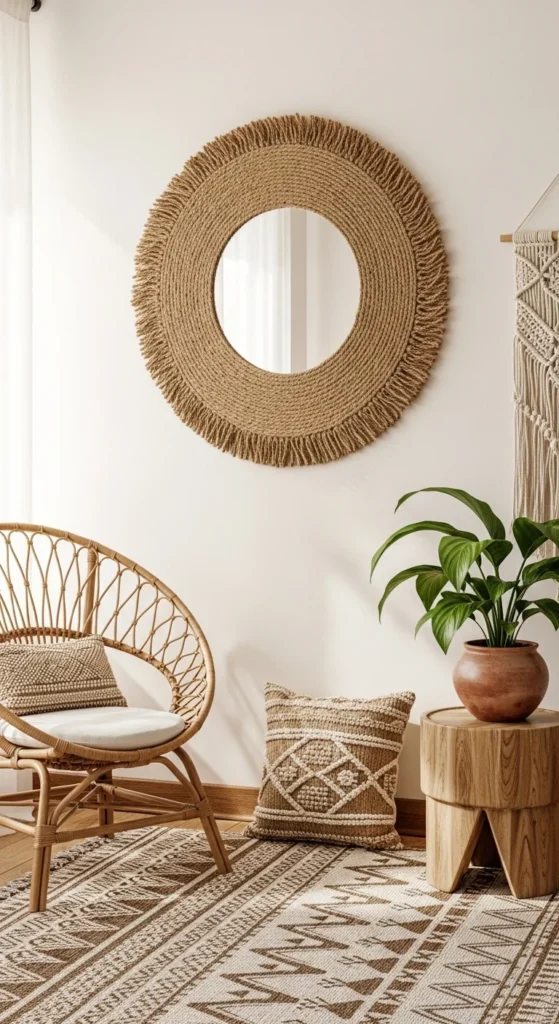
This is a classic for a reason. A plain round mirror turns cozy once the edge is wrapped in twine. Start with strong adhesive and work in short sections. Keep tension even so the wrap looks intentional, not sloppy. Natural fibers read warm on camera, which makes this project popular for small spaces.
Budget tip: jute or cotton twine from hardware shops costs very little and covers multiple mirrors.
For a cleaner finish, tuck the final inch under the previous wrap and secure from the back.
Style trick: leave a small uneven edge instead of trimming perfectly. That soft imperfection fits boho rooms better than sharp lines.
This mirror works well in entryways, above a console, or layered with framed art.
If weight is a concern, switch glass mirrors for acrylic.
Seal lightly with clear-dry glue if fraying worries you.
This project usually takes under 30 minutes and feels approachable even for first-time DIYers.
2. Macrame Fringe Statement Mirror
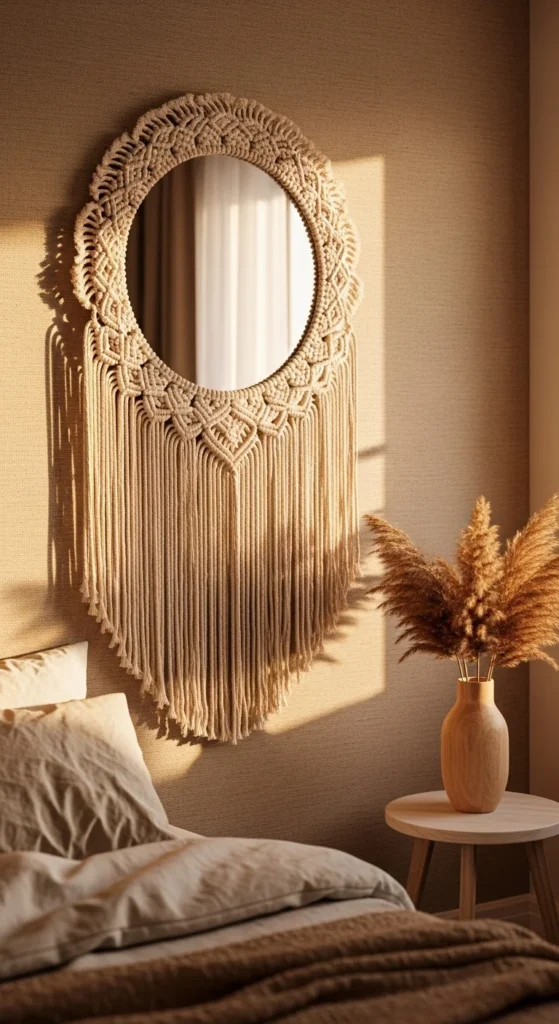
Macrame brings softness that hard frames never match. Use a basic knot pattern and repeat it evenly around the mirror. You don’t need complex designs. Consistent spacing matters more than complexity.
Cotton cord works best because it drapes instead of sticking out.
Keep fringe longer than you think. You can always trim later.
For beginners, tie the design on a separate hoop, then attach the mirror from behind.
This style shines above a bed, vanity, or reading corner.
Budget option: use fewer knots and let negative space show. It still looks intentional.
If the mirror tilts forward, add felt pads at the back bottom edge.
A light steam helps the fringe fall straight before hanging.
This mirror pairs well with neutral walls and layered textiles nearby.
3. Wooden Bead Boho Frame
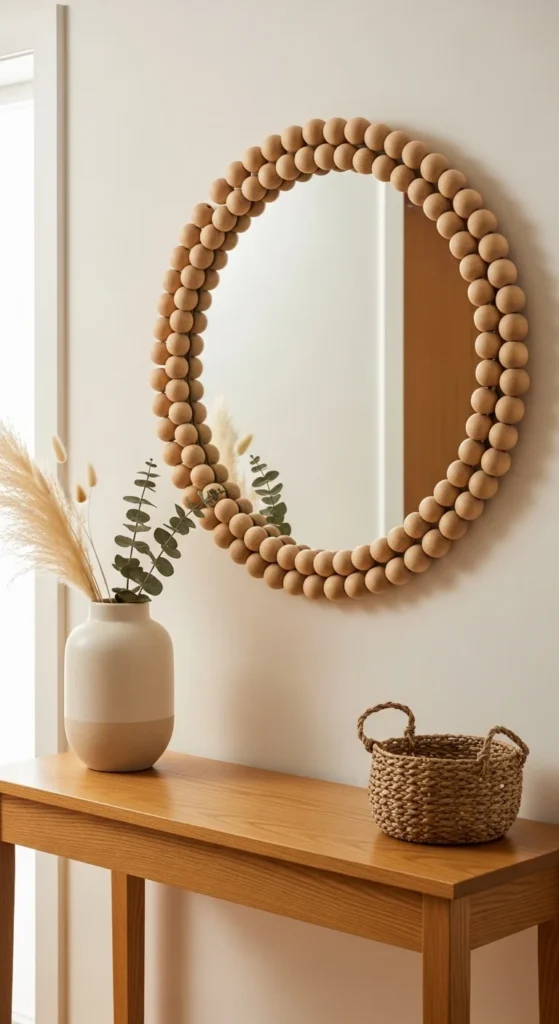
Wooden beads add rhythm and structure without feeling heavy. Thread them onto wire or strong cord before attaching to the mirror edge. Keep bead size consistent for a calm look.
Lighter wood tones photograph better in small rooms.
If gaps appear, slide beads closer before securing the final knot.
This mirror style leans more polished boho than relaxed fringe.
Budget tip: unfinished beads are cheaper and can stay raw.
Mount with secure hardware since beads add weight.
Try alternating bead sizes for subtle texture without clutter.
This works well in hallways or bathrooms with warm lighting.
Pair with simple decor nearby so the frame remains the focus.
4. Raffia Sunburst Mirror
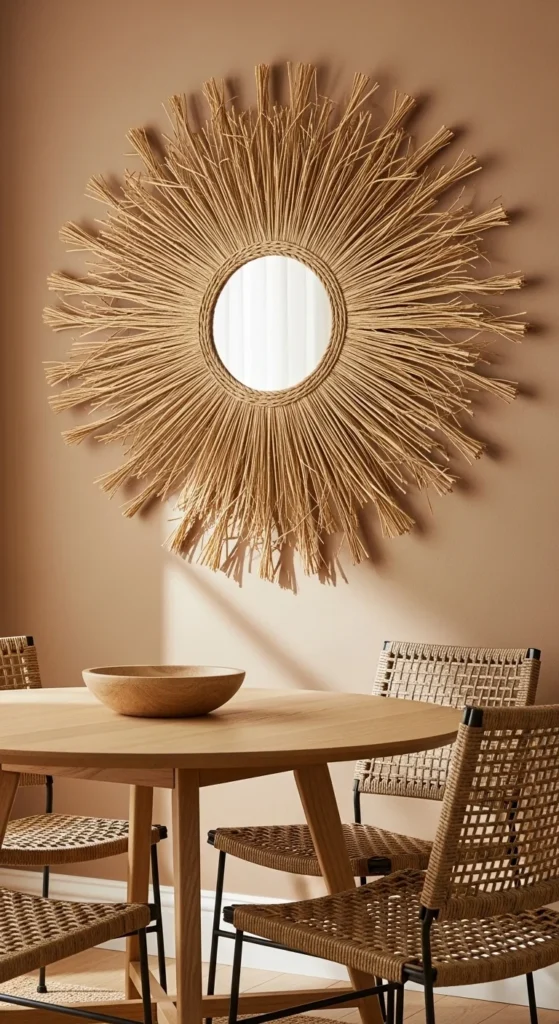
Raffia creates movement and shadow that changes throughout the day. Cut strands in varied lengths for a relaxed outline. Attach in small bundles instead of single strands for stability.
Asymmetry makes this design feel handmade, not messy.
Use a cardboard backing if the mirror has no lip.
This mirror suits dining areas or accent walls where light shifts often.
Budget option: mix raffia with dried grass for texture.
Avoid heavy glue blobs; thin layers dry cleaner.
Trim slowly once hung so the shape balances visually.
This project looks bold but stays lightweight and easy to hang.
5. Upcycled Hoop Boho Mirror
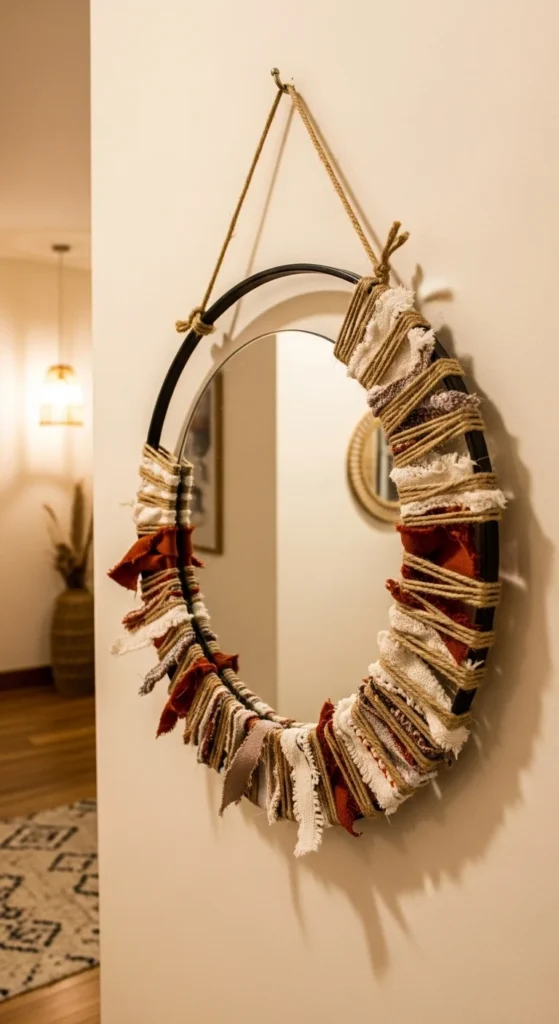
Old hoops make strong bases for mirrors. Wrap only sections to let metal peek through. That contrast adds character.
Secure the mirror with clips or strong wire from the back.
Partial wrapping keeps the look airy, not bulky.
This style fits narrow walls where depth matters.
Budget tip: reuse embroidery hoops or old craft rings.
Balance the design by spacing wrapped sections evenly.
Hang with a centered hook so weight distributes well.
This mirror works nicely in hallways or near doorways where light hits from the side.
6. Shell-Edged Coastal Boho Mirror
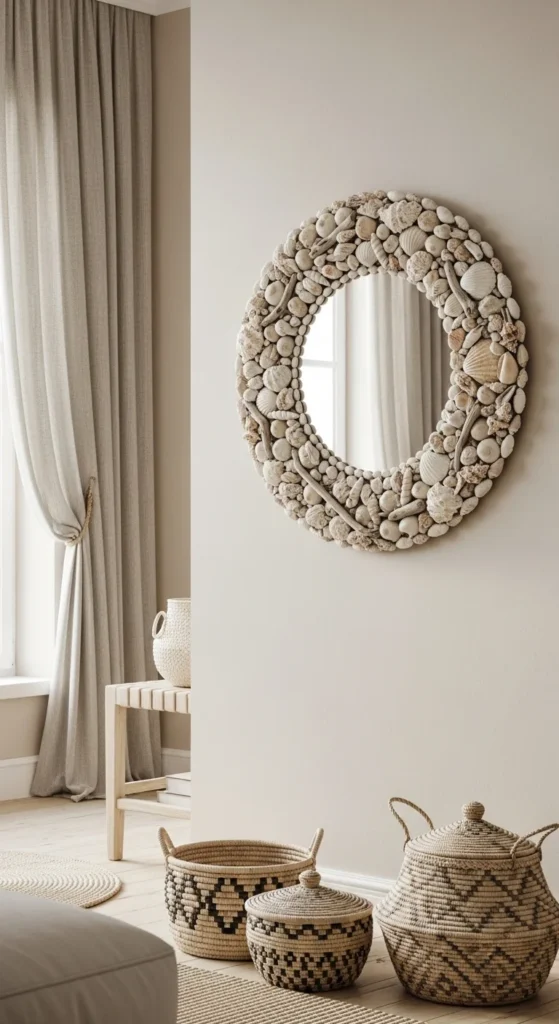
Shell accents bring a relaxed coastal note without feeling themed. Use small, similar-sized shells so the edge stays clean. Attach them close together for a continuous border. Irregular shapes add character, so don’t over-sort.
Clear-dry adhesive works best to avoid cloudy spots.
This mirror fits well in bathrooms, sunrooms, or near windows.
Budget option: collect shells over time instead of buying packs.
If weight builds up, limit shells to the outer edge only.
Leave small gaps to let the mirror frame breathe visually.
Pair with light textiles and pale wood nearby.
This project works best when kept simple and calm.
7. Fabric-Wrapped Boho Accent Mirror
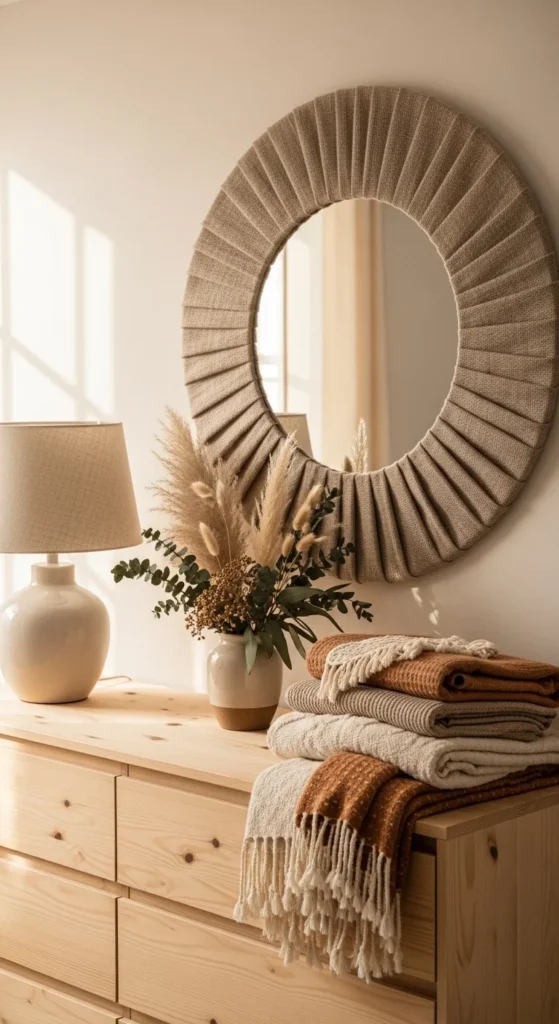
Fabric adds softness where twine feels too rough. Linen or cotton works best. Cut long strips and wrap tightly, overlapping slightly.
Keep seams on the back so the front stays smooth.
This style suits bedrooms and dressing areas.
Budget tip: use leftover fabric or old scarves.
Iron fabric first for a cleaner finish.
Secure ends with staples or glue on the reverse side.
Avoid shiny textiles; matte reads warmer.
This mirror pairs well with layered bedding and neutral walls.
8. Minimal Rope Loop Mirror
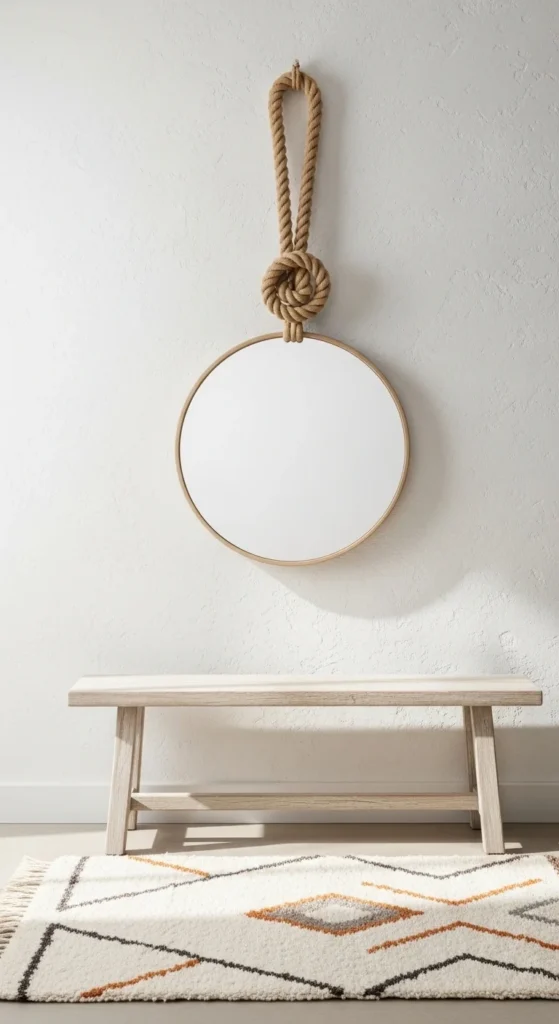
This is boho in its simplest form. Skip heavy frames and let the rope do the work. Tie a strong loop and mount from one centered hook.
Chunky rope feels intentional, not temporary.
This style works well in small spaces.
Budget option: cotton clothesline works just as well.
Adjust rope length so the mirror sits at eye level.
Add felt pads behind to prevent wall marks.
Pair with a slim console or bench below.
This mirror feels casual yet styled.
9. Painted Earth-Tone Boho Mirror
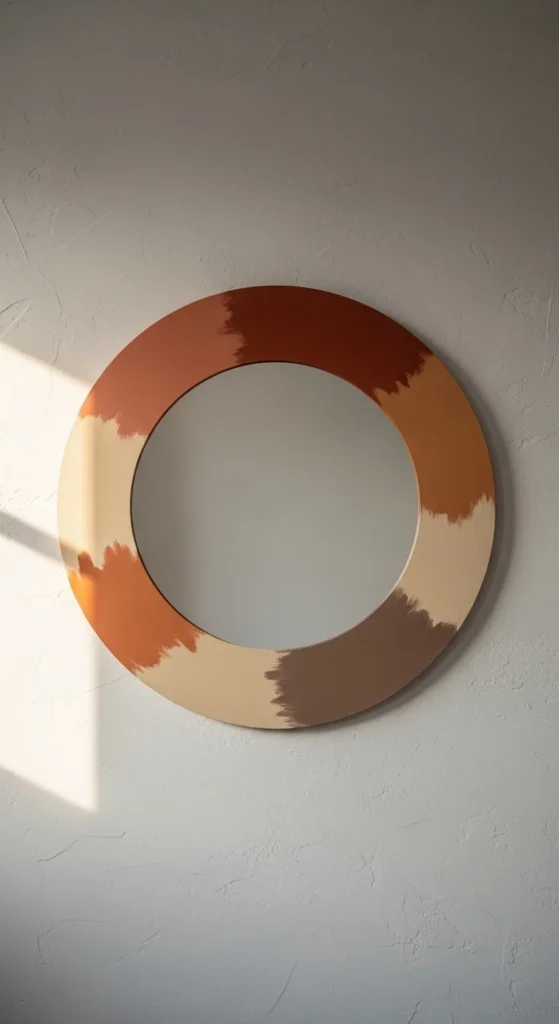
Paint adds color without adding bulk. Choose earthy tones like clay or muted ochre. Use a dry brush for texture.
Uneven strokes feel organic, not rushed.
Seal with matte clear coat for durability.
This mirror fits accent walls and gallery setups.
Budget tip: sample paint pots are enough.
Avoid glossy finishes; matte feels warmer.
Pair with neutral decor so color stays grounded.
This project suits renters and beginners alike.
10. Layered Frame Gallery Mirror
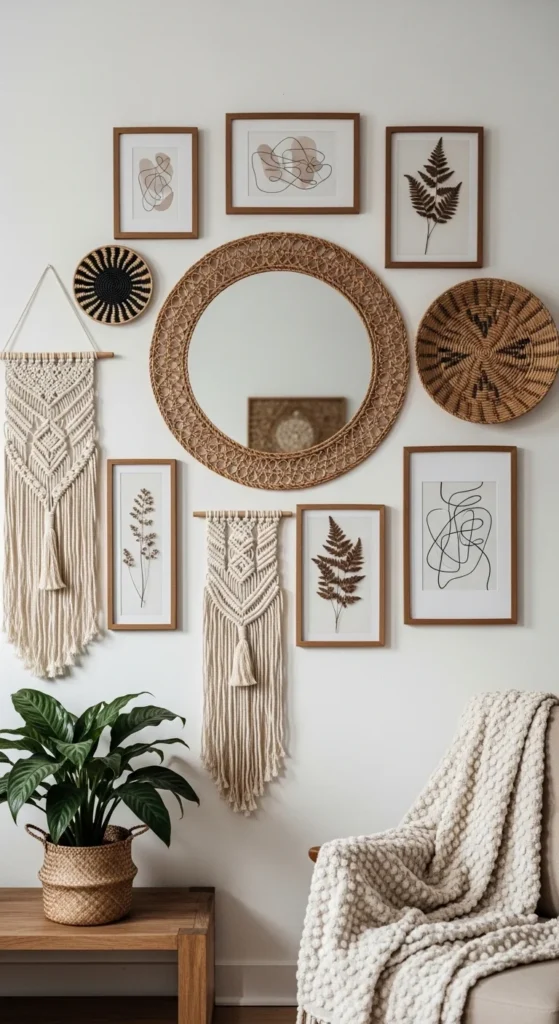
Layering adds depth without clutter. Hang the mirror slightly overlapping other pieces. Keep colors consistent so the wall reads calm.
Spacing matters more than quantity.
This approach works well for blank walls.
Budget option: mix thrifted frames with DIY pieces.
Lay everything on the floor first to plan placement.
Use lightweight items so mounting stays simple.
This mirror becomes part of the wall story, not a standalone piece.
11. Fringe-Draped Half Mirror
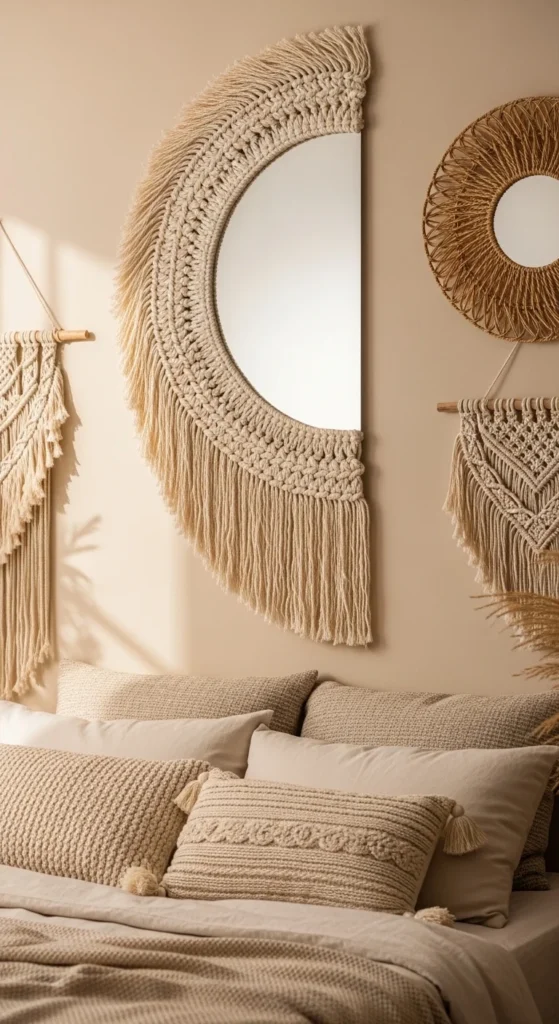
Half mirrors feel softer than full circles. Adding fringe enhances that effect. Attach fringe only along the curve, leaving the straight edge clean.
This contrast keeps the design balanced.
Cotton fringe works best for movement.
Budget option: cut fringe from macrame cord.
Keep strands uneven for a relaxed look.
This mirror fits nicely above nightstands or small dressers.
Use light adhesive so weight stays low.
Steam lightly after hanging to smooth the fringe.
12. Driftwood-Inspired Boho Mirror
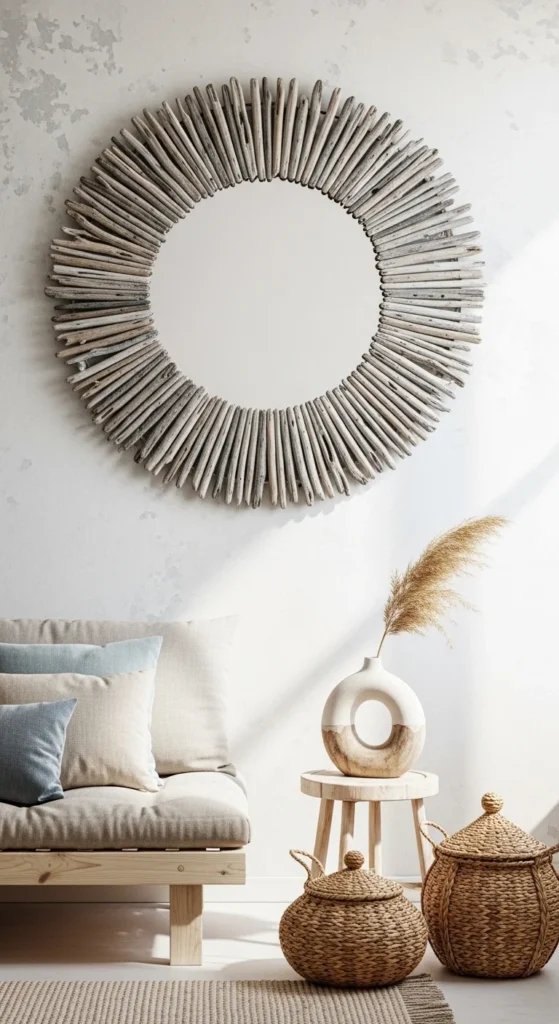
Driftwood brings organic shape and depth. Arrange pieces before gluing to find balance. Overlap slightly for stability.
Variation in size adds interest.
This mirror works well in open spaces.
Budget option: use found sticks or reclaimed wood.
Seal lightly to reduce shedding.
Avoid perfect symmetry.
Pair with soft textiles nearby to balance texture.
This design looks best when kept natural.
13. Leather Strap Hanging Mirror
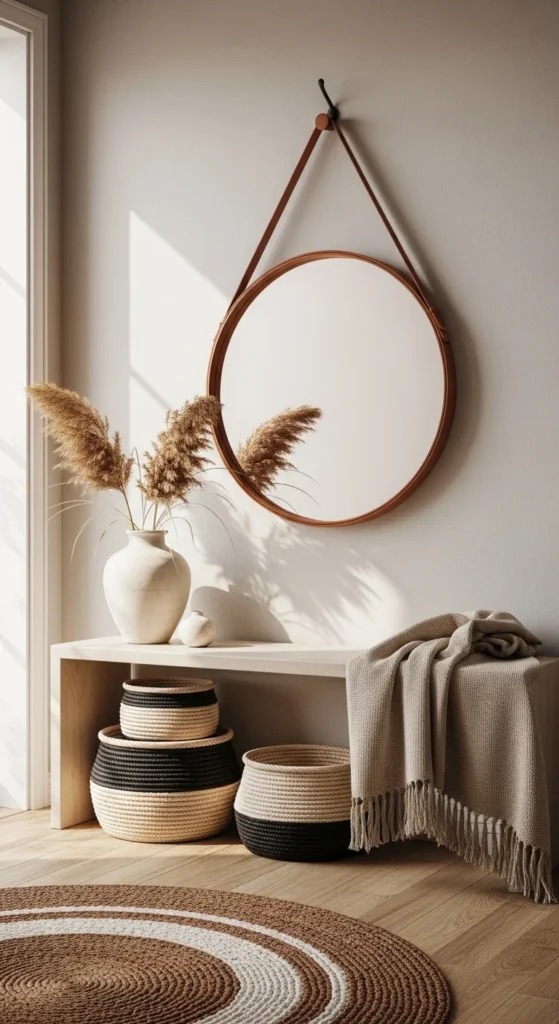
Leather adds contrast without overpowering. Use a single wide strap for a clean look. Secure tightly at the back.
Natural leather tones warm up walls.
Budget option: faux leather strips work fine.
This style suits entryways and bathrooms.
Keep hardware minimal.
Condition leather lightly before hanging.
Pair with wood furniture for cohesion.
14. Woven Grass Frame Mirror
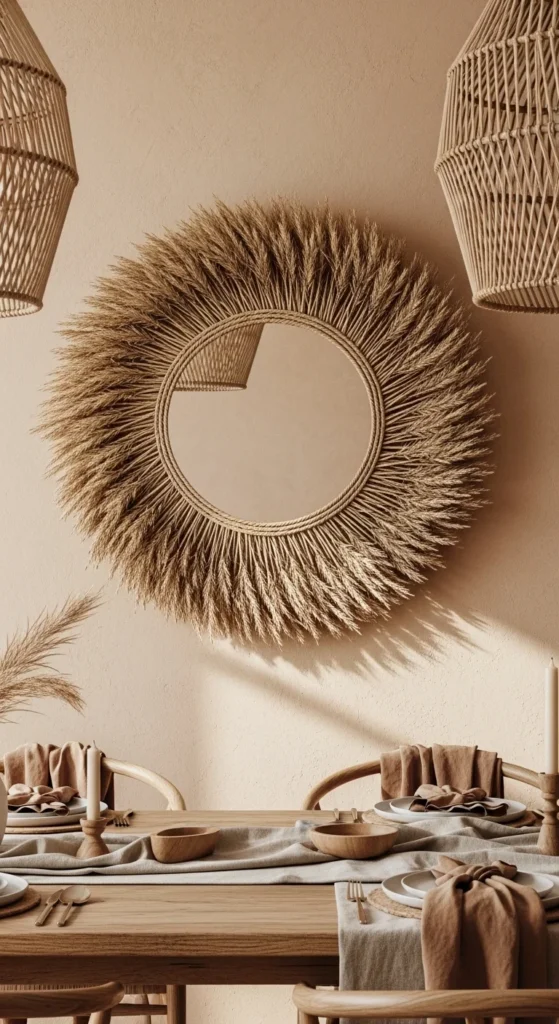
Grass weaving creates depth quickly. Wrap evenly to avoid bulges. Secure often.
Density gives this mirror structure.
Budget option: raffia or dried reeds.
This mirror works well as a focal point.
Trim edges slowly.
Keep nearby decor simple.
Avoid moisture-heavy rooms.
15. Asymmetrical Fiber Art Mirror
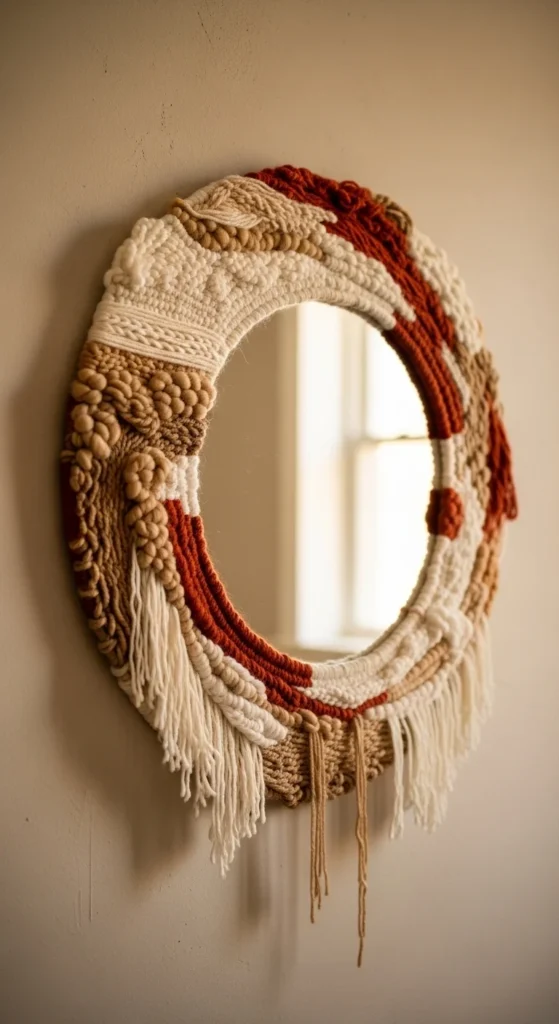
This design feels artistic and relaxed. Cover only part of the frame with fiber textures. Let the mirror stay exposed elsewhere.
Negative space keeps it light.
Budget option: yarn scraps work well.
This mirror suits creative spaces.
Attach fibers in layers.
Avoid overfilling one side.
Balance with minimal surrounding decor.
16. Painted Mandala Boho Mirror
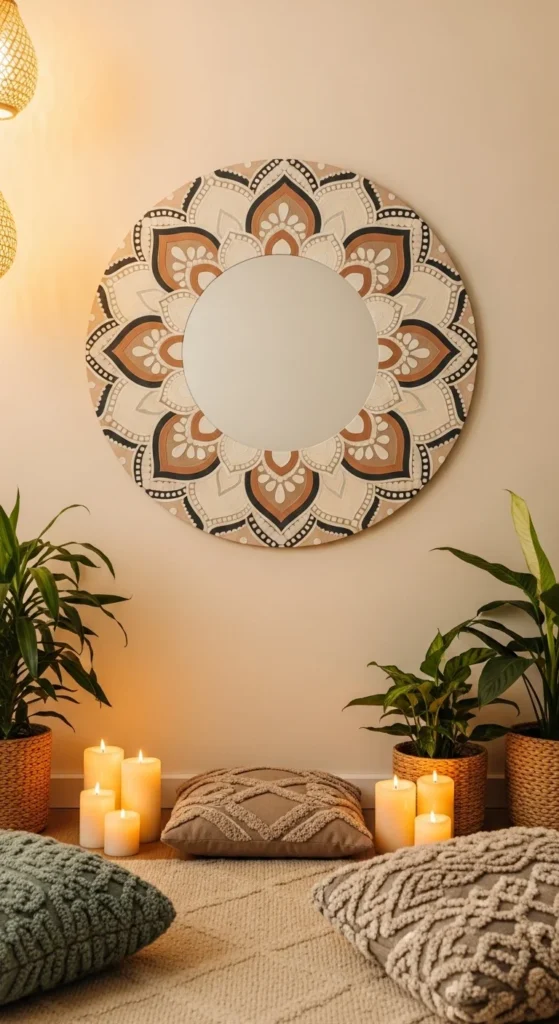
A painted mandala adds pattern without extra materials. Light pencil guides help keep spacing even. Use small brushes and work outward. Muted colors keep it grounded.
Budget option: acrylic paint samples work fine.
Seal lightly with matte clear coat.
This mirror suits quiet corners or studios.
Don’t rush drying between layers.
Keep surrounding decor simple so the pattern stands out.
This project feels personal and expressive.
17. Cane Webbing Frame Mirror
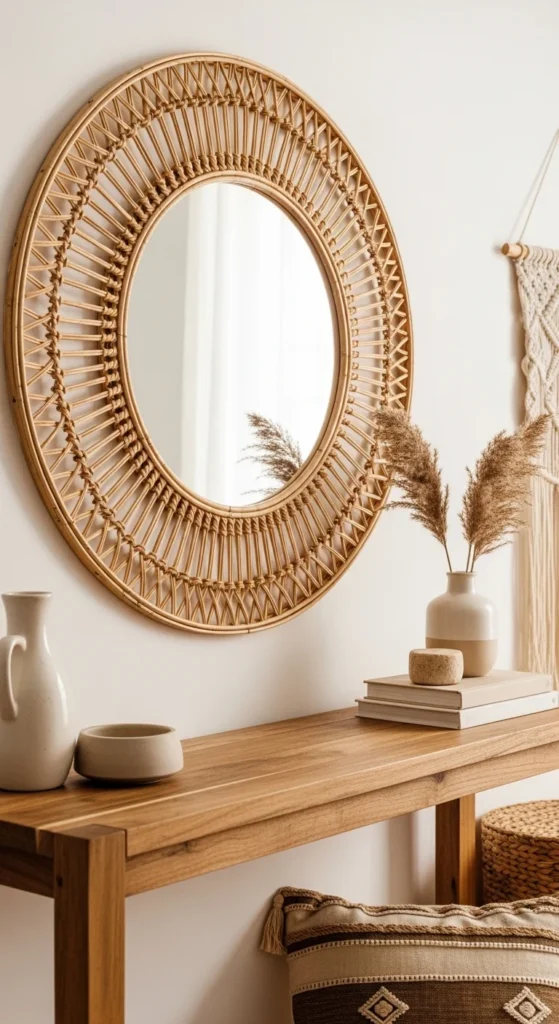
Cane webbing brings structure with lightness. Cut carefully and stretch before attaching. Secure from the back for a clean edge.
Air gaps prevent heaviness.
Budget option: small cane panels go a long way.
This mirror pairs well with wood furniture.
Avoid high-humidity rooms.
Trim edges neatly once secured.
This look feels calm and timeless.
18. Yarn-Wrapped Color-Block Mirror
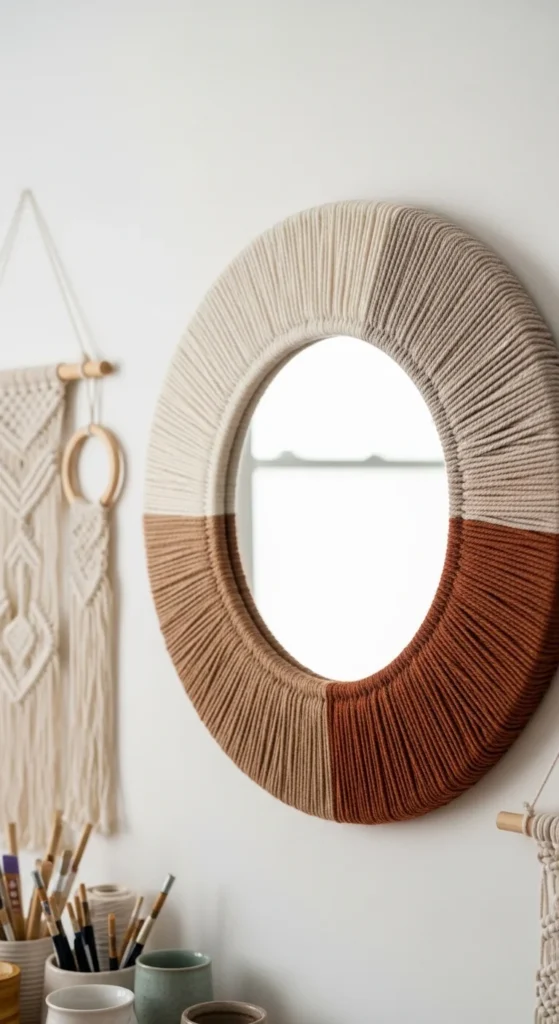
Color blocking adds interest without clutter. Wrap sections separately and secure ends underneath.
Stick to three tones max for balance.
Budget option: leftover yarn works perfectly.
This mirror fits creative spaces.
Keep blocks uneven for an organic look.
Avoid bold contrast.
This project feels relaxed and approachable.
19. Mini Boho Mirror Cluster
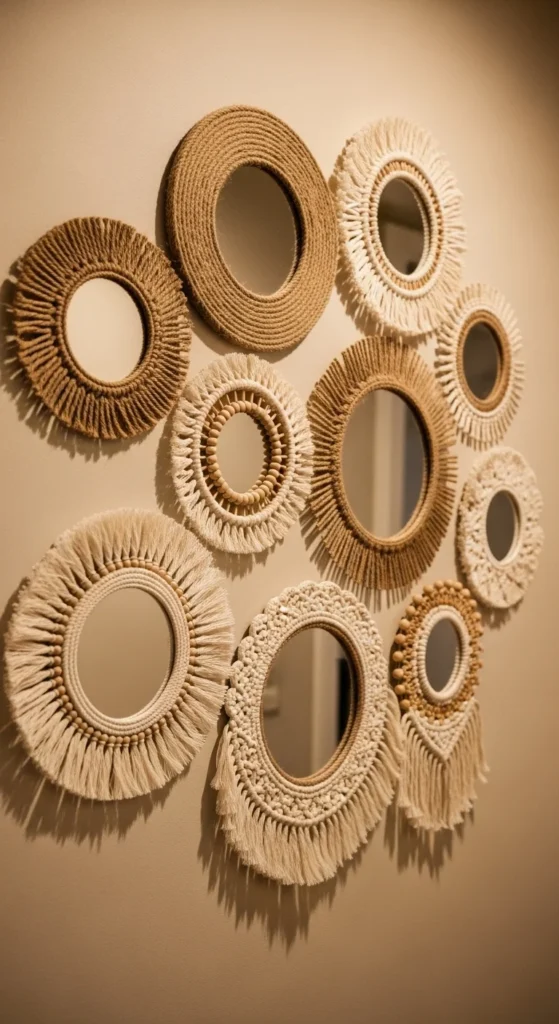
Small mirrors grouped together add charm. Vary sizes but keep materials similar. Space evenly.
Consistency ties the cluster together.
Budget option: use thrifted mirrors.
This works well in narrow spaces.
Lay out placement first.
Keep frames lightweight.
The result feels curated and personal.
20. Textured Plaster Frame Mirror
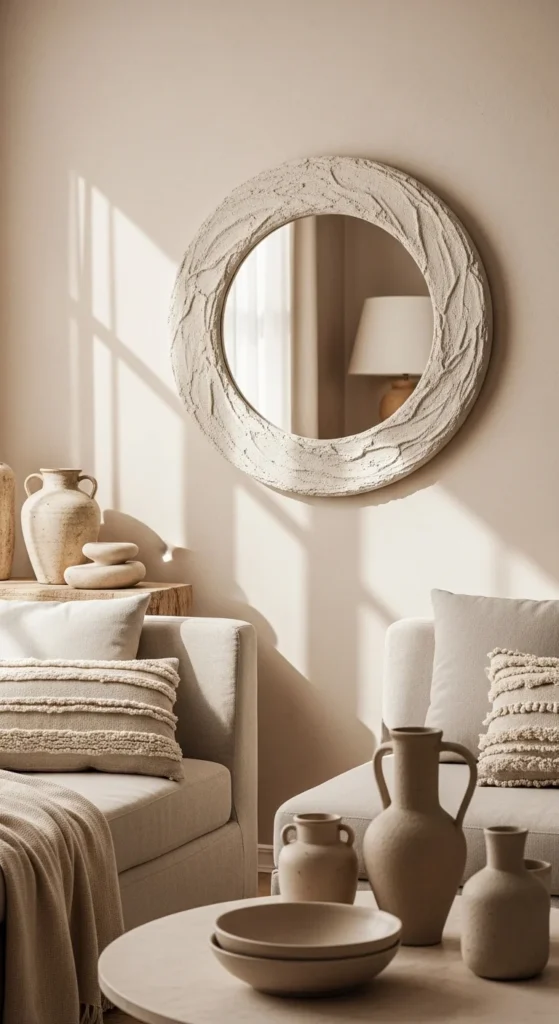
Plaster texture adds depth without decoration. Apply a lightweight compound with a spatula. Keep strokes irregular.
Subtle texture reads sculptural.
Budget option: joint compound works well.
Seal fully before hanging.
This mirror suits modern boho spaces.
Avoid thick buildup.
Pair with simple decor to let texture shine.
21. Braided Jute Rope Mirror
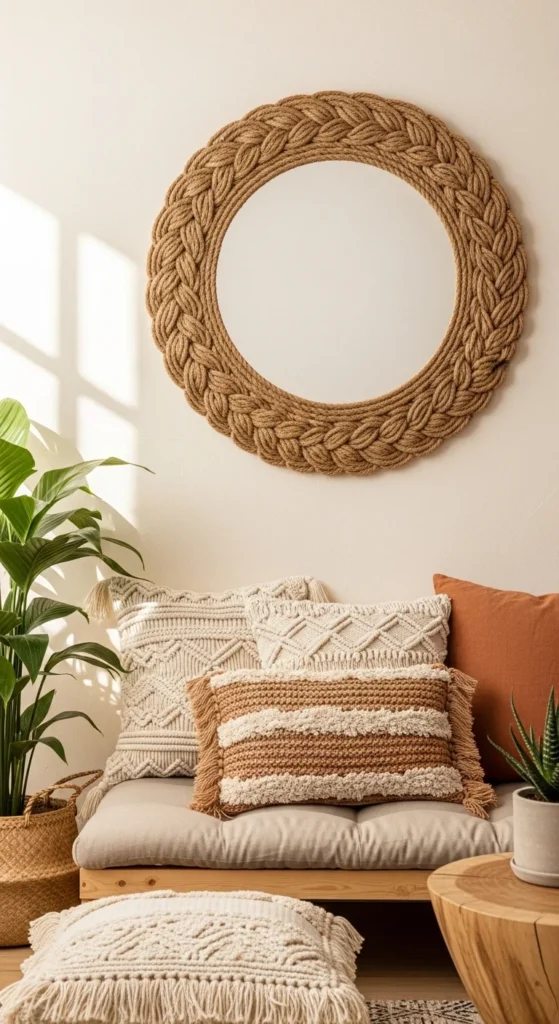
Braided rope brings instant texture. Choose a thick jute braid so the frame feels intentional. Wrap slowly and press firmly as you go. Chunky scale makes this design feel grounded.
Budget option: marine rope or garden rope works well.
Keep the braid direction consistent.
Secure from the back for a clean edge.
This mirror works best on larger walls.
Pair with simple furniture so texture stands out.
Avoid overly thin rope; it looks unfinished.
22. Fabric Tassel Border Mirror
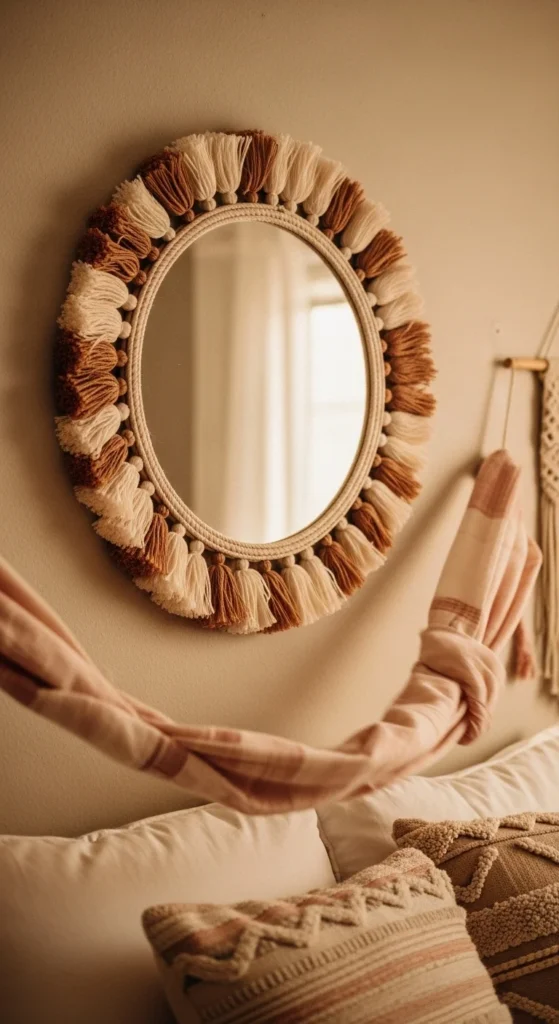
Tassels add movement without heaviness. Space them evenly for balance. Mix two similar shades for subtle contrast. Soft textiles bring warmth fast.
Budget option: make tassels from scrap fabric.
Attach securely to avoid sagging.
This mirror suits bedrooms and creative corners.
Keep tassels short for a tidy look.
Let the mirror remain the focal point.
23. Beaded Fringe Half-Wrap Mirror
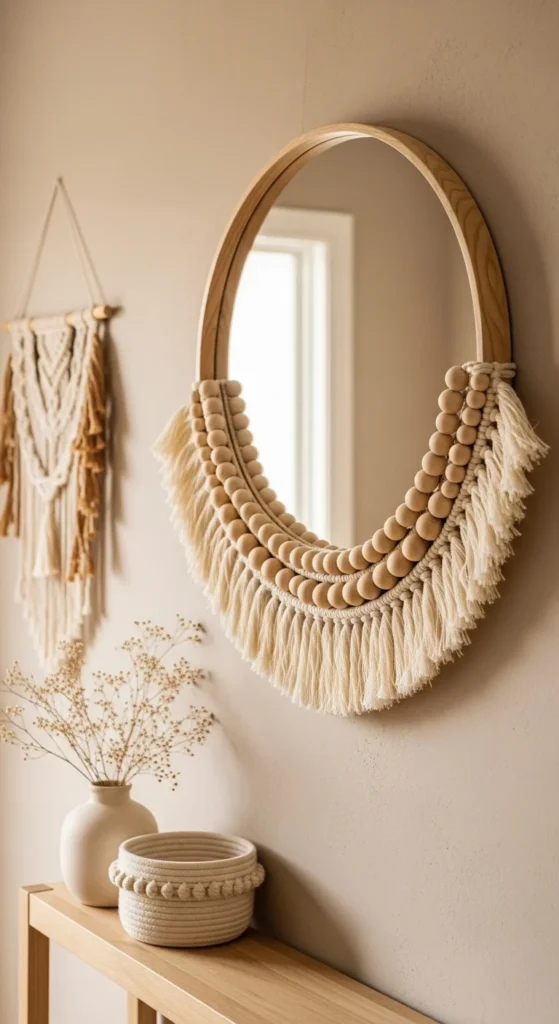
Half-wrap designs feel lighter on the wall. Beads add structure while fringe softens the edge. Weight stays balanced when coverage stays partial.
Budget option: alternate beads with knots.
Secure heavier sections first.
This mirror works well in hallways or above consoles.
Keep fringe short so it doesn’t overwhelm.
Balance with minimal decor nearby.
24. Neutral Patchwork Fiber Mirror
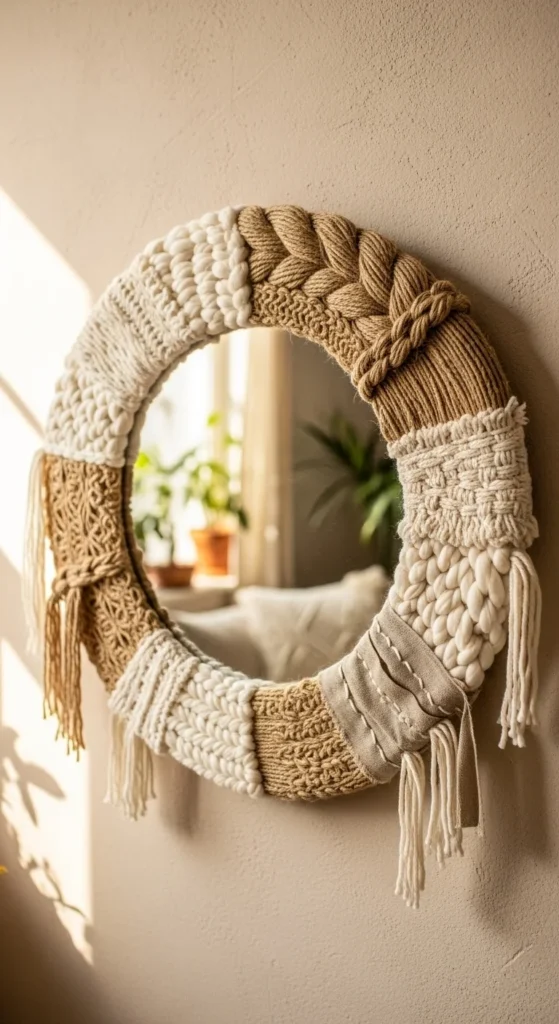
Patchwork fiber frames feel creative and personal. Combine similar tones to keep cohesion. Attach in layers for depth. Texture variation keeps the frame engaging.
Budget option: use leftover craft materials.
Keep the palette tight.
This mirror suits studios or creative rooms.
Avoid bold color shifts.
Let imperfections show for character.

Leave a Reply