

1. Macrame Wall Hanging Statement Piece
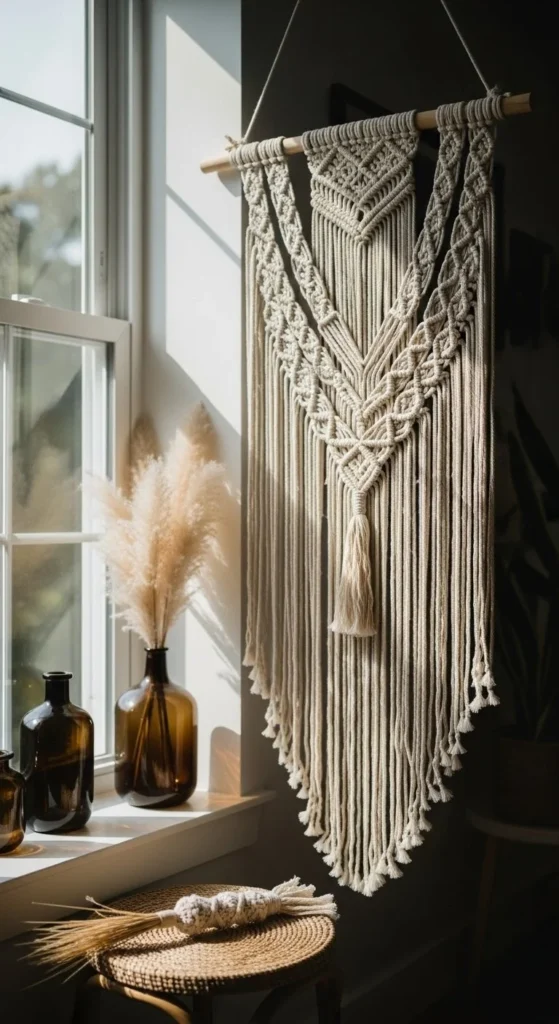
Macrame wall hangings sit at the heart of DIY boho decor. They bring texture without clutter. Cotton cord keeps the look soft and relaxed. Start with a simple square-knot pattern if you’re new. Even a narrow piece can anchor a wall when placed above a sofa or bed.
For tight budgets, use clothesline cotton or recycled yarn. Wooden dowels can come from fallen branches or old curtain rods. Keep colors neutral so the knots do the visual work. If the wall feels busy, hang just one large piece instead of several small ones.
Spacing matters. Let the bottom edge float above furniture rather than touching it. This keeps the wall from feeling heavy. Pair macrame with natural fibers and open space. Avoid mixing it with glossy frames nearby. The contrast breaks the flow.
This project works well for renters too. A single hook or removable strip is enough. When styles change, it’s easy to move or repurpose. That flexibility makes macrame a long-term boho staple.
2. Jute Rope Wrapped Pendant Light
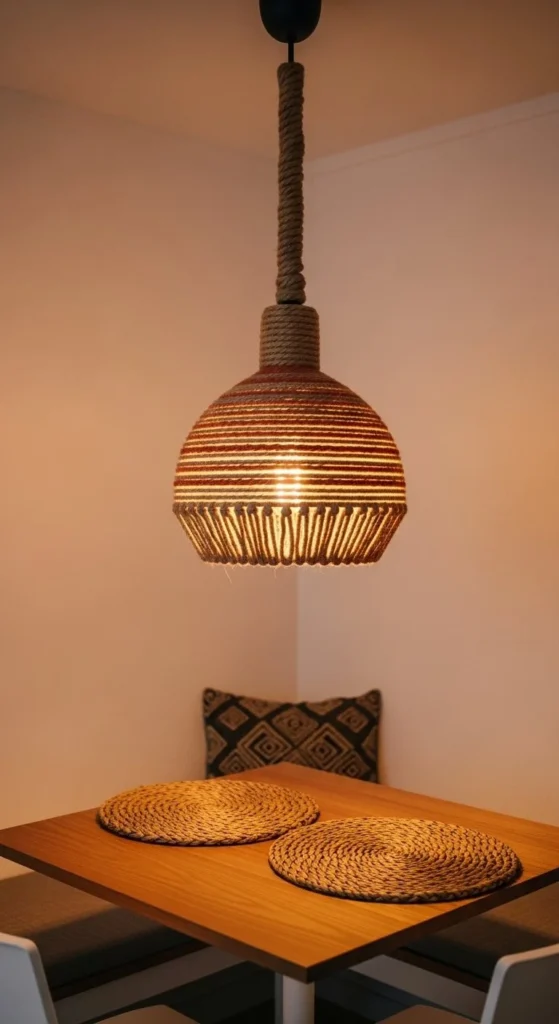
Lighting shapes the mood of a boho room. Jute rope pendants add texture while keeping the palette grounded. You can wrap rope around an old lampshade frame or metal basket. Secure it with hot glue in tight rows.
Choose thicker rope for bold texture. Thinner rope gives a lighter look. Keep gaps minimal so the bulb doesn’t show harshly. Warm bulbs work best here. White light feels out of place with rope and wood.
This project suits dining corners, reading chairs, or covered patios. For safety, never wrap rope directly on a hot bulb. Use LED bulbs only. If ceiling work feels intimidating, convert it into a plug-in pendant.
Styling matters. Let the light hang low over a table to create soft visual weight. Pair it with clay dishes or linen runners. Avoid shiny metals nearby. The goal is balance, not contrast.
Rope pendants also photograph well, making them ideal for Pinterest-style spaces. One light is enough. Multiple pendants should be evenly spaced to avoid visual noise.
3. Thrifted Mirror with Tassel Fringe
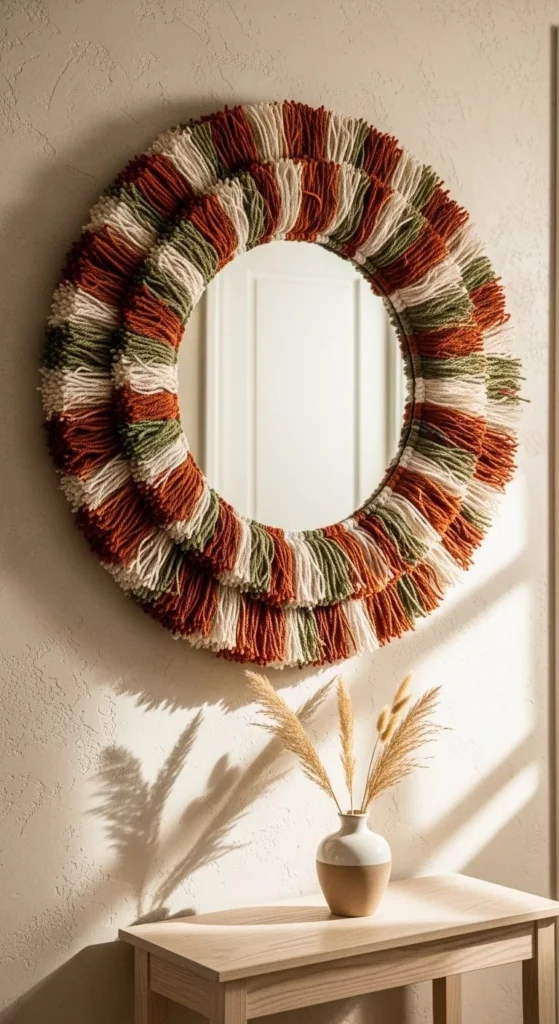
A simple mirror becomes expressive with fringe. Tassels introduce movement and softness. Start with a basic mirror from a thrift shop. Glue yarn tassels evenly around the frame edge.
Use two or three yarn colors only. Too many shades distract the eye. Earth tones keep the piece grounded. Tassel length should stay consistent for a clean outline. Trim carefully once everything dries.
This works well in hallways, bedrooms, or above dressers. Mirrors already reflect light. Fringe adds texture without adding bulk. That balance keeps small spaces comfortable.
If yarn feels messy, use cotton cord or embroidery thread. For a cleaner look, space tassels slightly apart. For a fuller look, pack them close. Both work depending on room size.
Hang the mirror where it can stand alone. Avoid crowded gallery walls nearby. Let it act as a focal accent, not background decor. This is a fast project with visible impact and very low cost.
4. Denim-Upcycled Boho Floor Pouf
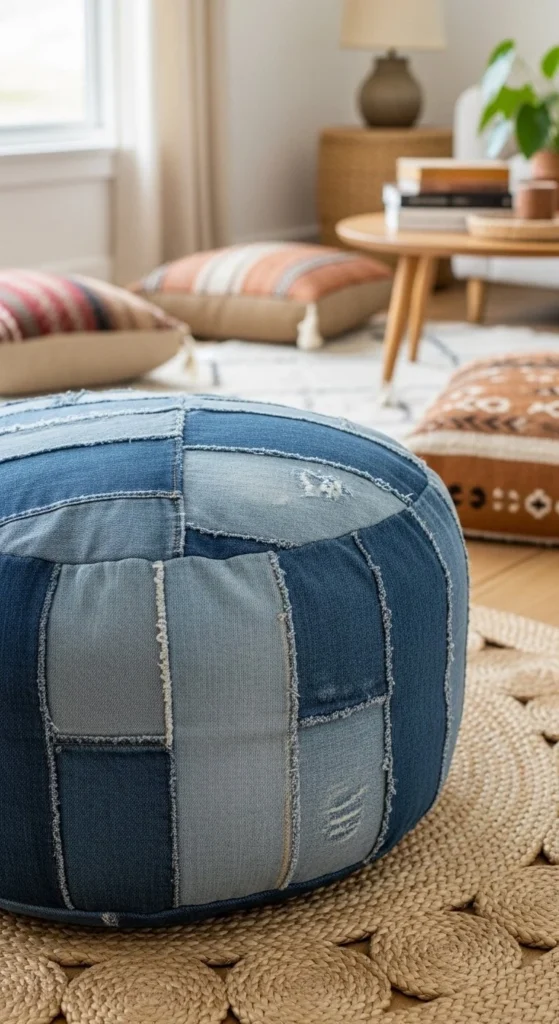
Old jeans can turn into functional decor. Denim poufs add seating without formal structure. Cut denim into panels and stitch them into a cube or round form. Stuff with old clothes, towels, or foam scraps.
Keep seams visible. That raw look suits boho spaces. Avoid perfect symmetry. Slight irregularity adds character. Dark and light denim mixed together creates natural contrast without extra color.
These poufs work well for floor seating, reading corners, or kids’ rooms. They’re sturdy and forgiving. If stitching feels difficult, use heavy fabric glue for reinforcement.
Pair denim with warm textures. Jute rugs, wool throws, or linen cushions soften the look. Avoid placing poufs near sleek furniture. They belong in relaxed zones.
This project solves two problems at once. Textile waste gets reused. Extra seating appears without spending much. The result feels personal, grounded, and comfort-first by design.
5. Hanging Plant Display with Wooden Dowels
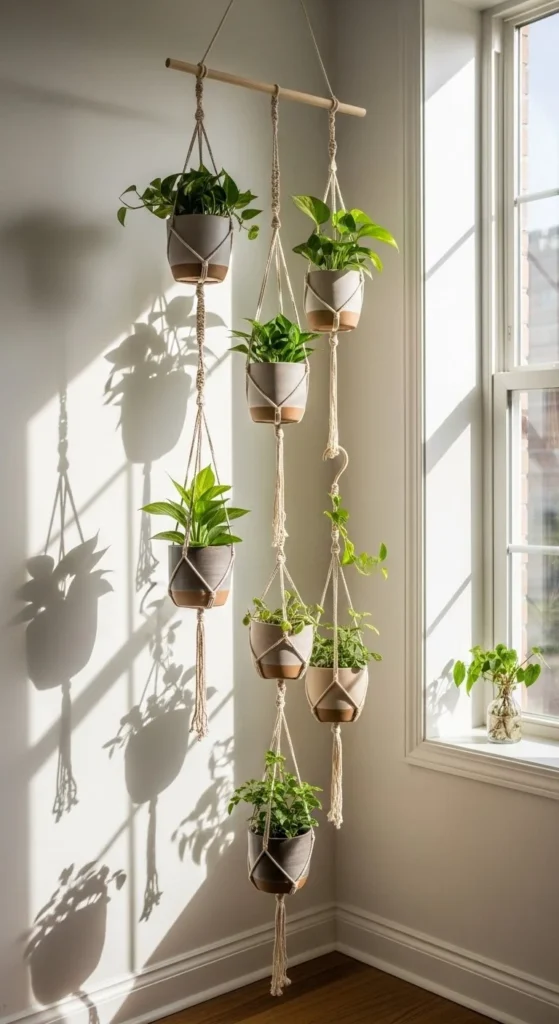
Plants and boho decor go hand in hand. Hanging displays save floor space while adding vertical interest. Wooden dowels keep the structure simple and warm. Drill small holes and thread cotton cord through evenly.
Stagger heights to avoid a flat look. Odd numbers work best visually. Use lightweight pots to reduce strain. Clay or fiber planters suit the style well.
If plant care feels difficult, use dried grasses or faux greenery. The structure still delivers texture. For real plants, choose trailing varieties that grow downward naturally.
Hang displays near windows but avoid harsh midday sun. Too much light dries soil quickly. Secure hooks into studs or ceiling anchors for safety.
This setup fits apartments and small rooms easily. One dowel can hold several plants. Multiple dowels can form a loose row. The result feels airy, balanced, and rooted in natural rhythm.
6. Rope-Wrapped Clay Planters
[Image Prompt: Terracotta clay planters tightly wrapped with natural jute rope, leaving the rim exposed. Soft beige and clay color palette. Arranged on a wooden shelf near a sunlit window. Boho indoor plant styling with subtle shadows and natural daylight. Calm, handmade feel. No text.]
Clay planters already belong in boho spaces. Rope wrapping adds grip and texture. Start from the base and wrap upward in clean rows. Hot glue works well when applied sparingly. Keep the rim bare so watering stays easy.
This project suits herbs, trailing plants, or dried stems. Smaller pots look better grouped. Larger ones work alone on the floor. If the rope frays, trim lightly instead of sealing it. The raw edge feels natural.
For variety, mix rope thicknesses across different pots. Stick to one tone per pot to avoid visual clutter. Pair them with wood shelves or low stools. Avoid glossy surfaces nearby.
These planters also work outdoors under cover. Moisture darkens the rope slightly over time, adding character. That aging effect fits the style well. The result feels grounded and material-driven, not decorative for decoration’s sake.
7. Yarn and Feather Mixed Wall Art
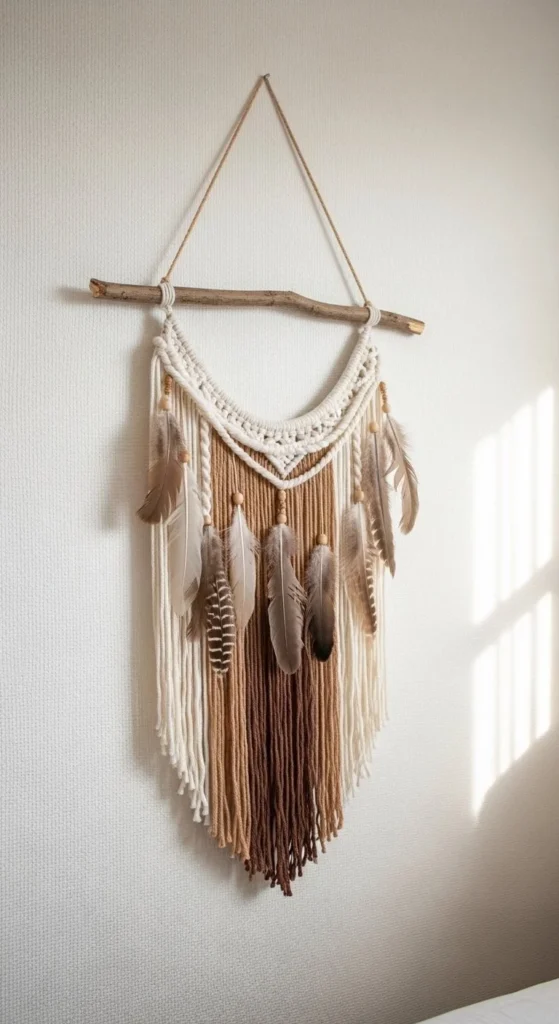
Mixed-media wall art brings depth without heaviness. Yarn gives softness. Feathers add movement. Keep the design loose rather than symmetrical. Let materials hang freely instead of forcing alignment.
Use fallen feathers or craft-store alternatives. Avoid dyed or glittered pieces. Natural tones keep the piece calm. Yarn thickness can vary, but limit colors to two or three.
This works best in bedrooms or reading corners. The motion catches light subtly as air moves. Hang it where there’s space around it. Crowding kills the effect.
If feathers feel fragile, replace them with dried grasses. The structure stays the same. The feeling remains tactile and relaxed. This kind of wall art reads as handmade presence, not wall filler.
8. DIY Beaded Boho Chandelier
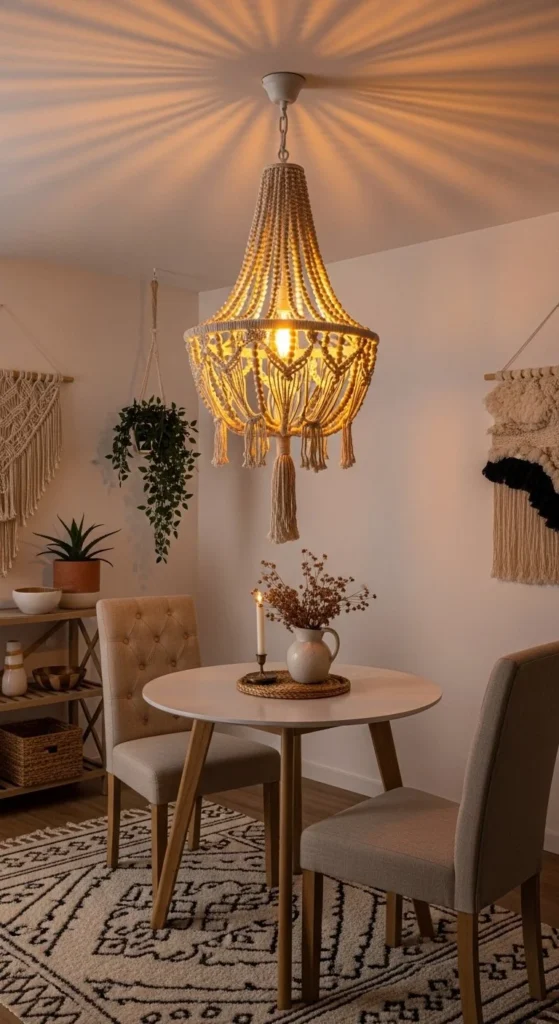
Beaded lighting adds rhythm and pattern. Start with a simple metal frame or embroidery hoop. String wooden beads in vertical strands. Knot securely at the top.
Keep bead size consistent for a clean silhouette. Mixing sizes can look busy unless planned carefully. Warm bulbs soften shadows and highlight texture.
This chandelier works best where ceilings aren’t too high. Over tables or seating areas, it feels intentional. Avoid pairing it with ornate furniture. Simple shapes let the beads stand out.
If ceiling wiring feels complicated, adapt it into a plug-in fixture. Safety comes first. The final look feels tactile, warm, and crafted rather than polished.
9. Rag-Woven Boho Throw Rug
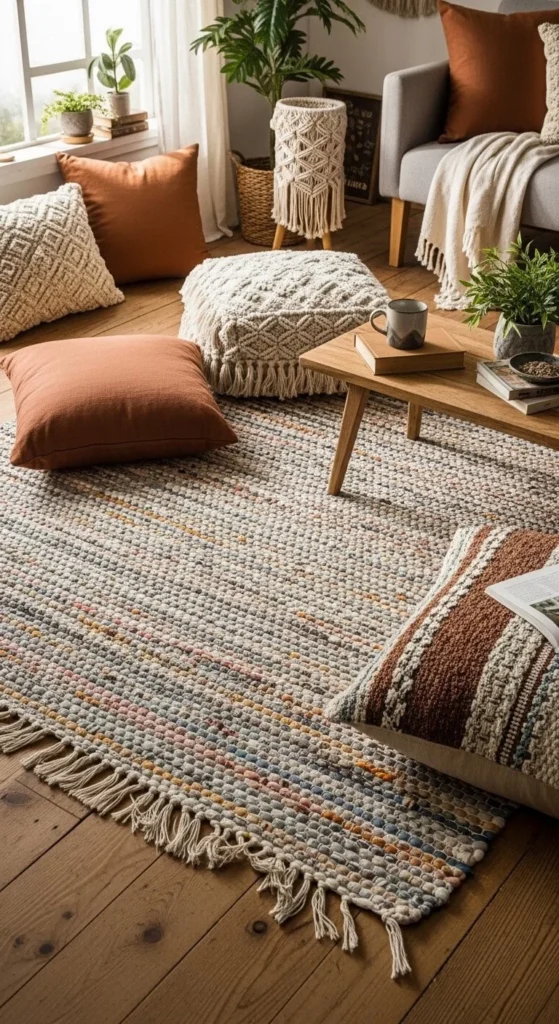
Rag rugs bring color through texture, not pattern. Old shirts, sheets, or denim work well. Tear fabric into strips and weave tightly. Imperfection is part of the charm.
Stick to a limited palette. Too many colors turn chaotic. Earth tones blend better with wood and plants. Size depends on patience. Even small rugs work beside beds or chairs.
These rugs handle wear well. Wash gently and air dry. Frayed edges only add character. Avoid backing materials that stiffen the rug.
Layer rag rugs over jute or sisal for contrast. That layering creates soft grounding without visual overload. It’s practical decor with personality.
10. Thrifted Dresser with Rattan Panel Inserts
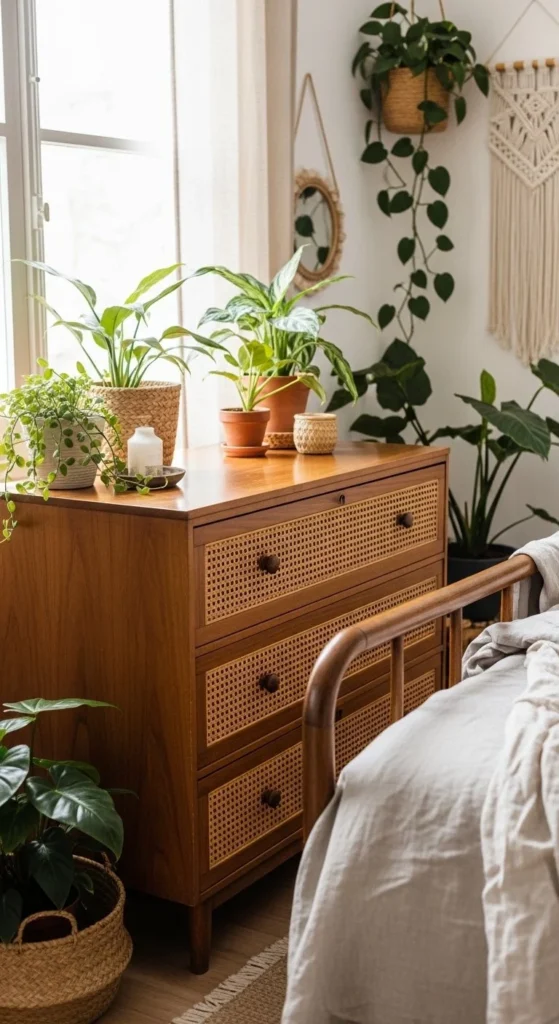
Thrifted furniture becomes boho-friendly with texture changes. Rattan panels lighten heavy wood pieces. Remove drawer fronts and cut rattan to size. Secure from the back with staples or glue.
Leave the wood natural or lightly sanded. Paint can flatten the effect. Replace old handles with simple pulls. Keep hardware minimal.
This update works on dressers, cabinets, or nightstands. It reduces visual weight while keeping storage intact. Place plants or ceramics on top to complete the look.
The result feels intentional without looking staged. It blends storage with style through material contrast, not ornament.
11. Tassel-Trimmed Boho Throw Pillows
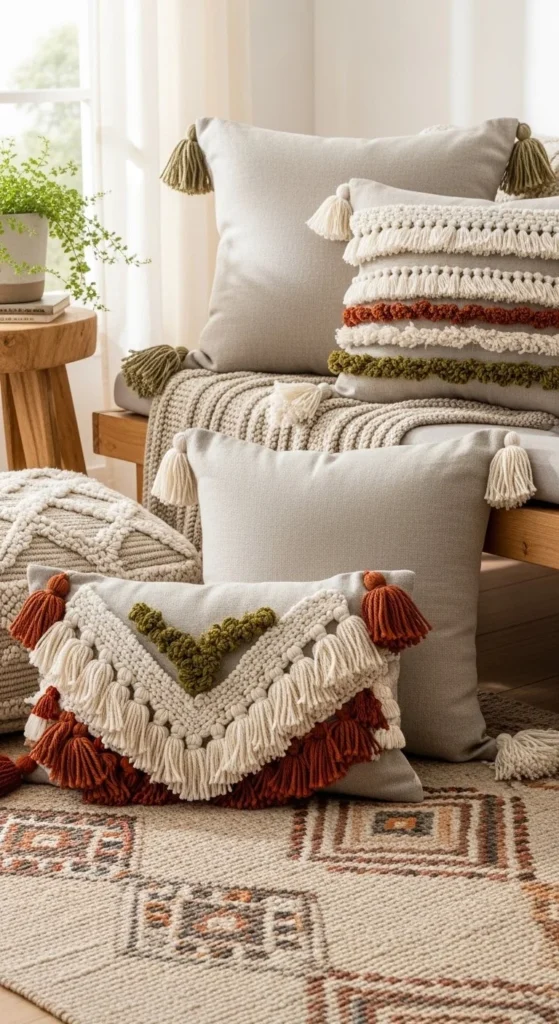
Plain pillows can feel flat in boho spaces. Tassels solve that quickly. Add them along seams or corners rather than across the center. This keeps the look grounded.
Use yarn or cotton cord. Keep tassels short for everyday use. Longer fringe works better for accent pillows that won’t be leaned on much. Hand-stitching gives more control than glue, especially after washing.
Stick to solid pillow covers. Pattern plus fringe often feels busy. Earthy tones blend better with plants and wood. Rotate pillows seasonally by swapping tassel colors only.
These pillows work well layered with plain cushions. Let them sit at the ends of sofas or beds. They act as soft visual anchors without taking over the space.
12. DIY Driftwood Wall Shelf
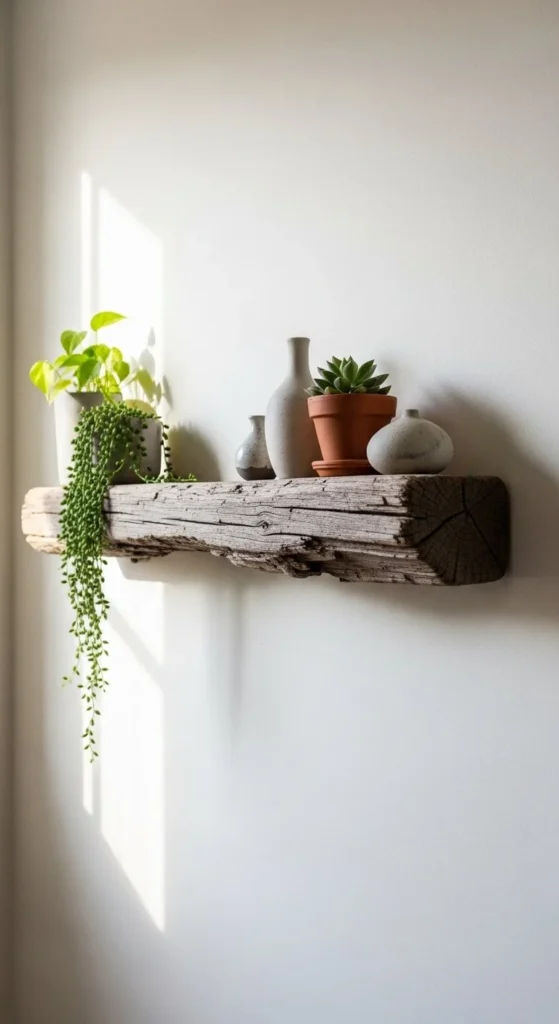
Driftwood shelves bring nature indoors without decoration overload. Choose a plank with texture but a flat top. Sand lightly to remove splinters while keeping character.
Hidden brackets help the wood stand out. Avoid ornate hardware. The shelf should feel like it’s floating. Keep styling minimal. One plant, one ceramic piece, one book is enough.
This works well in entryways, bathrooms, or bedrooms. Avoid heavy objects. Driftwood looks strong but isn’t meant for weight.
If driftwood isn’t available, use reclaimed fence wood. Weathered surfaces read similarly once cleaned. The shelf becomes a quiet backdrop, not the focus itself.
13. Shibori-Dyed Fabric Planter Covers
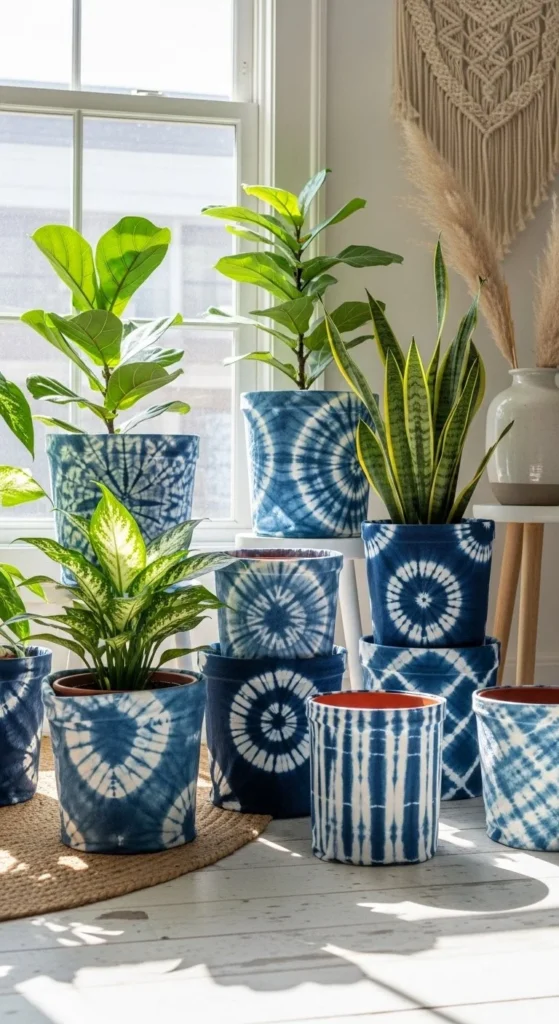
Fabric covers soften hard pots. Shibori dye adds pattern without loud color. Wrap fabric around existing planters and secure with stitching or ties.
Keep patterns loose. Perfect symmetry breaks the handmade feel. Indigo pairs well with clay, wood, and greenery. Wash fabric before use to prevent color transfer.
These covers work best indoors. Moisture outdoors fades dye faster. Swap them seasonally for variety without replacing plants.
If dyeing feels complex, use tie-dye kits with simple folds. The result still reads organic. This approach adds subtle pattern play without clutter.
14. Woven Basket Gallery Wall
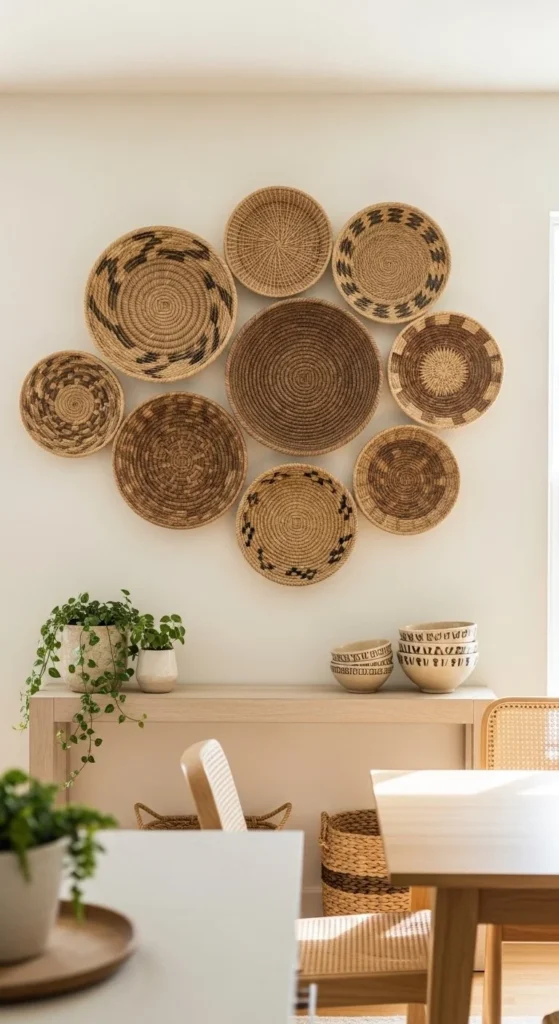
Baskets aren’t just for storage. On walls, they add texture fast. Mix sizes but keep colors consistent. Natural fibers work best together.
Arrange baskets on the floor first. This avoids uneven spacing later. Use removable hooks for flexibility. Keep gaps between pieces so each basket breathes.
This works well in dining spaces or stair walls. Avoid placing near busy furniture. Let the wall stay calm.
If baskets feel too rustic, mix in one smooth ceramic plate. That contrast adds balance. The wall reads as curated texture, not decoration overload.
15. Floor-Level Boho Seating Corner
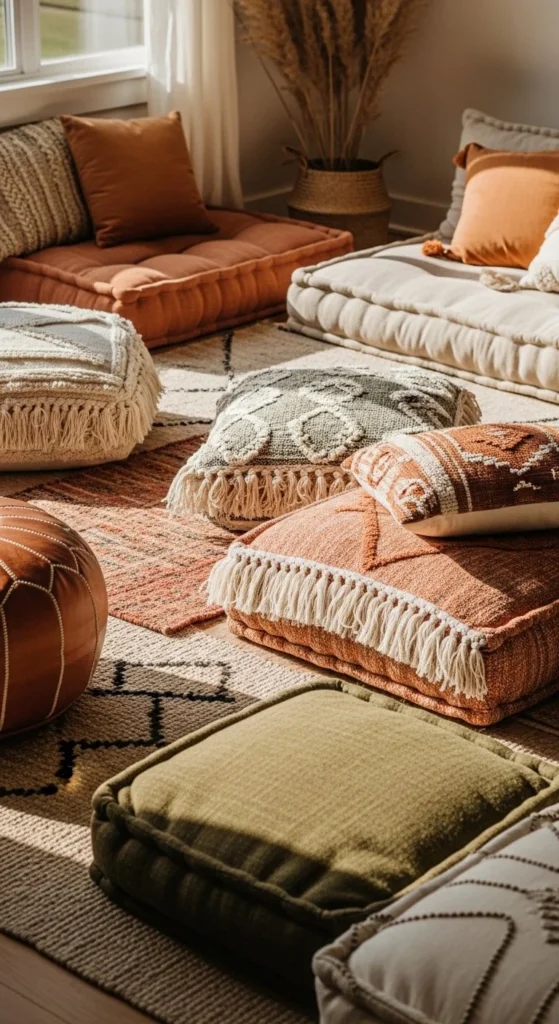
Floor seating encourages relaxed layouts. Start with one rug as the base. Add cushions in varied shapes. Keep colors within one palette.
Poufs work better than stiff cushions. They shift easily and hold shape. Layer textures instead of patterns. Linen, wool, and cotton balance each other well.
This setup fits small rooms or corners that feel unused. Keep furniture low nearby to maintain flow. Avoid placing it near walkways.
Add one side table or tray for function. Too many objects make the area feel crowded. The goal is informal comfort, not an arrangement.
16. Mirror with Rope-Wrapped Frame
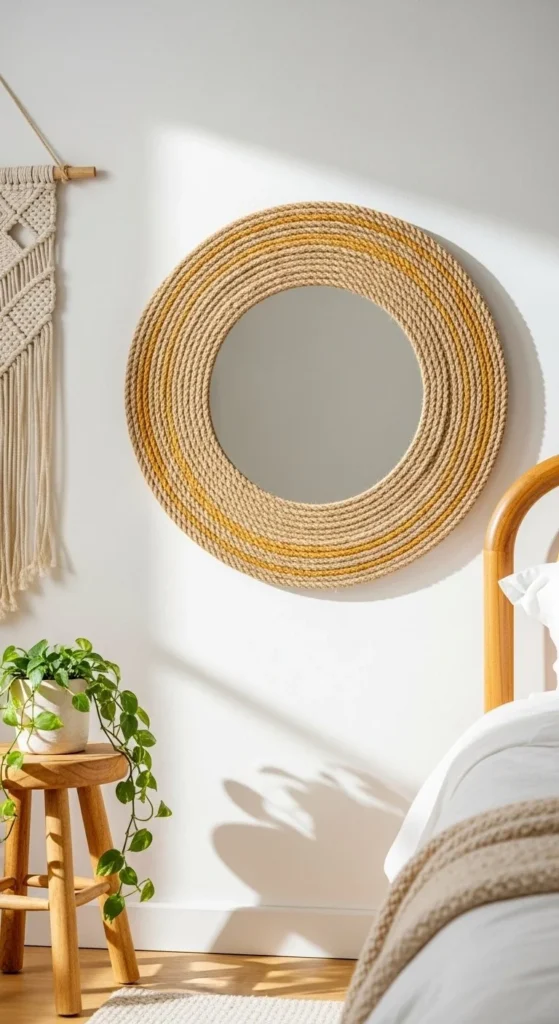
A rope frame changes how a mirror reads. It shifts from reflective object to textured decor. Start with a plain mirror. Wrap rope evenly around the edge, keeping tension consistent.
Thicker rope creates a bold outline. Thinner rope feels lighter and more subtle. Secure ends at the back so the front stays clean. Avoid overlap bumps along the frame.
This mirror works well in bedrooms, bathrooms, or entryways. Keep surrounding decor minimal. Rope already carries visual weight.
If humidity is high, seal the rope lightly. This prevents loosening over time. The finished piece feels grounded and material-forward, not decorative fluff.
17. Hanging Beaded Curtain Divider
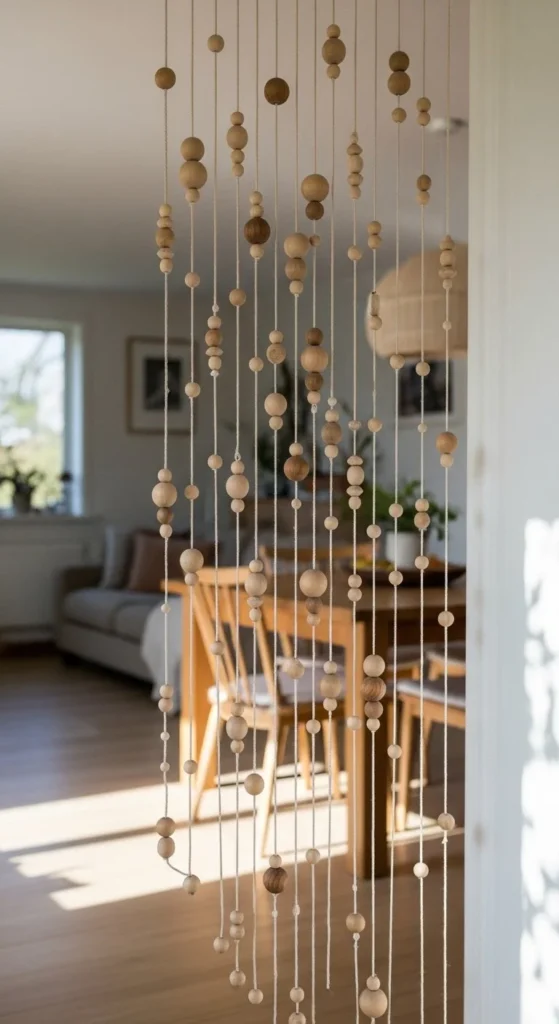
Beaded curtains divide space without closing it off. Wooden beads feel warmer than plastic. String beads in uneven lengths for movement.
Hang from a simple wooden rod or dowel. Keep spacing even so light passes through cleanly. This works best in doorways or between zones in open layouts.
Avoid heavy patterns nearby. Let the beads do the work. They catch light and motion naturally as people move.
If sound bothers you, space beads slightly farther apart. The divider stays visual without constant contact. This piece adds gentle separation, not walls.
18. Faux Dried Grass Arrangement
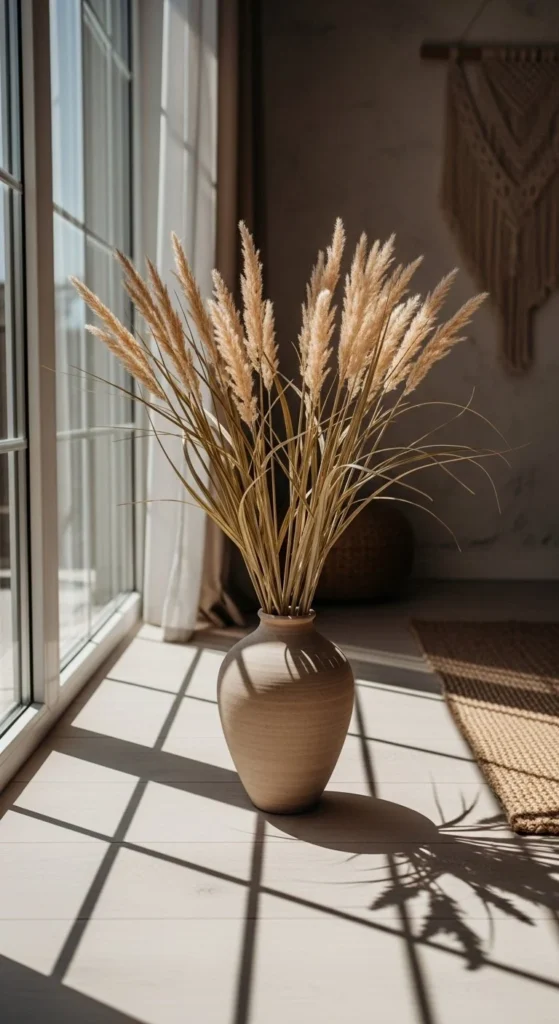
Dried grasses add height without effort. Faux versions solve maintenance issues. Choose stems with irregular shapes and muted tones.
Use tall vases with weight at the base. Let stems fan out naturally. Avoid symmetry. Slight chaos feels more natural.
This works in corners, beside sofas, or near windows. Keep the surrounding area clear so the arrangement stands alone.
If grasses feel too tall, trim unevenly. The result looks intentional. This styling choice brings quiet structure to open areas.
19. DIY Rope Ottoman Stool
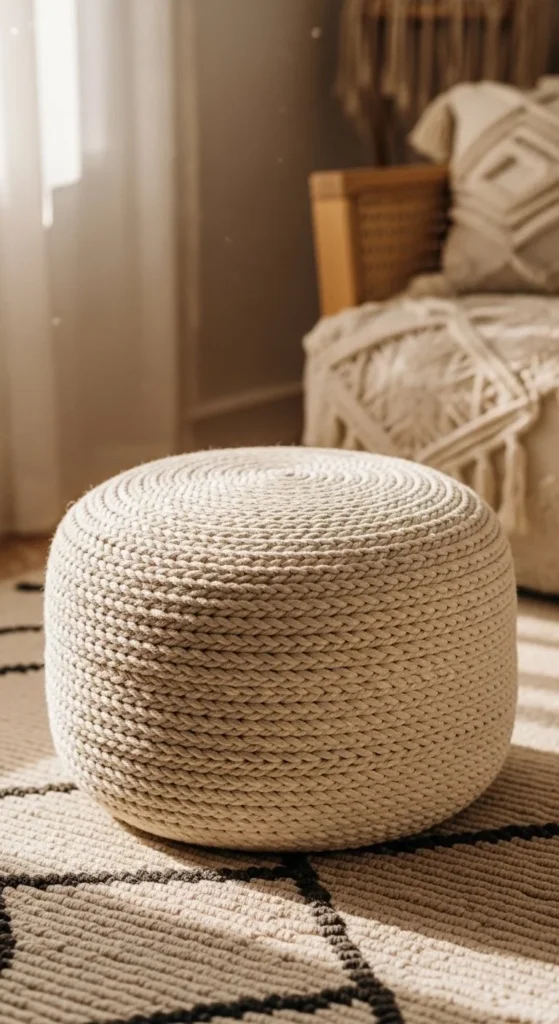
Rope ottomans combine seating and texture. Start with a sturdy base like a wooden stool or plastic crate. Wrap rope tightly from top to bottom.
Use strong adhesive and work in small sections. Keep coils aligned. Minor imperfections add character.
These stools work well as side tables, footrests, or extra seating. Pair with soft furnishings to balance the firmness.
Avoid placing near slick surfaces. Rope belongs with wood, linen, and plants. The finished piece feels solid and tactile, not decorative only.
20. Boho Outdoor Patio Corner
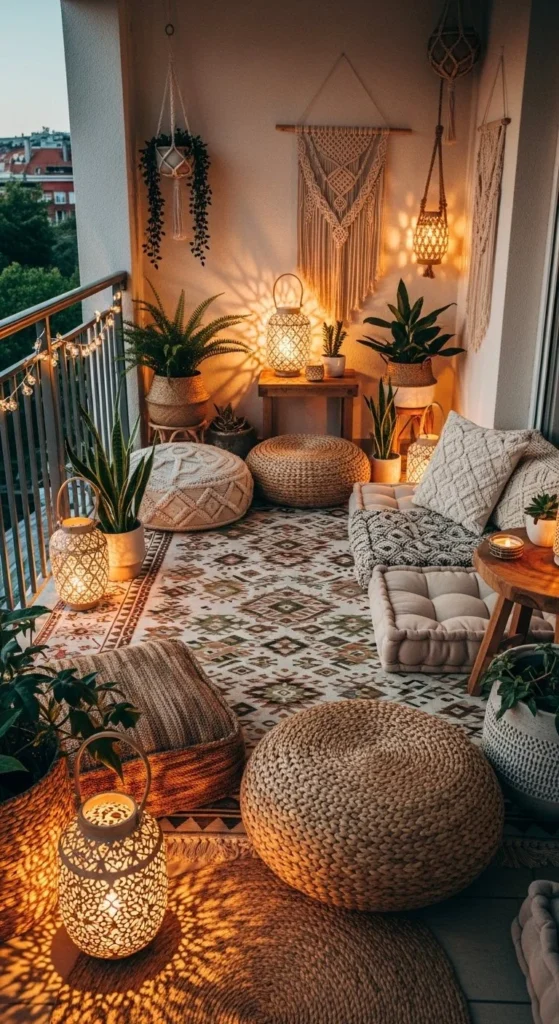
Boho style carries well outdoors. Start with weather-friendly rugs and cushions. Layer textures rather than colors.
Use poufs and low tables for flexibility. Keep decor minimal so cleaning stays simple. Plants soften hard surfaces.
Covered patios work best. Direct rain wears textiles quickly. Store cushions indoors when not in use.
This setup turns unused outdoor space into a calm retreat. The key is restraint. Let texture lead the design, not objects.
21. Twig and Yarn Nature Loom Wall Art
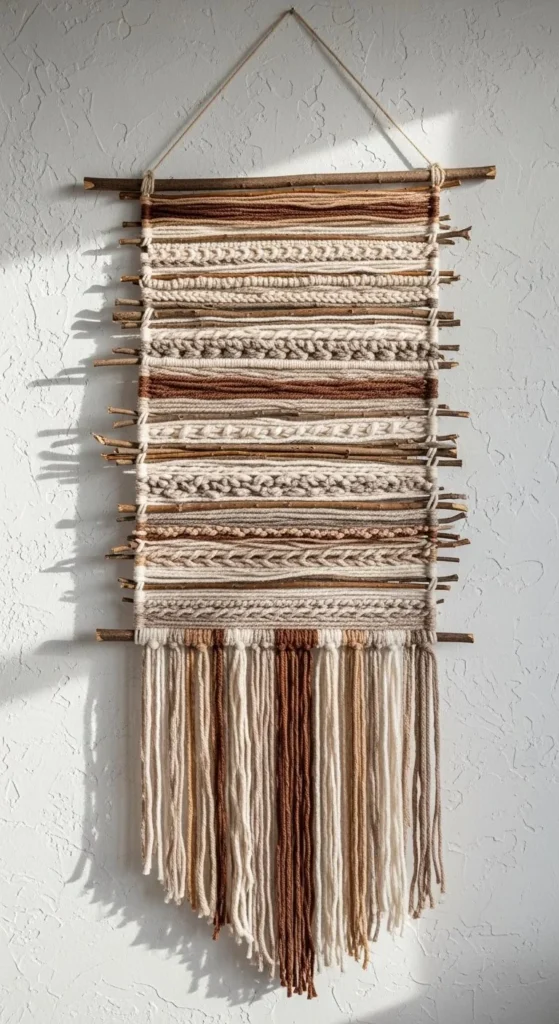
Nature looms bring raw texture indoors. Start with fallen twigs of similar thickness. Tie them together loosely. Weave yarn, fabric scraps, or rope through the gaps.
Keep the weaving uneven. Perfect lines remove the handmade feel. Use muted tones so materials stay the focus. This piece works best on blank walls where texture feels missing.
Hang it alone or as the center of a small grouping. Avoid placing near framed art. The contrast feels forced. Let the fibers breathe.
This project costs almost nothing. Everything can be sourced outdoors or from fabric leftovers. The result feels earth-connected and quiet, not decorative for show.
22. Boho Ladder Display with Textiles
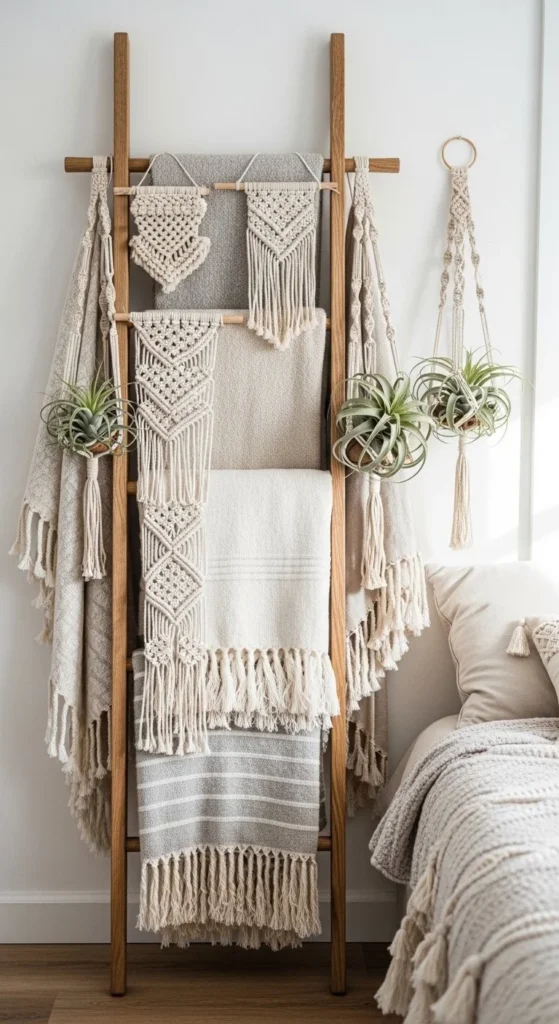
Decor ladders add height without shelves. Lean it gently against the wall. Drape textiles loosely across the rungs.
Stick to lightweight fabrics. Heavy items pull attention downward. Neutral tones keep the ladder calm rather than busy.
This works well in bedrooms or living rooms. Use it to display throws you already own. That keeps the setup functional.
Avoid overfilling. Empty space matters here. The ladder should read as structure first, not storage.
23. Clay Pot Cluster Table Centerpiece
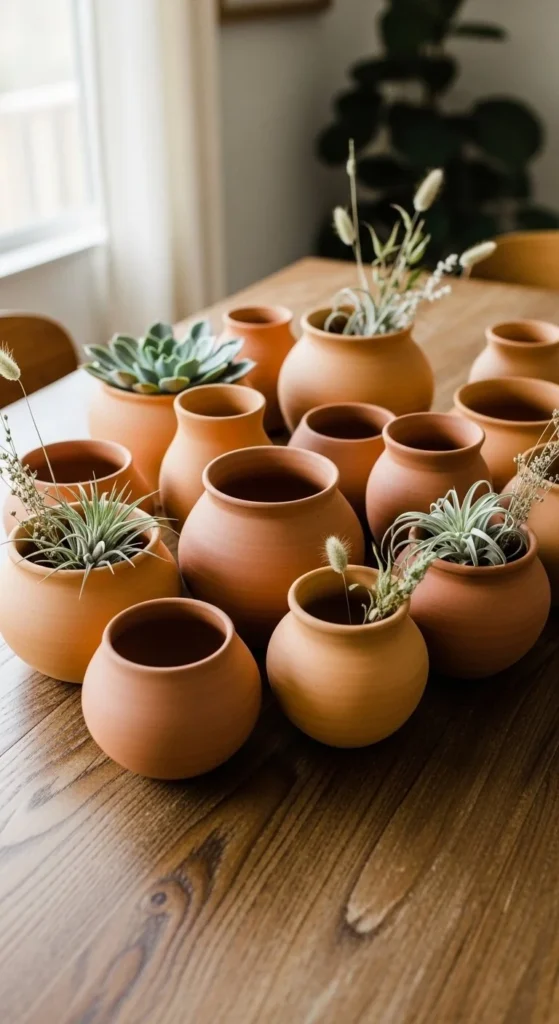
Clay pots don’t need plants to work. Group them empty or with dried stems. Vary heights for balance.
Keep colors natural. Painted pots feel less grounded in this context. Odd-numbered clusters work best visually.
This centerpiece fits dining tables, consoles, or coffee tables. It adds texture without blocking sightlines.
Rotate pieces occasionally to keep the setup from feeling static. This styling relies on form and repetition, not decoration.
24. DIY Fabric Fringe Wall Border
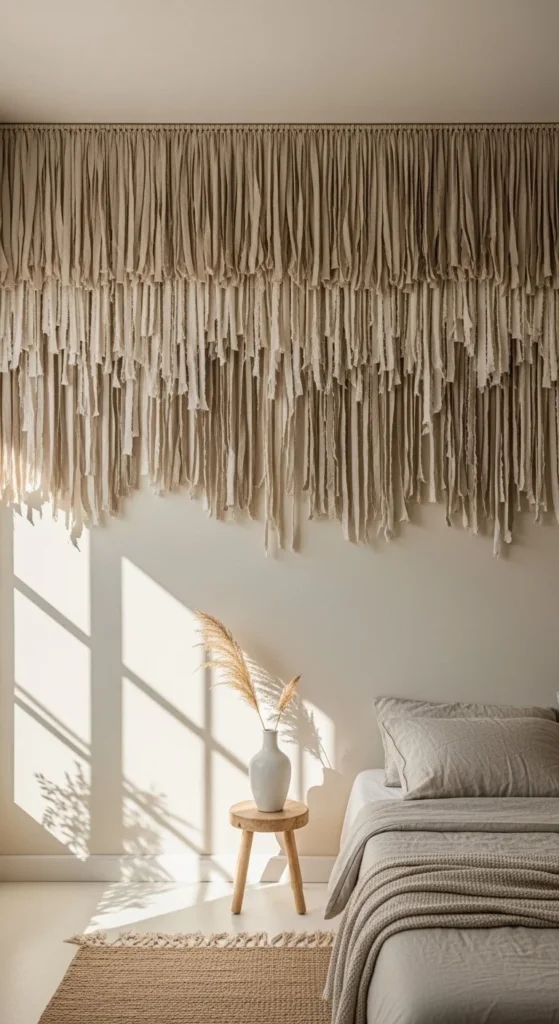
Fringe doesn’t have to hang low. Applied as a wall border, it frames space softly. Cut fabric strips evenly and attach them along a slim backing.
Keep fringe short for a cleaner look. Long fringe feels heavy on walls. This works best near ceilings or above beds.
Stick to one fabric type for consistency. Mixing textures here feels messy. Neutral tones blend well with most rooms.
This idea works well in rentals using removable strips. The effect feels quietly expressive, not loud.
25. Upcycled Sweater Woven Cushion
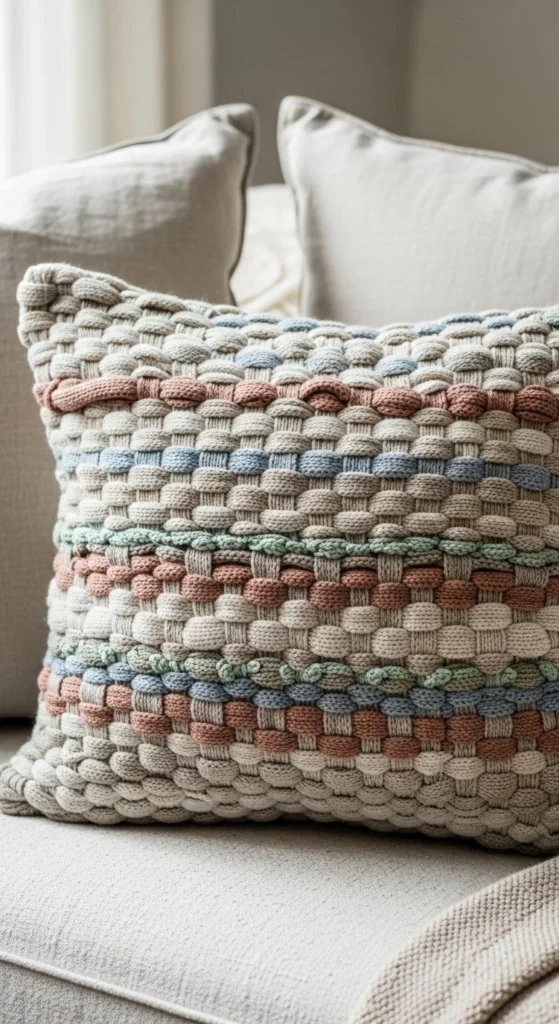
Old sweaters make excellent cushion material. Cut into strips and weave over a simple cushion base. Knit texture adds warmth instantly.
Stick to similar fabric weights. Mixing thick and thin knits causes uneven tension. Neutral sweaters age better visually.
This cushion works well layered with plain pillows. Let it stand out through texture, not color.
It’s a practical reuse project that adds comfort. The final piece feels soft, personal, and lived-in.

Leave a Reply