

1. Cozy Stone Fire Pit Circle
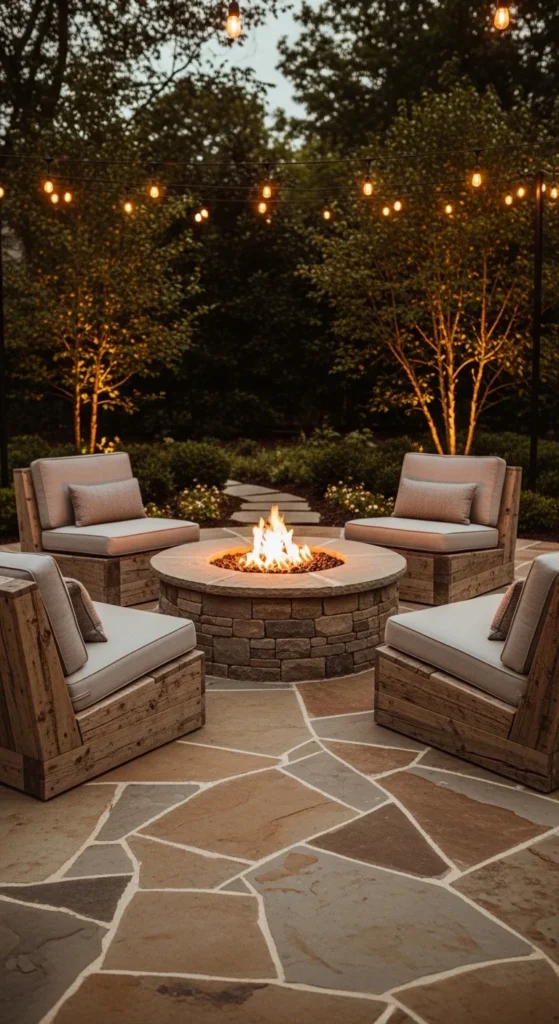
A fire pit turns any patio into a gathering magnet. Start with a circular layout so seating feels social rather than stiff. Natural stone or concrete kits keep costs predictable and install time short. For DIY builds, dry-stack pavers over a gravel base. No mortar. It allows small adjustments later. Add chairs with deep seats and washable covers for low stress upkeep. Warm firelight changes how the space feels once the sun dips. Keep a slim wood rack nearby so logs double as decor. If open flames aren’t allowed, use a gas bowl or tabletop fire feature. Layer in outdoor pillows with subtle texture instead of bold prints. It keeps the scene calm. Gravel or decomposed granite underfoot handles heat better than wood decking. For small patios, scale down to a square pit and built-in bench seating. One weatherproof lantern per chair adds balance without clutter.
2. Modular Sectional Lounge Setup
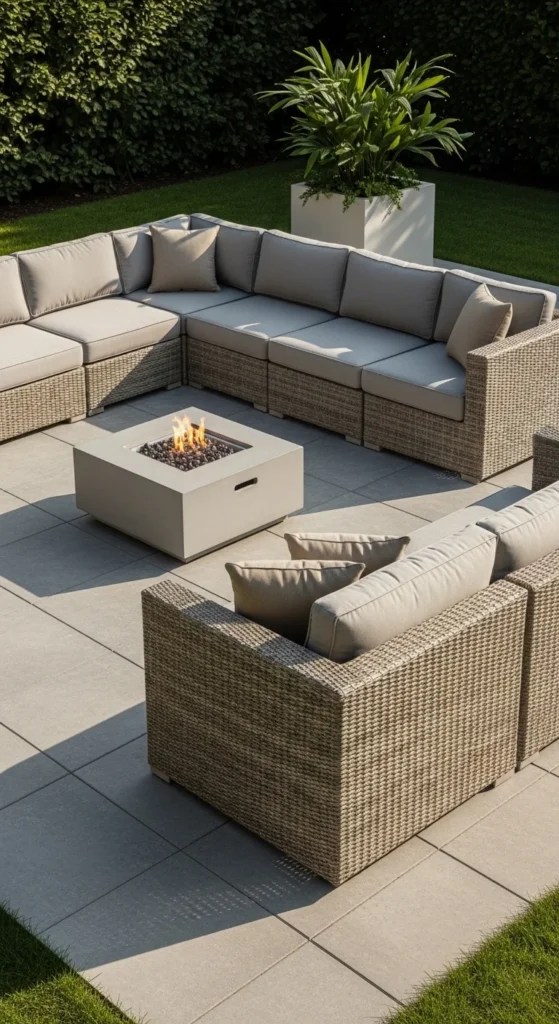
Modular seating works well when layouts change often. Start with two corner pieces and one armless chair. Rearrange as guests arrive. Look for aluminum or resin frames to avoid rust issues. Flexible seating keeps patios useful year-round. For tighter budgets, buy single modules over time instead of full sets. Use outdoor slipcovers to unify mixed brands. A low-profile coffee table anchors the setup and gives drinks a safe landing. If wind is an issue, choose heavier bases or add discreet furniture weights. Keep cushions neutral, then rotate accent pillows seasonally. Storage benches nearby help when rain rolls in fast. For renters, modular furniture avoids permanent changes while still feeling intentional. Place sections on an outdoor rug to stop shifting and define the zone.
3. Vertical Garden Privacy Wall
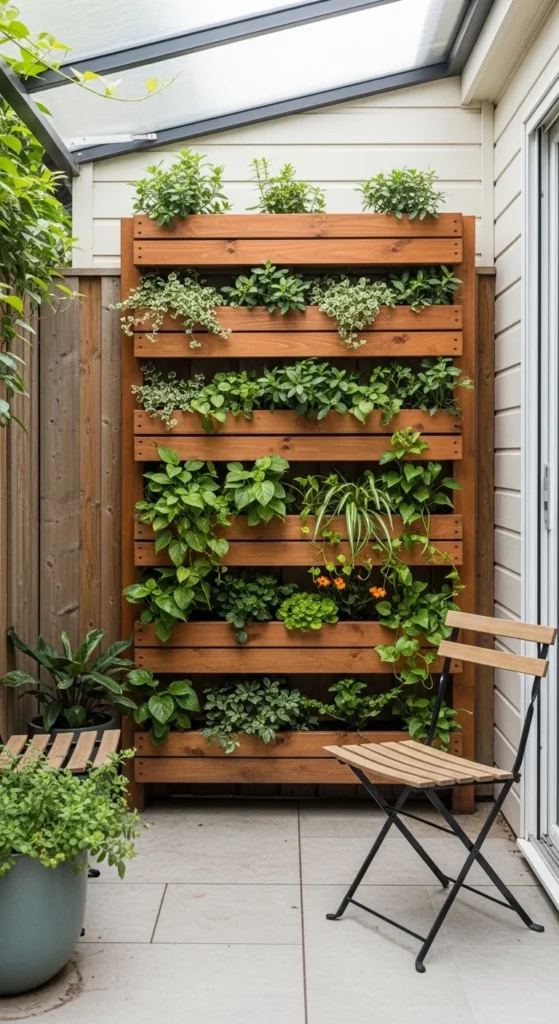
Vertical gardens solve two problems at once. Greenery and privacy. Use wall-mounted planters, pallet frames, or metal grids with pots. Herbs, ferns, and pothos work well outdoors in mild climates. Green walls soften hard patio surfaces without taking floor space. For DIY builds, line planters with landscape fabric to control moisture. Drip irrigation kits save time and water. If maintenance feels heavy, mix real plants with high-quality faux pieces. No one notices from a distance. Keep the base clear so airflow prevents mildew. For balconies or narrow yards, stagger planters instead of stacking straight up. It feels lighter. A simple bench placed in front turns the wall into a quiet sitting nook.
4. Pergola With Retractable Canopy
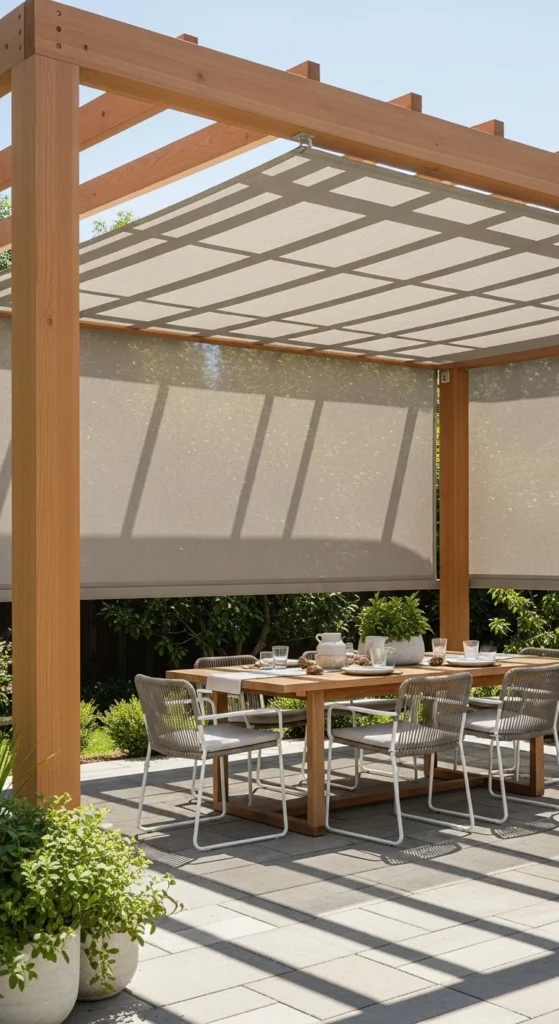
Pergolas give structure without closing the space in. A retractable canopy adds control during harsh sun or light rain. Aluminum kits assemble faster, while wood feels warmer. Shade control changes how often patios get used. For DIY installs, anchor posts with concrete footings to avoid wobble. Choose fade-resistant fabric in light tones to keep heat down. String lights or solar pendants mounted to beams handle nighttime use. If budgets are tight, start with the frame and add the canopy later. Curtains on two sides create privacy and block low sun. Keep furniture simple underneath so the structure stays the focus.
5. String Light Dining Zone
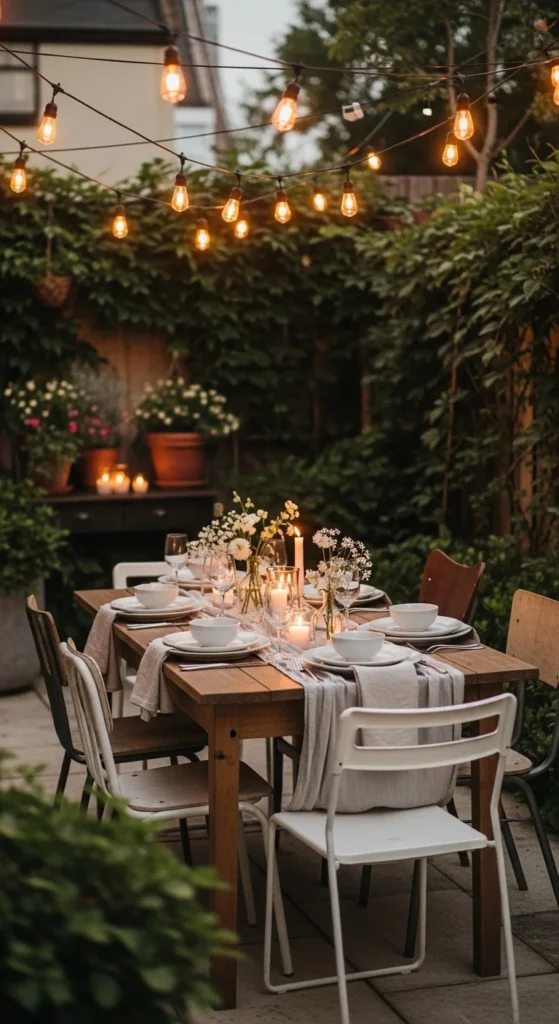
String lights change patios after dark. Hang them in a zigzag or gentle swoop to avoid a flat look. Warm LEDs feel calmer than bright white. Soft lighting makes outdoor dinners linger longer. For renters, use poles set in planters instead of drilling walls. Solar options cut wiring hassle. Pair lights with a compact bistro table or slim dining set to keep walkways clear. Wood or metal furniture both work if finishes are weather-rated. Add a simple runner or placemats for texture without fuss. Candles in hurricane jars add glow without wind issues. Keep cords tidy with clips so the setup feels intentional, not temporary.
6. Outdoor Kitchenette Corner
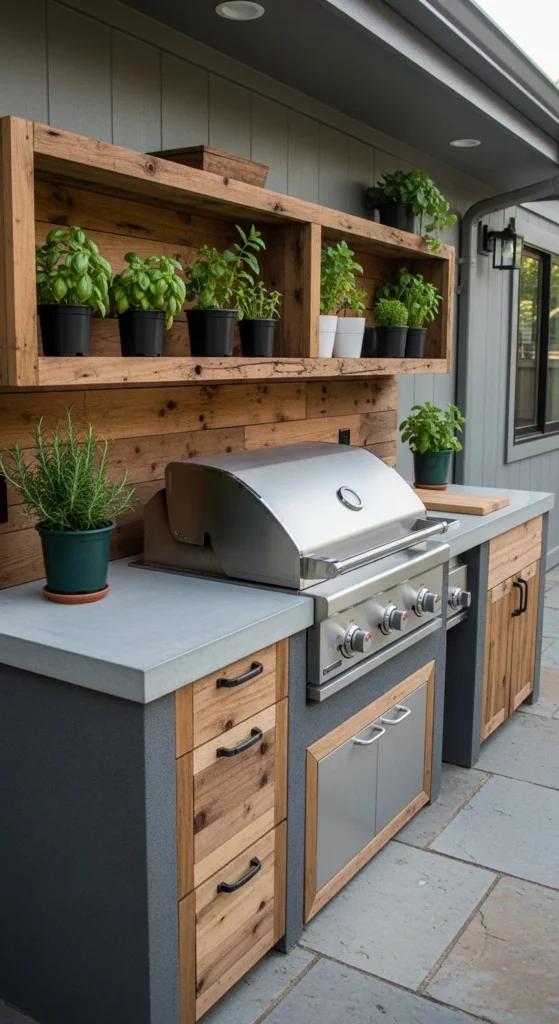
A kitchenette turns casual patios into hosting zones. Keep it compact. Grill, prep surface, and one shelf often cover most routines. Concrete or tile countertops handle heat and spills well. Small kitchens still handle big gatherings when layouts stay tight. For DIY builds, use weather-rated cabinets or masonry blocks with wood inserts. Open shelving avoids bulky doors and keeps airflow steady. Mount hooks for tools instead of drawers to save money. If plumbing feels like too much, skip the sink and add a nearby water station. Rolling carts extend prep space only when needed. Finish with herb pots so ingredients sit within arm’s reach.
7. Hammock Lounge Retreat
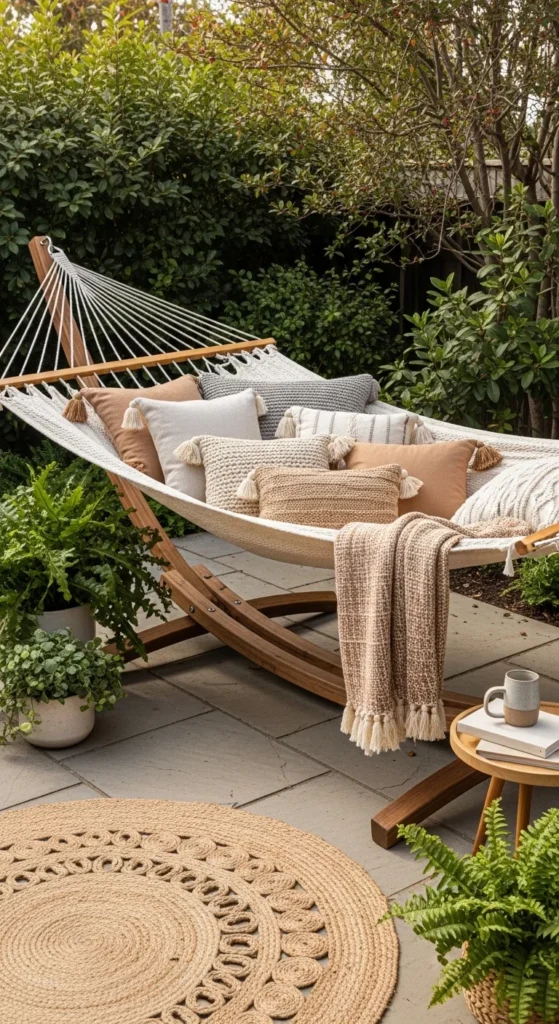
Hammocks invite slow afternoons. Choose stands if trees aren’t positioned well. Cotton blends feel softer than rope and photograph better. Gentle movement makes patios feel less rigid. Add one lumbar pillow for support, not five. It keeps the look clean. For small yards, a hanging chair offers a similar effect without taking much room. Place hammocks away from fire pits and walkways. A side table nearby handles drinks and books. When rain hits, unclip fabric and store it dry. The stand stays put.
8. Built-In Bench Seating
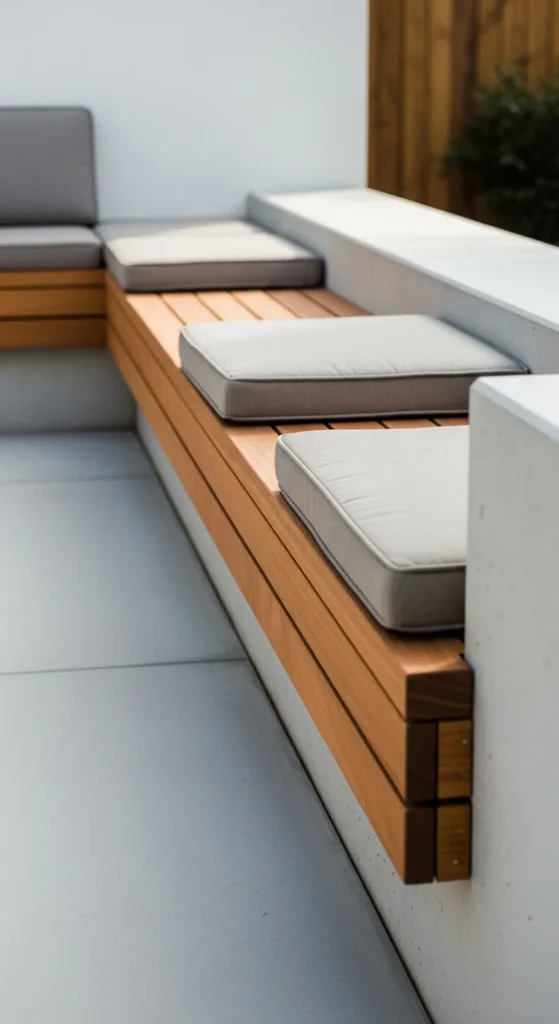
Built-in benches save floor space and guide traffic flow. They work well along fences or retaining walls. Use pressure-treated lumber or masonry bases for longevity. Fixed seating keeps patios organized during gatherings. DIY versions can double as storage with lift-up lids. Keep cushion colors light so the structure doesn’t feel heavy. Add small throw pillows for comfort without clutter. If backs aren’t built in, lean removable cushions against the wall. It allows layout tweaks later. Finish edges smoothly so guests don’t catch clothing or skin.
9. Outdoor Rug Layering
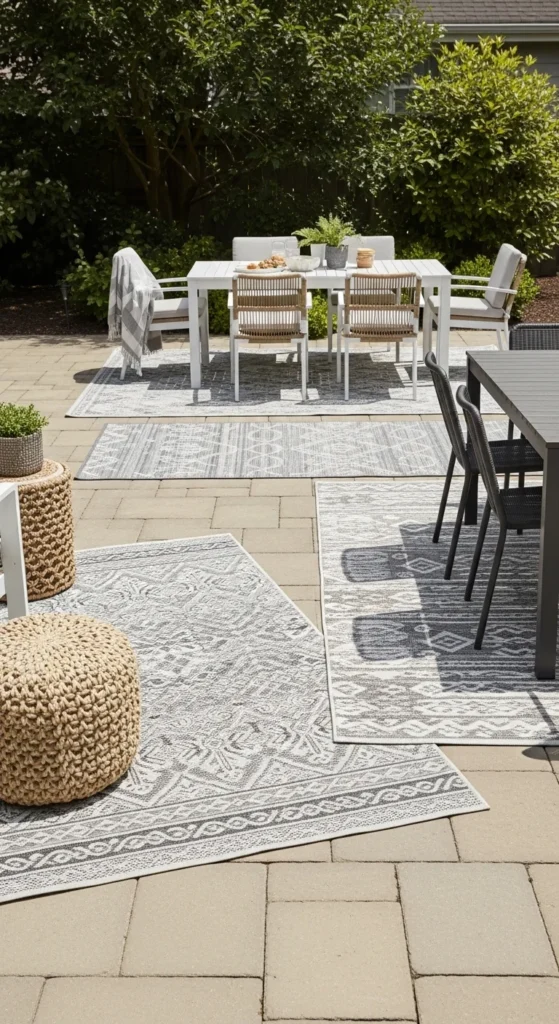
Rugs define zones on open patios. One under seating. One under dining. Flatweave styles dry faster after rain. Visual boundaries make patios feel planned. For budgets, polypropylene rugs last longer than natural fibers outdoors. Layering adds texture without furniture overload. Keep patterns subtle so furniture stands out. Secure corners with rug tape to prevent curling. In windy areas, heavier rugs behave better. Roll them up during storms to extend lifespan.
10. Water Feature Focal Point
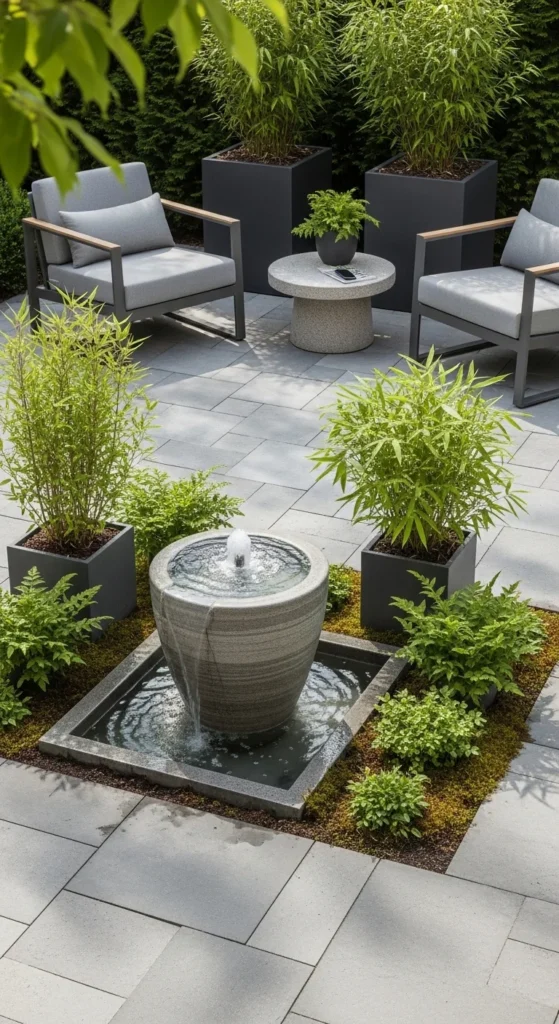
Water features bring sound that masks street noise. Small fountains work better than ponds for most yards. Plug-and-play kits install fast. Moving water shifts the mood instantly. Place the feature where it’s visible from seating, not tucked away. For DIY builds, use a glazed pot with a recirculating pump. Keep splashing minimal to avoid mess. Clean filters monthly so flow stays steady. Surround with plants to blend edges into the patio.
11. Hanging Egg Chair Statement
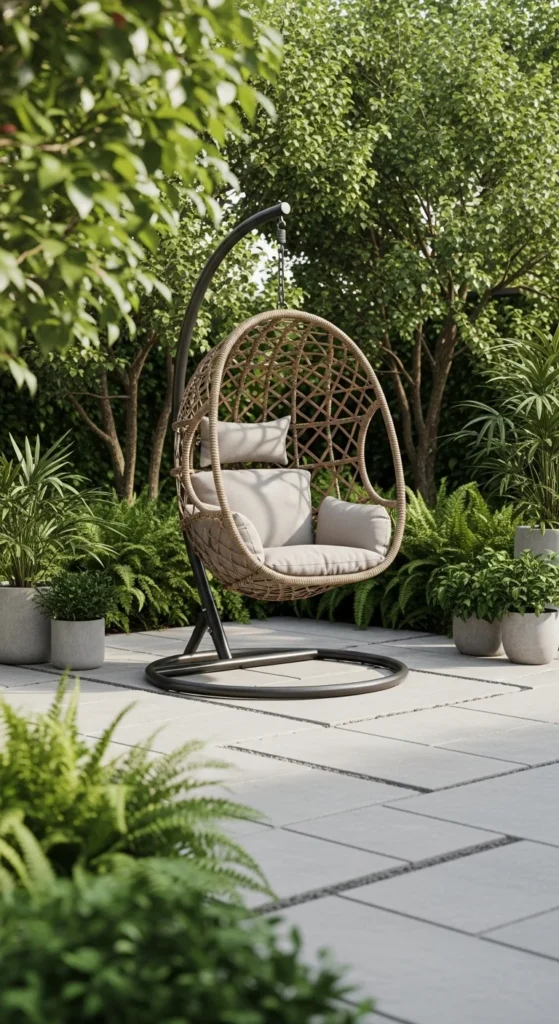
Egg chairs act like sculpture. One is enough. Too many crowd the space. Choose woven resin over natural rattan for weather tolerance. Statement seating adds personality fast. Place it slightly off-center so it feels intentional, not random. Neutral cushions keep it calm; add one accent pillow if color feels flat. For smaller patios, wall-mounted versions free floor space. Anchor stands properly so sway feels smooth, not shaky.
12. Multi-Level Deck Zones
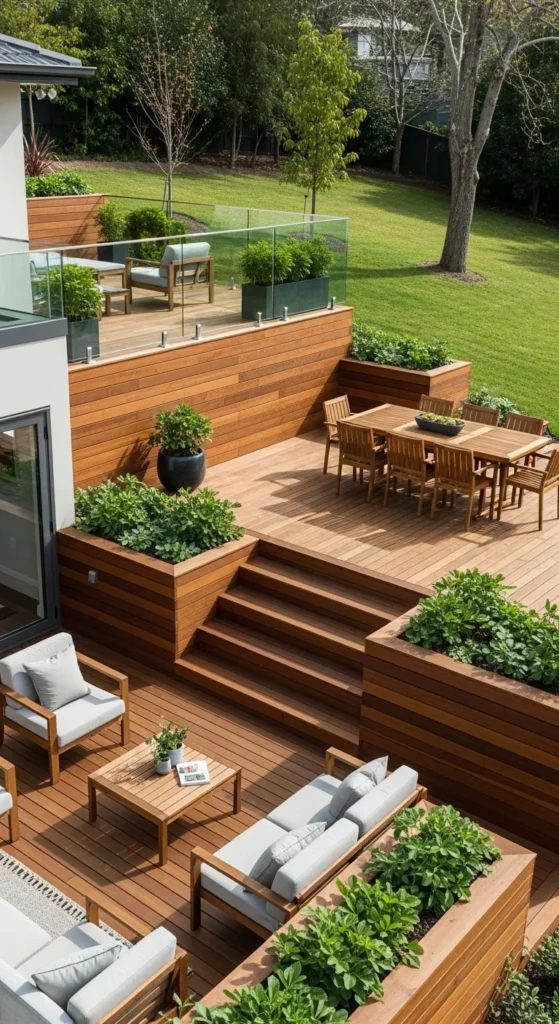
Tiered decks help uneven yards feel organized. Each level signals a different activity. Height changes create natural flow without walls. For DIY builds, keep rises low and uniform. It improves safety and comfort. Use the same decking material throughout so levels feel connected. Built-in steps double as seating during gatherings. Lighting along risers improves visibility at night. If full decking feels costly, combine one deck level with gravel or pavers below.
13. Bistro Dining Nook
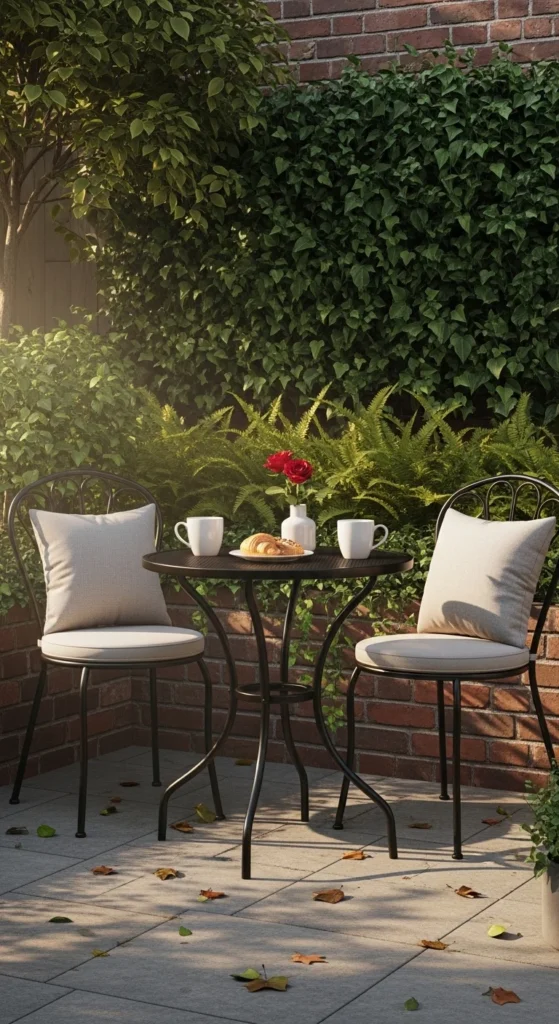
Bistro sets suit quiet meals and coffee breaks. They tuck into corners where full dining tables don’t fit. Small tables encourage daily use rather than special occasions only. Choose foldable chairs for easy storage. Metal handles weather better than wood in damp climates. Add a compact umbrella or wall-mounted shade if sun hits directly. Keep table decor simple. One plant or lantern does the job.
14. Solar Accent Lighting Path
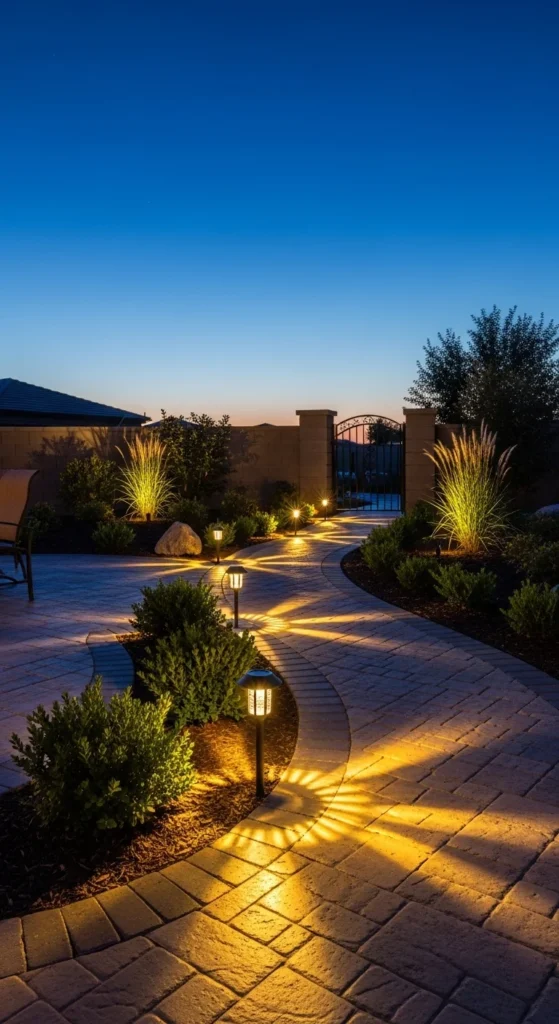
Solar lights handle safety and style at once. Line walkways or patio edges to guide movement after dark. Low lighting feels calmer than overhead glare. Choose warm tones to avoid harsh effects. Push stakes deep so fixtures stay upright. Clean panels occasionally so charging stays reliable. Mix stake lights with wall-mounted solar sconces for variety.
15. Pizza Oven Gathering Spot
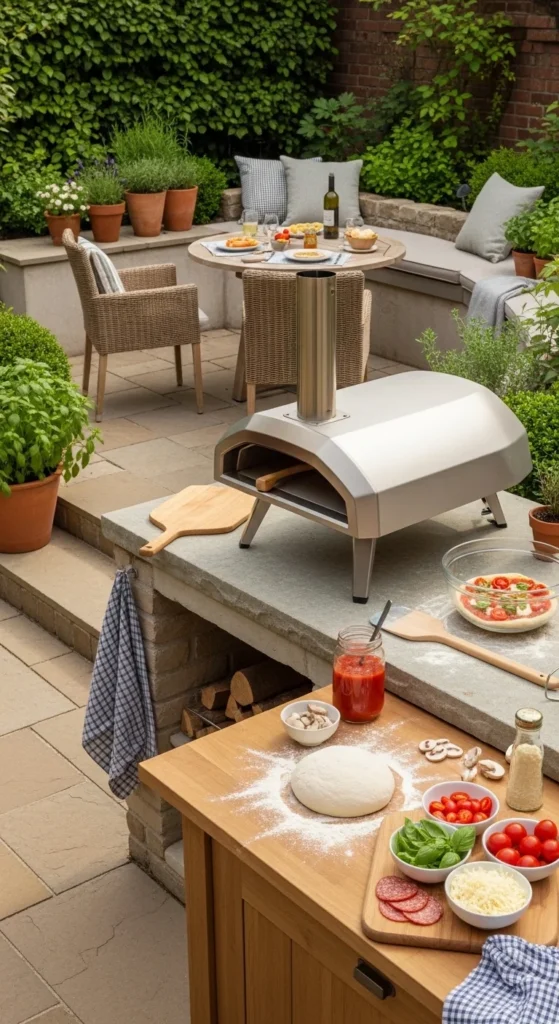
Pizza ovens turn patios into social centers. Countertop models cost less and heat fast. Cooking outdoors keeps guests nearby instead of stuck inside. Place ovens downwind from seating. Add a heat-resistant surface and a small prep table. Store tools on hooks to save space. If ovens feel like too much, a pizza stone on a grill gives a similar experience. Keep fire safety clear and simple.
16. Greenery Privacy Screen
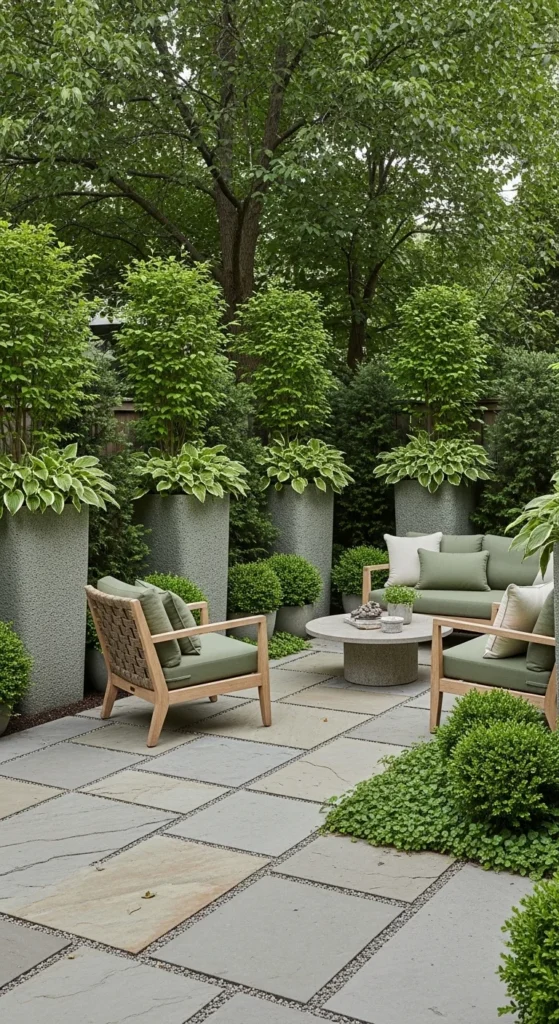
Privacy screens change how relaxed a patio feels. Tall grasses, bamboo, or shrubs work well in large planters. Green barriers feel softer than fences and shift with the seasons. For DIY setups, use lightweight fiberglass planters so rearranging stays easy. Line containers with drainage layers to avoid soggy roots. Mix plant heights so the screen doesn’t look flat. In windy areas, group planters closely for stability.
17. Bar Cart Entertaining Station
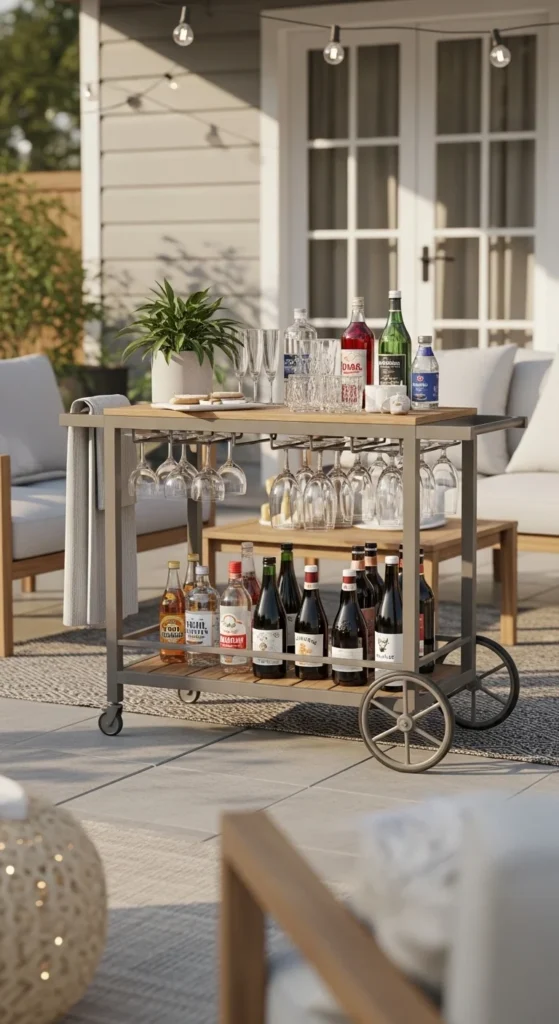
Bar carts keep hosting flexible. Roll them where people gather instead of fixing drinks in one spot. Mobility keeps layouts adaptable. Choose powder-coated metal frames for weather tolerance. Store liquids indoors when not in use. Add a tray to prevent spills while moving. For tight patios, slim carts fit between seating zones. A small plant or lantern keeps it from feeling utilitarian.
18. Composite Decking Surface
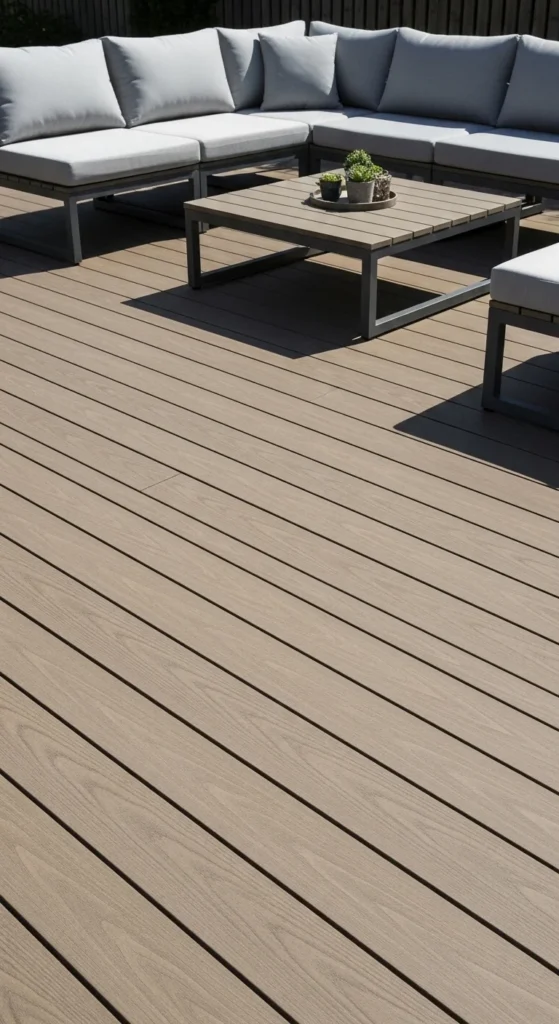
Composite decking handles moisture and sun without constant sealing. It works well for patios connected to homes. Low upkeep surfaces save weekends. Install boards with proper spacing for drainage. Match deck color to furniture for a cohesive look. For budget control, use composite only in high-traffic areas and mix with pavers elsewhere. Keep the design simple so the material doesn’t dominate visually.
19. Cantilever Umbrella Shade
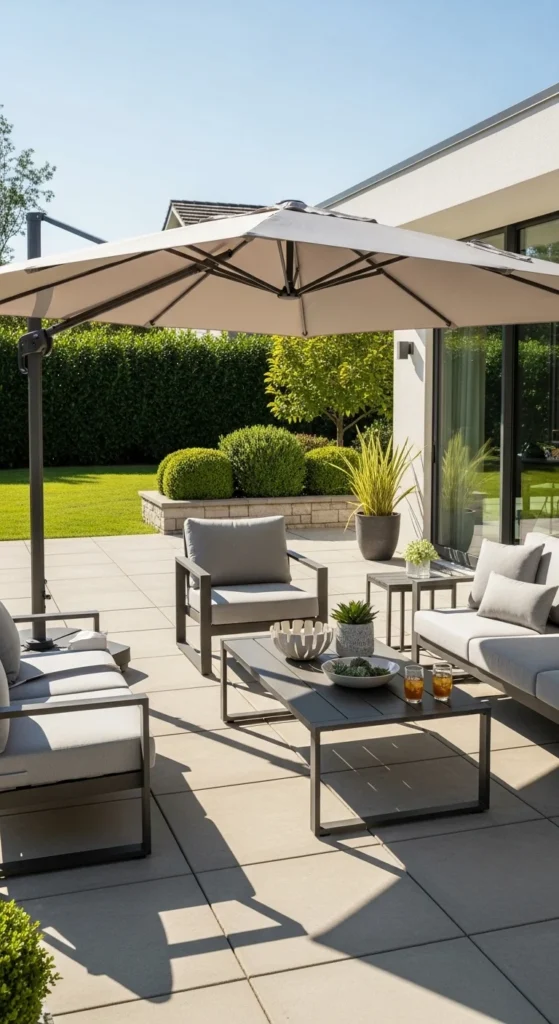
Cantilever umbrellas free space around tables. The base stays off to the side. Side-mounted shade covers more area without crowding seating. Fill bases fully so wind doesn’t shift them. Choose fade-resistant fabric in light tones. When storms approach, close and secure canopies to extend fabric life. Pair umbrellas with low seating so shade coverage feels balanced.
20. Herb Garden Patio Edge
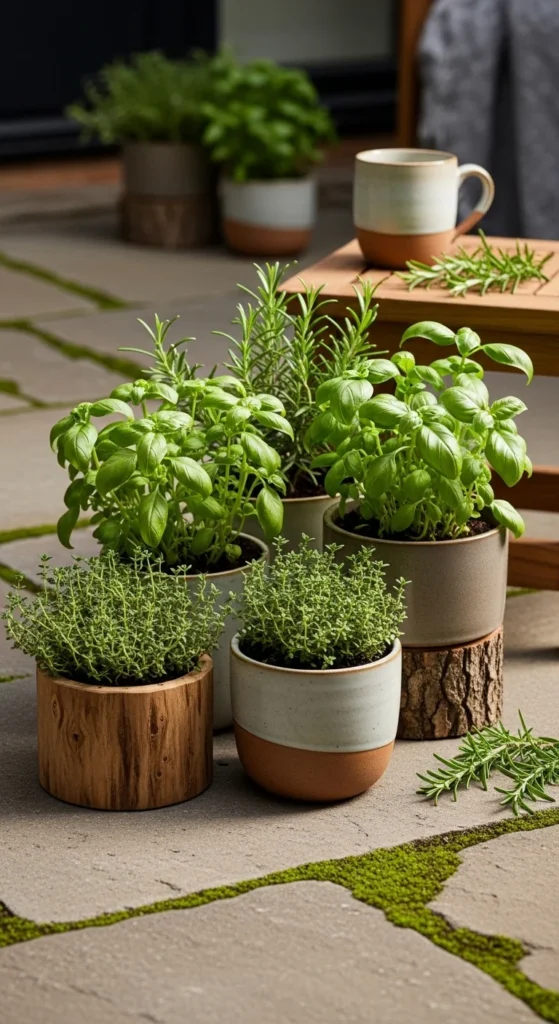
Herb gardens add scent and function. Border patios with low planters so greenery frames the space. Edible plants keep decor practical. Use matching containers to avoid visual clutter. For DIY builds, repurpose wooden crates with liners. Water early in the day so soil dries by evening. Even a few pots make outdoor meals feel more connected to the space.
21. Lounge Pod Hideaway
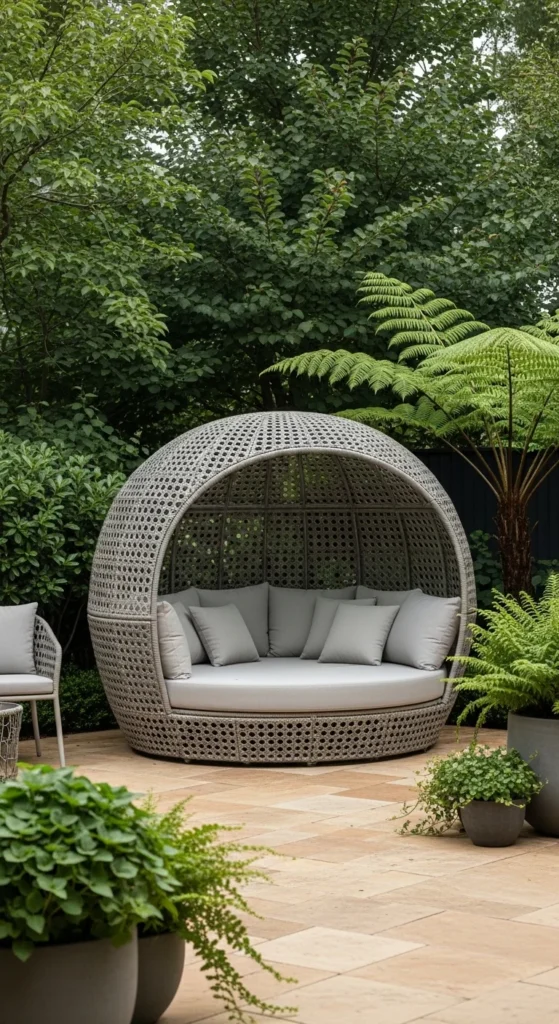
Lounge pods feel like private rooms without walls. They work best as a single focal piece rather than part of a set. Curved shapes soften patios filled with straight lines. Enclosed seating creates instant retreat energy. For smaller yards, choose half-shell designs instead of full enclosures to keep airflow moving. Look for removable cushions so cleaning stays simple. Position the pod where it catches morning or late-afternoon light, not harsh midday sun. Add one side table nearby so drinks don’t clutter seating. If budgets are tight, mimic the look with a canopy daybed and sheer outdoor curtains. It delivers the same sense of separation without the price tag.

Leave a Reply