

1. Vertical Plant Wall for Small Patios
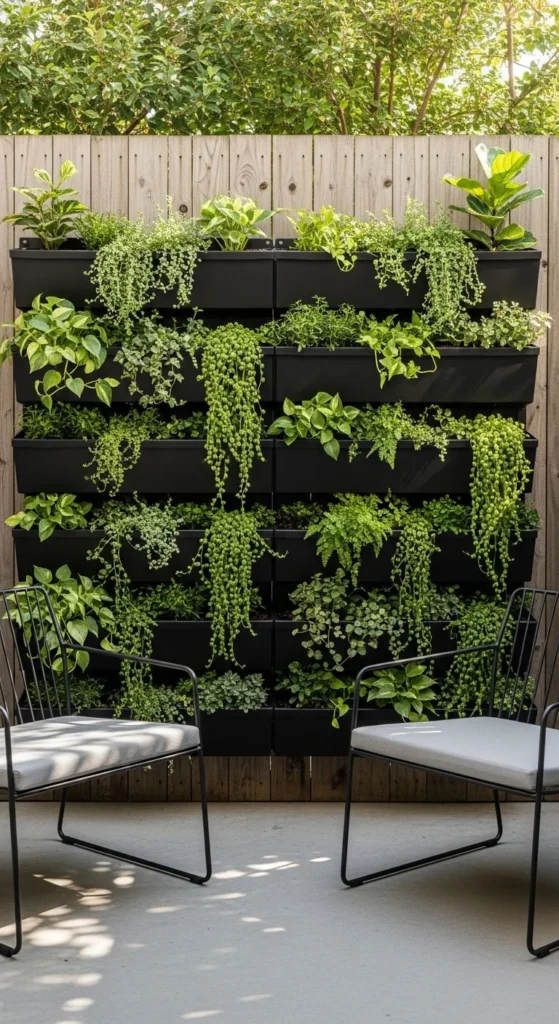
Vertical plant walls turn limited patios into layered green retreats. They free floor space while adding height and privacy. Modular systems snap together quickly and mount onto fences or exterior walls. Choose trailing plants for softness and upright growers for structure. Vertical garden layouts feel intentional when plant sizes vary. Use lightweight planters to reduce strain. For budgets, fabric pocket panels cost less and install fast. Line the base with a slim trough to catch water runoff. Pair the wall with narrow furniture to keep walkways clear. If sunlight shifts during the day, group plants by light tolerance. Rotate seasonal plants to maintain coverage. Drip irrigation kits simplify watering and reduce mess. Color cohesion matters. Stick to one planter finish for a calm look. Vertical planting also reduces visual clutter compared to scattered pots. It frames seating areas naturally and acts as a living backdrop. This approach works well for rental patios because most systems remove cleanly. When styled thoughtfully, one wall replaces several containers. The result feels lush without crowding. Small patios gain structure, privacy, and a garden-like atmosphere through vertical planting alone.
2. Succulent-Heavy Container Groupings
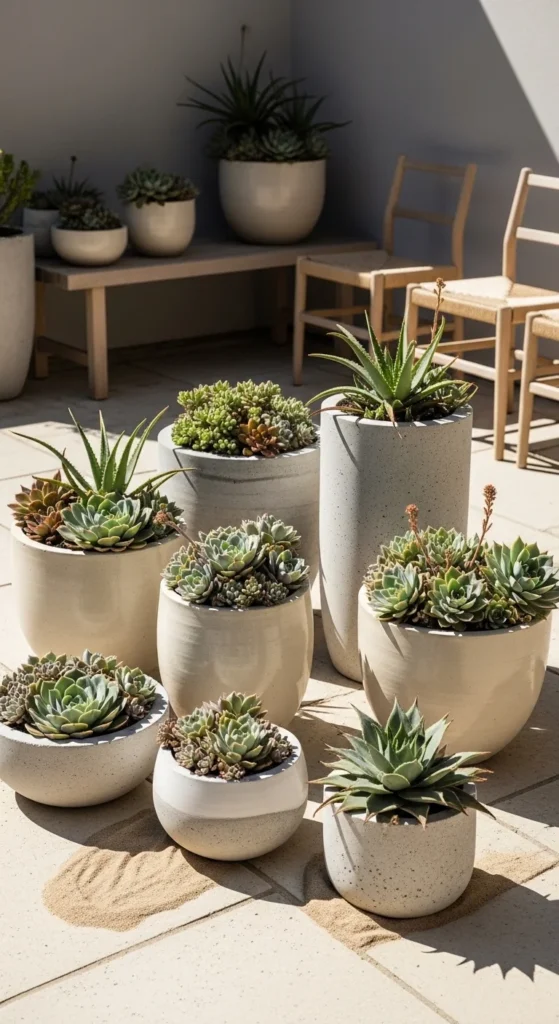
Succulents thrive in containers and suit patios exposed to heat. Their sculptural forms bring order without constant care. Use containers with drainage holes and gritty soil blends. Group pots in odd numbers for a relaxed look. Low maintenance planting works best when varieties share similar light needs. Keep color palettes restrained. Neutral containers highlight plant shapes. For cost control, mix premium pots with basic clay ones in matching tones. Elevate some containers on stools or crates to vary height. This adds rhythm without crowding. Succulents handle missed watering well, making them ideal for busy schedules. Avoid overcrowding. Airflow keeps plants healthy. Rotate pots quarterly so growth stays even. For colder climates, choose containers light enough to move indoors. Succulent groupings double as decor near seating or tables. They also line steps cleanly. Unlike flowering plants, they maintain structure year-round. This makes patios feel styled even off-season. Succulent containers offer consistency, visual calm, and a polished garden feel with minimal input over time.
3. Solar-Lit Plant Corners
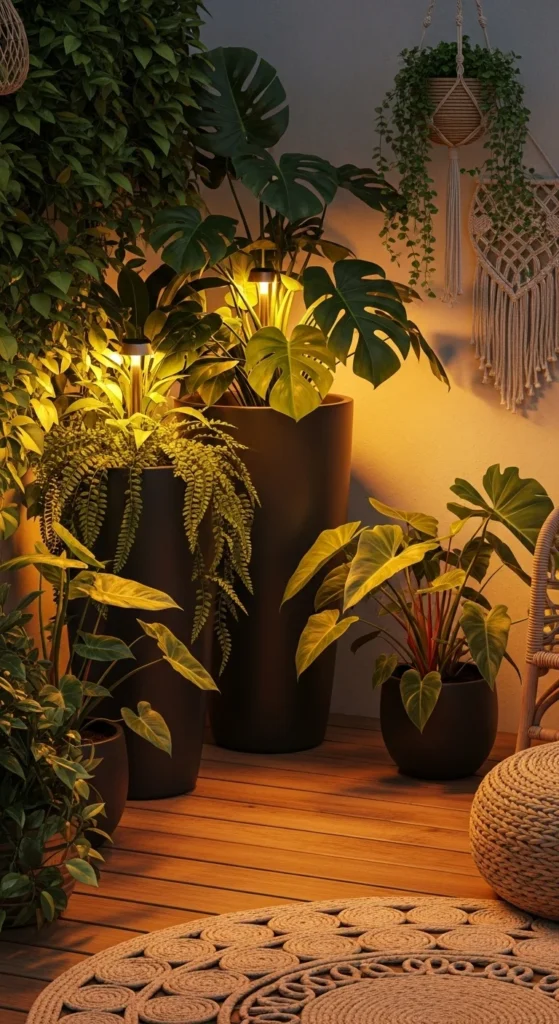
Lighting changes how patios function after dark. Solar lights woven into planters create ambiance without wiring. Position lights behind foliage so glow feels indirect. Warm tones suit greenery better than cool white bulbs. Outdoor oasis styling relies on contrast between shadow and light. Stake lights behind taller plants for depth. For smaller patios, clip micro lights along planter rims. This keeps pathways clear. Solar options recharge daily and switch on automatically. Choose weather-rated fixtures to avoid frequent replacements. Lighting also highlights leaf texture and movement at night. Keep spacing irregular to avoid a staged look. Pair lit plants with low seating for an inviting corner. Avoid over-lighting. Darkness adds calm. When done well, one illuminated planting zone defines the entire patio mood. It extends usability into evenings and cooler hours. Solar-lit plant corners combine function with atmosphere. They offer visual comfort without clutter or cables, making them ideal for compact outdoor spaces.
4. Sustainable Recycled Planter Layouts
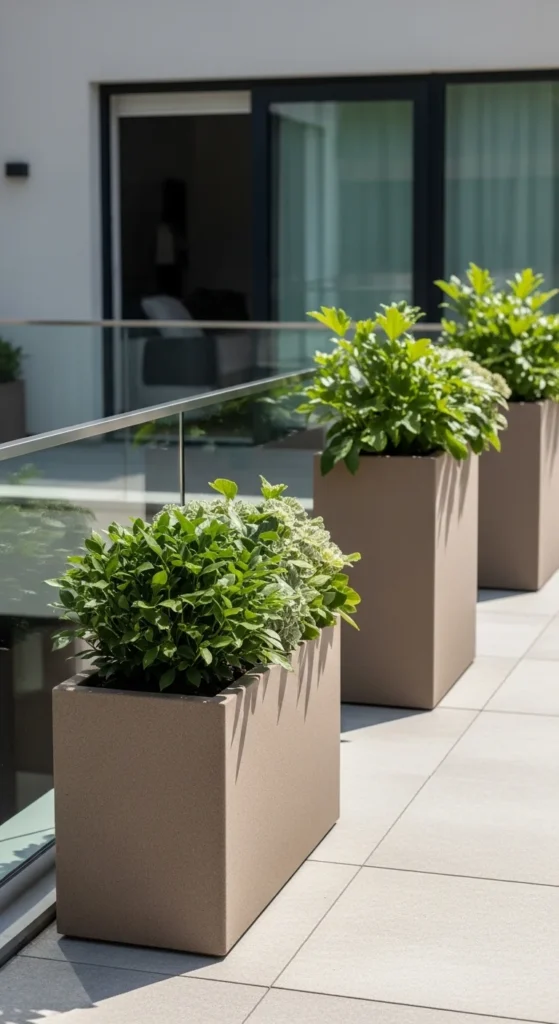
Recycled planters suit patios focused on longevity and ease. Composite materials resist cracking and fading. They weigh less than stone yet hold shape well. Container gardening feels simpler when planters last multiple seasons. Choose consistent shapes to keep layouts organized. Tall planters double as soft dividers along edges. For tighter budgets, replace only the most worn pots first. Mix sizes within one color family for cohesion. These planters pair well with native plants that handle local conditions. Less watering means less maintenance overall. Recycled materials also insulate roots better than thin plastic. This protects plants during heat swings. Arrange planters in lines rather than clusters for modern patios. Add wood or metal accents nearby for warmth. Sustainable layouts feel intentional without looking themed. They support greenery while keeping patios visually clean. Over time, durable planters reduce replacements and effort. This approach balances style, cost control, and long-term outdoor use with minimal fuss.
5. Native Plant Privacy Borders
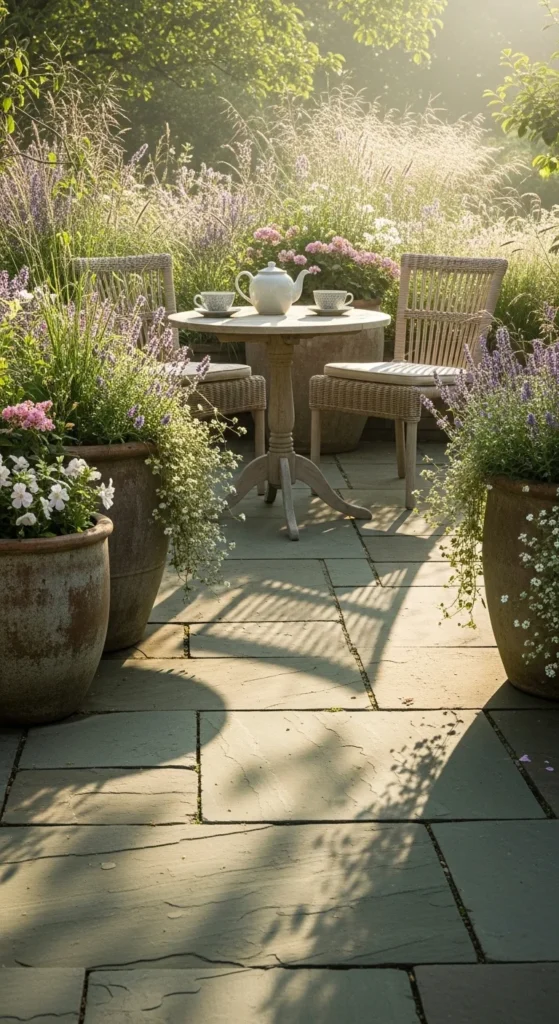
Native plants work as living privacy screens. They adapt well to local weather and soil conditions. Use tall grasses and flowering natives in grouped containers. Native plants require less watering once established. Arrange them along railings or patio edges. Stagger heights for fuller coverage. Containers allow flexibility for renters. Choose wide bases for stability in wind. Many natives attract pollinators, adding movement and sound. Trim lightly to keep borders tidy. For visual balance, repeat the same plant varieties rather than mixing many types. This reads cleaner from a distance. Pair borders with simple seating to avoid visual overload. Native privacy planting replaces fences with greenery. It softens hard lines and adds seasonal change. Over time, borders fill in naturally. They create separation without blocking light or airflow. This method offers privacy, texture, and a garden-like feel using plants already suited to the environment.
6. Hanging Planters for Airy Patios
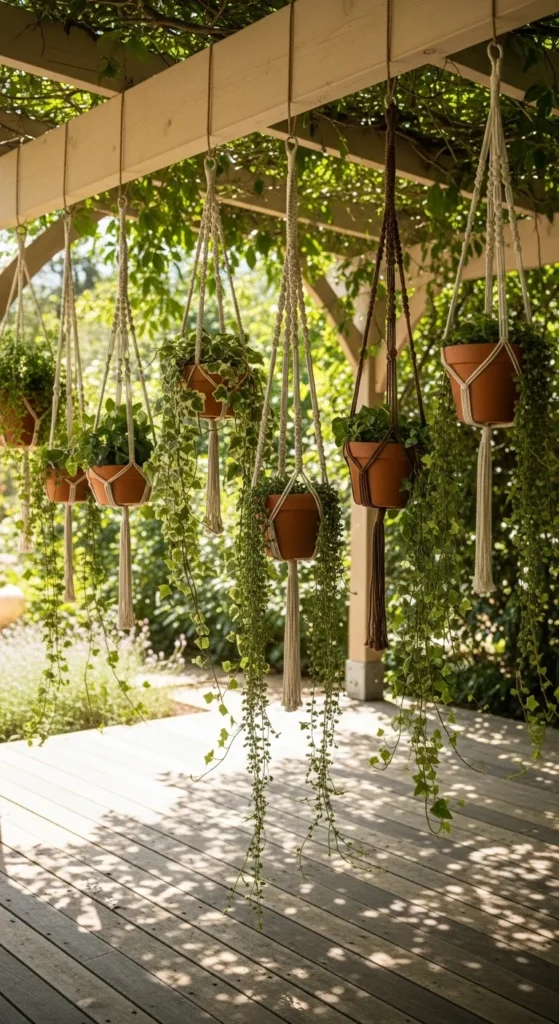
Hanging planters add greenery without crowding the floor. They work especially well on narrow patios and balconies. By lifting plants overhead, airflow improves and pests become less common. Hanging baskets create visual movement when plants trail downward. Choose lightweight containers to reduce strain on hooks. Rope and fabric hangers sway gently rather than pulling hardware loose. Space planters unevenly for a natural look. Keep watering simple by grouping plants with similar schedules. Drip trays prevent mess below. For windy locations, anchor hangers with discreet side ties. Trailing pothos, ivy, and philodendron perform reliably. Use pergolas, ceiling beams, or wall-mounted brackets. Avoid hanging directly over dining tables. Overhead greenery frames seating areas and softens hard lines. It also draws the eye upward, making patios feel taller. Seasonal swaps keep growth balanced. Hanging planters offer an easy way to layer plants while preserving walking space. They create an open, garden-like atmosphere without adding bulk or visual weight.
7. Modular Seating with Built-In Planters
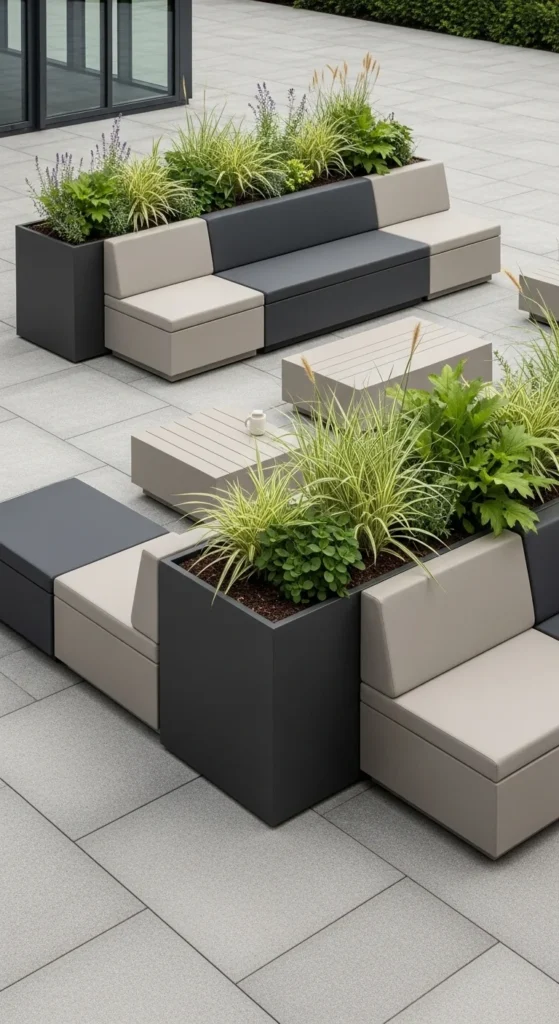
Furniture that incorporates planters simplifies patio layouts. Seating and greenery share one footprint. Outdoor oasis design benefits from this dual purpose. Built-in planters work well behind benches or between seating modules. They define zones without walls. Use shallow-root plants to avoid crowding. Herbs and grasses perform well in these spaces. Modular furniture allows rearranging as seasons change. For a budget option, place planter boxes directly behind standard benches. Secure them so they stay aligned. Keep cushion colors neutral to let greenery stand out. Integrated planters reduce the need for extra pots. This keeps patios uncluttered. They also create privacy between seating areas. Drainage is key. Always line planter compartments properly. With thoughtful placement, modular planter seating transforms patios into structured, green environments. It balances comfort and planting in one streamlined setup. The result feels intentional and organized while still relaxed.
8. Self-Watering Containers for Sun Exposure
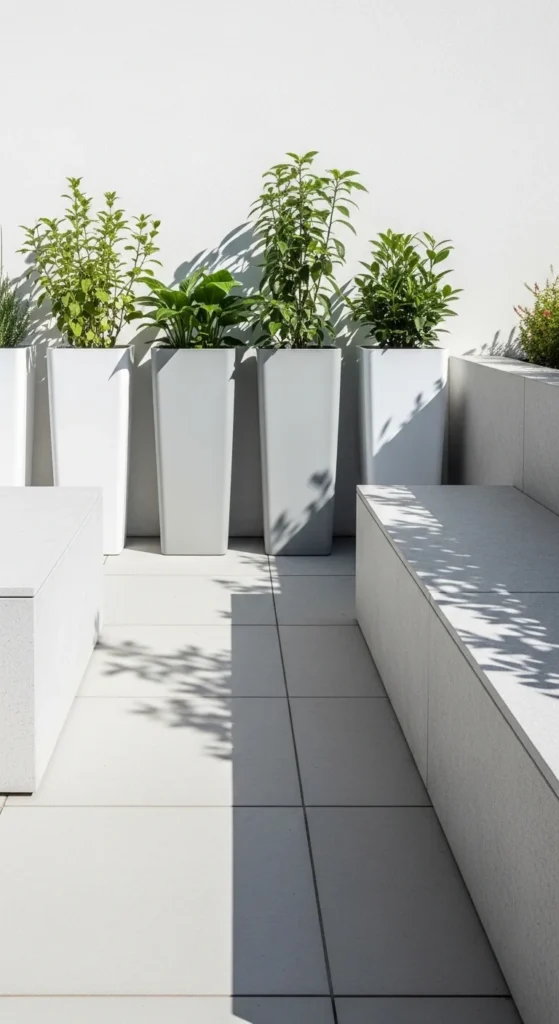
Self-watering containers simplify care in hot conditions. Built-in reservoirs regulate moisture steadily. Drought tolerant plants pair well with these systems. Fill reservoirs fully and monitor weekly. Choose taller planters to reduce evaporation. Many designs hide plastic inserts inside decorative shells. This keeps visuals clean. Use consistent container styles for a calm layout. Self-watering planters work well along railings and walls. They reduce daily watering routines. For small patios, limit quantities to avoid overwatering. These containers suit busy schedules and travel periods. They also help prevent stress during heat waves. Position them where runoff will not stain flooring. Combine with mulch layers for added moisture control. Self-watering systems support steady growth without constant attention. They make patios more forgiving while keeping plants healthy. This approach balances practicality with polished design, especially in sun-heavy outdoor spaces.
9. Climbing Vines on Slim Trellises
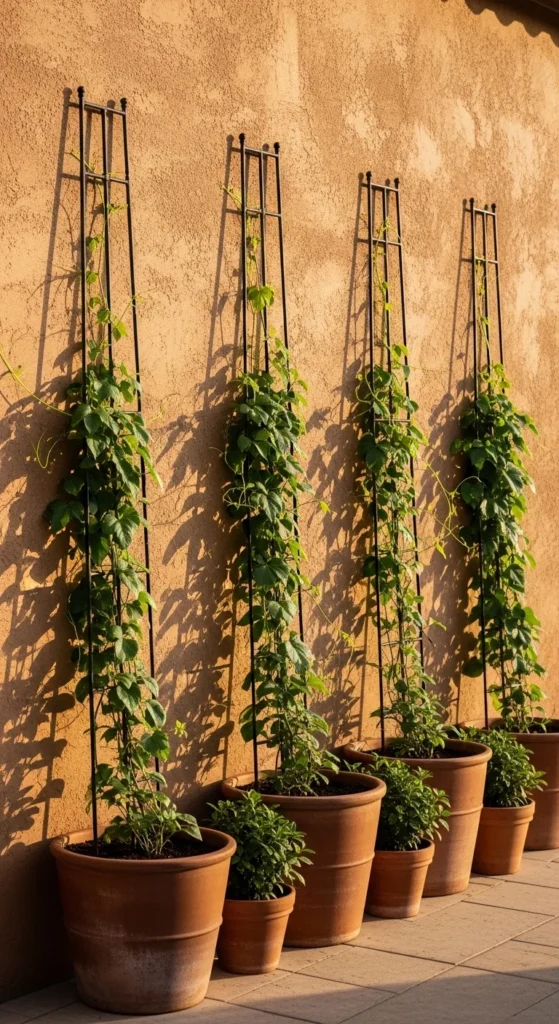
Climbing vines add height without heavy structures. Slim trellises install quickly and suit containers. Privacy screen effects develop as vines mature. Position trellises against fences or blank walls. Secure them firmly to handle wind. Choose fast growers for quicker coverage. Flowering vines add color and scent. Keep containers wide for root stability. Guide early growth with soft ties. Vertical growth frees floor space while softening hard surfaces. Trellised vines also filter light rather than blocking it. This keeps patios bright. Use repeating trellis designs for visual order. Prune lightly to maintain shape. Container-based vines allow flexibility for renters. They create separation and intimacy using living material. Over time, vines form natural backdrops for seating. This approach replaces bulky screens with greenery and movement.
10. Seasonal Container Color Rotations
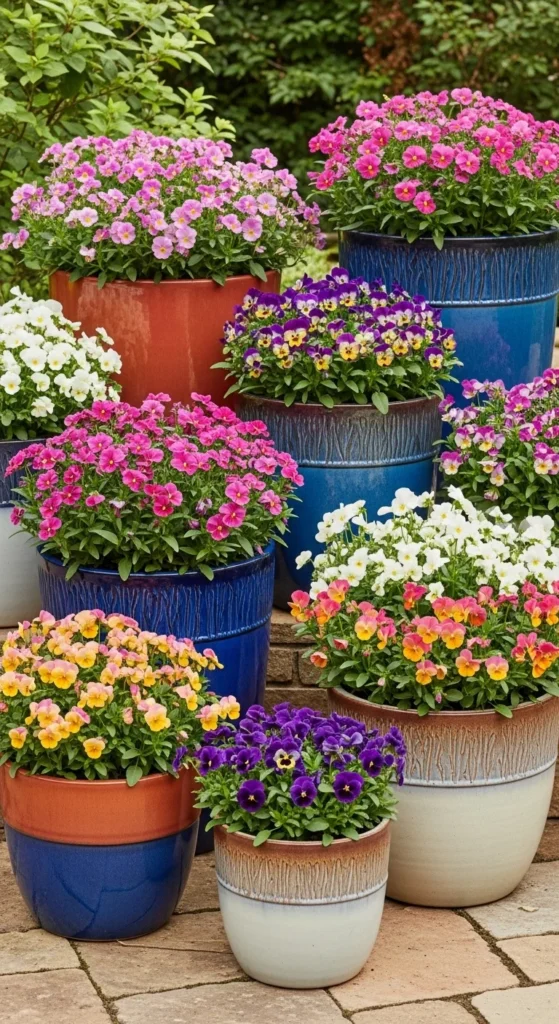
Seasonal container swaps keep patios visually engaging. Use the same planters year-round. Change plants instead. Container gardening becomes efficient with this method. Assign color themes per season. This keeps transitions smooth. Store off-season plants in shaded areas or garages. Choose containers that complement all palettes. Group plants by bloom time for consistent color. Seasonal rotation also refreshes soil naturally. Keep layouts consistent so the patio feels familiar. This approach avoids buying new decor. It relies on plant changes alone. Even small patios benefit from seasonal rhythm. Swapping plants resets the mood without rearranging furniture. Use simple labels to track varieties. Seasonal color cycles add interest while maintaining structure. The patio stays lively and intentional throughout the year.
11. Potted Herb Corners for Edible Patios
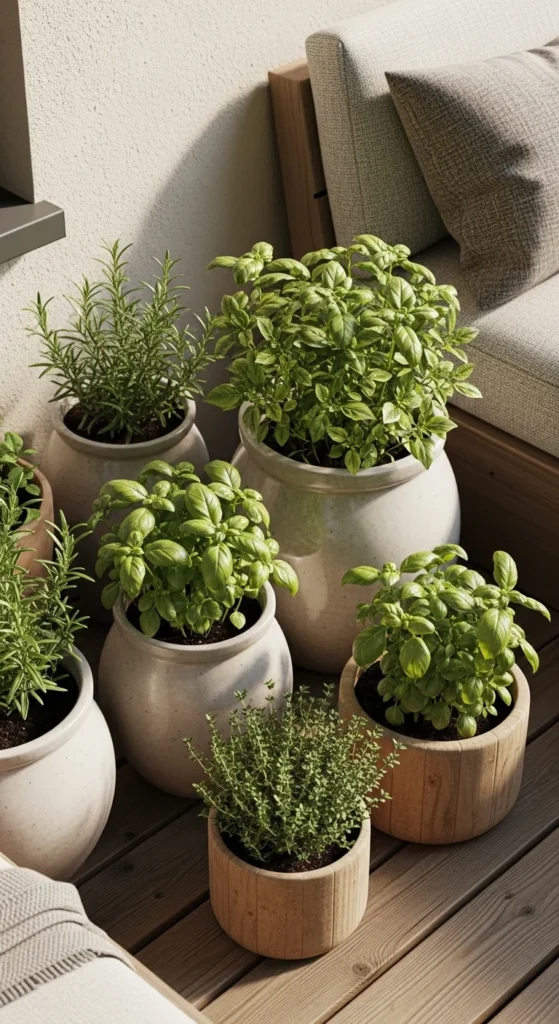
Growing herbs in containers adds function to patios. Edible patios create easy access for cooking and cocktails. Group plants by water requirements to simplify care. Use tall pots for rosemary and shorter ones for basil. Containers can sit near kitchen doors for convenience. Layer pots for depth and visual interest. DIY wooden planter boxes work for budget-friendly options. Rotate plants seasonally to maximize harvest. Companion planting can deter pests naturally. Use pebble mulch to reduce evaporation and keep soil tidy. Regular trimming encourages bushy growth. Potted herbs add scent, flavor, and color without taking floor space. Containers can be moved to follow sun patterns. Lightweight pots allow portability for winter storage. Even small corners become productive with strategic planning. Arranged thoughtfully, herb clusters act as living decor while feeding meals. The result balances practicality with a lush, garden-inspired feel. Herbs also attract pollinators, adding movement and life to patios.
12. Low-Grow Ground Cover Mats
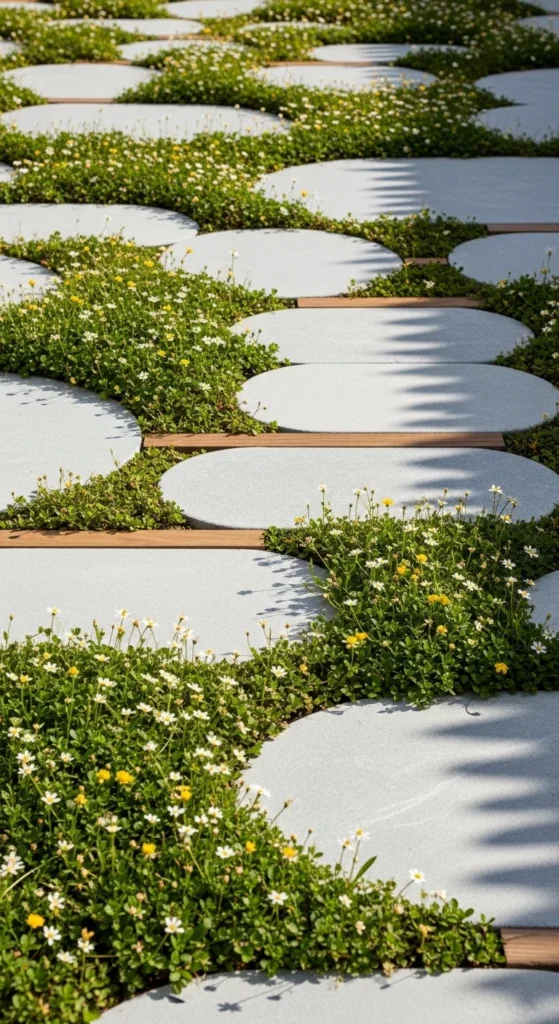
Ground cover mats fill gaps under furniture. Low-grow mats suppress weeds and soften hard flooring. Choose hardy species like creeping thyme or moss for sun or shade. Arrange mats in sheets or clusters for even coverage. Regular trimming keeps them tidy. Pair with pavers or decking for a clean look. Mats reduce dust and mud tracking into the home. For small patios, they create a continuous green effect without adding bulk. Use edging to separate mats from planters. Ground covers complement taller container plants. They enhance texture while preserving walking space. Some species release fragrance when walked on, adding sensory appeal. Water carefully during establishment. Once rooted, mats require minimal care. They also prevent soil erosion around containers. This approach creates a subtle, garden-like feel. Mats layer naturally beneath seating, defining zones without fencing. Patios feel cohesive and intentional with consistent ground cover. They complete the design while keeping maintenance low.
13. Tiered Plant Stands for Vertical Interest
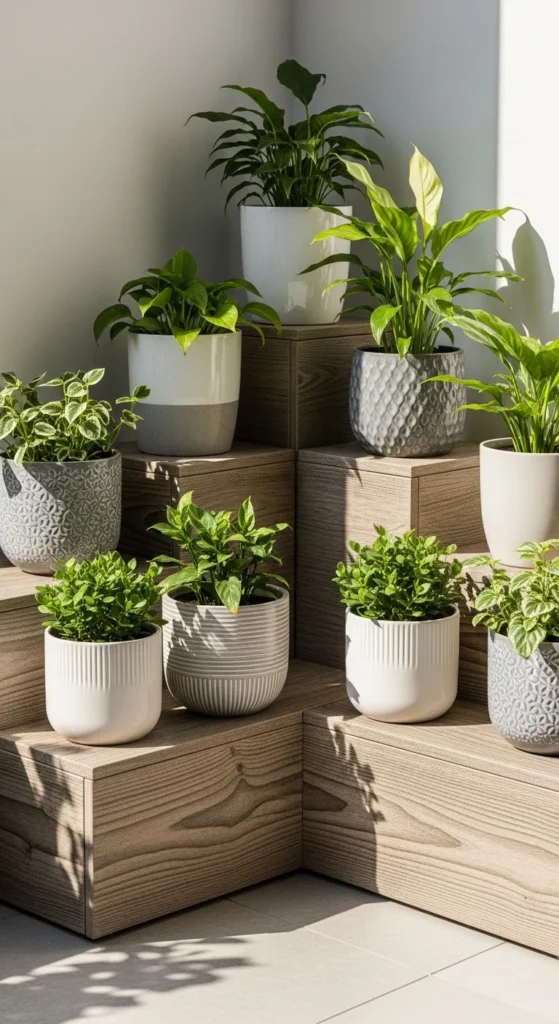
Tiered plant stands maximize vertical space. Multi-level displays make small patios feel larger. Use three to five tiers for variation. Combine trailing plants on top with upright plants below. Lightweight pots prevent tipping. For DIY, repurpose old ladders or crates. Keep color schemes consistent for a cohesive look. Group similar plant types together. Tiered stands also simplify watering, as trays catch overflow. Rotate seasonal plants to maintain vibrancy. Position stands near seating areas for visual impact. This approach allows multiple species without cluttering floors. Stands highlight plant textures and shapes. Use tiered arrangements to frame corners or entrances. They bring depth and dimension. Avoid overcrowding tiers; each plant should have room to grow. Layered greenery draws the eye upward, enhancing the sense of height. Tiered plant stands combine practicality with a garden-like display that feels curated yet approachable.
14. Weatherproof Fabric Hanging Pots
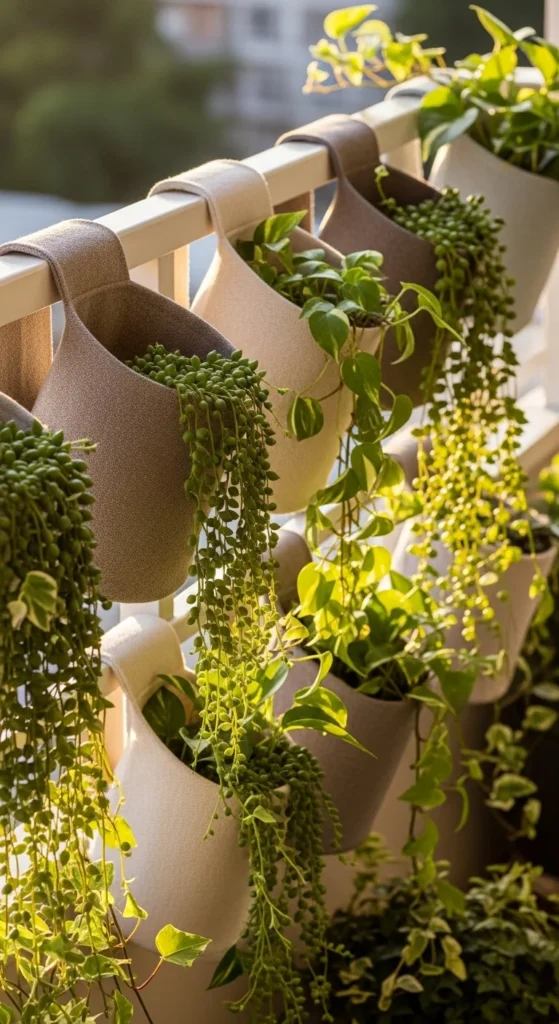
Fabric hanging pots are light and flexible. Wind-resistant hanging options keep plants safe during storms. Attach pots to railings or beams using sturdy clips. Trailing plants cascade naturally, filling vertical space. Fabric allows air and water flow, reducing root rot. Choose pots rated for UV exposure. Rotate plants seasonally for consistent growth. For budget-friendly options, DIY with recycled fabric containers or reinforced old bags. Keep watering efficient using drip trays or shallow saucers underneath. Hanging arrangements free up floor space while softening edges. They add dimension to small patios. Group pots in odd numbers for visual balance. Fabric containers are portable and easy to adjust as plants grow. This solution works well for urban balconies where weight is a concern. With proper care, fabric hanging pots maintain greenery year-round. They bring height, texture, and movement without permanent installations.
15. Companion Plant Duos for Pest Control
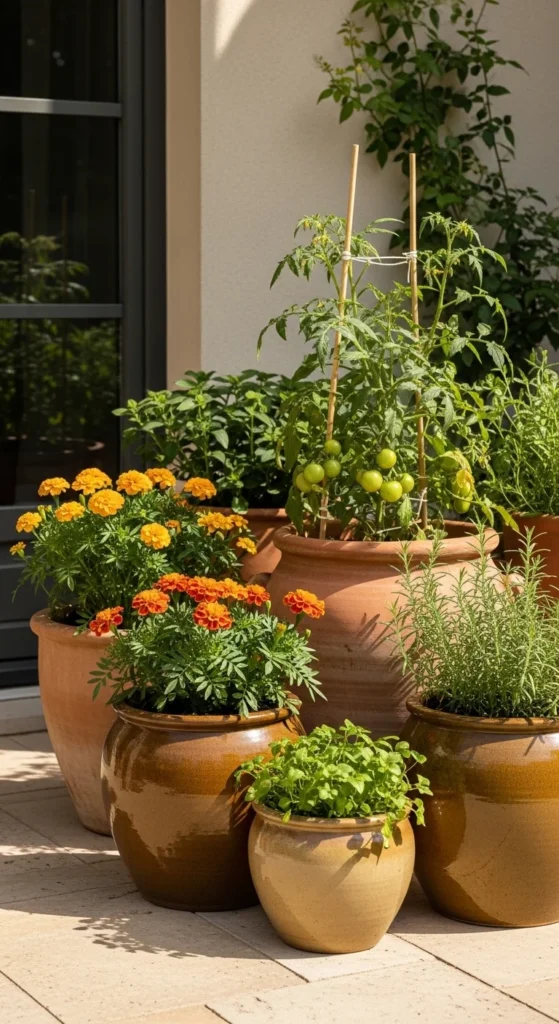
Companion planting pairs help reduce pests naturally. Pest-repelling duos like marigolds with vegetables are effective in containers. Arrange taller plants at the back and smaller companions in front. This ensures sun access and airflow. Group plants by growth rate to prevent overcrowding. Containers allow rotation each season. Fertilize and water according to each plant’s needs. Companion planting encourages beneficial insects while deterring harmful ones. Even small patios can benefit by clustering two to three plant types per pot. Keep herbs nearby to repel aphids and beetles. Monitor growth to maintain balance between companions. Pairings also create visual interest with contrasting leaf shapes and colors. This approach integrates function and design without adding extra chemicals. Containers simplify maintenance, while strategic plant pairings improve plant health and productivity. Over time, companion planting fosters a more resilient and lively patio ecosystem. The result feels intentional, controlled, and lush.
16. Solar-Powered Water Fountains
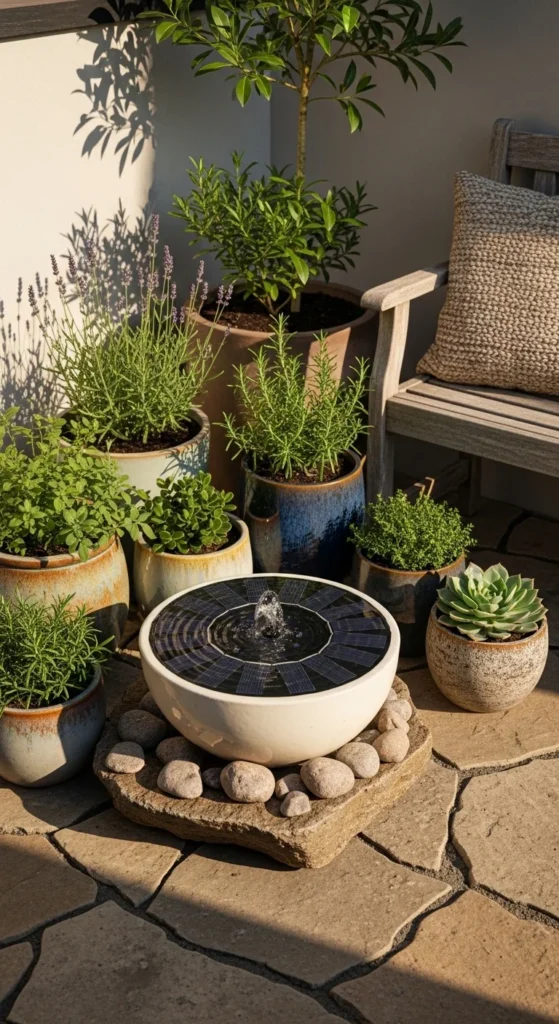
Solar-powered fountains add movement and sound to patios. Water features with plants increase humidity and attract pollinators. Place the fountain near container plants to create a microclimate. Choose shallow basins for herbs and small flowers. Solar options avoid wiring, simplifying installation. Surround the fountain with stones or mulch for stability and aesthetic appeal. Position plants with varying heights to frame the fountain. Over time, the fountain becomes a focal point and gathering spot. Clean the basin regularly to prevent algae. Use floating aquatic plants for extra interest. Combine with seating areas for a calm retreat. Even small patios benefit from the gentle trickle of water. Solar fountains are low-maintenance, visually appealing, and eco-friendly. They integrate seamlessly into container garden layouts. Seasonal rotation of surrounding plants maintains vibrancy. This combination balances tranquility, greenery, and sensory appeal. Fountains expand the patio’s usability by creating a refreshing atmosphere while complementing plants naturally. They also encourage wildlife, adding subtle motion and life.
17. Rustic Wooden Pallet Planters
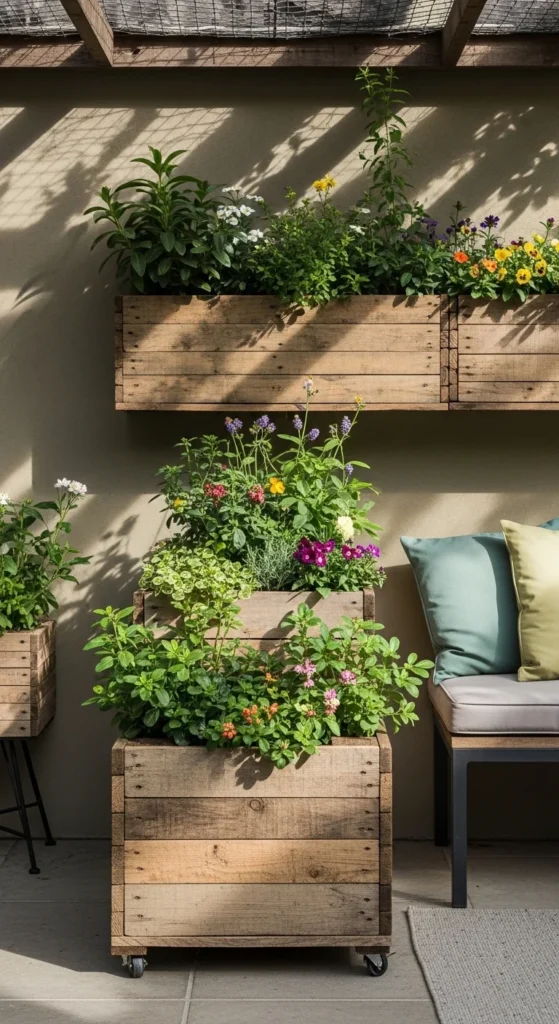
Pallet wood is an affordable option for container gardening. DIY pallet projects allow for tall or wide planters. Sand rough edges and apply weatherproof sealant. Stack pallets for tiered arrangements or cut into boxes. Use landscape fabric inside to prevent soil loss. Arrange plants by height, keeping tallest at the back. These planters add texture and rustic charm. Pallets are lightweight, easy to move, and work for small patios. Mix flowers, herbs, or trailing plants for visual interest. Paint or stain for added personality while maintaining natural feel. Pallet planters work along railings or corners. They also encourage creativity, letting you combine multiple pallets into custom layouts. Watering is easier with open-top designs. Add mulch to retain moisture and reduce weeds. They can be built to fit irregular spaces. Over time, plants fill the structure, creating a dense, lush display. Rustic pallet planters provide budget-friendly style, practicality, and the satisfaction of a hands-on project, while keeping a patio garden organized and green.
18. Tropical Plants in Temperate Zones
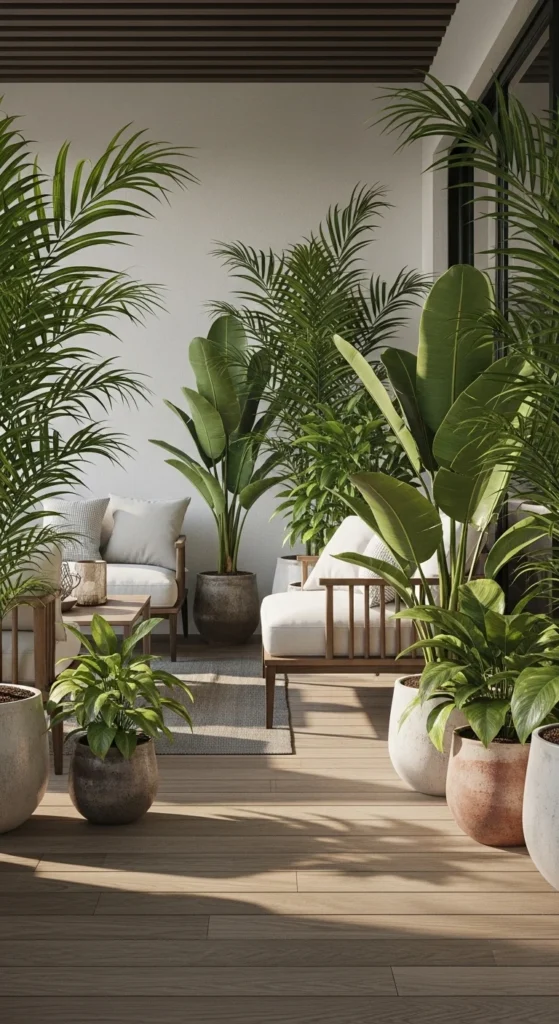
Tropical plants add a dramatic feel even in cooler regions. Palm thrillers for cool patios require well-draining pots and seasonal protection. Move sensitive species indoors during winter. Use large containers for stability and insulation. Combine with hardy companion plants for a balanced look. Tropical foliage contrasts sharply with neutral furniture, enhancing the garden vibe. Keep leaves clean and dust-free for health. Water deeply but allow soil to dry between sessions. Group pots together to retain warmth and humidity. Add mulch or decorative stones to reduce evaporation. Position near seating areas for visual impact. Tropical accents provide vertical interest and exotic textures. Even in temperate climates, container tropicals offer year-round structure if managed correctly. They pair well with LED grow lights during shorter daylight months. This method transforms ordinary patios into lush, exotic corners while maintaining practical care routines. Strategically chosen tropical plants provide drama, color, and a garden-like feel without permanent landscaping.
19. Mulch for Moisture Retention
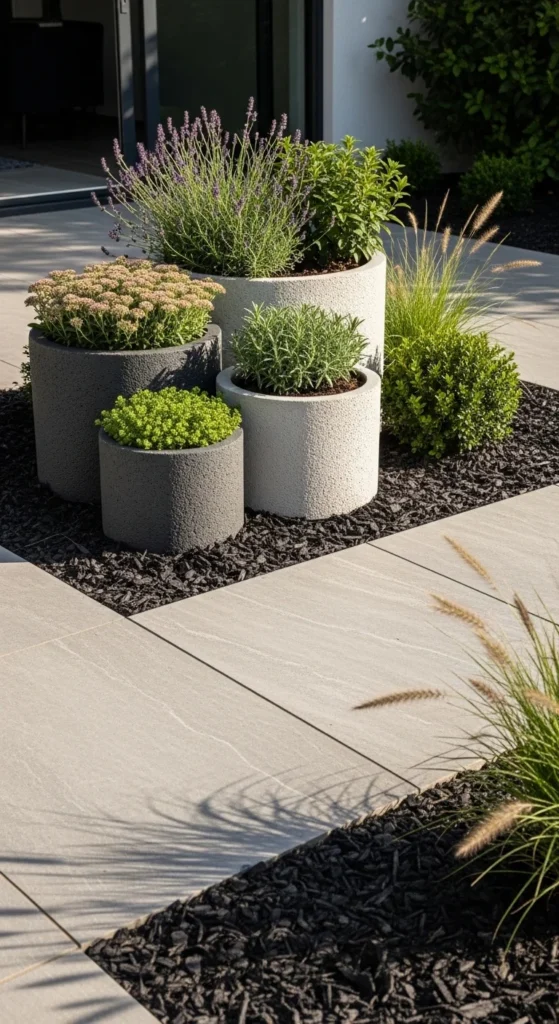
Mulch improves plant health and soil retention. Soil hacks for dry spells involve spreading organic mulch over soil in containers and beds. Mulch retains moisture, reduces evaporation, and prevents weeds. Apply 2–3 inches thick, keeping a small gap around stems to avoid rot. Mulch also regulates temperature, protecting roots from heat swings. Pine bark, straw, or shredded leaves work well. Combine with self-watering containers for maximum efficiency. Mulch improves aesthetics, giving patios a polished look while supporting plant growth. Replace old mulch annually to maintain effectiveness. In potted herbs or vegetables, mulch reduces daily watering. It also creates a more cohesive appearance across container arrangements. Mulching is simple, inexpensive, and highly effective for both ornamental and edible patios. Seasonal plant rotations complement mulch coverage. With consistent application, patios remain vibrant and soil stays fertile longer. Mulch integrates practical care with a visually calm, garden-inspired atmosphere.
20. App-Controlled Patio Irrigation
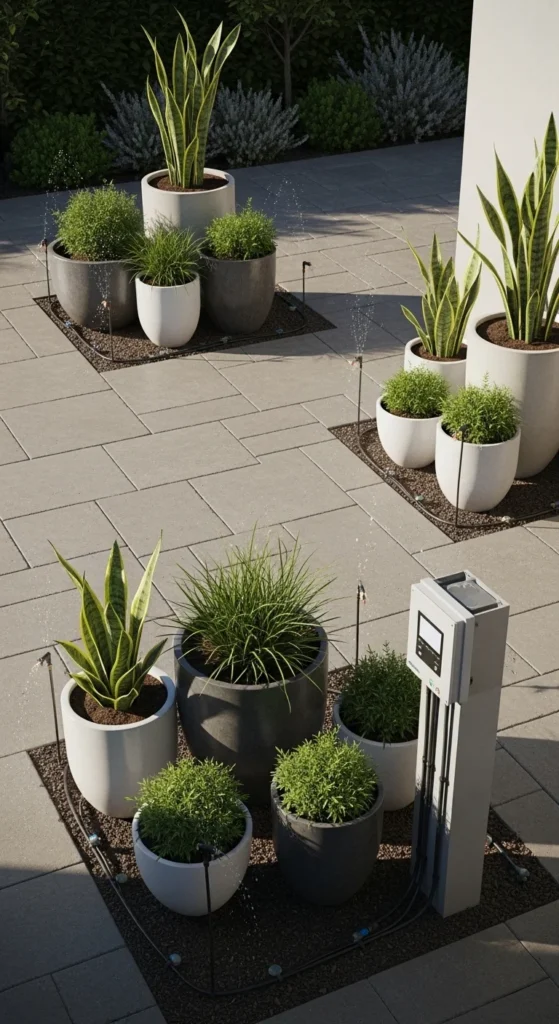
Smart irrigation systems make watering easy. App-controlled irrigation schedules watering for multiple containers. Connect to a smartphone or tablet to adjust flow and timing. This prevents over- or under-watering. Ideal for small patios with grouped containers. Systems work with drip lines or micro-sprayers hidden in pots. Combine with moisture sensors for real-time alerts. Use winter or seasonal adjustments to conserve water. Smart irrigation also reduces manual labor and ensures consistent plant health. Install near a water source for convenience. Compatible containers include self-watering and traditional pots. This approach helps busy gardeners maintain lush patios without daily attention. Layer plants thoughtfully to cover irrigation lines discreetly. Some apps track plant types, customizing watering schedules. Over time, plants grow healthier and patios stay visually consistent. App-based irrigation allows precision, reliability, and efficiency, blending technology with garden care. It keeps patios green, structured, and low-stress year-round.
21. Biophilic Design Corners
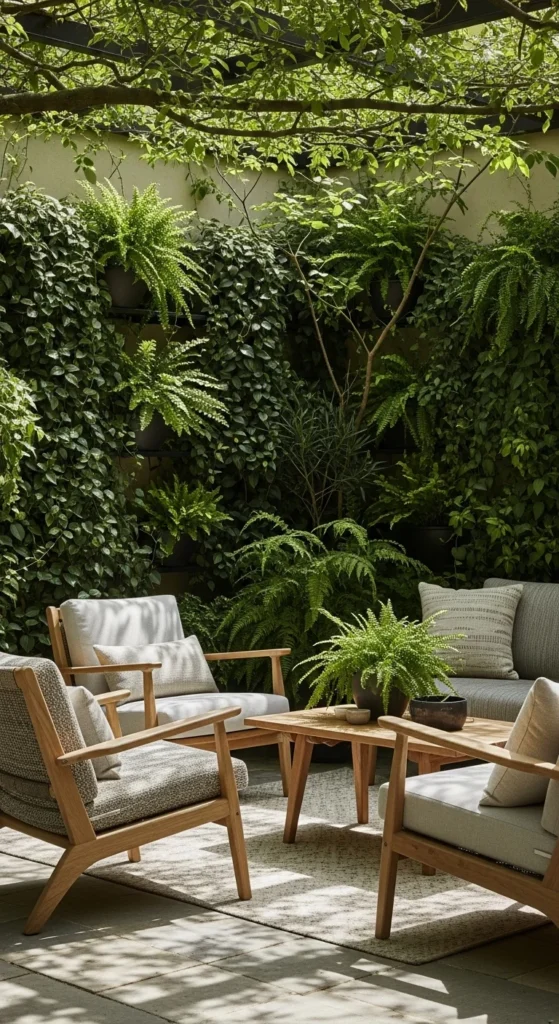
Biophilic design integrates nature directly into patios. Nature indoors-out concepts create relaxation and calm. Arrange plants in clusters with varied textures and heights. Use natural materials like wood, stone, and woven textiles for furniture and planters. Even small patios benefit from a green corner with ferns, trailing vines, and moss. Grouping plants improves air quality and encourages wildlife like pollinators. Layer plants vertically and horizontally for a more immersive environment. Include seating near greenery for sensory engagement. Combine planters with natural décor accents such as bamboo screens or stone sculptures. Light the area with solar LEDs or soft ambient fixtures for evening enjoyment. Biophilic corners reduce stress while providing a garden-like atmosphere. Rotate seasonal plants to maintain color and texture throughout the year. This approach balances aesthetics with wellness. By designing intentional green corners, patios feel like extensions of nature. Layered textures, organic shapes, and multiple plant types enhance visual interest while creating a small sanctuary. Biophilic patios are restorative, functional, and visually lush.
22. Pet-Safe Plant Collections
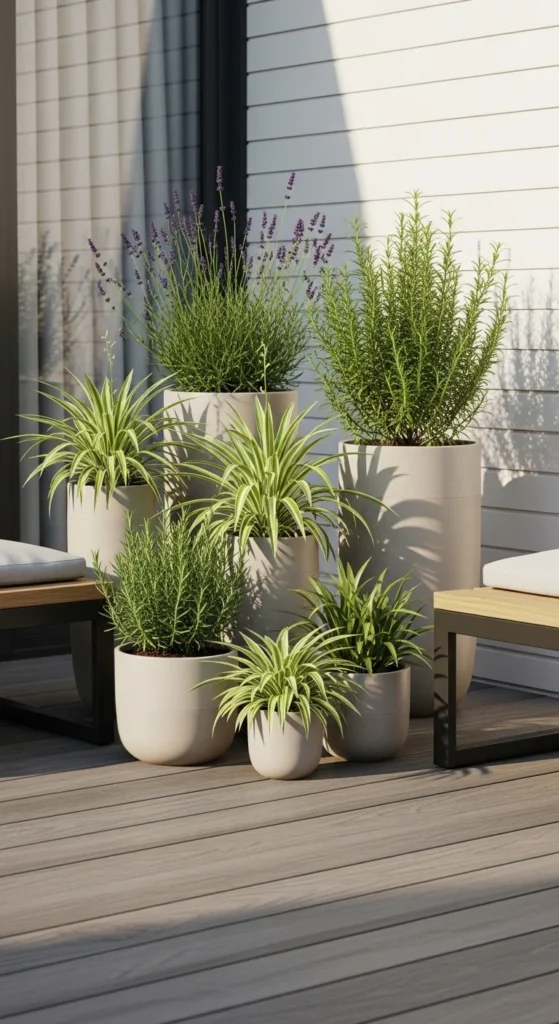
Pet-safe plants make patios safe for animals. Non-toxic greenery lists ensure furry friends can explore without risk. Arrange plants in clusters away from high-traffic zones. Combine herbs, decorative grasses, and small shrubs. Container placement keeps plants contained and prevents soil digging. Choose varieties that thrive in sun or shade based on patio orientation. Regular pruning maintains healthy growth and reduces debris. Use pebble mulch to discourage digging. Mixing textures keeps patios visually appealing while ensuring safety. Pet-safe patios allow interaction without compromise. They integrate well with edible and decorative plants. For multi-level layouts, place more delicate species out of reach. This approach protects pets while maintaining a lush, garden-like atmosphere. Seasonal swaps and tiered stands keep areas interesting. Containers can be moved as needed for cleaning or to follow sun patterns. With intentional planning, patios become secure, lively, and visually layered. Pet-friendly greenery balances aesthetics, function, and safety. The result is a verdant, relaxing patio where pets and plants coexist comfortably.
23. LED Grow Lights for Shaded Spaces
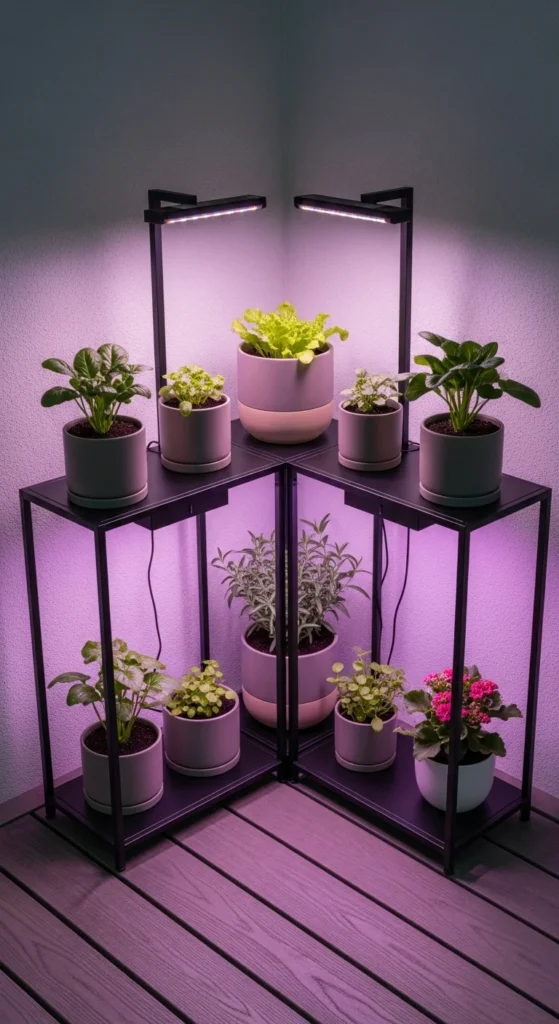
LED grow lights allow plants to thrive in low-light patios. Extend seasons in low light by installing small, adjustable LEDs above containers. Position lights to cover foliage evenly. Combine with shade-tolerant species for best results. Grow lights are energy-efficient and discreet. Use timers for consistent schedules without manual attention. This method supports winter growth and shaded urban patios. Stack or arrange plants vertically to maximize coverage. Reflective surfaces or white walls enhance light distribution. LEDs also allow indoor-outdoor hybrid planting for patios with partial sun. Seasonal rotation maintains visual interest. Lights improve flowering, leaf development, and overall plant vitality. Even small spaces can achieve a lush, vibrant look year-round. This approach integrates modern technology with container gardening. Care remains simple with drip trays and mulch to maintain moisture. The result is a healthy, thriving patio regardless of natural light limitations. LEDs turn shaded corners into functional, green retreats.
24. Pollinator-Friendly Flower Mixes
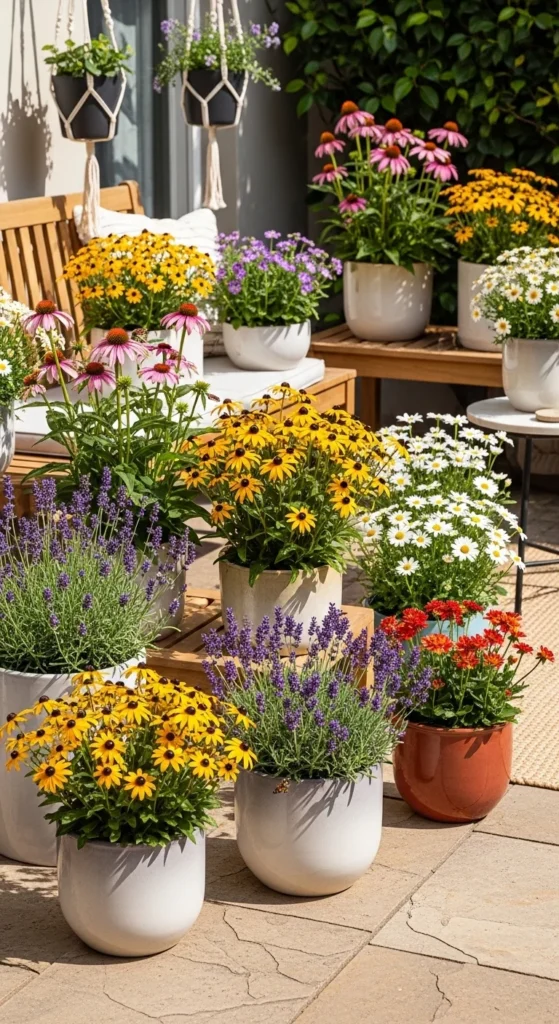
Pollinator gardens bring life to patios. Bee-friendly patios attract pollinators with native flowers and nectar-rich blooms. Plant in clusters for easy access. Combine perennials with seasonal annuals for continuous flowering. Use a mix of heights and textures to mimic natural habitats. Position containers where sunlight is sufficient. Avoid chemical pesticides that harm pollinators. Even small patios can support bees, butterflies, and beneficial insects. Group flowering plants near seating areas for visual and sensory engagement. Containers keep plantings flexible and easy to rotate. Mulch and watering trays maintain soil health. Pollinator-friendly patios also improve local ecosystem health. Over time, insects naturally control pests, reducing maintenance. Colorful blooms provide interest and movement, enhancing patio aesthetics. Thoughtful arrangement ensures safety for pets and humans while maximizing plant diversity. This approach creates vibrant, living patios that feel like mini garden ecosystems. Pollinator-friendly mixes support sustainability, visual appeal, and ecological function in compact outdoor spaces.

Leave a Reply