

1. Stacked Vintage Books with Natural Twine
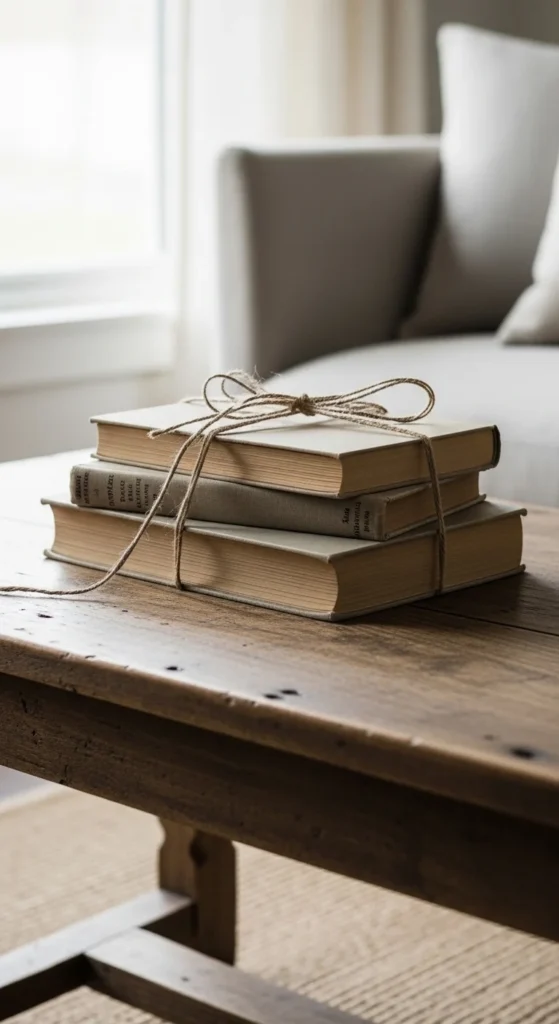
Vintage books bring warmth without effort. The key is restraint. Keep the stack short. Two or three books work best. Choose faded covers. Beige, tan, soft gray. Avoid bright spines. Tie them with jute or cotton twine. One loose wrap is enough. Tight knots look forced. This setup works well for small living rooms. It keeps the table usable. Thrift shops are ideal for sourcing books. Old cookbooks and travel journals work beautifully. If pages smell musty, leave them in sunlight for an hour. That helps. Layered texture is what makes this idea work. Place the stack slightly off-center. Never dead middle. Add a small object on top if you want weight. A wooden bead strand or tiny stone works well. For homes with kids, swap real books for blank notebooks wrapped in kraft paper. Same look. Less worry. Dust covers gently with a dry cloth. Water ruins old paper. Pair this idea with linen sofas, cotton throws, and warm wood tones nearby. Keep the palette calm. Let age and wear do the styling.
2. Reclaimed Wood Tray with Ceramic Candles
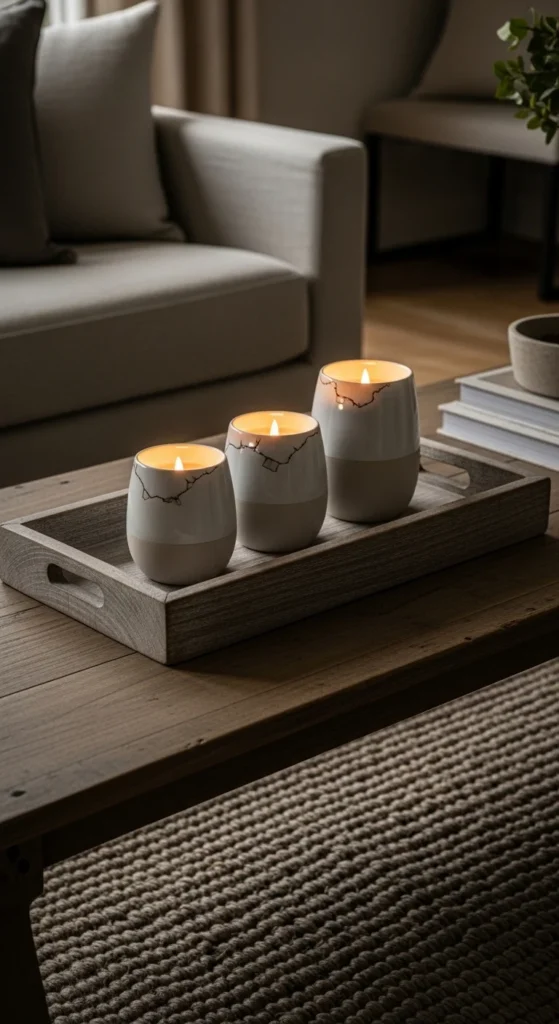
A wooden tray gives structure without stiffness. Reclaimed wood adds character. Look for cracks and grain. That’s the charm. Inside the tray, group candles in odd numbers. Three is the sweet spot. Keep heights slightly different. Stick to one color family. White, cream, or clay. Avoid printed labels. Plain vessels feel calmer. This arrangement works day and night. In daylight, it reads sculptural. In the evening, it glows softly. Soft repetition ties everything together. Budget tip: reuse candle jars. Clean them well. Pour in refill wax. Thrifted ceramics also work. Check for heat safety first. Place the tray slightly to one side of the table. Leave space for mugs or books. If scent matters, choose one mild fragrance. Mixing scents feels heavy fast. This idea fits modern farmhouse rooms with simple lines. If your table is small, choose a narrow tray. Wide trays crowd the surface. Keep the look relaxed. Nothing perfectly lined up.
3. Shallow Bowl with Dried Botanicals
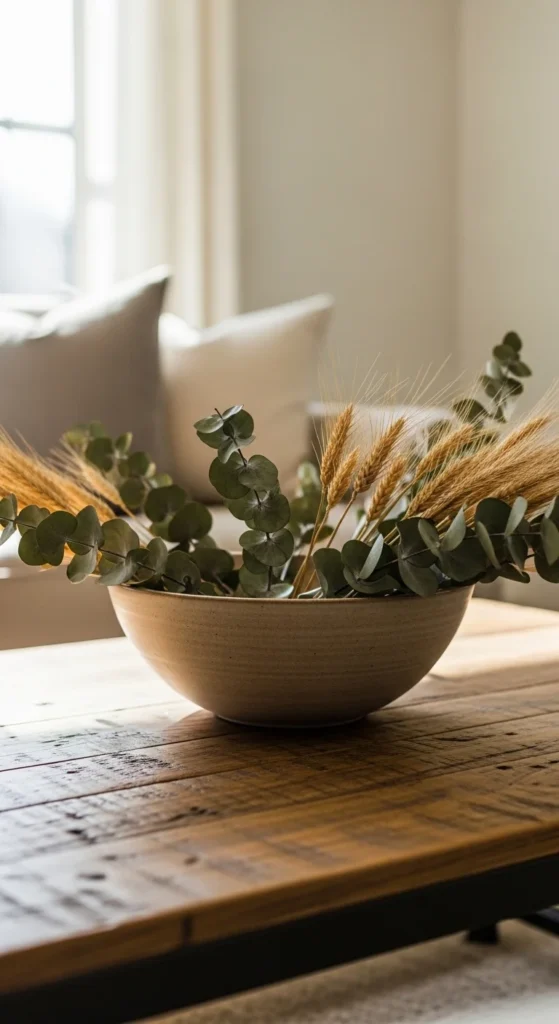
Dried botanicals add life without maintenance. A shallow bowl keeps sightlines open. Ceramic or stone works best. Skip glossy finishes. Fill the bowl loosely. Let stems cross naturally. Avoid symmetry. Eucalyptus, wheat, or dried grasses all work well. Keep everything low. Tall stems block views. This setup suits open living rooms. Natural movement is the appeal. Budget option: dry your own stems. Hang them upside down in a dark space for a week. Rotate the bowl every few days to manage dust. If shedding bothers you, line the bowl with linen fabric. Place this arrangement near a window but not in harsh sun. Colors stay softer that way. Pair with wood furniture and neutral textiles. Metal-heavy rooms clash with this look. Keep it grounded. If your space leans minimal, limit the number of stems. Less feels calmer. This idea works year-round and transitions easily with seasons.
4. Wooden Bead Garland Draped Casually
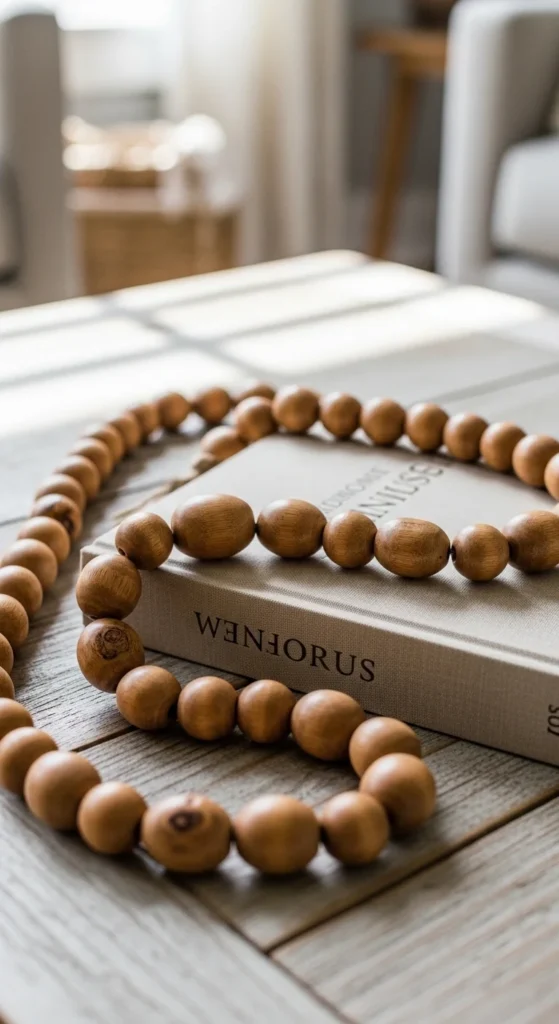
Wood bead garlands add rhythm to a flat surface. Choose beads with uneven finish. Perfect spheres feel stiff. Let the strand fall naturally. Don’t shape it too much. A relaxed curve looks better. This works alone or layered over books. Simple contrast between wood and fabric keeps it grounded. Make your own using craft beads and jute cord. Leave knots visible. That handmade touch matters. Medium-sized beads work best. Tiny beads disappear visually. Oversized ones feel heavy. Dust with a dry cloth only. Oils darken wood fast. This idea suits neutral rooms that lean quiet. If your table already has a tray, drape part of the garland inside it. That overlap looks intentional. Keep colors warm. Avoid painted beads. Natural tones age better and blend easily with other decor.
5. Stone Coasters Stacked Neatly
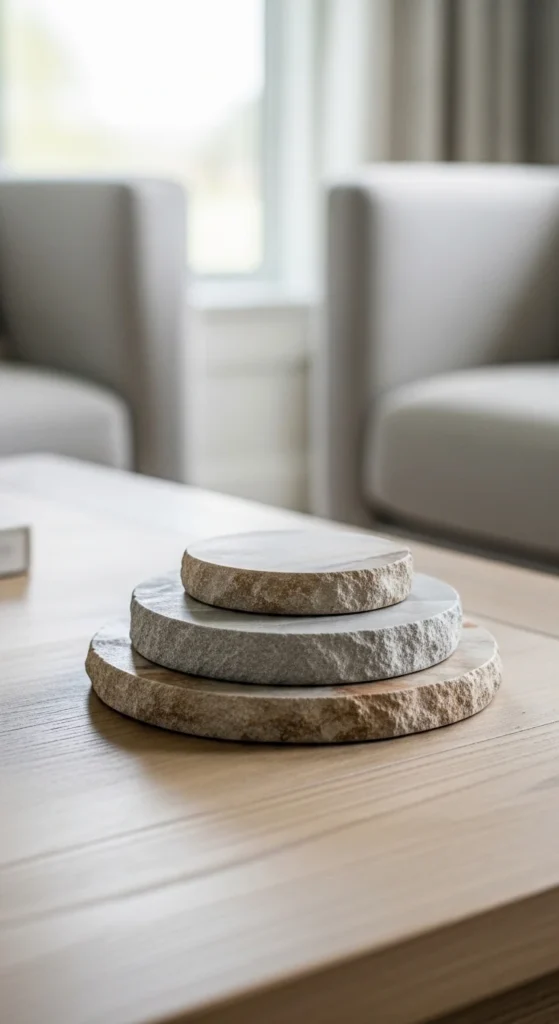
Coasters don’t have to hide. Stone coasters look styled when stacked well. Choose natural stone. Travertine or soapstone work nicely. Stack three or four pieces. Align them slightly off. Perfect stacks feel flat. This detail works well for homes that host often. Guests know exactly where to reach. Quiet practicality makes this appealing. Budget option: concrete coasters from local makers. Seal them to prevent marks. Place the stack near the table edge but not hanging off. Balance matters. This idea pairs well with book stacks or trays nearby. Avoid mixing too many materials in one spot. Let the stone stand alone. If your table is dark wood, light stone adds contrast. If your table is light, choose slightly darker stone. Small choices like this keep the table looking intentional without effort.
6. Woven Basket with Linen Napkins
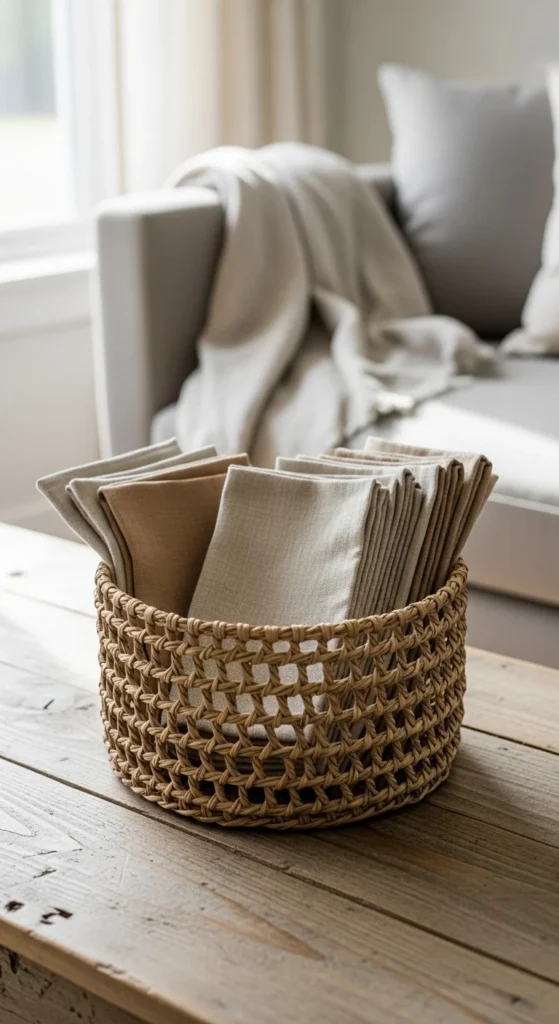
A woven basket adds softness to a hard surface. Keep it small. Oversized baskets crowd the table. Linen napkins bring a lived-in feel. Choose neutral shades. Oat, ivory, soft gray. Fold them loosely. Crisp folds feel formal. This setup works well for family rooms where snacks and tea are common. Casual function is the beauty here. Budget tip: use fabric remnants or cut old linen curtains into squares. Frayed edges look relaxed. Rotate napkins seasonally. Lighter tones in summer. Heavier textures in winter. Place the basket near one side of the table. Balance it with a solid object on the other side. If crumbs worry you, line the basket with a thin cotton cloth. Shake it out weekly. This idea pairs well with wood trays and ceramic pieces nearby. Avoid mixing too many patterns. Let texture do the work. Keep colors calm so the table stays easy on the eyes.
7. Low Ceramic Vase with Olive Branches
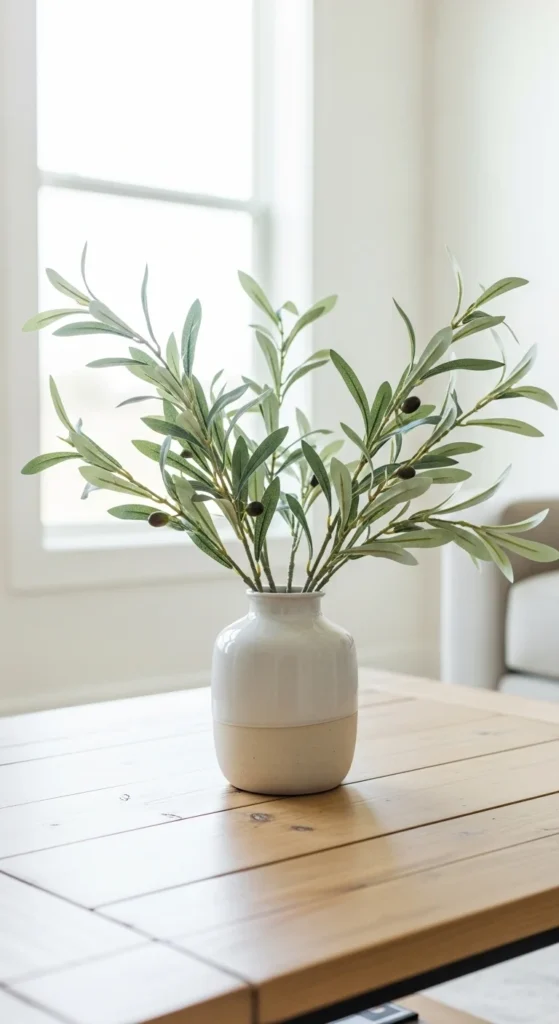
A low vase keeps things open and airy. Olive branches bring shape without bulk. Faux works well here. It holds form and drops no leaves. Choose a vase with an imperfect rim. Handmade pottery feels warmer. Keep the arrangement sparse. Two or three stems are enough. Simple form makes this feel calm. Budget option: use a vintage crock or cream pitcher instead of a vase. Trim stems so they sit just above eye level when seated. Too tall feels distracting. Place the vase slightly off-center. Pair it with books or a tray nearby. Dust branches gently with a dry cloth. Water is not your friend here. This idea suits both rustic and modern farmhouse rooms. If your palette leans warm, choose darker green leaves. If your room is light, go softer and dusty.
8. Antique Box Used as Hidden Storage
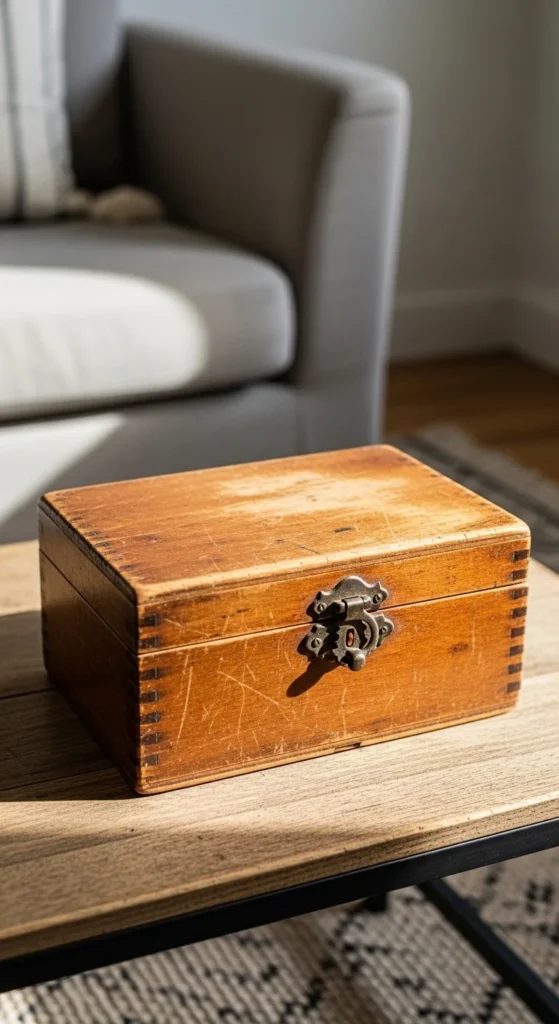
An old box adds character and purpose. It keeps clutter out of sight. Look for worn wood and simple hardware. Avoid glossy finishes. This piece works well for remotes, matches, or coasters. Hidden order keeps the table calm. Budget tip: flea markets and online resale shops are great for this. If the box smells old, wipe it with vinegar and let it air out. Place it near the edge of the table. Balance it with something soft nearby. A fabric item or paper stack works well. Avoid stacking too much on top. Let the box stand on its own. This idea fits rooms with layered textures and warm tones. If your table is small, choose a shallow box. Deep boxes feel heavy visually.
9. Fabric-Covered Books in Neutral Tones
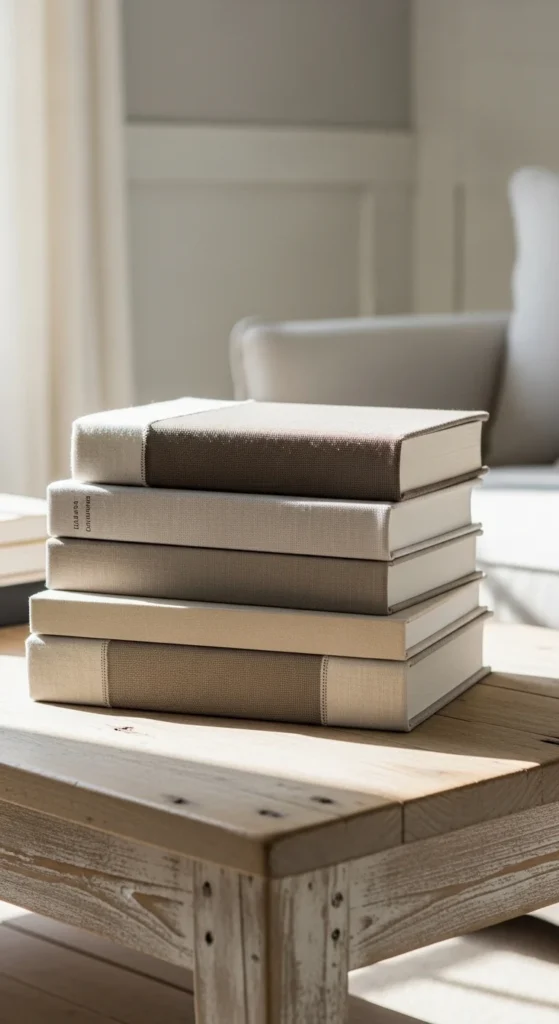
Wrapping books gives a calm, uniform look. Choose breathable fabric. Linen and cotton work best. Cut fabric slightly larger than the book. Fold edges inward. Secure with double-sided tape. No glue. Soft uniformity keeps the table peaceful. This works well when book covers clash with your palette. Budget option: use old pillowcases or table runners. Keep the stack low. Two books are often enough. Place them near a tray or vase. Avoid lining everything up perfectly. A slight shift looks natural. This idea suits minimal farmhouse rooms that lean quiet. Dust fabric weekly. Wash covers as needed. Replace fabric seasonally if you like small changes without buying new decor.
10. Round Wood Bowl with Seasonal Fruit
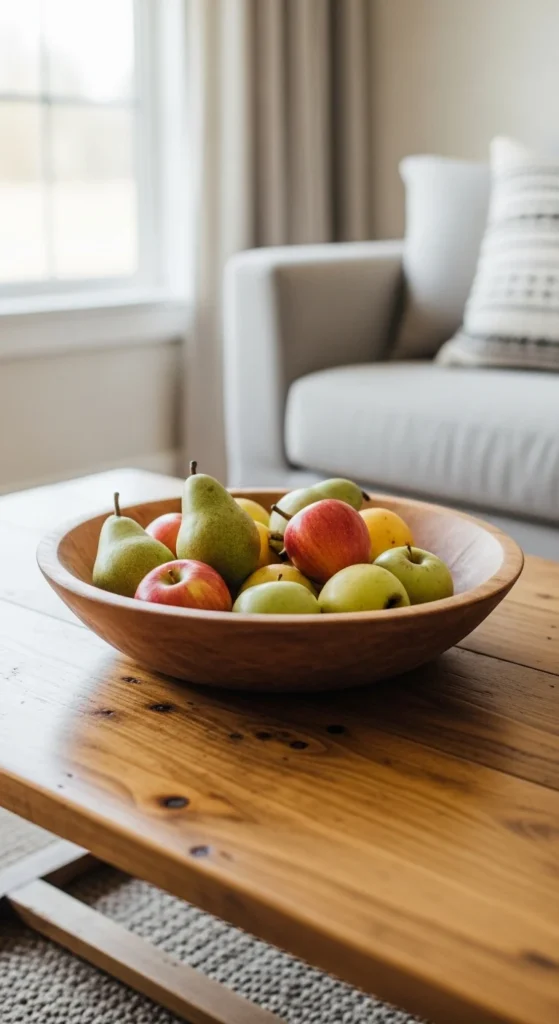
Fruit brings life and color without effort. A shallow wood bowl keeps it grounded. Choose fruit in muted tones. Pears, apples, or figs work well. Avoid bright citrus if your palette is soft. Natural color does the styling for you. Budget tip: mix real and faux fruit. Place faux at the bottom and real on top. Rotate fruit often to avoid bruising. Place the bowl slightly off-center. Balance it with books or a tray nearby. This idea works best in family spaces. It feels welcoming and real. If fruit isn’t your thing, swap in pinecones or dried pods during colder months. Keep the bowl clean and oiled lightly to maintain the wood finish.
11. Neutral Fabric Runner Across the Table
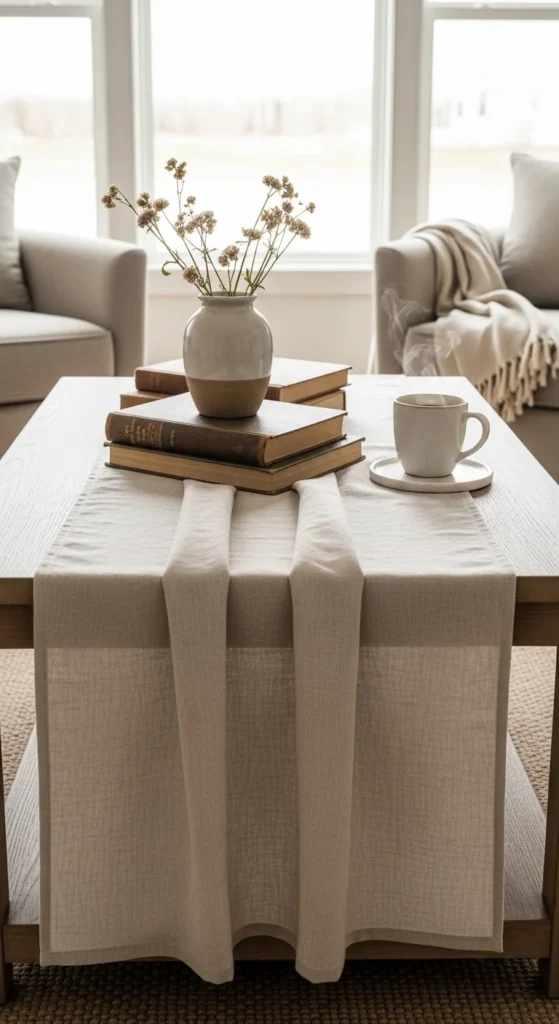
A fabric runner changes the table without adding clutter. Linen works best. It creases naturally and looks relaxed. Choose a light neutral. Beige, flax, soft gray. Let the ends fall slightly over the edges. Perfect alignment looks stiff. This idea works well on long tables. Soft grounding is the goal. Budget tip: cut a piece from an old linen curtain or tablecloth. Frayed edges are fine. They add character. Layer books, trays, or a bowl on top. Keep spacing loose. Wash the runner often. Natural fabrics age nicely. If spills worry you, rotate the runner weekly. This look pairs well with wood and stone decor. Avoid bold patterns. Texture alone is enough.
12. Glass Cloche with Wooden Base
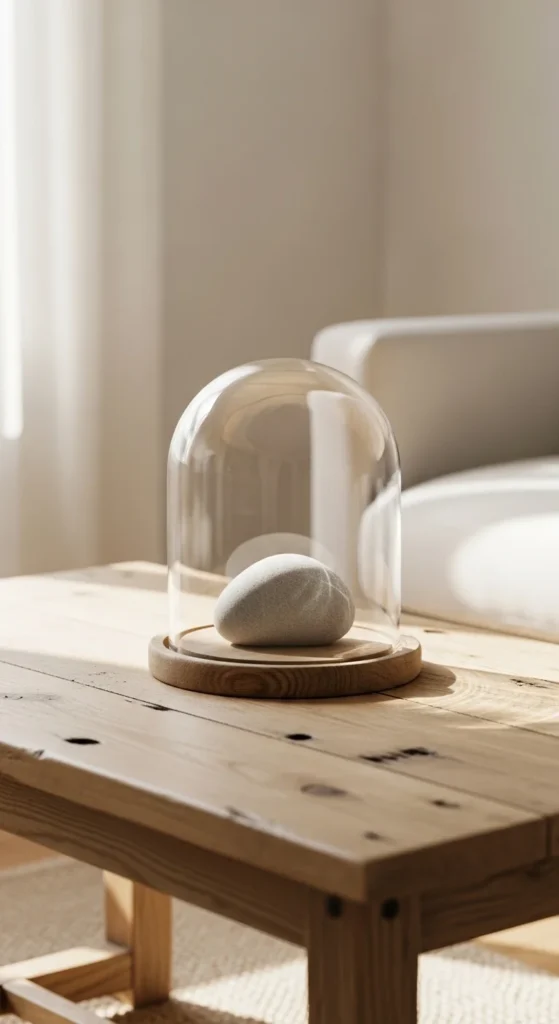
A cloche adds quiet drama. Keep what’s inside simple. A stone, small plant, or wooden object works well. Avoid busy items. The glass does the work. Subtle display keeps this from feeling precious. Budget option: use a bell jar from a thrift store. Pair it with a wood coaster as a base. Place the cloche slightly off-center. Balance it with something matte nearby. Clean the glass often. Dust shows fast. This idea suits both rustic and modern farmhouse rooms. If your space is small, choose a low-profile cloche. Tall ones block sightlines. Keep the palette calm so reflections don’t overwhelm the table.
13. Handwoven Placemat as a Base Layer
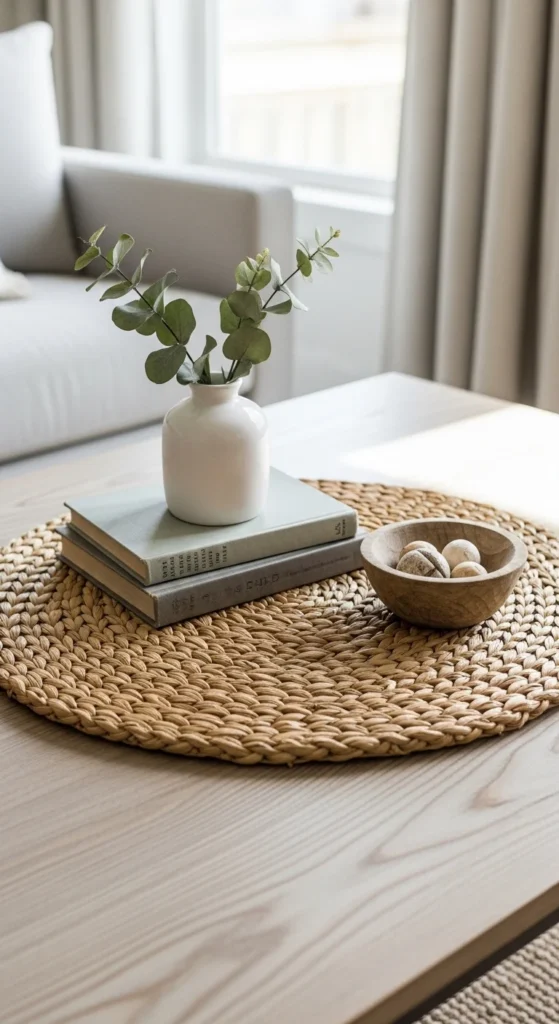
A placemat isn’t just for dining. It works as a base layer. Round shapes soften square tables. Choose natural fibers. Jute or seagrass works well. Place decor on top. A vase, bowl, or tray looks grounded this way. Textural balance keeps things calm. Budget tip: use one placemat instead of a runner. It’s easier to move and clean. Shake it out weekly. Avoid dark fibers if crumbs bother you. This idea fits casual farmhouse spaces. It also works well in rental homes. Nothing permanent. Keep the rest of the table simple so the weave stands out.
14. Simple Wood Sculpture or Carved Object
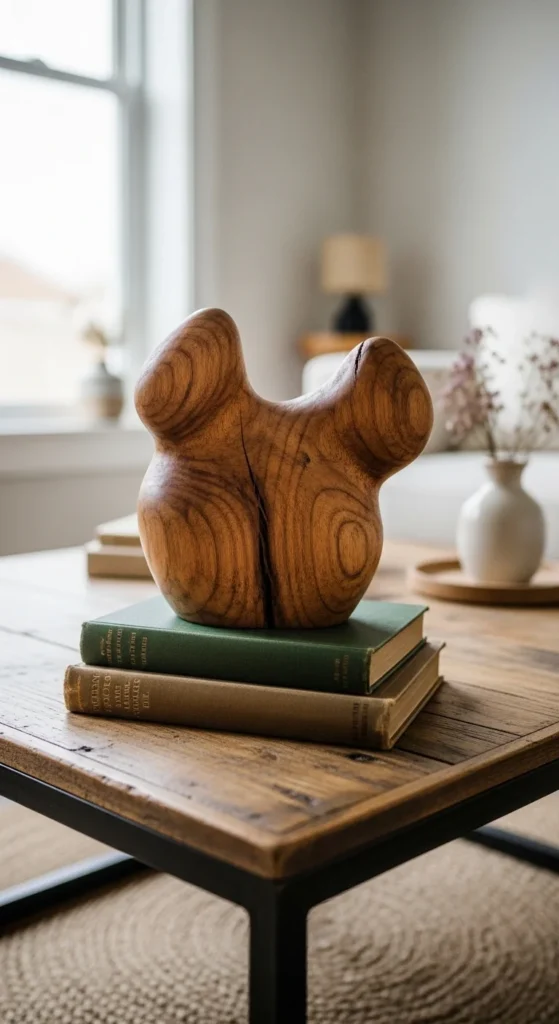
One sculptural piece is enough. Wood keeps it grounded. Look for organic shapes. Nothing sharp or glossy. Quiet form draws the eye without noise. Budget option: check local craft markets or carve your own simple shape. Sand it smooth. Leave the grain visible. Place the piece where light hits it gently. Shadows add interest. Pair it with flat items nearby. Books or trays work well. Avoid grouping it with too many objects. Let it breathe. This idea suits minimal farmhouse rooms that rely on shape rather than color.
15. Neutral Throw Folded on One Corner
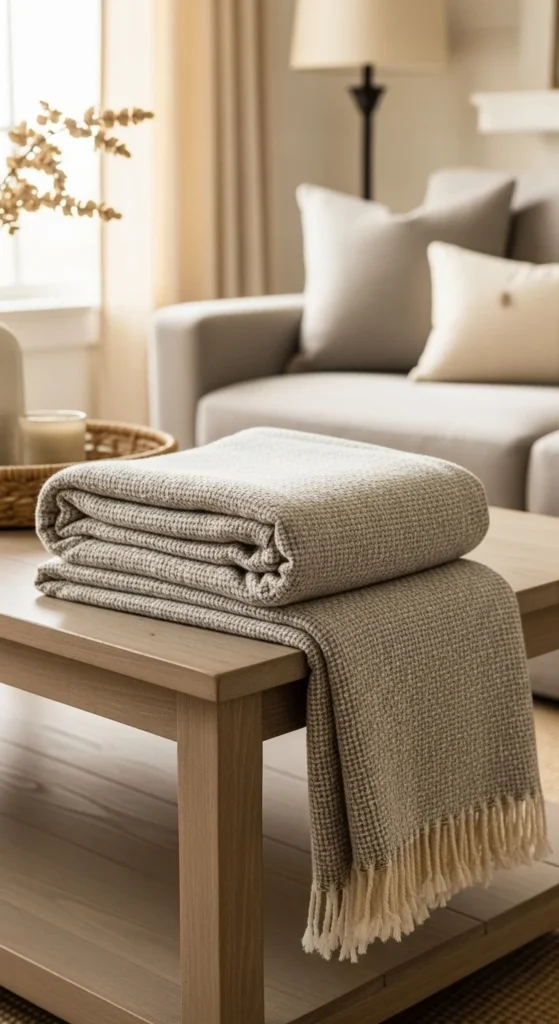
A folded throw adds softness instantly. Choose lightweight fabric. Cotton or linen works well. Avoid bulky knits on the table. Fold it loosely. Crisp folds feel formal. Soft layering makes the space feel lived-in. Budget tip: use a small lap blanket or scarf. Rotate throws seasonally. Lighter in warm months. Heavier in cool ones. Place it on one corner only. Balance the rest of the table with harder textures. This idea works well in family rooms where comfort matters. Keep colors neutral so it blends easily with other decor.
16. Small Terracotta Planter with Succulent
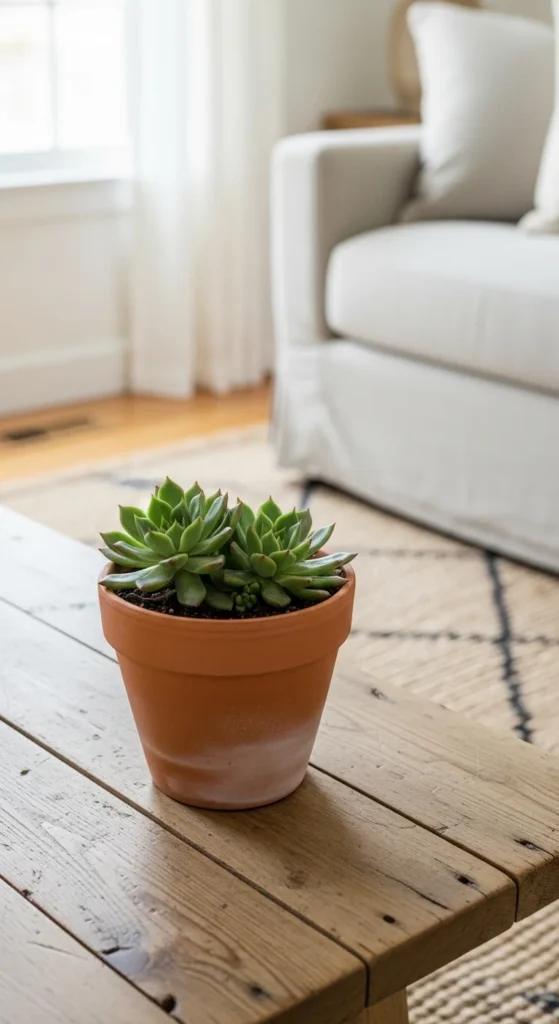
Succulents bring life without effort. Choose a low planter so it doesn’t block sightlines. Terracotta adds warmth and a rustic feel. Keep soil neat. Use one or two small stones on top for visual interest. Easy greenery is the charm here. Budget tip: propagate succulents from existing plants. They grow fast and cost almost nothing. Place near other textures like books or a tray. Avoid crowding the table. Rotate plants to get even sunlight. Water lightly; overwatering is common. This setup works well in modern farmhouse rooms and small apartments. If you like seasonal touches, swap succulents with small flowering plants occasionally. The goal is simplicity and life without clutter. Dust leaves gently with a soft brush. Pair with neutral textiles for a balanced table. Keep color muted so the green pops naturally. This arrangement is ideal for small tables or open-plan spaces.
17. Candle Cluster on Marble Slab
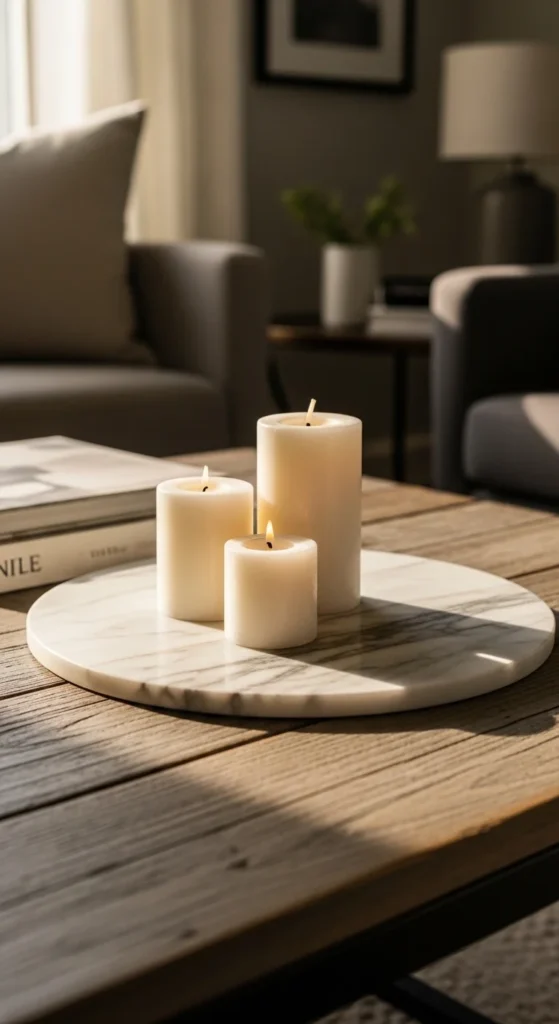
Candles bring warmth and focus. Use three in odd numbers. Vary the height for depth. Place them on a marble slab to protect the table. Layered lighting is the appeal. Budget option: swap marble with a ceramic or wooden plate. Keep candles simple and unadorned. Position slightly off-center for a relaxed look. Light them occasionally for mood. During the day, they function as sculptural accents. Avoid scented candles with strong fragrances if multiple are used. Rotate placement to prevent wax pooling. This idea fits farmhouse spaces, from rustic to modern. Pair with books or a small greenery element nearby. Marble adds elegance without clutter. Keep the slab clean. Dust edges weekly. This combination balances hard and soft textures, giving the table a curated yet effortless look.
18. Mini Lantern with LED Light
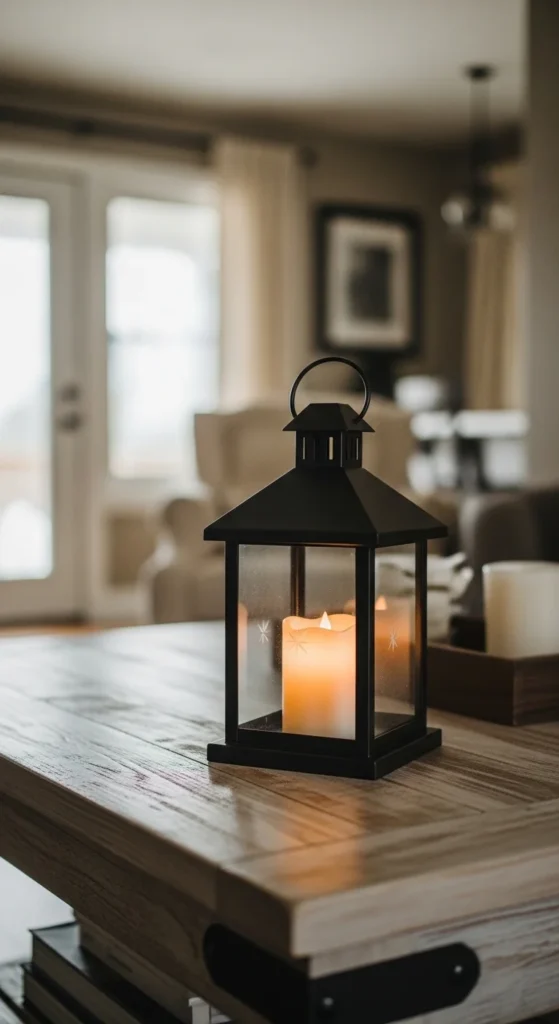
Lanterns add vertical interest without bulk. Use a mini size for balance. LED candles avoid mess. Safe illumination is key. Place near other soft objects, like a folded throw or small tray. Budget tip: repurpose old candle holders and add LED lights. Position slightly to one side of the table. Keep surrounding space clean to highlight the piece. The look works in both rustic and modern farmhouse rooms. Avoid overly decorative lanterns; simple shapes read calmer. Dust weekly and wipe glass gently. Change LED batteries when dim. Lanterns create warmth visually and functionally. Pair with natural textures: wood, linen, or ceramic. This setup adds charm to living rooms, especially evenings. Rotate seasonal décor around it to keep things fresh.
19. Tray with Seasonal Pinecones
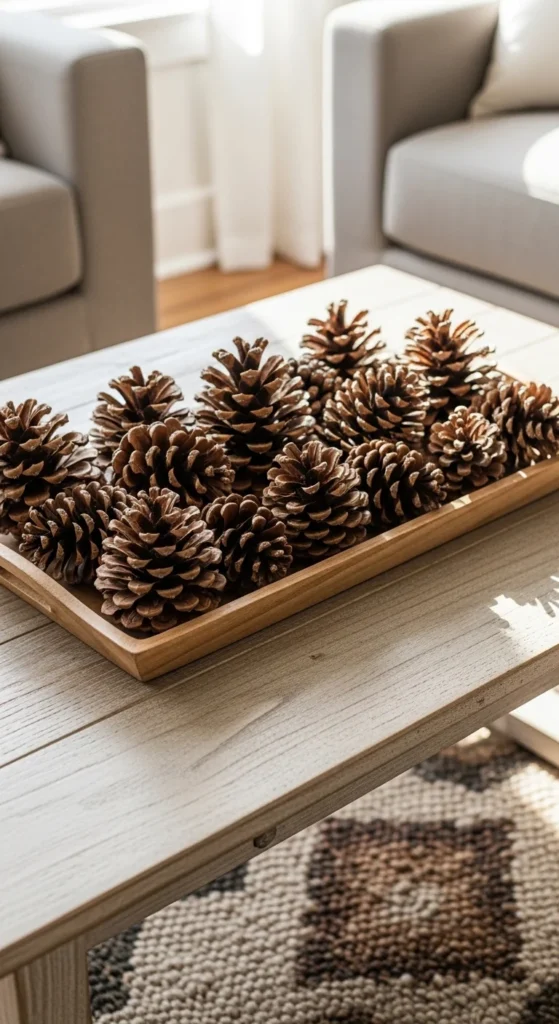
Pinecones are simple and seasonal. Place them loosely in a wooden tray. Avoid overcrowding. Natural rhythm makes the table feel calm. Budget option: gather pinecones from outdoors. No cost. Dust lightly. Pair with a candle or small ceramic piece for balance. Keep the tray offset on the table, leaving functional space. Works for winter or fall styling but can transition with faux fruit in warmer months. Avoid painted pinecones; natural tones blend better with neutral rooms. This setup works for farmhouse spaces of all sizes. Rotate items for seasonal interest. Layer textures subtly: rough pinecone against smooth tray or fabric beneath. This small styling change adds charm without permanent commitment. Keep the overall palette muted to maintain cohesion with other table décor.
20. Small Wire Basket with Coiled Rope
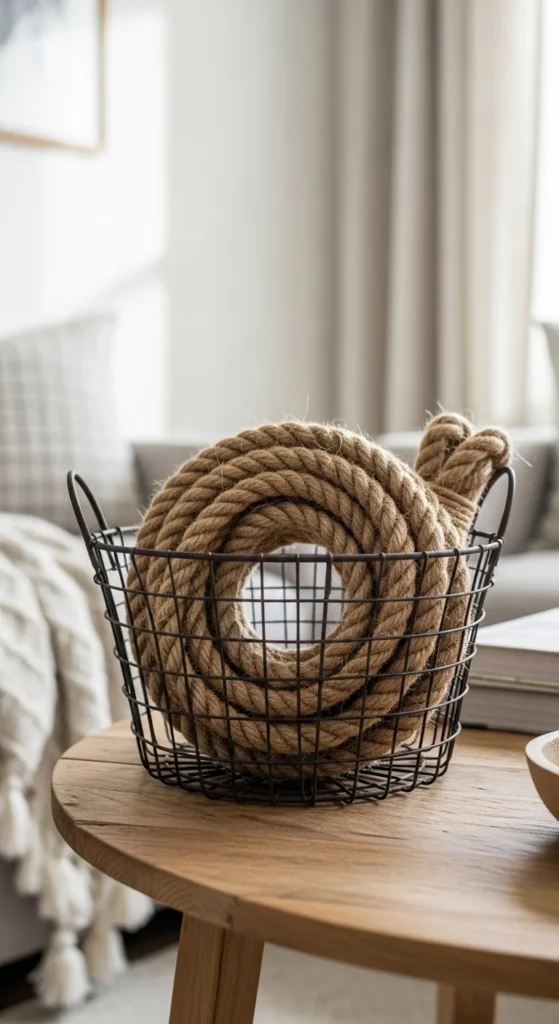
A wire basket adds structure and texture. Fill it with coiled rope or other natural fiber items. Tactile layers keep the table interesting. Budget tip: use leftover rope from DIY projects. Coil loosely, don’t force it tight. Place basket near a tray or book stack to anchor it visually. Avoid overcrowding the table. This works in rustic or modern farmhouse rooms. Wire baskets are versatile and lightweight. Dust weekly. If rope frays, trim ends subtly. This setup brings a casual, curated look. Pair with small ceramics or low bowls nearby. Keep colors natural. Neutral browns and tans blend seamlessly with wood surfaces. This small touch adds interest without cluttering functional space.
21. Ceramic Pitcher as Vase
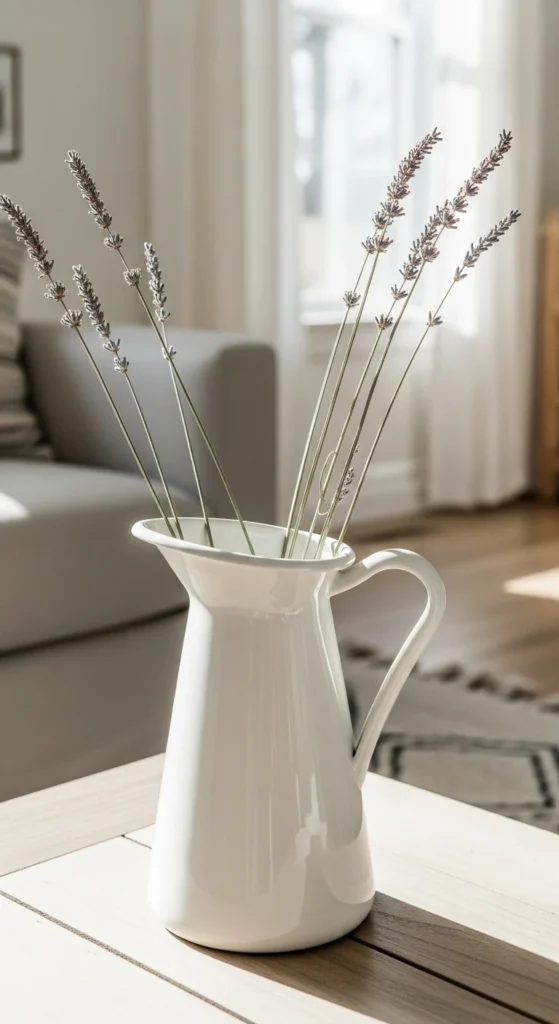
A ceramic pitcher doubles as a vase and adds charm. Choose one with subtle curves and matte finish. Keep the flower arrangement minimal. Lavender or dried herbs work beautifully. Soft contrast between white and natural wood adds interest. Budget tip: repurpose an old pitcher or thrifted jug. Trim stems to a manageable height. Place slightly off-center for balance. Pair with a low book stack or tray to create a layered look. Avoid overcrowding the pitcher with multiple flower types; simplicity is key. Rotate dried flowers seasonally. Dust gently with a dry cloth. This setup works for both rustic and modern farmhouse rooms. If you prefer fresh flowers, water carefully and place a small coaster underneath to protect the wood. Neutral tones keep the table calm, while the shape of the pitcher draws subtle attention.
22. Small Wooden Candle Holder Trio
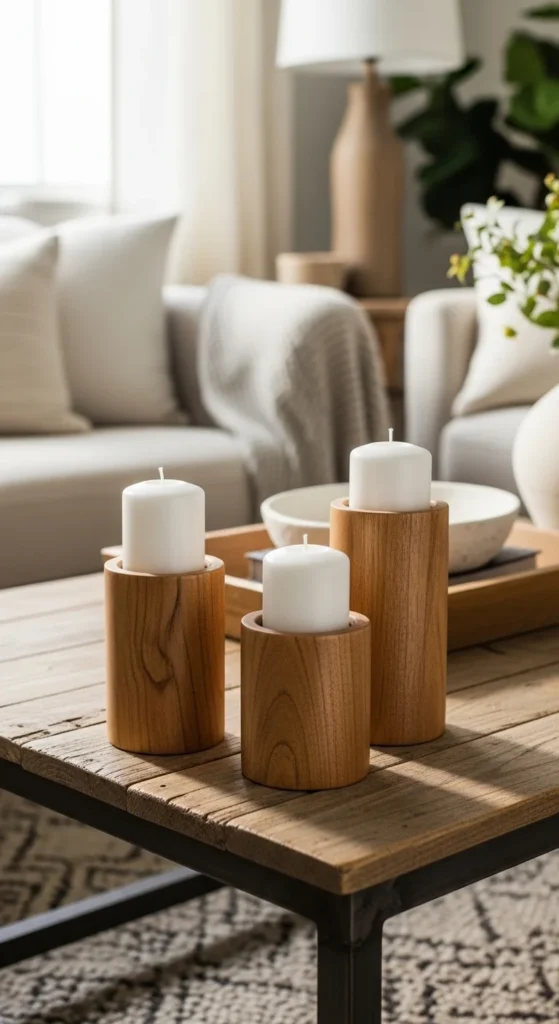
Grouping candles in odd numbers creates visual rhythm. Three holders of varying heights add depth. Stick to natural wood for warmth. Layered textures make the setup feel intentional. Budget option: carve or sand leftover wood blocks into simple holders. Position slightly off-center on the table. Pair with a small bowl or tray for balance. Avoid too many competing objects; let the candles stand out. Rotate candle placement occasionally. Light candles safely for ambiance. Keep pillar candles simple; no ornate designs. Dust wooden holders regularly to maintain warmth in the grain. This idea works for small and large tables alike. It blends seamlessly with modern or rustic farmhouse aesthetics. Neutral whites and wood tones make the arrangement calm yet visually interesting. The simplicity of shapes and repetition adds a curated feel without effort.
23. Woven Tray with Seasonal Decor
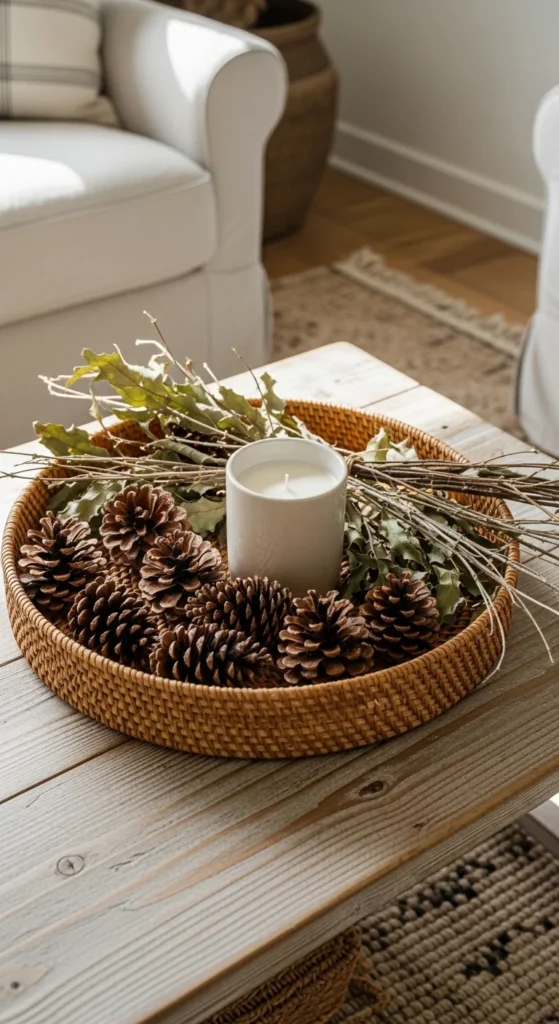
A woven tray organizes seasonal items neatly. Pinecones, small candles, or dried foliage work well. Keep items low and loosely arranged. Layered natural textures create visual interest. Budget tip: gather natural elements outdoors or use thrifted candles. Place the tray slightly to one side for asymmetry. Rotate contents seasonally for variety. Avoid overcrowding; the tray should feel spacious. Pair with a small book stack or bead garland for layered styling. Keep the color palette neutral to maintain calmness. Dust weekly and wipe tray lightly to preserve texture. This arrangement works for year-round farmhouse style. The round tray softens table edges, while natural materials tie the room together. Its flexibility makes it ideal for both small and large tables. Neutral tones combined with organic shapes create a curated but effortless look. This finishing touch completes the 23-item farmhouse coffee table decor list.

Leave a Reply