

1. Layered Warm Lighting Corners
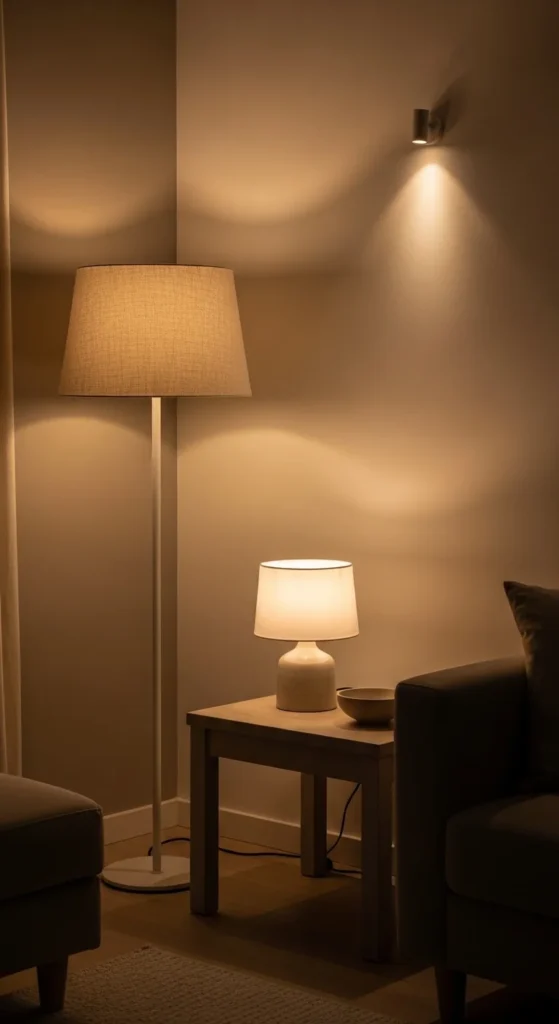
Most apartments rely too heavily on one ceiling light. That single source creates harsh shadows and makes the room feel flat. A layered lighting corner changes that completely. Start with a floor lamp to introduce height and visual structure. Choose one with a fabric or linen shade so the light stays soft. Add a table lamp at a lower level. Ceramic, wood, or stone bases work well and feel grounded. The third layer should be subtle. A plug-in wall light, a small uplight, or even a hidden LED placed behind furniture works here.
Always stick to warm bulbs only. Anything cool-toned will break the atmosphere. Keep all bulbs within the same temperature range so the light feels consistent. If you find mismatched lamps while thrifting, don’t worry. Matching shades and bulbs matter more than matching bases. Hide cords using baskets or fabric cord covers to keep the setup clean. Angle at least one light toward the wall instead of the room. Reflected light softens edges and makes small spaces feel calmer. This corner works in living rooms, bedrooms, and even dining areas. It’s one of the easiest ways to create comfort without changing furniture.
2. Peel-and-Stick Accent Wall Panels
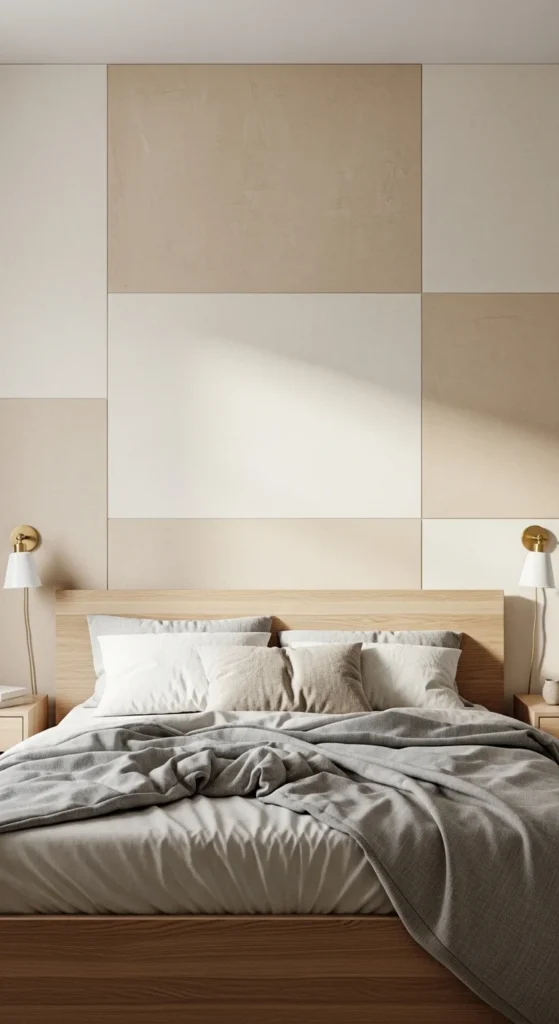
An accent wall works best when it relies on texture rather than bold color. Peel-and-stick wall panels make this possible without tools or permanent changes. Look for finishes that mimic plaster, fabric, stone, or limewash. Matte surfaces read more natural and less artificial. Before installation, clean the wall thoroughly and let it dry fully. Measure twice and plan the layout so seams land behind furniture whenever possible.
Start from a corner that is least visible. Work slowly, smoothing as you go. Small air bubbles can be pressed out with a soft cloth. If a panel goes on crooked, peel it back gently and reapply. Once installed, keep the rest of the room restrained. Neutral bedding, simple pillows, and minimal wall decor allow the surface to stand out. Texture becomes the main design feature, not extra accessories. This type of wall works especially well behind beds, sofas, or compact dining tables. If you decide to move, removal is simple and usually leaves the wall intact, which makes it ideal for rentals.
3. Thrifted Wood Furniture Makeover
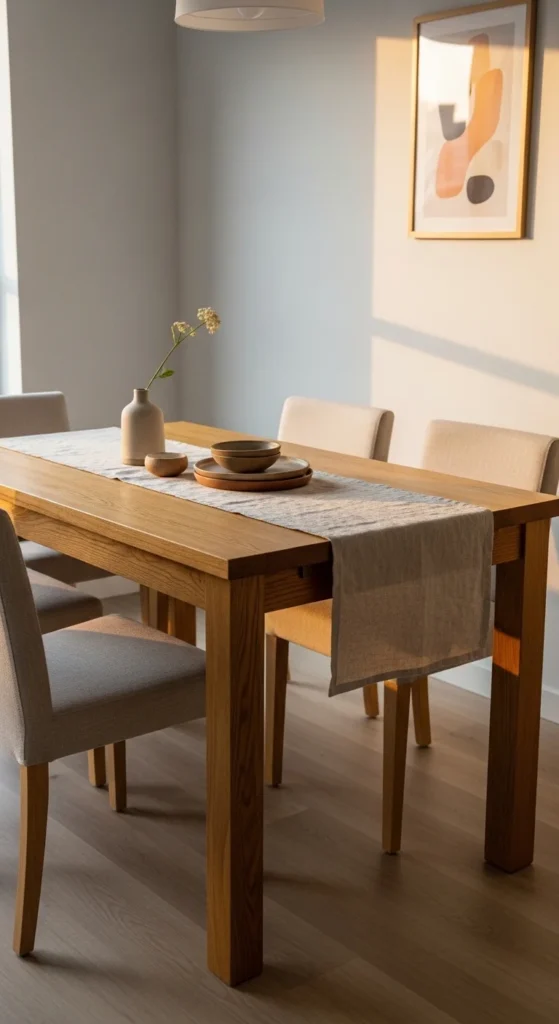
Secondhand wood furniture often hides incredible quality. Focus on weight and construction. Solid wood pieces feel heavier and sturdier than veneer furniture. Scratches and uneven stain are cosmetic issues, not deal breakers. Light sanding removes surface damage and opens the grain. Choose a wipe-on stain or natural oil to keep the wood looking authentic. Warm oak tones feel relaxed. Deeper brown shades add contrast and depth. Always finish with a matte or low-sheen sealant.
Avoid over-styling the piece once it’s done. Let the wood remain the focus. One ceramic bowl, a stack of books, or a simple runner is enough. Mixing this type of furniture with more modern pieces creates balance. Older wood carries visual weight, which makes a room feel established rather than temporary. This approach works for dining tables, nightstands, dressers, and even desks. It’s one of the most cost-effective ways to bring character into an apartment without buying new furniture.
4. Micro Gallery Wall With Removable Frames
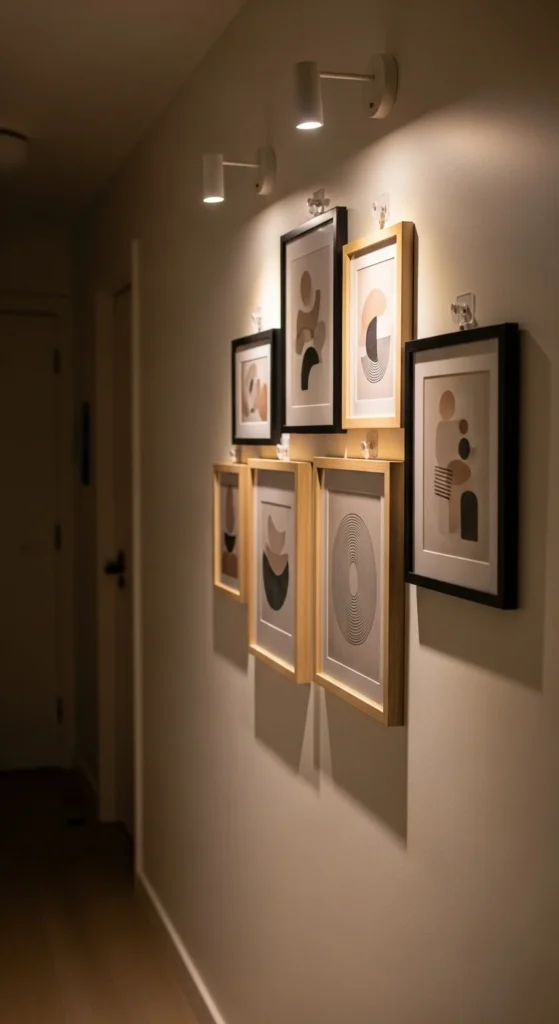
Gallery walls don’t need to fill an entire wall to feel intentional. In apartments, smaller arrangements often work better. Choose compact frames and keep spacing tight so the grouping feels cohesive. Stick to a limited color range for the artwork. Soft landscapes, line drawings, textured paper art, or toned-down photography blend easily. Use removable hooks that match the weight of each frame to avoid damage.
Lay everything out on the floor first. Rearrange until the balance feels right. Start with three frames and add more gradually. Printing art at home on textured or heavyweight paper works surprisingly well. Even personal photos look refined when colors align. Avoid mixing too many frame styles. Black and light wood together usually feel balanced. Collected arrangements feel personal, not rigid. Hallways, desks, and bed-adjacent walls are ideal spots for this type of display. It adds character without overwhelming limited wall space.
5. Natural-Fiber Texture Styling Kit
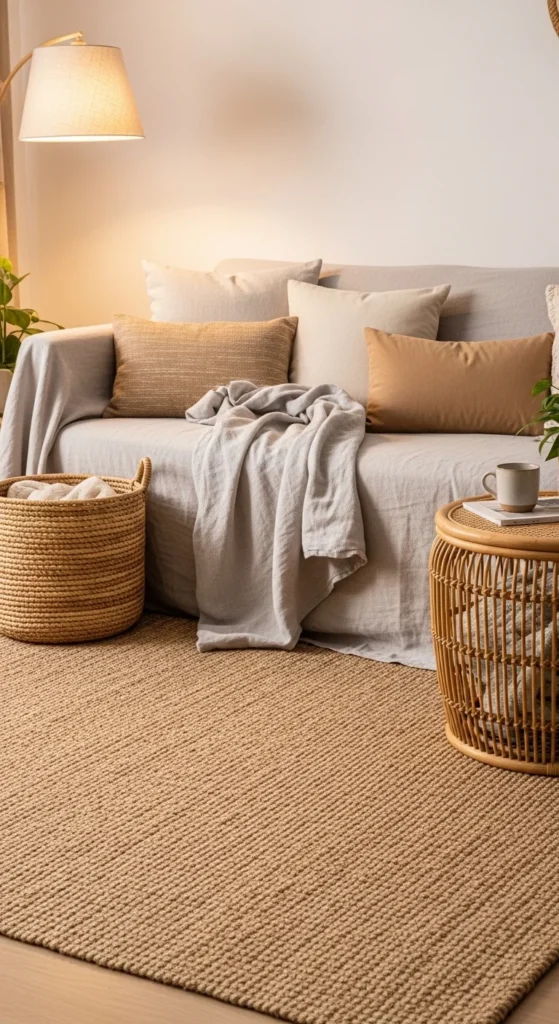
Texture brings warmth without adding clutter. A simple styling kit built from natural fibers can transform a room quickly. Start with a rug made from jute or flatwoven fibers to ground the space. Add a linen or cotton throw for softness. A woven basket introduces structure while hiding cords or loose items. One textured cushion adds depth without visual noise. Finish with a wood or rattan accent piece to tie everything together.
Stick to warm neutral tones so pieces mix easily. Cream, sand, and soft brown work across seasons. Rotate items between rooms instead of buying new ones. This keeps the home feeling updated without constant spending. Avoid filling every surface. Leave breathing room between objects so each texture stands out. Fewer items create stronger impact when materials are intentional. This kit works in living rooms, bedrooms, and entryways, making it one of the most flexible approaches for small apartments.
6. DIY Contact Paper Counter Upgrade
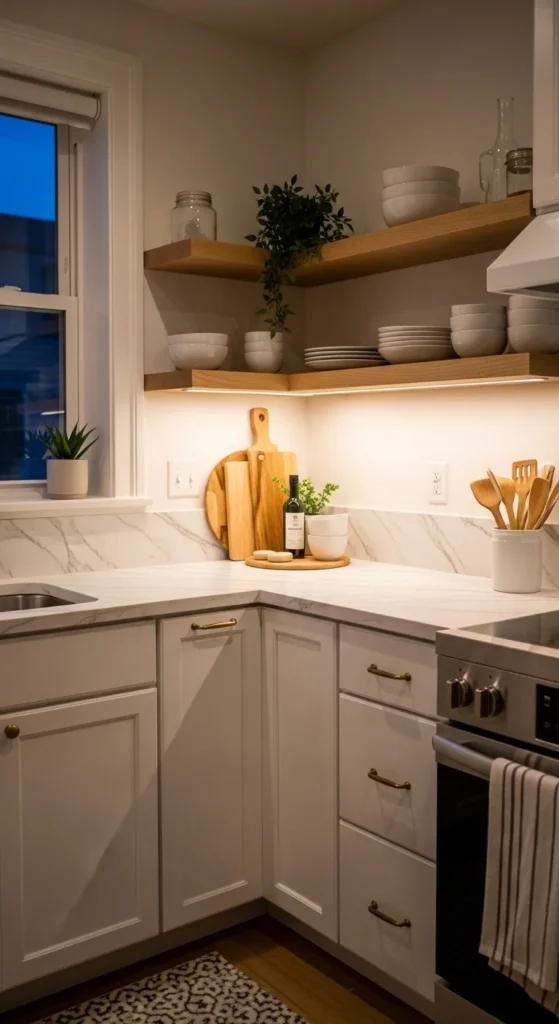
Old countertops can make an entire kitchen feel dated, even when cabinets are fine. Contact paper offers a practical workaround that stays within a small budget. Start by cleaning the surface thoroughly. Any grease or dust will show through later. Choose a matte finish rather than glossy. Matte patterns reflect light softly and hide seams better. Marble, concrete, or stone-inspired designs read calmer than busy prints. Measure carefully and cut pieces slightly larger than needed. This gives room for adjustment.
Work in short sections. Peel the backing slowly while smoothing with a felt squeegee or soft cloth. If bubbles appear, lift and reset instead of forcing them out. Pay extra attention to edges near sinks and stoves. Trim cleanly and secure edges underneath the counter lip when possible. Pair the finished surface with warm lighting below cabinets. This softens the look and reduces the artificial feel. Keep styling simple. One wood cutting board or ceramic container is enough. The goal is a clean surface that lets texture do the work. This approach updates kitchens without touching plumbing or fixtures and can be removed later with patience.
7. Statement Mirror Placement
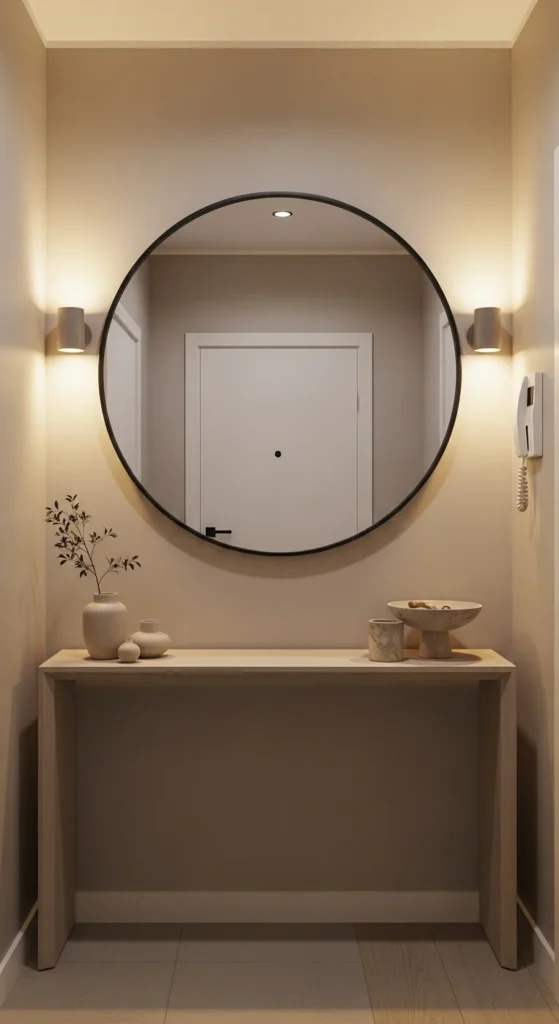
Mirrors do more than reflect light. They anchor walls and create visual balance. In small apartments, one larger mirror works better than several small ones. Round shapes soften tight layouts and contrast straight furniture lines. Thrift stores often carry solid mirrors with good frames. Clean them well and consider painting the frame if the tone feels off. Use removable mounting systems rated for the mirror’s weight.
Placement matters. Hang the mirror where it reflects either a window or a lamp. This doubles the effect of existing light. Keep surrounding decor minimal so the mirror remains the focus. A narrow console, one tray, and a small bowl are enough. Avoid cluttering the surface below. One strong piece replaces multiple decorations when used well. Mirrors work especially well in entryways, bedrooms, and dining corners where space feels compressed. This single change often makes rooms feel wider and more settled without adding furniture.
8. DIY Fabric Headboard Panel
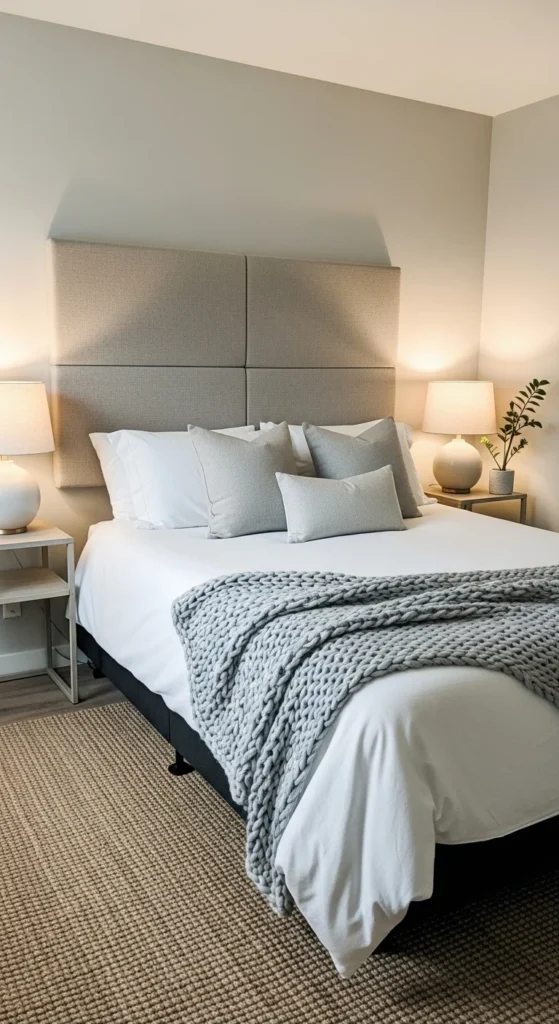
Headboards change how a bedroom feels. Upholstered ones add softness and absorb sound. A DIY panel version works well for rentals. Use high-density foam cut into rectangular panels. Wrap each piece with linen or cotton fabric and staple tightly at the back. Neutral shades close to the wall color feel intentional. Mount panels using heavy-duty removable strips so walls remain untouched.
Spacing panels slightly apart adds structure without bulk. Keep bedding simple so the headboard remains the visual anchor. Plug-in wall lamps on either side free up nightstand space and reinforce symmetry. Soft surfaces calm rooms that otherwise rely on hard materials. This setup works in small bedrooms where full headboards feel heavy. It also allows flexibility. Panels can be rearranged or reused in another home later.
9. Wall-Mounted Plant Ledges
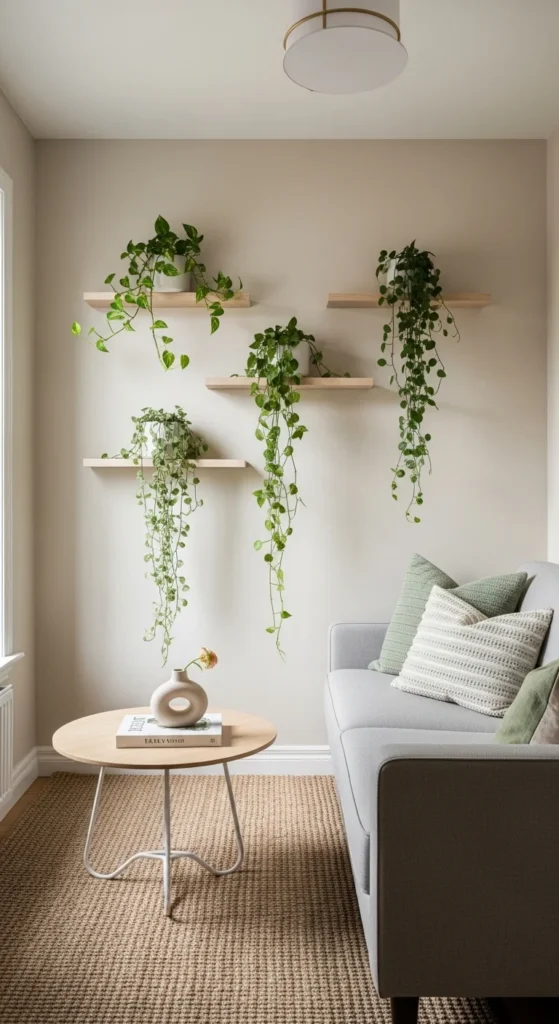
Plants bring life without adding furniture. Wall-mounted ledges keep floors clear and layouts open. Choose narrow shelves so they don’t project too far. Trailing plants like pothos or philodendron soften vertical space. Keep pots consistent in color to avoid visual noise. Use removable mounting systems designed for shelves rather than hooks.
Limit each wall to two or three ledges. More than that feels busy. Place shelves where plants receive indirect light. Avoid dark corners unless using grow bulbs. Green works best when treated like decor, not filler. This approach suits living rooms, kitchens, and workspaces. It brings nature into apartments without crowding already tight rooms.
10. Quiet Luxury Color Palette Reset
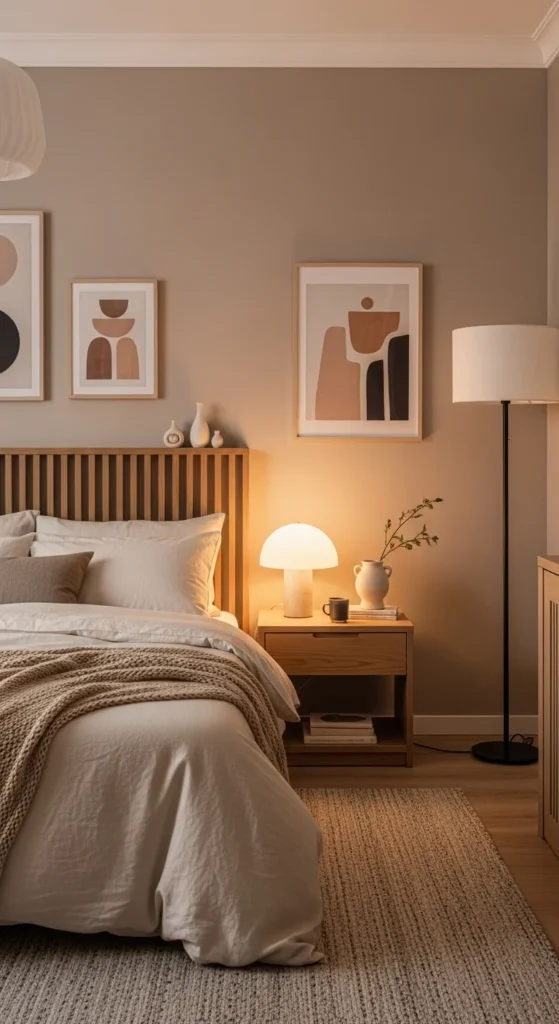
Color influences mood more than any single object. Quiet palettes rely on warm undertones and restraint. Instead of stark white, choose soft taupe, oatmeal, or clay-inspired shades. Start small. Swap pillow covers or throws first. Paint comes last. Repeat one accent tone twice in the room to create cohesion. This could be in cushions, art, or ceramics.
Avoid sharp contrast. Let colors blend gently. Wood accents add warmth and prevent the room from feeling flat. Keep finishes matte so light diffuses evenly. Consistency creates calm without looking plain. This approach works across rooms, making apartments feel connected rather than pieced together. It’s especially effective in bedrooms and living spaces where comfort matters most.
11. DIY Floating Shelf Styling
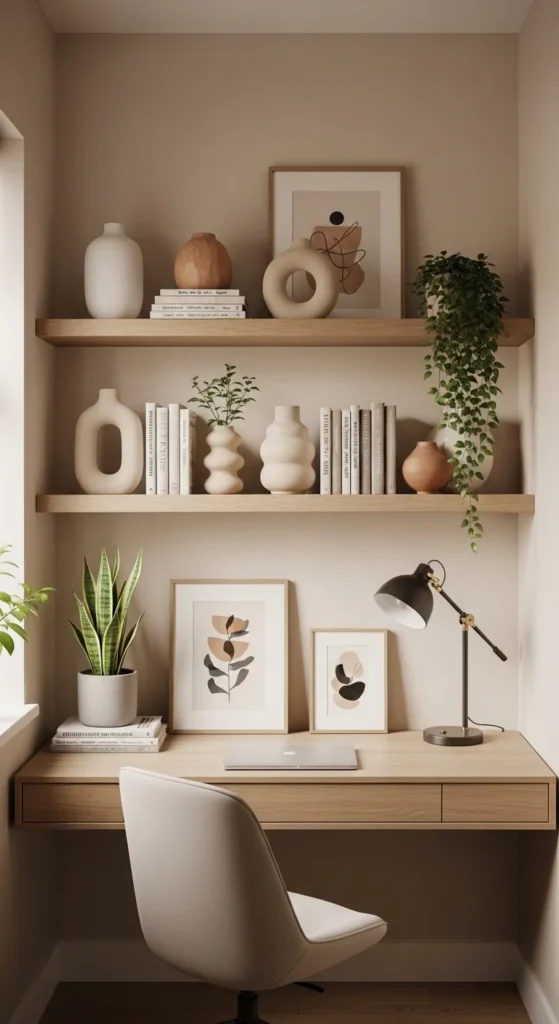
Floating shelves are a practical and stylish way to display objects without taking up floor space. Choose shallow shelves, around 6–8 inches deep, to prevent a cramped feel. Mount them with removable wall anchors if you’re renting, or use sturdy brackets that blend into the wall. Styling is key—avoid overfilling. Place books horizontally and vertically to create visual rhythm. Add one or two decorative items like a ceramic vase or a small plant for texture. Consider leaving empty spaces intentionally; breathing room gives the display a curated feel rather than cluttered.
Group objects in odd numbers, like three or five pieces per shelf. Stick to a consistent color palette with natural tones—beige, sand, cream, and muted browns—to maintain cohesion. Layer items slightly by placing smaller pieces in front of larger ones. Switch items seasonally to refresh the space without buying new decor. Floating shelves work well in living rooms, offices, and bedrooms. They can display meaningful objects, functional items, or small art pieces. Intentional minimalism on a shelf often reads more expensive than multiple decorative items. It’s a simple DIY upgrade that transforms the perception of a small space while staying renter-friendly.
12. Entryway Drop Zone Upgrade
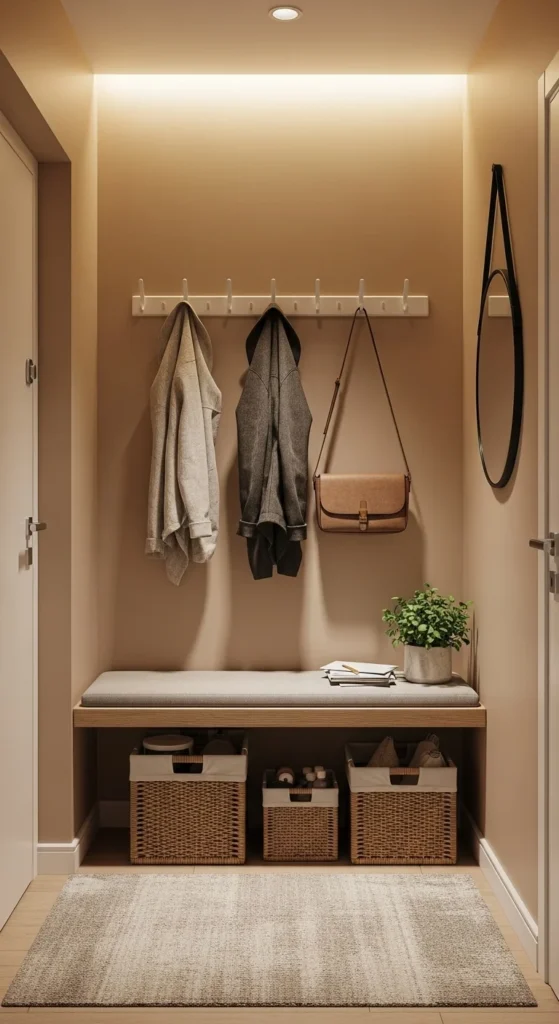
Entryways are small but high-impact spaces. A proper drop zone organizes keys, bags, and shoes without crowding. Install wall hooks at a comfortable height, ideally in a row for multiple items. Pair hooks with a slim bench for seating and storage. Woven baskets underneath hide shoes, umbrellas, or miscellaneous clutter while keeping the area neat. Stick to natural materials and neutral tones to maintain cohesion.
The key is simplicity. One bench, a few hooks, and baskets are often enough. Keep the surface of the bench clear except for essentials like a tray for mail or a small decorative object. Add a neutral rug to define the zone and protect flooring. A well-organized entryway gives a welcoming first impression without extra spending. Rotate baskets seasonally or swap one decorative item to refresh the space. Even tiny entryways feel intentional when every piece serves a purpose. Lighting should be soft but sufficient for morning routines. This DIY upgrade is quick, affordable, and renter-friendly, requiring minimal tools while maximizing functionality.
13. Removable Wall Sconces
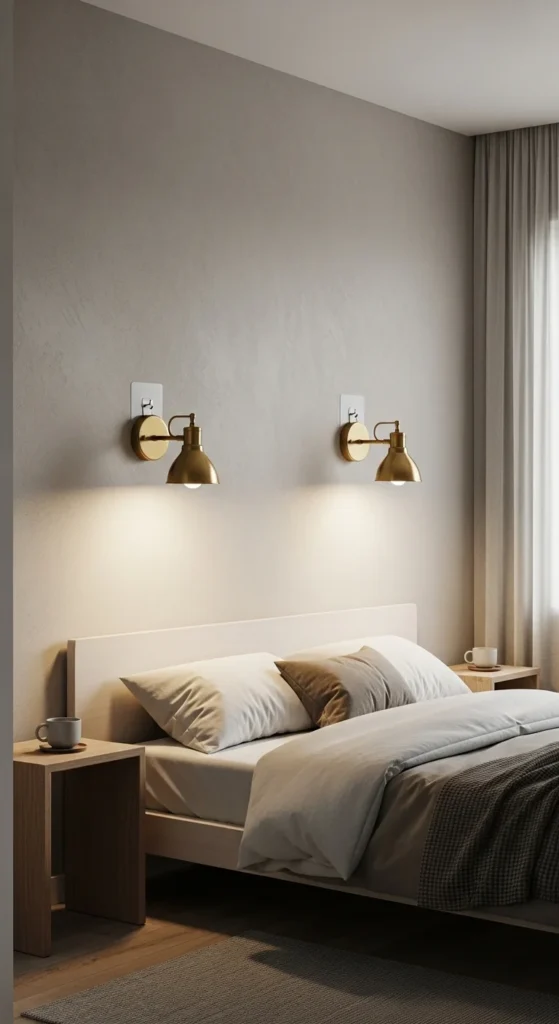
Lighting at eye level adds drama and frees nightstand space, and removable sconces are a renter-friendly solution. Choose plug-in sconces with cords long enough to reach outlets, and secure them with strong adhesive hooks rated for the weight. Brass or matte finishes read upscale without high cost. Install them slightly above eye level to reduce glare and create balanced lighting.
Use sconces on either side of the bed, above a sofa, or in a reading nook. Position lamps so they highlight walls rather than harshly illuminating the room. Soft, warm bulbs enhance coziness. Pair with neutral bedding or minimal decor to keep the focus on the light and surroundings. Strategic light placement can make even a small room feel curated and luxurious. This solution works in bedrooms, living areas, and offices. The best part is reversibility; if you move, the sconces come down without leaving marks. It’s a simple DIY change that impacts both function and style.
14. Textured Area Rug Layering
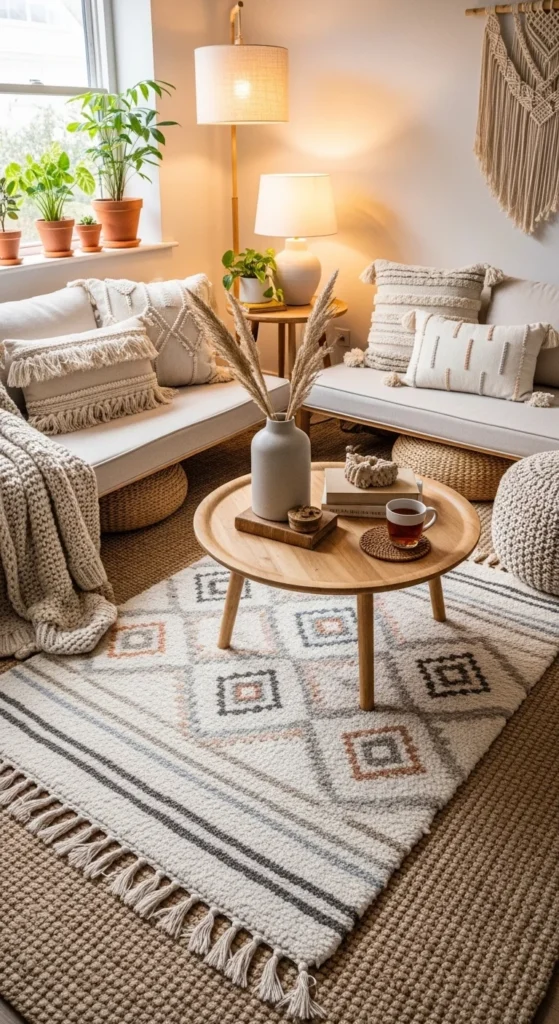
Layering rugs is a subtle design tactic that adds depth and warmth to a room. Start with a flat base rug, such as jute or sisal, which anchors the space. Add a smaller, textured rug on top to create interest. Stick to similar color families to avoid visual clutter—cream, taupe, soft browns, and muted golds work best. Texture, rather than pattern, is the focus, especially in compact apartments.
Size matters. The top rug should be smaller than the base rug, leaving a visible border. This technique defines seating or activity zones and adds visual hierarchy. Avoid too many layers; two are enough for impact. Layering works well under coffee tables, sofas, or dining sets. Add a throw or cushion in matching tones to tie the textures together. Even modest apartments feel more expensive when layers are thoughtfully combined, giving the room depth without overloading it. Rugs also soften sound, making apartments feel more comfortable.
15. DIY Art Using Fabric or Paper
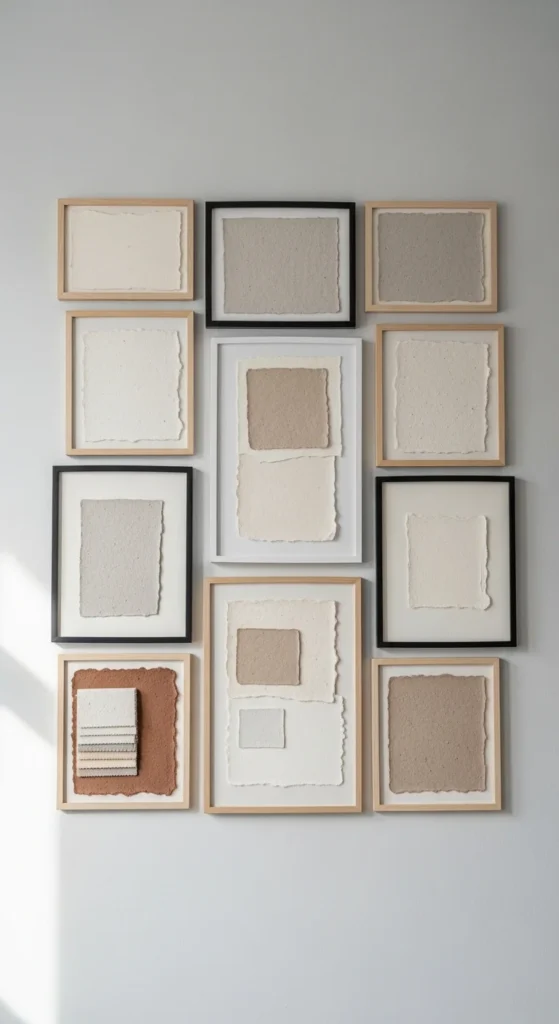
Art doesn’t need to come from a gallery. DIY fabric or paper pieces create personality while staying budget-friendly. Start by selecting textured materials—linen, cotton, or handmade paper. Cut squares or rectangles and place them in simple frames. Neutral tones like cream, taupe, and muted gray work well. For added dimension, slightly mount the fabric on foam or cardboard to create depth.
Group frames in odd numbers and maintain consistent spacing. Hang them at eye level to maximize impact. Simple frames in black, wood, or white unify the display. This approach lets you refresh artwork seasonally or switch rooms without extra cost. Combine with minimal lighting or a nearby shelf to integrate the wall into the space. DIY art feels intentional when textures and colors are cohesive. Even a small arrangement can act as a visual anchor for the room, creating a sense of refinement without buying expensive art pieces. It’s particularly effective in bedrooms, hallways, and compact living spaces.
16. Compact Multifunctional Furniture
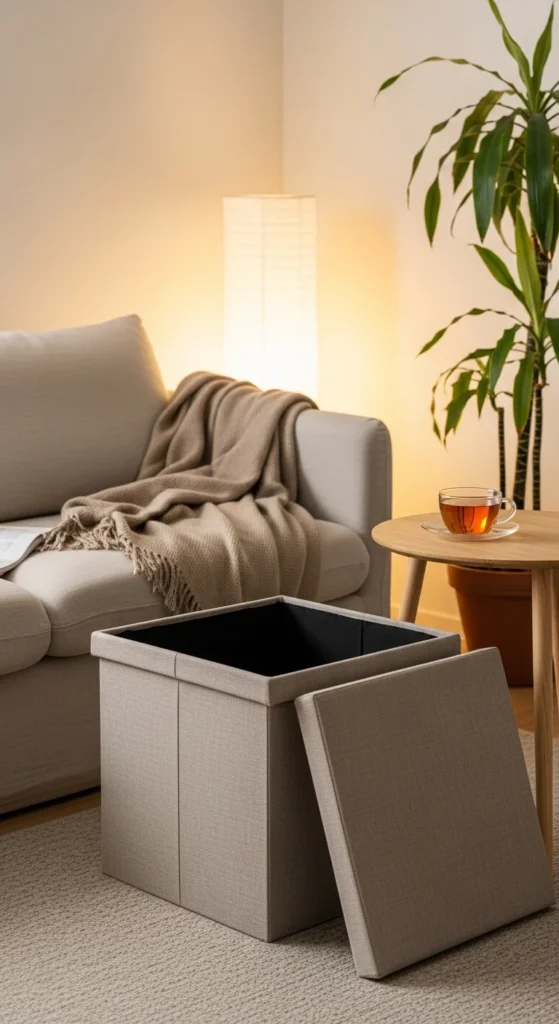
Multifunctional furniture is essential in small apartments where every square foot counts. A storage ottoman combines seating, a footrest, and hidden storage in one piece, reducing clutter while remaining stylish. Choose neutral upholstery so it blends with existing furniture. A removable lid provides easy access for blankets, books, or electronics. Pair the ottoman with a simple wooden side table or tray to create a flexible coffee table alternative.
Placement is key. Position near a sofa, chair, or entryway so the ottoman serves multiple functions. Avoid oversized pieces that dominate the space. Compact design with multiple uses reads more expensive than separate single-function items. Thrifted pieces can be refreshed with new upholstery or paint for the base, giving them a modern look without high costs. Rotate storage contents seasonally to maintain freshness and reduce visual clutter. Small apartments benefit from this approach because it blends practicality with aesthetic appeal, giving each item a purpose. This strategy works across living rooms, bedrooms, or even multipurpose home offices, allowing you to maximize function without sacrificing style or floor space. Lighting nearby should be soft to enhance warmth and avoid highlighting bulky shapes.
17. Seasonal Pillow Cover Rotation
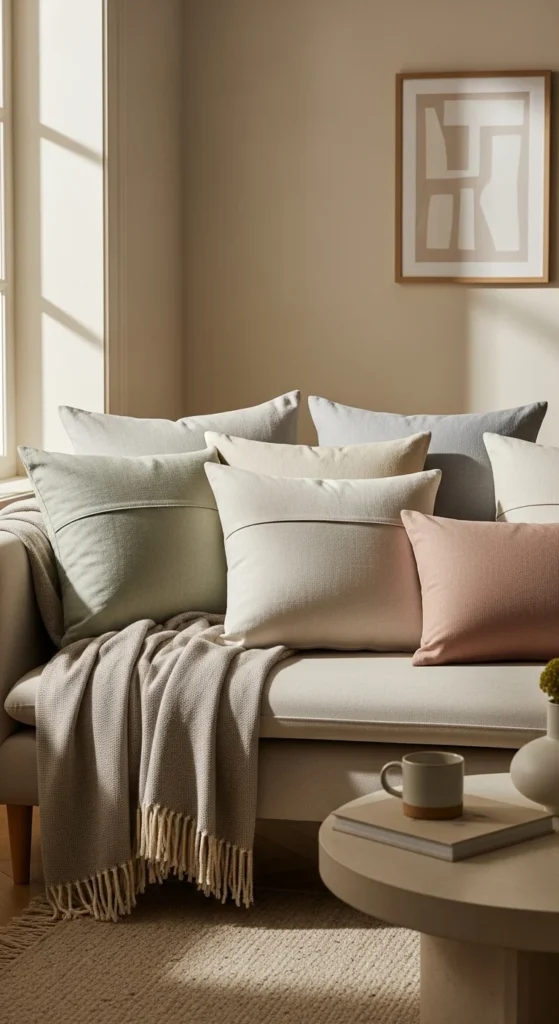
Pillows are an easy way to refresh a room without a full redesign. Instead of buying new furniture or throws, switch out pillow covers each season. Linen and cotton blends work best because they feel luxurious and soften over time. Stick to a consistent neutral palette—cream, beige, taupe—with one or two muted accent colors to create visual interest. Layering textures adds depth; for example, combine smooth cotton, nubby linen, and soft knit.
Rotation keeps rooms feeling current while staying budget-conscious. Store off-season covers in a neat basket or drawer to maintain organization. Mix and match sizes while keeping the overall aesthetic balanced. Simple pillow swaps make a room feel redesigned without heavy labor or cost. This technique works in living rooms, bedrooms, and even small dining benches with cushions. Keep the rest of the space minimal so pillows become the focus. Using consistent colors and materials ensures a cohesive look while giving you flexibility to add pops of seasonal color. This strategy is practical, renter-friendly, and highly effective for small spaces.
18. DIY Bathroom Shelf Styling
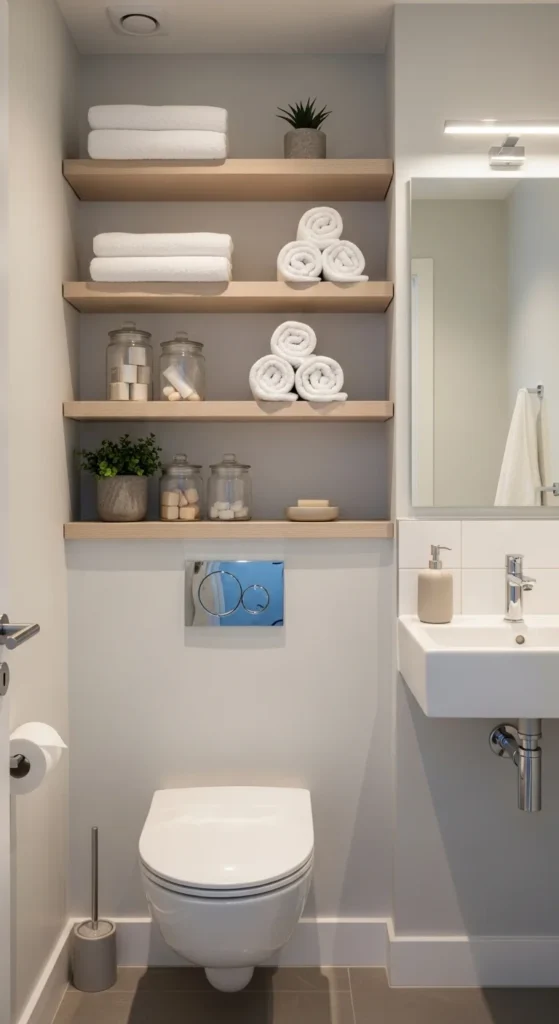
Even small bathrooms can feel curated with simple shelf styling. Floating shelves above the toilet or next to the sink save floor space while providing display and storage. Keep objects functional and minimal—rolled towels, glass jars, and small plants offer texture and color without overcrowding. Neutral tones, like beige, white, or light wood, create calmness and sophistication. Avoid overloading shelves; fewer items allow each piece to stand out.
Measure shelf placement carefully to maintain comfortable clearance. Use removable or light-duty anchors in rental spaces. Arrange objects in odd numbers and group by type—stack towels, place jars together, and separate plants. Layer textures such as linen towels against smooth glass or ceramic. Well-organized bathroom shelves feel luxurious and intentional, giving small spaces a spa-like atmosphere. Change items seasonally or rotate decorative accents to keep the look fresh. Even in compact apartments, this simple styling technique upgrades a utilitarian space into a visually appealing, functional area with minimal investment.
19. Soft Window Treatments Upgrade
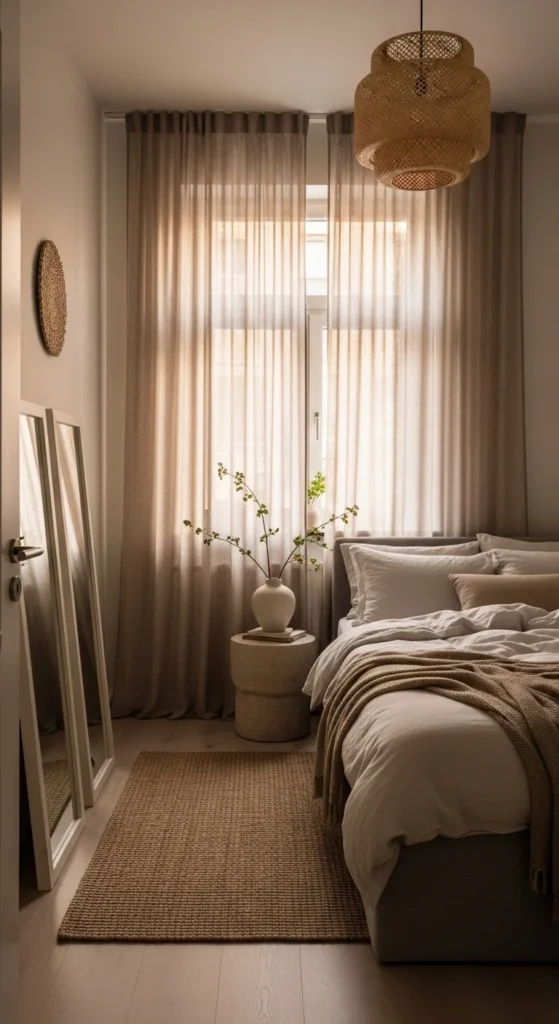
Curtains can drastically affect how a room feels. Hanging them higher than the window frame elongates walls, making apartments feel larger. Floor-length sheers in linen or cotton blend diffuse natural light while keeping the space airy. Stick to neutral tones like cream, sand, or soft taupe to harmonize with the room’s color palette. Avoid busy prints or overly bright colors that can overwhelm a small space.
Mount a simple tension rod or rental-friendly curtain rod for easy installation. Layer sheer curtains with a heavier drape if privacy is required. Minimal hardware keeps the look clean and modern. Pair curtains with complementary textures in cushions or throws to reinforce a cohesive design. Even modest window upgrades create a sense of luxury by controlling light, privacy, and mood. This approach works for bedrooms, living rooms, and studios, providing softness without sacrificing natural brightness. Soft, flowing fabric adds elegance while remaining renter-friendly and affordable, making it a high-impact yet low-effort project.
20. Micro Decor Focal Points
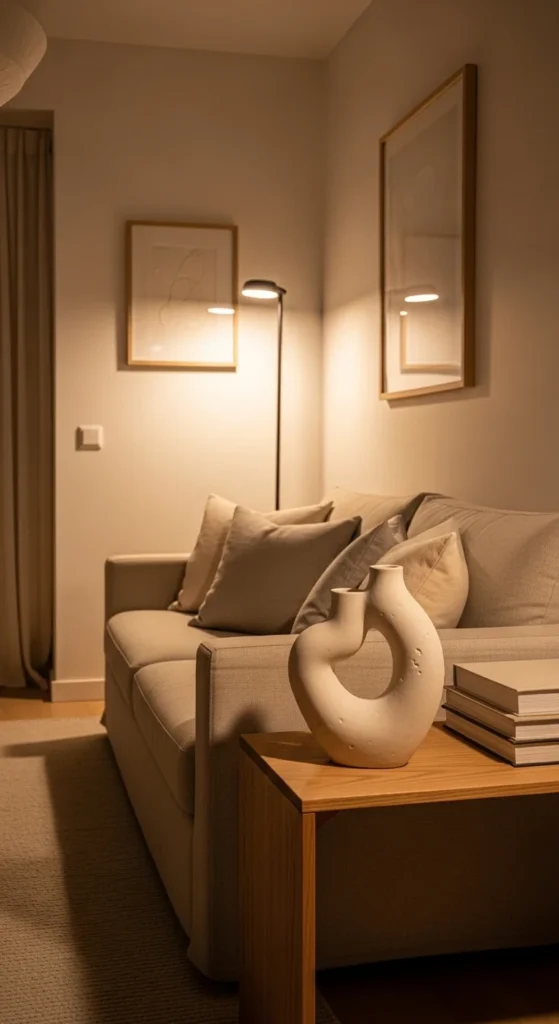
Every room benefits from at least one focal point. In small apartments, a micro-scale decorative piece can anchor a space without cluttering it. Sculptural objects, stone bowls, or unique ceramics draw the eye and create a sense of refinement. Place the piece on a side table, shelf, or console where it naturally falls into sightlines. Stick to neutral or soft muted colors to maintain cohesion with existing decor. Avoid multiple competing objects, as they dilute the effect.
Micro decor works especially well in living rooms, bedrooms, or entryways. Rotate pieces periodically to refresh the aesthetic without adding clutter. Combine texture, material, and height to give the object presence. For example, a smooth ceramic piece on a wooden tray with a small textile accent adds layers of interest. Focused attention on one statement piece reads more expensive than multiple smaller decorations. Lighting enhances the impact, so position near a lamp or under natural daylight. Micro decor is a simple, low-cost way to infuse personality and elegance into compact spaces without overcomplicating the design.
21. Eco-Friendly Local Finds
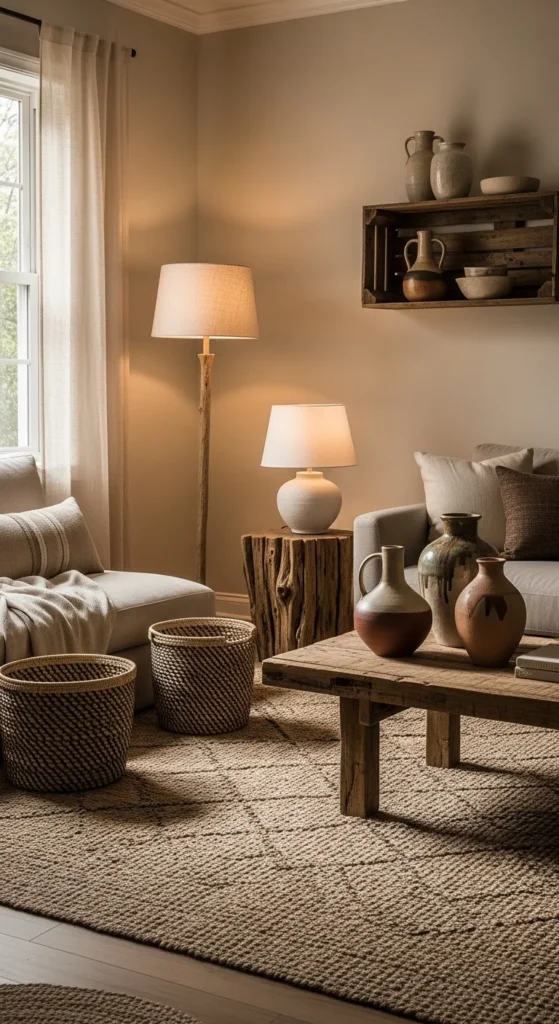
Supporting local artisans can enhance both the look and story of your apartment. Locally sourced decor often uses sustainable materials and unique techniques, giving spaces a distinctive edge. Look for handcrafted ceramics, woven baskets, reclaimed wood trays, or hand-dyed textiles. Arrange a few standout pieces in prominent spots—like a coffee table, shelf, or console—so each item has presence without overcrowding the room.
Keep color palettes neutral to allow textures and craftsmanship to shine. Mix natural fibers with wood, stone, or ceramic to create visual depth. Sustainable decor doesn’t have to be expensive; many local markets and online handmade marketplaces offer affordable options. Rotating pieces seasonally keeps the space feeling updated and connected to your environment. Highlight one or two larger items and supplement with small, functional objects like planters or trays. Using local finds brings personality, supports ethical practices, and adds a subtle luxury feel that sets your apartment apart from mass-produced interiors. This approach works in living rooms, bedrooms, and entryways alike.
22. Natural-Fiber Furniture and Textiles
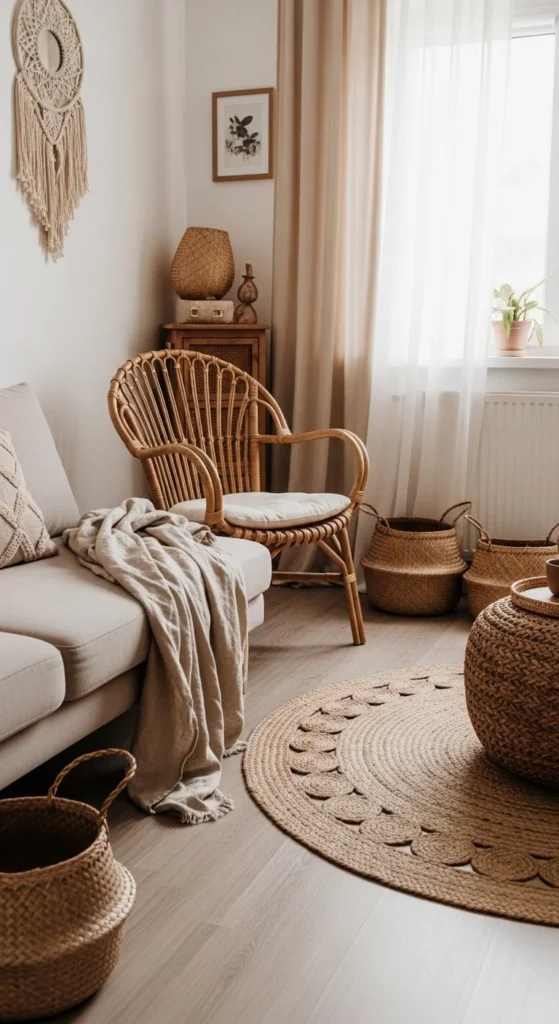
Natural fibers add warmth, texture, and visual interest while remaining subtle and adaptable. Incorporate rattan chairs, jute rugs, linen throws, or cotton cushions into your space. Layer textures across materials—soft throws on structured furniture, woven baskets on smooth wood surfaces. This creates depth and tactile comfort without overwhelming a small apartment. Stick to a cohesive neutral palette to unify materials.
Choose pieces that serve multiple functions if possible: a rattan chair can also be a bedside seat, a basket can store blankets. Layering natural fibers enhances a sense of timeless sophistication on a budget. Rotate throws and small accessories seasonally to refresh the look. Even simple swaps like switching a wool pillow for linen instantly feel elevated. Prioritize quality over quantity; one well-chosen natural-fiber piece can transform a room’s perception. This strategy is ideal for living rooms, bedrooms, or small studios seeking an organic, calm, and inviting atmosphere.
23. Small-Space Decluttering Routine
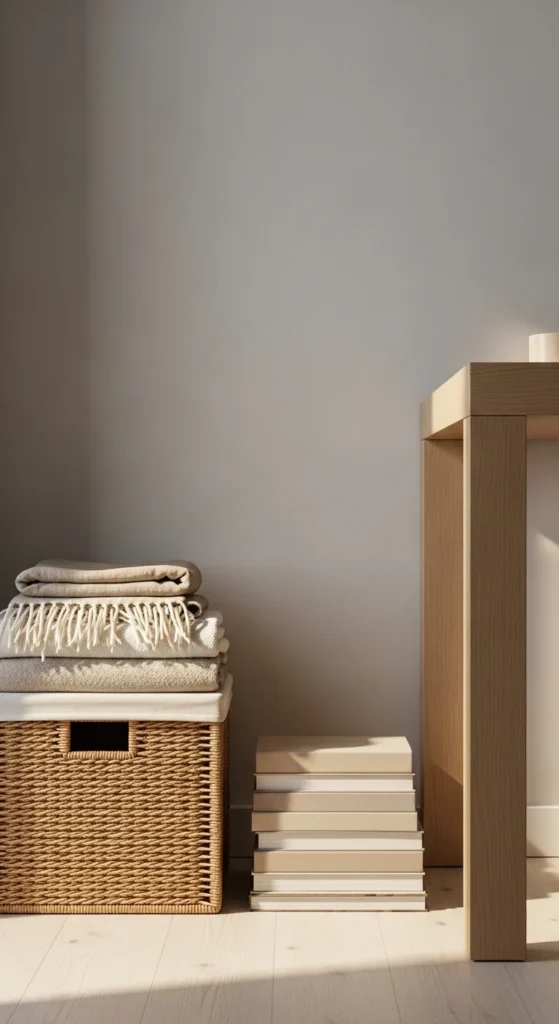
Limited square footage can make clutter feel overwhelming. A daily 10-minute declutter routine keeps small apartments organized and visually appealing. Begin by identifying hotspots: entryways, coffee tables, and nightstands. Remove items that are out of place and return them to their storage spots. Use small baskets, trays, or bins to group items and reduce visual chaos. Rotate seasonal items into storage to free up surfaces.
Incorporate storage solutions that blend with your decor. For instance, a woven basket or decorative box can hide electronics, cords, or magazines. Keep surfaces mostly clear; minimalism in daily habits feels luxurious without removing personality. Make the routine easy by assigning a consistent time—morning or evening works best. Encourage intentional possession: one carefully selected item on display is better than multiple objects competing for attention. A well-maintained apartment instantly feels larger, calmer, and more thoughtfully styled, proving that consistent small efforts yield significant aesthetic and practical benefits.
24. Visual Storytelling With Mood Boards
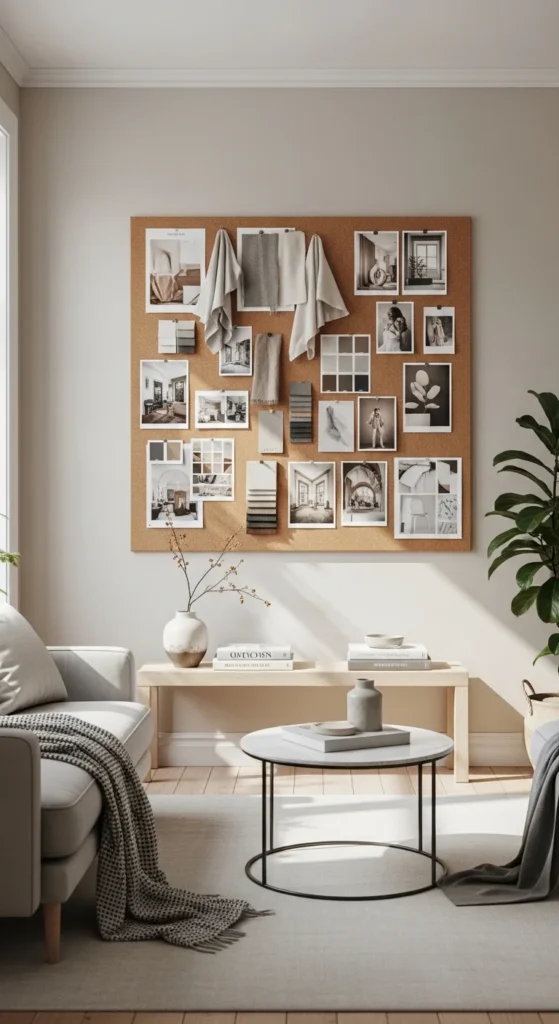
Mood boards aren’t just for designers—they help plan cohesive spaces, especially in compact apartments. Assemble a board with fabric swatches, paint chips, printouts, and images of decor pieces. Group items by color, texture, or function. Keep it neutral with one accent color for reference. Display the board where you can see it while decorating. It helps prevent mismatched choices and keeps the room visually consistent.
Create mini-projects from the board: identify one section for textiles, one for furniture, and one for small decor. Rotate items seasonally to test combinations. Visual storytelling guides decisions and prevents impulse purchases, keeping your budget intact. Mood boards are portable and reusable; you can swap sheets, photos, or swatches as tastes evolve. Even in small apartments, this approach ensures every choice aligns with a cohesive aesthetic. It also adds a layer of professionalism to DIY projects, helping your spaces feel intentional, curated, and calm without large financial investment.
25. Rotating Digital Art Frames
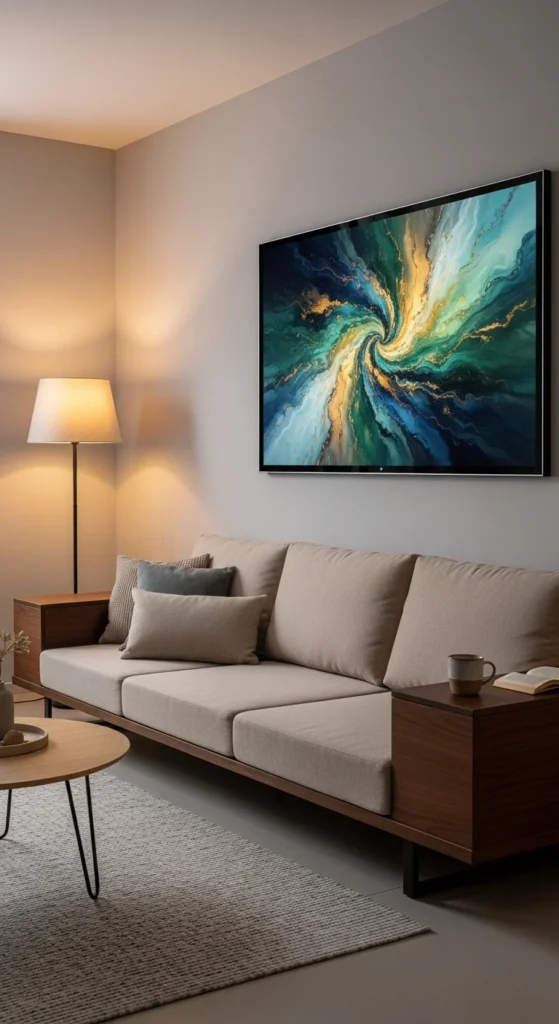
Digital frames allow affordable art rotation while minimizing clutter. Upload prints, photography, or personal designs to rotate daily or weekly. A single frame can serve as an ever-changing focal point, keeping walls fresh without physical storage. Place the frame at eye level for maximum impact. Pair with subtle decor items below to avoid distraction.
Choose neutral-colored frames to blend with your room’s palette. Minimal side tables or consoles beneath the frame work best. Rotating digital art offers flexibility: you can feature seasonal themes, family photos, or curated collections. It’s perfect for renters who cannot drill or hang multiple heavy pieces. Power cords can be concealed behind furniture or within decorative baskets. Digital frames provide a sense of sophistication and versatility, giving a small apartment the feel of a gallery without the permanent commitment. They combine technology, art, and simplicity in one elegant solution.
26. Seasonal Lighting Magic
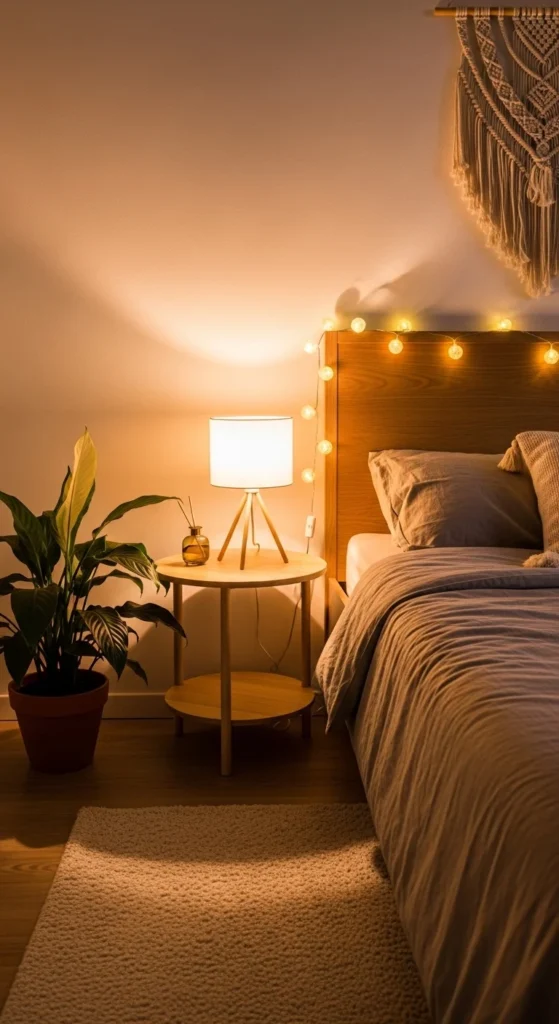
Lighting is one of the fastest ways to shift mood. Twinkle lights, string lights, or warm LED strips add a soft, inviting glow without major installation. Drape them over a headboard, along shelving, or around a mirror to create ambiance. Pair with a small table lamp or plug-in sconce for layered effect. Stick to warm tones—yellow or amber lights feel calm and luxurious compared to harsh white LEDs.
Use clips, adhesive hooks, or existing furniture edges to hang lights without damaging walls. Layering light creates depth and a sense of intimacy in small spaces. Combine with minimal decor so the glow becomes the focal feature. Seasonal lighting allows for quick room refreshes that feel intentional. Swap designs during holidays or seasons to maintain variety without permanent changes. Small apartments benefit greatly from this strategy, as it transforms rooms instantly, creating warmth, sophistication, and a sense of curated style on a modest budget.

Leave a Reply