

1. Modular Sectional That Shifts With the Crowd
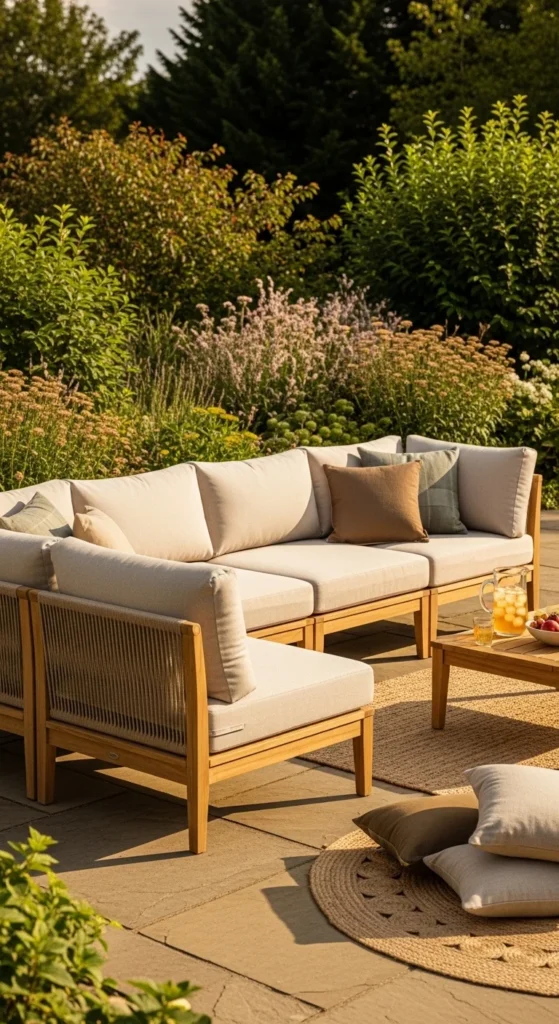
Modular seating shows up everywhere for a reason. You can split it. You can stack it. You can pull pieces apart for a crowd or push them together for quiet nights. Modular furniture works especially well for patios that host different kinds of moments. Morning coffee feels different from weekend dinners, and this setup handles both.
Start with three core pieces instead of a full set. That keeps costs under control and gives room to expand later. Look for aluminum or FSC-certified teak frames so rearranging doesn’t feel like a workout. Performance fabric cushions matter here. Fading and mildew ruin the fun fast.
Styling trick: anchor the layout with an outdoor rug first. Then move the pieces on top of it until the flow feels right. Add one side table instead of several. It keeps the look calm. For small patios, armless modules save inches without looking skimpy. Keep throw pillows limited to two colors so the setup stays relaxed rather than busy.
2. Curved Outdoor Sofa With Sculptural Lines
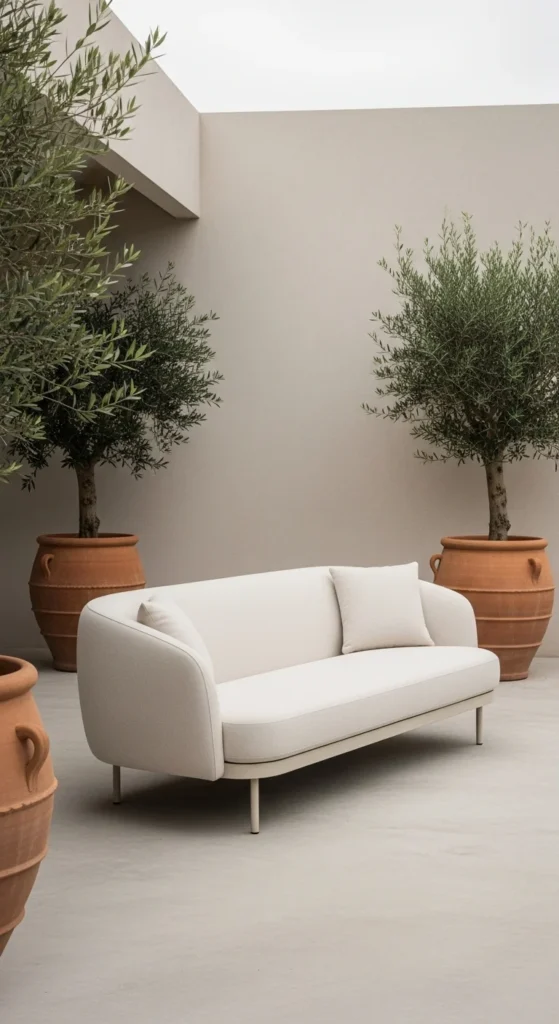
Straight lines dominated patios for years. Curves are changing that. A rounded sofa softens the entire space and pulls people together without forcing symmetry. Sculptural silhouettes feel calm and modern at the same time.
This works best when the rest of the patio stays simple. Pair the sofa with a round concrete or stone table so shapes echo instead of clash. Skip bulky chairs nearby. Let the curve stand alone. If the price tag stings, look for resin-wicker versions with curved frames. They cost less and still read high-end from a distance.
DIY idea: place the sofa slightly off-center and add a tall planter behind one end. That frames the curve and hides awkward corners. Neutral cushions keep the shape as the star, but one muted accent pillow—rust or olive—adds depth. Avoid sharp-patterned rugs here. Flatweave or solid tones work better with rounded forms.
3. Rope-Wrapped Lounge Chairs With Artisanal Detail
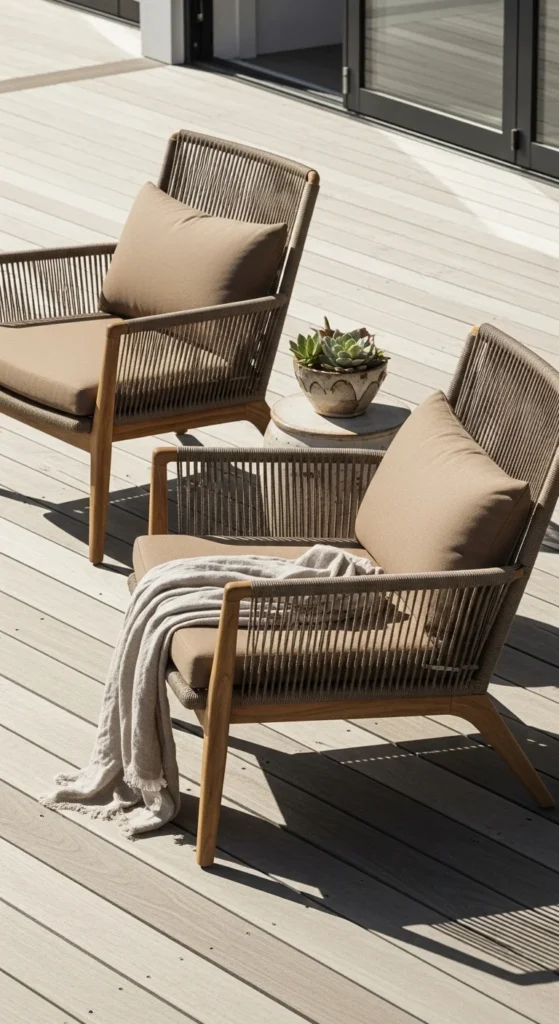
Rope furniture quietly steals attention. The texture feels crafted, not mass-produced. These chairs balance casual comfort with visual interest, making them great accent pieces. Artisanal rope details add depth without heavy ornament.
They shine when paired with simple materials. Teak, concrete, or stone keeps the look grounded. Skip glossy metals nearby. For durability, check that the rope is synthetic rather than natural fiber. It holds up better against rain and sun while keeping the same look.
Budget tip: buy rope chairs as singles instead of pairs. One on each side of a sofa feels intentional and costs less upfront. Styling trick: add a thin lumbar pillow instead of a full cushion stack. It keeps the woven back visible. At night, place a low lantern near the chairs so shadows highlight the texture. This kind of seating works well on decks, balconies, or pool edges where you want comfort without bulk.
4. Teak Dining Set Mixed With Concrete Tabletop
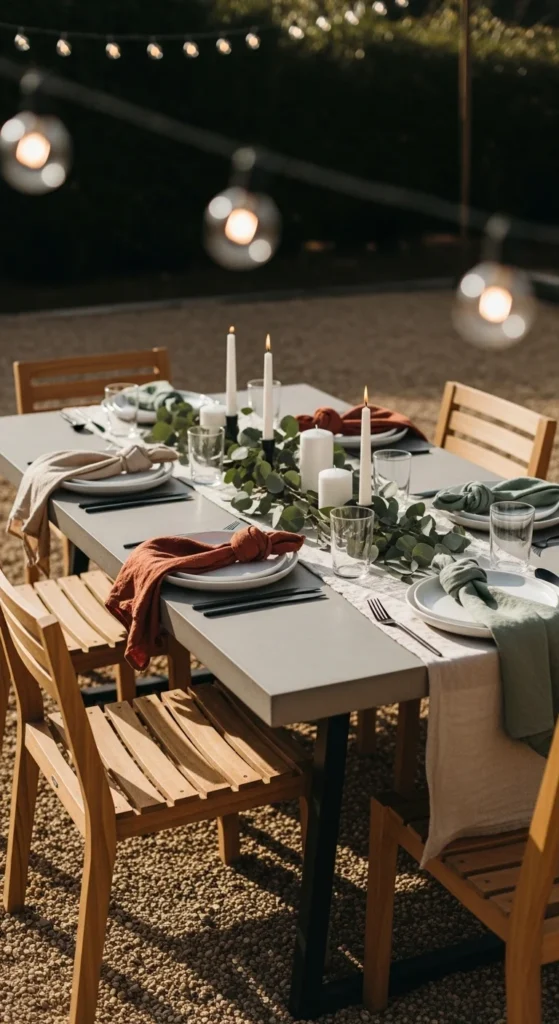
Mixing materials creates tension in a good way. Teak chairs feel warm. Concrete tables feel solid and grounded. Together, they balance comfort and structure. This combo fits both modern and rustic patios.
Concrete tabletops resist heat and weather better than many woods. They also hide wear over time. To keep things from feeling cold, layer in texture. A simple runner. Woven seat cushions. Even unfinished ceramics help.
Cost-saving move: choose a concrete-look composite instead of poured concrete. It weighs less and costs less. For smaller patios, go with a narrow rectangular table and armless chairs so everything tucks in cleanly. Maintenance stays simple. Teak can weather naturally or be lightly oiled once a year. The contrast only improves with age. This setup works well for people who host often but don’t want delicate furniture anxiety.
5. Compact Modular Seating for Small Balconies
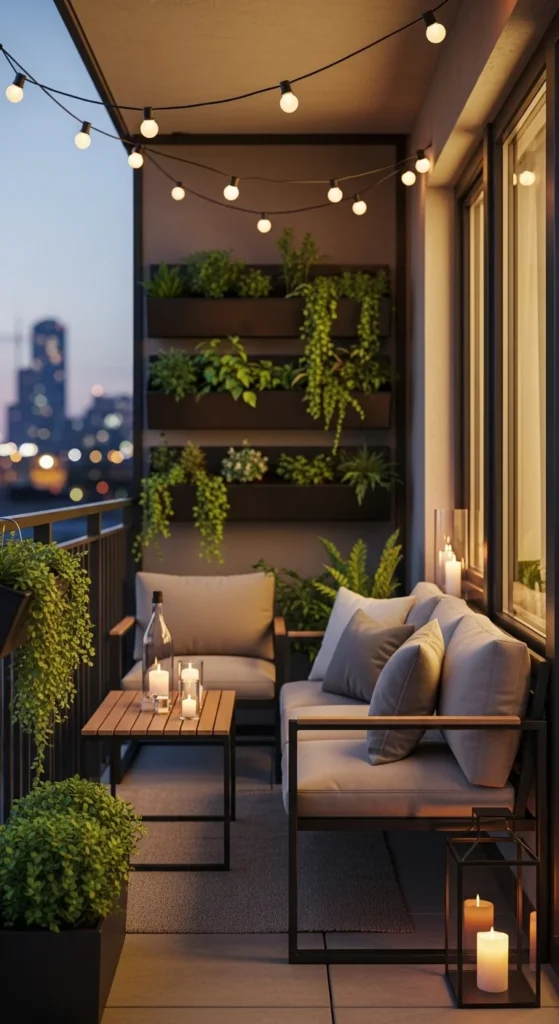
Small balconies still deserve good design. Compact modular seating makes that possible without crowding the space. Low-profile frames and shallow cushions keep walkways open while still offering comfort. Outdoor living doesn’t require a backyard.
Start with a two-piece corner unit. It defines the seating zone instantly. Choose light-colored cushions so the space feels open. Dark fabrics shrink visual space fast. Storage ottomans double as seating and hide clutter like covers or candles.
Styling trick: think vertical. Wall planters or railing-mounted greenery free up floor space. A narrow bistro table works better than a coffee table here. If wind is an issue, pick heavier bases or weighted rugs. Lighting matters more in small areas. One warm string light and a rechargeable lamp create atmosphere without cords. This setup proves size doesn’t limit style—it just asks for smarter choices.
6. Bamboo Lounge Chairs With a Retro Twist
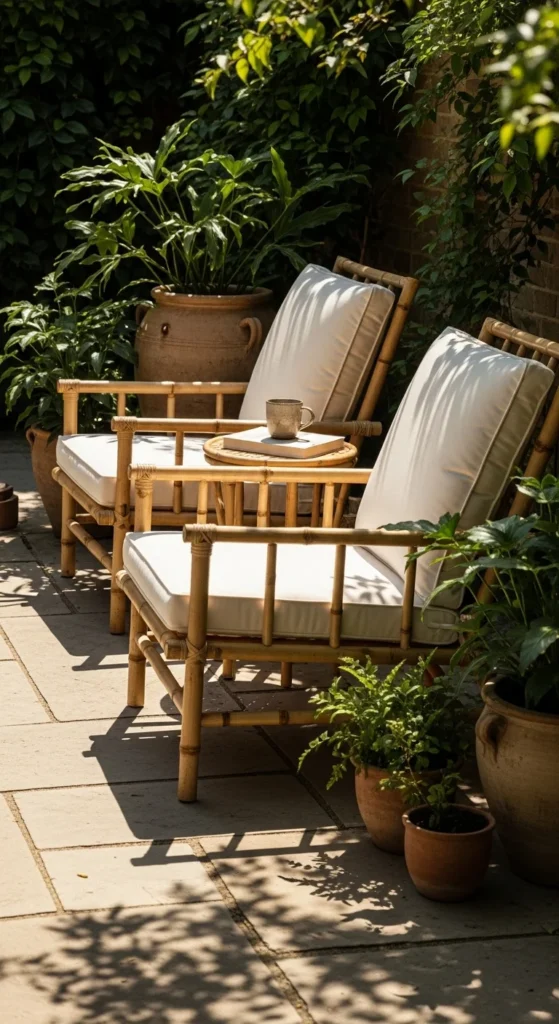
Bamboo is back, and it doesn’t feel dated anymore. Clean lines and thicker frames give it staying power outdoors. These lounge chairs bring warmth without visual weight. They also pair well with greenery, which makes patios feel calmer and more intentional.
Look for treated bamboo or sealed finishes so moisture doesn’t cause cracking. If you’re watching spending, bamboo often costs less than teak while offering similar visual warmth. Keep cushions simple. Solid colors work better than loud prints here.
Styling trick: add one woven side table or ceramic stool nearby. It keeps the look cohesive without matching too closely. Bamboo works especially well on covered patios or sunrooms, but it can handle open-air setups when properly sealed. For evening use, place a floor lantern behind the chair to cast soft shadows through the frame. That texture becomes part of the decor.
7. Fire Pit Seating That Invites Long Conversations
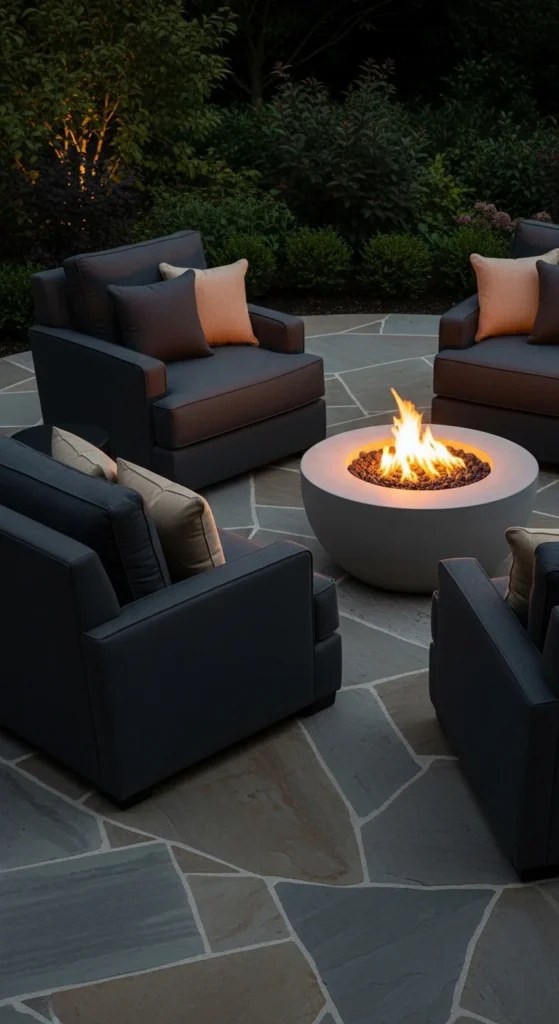
Fire pits change how people use outdoor spaces. Seating arranged around one feels natural and social. Chairs don’t have to match perfectly. Mixing materials adds character and keeps things relaxed.
Choose seats with slightly angled backs for comfort during long sits. Metal frames with fabric slings handle heat better than heavy cushions placed too close to flames. For smaller patios, a compact gas fire pit paired with two chairs still creates impact.
Budget idea: use movable chairs instead of built-in benches. That keeps layouts flexible. Add one shared table or stool for drinks rather than individual side tables. For styling, stick to a tight color range so the fire becomes the focal point. Soft throws nearby make the space usable across seasons. This setup works for quiet nights and small gatherings without extra furniture clutter.
8. Rattan Sofa With Deeper Weave Texture
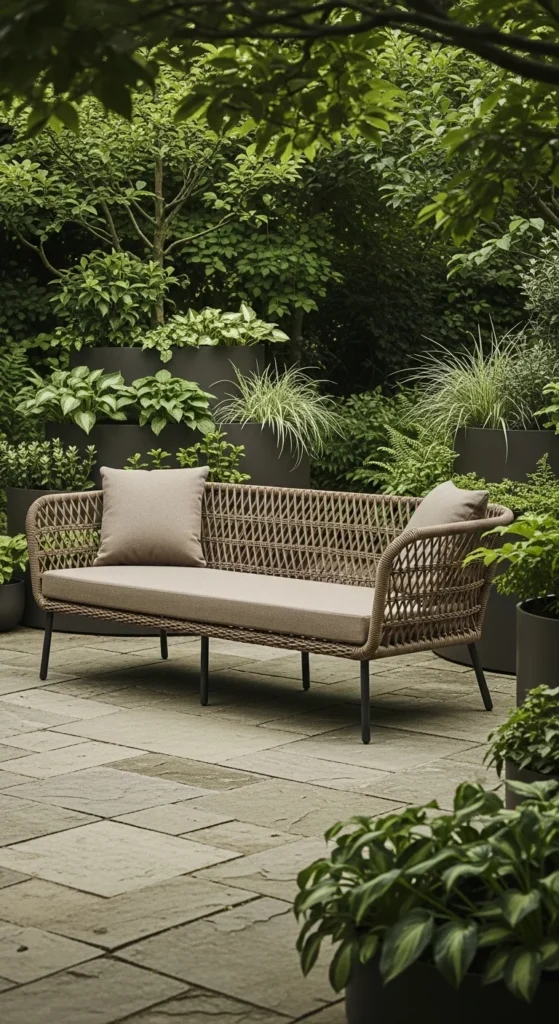
Rattan hasn’t disappeared—it has matured. Deeper weaves add shadow and texture that flatter outdoor light. A rattan sofa anchors patios without feeling heavy or dated.
Synthetic rattan holds up better outdoors than natural fiber while keeping the same look. Pair it with slim metal or wood legs so the piece doesn’t feel bulky. Cushions in soft neutrals let the weave do the talking.
Styling tip: keep surrounding pieces simple. One concrete table or smooth ceramic planter balances the texture. Avoid pairing with busy patterns nearby. If cost matters, choose a loveseat instead of a full sofa and add matching chairs later. Maintenance stays easy with quick wipe-downs. This style works in gardens, poolside spaces, and covered terraces where texture brings warmth without excess.
9. Smart Outdoor Lounge With App-Control Lighting
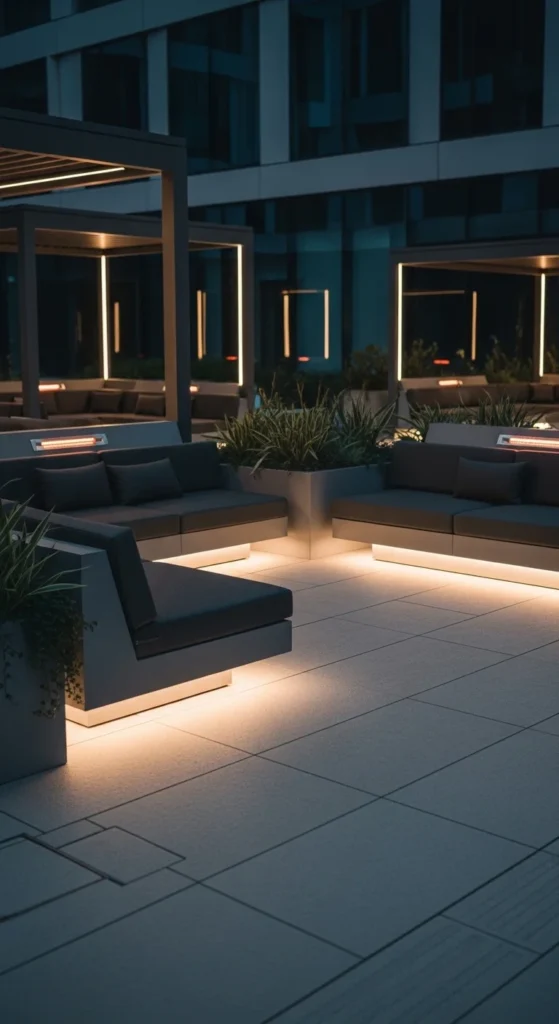
Technology has quietly entered patios. App-controlled lighting and heaters make evenings easier and more comfortable. You control mood without getting up or adjusting multiple fixtures.
Start small. Smart bulbs or strip lighting under seating create atmosphere without major installs. Pair with simple furniture so the tech doesn’t feel flashy. Aluminum frames and neutral cushions work best here.
Money-saving tip: retrofit existing furniture with smart lighting rather than buying tech-heavy pieces upfront. Place lights low for subtle glow instead of overhead brightness. This approach suits people who host often or use patios after dark. Keep cables hidden and layouts clean so the space still feels like a retreat, not a showroom.
10. Mixed-Material Coffee Tables That Ground the Space
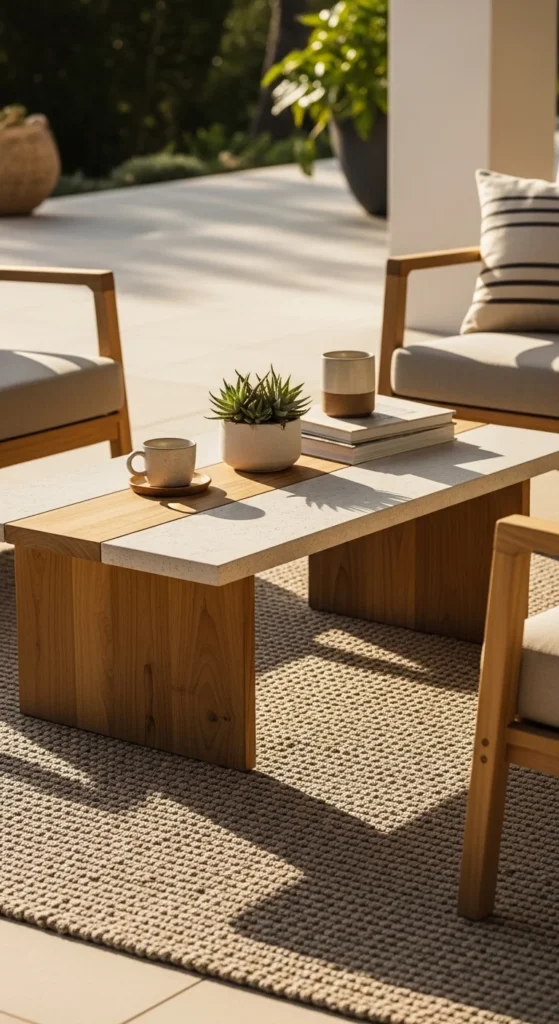
Coffee tables often get overlooked, but they hold layouts together. Mixed materials—wood with stone or metal—add contrast without overpowering seating. These tables feel intentional and practical.
Stone or concrete tops handle weather and spills better than wood alone. Wood bases keep things warm visually. For tight spaces, choose oval or round shapes so movement feels easier.
DIY idea: pair a heavier table with lighter chairs to balance the look. Keep decor minimal. One tray, one plant, nothing more. That keeps surfaces usable. Budget-friendly versions use composite stone or sealed resin that mimics natural textures. This small choice quietly improves the whole patio and ties mismatched seating into one cohesive scene.
11. Aluminum Frame Sofas Built for Rainy Climates
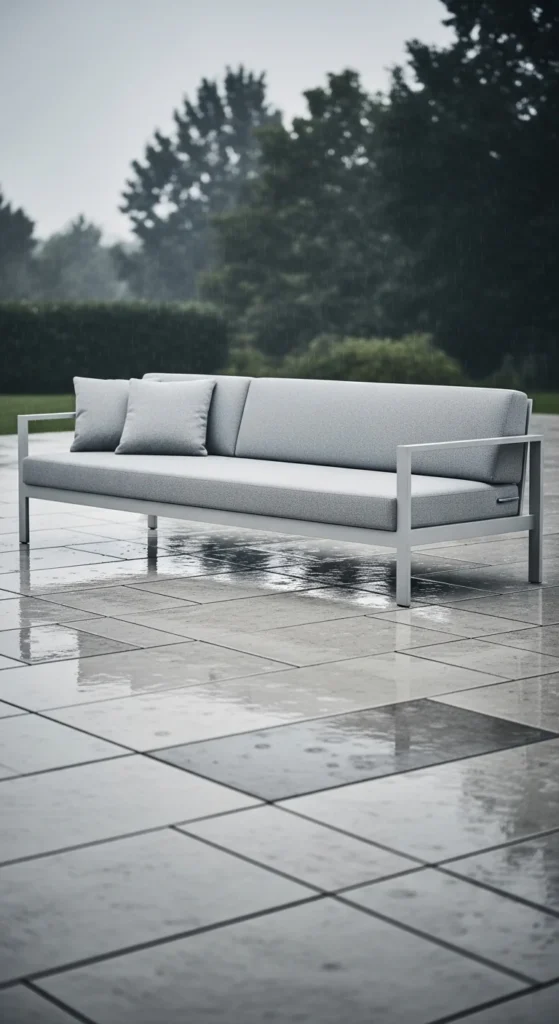
Rain changes how patio furniture performs. Aluminum frames handle moisture without rust and stay light enough to move around. These sofas feel clean and practical without looking industrial.
Choose powder-coated finishes for better longevity. Cushions should have quick-dry foam and zip covers. That combo keeps things usable even after a storm. If budgets are tight, focus spending on the frame quality and choose simpler cushions you can replace later.
Styling trick: soften the metal with texture. Woven rugs, planters, or wood side tables balance the look. Keep colors muted so the setup feels calm rather than cold. Aluminum works especially well for open patios where furniture stays exposed year-round. Maintenance stays simple—just rinse and wipe when needed.
12. Earth-Tone Lounges That Age Gracefully
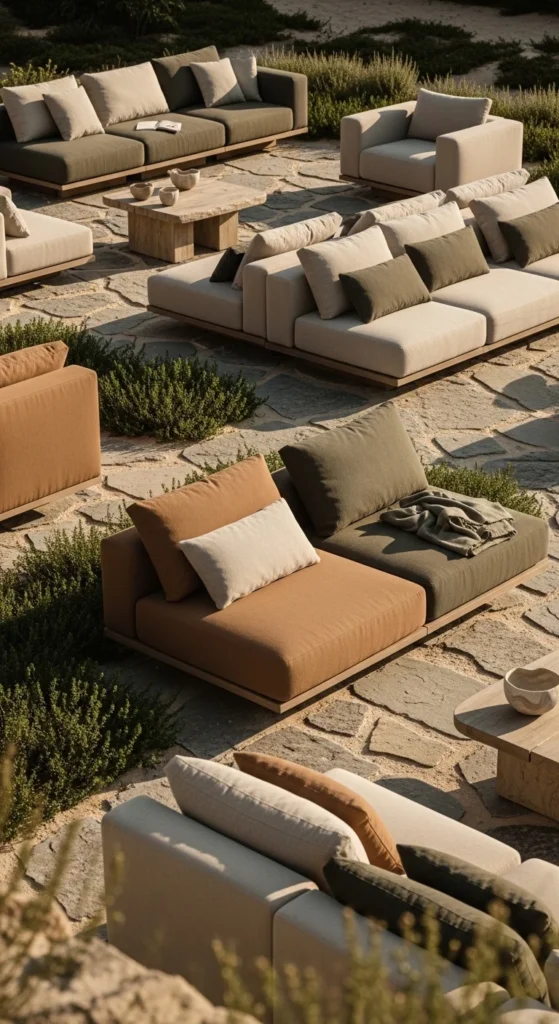
Bright plastics fade fast. Earth tones last longer visually and feel calmer. Sand, clay, and muted greens blend with outdoor surroundings instead of fighting them.
This palette works across materials—wood, metal, wicker—without clashing. Start with one dominant neutral, then add one accent shade. Keep patterns minimal so the look stays grounded.
Budget tip: swap cushion covers seasonally instead of buying new furniture. Earth tones hide wear better than stark whites. Styling stays easy. Natural ceramics, linen throws, and stone tables fit right in. This approach suits patios meant for daily use, not just special occasions.
13. Performance Fabric Seating for High Sun Exposure
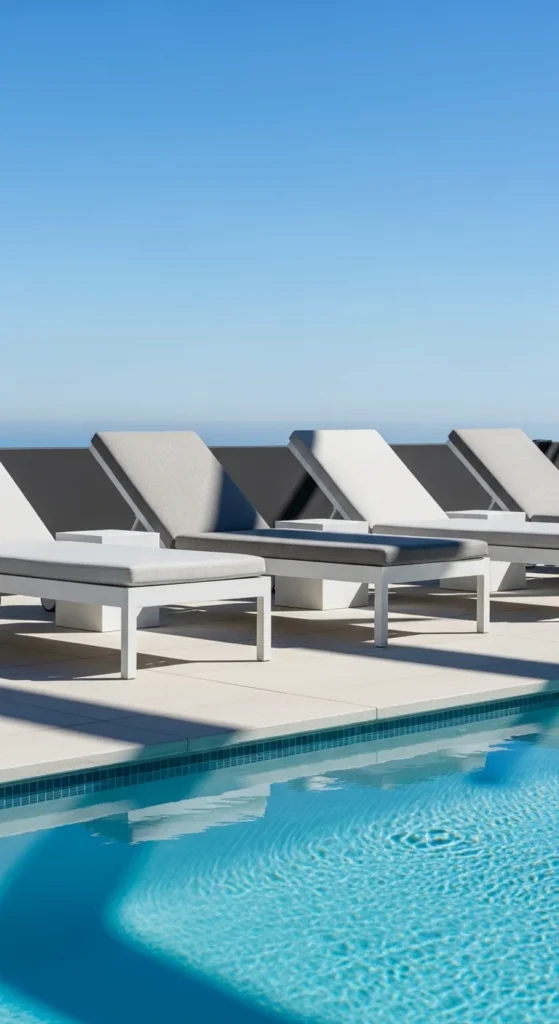
Sun exposure ruins ordinary fabric fast. Performance fabrics handle fading, moisture, and wear much better. They feel soft but hold their color through seasons.
Look for solution-dyed acrylic or similar materials. They cost more upfront but save replacement costs later. Keep colors light to reduce heat buildup. Dark shades get uncomfortable under full sun.
Styling trick: limit pillows and focus on cushion quality instead. Fewer pieces mean less upkeep. Pair with umbrellas or pergolas to extend fabric life even more. This setup works well near pools, rooftops, and open yards where shade shifts throughout the day.
14. Eclectic Chair Mix Around a Simple Table
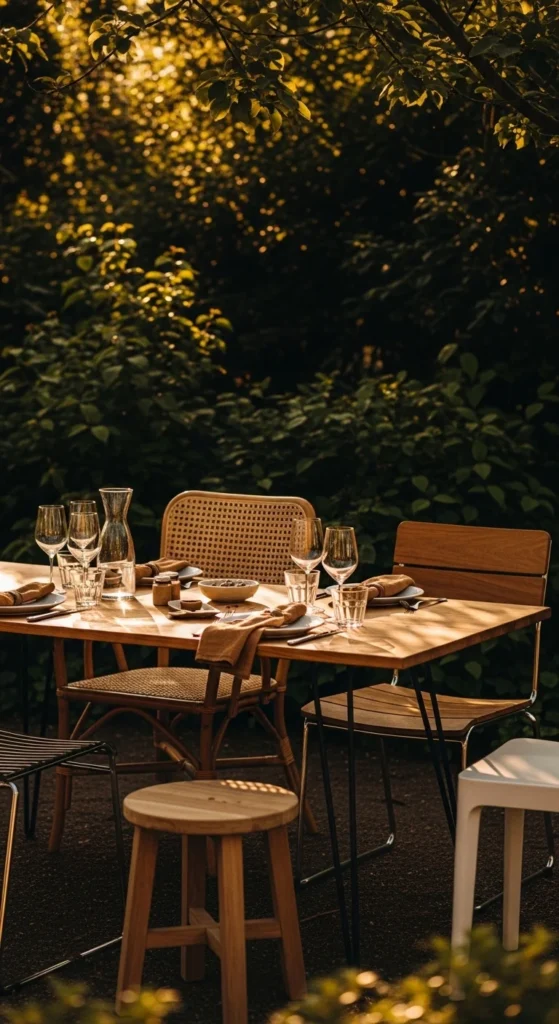
Matching sets feel safe but dull. Mixing chairs adds personality and breaks visual monotony. The trick is keeping one element consistent—height, color tone, or material family.
Start with a simple table. Let chairs do the talking. Keep finishes within the same warmth range so nothing feels random. If buying new, mix two styles instead of many.
Budget idea: thrift or reuse indoor chairs that can handle covered patios. Add outdoor cushions for comfort. Styling stays relaxed and personal. This setup works well for people who entertain often and like a collected, lived-in feel rather than showroom polish.
15. Concrete Side Tables as Quiet Anchors
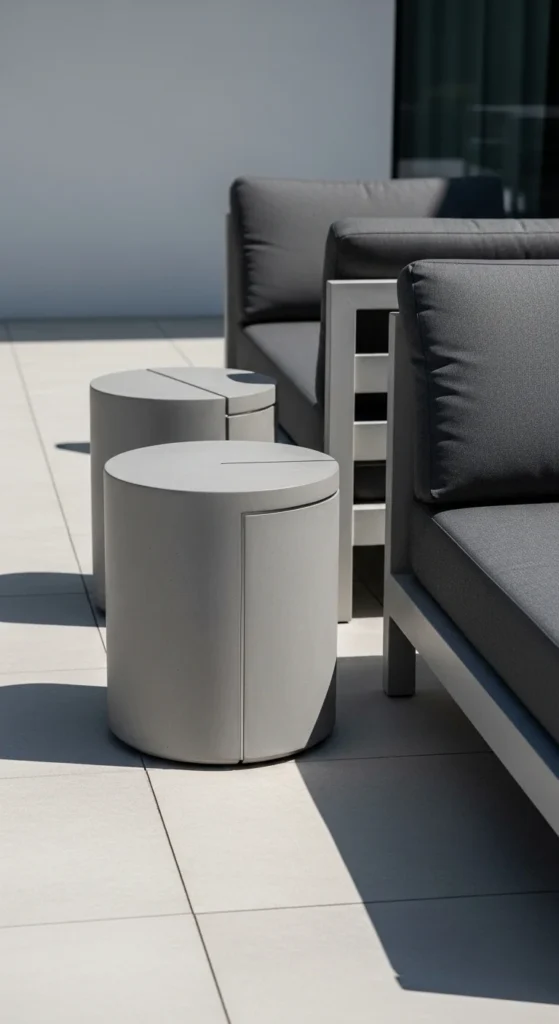
Concrete side tables don’t shout for attention, and that’s the point. They ground seating areas and handle weather without fuss. Their weight keeps them steady even in wind.
Choose smooth finishes for modern patios or lightly textured surfaces for natural settings. For cost savings, fiber-reinforced concrete offers similar looks with less weight.
Styling trick: use them sparingly. One table between two chairs feels intentional. Add a single object—stone bowl or candle—and stop there. Concrete pairs well with wood, fabric, and metal, making it an easy connector across mixed furniture styles.
16. Vibrant Turquoise Lounge Chairs for a Pop of Color
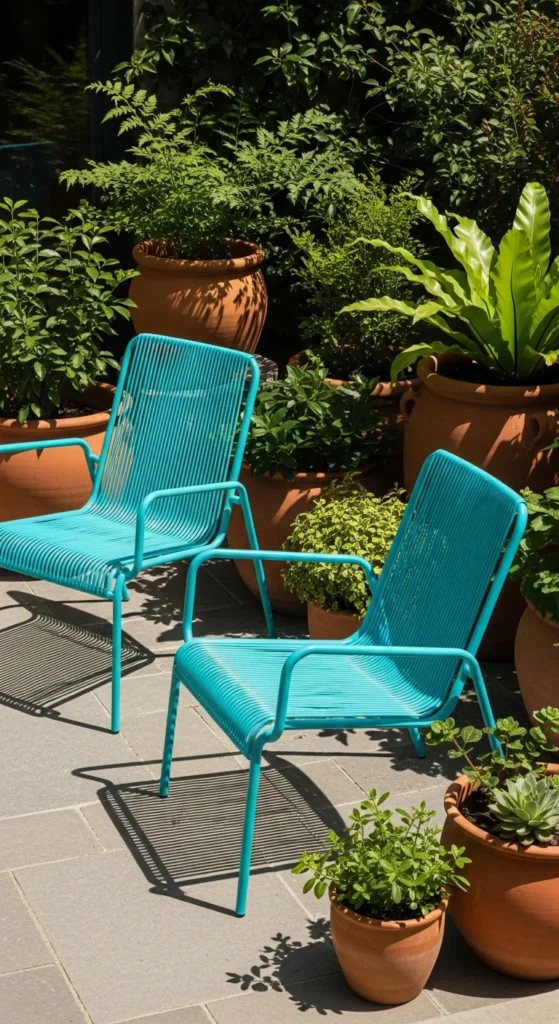
Bold color brings personality without cluttering. Turquoise works beautifully against neutral backdrops like stone or wood. Vibrant colors give energy to seating areas while staying sophisticated.
Start with one or two statement pieces rather than an entire bright set. That way, colors feel intentional instead of overwhelming. Cushions and throws can repeat the color subtly to tie things together.
Budget option: repaint older frames with outdoor-grade spray paint for a cost-effective update. Keep surrounding furniture neutral or natural. Plants or clay accessories soften the intensity and keep the space inviting. This strategy works well in both small patios and expansive terraces.
17. FSC-Certified Teak Dining Set
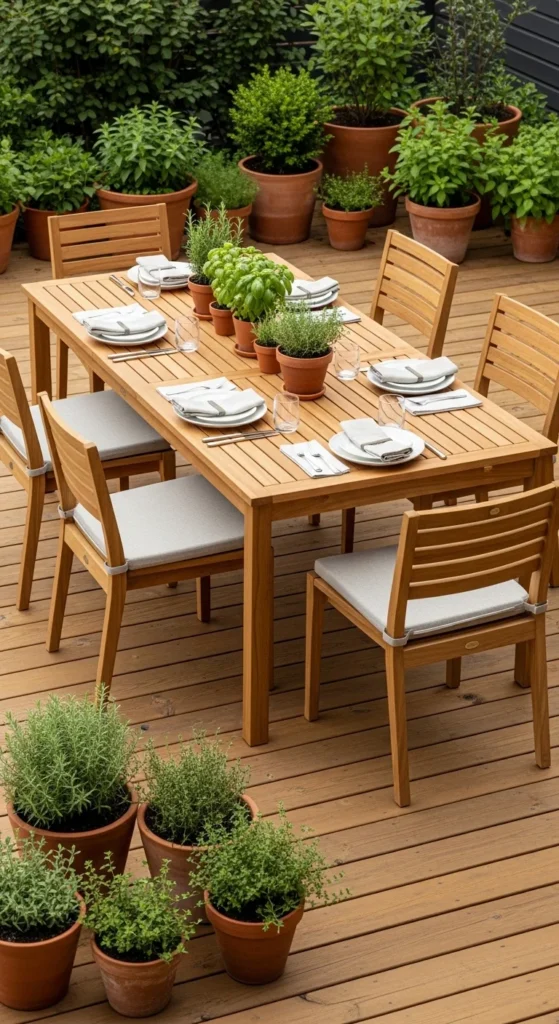
Sustainable materials are becoming table stakes. FSC-certified teak guarantees responsible sourcing and long-lasting quality. A teak dining set feels grounded, warm, and environmentally conscious.
Maintenance is low: occasional oiling keeps it golden, but it can also age naturally to a silver patina. Neutral cushions complement without stealing focus from the wood.
Styling tip: add a single linen table runner and simple ceramics for dinners. Avoid flashy linens that compete with the natural beauty of teak. This setup is perfect for family meals or small dinner parties, offering durability and charm for years.
18. Round Sculptural Sectional With Cushions
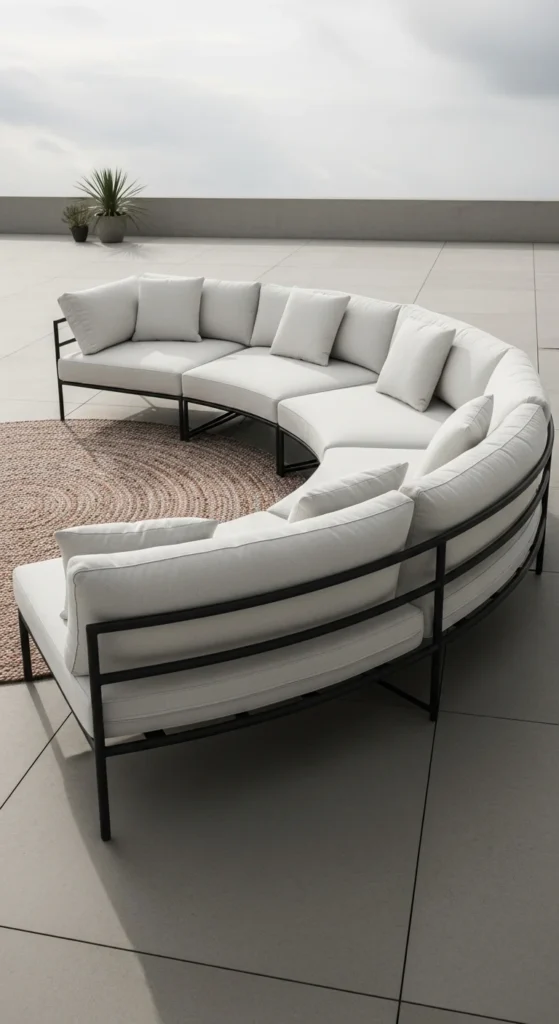
Round sectionals encourage gathering naturally. Curved seating breaks the rigidity of square layouts and feels inclusive. Sculptural silhouettes also add visual interest without extra decor.
Place a round rug beneath to define the space. Keep side tables minimal or add a single statement piece to maintain flow. For durability, pick frames in powder-coated metal or aluminum, with removable cushion covers for easy cleaning.
DIY idea: add low-profile planters around the curve’s perimeter. It frames the seating and softens hard edges. Perfect for terraces, rooftop patios, or wide backyard spaces.
19. Outdoor Umbrella With Weighted Base
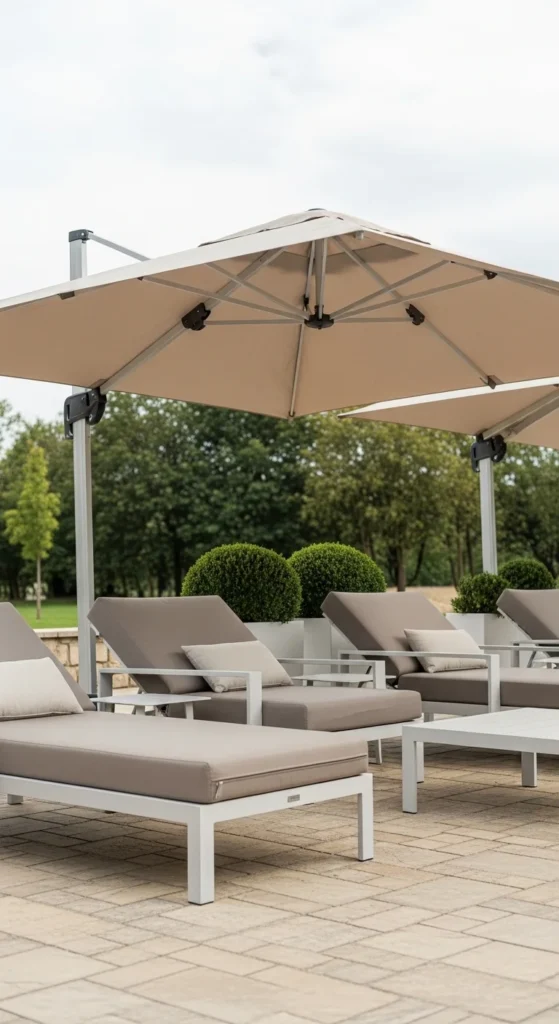
Shade matters more than many realize. A well-placed umbrella extends comfort during sunny afternoons, especially for heat-sensitive cushions. Weighted bases prevent tipping in wind.
Choose a neutral color to keep the umbrella versatile across different furniture palettes. Look for tilting options for sun movement. Smaller umbrellas work for balconies; larger ones anchor bigger patios.
Styling tip: position one lantern or potted plant nearby to frame the umbrella naturally. Pair with durable fabrics and aluminum frames for low maintenance. The umbrella becomes both functional and a visual anchor.
20. Rope Dining Chairs Around a Minimalist Table
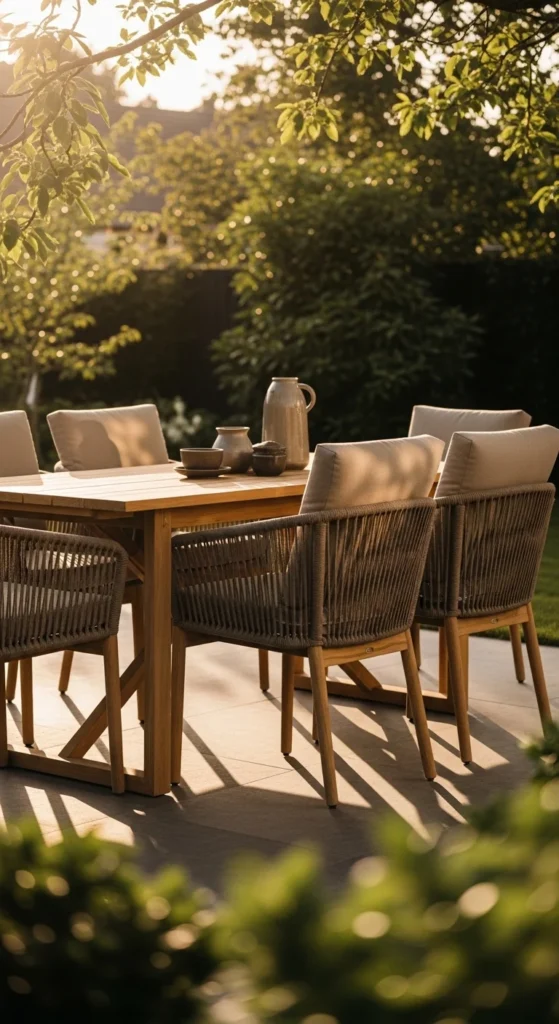
Rope chairs bring texture and a relaxed artisan feel to dining areas. The tactile weave draws attention without heavy ornamentation. Pairing with a simple table ensures the seating is the star.
Opt for synthetic rope for durability. Keep the color palette muted to maintain cohesion. Cushions in beige, taupe, or sand complement the natural rope tones.
Budget option: mix rope chairs with a few matching stools instead of a full set. It creates an eclectic, collected look while controlling costs. Perfect for covered patios or spaces where you want casual comfort with style, these chairs work for meals, coffee, or evening drinks alike.
21. Compact Balcony Bistro Set With Folding Chairs
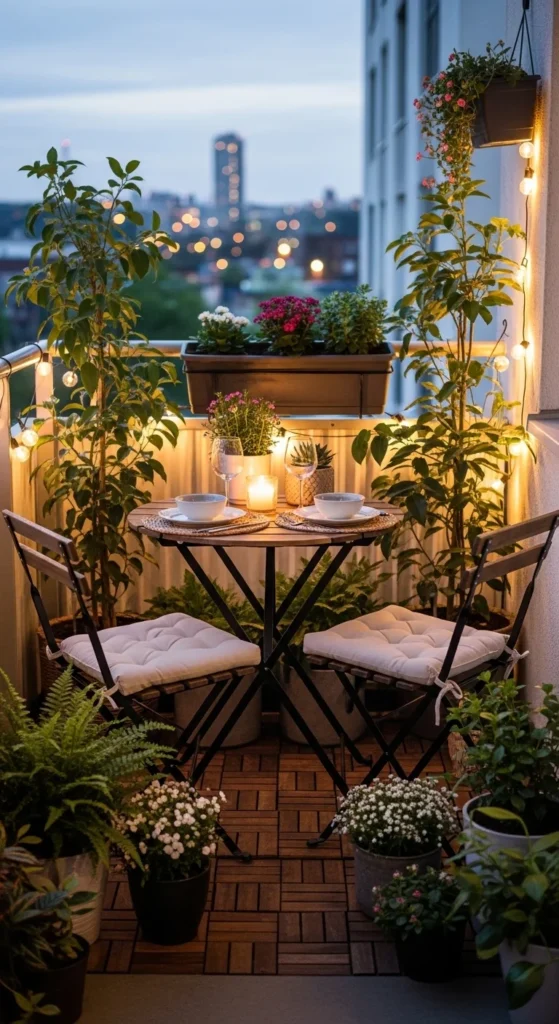
Small balconies don’t need big furniture. A compact bistro set gives you dining and lounging space without clutter. Folding chairs make it flexible—bring them out for meals, tuck them away when not in use.
Opt for lightweight metal frames with weatherproof cushions. Budget tip: look for second-hand or refurbished folding sets. A small rug anchors the scene, and string lights add warmth without taking up floor space.
Styling trick: keep plants vertical—hanging planters or railing pots—to maximize usable area. Use a tabletop tray for drinks or candles. This setup is perfect for city patios, rooftop corners, or tiny terraces where every inch counts.
22. Concrete Bench With Integrated Planters
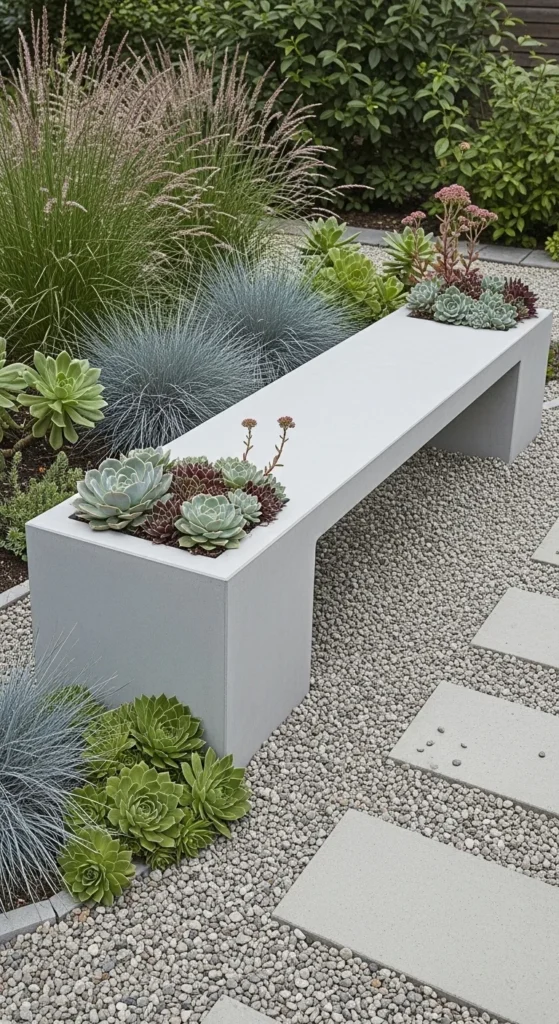
Concrete benches feel permanent and modern. Integrated planters add greenery without extra furniture. This combination creates a clean, structured look that works for entertaining or quiet lounging.
DIY tip: seal concrete to prevent staining and soften edges with cushions or outdoor pillows. Budget-friendly approach: use pre-cast concrete forms instead of custom pours. One cushion along the bench adds comfort without hiding the design.
Styling trick: plant low-maintenance greenery like succulents or ornamental grasses to keep upkeep minimal. The bench doubles as seating and decor, ideal for mid-sized patios or garden corners where structure is important.
23. Teak Chaise Lounge With Adjustable Back
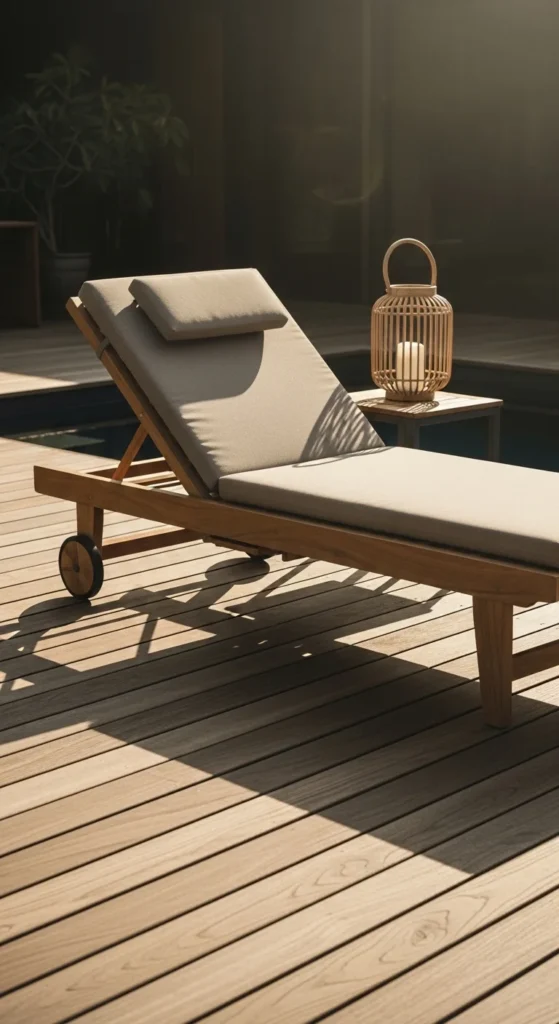
Chaise lounges are patio classics, but adjustable backs add comfort for sunbathing or reading. Teak is durable, sustainable, and ages gracefully outdoors.
Opt for cushions with quick-dry foam and removable covers. If budgets are tight, choose natural teak without additional finishes—it will develop a lovely silver patina over time.
Styling trick: pair with one compact side table for drinks or books. Keep throws or pillows neutral to maintain a calm look. Perfect for poolsides, decks, or garden nooks where relaxation is key.
24. Rattan Daybed With Canopy for Shade
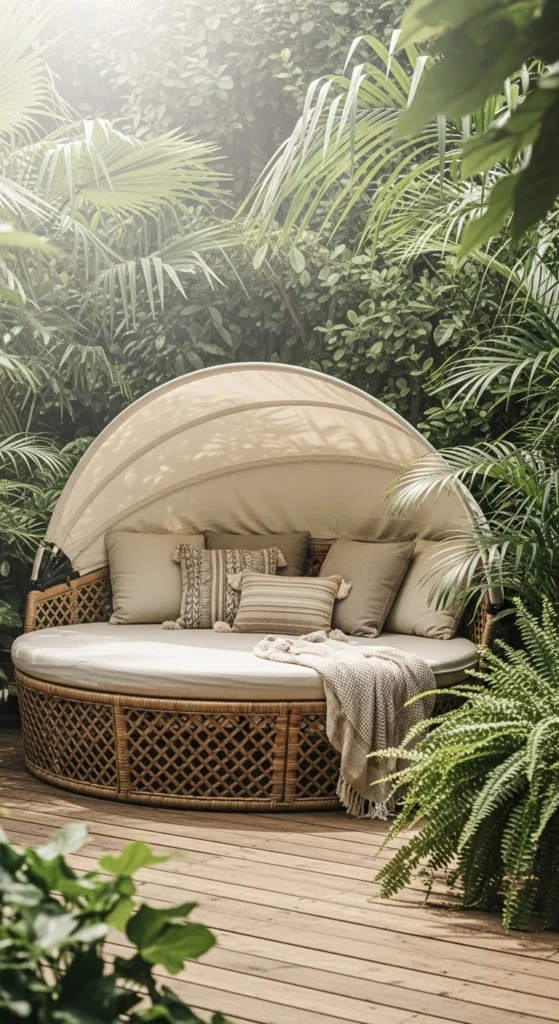
Rattan daybeds create a retreat-like vibe. The canopy offers sun protection while adding an element of luxury. Deeper weaves in rattan add texture and dimension.
Synthetic rattan resists weather better than natural fibers. Cushions should be fade-resistant. Budget tip: buy the frame and add cushions separately for flexibility.
Styling trick: surround with low-profile planters or lanterns to define the lounging area. Works best in covered patios or semi-open spaces. The daybed doubles as a statement piece and functional seating for multiple people.
25. Vibrant Coral Adirondack Chairs
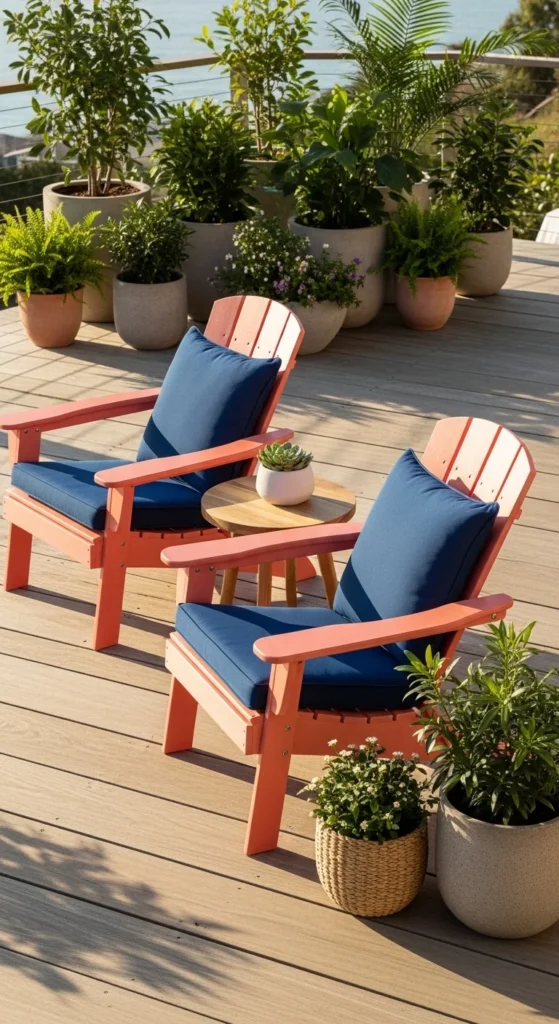
Adirondack chairs are classic, but bold colors make them contemporary. Coral adds energy to neutral patios and pairs well with navy or earthy accents.
Lightweight and stackable options save space. For budget-friendly alternatives, repaint existing wooden chairs with outdoor-grade paint. Keep cushions simple for easy cleaning.
Styling tip: position facing a fire pit or garden view to create a conversation area. Small side tables keep drinks handy. Ideal for decks, poolside, or backyard patios looking for a cheerful, durable seating option.
26. Hybrid Metal and Rope Bistro Chairs
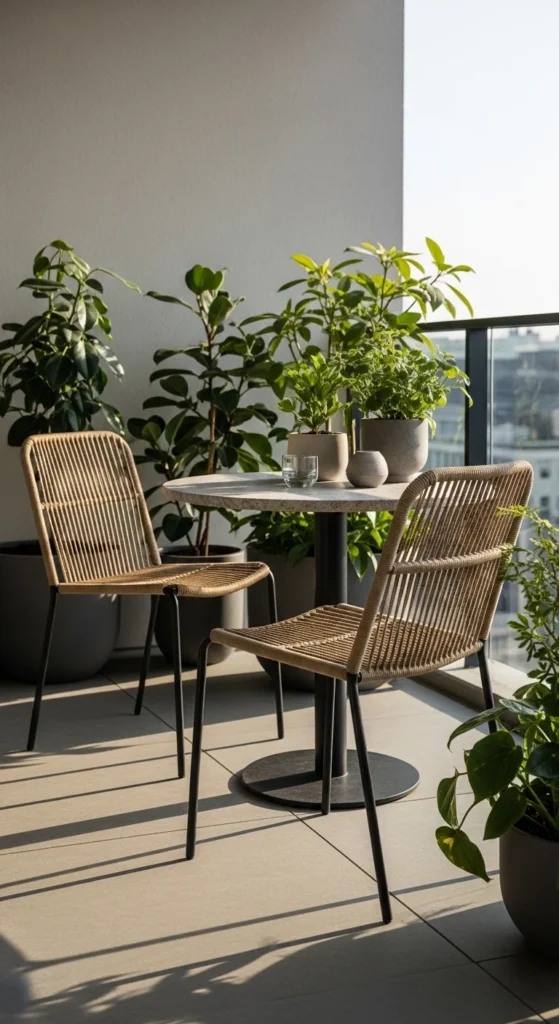
Combining materials like metal and rope offers a chic, relaxed aesthetic while remaining durable. Rope adds softness and texture; metal provides stability and longevity.
Choose UV-resistant rope for sunny locations. Mix with lightweight metal frames for easy rearrangement. Budget tip: start with two chairs and add more if needed, instead of buying a full set upfront.
Styling trick: keep table decor minimal—a single plant or candle—to let textures shine. Works well for urban terraces, small patios, or compact dining nooks where elegance and practicality meet.

Leave a Reply