

1. Low-Profile Curved Sofa Moment
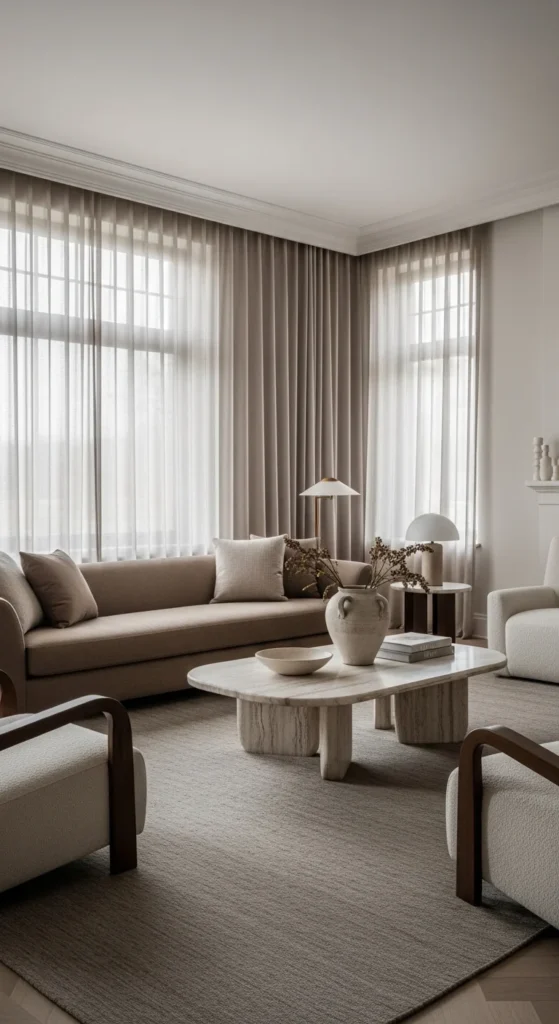
Low seating changes how a room feels. Everything settles. A curved sofa wrapped in linen or boucle reads relaxed yet polished. Keep legs short or hidden so the shape feels grounded. Pair it with a slim coffee table to avoid visual bulk. Low-profile silhouettes work best in open plans where sightlines matter.
Budget tip: look for modular sections rather than one-piece designer sofas. Many brands sell armless curved units that mimic custom forms. Use oversized cushions to fake depth. Skip busy throw pillows; stick to two large squares in matching fabric.
Styling trick: float the sofa slightly away from the wall. Add a slim console behind it for lamps or books. This creates a layered look without crowding. Choose a rug that extends past the sofa edges to frame the curve. Soft lighting at seat height keeps the mood calm at night.
2. Warm Neutral Palette With Blue Accents
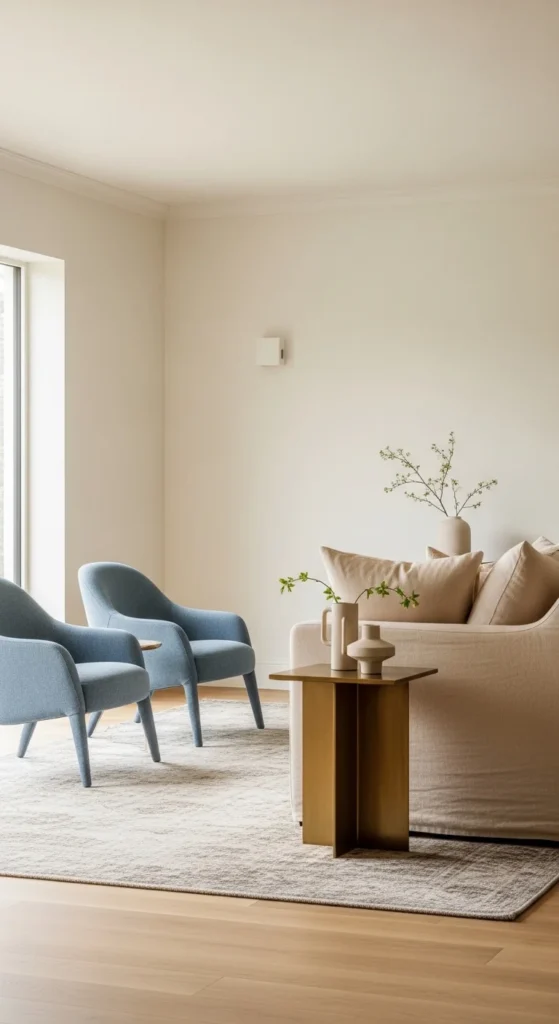
Cream, taupe, and soft brown set the base. Blue steps in quietly. Dusty or greyed blues feel calm rather than coastal. Use them sparingly through chairs, art, or cushions. Warm neutrals keep the space timeless while blue adds contrast without shouting.
DIY option: repaint an old side table or lamp base in muted blue satin paint. It adds color without committing to large furniture. For renters, blue throws at the armrest do the same job.
Keep walls light but not stark. Cream with a hint of beige avoids a cold look. Metals matter here. Choose brushed brass or bronze instead of chrome. They sit better with blue and brown tones.
Layer textures to stop the palette from feeling flat. Linen curtains. Wool rug. Ceramic decor. Stick to simple shapes so color stays the focus. The result feels calm, grown-up, and easy to live with.
3. Sculptural Coffee Table as Centerpiece
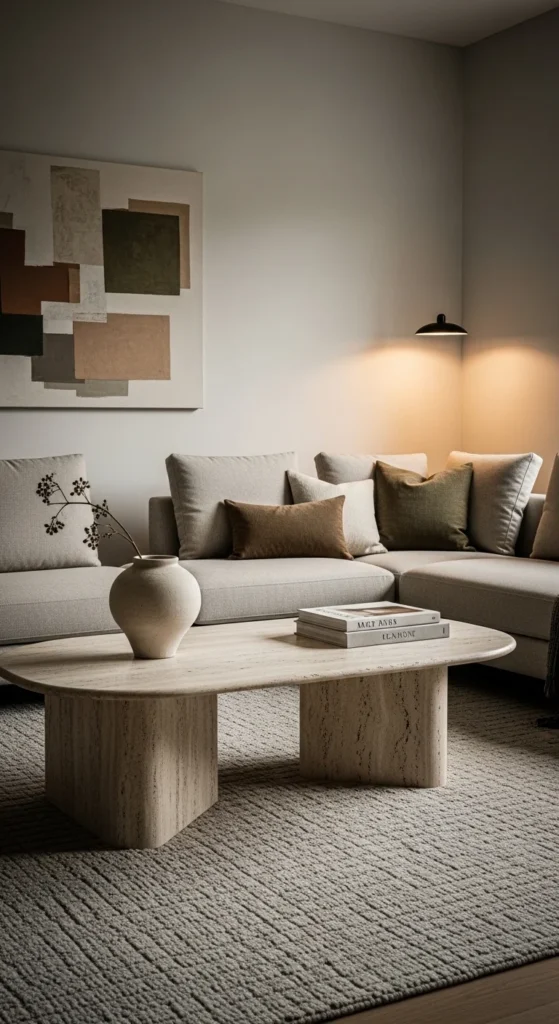
A coffee table can act like art. Stone, plaster, or wood with rounded edges draws the eye without clutter. Sculptural forms suit minimal rooms where furniture does the talking. Artful forms replace busy decor.
Travertine is popular, but concrete-look resin or MDF replicas cost far less and weigh less too. Look for drum or pebble shapes. Avoid sharp corners; curves echo current furniture trends.
Styling trick: keep the surface almost bare. One large book. One ceramic bowl. Nothing more. Let the shape shine. If storage is a concern, add a low tray beneath or a nearby side table.
Balance matters. Pair heavy stone with soft seating and plush rugs. This contrast keeps the room welcoming rather than cold. Lighting should graze the surface gently. A floor lamp nearby highlights texture and shadows, giving the table quiet presence day and night.
4. Layered Textures With Linen and Boucle
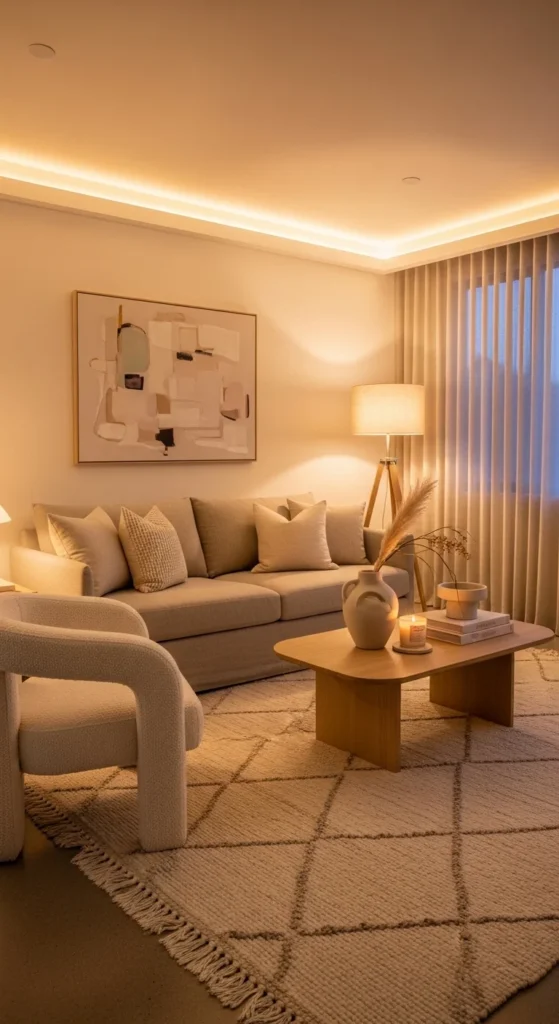
Texture does the heavy lifting in luxury spaces. Linen feels relaxed. Boucle adds softness. Wool grounds everything underfoot. Together, they create depth without loud patterns. Layered textures keep neutral rooms from feeling flat.
Start with one anchor piece. A linen sofa works year-round and ages well. Add boucle through a chair or ottoman rather than a full sofa if budget is tight. Small swaps count. Cushion covers. Throws. Upholstered stools.
Mix weaves, not colors. Stick to a tight palette so textures stand out. Too many shades dilute the effect. Keep tones within the same family—cream, sand, mushroom.
Maintenance tip: choose removable covers where possible. Linen wrinkles; that’s part of its charm. Embrace the lived-in look. Soft lighting enhances texture at night, especially wall sconces or table lamps placed low.
5. Statement Lighting With Vintage Influence
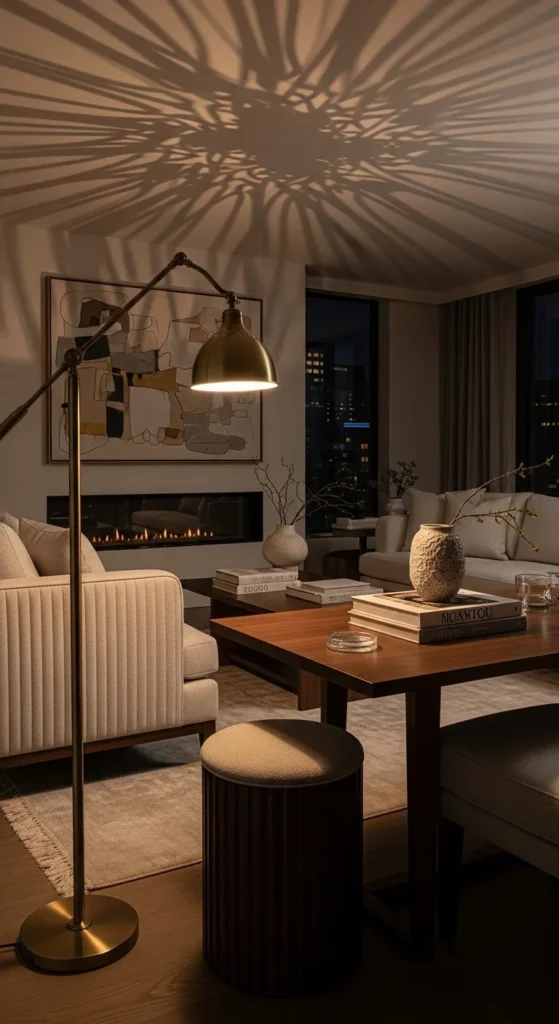
Lighting sets the mood long before decor does. Vintage-inspired lamps with curved arms or fluted shades add character without overpowering the room. Brass and bronze finishes feel warm and tactile. Statement lighting works best when the rest stays calm.
You don’t need a chandelier. One sculptural floor lamp beside a sofa can anchor the entire seating area. Look for dimmable bulbs to shift from day to night. Warm LEDs mimic incandescent glow without heat.
Budget idea: swap lamp shades. A pleated or linen shade instantly changes the vibe of an old base. Even mismatched pieces feel intentional when finishes repeat elsewhere.
Layer light sources. Floor lamp. Table lamp. Hidden LED strip on a shelf. Avoid harsh overhead light at night. The result feels intimate, polished, and comfortable for long evenings.
6. Oversized Sofa for Sink-In Comfort
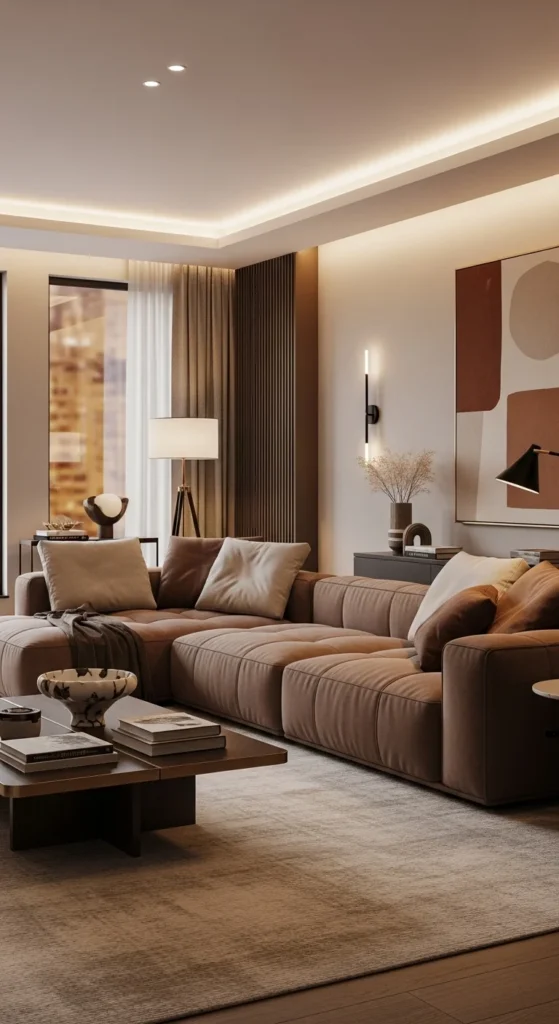
Big sofas are having a moment. Extra depth signals comfort first, style second. Oversized seating works best when lines stay clean and colors stay calm. Think wide arms, low backs, and generous cushions. Large-scale seating invites long lounging without looking sloppy.
If space is tight, choose a single oversized piece instead of multiple chairs. It simplifies the layout. Modular sections help too. You can spread them out or pull them together depending on the day.
Budget trick: add depth with loose back cushions. A standard sofa can feel larger when cushions are overfilled and fewer in number. Avoid tiny pillows that break the flow.
Balance the scale. Keep coffee tables low and slim. Add negative space around the sofa so it can breathe. A large rug underneath anchors the size and keeps the room from feeling crowded.
7. Fireplace as a Modern Stone Focal Point
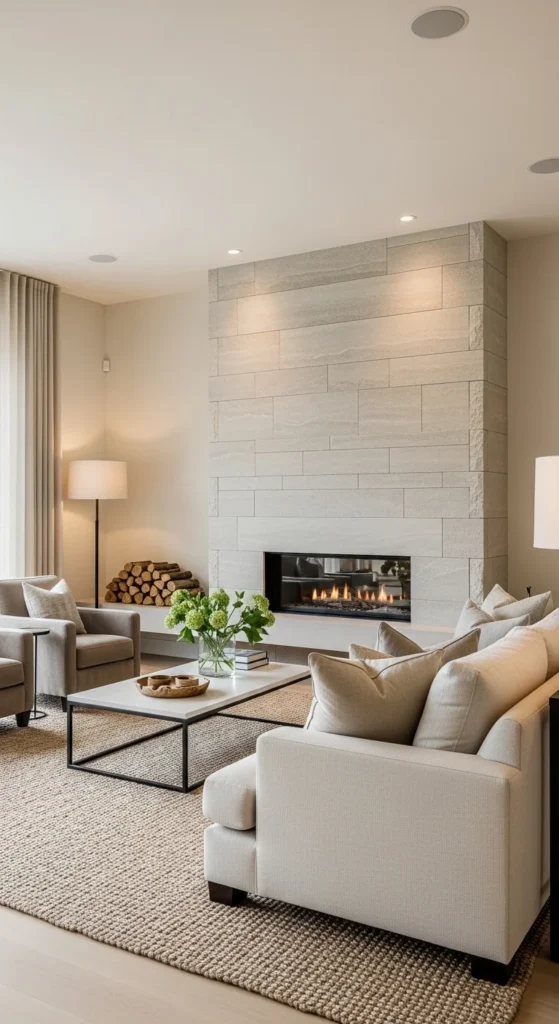
Fireplaces anchor a room instantly. Stone cladding brings texture and weight without ornament. Go for limestone, travertine, or stone-look panels with subtle variation. Fireplace focal points work best when furniture faces them naturally.
You don’t need a full renovation. Peel-and-stick stone panels or microcement finishes offer similar impact at lower cost. Keep the surround simple. Let the material do the work.
Styling tip: skip busy mantels. One low object or framed art leaning casually feels intentional. Wall-mounted TVs look better when recessed or matched to stone tones.
Lighting matters here. Add soft sconces or hidden LEDs along the stone edges. This highlights texture at night and keeps the fireplace present even when unlit. Pair with plush seating nearby to create a cozy gathering zone.
8. Elegant TV Wall With Hidden Tech
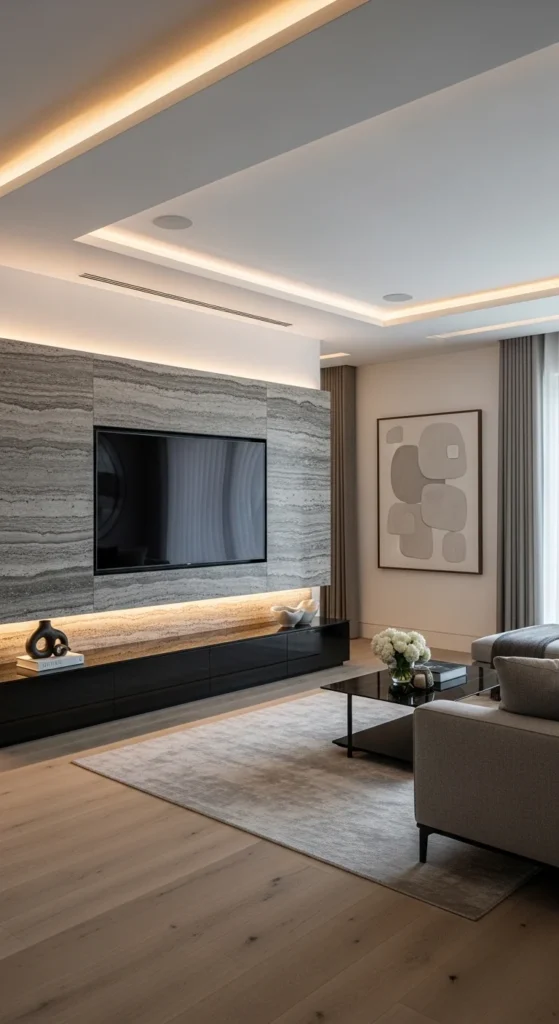
TV walls don’t have to dominate. Stone, wood slats, or plaster finishes help screens blend in. Built-in panels hide cables and storage so the wall reads calm. Hidden tech keeps focus on the room, not the screen.
DIY route: mount the TV on a painted MDF panel slightly darker than the wall. Run cords behind it. Add a slim floating shelf below for devices. Simple but effective.
Keep proportions right. Oversized TVs look better when balanced with wide panels or long consoles. Avoid tiny units that make the screen feel awkwardly large.
Finish with subtle lighting. Backlighting softens contrast at night and reduces eye strain. Match the light temperature to your lamps so everything feels cohesive. The result feels polished without feeling like a media room.
9. Brown Tones for Grounded Warmth
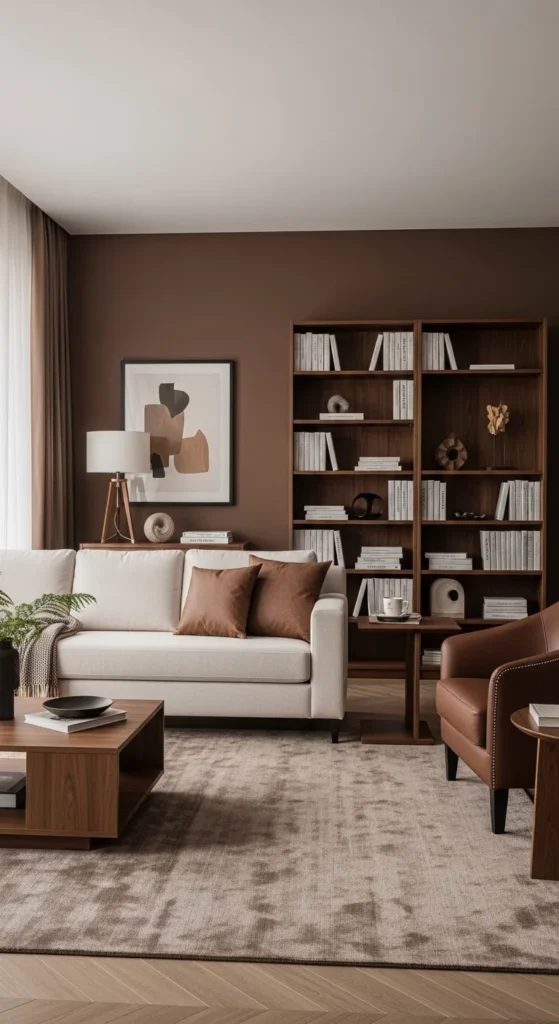
Brown is back in a big way. Chocolate, caramel, and espresso shades ground modern spaces. They pair naturally with cream and stone. Earthy browns add warmth without heaviness when used thoughtfully.
Start small if you’re unsure. A leather chair. Wood side tables. Brown cushions layered over light seating. These touches anchor the room visually.
Avoid mixing too many wood tones. Stick to one main finish and one accent. This keeps the look intentional. Metals should stay warm too—bronze over silver.
Texture helps brown feel rich rather than dull. Suede, leather, and woven fabrics add variation. Use lighter rugs and walls to balance darker furniture. The room feels calm, cozy, and timeless.
10. Modular Seating for Flexible Layouts
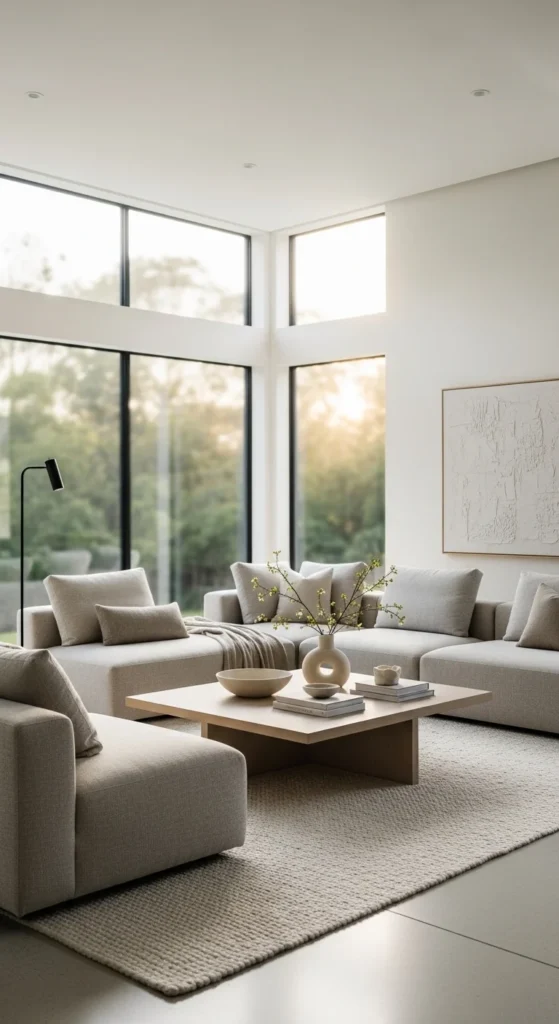
Life changes. Furniture should keep up. Modular sofas allow rearranging without buying new pieces. Straight today. Curved tomorrow. Modular flexibility suits evolving homes and social spaces.
Choose modules with clean seams and consistent height. This keeps rearrangements looking planned. Armless pieces are the most flexible and usually more affordable.
Styling trick: use a large rug to unify different layouts. No matter how modules move, the rug keeps the zone defined. Add a movable side table instead of fixed furniture.
If full modular systems feel pricey, mix matching ottomans with a standard sofa. The effect is similar. Flexibility brings ease, and the room always feels ready for change.
11. Quiet Luxury With No-Logo Decor
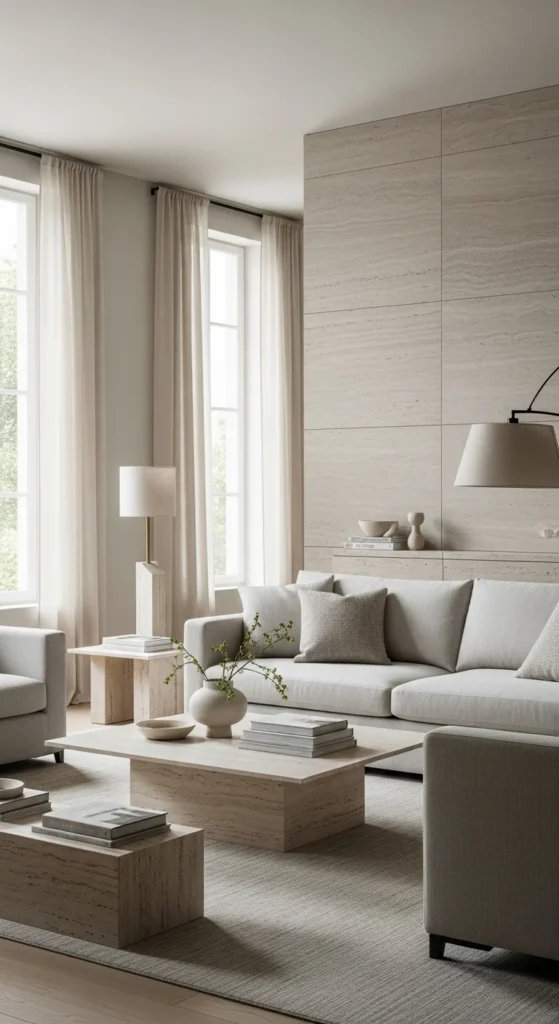
Luxury doesn’t shout anymore. It whispers. Clean shapes, quality materials, and restraint do the work. No visible branding. No trend overload. Quiet luxury feels timeless because nothing dates it quickly.
Start by editing. Remove extra decor. Keep only pieces with weight or texture. Stone bowls. Heavy ceramics. Solid wood trays. Fewer items make each one feel intentional.
Budget approach: invest visually, not financially. One good-looking object beats five fillers. Thrift stores often hide solid wood or stone pieces that clean up well.
Stick to a tight palette. Three colors max. Repetition creates calm. Let fabrics and finishes vary instead of hues. This style works best with soft lighting and uncluttered surfaces. The room feels restful, not staged.
12. Statement Rug That Grounds the Space
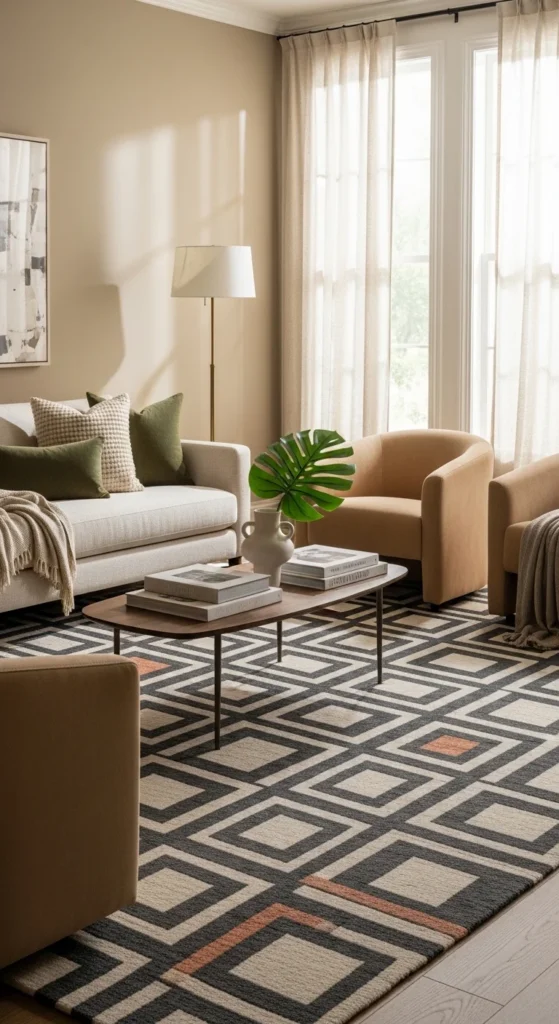
Rugs do more than sit under furniture. They set mood. Patterned rugs add personality to minimal rooms without extra decor. Statement rugs work best when furniture stays simple.
Go oversized. Small rugs break the room visually. The front legs of all seating should sit on the rug at minimum. This creates cohesion.
Budget tip: flatweaves and low-pile rugs cost less and wear well. Vintage-style prints hide wear better than solids. If colors feel strong, repeat one shade elsewhere through cushions or art.
Layering is allowed. A neutral base rug with a smaller patterned rug on top adds depth. Keep textures different so layers feel intentional. Rugs anchor the space and quietly pull everything together.
13. Sculptural Accent Chairs With Curves
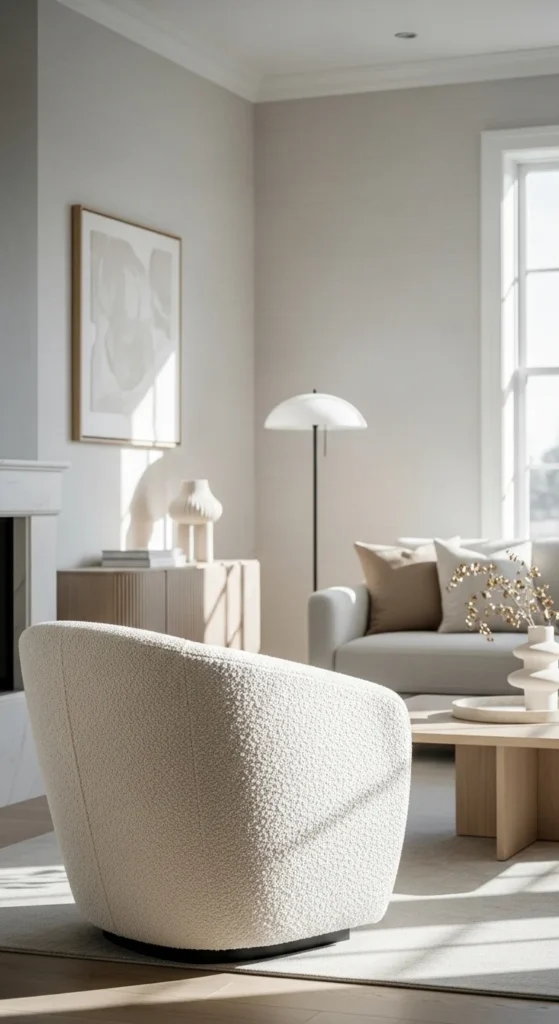
Accent chairs are the easiest way to bring curves into a room. Rounded backs and soft arms break up straight lines from sofas and walls. Curved furniture feels inviting and calm.
You don’t need pairs. One sculptural chair can stand alone. Place it near a window or corner with a small side table. It becomes a moment rather than filler.
Boucle works well here, but textured linen or velvet also suits. Keep color neutral so shape stands out. Avoid busy patterns on curvy forms.
If budget is tight, look for secondhand frames and reupholster in a simple fabric. Curves stay relevant longer than trends. The chair becomes both functional seating and visual interest.
14. Ambient Layered Lighting Strategy
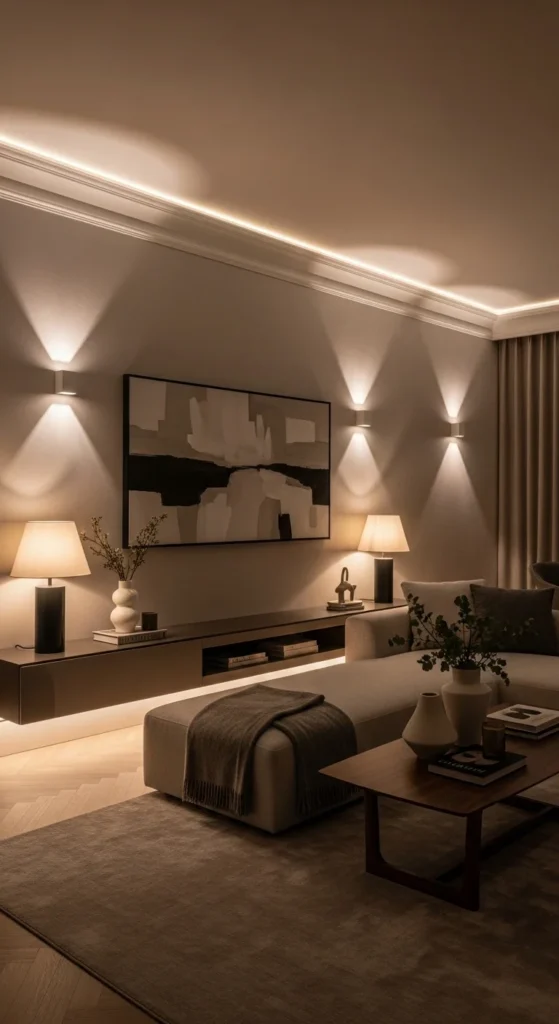
One light source is never enough. Ambient lighting creates comfort and depth. Mix sconces, lamps, and subtle LEDs to shape the mood. Ambient layered lighting feels intentional, not harsh.
Wall sconces free up floor space and add symmetry. Table lamps soften corners. LED strips under shelves or consoles add glow without glare.
DIY tip: plug-in sconces work well for renters. Hide cords with paintable channels. Choose warm bulbs only. Cool light kills cozy rooms fast.
Keep switches simple. Group lights so they turn on together. At night, skip overhead lights completely. The room feels calmer, more relaxed, and easier on the eyes.
15. Natural Materials for Organic Calm
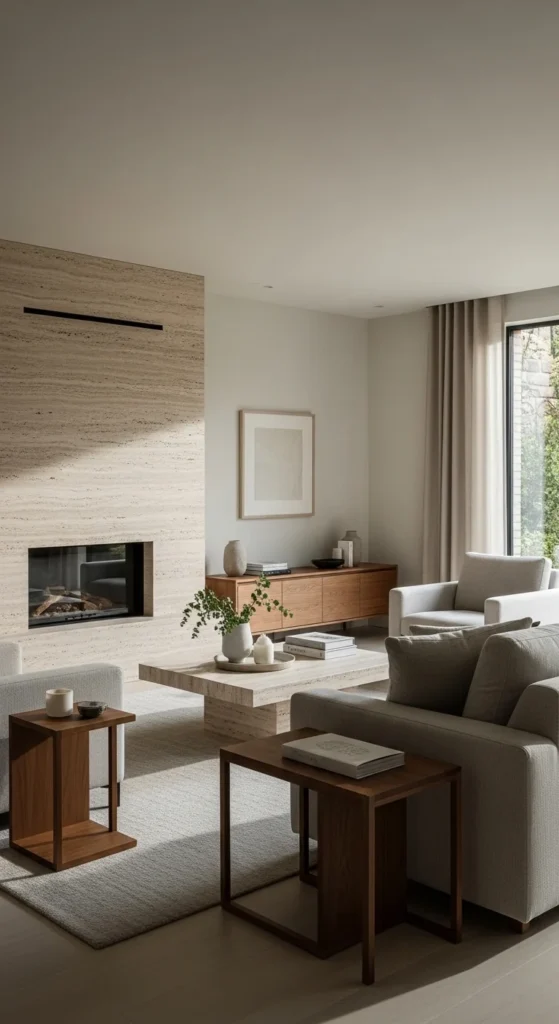
Natural materials bring balance to modern spaces. Stone, wood, and linen ground sleek forms. They add subtle variation that never feels busy. Natural materials age well and feel honest.
Travertine tables are popular, but wood alternatives work just as well. Look for visible grain and matte finishes. Glossy surfaces fight the organic feel.
Mix materials, not styles. Keep shapes simple so textures stand out. One stone piece. One wood piece. One fabric focal point.
Maintenance tip: seal stone surfaces properly. Use coasters and trays. Small habits keep materials looking good long-term. The space feels calm, rooted, and welcoming without extra decoration.
16. Blue-Toned Art for Subtle Color Play
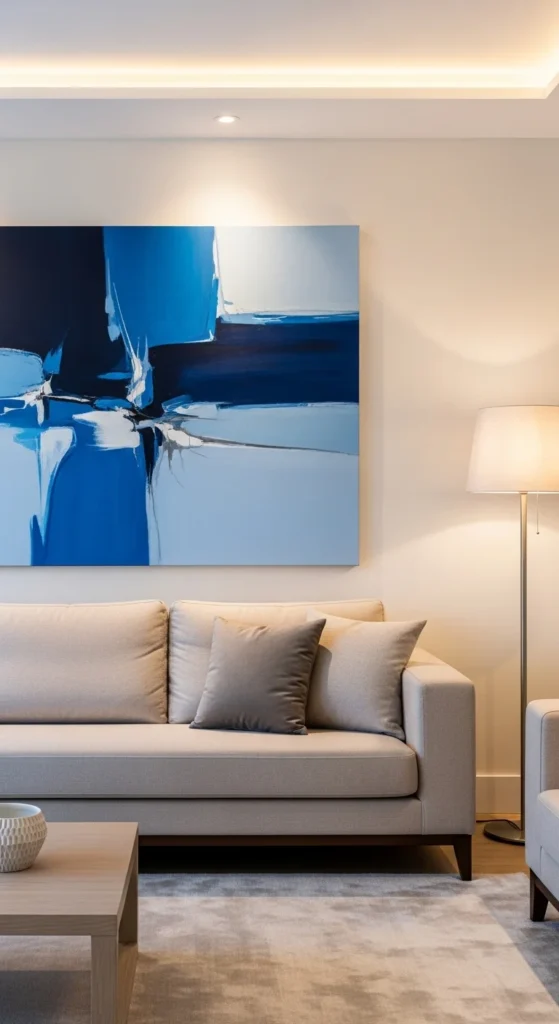
Artwork sets the emotional tone of a room. Blue pieces bring calm without overpowering the palette. Abstract or soft landscape styles suit modern luxury spaces best. Blue accents work quietly against warm neutrals.
You don’t need large collections. One oversized piece reads more intentional than many small frames. Keep frames thin and neutral so the art stays in focus.
Budget idea: create your own canvas art using layered blue washes or textured plaster paint. Imperfection adds character.
Hang art lower than expected. Align the bottom third closer to eye level when seated. This keeps the space grounded and connected to the furniture rather than floating above it.
17. Vintage-Inspired Tables and Storage
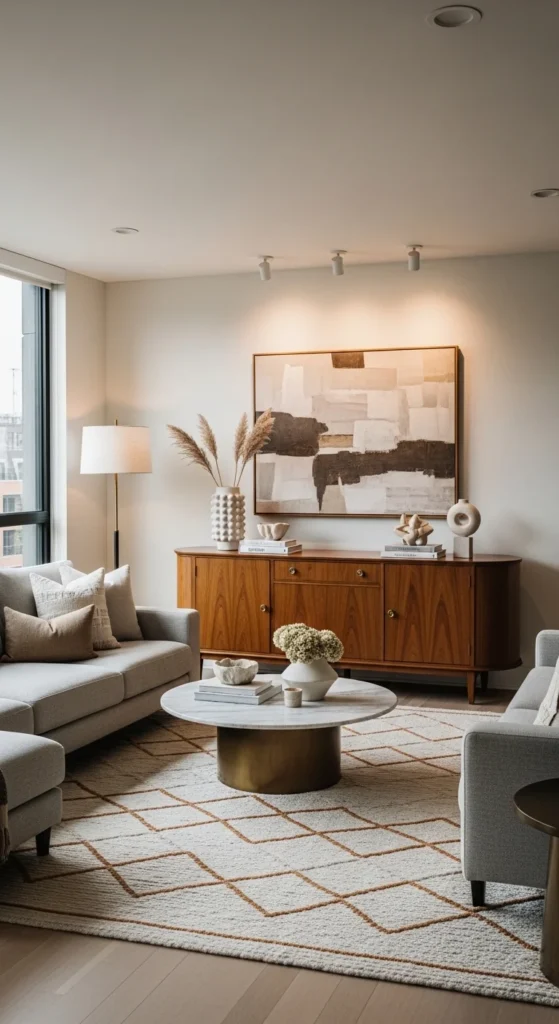
Vintage shapes bring soul into modern rooms. Rounded corners, fluted fronts, and warm wood tones add character without clutter. Retro influence feels collected rather than themed.
Sideboards work well behind sofas or along blank walls. They add storage without visual heaviness. Look for low, wide proportions to keep the room feeling open.
Secondhand finds often shine here. Refinish wood lightly and replace hardware if needed. Small updates make big differences.
Style the top simply. One lamp. One tray. One sculptural object. Let the furniture speak. This mix of old and new keeps luxury spaces from feeling too perfect.
18. Hollywood Cottage Soft Glam Touches
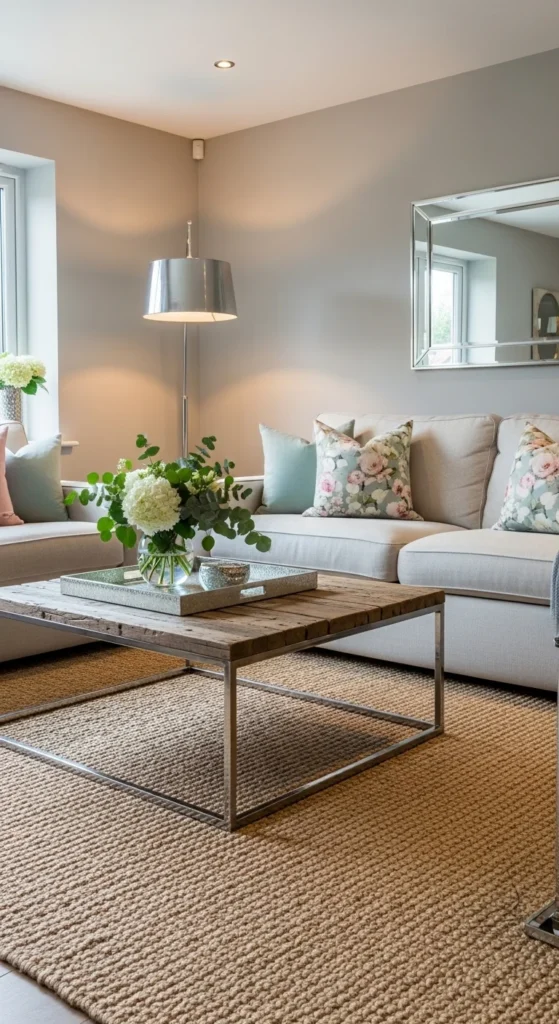
This look blends comfort with polish. Natural textures like seagrass and linen meet subtle shine from silver or glass. Hollywood Cottage feels lived-in yet refined.
Florals stay soft and muted. Avoid bold prints. Think gentle patterns and layered fabrics. Metals should feel brushed or aged, not mirror-bright.
DIY idea: swap glossy decor for patina finishes. Rub-n-buff or light sanding softens shine instantly.
Balance is key. Too much glam feels formal. Too much cottage feels casual. Keep lines clean and colors restrained. The result feels welcoming, layered, and quietly elegant.
19. Curated Trays and Greenery Details
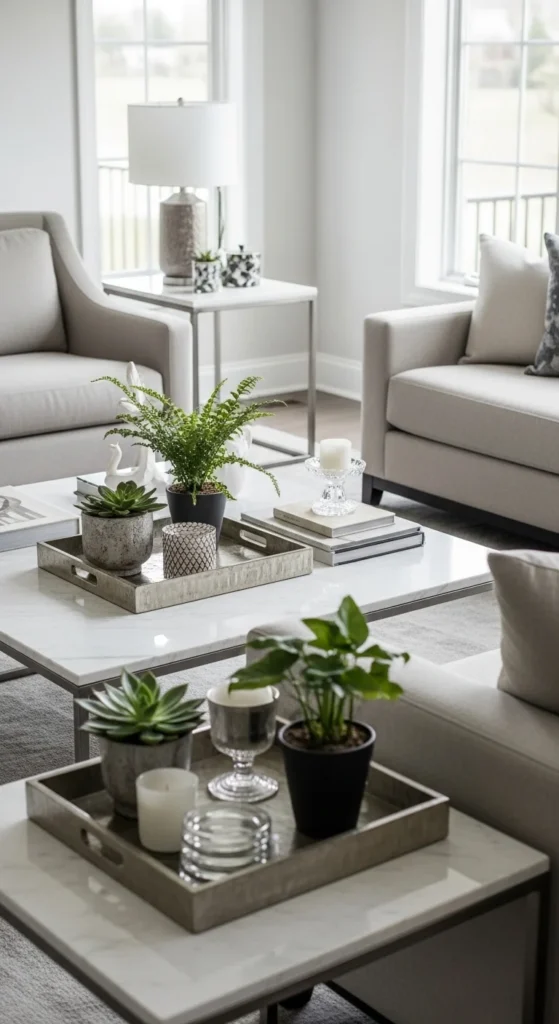
Small details finish a room. Trays group objects so surfaces feel styled, not messy. Greenery adds life without visual noise. Curated accents keep things intentional.
Choose trays in stone, wood, or metal with weight. Skip lightweight plastics. Keep items minimal—candles, books, small vessels.
Plants don’t need to be large. One olive branch or sculptural stem does enough. Faux works if it looks real and stays dust-free.
Repeat greenery in two or three spots for cohesion. This subtle rhythm ties the room together and adds warmth without extra decor.
20. Seamless Indoor-Outdoor Flow
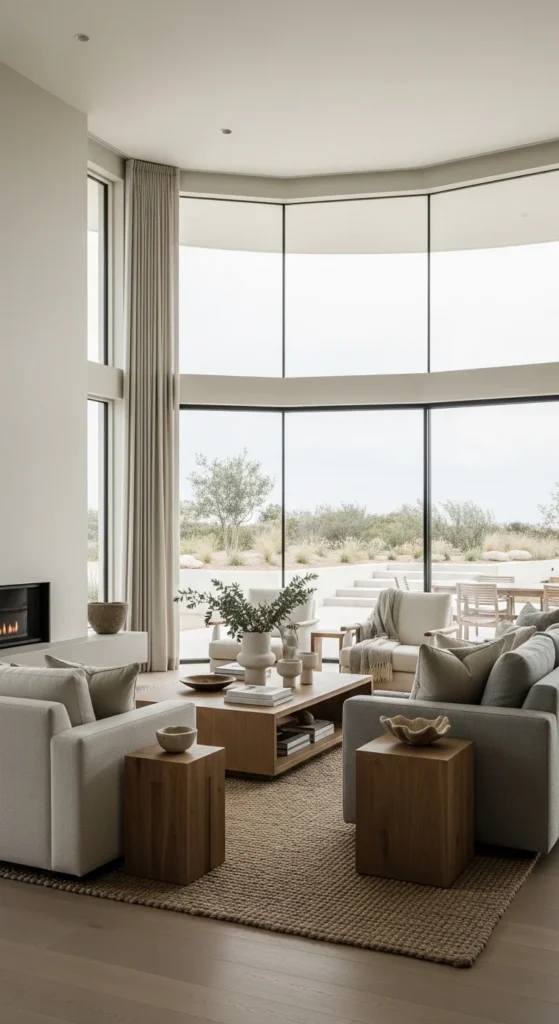
Indoor-outdoor flow changes how a space feels. Large windows, curved openings, and matching materials blur boundaries. Seamless flow brings light and calm inside.
You don’t need structural changes. Match interior textiles with outdoor tones. Use similar rugs, woods, or stone finishes to create visual continuity.
Furniture placement matters. Face seating toward the view. Keep window areas uncluttered so the outside becomes part of the decor.
Sheer curtains soften light without blocking it. The room feels open, relaxed, and connected to nature—an effortless luxury that never feels forced.
21. Neo-Deco Arches and Fluted Details
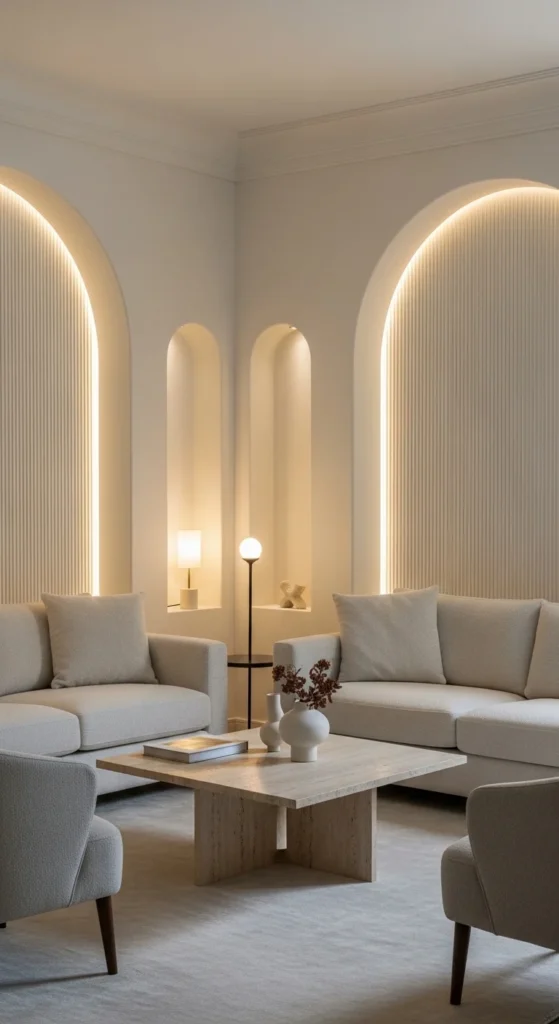
Neo-Deco borrows elegance without going theatrical. Gentle arches, fluted panels, and rounded niches add rhythm to clean rooms. It feels decorative but restrained. Soft architectural details replace loud ornament.
You don’t need construction. Apply fluted MDF panels to one wall or a media unit. Paint everything the same shade to keep it calm. Even shallow arches drawn with trim can suggest the look.
Keep furniture simple so the walls shine. Low seating works best here. Avoid heavy patterns nearby.
Lighting should skim the surface. Wall washers or concealed LEDs highlight texture and shadow. The room feels tailored, graceful, and quietly dramatic.
22. Japandi-Inspired Low Seating Zone
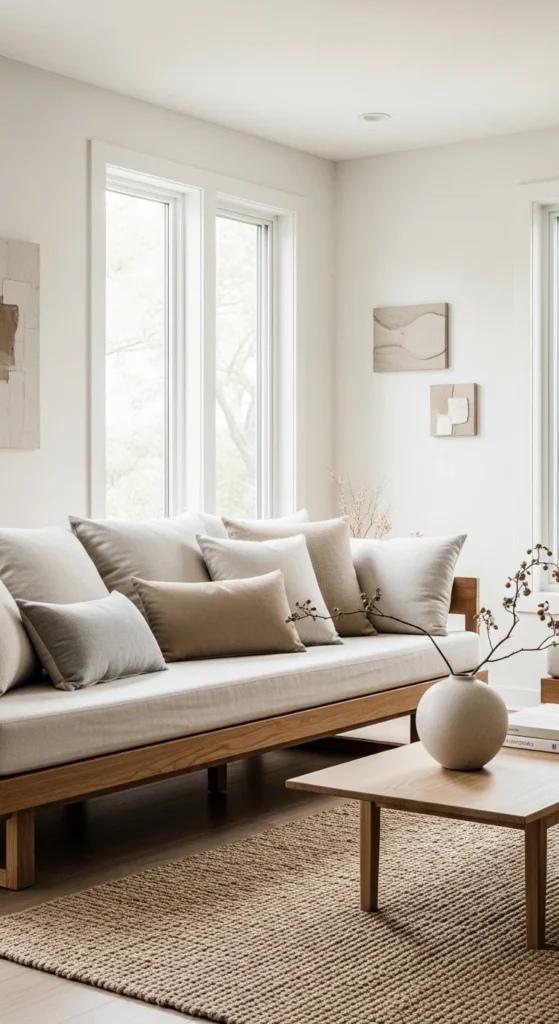
Japandi blends calm minimalism with warmth. Low seating, natural wood, and simple forms define the look. It feels grounded and peaceful. Low-profile living suits open spaces and slow living.
Stick to light or mid-tone wood. Avoid glossy finishes. Linen and cotton add softness without fuss. Keep cushions structured rather than overstuffed.
DIY idea: lower the visual height of existing furniture by removing legs or choosing platform bases. Use floor lamps instead of tall overhead fixtures.
Negative space matters. Let walls breathe. Fewer objects create clarity. The room feels balanced, intentional, and easy to unwind in.
23. Stone and Wood Coffee Table Pairing
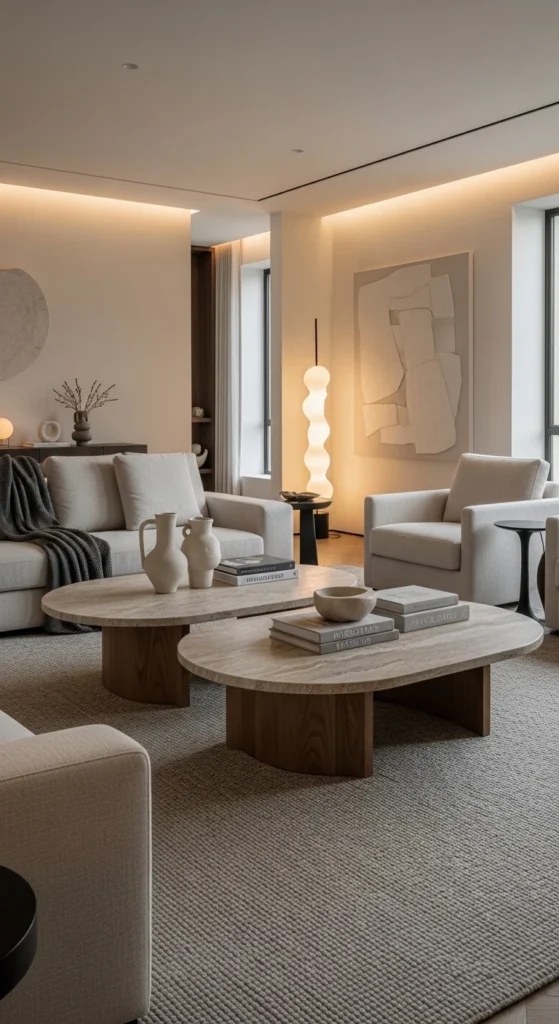
Pairing tables adds function and interest. Stone brings weight. Wood brings warmth. Together, they feel collected rather than matched. Mixed materials keep minimal rooms engaging.
Choose different heights so each piece has purpose. One holds decor. The other stays clear for daily use. Shapes can vary as long as tones stay cohesive.
Budget option: mix a stone-look table with a solid wood stool. The contrast still works. Keep finishes matte to avoid glare.
Leave space between pieces. Crowding ruins the effect. This setup feels relaxed, practical, and visually balanced.
24. Boutique-Hotel Styling Approach
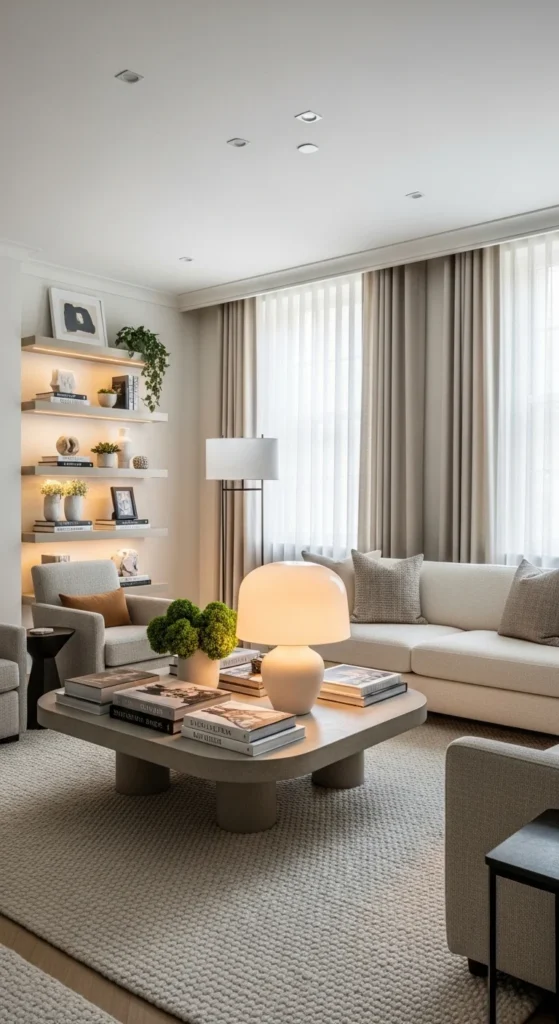
Hotels understand comfort and polish. Borrow that mindset. Symmetry, quality lighting, and edited decor make spaces feel intentional. Boutique styling balances order with softness.
Use pairs where possible. Two cushions. Two lamps. It brings calm. Keep surfaces partially clear so the room feels ready, not staged.
Invest visually in lighting first. Lamps change mood faster than furniture. Choose warm bulbs only.
Add a subtle scent through candles or diffusers placed on trays. Sensory layers complete the experience. The room feels welcoming and refined without excess.
25. Layered Window Treatments for Softness
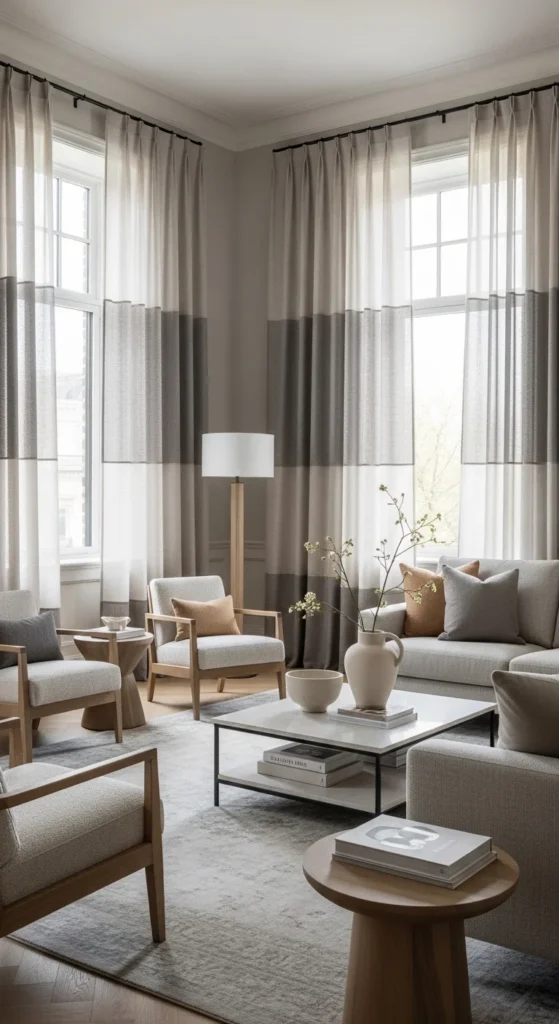
Windows shape the mood of a room. Layered treatments soften light and add texture. Sheers filter daylight. Linen panels add weight. Layered curtains feel tailored and cozy.
Hang rods high and wide. This makes ceilings feel taller and windows grander. Even

Leave a Reply