

1. Pergola-Wrapped String Lights
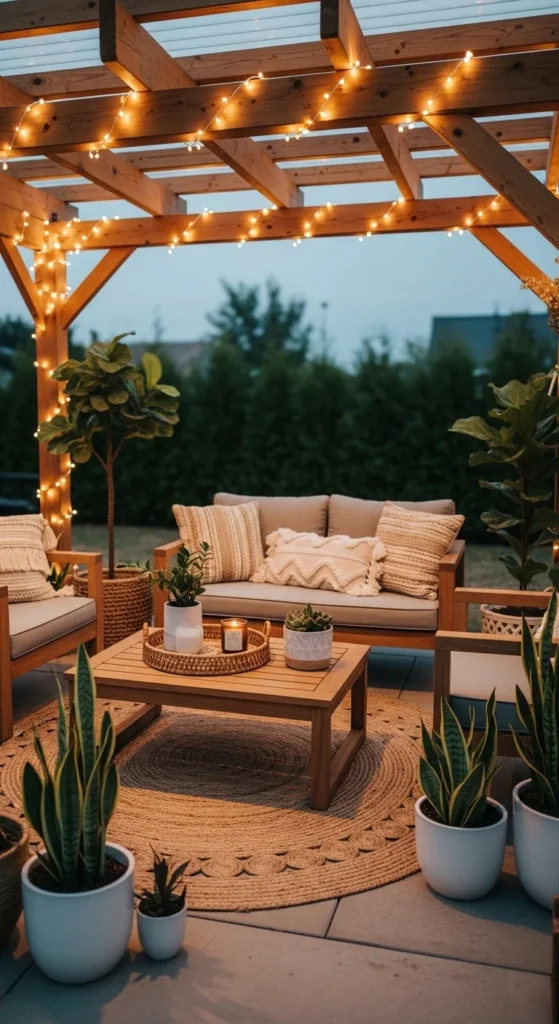
String lights and pergolas are a classic pairing for a reason. The structure gives you clean anchor points. Wrap lights along beams rather than zig-zagging randomly. This keeps lines calm and intentional. Choose warm bulbs, not cool white. The glow feels softer on wood and skin. Commercial-grade strands last longer outdoors and sag less over time. For budget setups, zip ties in matching tones hide well against beams. Add a dimmer plug to shift from dinner lighting to late-night lounging. If your pergola is metal, magnetic hooks make setup fast and removable. Layer with lanterns on the floor to avoid flat lighting. Keep bulbs evenly spaced so shadows stay gentle. One smart trick: run lights slightly higher than eye level to prevent glare while seated. This setup works year-round and photographs beautifully for social posts.
2. Solar Path Lights for Soft Wayfinding
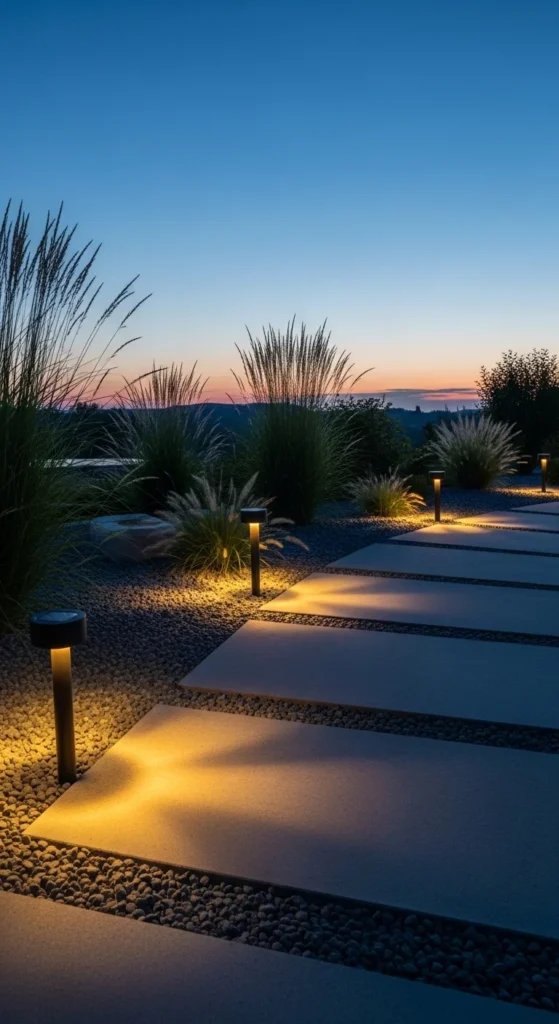
Path lights quietly shape the entire patio experience. They guide movement without stealing attention. Solar versions work well where outlets feel inconvenient. Look for warm amber tones rather than bright white. That color keeps things relaxed. Low-profile stakes disappear during the day and glow gently at night. Spacing matters more than brightness. Place lights closer together with lower output to avoid harsh pools. Many sets install in minutes and cost less than one hardwired fixture. Clean the panels every few months so charging stays consistent. Angle lights slightly outward so paths read clearly without shining into seating zones. Mixing path lights with string lighting adds dimension. It also keeps guests from stepping into planters after sunset. For renters, this setup checks every box: no wiring, no tools, easy removal.
3. Tree Uplighting for Garden Drama
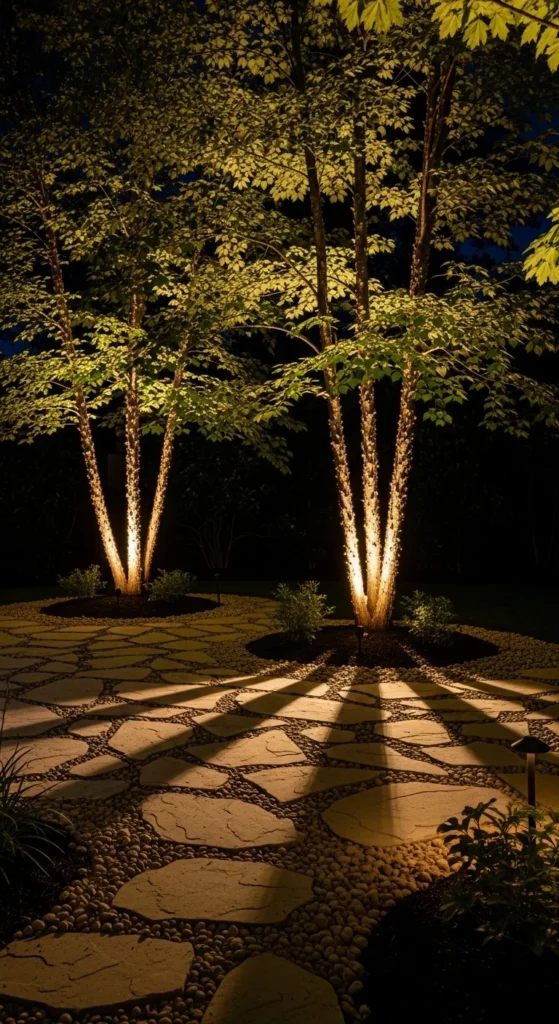
Uplighting trees adds instant mood without crowding the patio. Aim lights upward at trunks or lower branches. This creates depth and movement as leaves shift. Use narrow-beam fixtures for trunks. Wider beams work better for shrubs. Soft uplighting feels theatrical without feeling staged. Low-voltage kits keep installation simple and safe. Hide cables under mulch or gravel for a clean look. Avoid lighting every tree. One or two focal points feel intentional. Warm LEDs around 2700K flatter greenery and blend with string lights nearby. For small patios, uplighting visually expands the space beyond furniture lines. It draws the eye outward. If glare becomes an issue, tilt fixtures down slightly or shield them with rocks. This approach pairs well with fire pits and water features for layered nighttime scenes.
4. Wall Sconces for Ambient Structure
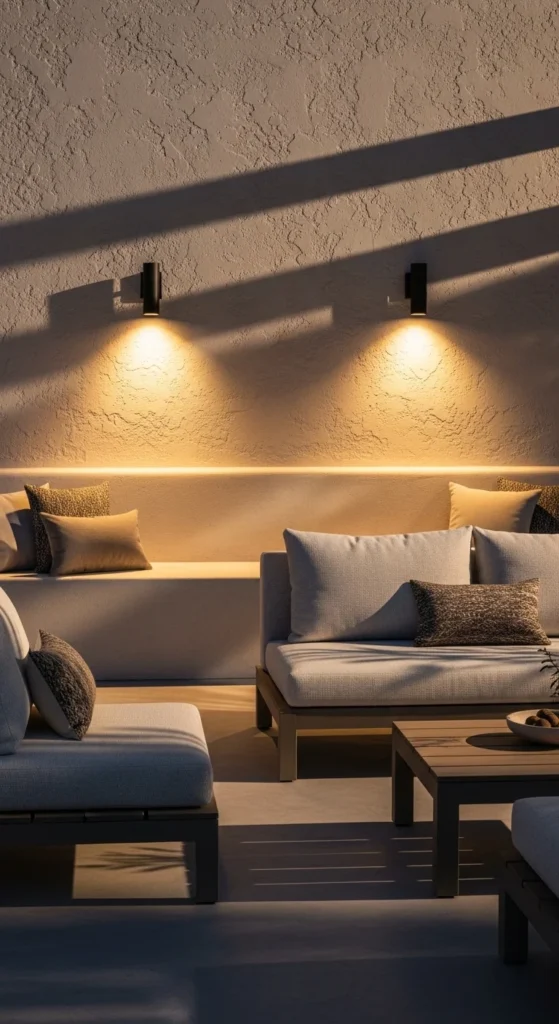
Wall sconces bring balance to patios connected to the home. They frame doors, seating zones, and dining areas. Choose fixtures rated for outdoor exposure and damp conditions. Up-and-down lighting adds texture without flooding the space. Install sconces slightly above eye level to keep glare low. For DIY installs, solar wall lights offer a shortcut with similar impact. Spacing matters. Too far apart feels scattered. Too close feels busy. Match finishes to door hardware for cohesion. Dimmable models work well when entertaining. Bright for meals, softer later on. Wall lighting also improves visibility without overhead clutter. It keeps the patio feeling grounded and architectural. Pair with string lights or lanterns so the space doesn’t feel flat. This setup works especially well for covered patios and balconies.
5. Hanging Lantern Clusters
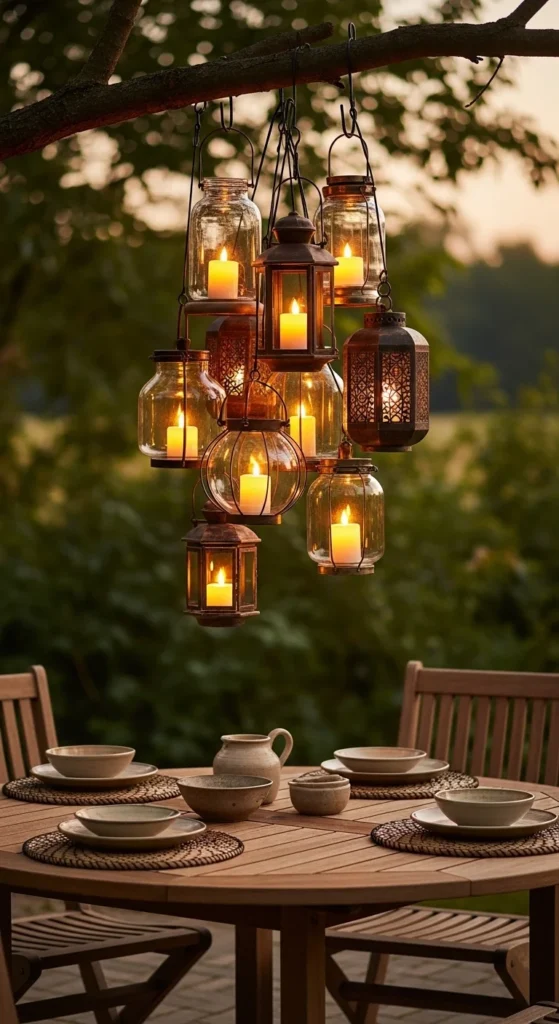
Lantern clusters add charm with very little effort. Hang them at different heights to create rhythm. Use LED candles for safety and longer burn time. Mixed materials like glass, metal, and rattan keep the look relaxed. For trees, use padded hooks to protect bark. On pergolas, S-hooks make rearranging easy. Battery-powered lanterns work well for renters or temporary setups. Group odd numbers for a natural feel. Keep them slightly off-center above tables to avoid blocking conversation lines. Lantern light feels softer than exposed bulbs, which helps when you want calm evenings. This style pairs beautifully with neutral textiles and low seating. When not in use, lanterns double as daytime decor. It’s one of the easiest ways to add personality without permanent changes.
6. Bistro-Style Café Lights Over Dining Areas
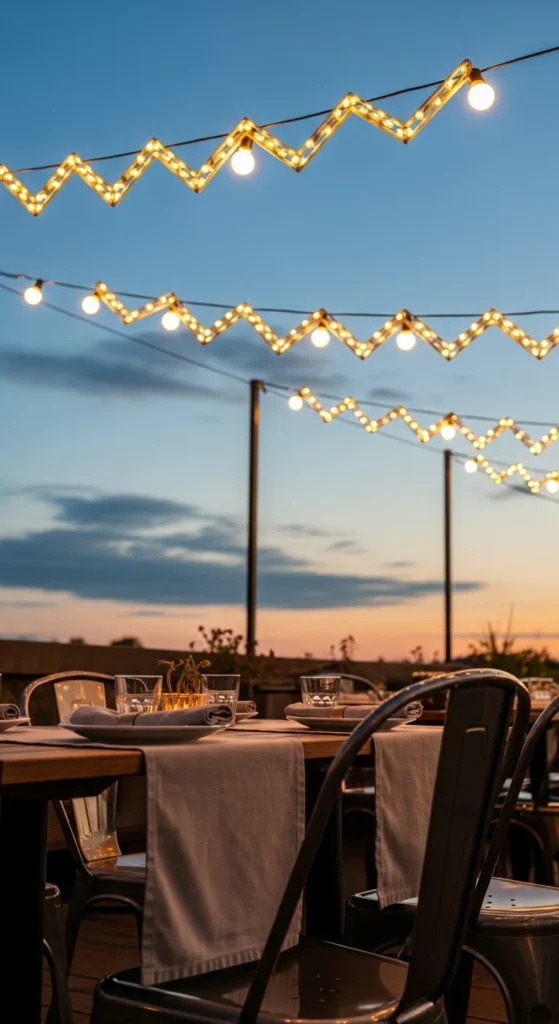
Café lights instantly set a relaxed dining mood. Hang them in gentle zig-zag lines above the table rather than tight grids. This keeps the space casual. Choose warm filament bulbs for a softer tone that flatters food and faces. If wind is common, tension the wires slightly so bulbs don’t clink. Budget-friendly sets often connect end to end, letting you cover larger patios without extra outlets. Clip lights to guide wires for straighter lines. Add a plug-in dimmer so dinner starts bright and eases into a mellow glow. Keep bulbs centered over the table to avoid dark plates. This setup feels welcoming for everyday meals and still works for gatherings. Pair with simple table lanterns for depth once the sun fully sets.
7. Step and Stair Lights for Quiet Safety
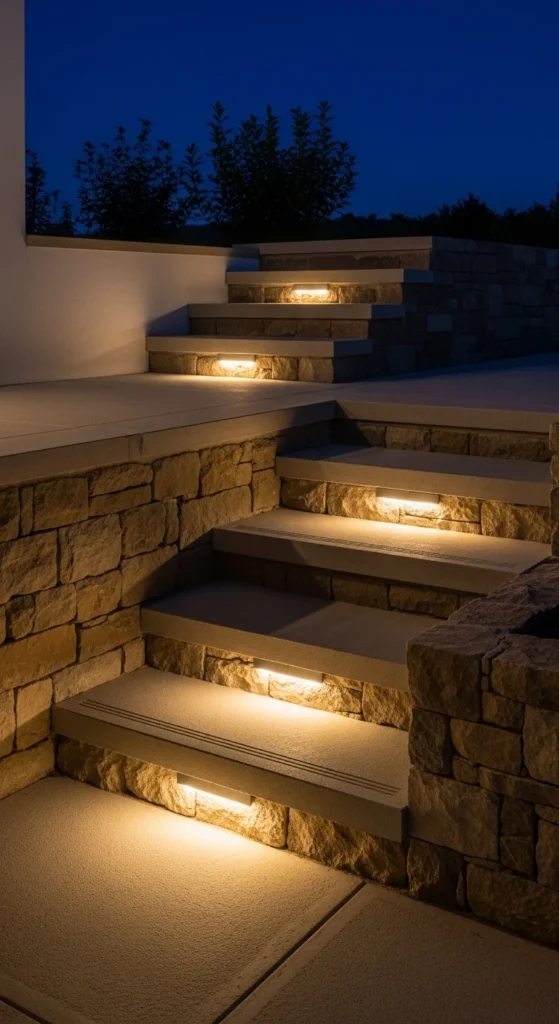
Step lights do more than guide feet. They outline the patio’s shape after dark. Install lights under stair lips or along risers for a clean look. Low-voltage kits suit DIY installs and keep glare minimal. Warm light reads calmer than bright white. Space fixtures evenly so steps feel consistent. Solar versions work for short stair runs, though wired options stay more reliable in shaded areas. Hide fixtures during the day so the patio stays uncluttered. Pair step lighting with nearby path lights for continuity. This approach works especially well around decks, pool edges, and multi-level patios. Guests move comfortably without the space feeling overlit.
8. Color-Changing LEDs for Occasional Nights
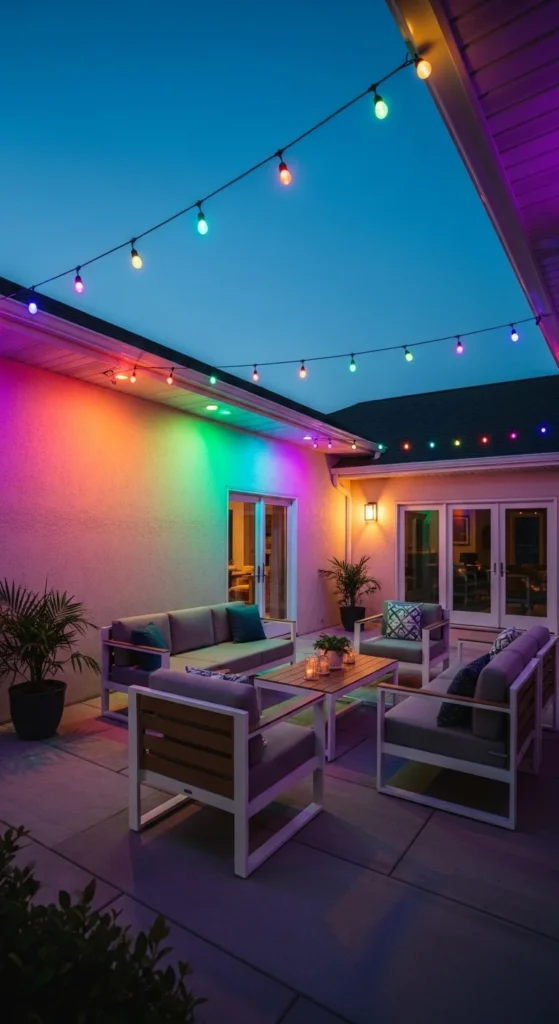
Color-changing lights bring flexibility without permanent commitment. Keep everyday settings warm and neutral. Save color scenes for parties or holidays. App-controlled systems make switching quick and simple. Avoid saturating the entire patio in color. Use it as an accent layer behind seating or along fences. This keeps the look tasteful. Many systems allow scheduling so lights shift automatically. For smaller patios, softer pastel tones feel calmer than bold hues. Combine color LEDs with steady warm lights so faces stay well-lit. This balance keeps the patio comfortable while still playful. It’s a fun option that adapts to different moods without rewiring.
9. Solar Lanterns on Tables and Corners
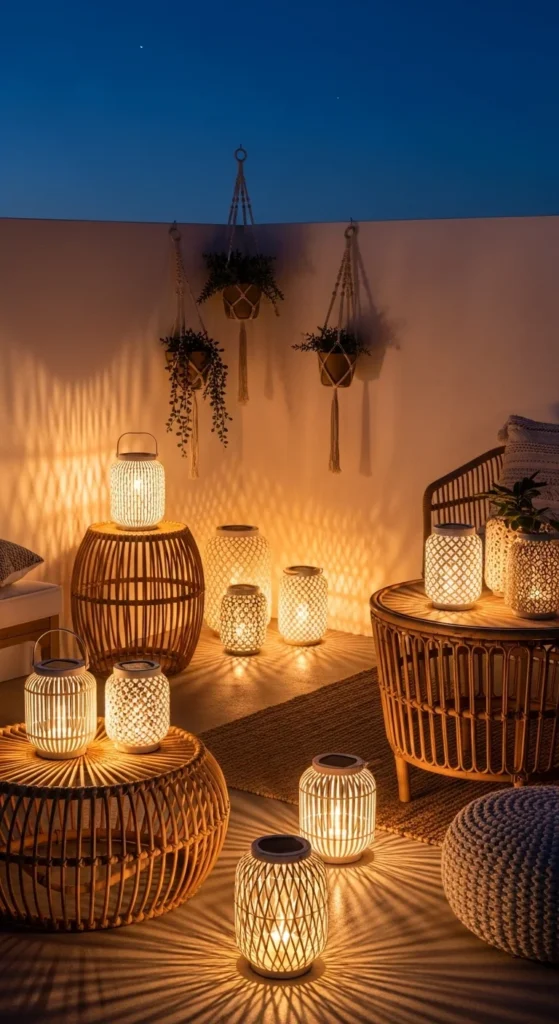
Solar lanterns shine in flexible layouts. Place them where cords feel awkward. Tables, corners, and steps all work well. Choose lanterns with flicker-style LEDs for candle-like warmth. Charging panels perform best with direct sun, so rotate lanterns occasionally. Lightweight designs make rearranging easy. Mix sizes for visual interest. One larger lantern anchors a corner while smaller ones soften tabletops. This lighting layer feels intimate and calm. It pairs nicely with string lights overhead. For budget styling, look for multi-packs with consistent finishes. Lanterns store easily when not in use and travel well for picnics or balconies.
10. Pergola Pendant Lights for Defined Zones
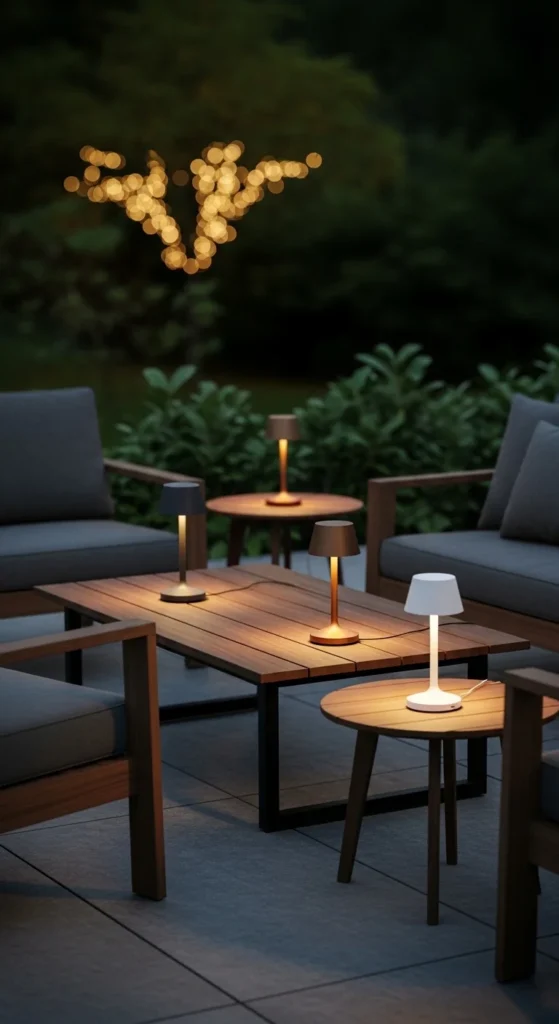
Pendant lights bring indoor comfort outdoors. Hang them above seating zones to mark areas clearly. Choose outdoor-rated fixtures with sealed sockets. Downward-facing pendants focus light where people gather without spilling everywhere. Keep cords tidy by routing them along beams. For renters, plug-in pendants with hooks offer a workaround. Match fixture finishes to nearby furniture for cohesion. Space pendants evenly to avoid dark gaps. This lighting style works well for covered patios and pergolas used year-round. Combine with softer accent lighting nearby so the space doesn’t feel rigid. Pendants add structure while still feeling relaxed.
11. Fire Pit Lighting Pairings
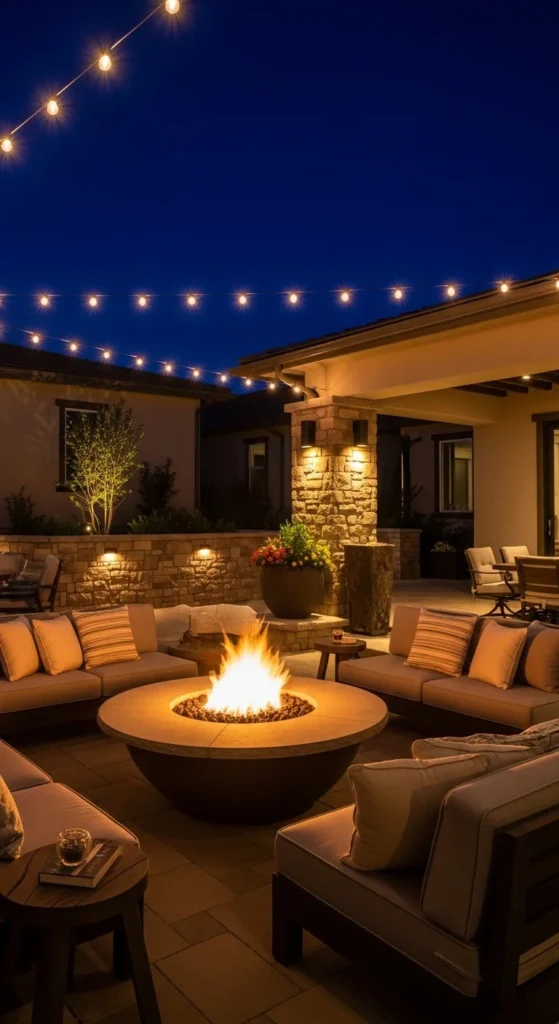
Fire pits already glow, but pairing them with light completes the scene. Use soft ambient lighting nearby rather than bright fixtures. Low-level accent lights around seating keep faces visible without competing with flames. String lights hung wider than the fire pit frame the area gently. Avoid lights directly above flames. This keeps smoke from dimming bulbs and maintains a calm feel. Battery lanterns on side tables add flexibility. Choose warm tones so light blends with fire rather than clashing. This setup works well for cool evenings and long conversations. The key is restraint. Let the fire lead while lighting supports comfort and visibility.
12. Fence-Line Accent Lighting
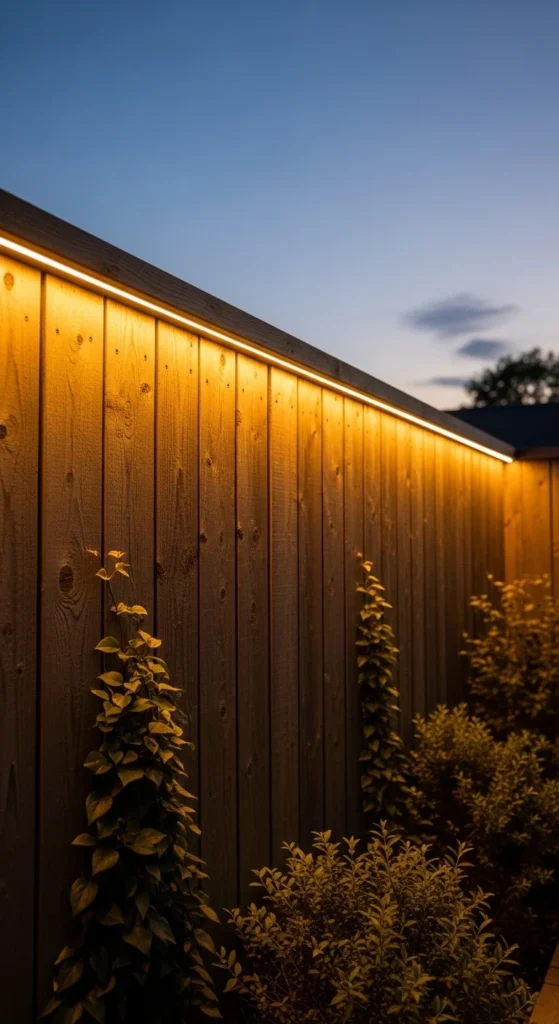
Fence lighting defines boundaries after dark. Install lights along the top rail or near the base for subtle outlining. Downward-facing strips prevent glare and keep things calm. Warm LEDs highlight wood grain beautifully. Use clips or channels to keep lines clean. Solar strips work for smaller runs, while low-voltage systems suit longer fences. This approach makes patios feel enclosed and intimate without walls. Pair with plants or climbing vines for layered texture. Fence lighting also improves visibility around edges, especially on narrow patios or shared outdoor spaces.
13. Portable Rechargeable Table Lamps
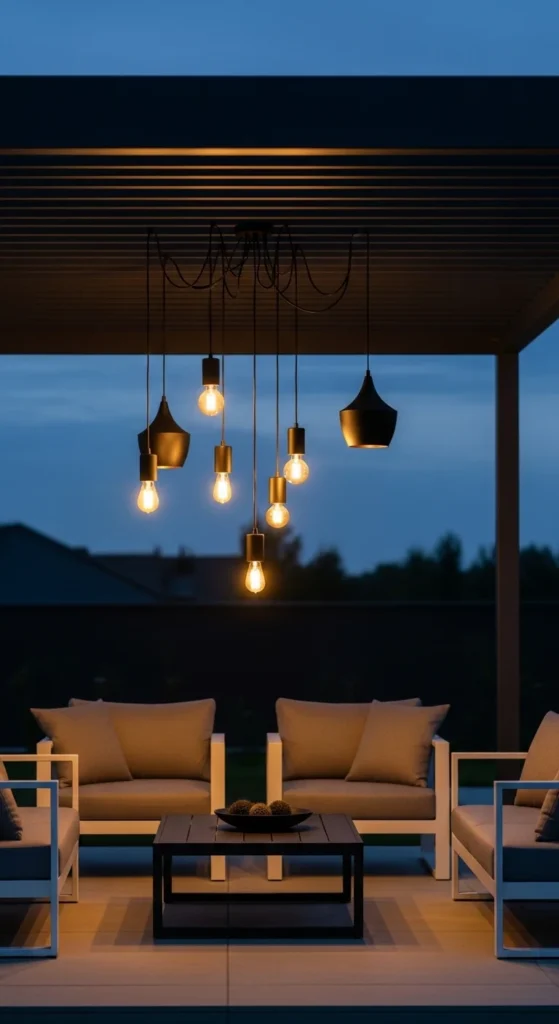
Rechargeable lamps bring flexibility to patio layouts. Place them where cords feel intrusive. Many models offer touch dimming and long battery life. Soft diffused shades reduce glare and feel calm. Use them to anchor seating clusters or dining tables. Move lamps as guests shift around. This lighting layer feels personal and controlled. Look for weather-rated designs so sudden moisture isn’t a worry. When not in use outdoors, many lamps transition indoors easily. This makes them a practical purchase with multiple uses.
14. Hardscape-Integrated Deck Lighting
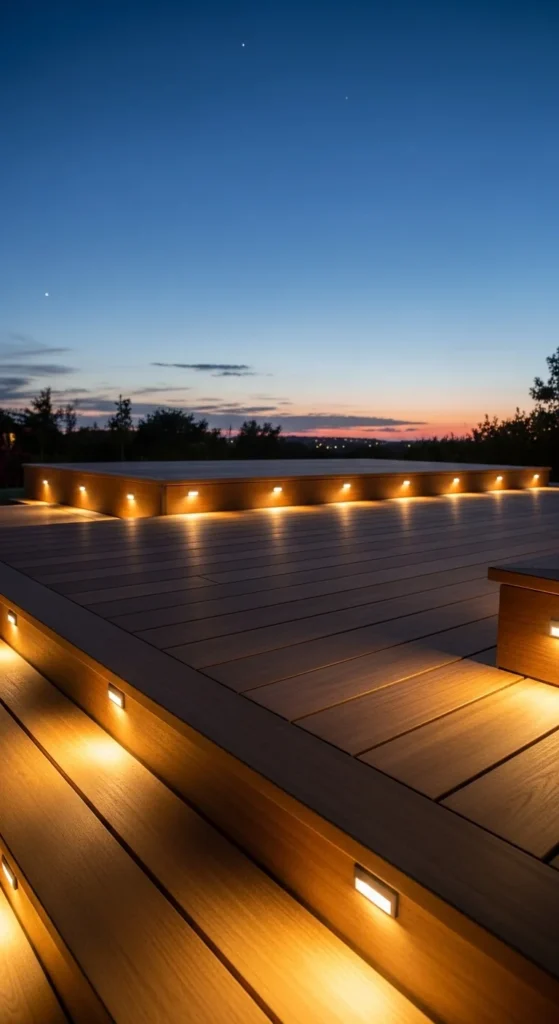
Integrated deck lighting blends function and style. Lights built into steps, rails, or deck edges keep surfaces readable. Recessed fixtures stay out of sight during the day. Use warm LEDs to avoid a harsh look on wood. Spacing lights evenly keeps shadows predictable. Many low-voltage kits are installed with basic tools. Hide wiring beneath boards for a clean finish. This lighting works well for multi-level decks and dining areas. Pair with overhead lighting so the deck doesn’t feel isolated after dark.
15. Tree-to-Post Light Draping
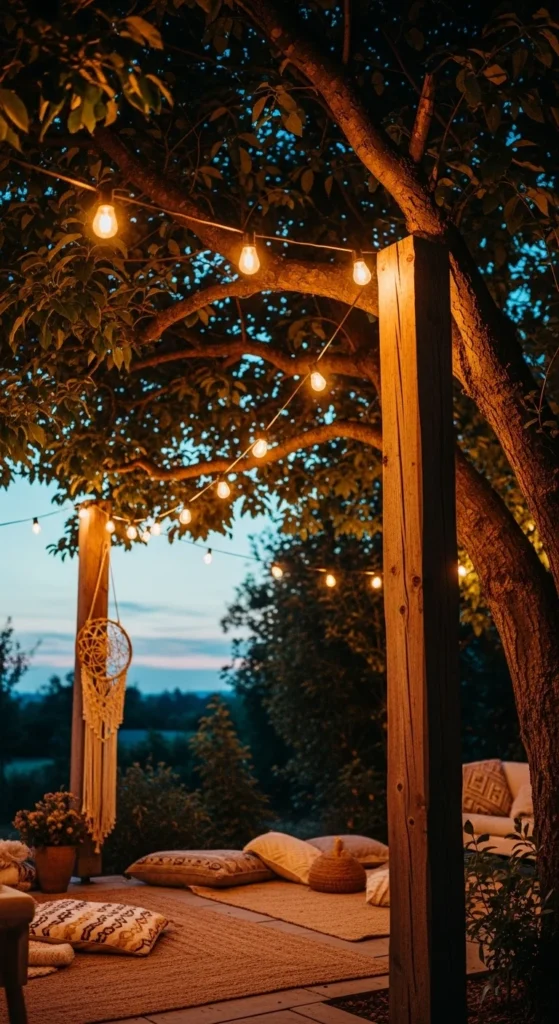
Draping lights from trees to posts creates an organic canopy. It feels relaxed and inviting. Use guide wires first, then clip lights along them. Gentle curves look better than tight straight lines. Choose shatterproof bulbs for outdoor reliability. Keep lights high enough so they don’t interfere with movement. This setup works well for open patios without pergolas. Combine with ground lighting so the space feels balanced. It’s an easy way to define zones using what’s already in your yard.
16. Motion-Sensor Lights for Subtle Security
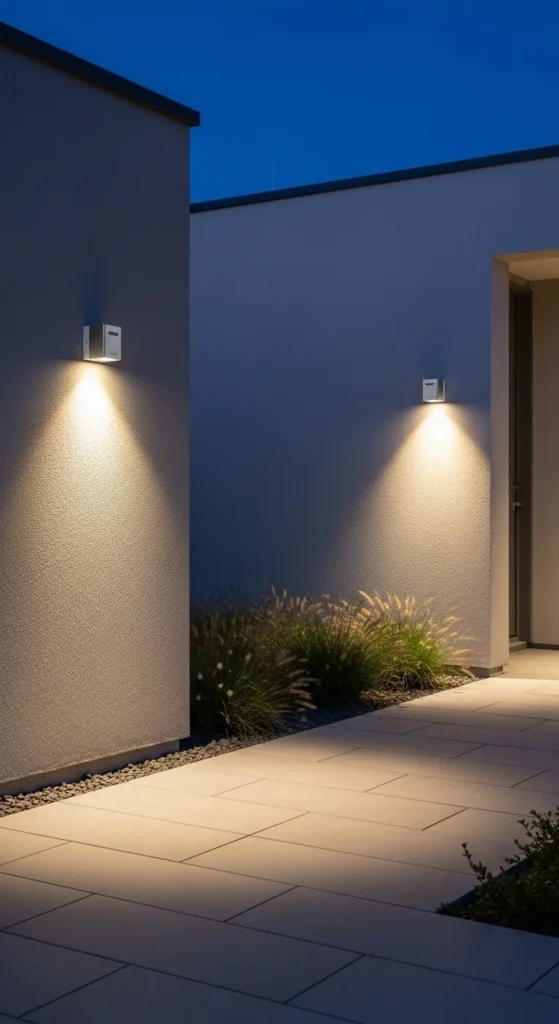
Motion-sensor lights don’t have to feel harsh. Choose fixtures with adjustable sensitivity and warm output. Set them to glow softly rather than flash bright. Zoned activation keeps light focused where movement happens. This works well near gates, side yards, or back doors. Many models allow dusk-to-dawn modes with motion override. Install lights higher so coverage spreads evenly. This keeps shadows predictable. Pair sensor lights with steady ambient lighting so the patio never feels dark. It’s a quiet way to add comfort without changing the mood.
17. Edison Bulbs for Vintage Warmth
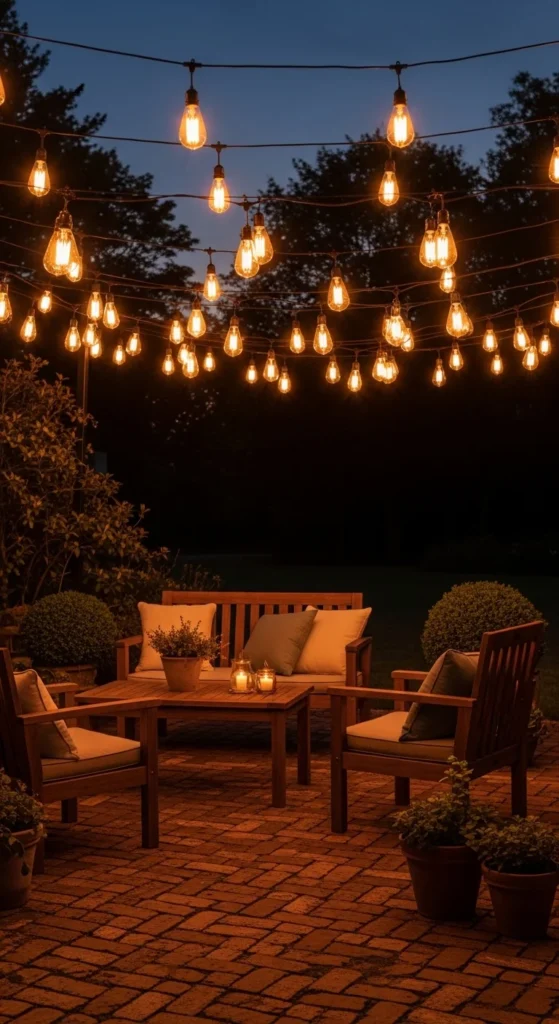
Edison bulbs bring character through visible filaments. Their amber glow feels calm and nostalgic. Hang them over seating or dining zones where the bulbs stay visible. Lower wattage LEDs mimic filament warmth without heat. Keep spacing consistent so lines feel intentional. This style pairs well with wood, brick, and metal finishes. Avoid mixing Edison bulbs with cool-white lights nearby. Consistent tone keeps the patio cohesive. Add a dimmer to soften the glow late in the evening.
18. Biophilic Lighting Around Greenery
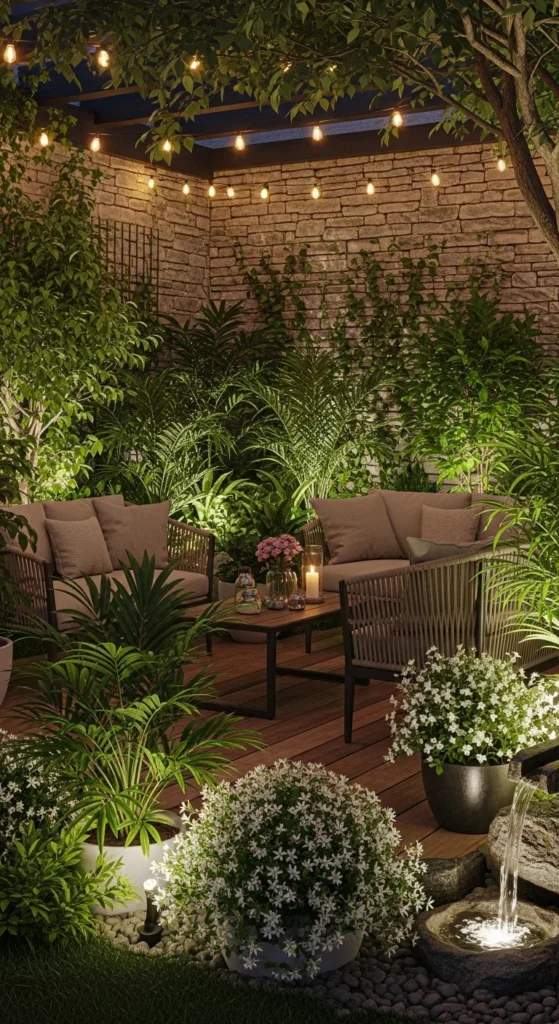
Biophilic lighting highlights natural shapes rather than fixtures. Tuck small lights behind planters or under benches. Aim light through leaves, not directly at them. Filtered glow feels calm and organic. Warm LEDs blend well with plant tones. Avoid lighting every plant. A few focal points read better. This approach works well on patios with vertical gardens or clustered pots. Combine with neutral furniture so greenery stays the focus. The result feels relaxed and grounded.
19. Connectable String Lights for Large Patios
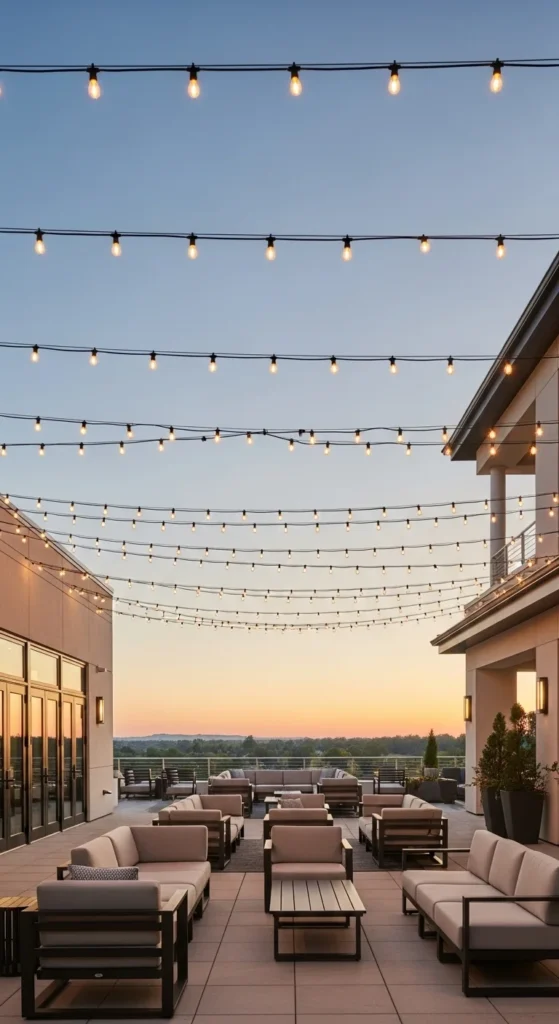
Large patios benefit from connectable strands. They keep lighting consistent across zones. Run lights in parallel lines or gentle grids for order. End-to-end connections reduce outlet clutter. Use guide cables so strands stay straight over time. Choose commercial-grade cords for durability. Balance coverage so no area feels dim. Pair overhead lighting with accent lights below for depth. This setup works well for entertaining and everyday use alike.
20. Low-Voltage DIY Lighting Kits
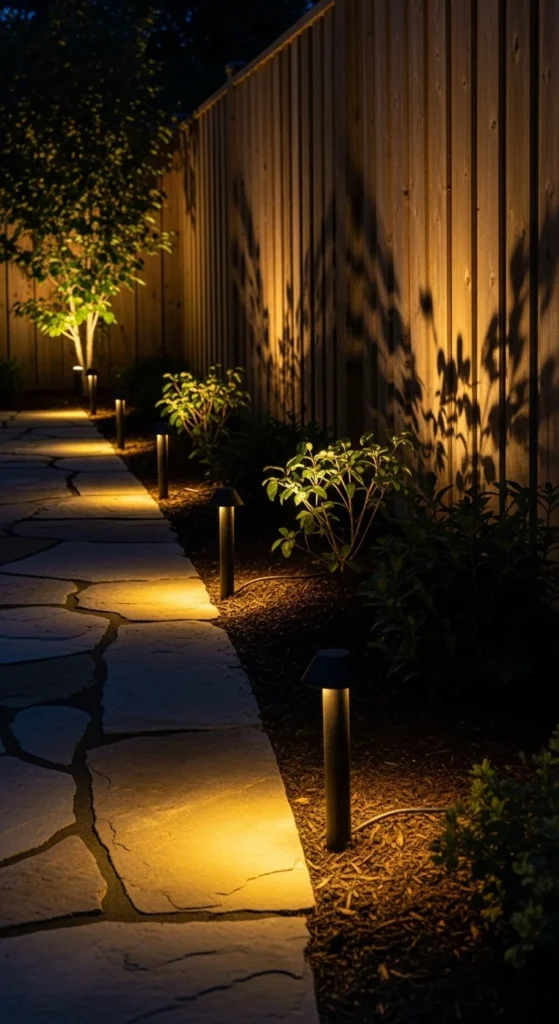
Low-voltage kits make patio lighting approachable. Most include transformers, cables, and fixtures. Installation usually takes an afternoon. Plug-and-play connections simplify layout changes later. Start with path or accent lights, then add more over time. Keep fixtures warm-toned for consistency. Bury cables shallowly or tuck them under edging. This system grows with your patio without major commitment. It’s a practical way to build layered lighting gradually.
21. Magnetic Rechargeable Accent Lights
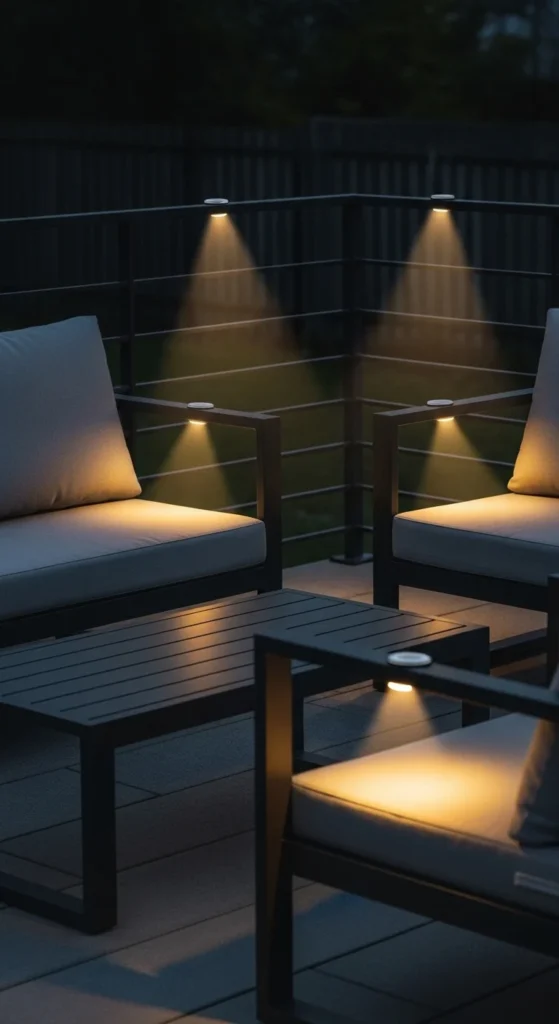
Magnetic accent lights solve tricky lighting spots fast. Attach them to metal railings, furniture frames, or pergola brackets. No tools. No wiring. Focused warm beams highlight seating edges and tabletops without flooding the patio. Many designs swivel, letting you adjust direction easily. Rechargeable batteries last several evenings on low settings. Move lights as layouts change. This works well for renters and seasonal setups. Use them sparingly so the patio stays calm rather than busy. Pair with softer ambient lighting nearby to balance contrast. When not in use outdoors, these lights work indoors too, which makes them feel like a smart addition rather than a single-use item.
22. Layered Lighting Zones for a Cozy Flow
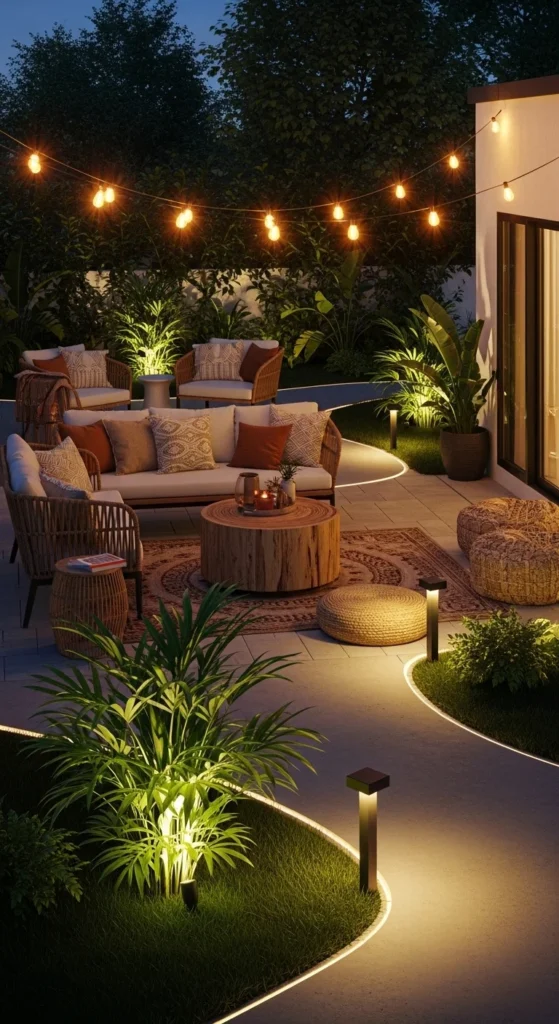
Layered lighting pulls everything together. Combine overhead string lights, low path lighting, and soft accents. Each layer has a role. Overhead lights set the mood. Path lights guide movement. Accent lights add texture. Zoned lighting keeps the patio readable without glare. Use consistent color temperature so layers blend naturally. Avoid turning every light on at once. Select zones based on how the patio is used that evening. This approach works for small patios and large outdoor rooms alike. It creates a gentle flow that feels welcoming from every angle and keeps the space comfortable long after sunset.

Leave a Reply