

1. Warm Neutral Color Palette Foundations
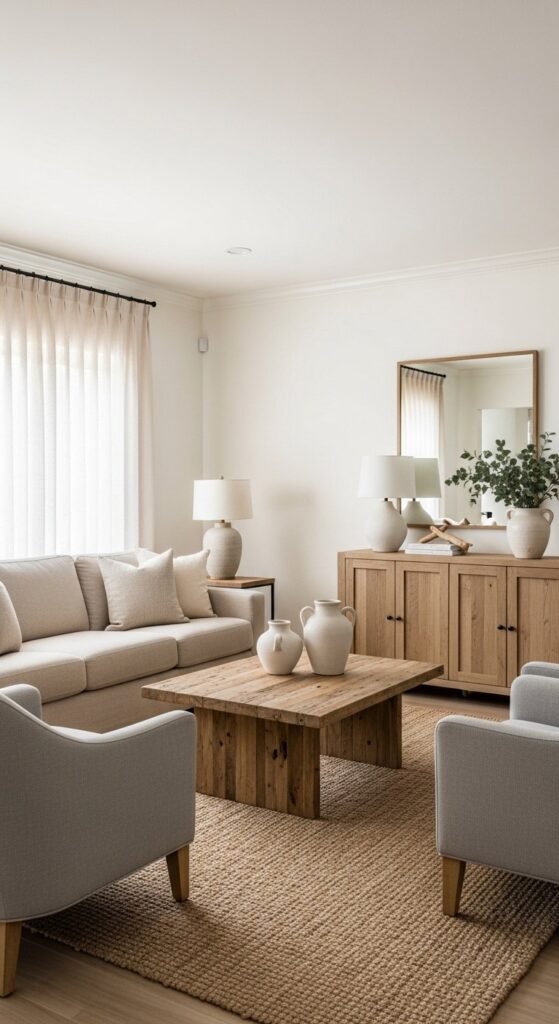
Warm neutrals set the tone for modern farmhouse spaces. Think warm white walls, sandy beige upholstery, and soft gray accents. These shades work quietly together. They calm busy rooms. They also allow wood grain and texture to stand out. Start with paint. Choose warm whites instead of stark ones. Avoid anything that reads blue.
Furniture is where balance happens. Linen sofas, cotton slipcovers, and oak or pine tables keep the look grounded. If your space feels flat, layer tones within the same family. Cream next to oatmeal. Taupe next to mushroom gray. This trick adds contrast without clutter.
Budget tip: paint gives the biggest visual change for the least spend. Use neutral pillow covers to update older seating. Styling trick: add one darker neutral, like charcoal or weathered black, to anchor the room. Neutral tones don’t mean boring. They create breathing room for everything else.
2. Rustic Wood Coffee Tables With Visible Grain
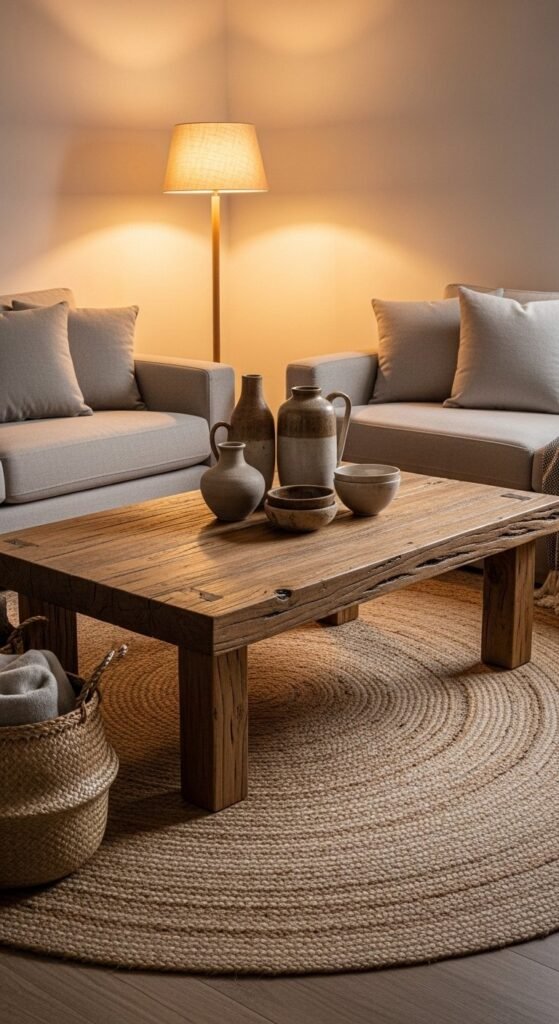
A rustic coffee table grounds a living room fast. Visible grain, knots, and imperfect edges bring warmth. These details keep modern farmhouse spaces from feeling too polished. Look for oak, pine, or reclaimed wood with a matte finish. Avoid glossy stains. Texture matters more than shine.
If buying new feels pricey, thrift stores and estate sales are gold. Solid wood tables can be sanded and sealed at home. Leave some wear marks. They tell a story. Pair the table with softer elements like linen seating or plush rugs to keep balance.
Styling should stay simple. A stack of books. A wooden bowl. Maybe a ceramic vase. Let the grain do the talking. For smaller rooms, choose tables with open bases. They feel lighter and keep sightlines clear. Reclaimed wood works especially well in open layouts where the table becomes a focal point.
3. Layered Textiles for Cozy Living Rooms
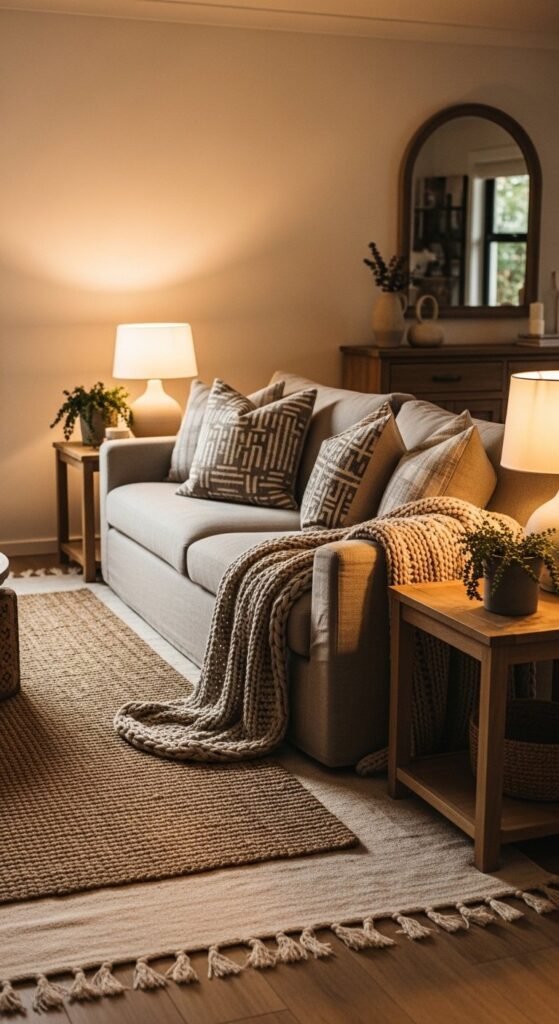
Layering textiles adds comfort without clutter. Start with one solid base. A neutral sofa works best. From there, layer throws and pillows in different textures. Knit. Linen. Cotton. Keep colors close so the mix feels calm.
Rugs matter more than most people think. A jute rug anchors the room. Layer a softer rug on top for comfort. This also helps define seating zones in open spaces. If maintenance worries you, choose performance fabrics. Many look like natural fibers but clean easily.
DIY tip: swap pillow covers seasonally. Same inserts. New look. Styling trick: odd numbers look more relaxed. Three pillows beat four. One throw beats two. Layered textures create warmth without adding furniture, which is perfect for smaller rooms.
4. White Subway Tile With Modern Grout Choices
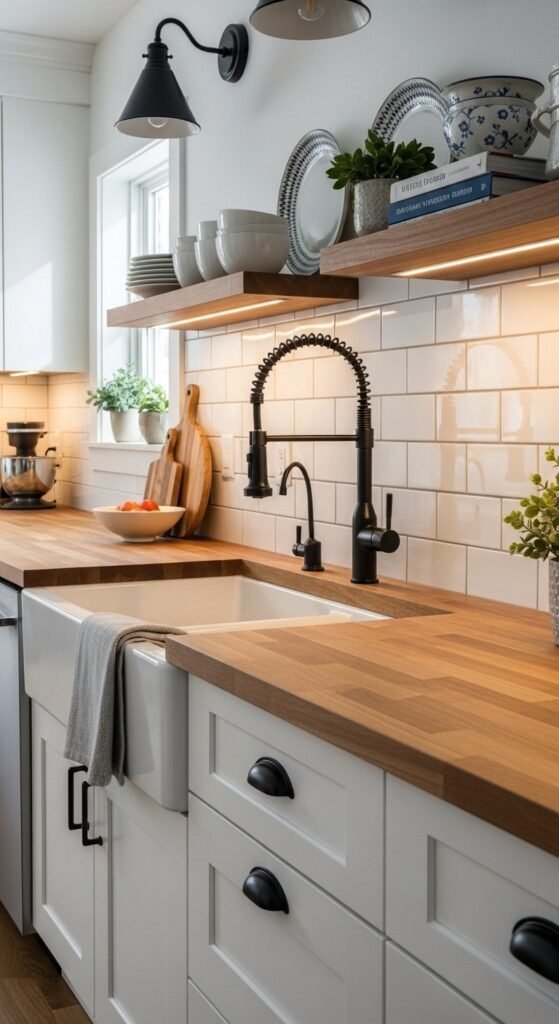
White subway tile stays popular for a reason. It’s clean. It’s timeless. The twist comes from grout. Light gray softens contrast. Warm beige adds depth. Black grout adds edge but should be used carefully. Keep counters and cabinets simple if you go dark.
Installation style changes everything. Traditional brick patterns feel classic. Vertical stacking reads more modern. Herringbone adds movement without extra color. For budget kitchens, peel-and-stick tile works well for rentals or quick updates.
Maintenance tip: sealed grout saves time later. Styling trick: pair tile with wood shelves or butcher block to avoid an all-white look. Subway tile works best when balanced with warmth nearby.
5. Open Kitchen Shelving With Styled Dishware
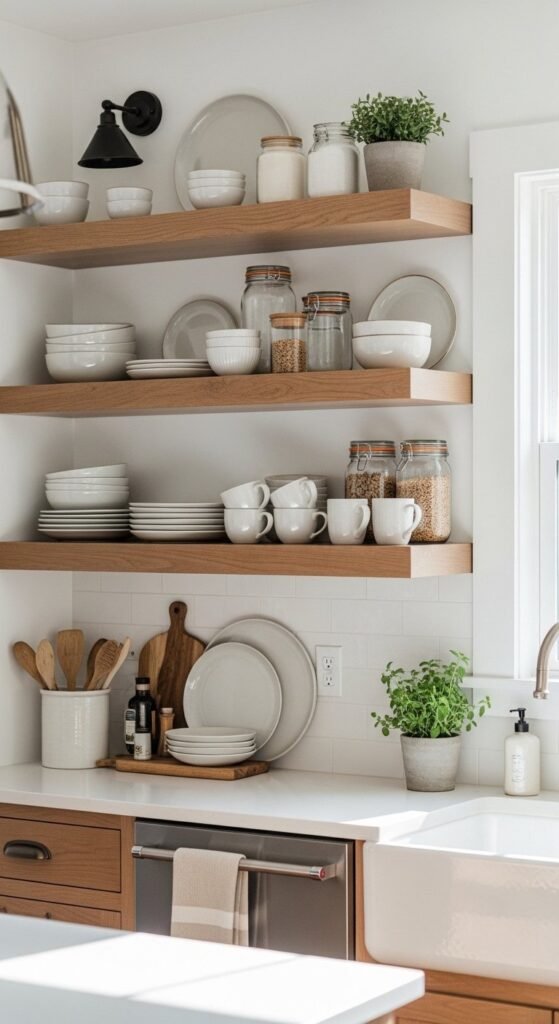
Open shelving adds air to kitchens. It also forces thoughtful styling. Use everyday dishware. Neutral plates. Simple mugs. Clear glass. This keeps shelves practical, not staged. Wood shelves feel warmer than painted ones, especially against white walls.
Spacing matters. Leave room between stacks. Negative space keeps shelves from feeling crowded. Mix vertical and horizontal items for balance. A small plant or cutting board adds texture without clutter.
If full open shelving feels risky, try one section. A coffee wall. A prep zone. Budget option: remove cabinet doors before committing. Store extras below. Open shelving works best when items earn their place.
6. Matte Black Lighting and Hardware Accents
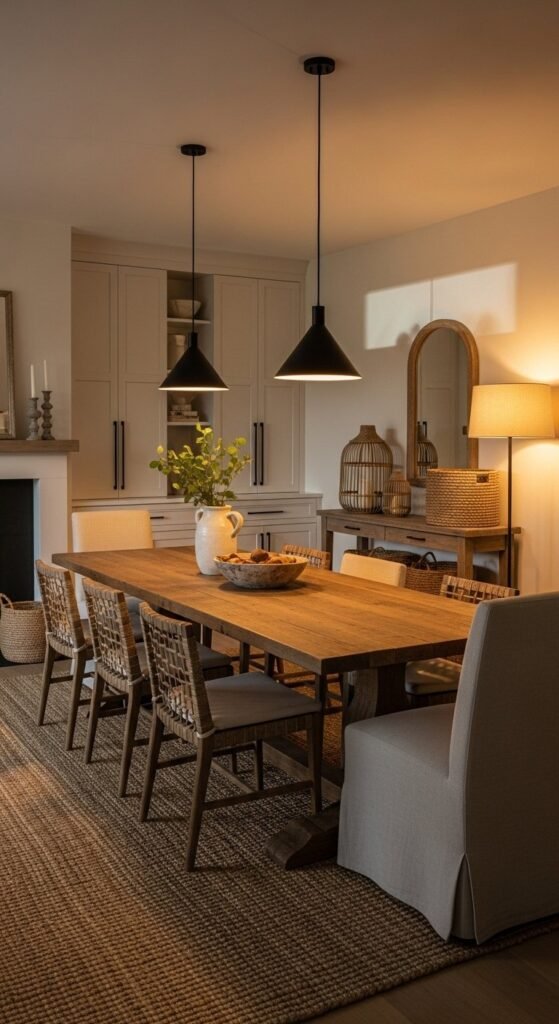
Matte black accents bring contrast into farmhouse interiors. They add structure without pulling attention away from wood and neutrals. Lighting is the easiest place to start. Pendant lights over islands or tables create strong visual lines. Go simple with lantern shapes or clean metal domes.
Hardware follows the same rule. Drawer pulls, faucets, and door handles in matte black read modern without feeling cold. Mixing metals works too. Black pairs well with aged brass or brushed nickel if kept intentional.
Budget tip: swap hardware before replacing cabinets. It changes the room fast. DIY trick: spray paint can work on existing fixtures if prepped properly. Keep finishes consistent within a room so the look stays cohesive. Matte black hardware keeps farmhouse spaces from drifting too rustic.
7. Woven Baskets for Stylish Storage
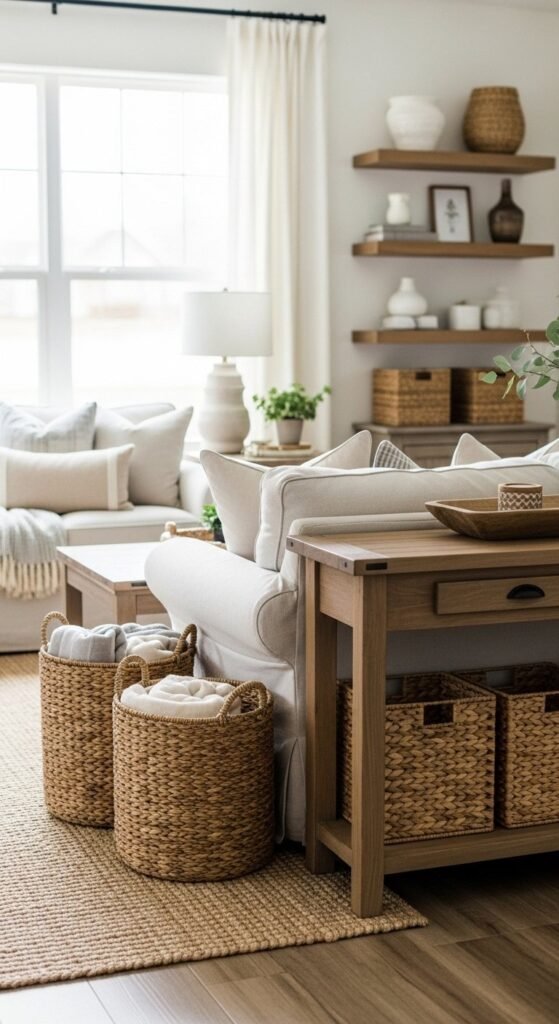
Woven baskets do double duty. They store clutter and add texture. Use them in living rooms for throws, entryways for shoes, or kitchens for pantry overflow. Natural fibers like seagrass and water hyacinth feel relaxed and lived-in.
Size matters. Oversized baskets work well on the floor. Smaller ones fit shelves better. Stick to similar tones so storage feels intentional, not random. Lids help hide visual mess in busy spaces.
Budget tip: thrift stores often carry sturdy baskets. Even mismatched ones work if the color palette stays tight. Styling trick: pair baskets with hard materials like stone or metal to balance softness. Woven baskets keep rooms tidy while still feeling warm.
8. Indoor Greenery for Natural Contrast
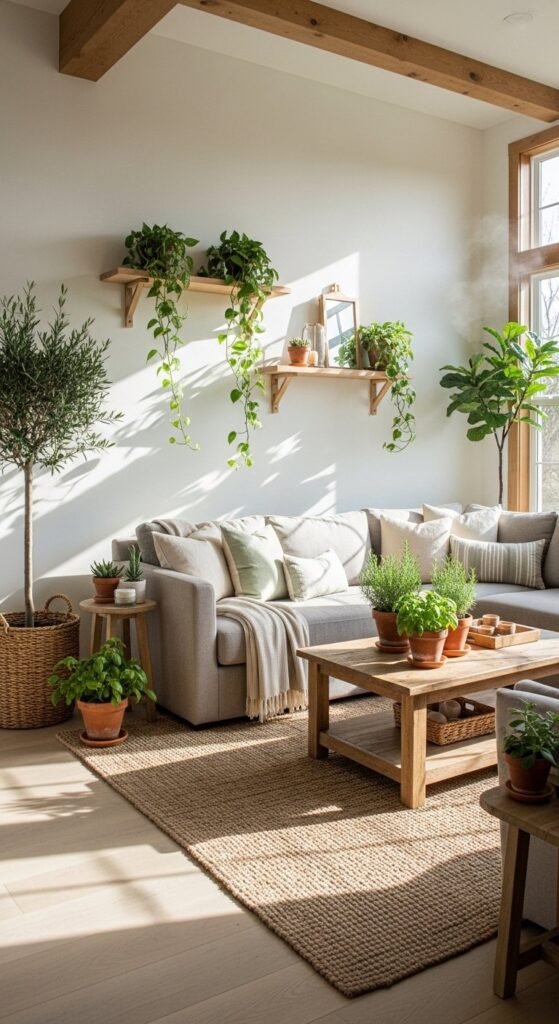
Plants soften farmhouse interiors instantly. They bring life into neutral rooms and break up wood-heavy spaces. Large floor plants work well in corners. Smaller plants shine on shelves and windowsills. Choose varieties with simple shapes and muted greens.
If upkeep worries you, start small. Snake plants and pothos are forgiving. Faux plants can work if chosen carefully. Look for realistic stems and matte leaves. Avoid glossy finishes.
Styling trick: use ceramic or stone planters instead of plastic. Neutral containers keep the look cohesive. Group plants in odd numbers for balance. Greenery arrangements add contrast without adding color overload.
9. Shiplap and Alternative Wall Treatments
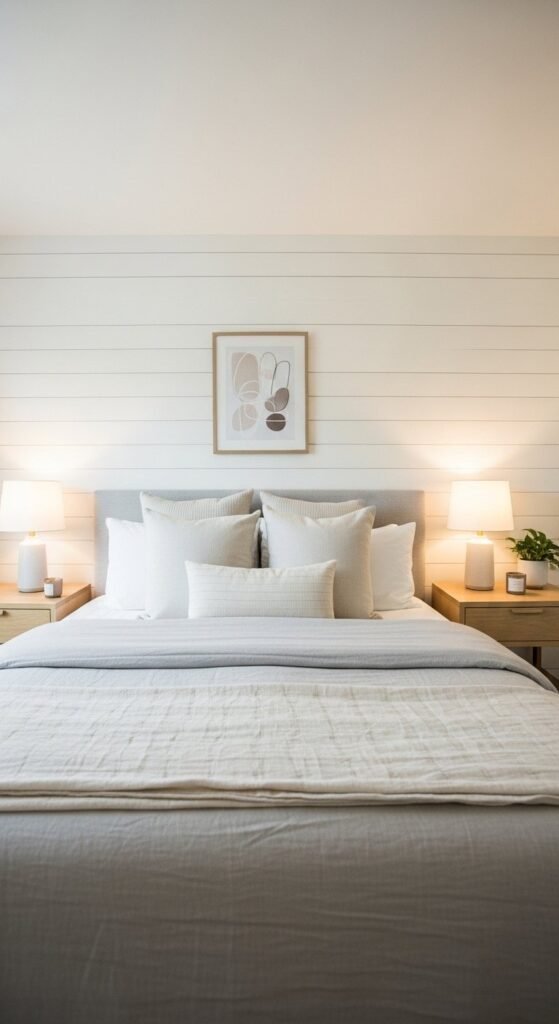
Shiplap still shows up in farmhouse homes, but restraint matters. One wall is enough. Bedrooms, hallways, or dining rooms work best. Paint it warm white to keep things subtle.
If shiplap feels overdone, alternatives exist. Beadboard panels. Vertical planks. Limewash finishes. These give texture without repeating the same look everywhere. Peel-and-stick panels offer rental-friendly options.
DIY tip: spacing between boards affects the final look. Narrow gaps feel cleaner. Styling trick: keep wall decor minimal so texture stands out. Wall treatments add depth without adding furniture.
10. Jute and Sisal Rugs for Natural Warmth
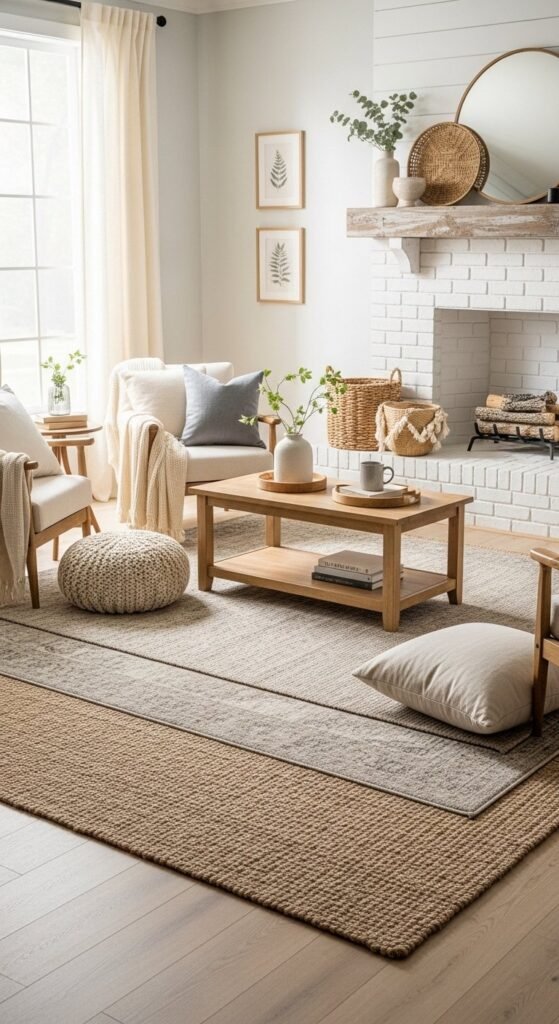
Natural fiber rugs ground farmhouse spaces. Jute and sisal bring texture and warmth without pattern overload. They work especially well on wood floors. Use them in living rooms, dining areas, or under beds.
Layering helps with comfort. Place a softer rug on top if the texture feels rough. This also adds dimension. For high-traffic areas, choose tightly woven styles that hold shape better.
Maintenance tip: vacuum regularly and spot clean only. Avoid moisture-heavy rooms unless rugs are labeled for indoor-outdoor use. Budget option: larger jute rugs often cost less than patterned wool ones. Neutral rugs tie furniture together while keeping rooms relaxed.
11. Floating Kitchen Shelves for an Airy Look
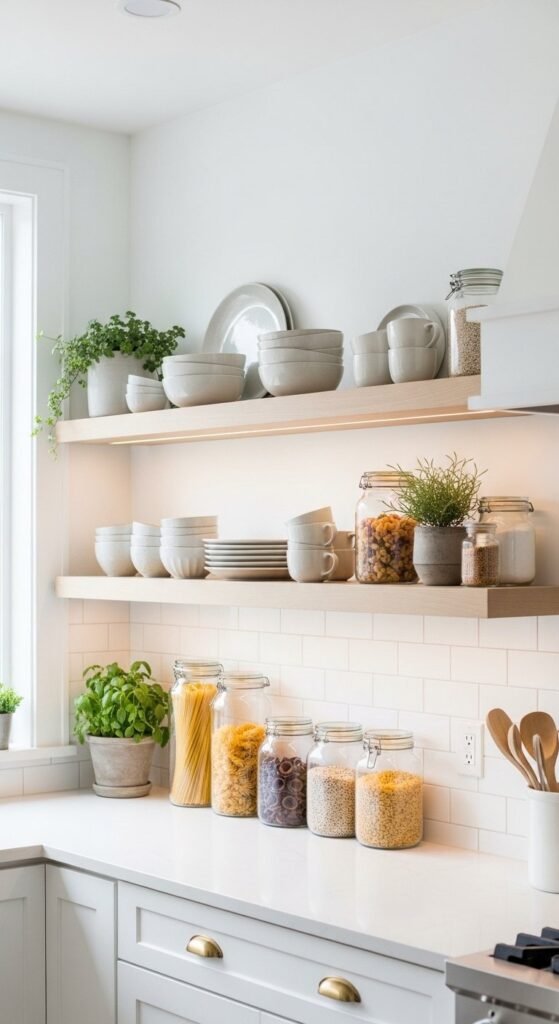
Floating shelves lighten kitchens visually. They replace bulky cabinets and keep walls open. Wood shelves add warmth against white tile or paint. Choose thicker planks for a grounded feel. Thin shelves read more modern.
Limit what goes on display. Everyday plates and bowls work best. Avoid novelty pieces that distract. Keep colors consistent to reduce visual noise. Glass jars with pantry items double as storage and decor.
DIY tip: install shelves into studs for stability. If that’s not possible, use heavy-duty anchors. Styling trick: leave space between groupings so the wall still breathes. Floating shelves work especially well in smaller kitchens where light matters.
12. Vintage Heirlooms Mixed With Modern Decor
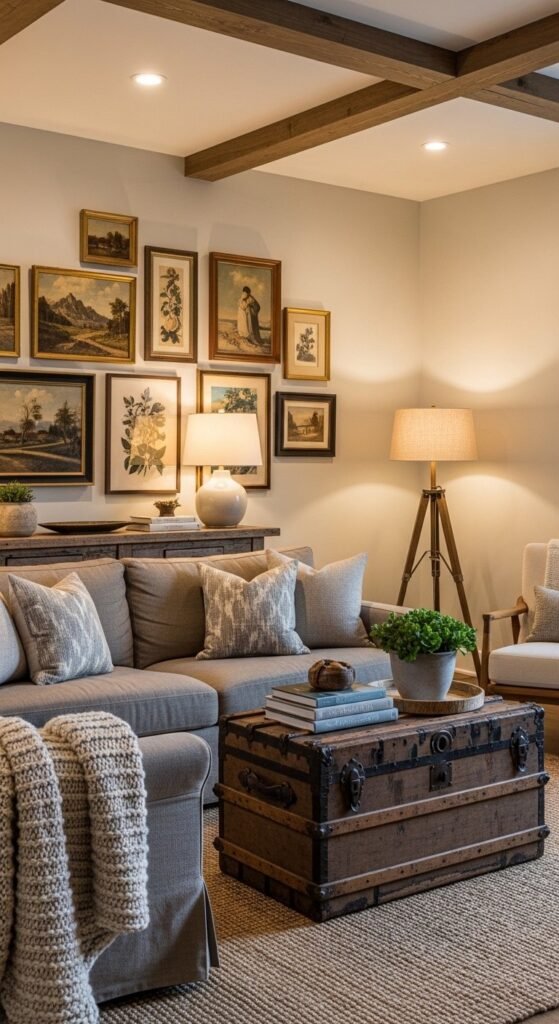
Mixing old and new gives farmhouse spaces personality. Vintage items add history. Modern furniture keeps the room clean-lined. The contrast prevents the space from feeling themed.
Start small. An old mirror. A wooden stool. A ceramic crock. Let one piece stand out instead of spreading antiques everywhere. This keeps the room from leaning cottage-heavy.
Budget tip: flea markets and estate sales are great sources. Look for solid materials over perfect condition. Styling trick: pair one vintage item with two modern ones nearby. Vintage-modern mix tells a personal story without clutter.
13. Industrial Lantern Lighting for Modern Edge
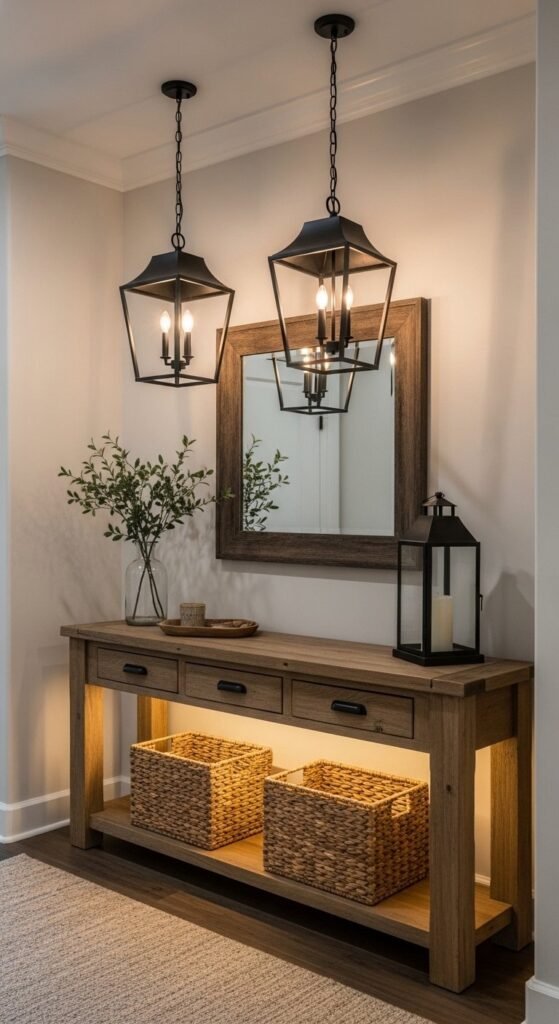
Lantern lighting bridges rustic and modern styles. Black metal frames add structure. Clear glass keeps the look light. These fixtures work well in entryways, dining rooms, and kitchens.
Scale matters. Oversized lanterns anchor large rooms. Smaller ones suit hallways or breakfast nooks. Keep finishes consistent with nearby hardware for a cohesive look.
Budget option: many lantern styles come in affordable ranges. Swap bulbs to control mood. Warm bulbs create softer light. Industrial accents prevent farmhouse spaces from feeling too sweet.
14. Entryway Console Tables With Hooks and Storage
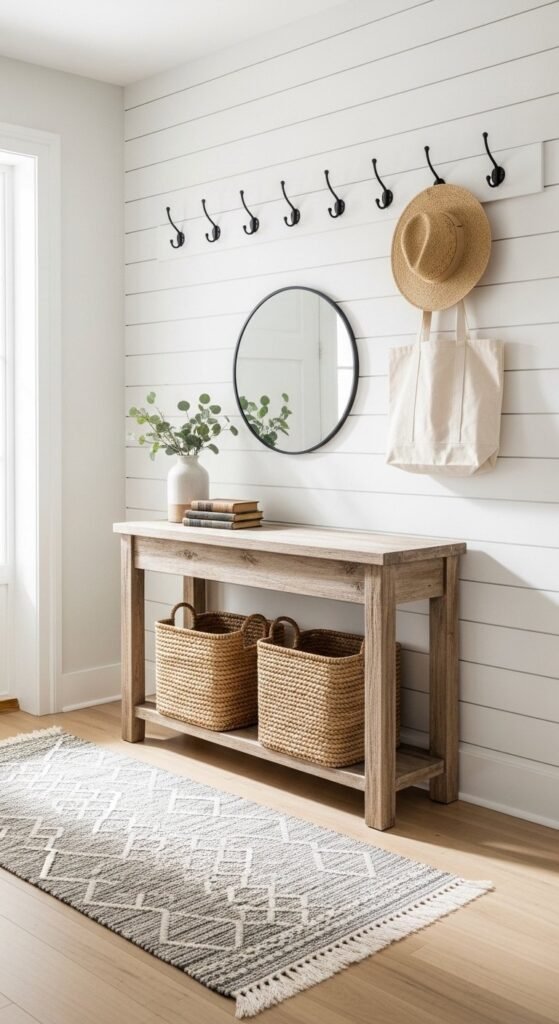
Entryways set the tone for the home. A console table offers function without bulk. Wood finishes add warmth. Slim profiles work best in tight spaces.
Hooks keep daily items visible and easy to grab. Use black metal or aged finishes for contrast. Baskets below hide shoes and bags. Keep the top surface simple. One lamp. One bowl. One plant.
DIY tip: wall-mounted shelves can replace consoles in narrow hallways. Styling trick: mirrors above consoles reflect light and widen the space. Entryway storage can look intentional and calm.
15. Warm Wood Finishes for Timeless Appeal
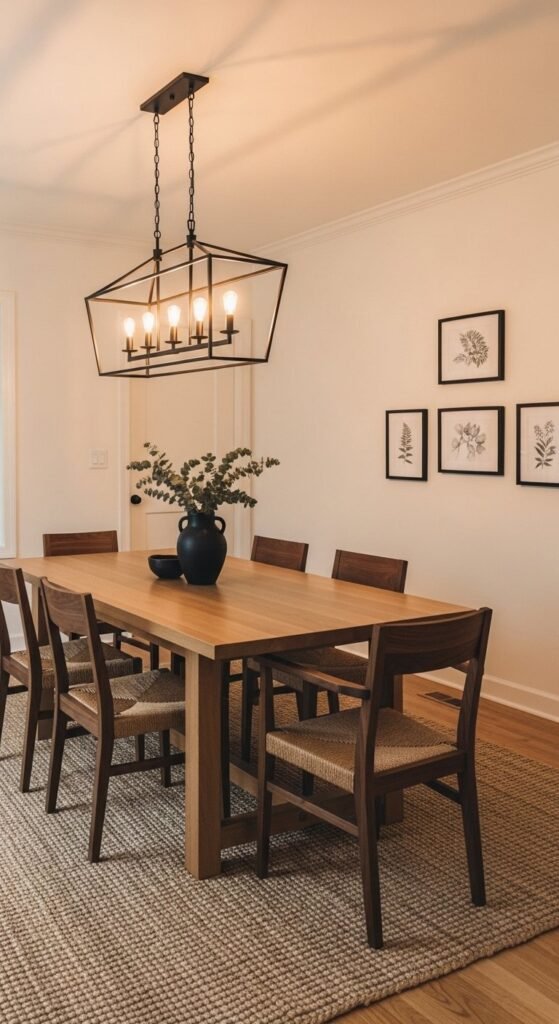
Warm wood tones shape farmhouse interiors in 2025 and beyond. Oak, walnut, and pine feel inviting without reading dates. Mixing finishes works when undertones stay similar.
Avoid matching everything. Let contrast happen naturally. A darker table with lighter floors creates depth. Matte or satin finishes look more relaxed than glossy ones.
Budget tip: wood-look pieces can work if texture is visible. Styling trick: repeat wood tones across rooms for flow. Warm woods keep modern farmhouse spaces grounded and long-lasting.
16. Penny and Black Hex Tile for Farmhouse Bathrooms
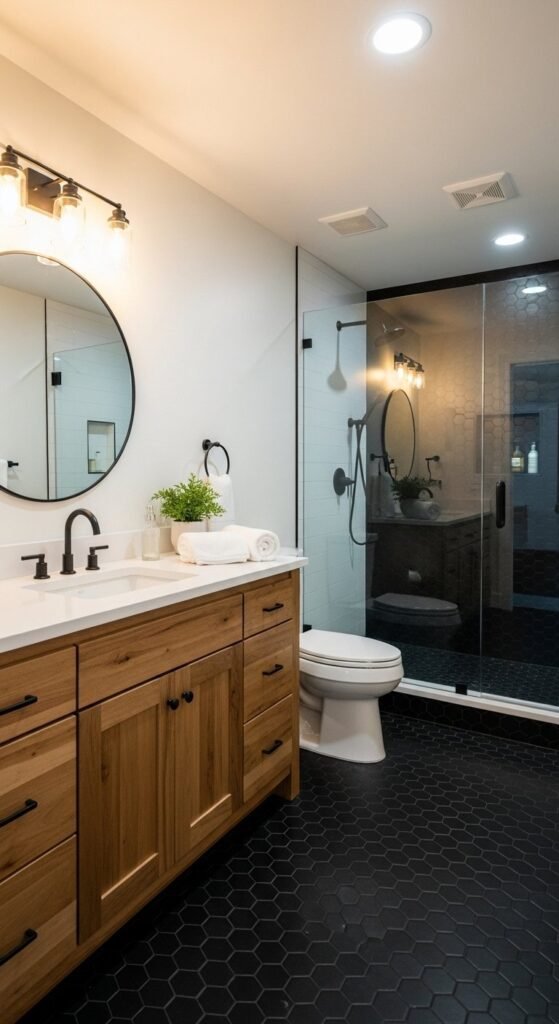
Floor tile sets the tone in farmhouse bathrooms. Penny and hex tiles add pattern without overpowering the room. Black options ground the space and contrast well with white walls and wood vanities. Smaller tiles also add grip, which works well in wet areas.
Keep the rest of the room simple. Neutral walls. Minimal accessories. Let the floor do the work. For a lighter look, try white penny tile with darker grout. This adds definition without heavy contrast.
Budget tip: tile sheets install faster and reduce labor costs. Styling trick: repeat the tile color in hardware or mirrors for cohesion. Floor tile trends move fast, but classic shapes last.
17. Console Styling With Mirrors to Amplify Light
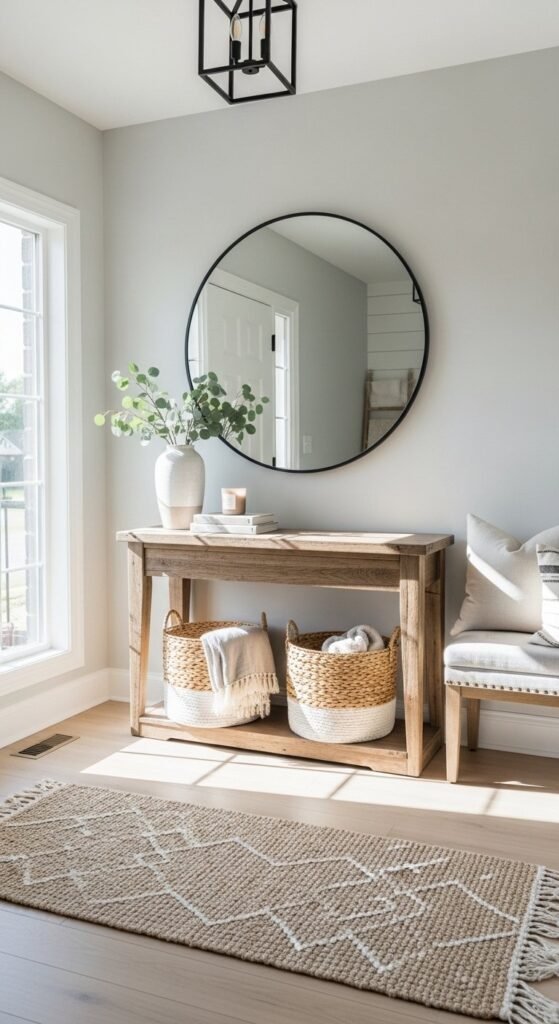
Mirrors change how a room feels instantly. In entryways, they reflect light and open tight spaces. Round mirrors soften straight lines from furniture and walls. Wood or black frames keep the look grounded.
Console styling should stay restrained. A lamp for height. A shallow bowl for keys. One sculptural object. Too many items crowd the reflection.
Budget option: oversized mirrors often cost less than art at the same scale. Styling trick: place mirrors across from windows to maximize light. Mirror magic works especially well in narrow or dim spaces.
18. Performance Rugs That Handle Real Life
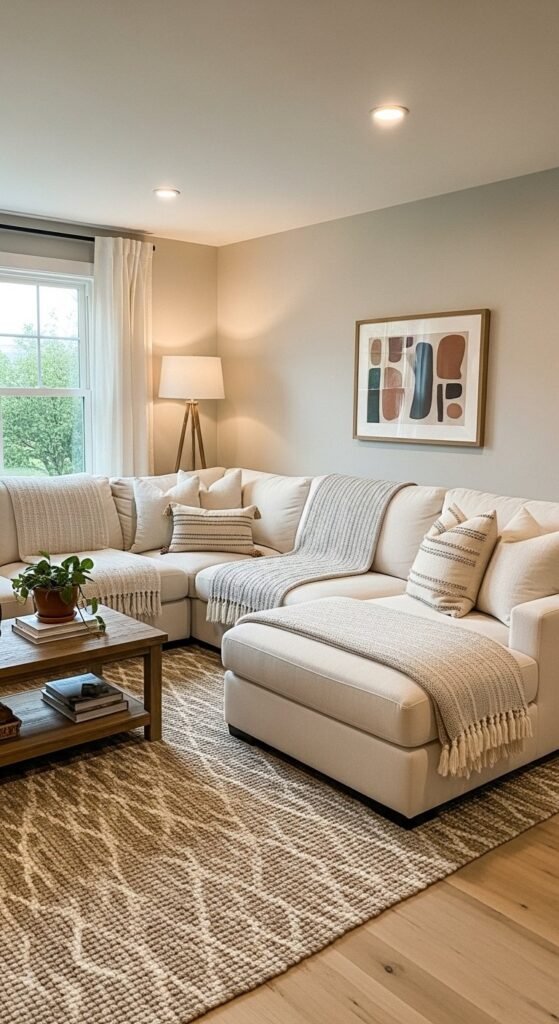
Performance rugs bring peace of mind. They look like natural fibers but handle spills and traffic better. Neutral patterns hide wear without drawing attention. These rugs work well in living rooms, dining areas, and entryways.
Choose low-pile options for easy cleaning. Avoid busy patterns that fight farmhouse simplicity. Many styles are machine washable, which helps in homes with pets or kids.
Budget tip: invest in one large rug instead of several small ones. It anchors the room better. Styling trick: layer performance rugs with jute for added texture. Durable rugs keep spaces calm and practical.
19. Decorative Ladders for Blankets and Towels
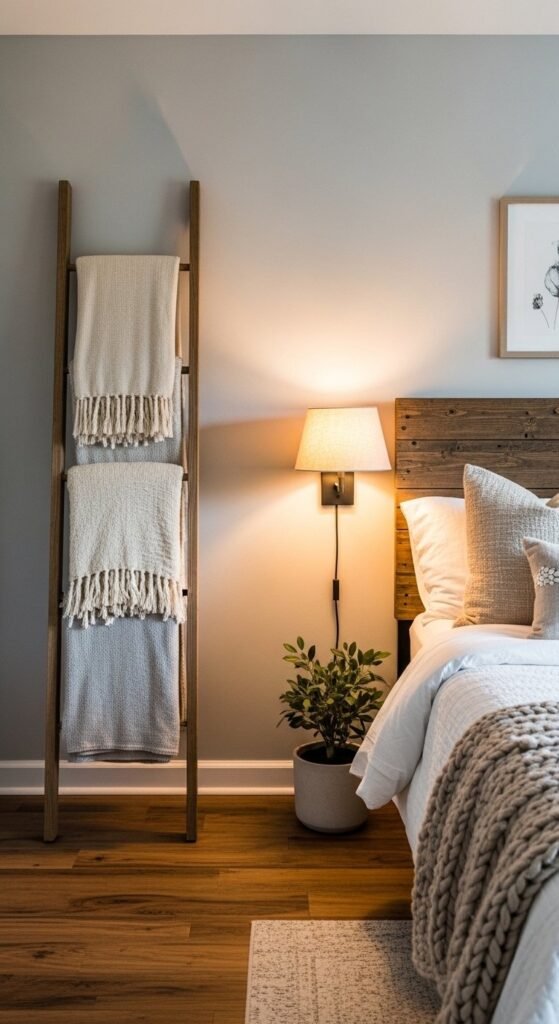
Decorative ladders add vertical interest. They also serve a purpose. Use them in bedrooms for throws or bathrooms for towels. Wood ladders feel warmer than metal ones and blend well with neutral walls.
Placement matters. Lean ladders where they won’t interrupt walkways. Keep items folded loosely for a relaxed look. Avoid overloading. Less looks intentional.
DIY tip: old ladders can be sanded and sealed for indoor use. Styling trick: match ladder wood tone to nearby furniture. Multi-use ladders add function without furniture bulk.
20. Simple Tabletop Decor With Natural Fillers
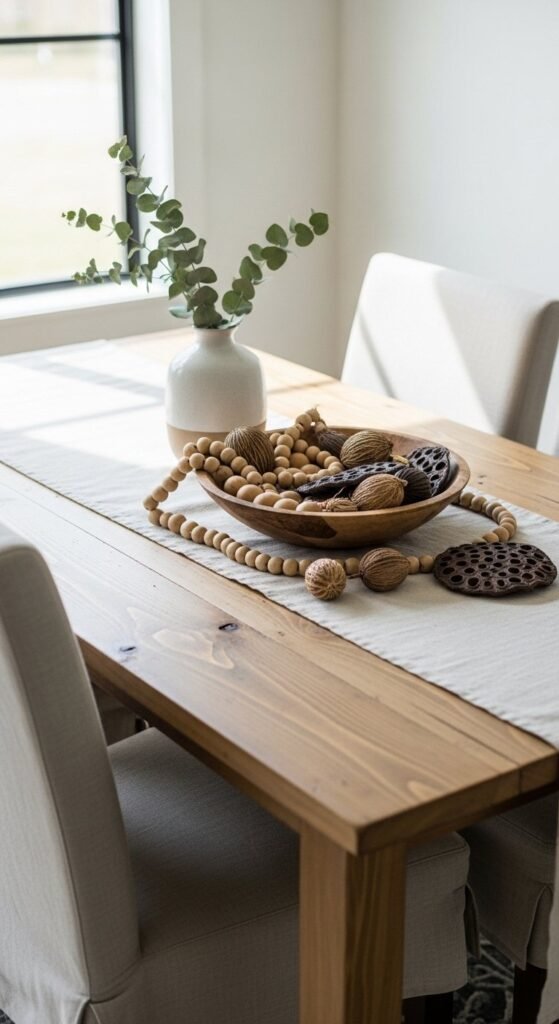
Tabletop decor works best when understated. Wooden bowls filled with natural elements add texture without clutter. Mango wood beads, pods, or simple greenery feel organic and calm.
Keep colors muted. Natural browns, soft creams, and matte finishes blend easily. Avoid shiny or overly detailed fillers. They distract from the room.
Budget tip: rotate fillers seasonally instead of replacing bowls. Styling trick: choose one centerpiece per surface. Tabletop fillers should support the space, not compete with it.
21. Earthy Accent Colors Like Sage and Dusty Blue
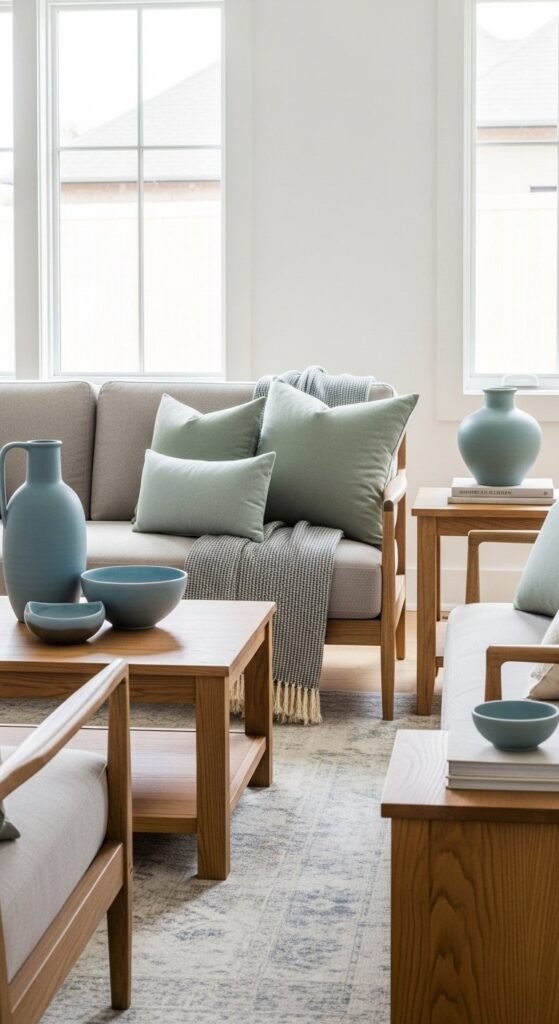
Earthy accents add depth to neutral farmhouse rooms. Sage green and dusty blue work especially well because they feel muted, not loud. Use them sparingly. Pillows, throws, art, or small ceramics are enough to shift the mood.
Avoid painting entire rooms unless the space gets plenty of light. Accent colors work best when layered against warm whites and wood tones. This keeps the room calm and balanced.
Budget tip: swap accessories instead of furniture. Styling trick: repeat the accent color at least twice in the room so it feels intentional. Color pops beyond neutrals keep farmhouse spaces from feeling flat.
22. Marble and Wood Pairings for Modern Contrast
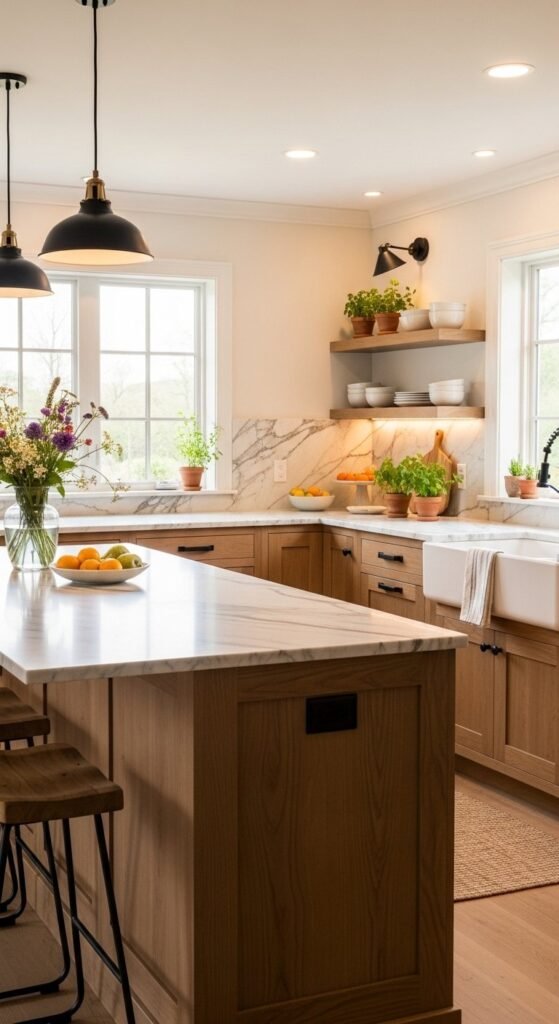
Marble and wood together strike a strong balance. The stone feels refined. The wood keeps things grounded. This pairing shows up often in kitchens and bathrooms. Use marble on counters or vanities. Let wood handle cabinets or shelving.
If real marble isn’t realistic, look for quartz with subtle veining. Avoid high-contrast patterns. Softer veining feels more timeless.
Styling trick: keep surrounding finishes simple so the materials stand out. Mixed materials add contrast without overwhelming the room.
23. Gallery Walls With Botanical and Nature Art
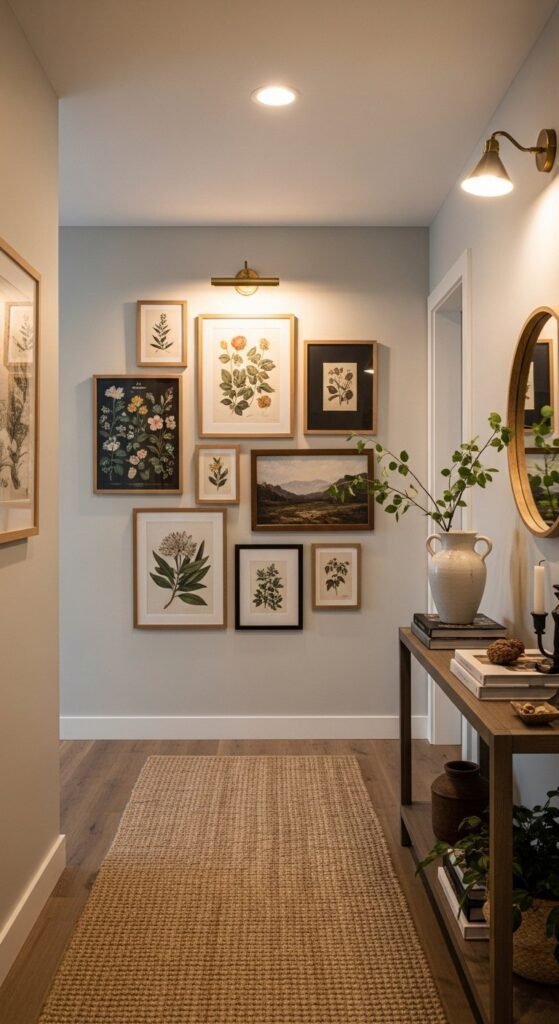
Gallery walls add personality without furniture. Botanical and nature art fits farmhouse spaces naturally. Stick to a limited color palette so the wall feels cohesive. Mix frame sizes, but keep spacing consistent.
Lay the arrangement on the floor before hanging. This saves wall patching later. Use kraft paper templates if needed.
Budget tip: printable art and thrifted frames keep costs low. Styling trick: anchor the gallery with one slightly larger piece in the center. Farmhouse gallery walls feel collected when spacing stays tight.
24. Curated Decor Boxes for Seasonal Updates
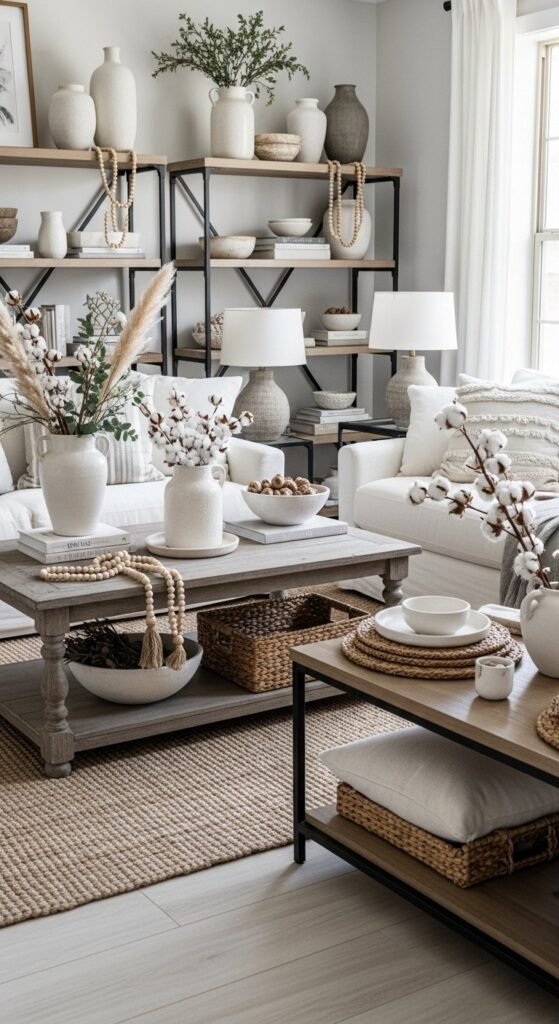
Curated decor boxes simplify seasonal updates. They provide coordinated pieces without overthinking. Use them to refresh shelves, coffee tables, or entry consoles. Rotate items instead of adding more. This avoids clutter.
Even without a subscription, you can copy the idea. Group decor by season in storage bins. Swap items every few months.
Styling trick: remove one item before adding another. This keeps surfaces calm. Seasonal refreshes work best when edits matter as much as additions.

Leave a Reply