

1. Nature-Inspired Color Palettes
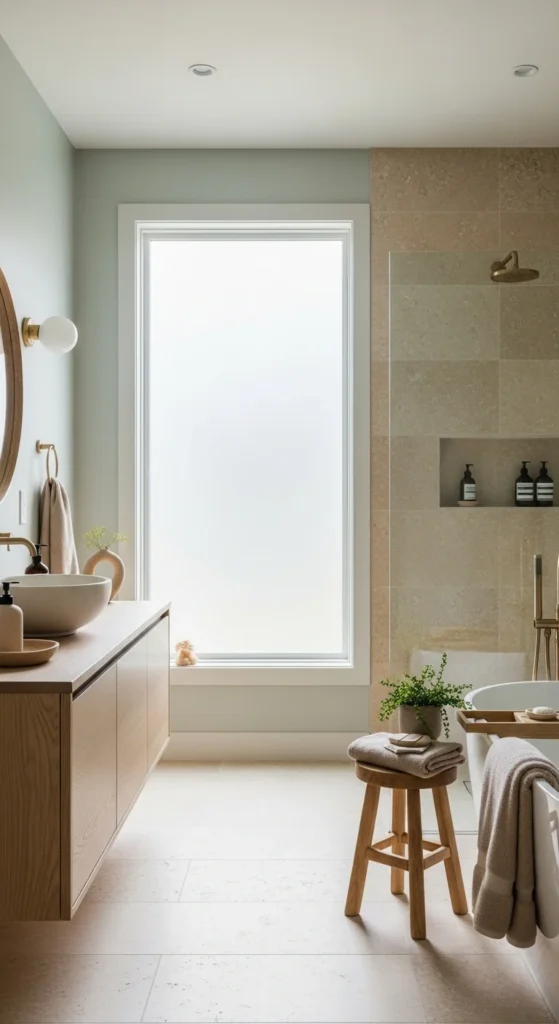
Soft greens, muted sand, and clay tones create a calming base that feels relaxed rather than stark. These shades work well in both large and small bathrooms. Paint is the quickest route. A single weekend can shift the entire mood. If repainting feels like too much, swap in tone-on-tone accessories instead. Think ceramic soap pumps, stone trays, or linen shower curtains. Keep the contrast gentle. Avoid sharp black-and-white pairings here. Nature-led palettes shine when finishes stay matte or softly textured. Budget tip: sample-sized paint jars make great test swatches. Brush them onto foam boards and view them in morning and evening light. Styling trick: repeat the same color at least three times—walls, towels, and one accent piece—to keep the look intentional.
2. Floating Vanity Install
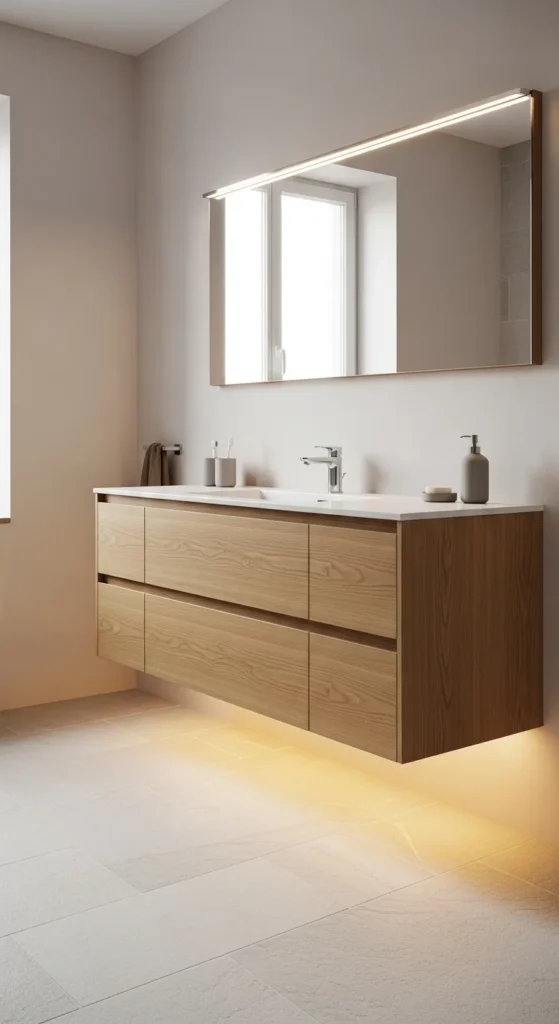
Wall-hung vanities keep the floor visible, which visually opens the room. They also simplify cleaning days. Dust and water don’t collect around legs or bulky bases. For small bathrooms, this change alone can make the space feel twice as open. Choose a finish with subtle grain for warmth. Flat laminate can feel cold. Floating storage also pairs well with drawer organizers inside, keeping counters clear. Budget route: many ready-made vanities can be wall-mounted with a reinforced cleat system. Always confirm wall studs before installing. Styling trick: leave a bit of space underneath clear. Avoid baskets directly below; that defeats the airy effect. Add a low-profile bath mat instead.
3. Pastel Towel Layers
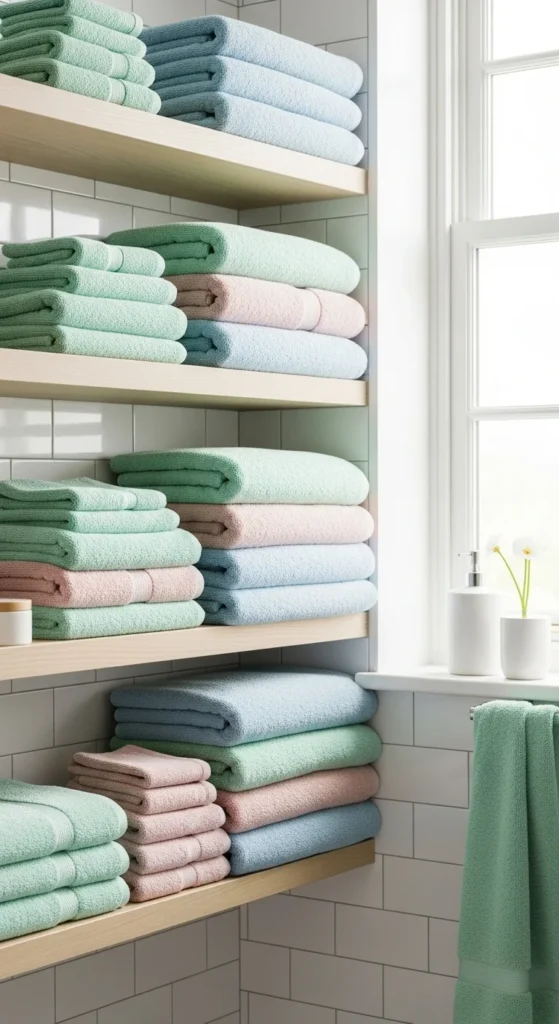
Pastel towels change the look of a bathroom in minutes. Mint, blush, and sky blue feel gentle without overpowering the room. Layering is key. Fold bath towels tightly, then place hand towels slightly off-center on top. Add one contrasting shade for depth. Quick color swaps like this work well for seasonal resets. Keep walls and large fixtures neutral so towels stand out. Budget tip: buy towel sets gradually rather than all at once. Even two new towels can shift the tone. Styling trick: store extras out of sight. Too many colors on open shelves can feel busy.
4. Simple Floral Centerpieces
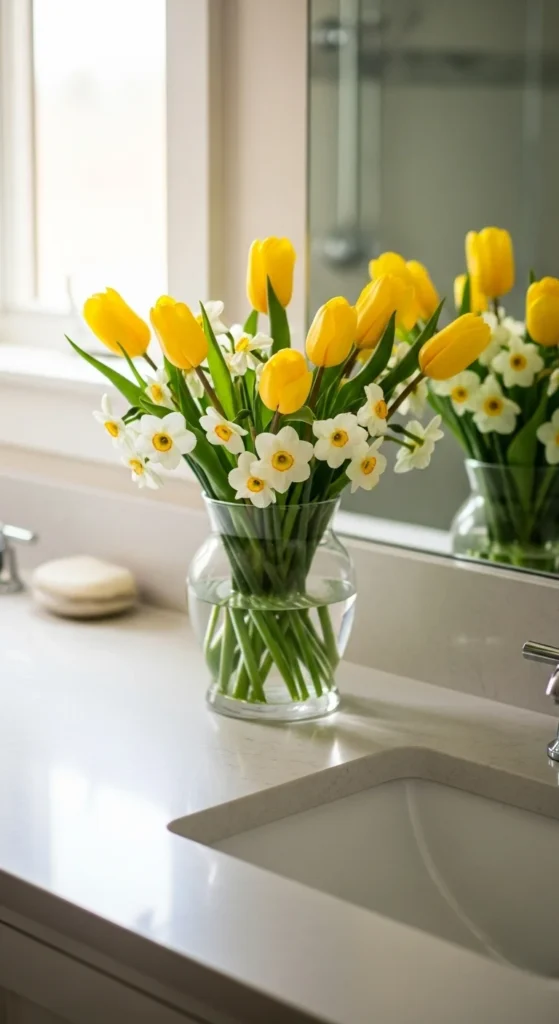
Flowers bring life to a bathroom without permanent changes. One small vase on the vanity is enough. Tulips and daffodils work well because their shapes stay upright. Faux stems are also a solid option, especially in rooms without windows. Low-effort decor like this adds softness to stone and tile-heavy spaces. Keep vases clear or ceramic to avoid visual clutter. Budget tip: grocery store bouquets often look better when split into smaller arrangements. Styling trick: trim stems shorter than usual so blooms sit low and tidy.
5. Rainfall Shower Upgrade
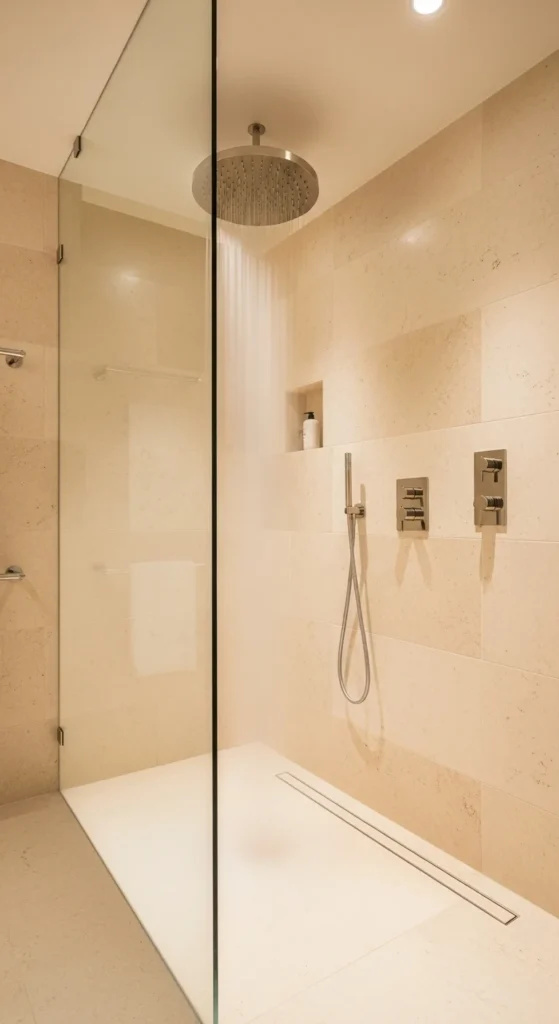
Rain-style showerheads change how the space feels, not just how it functions. Water falls evenly, creating a gentle, immersive experience. Many models screw directly onto existing arms, making installation simple. Spa-like showers pair best with frameless glass to keep sightlines open. Choose finishes that match existing hardware for cohesion. Budget tip: skip digital controls and focus on the showerhead itself. Styling trick: add a recessed niche with matching tile to keep bottles hidden.
6. Organic Texture Accents
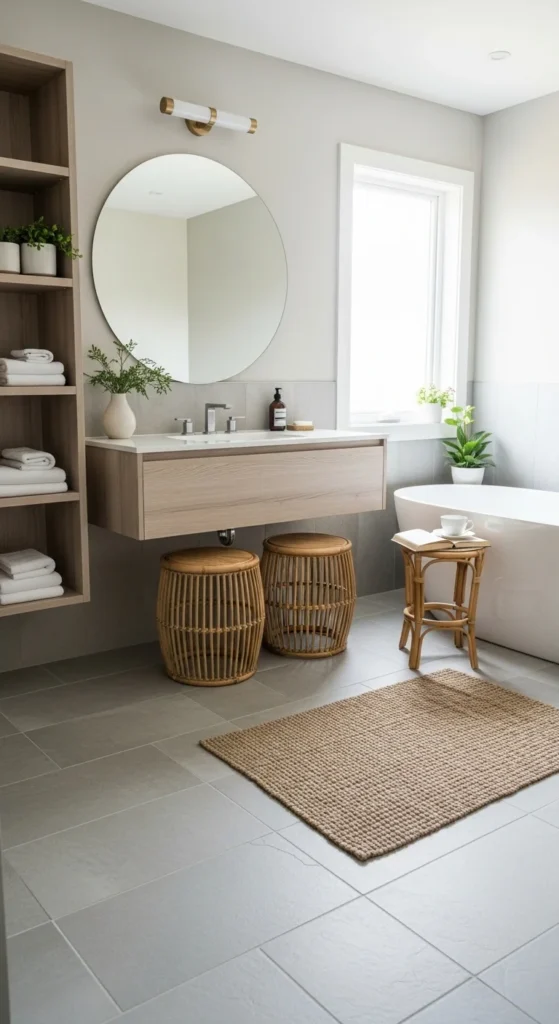
Texture adds warmth where color stays quiet. Rattan, pale wood, and woven accents soften hard surfaces like tile and porcelain. Use these materials sparingly. One stool or tray can balance an entire room. Organic materials work best when finishes stay raw or lightly sealed. Budget tip: check secondhand shops for small wooden pieces that can be sanded and sealed. Styling trick: keep textures within the same tone family to avoid visual clutter.
7. Floral Peel-and-Stick Accent Walls
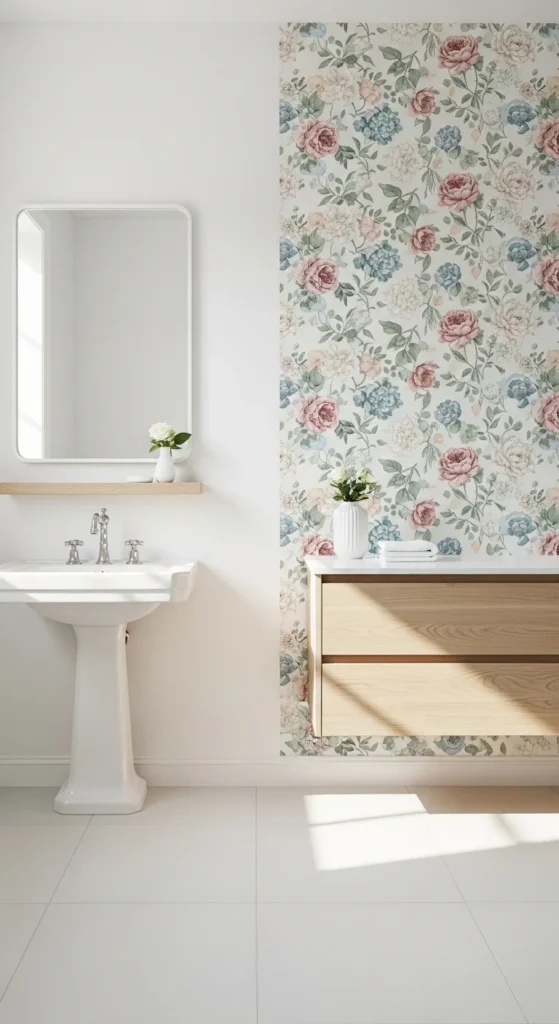
Peel-and-stick wallpaper allows bold patterns without long-term commitment. Floral prints soften bathrooms that feel too sharp or plain. Apply wallpaper behind the vanity or tub for maximum impact. Temporary wall treatments are renter-friendly and removable. Choose patterns with breathing room—tight, busy florals can overwhelm small spaces. Budget tip: use wallpaper only on one wall to reduce cost. Styling trick: pull one color from the print into towels or accessories.
8. Humidity-Friendly Greenery
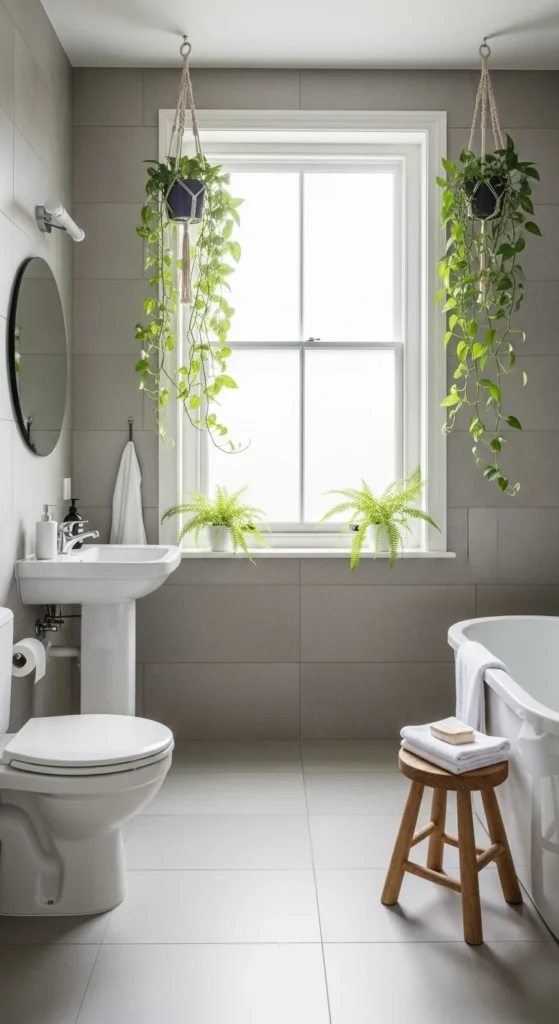
Plants bring life and movement. Pothos and ferns handle moisture well and don’t demand constant care. Place them where steam circulates but water doesn’t pool. Bathroom greenery works best when containers stay simple—ceramic or stone over glossy plastic. Budget tip: propagate cuttings from existing plants. Styling trick: limit plant variety to keep the look calm.
9. Matte Black and Brushed Metal Hardware
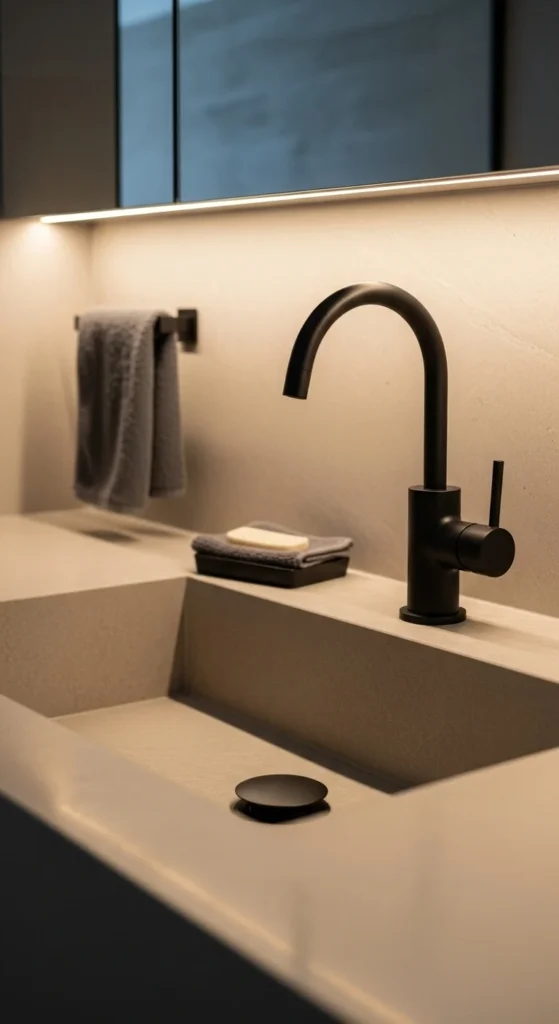
Hardware swaps offer noticeable change without renovation. Matte black and brushed metals add contrast while staying understated. Replace faucets, towel bars, and hooks together for consistency. Finish coordination keeps the space intentional. Budget tip: prioritize the faucet first—it draws the most attention. Styling trick: pair dark hardware with warm textures so it doesn’t feel harsh.
10. Wicker Storage Baskets
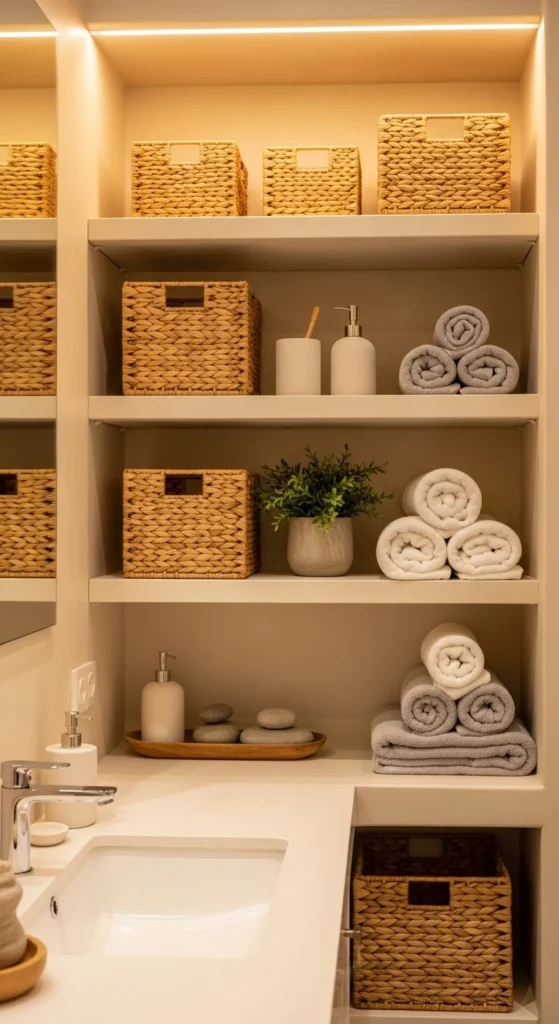
Wicker baskets organize clutter while adding texture. Use them under sinks or on open shelves. Choose baskets with tight weaves for a cleaner look. Hidden storage helps bathrooms feel calm and orderly. Budget tip: line baskets with fabric remnants for a polished finish. Styling trick: label interiors, not exteriors, to keep visuals simple.
11. Warm Lighting Layers
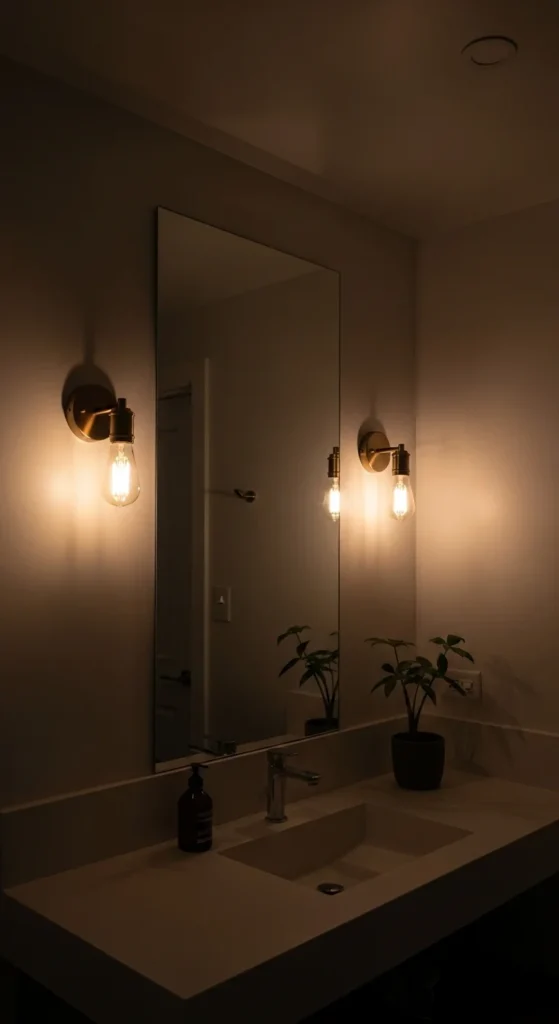
Lighting shapes mood more than most decor choices. Warm bulbs soften skin tones and reduce glare. Add sconces at eye level to avoid harsh overhead shadows. Soft lighting setups make evening routines feel relaxed. Budget tip: swap bulbs before replacing fixtures. Styling trick: keep color temperature consistent across all lights.
12. Pastel Patterned Tile Accents
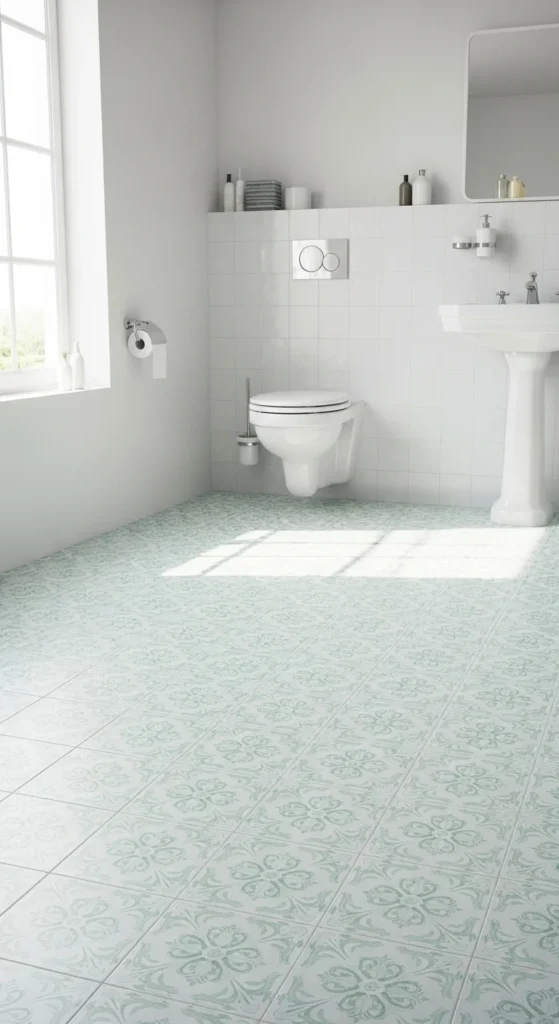
Patterned tiles introduce interest without overwhelming the room. Pastel shades keep the look light. Use them on floors or backsplashes rather than full walls. Tile accents work best when surrounding surfaces stay simple. Budget tip: tile a small area only, like behind the sink. Styling trick: echo tile colors in textiles.
13. Water-Saving Fixtures
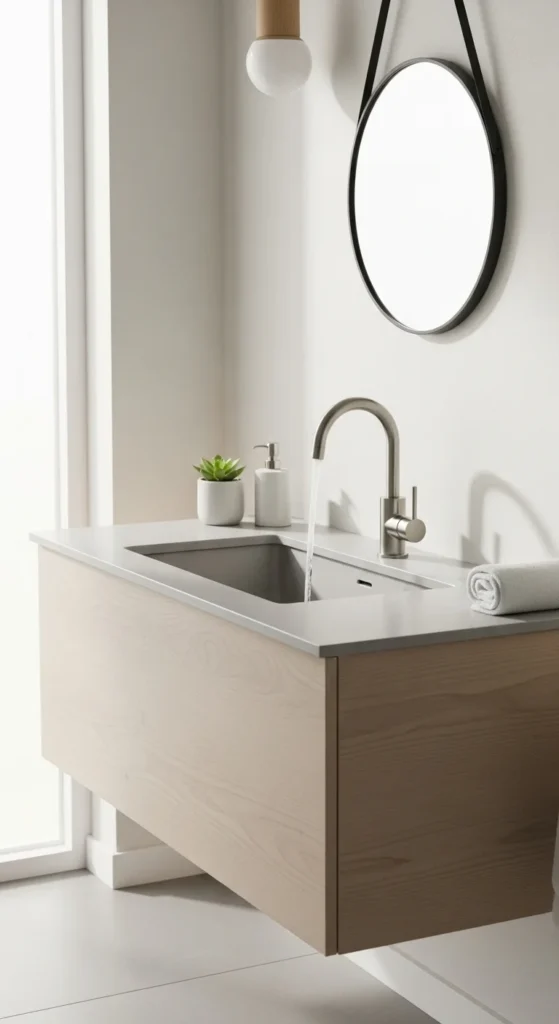
Efficient fixtures support long-term savings without changing appearance. Many modern designs look identical to standard models. Focus on aerated faucets and efficient showerheads. Sustainable choices blend function and style. Budget tip: check for local rebates. Styling trick: keep packaging until installation in case of returns.
14. Layered Scent Styling
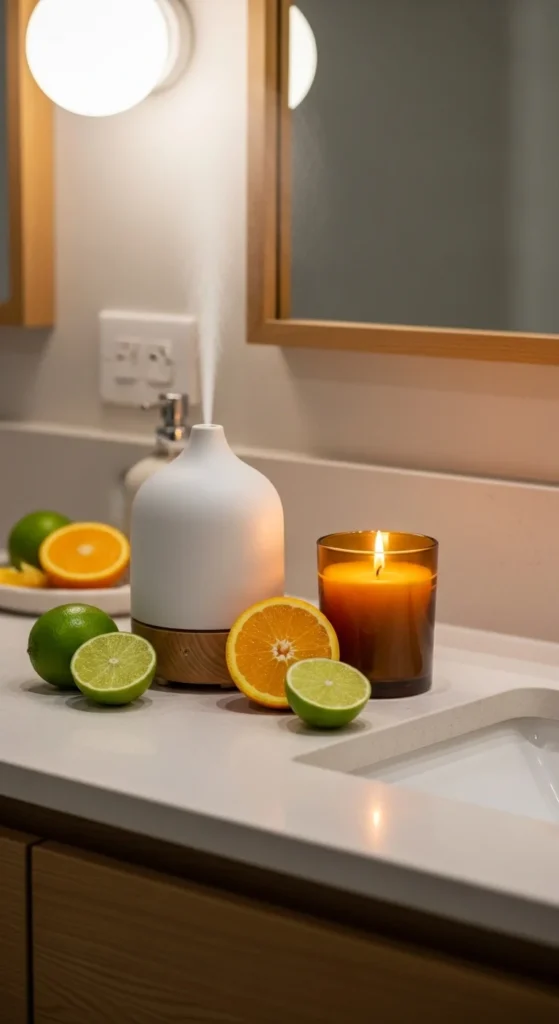
Scent shapes how a bathroom feels. Floral or citrus notes work well for daytime. Use diffusers for consistency and candles for evening routines. Scent layering keeps fragrances subtle rather than overpowering. Budget tip: essential oils last longer than pre-made blends. Styling trick: keep containers neutral so scent sources double as decor.
15. Open Shelf Styling
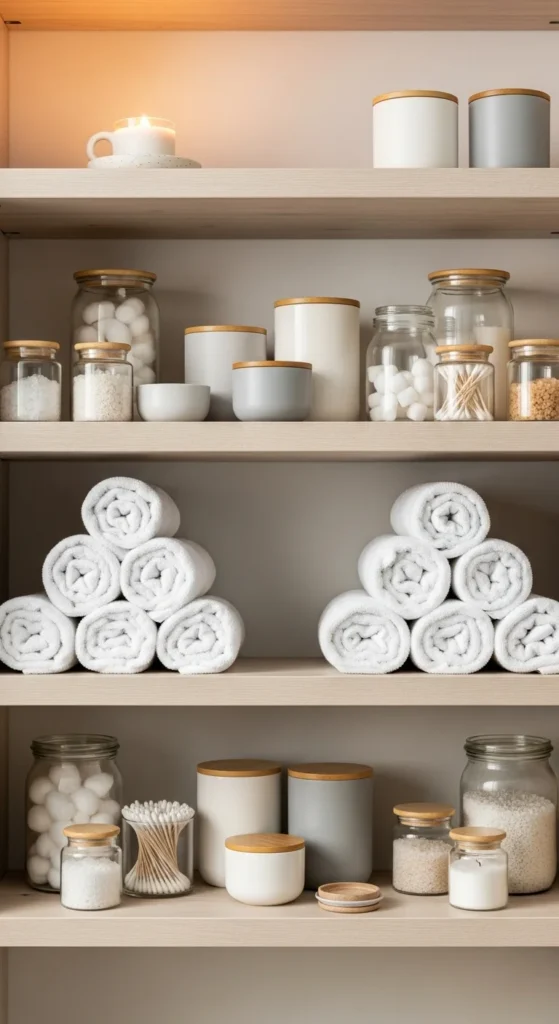
Open shelving shows restraint. Limit items to essentials and decor. Roll towels tightly for structure. Use clear jars for cotton items. Styled storage keeps the room functional and attractive. Budget tip: repurpose kitchen jars. Styling trick: vary heights slightly to avoid a rigid look.
16. Earth-Toned Neutral Shifts
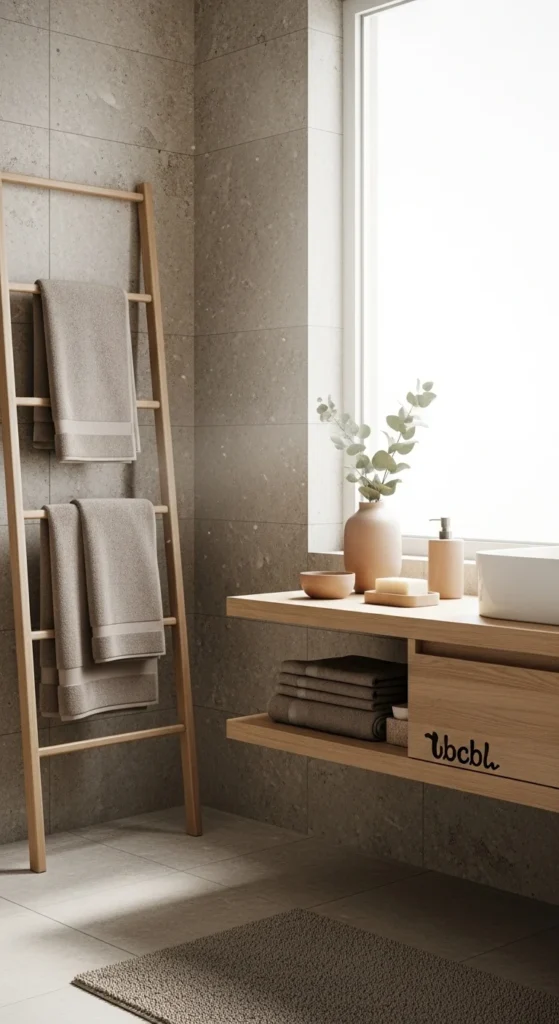
Stone, taupe, and sand tones replace stark white with warmth. These shades feel grounding and calm. Apply them through paint or textiles. Muted neutrals age well and pair easily with other trends. Budget tip: start with towels and mats before repainting. Styling trick: keep undertones consistent.
17. Walk-In Shower Layouts
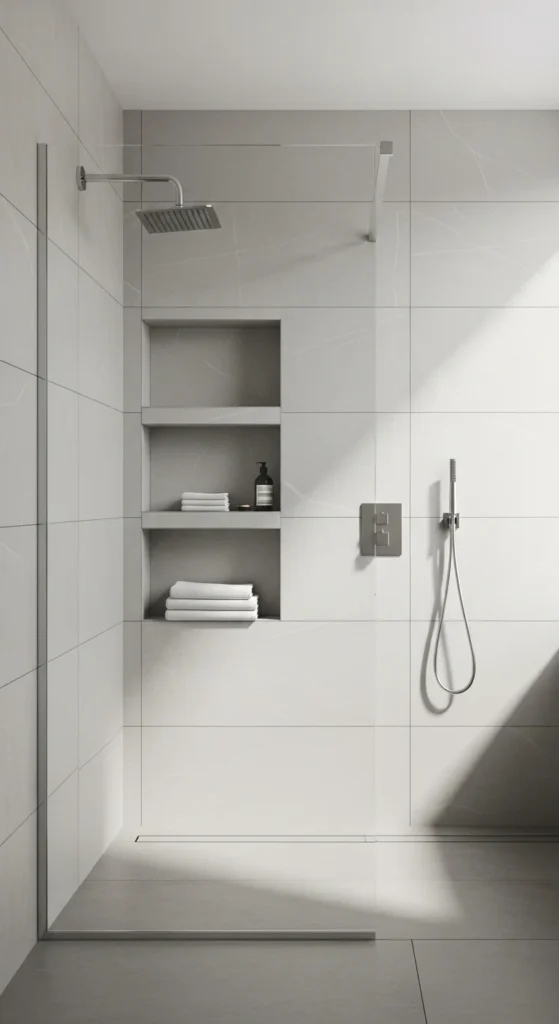
Walk-in showers simplify layouts and improve light flow. Frameless glass keeps views open. This layout suits modern homes and compact spaces. Open shower designs feel less boxed-in. Budget tip: reuse existing plumbing locations. Styling trick: slope floors subtly for clean drainage.
18. Floral Bath Mats
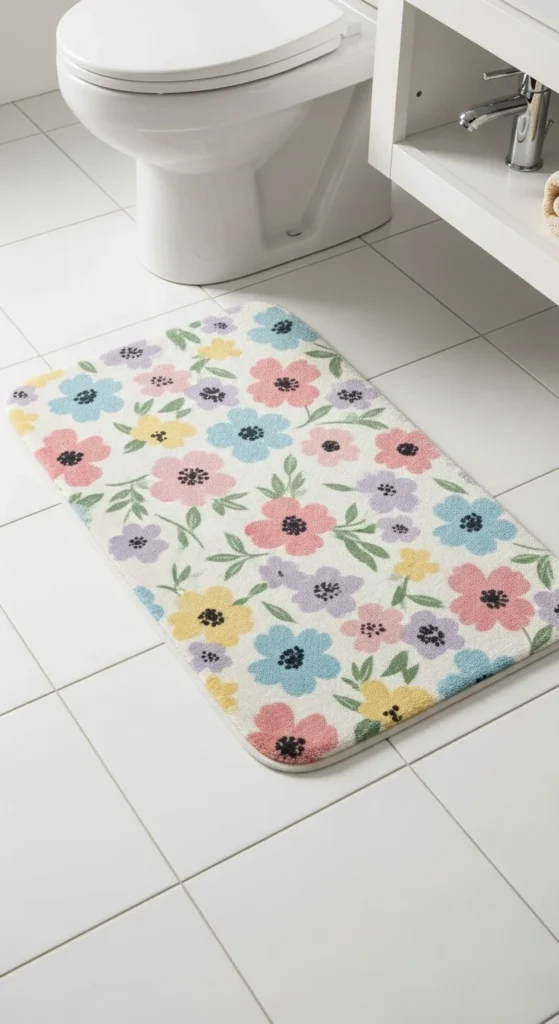
Bath mats add comfort and safety. Floral patterns introduce softness underfoot. Choose low-pile options for easier care. Patterned textiles should complement, not compete with, other elements. Budget tip: rotate mats seasonally to extend lifespan. Styling trick: match one color from the mat to towels.
19. Decorative Soap Dispensers
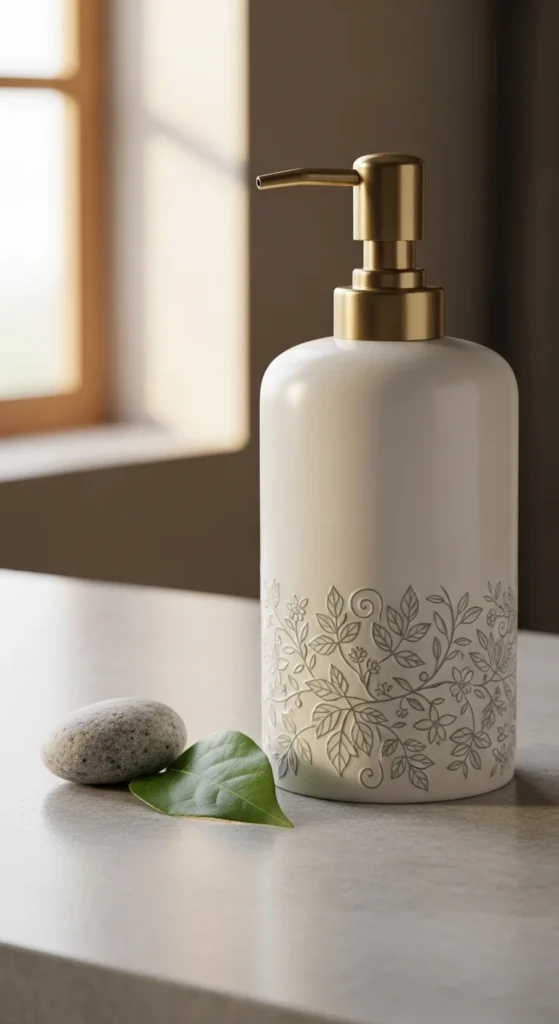
Small swaps can make a vanity feel intentional. Ceramic or glass dispensers look more refined than plastic bottles. Coordinated accessories bring cohesion. Budget tip: refill decorative bottles with bulk soap. Styling trick: group items in odd numbers.
20. Wooden Ladder Racks
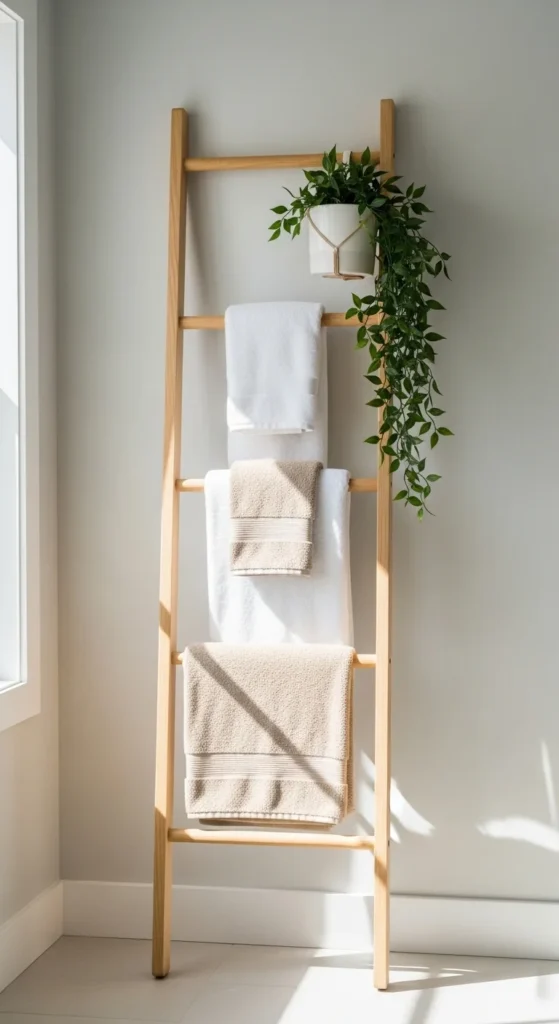
Ladder racks provide storage without heavy installation. They lean against walls and add vertical interest. Use them for towels or small plants. Multi-use racks suit modern and relaxed styles alike. Budget tip: DIY with basic lumber and sanding. Styling trick: keep spacing even between items.
21. Minimalist Clean-Line Fixtures
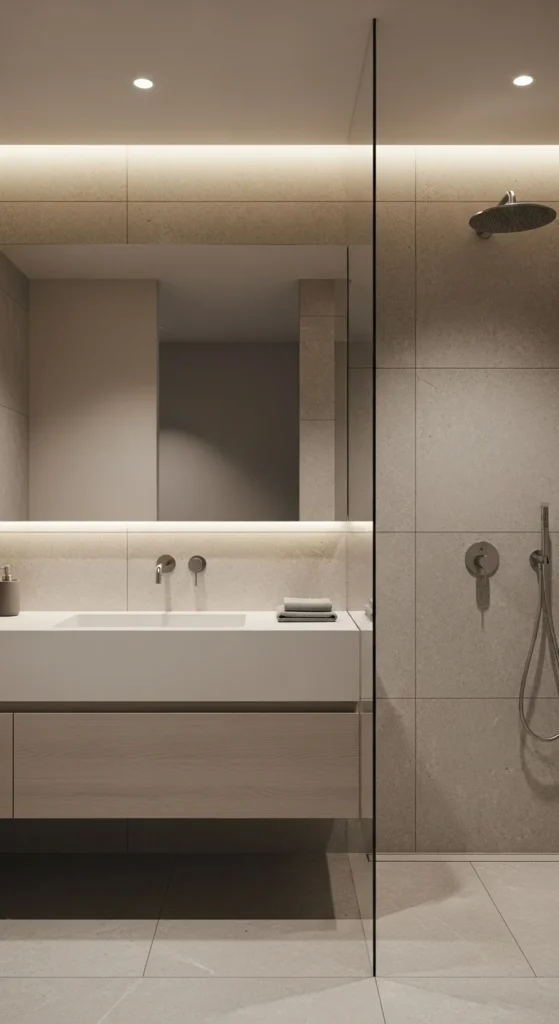
Clean lines bring clarity to a bathroom. Flat-front vanities, slim-profile sinks, and frameless showers reduce visual noise. The room feels calmer because nothing interrupts the flow. This approach works especially well in smaller spaces where detail overload can feel heavy. Keep joins discreet. Integrated handles or push-to-open drawers help maintain a smooth surface. Minimalist fixtures rely on proportion more than decoration. Choose one standout element, such as a sculptural basin or elongated mirror, and let everything else stay quiet. Budget tip: if replacing fixtures isn’t an option, remove excess accessories instead. Clear counters change the look immediately. Styling trick: repeat straight lines across elements—mirror edges, vanity width, and tile layout—for subtle cohesion.
22. Pastel Color Drenching
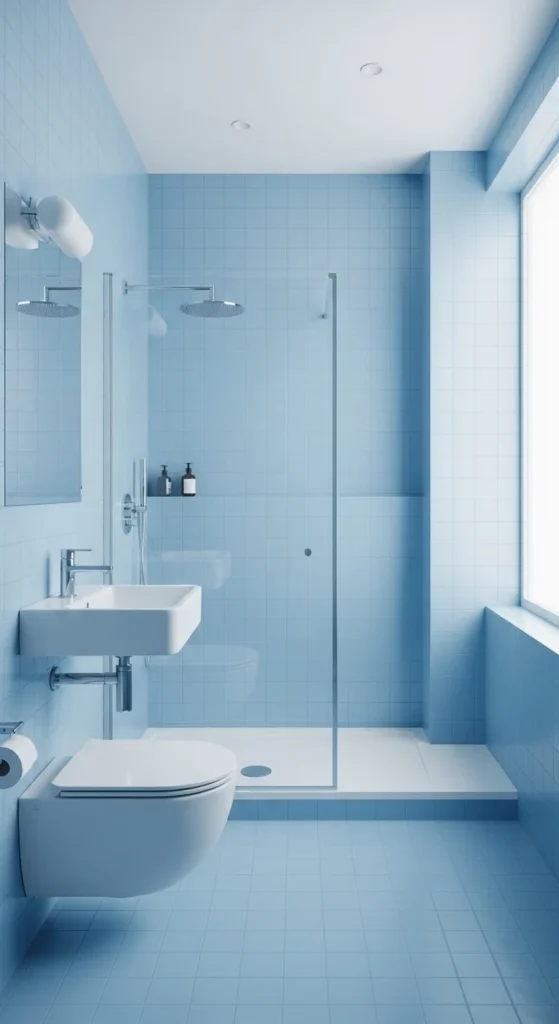
Color drenching uses one hue across multiple surfaces for a unified effect. Pastels work well because they feel gentle rather than heavy. Tile, paint, or even cabinetry can carry the same tone. Matching grout strengthens the look and avoids harsh breaks. Single-hue spaces feel intentional when finishes vary slightly—gloss tile against matte paint, for example. This approach suits bathrooms with good lighting, natural or artificial. Budget tip: apply the color-drench idea to paint and accessories first before committing to tile. Styling trick: keep fixtures neutral so the color remains the focus without feeling overwhelming.

Leave a Reply